
World War I CHAPTER 19 Intervention Panama Canal

- Slides: 14
World War I CHAPTER 19
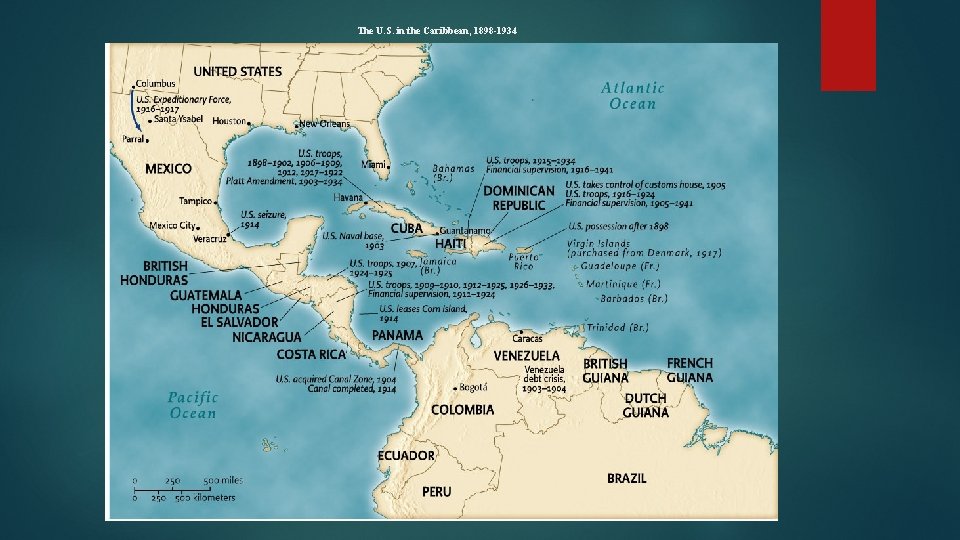
Intervention Panama Canal Roosevelt Corollary Latin America William Taft Dollar Woodrow Wilson Moral Diplomacy Imperialism Mexican Revolution
The U. S. in the Caribbean, 1898 -1934
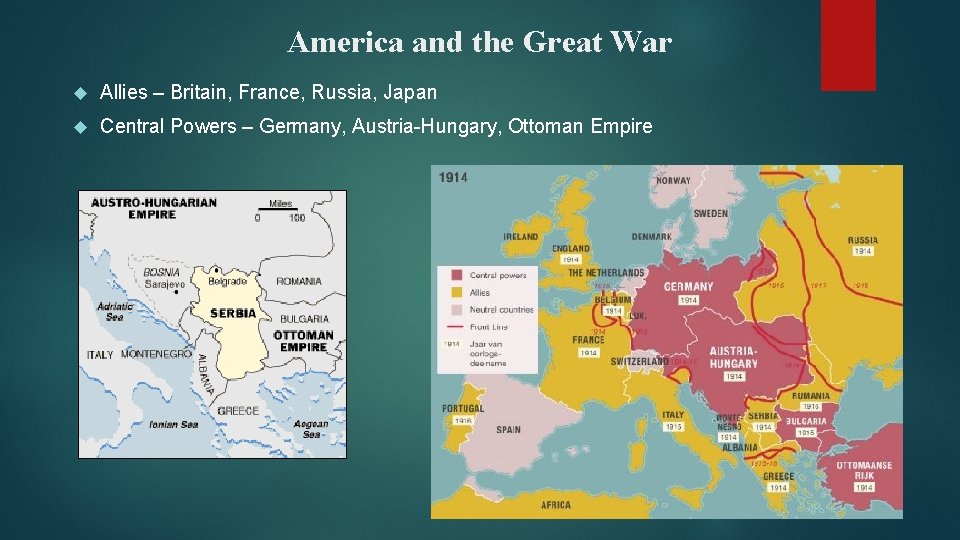
America and the Great War Allies – Britain, France, Russia, Japan Central Powers – Germany, Austria-Hungary, Ottoman Empire
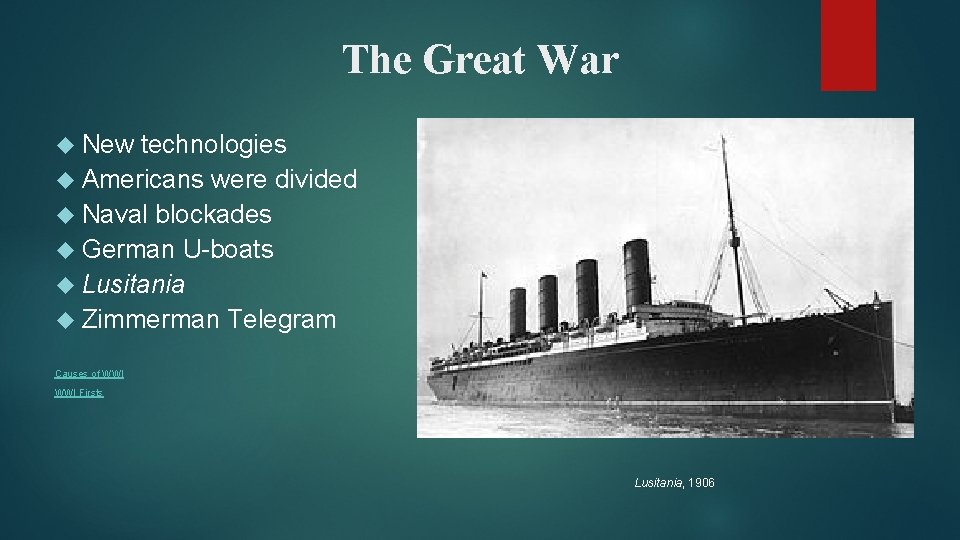
The Great War New technologies Americans were divided Naval blockades German U-boats Lusitania Zimmerman Telegram Causes of WWI Firsts Lusitania, 1906
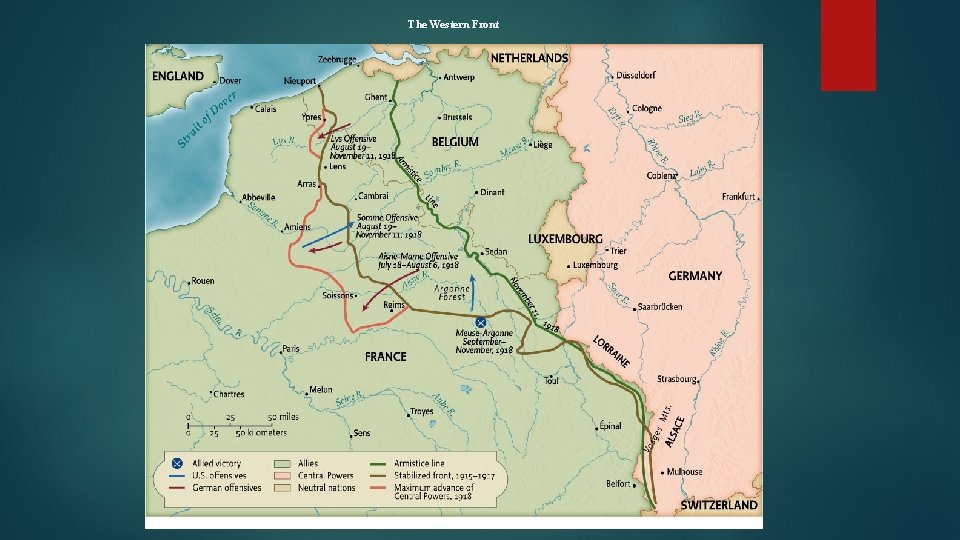
The Western Front
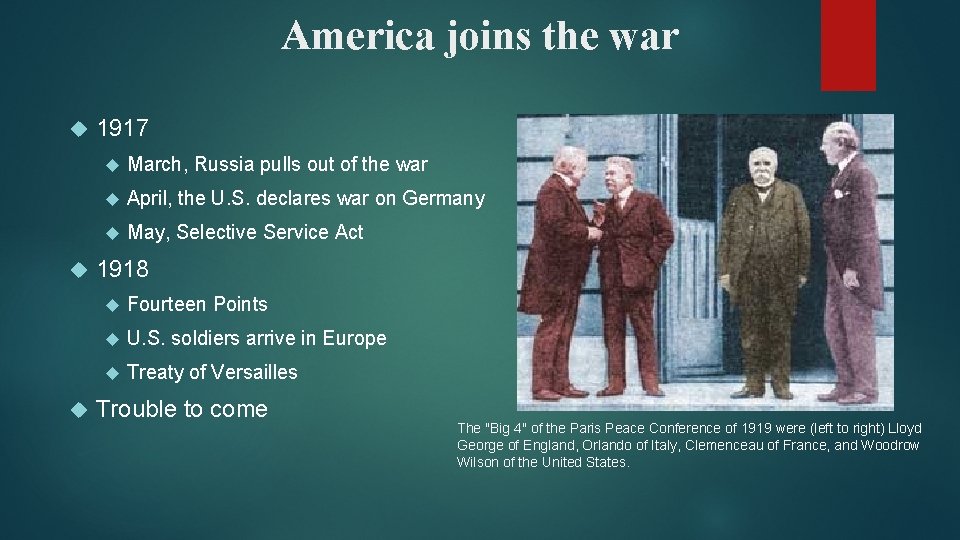
America joins the war 1917 March, Russia pulls out of the war April, the U. S. declares war on Germany May, Selective Service Act 1918 Fourteen Points U. S. soldiers arrive in Europe Treaty of Versailles Trouble to come The "Big 4" of the Paris Peace Conference of 1919 were (left to right) Lloyd George of England, Orlando of Italy, Clemenceau of France, and Woodrow Wilson of the United States.
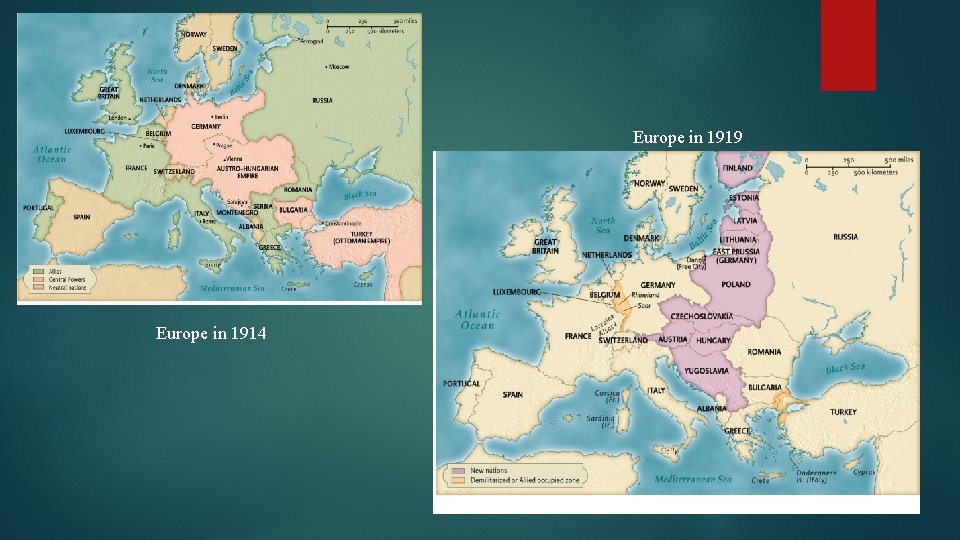
Europe in 1919 Europe in 1914
Total War at Home Federal agencies set up for regulation of industries, transportation, propaganda Committee War Tough on Public Information (CPI) Industries Board act to balance security and freedom Espionage Sedition Act 1917 Act 1918 Repression on state and federal level
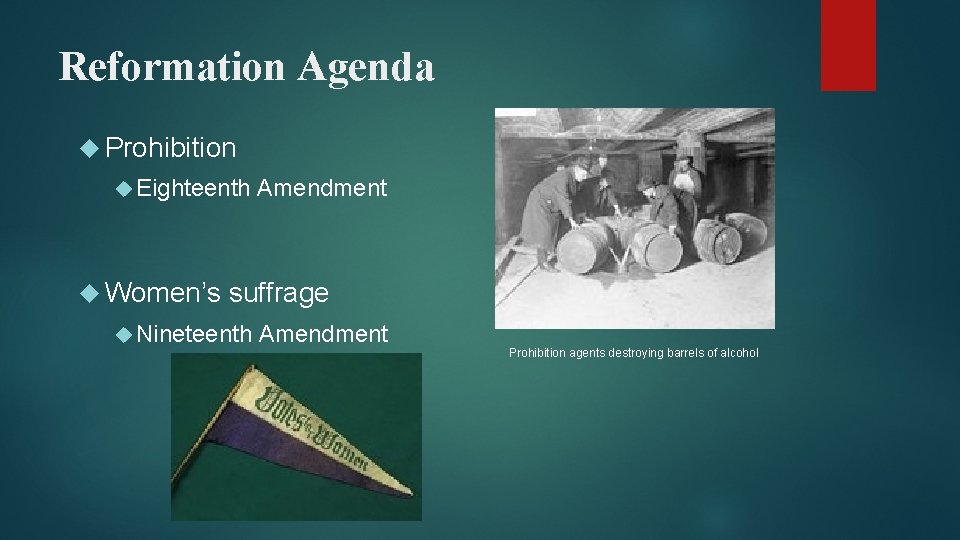
Reformation Agenda Prohibition Eighteenth Women’s Amendment suffrage Nineteenth Amendment Prohibition agents destroying barrels of alcohol
Americanization Eugenics Melting Pot Anti-German Buck sentiment vs. Bell Mexican Asian immigrants
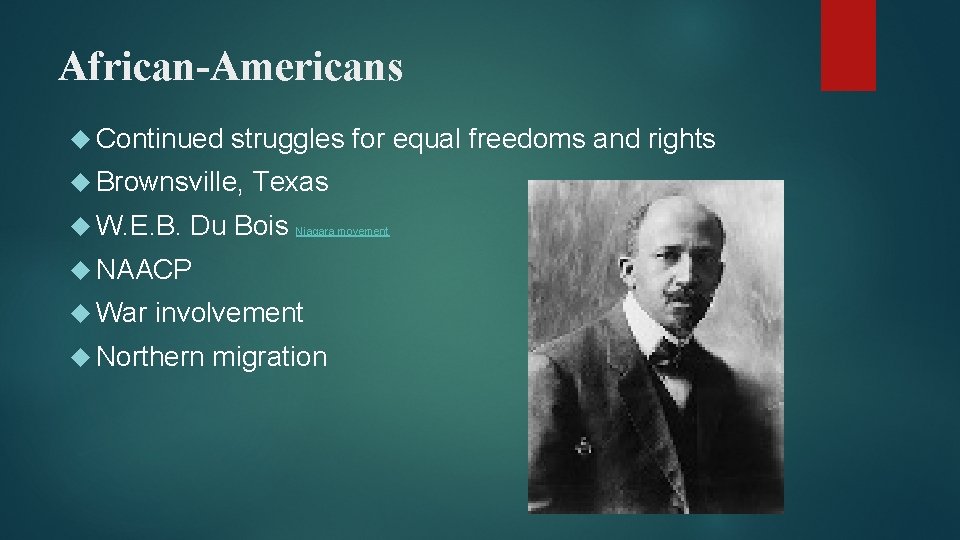
African-Americans Continued struggles for equal freedoms and rights Brownsville, W. E. B. Texas Du Bois Niagara movement NAACP War involvement Northern migration
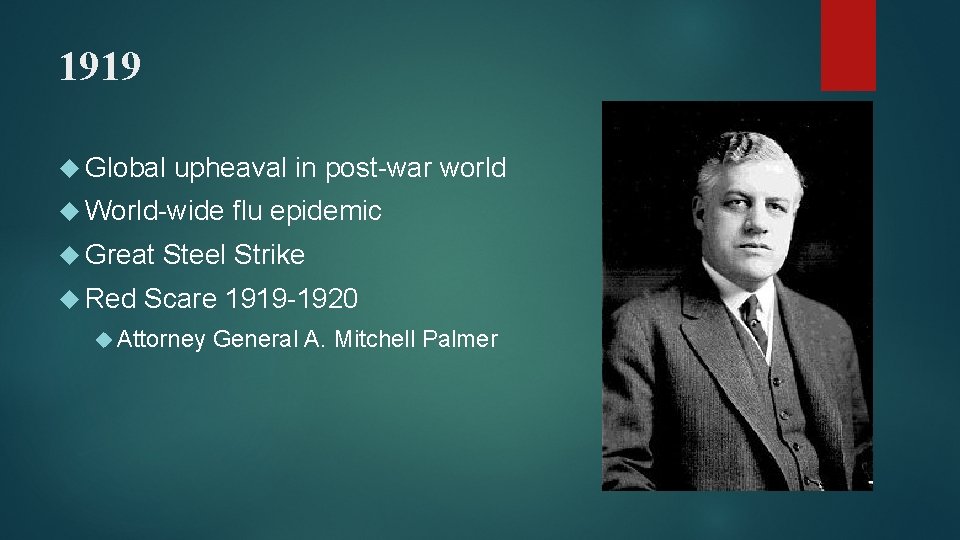
1919 Global upheaval in post-war world World-wide Great Red flu epidemic Steel Strike Scare 1919 -1920 Attorney General A. Mitchell Palmer