
World War I Causes The Great WarBegin with
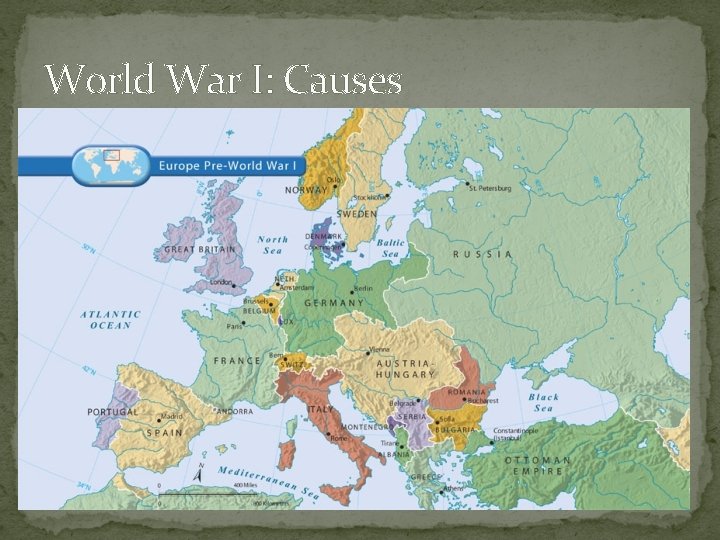
World War I: Causes
The Great War—Begin with the end… � 8, 000—Civilians killed � 8, 300, 000—Combatants killed � 19, 536, 000—Wounded combatants � 61, 526, 000—Soldiers mobilized �$82, 400, 000—Direct cost of war in 1913 real dollars ($1. 8 trillion adjusted for inflation) � 21, 500, 000—Deaths in 1918 Spanish Influenza Pandemic **All are estimates**
World War I: Causes “The entire able-bodied population are preparing to massacre one another; though no one, it is true, wants to attack, and everybody protests his love of peace and determination to maintain it, yet the whole world feels that it only requires some unforeseen incident, some unpreventable accident, for the spark to fall in a flash…and blow Europe sky-high. ” Frederic Pessy (1895)
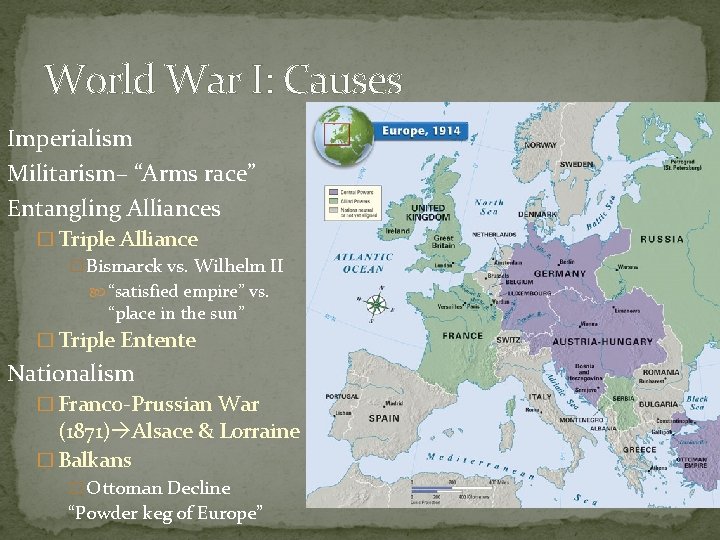
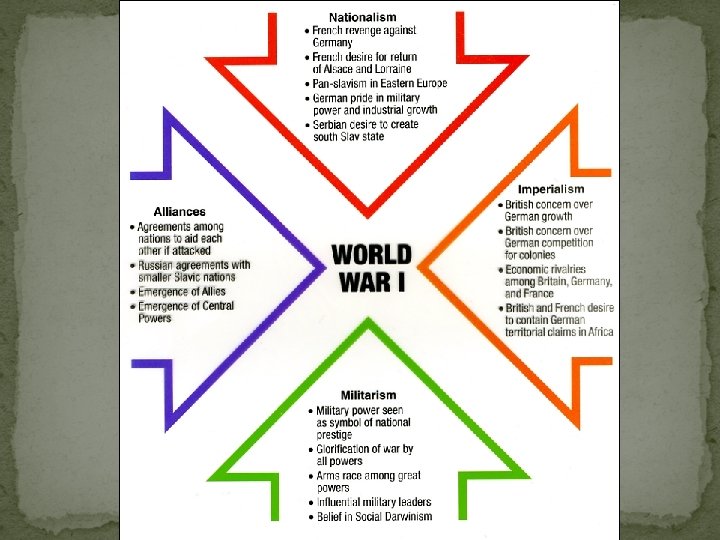
World War I: Causes Imperialism Militarism– “Arms race” Entangling Alliances � Triple Alliance � Bismarck vs. Wilhelm II “satisfied empire” vs. “place in the sun” � Triple Entente Nationalism � Franc 0 -Prussian War (1871) Alsace & Lorraine � Balkans � Ottoman Decline “Powder keg of Europe”
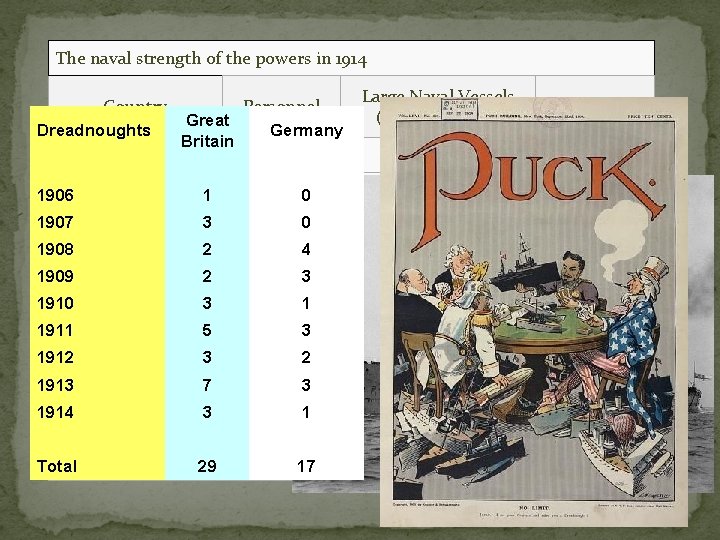
The naval strength of the powers in 1914 Country Great Britain Dreadnoughts Russia Personnel Germany Large Naval Vessels (Dreadnoughts) Tonnage 54, 000 4 328, 000 France 1906 1 68, 000 0 10 731, 000 1907 Britain 3 0 209, 000 29 2, 205, 000 1908 2 4 TOTAL 331, 000 43 3, 264, 000 3 79, 000 1 17 1, 019, 000 1911 Austria-Hungary 5 3 16, 000 3* 249, 000 1912 3 TOTAL 2 95, 000 20 1, 268, 000 GRAND TOTAL 426, 000 63 4, 532, 000 1909 Germany 1910 1913 1914 2 7 3 3 3 1 *4 th not commissioned yet. (Source: Ferguson, Niall. The pity of war (1999) p. 85. ) Total 29 17 HMS Dreadnought
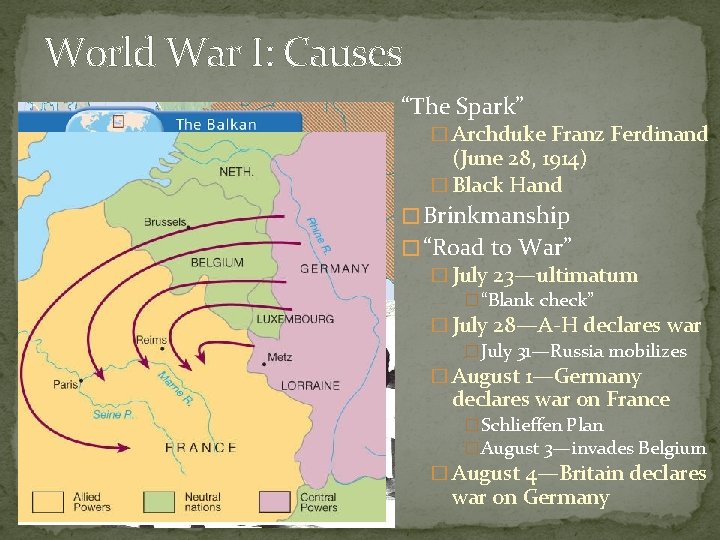
World War I: Causes “The Spark” � Archduke Franz Ferdinand (June 28, 1914) � Black Hand � Brinkmanship � “Road to War” � July 23—ultimatum � “Blank check” � July 28—A-H declares war � July 31—Russia mobilizes � August 1—Germany declares war on France � Schlieffen Plan � August 3—invades Belgium � August 4—Britain declares war on Germany
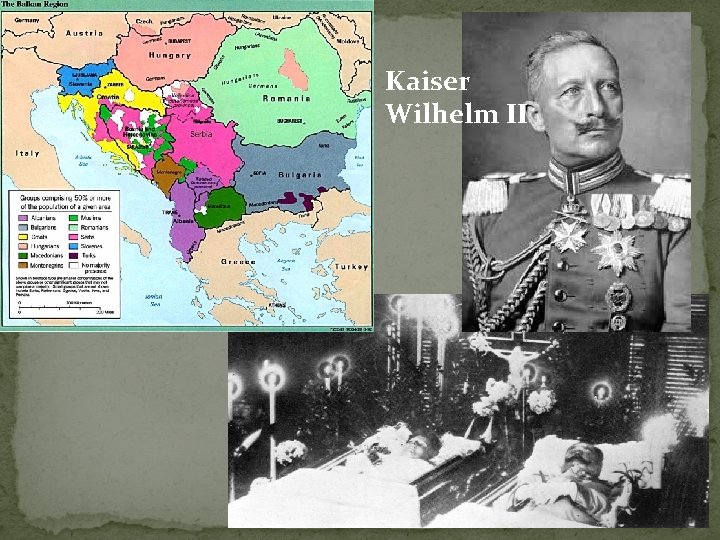
Kaiser Wilhelm II
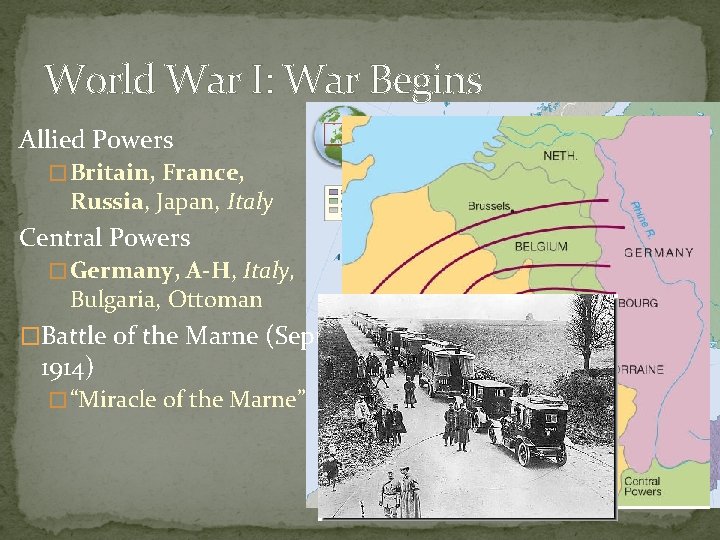
World War I: War Begins Allied Powers � Britain, France, Russia, Japan, Italy Central Powers � Germany, A-H, Italy, Bulgaria, Ottoman �Battle of the Marne (Sept. 1914) � “Miracle of the Marne”
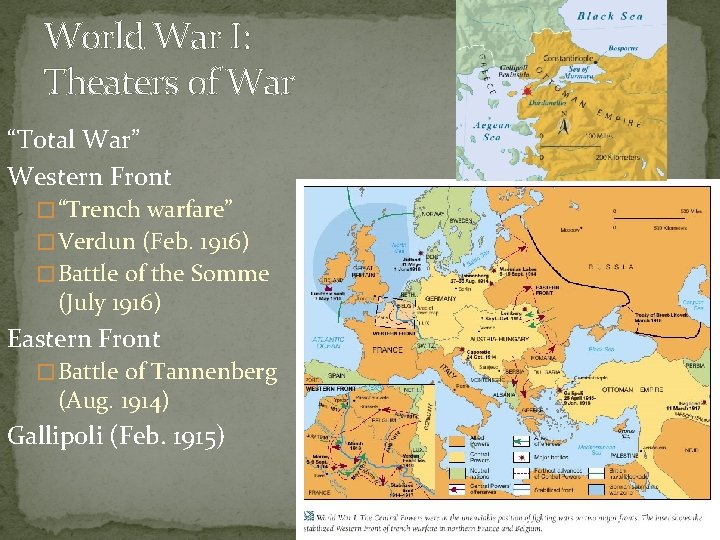
World War I: Theaters of War “Total War” Western Front � “Trench warfare” � Verdun (Feb. 1916) � Battle of the Somme (July 1916) Eastern Front � Battle of Tannenberg (Aug. 1914) Gallipoli (Feb. 1915)
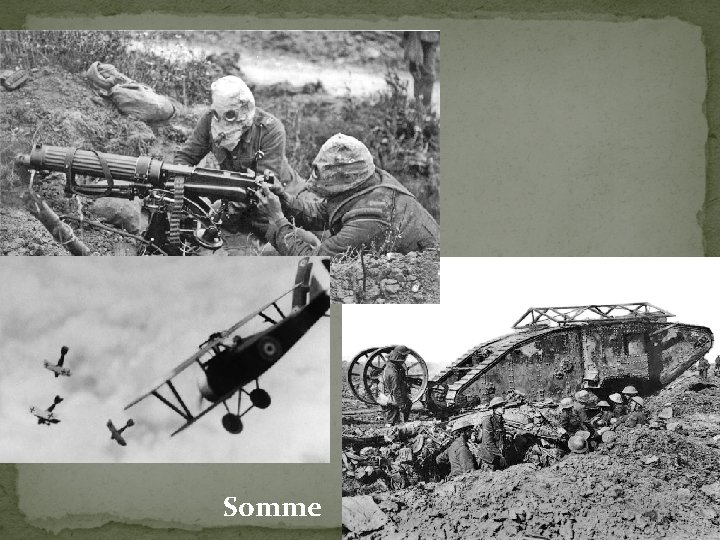
Somme
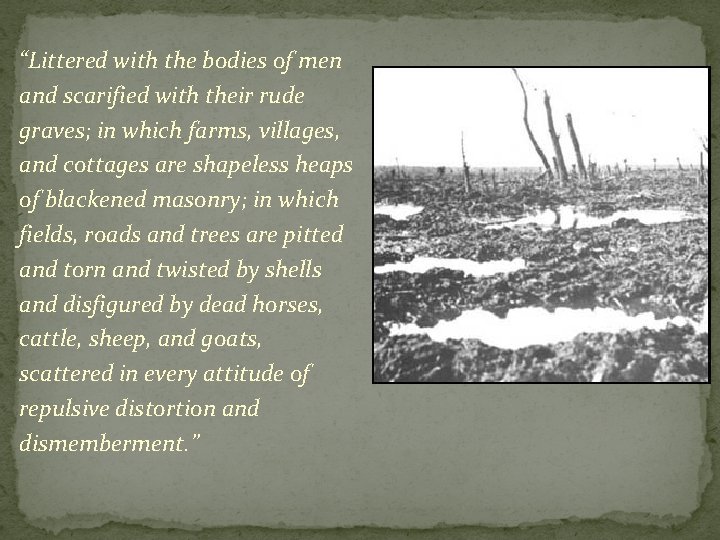
“Littered with the bodies of men and scarified with their rude graves; in which farms, villages, and cottages are shapeless heaps of blackened masonry; in which fields, roads and trees are pitted and torn and twisted by shells and disfigured by dead horses, cattle, sheep, and goats, scattered in every attitude of repulsive distortion and dismemberment. ”
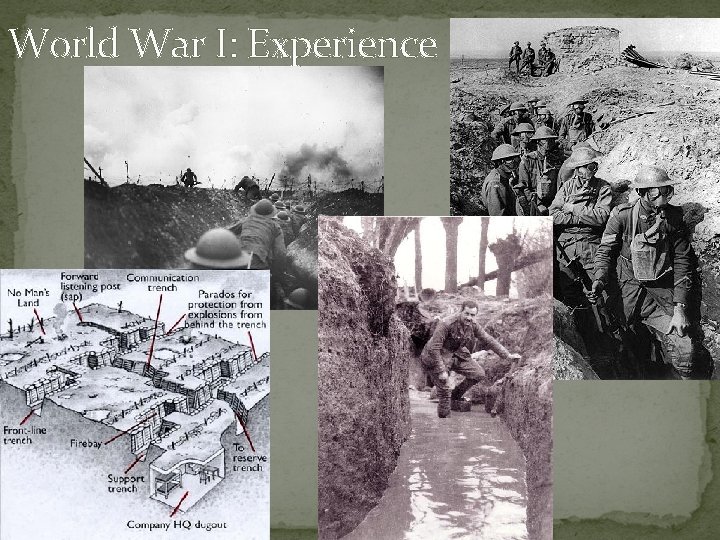
World War I: Experience
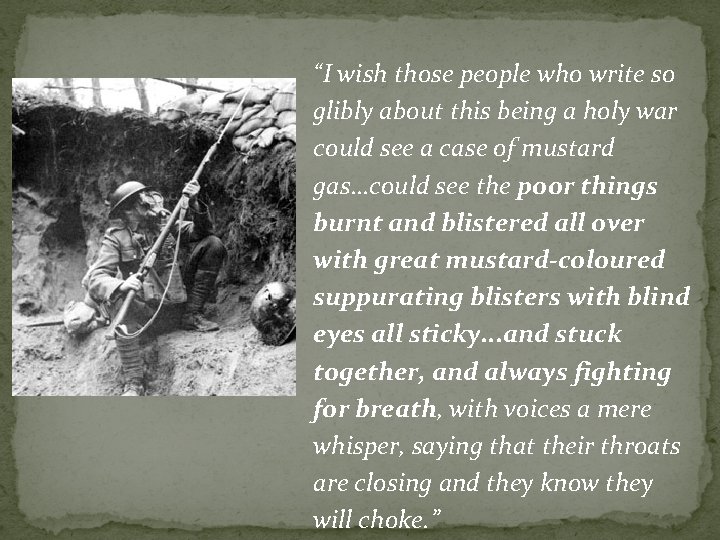
“I wish those people who write so glibly about this being a holy war could see a case of mustard gas…could see the poor things burnt and blistered all over with great mustard-coloured suppurating blisters with blind eyes all sticky. . . and stuck together, and always fighting for breath, with voices a mere whisper, saying that their throats are closing and they know they will choke. ”
John Mc. Crae, (1872 -1918) In Flanders Fields In Flanders fields the poppies blow Between the crosses, row on row, That mark our place; and in the sky The larks, still bravely singing, fly Scarce heard amid the guns below. We are the Dead. Short days ago We lived, felt dawn, saw sunset glow, Loved and were loved, and now we lie In Flanders fields. Take up our quarrel with the foe: To you from failing hands we throw The torch; be yours to hold it high. If ye break faith with us who die We shall not sleep, though poppies grow In Flanders fields. Trench Poets 1. 2. 3. 4. Why did the author choose this particular title? What is the author’s message? What does the author want you to take from the poem? Which poem do you think is the most powerful? Why do you think so many poems were created in the midst of World War I?
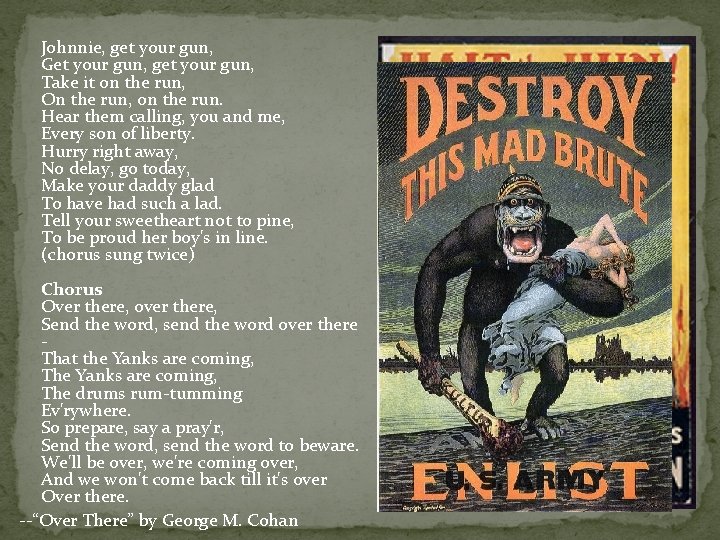
Johnnie, get your gun, Get your gun, get your gun, Take it on the run, On the run, on the run. Hear them calling, you and me, Every son of liberty. Hurry right away, No delay, go today, Make your daddy glad To have had such a lad. Tell your sweetheart not to pine, To be proud her boy's in line. (chorus sung twice) Chorus Over there, over there, Send the word, send the word over there That the Yanks are coming, The drums rum-tumming Ev'rywhere. So prepare, say a pray'r, Send the word, send the word to beware. We'll be over, we're coming over, And we won't come back till it's over Over there. --“Over There” by George M. Cohan
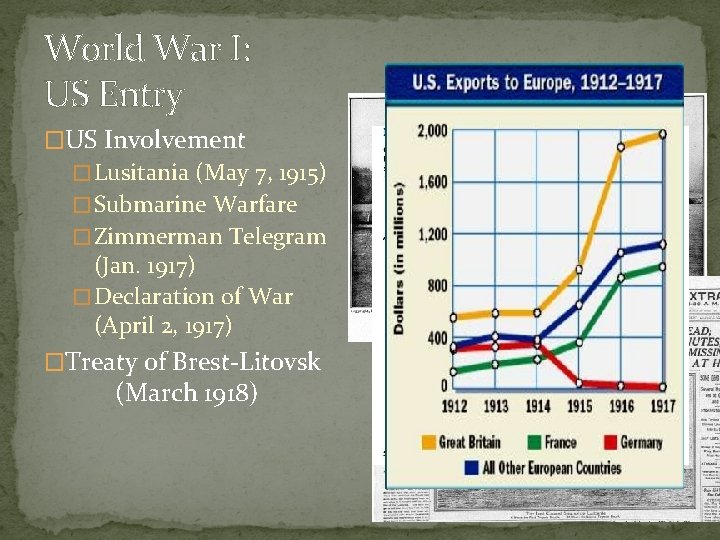
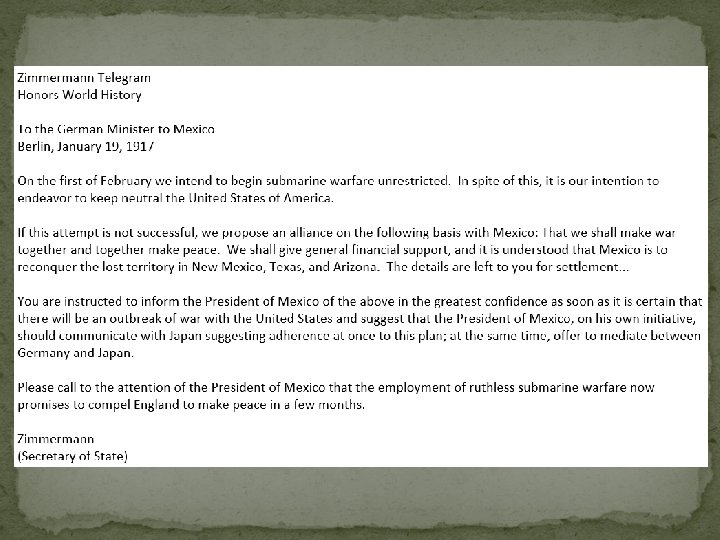
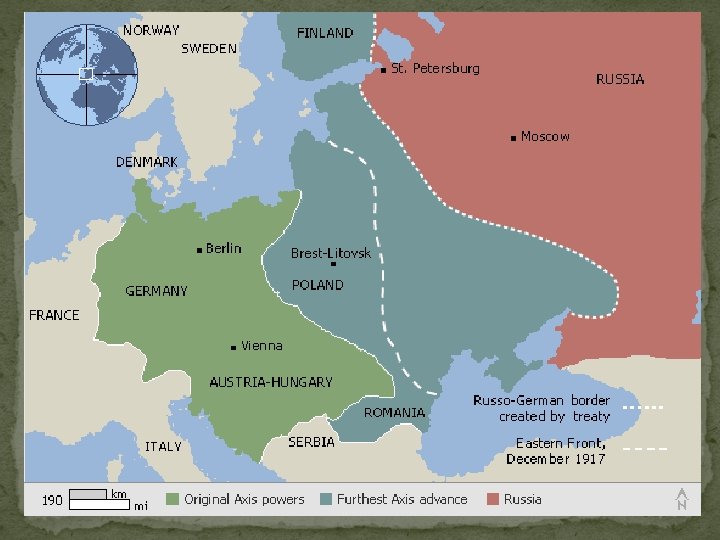
World War I: US Entry �US Involvement � Lusitania (May 7, 1915) � Submarine Warfare � Zimmerman Telegram (Jan. 1917) � Declaration of War (April 2, 1917) �Treaty of Brest-Litovsk (March 1918)
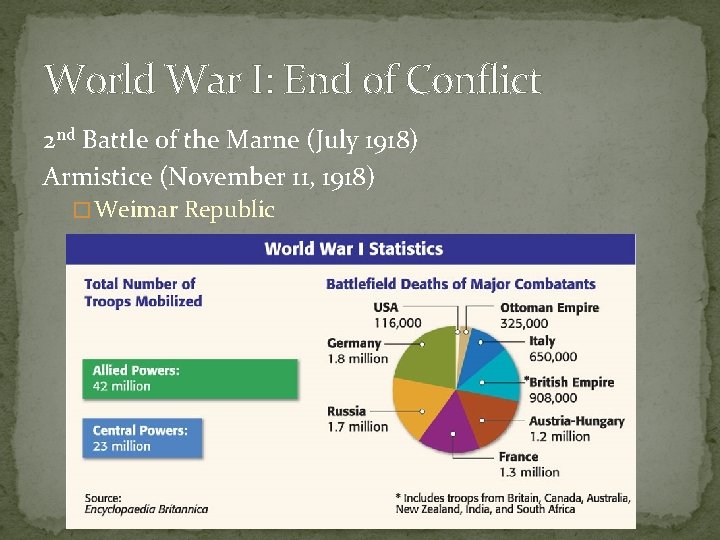
World War I: End of Conflict 2 nd Battle of the Marne (July 1918) Armistice (November 11, 1918) � Weimar Republic
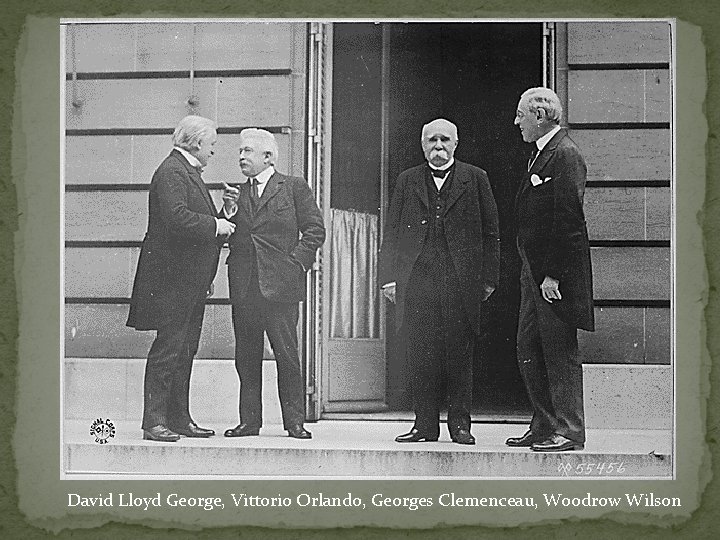
David Lloyd George, Vittorio Orlando, Georges Clemenceau, Woodrow Wilson
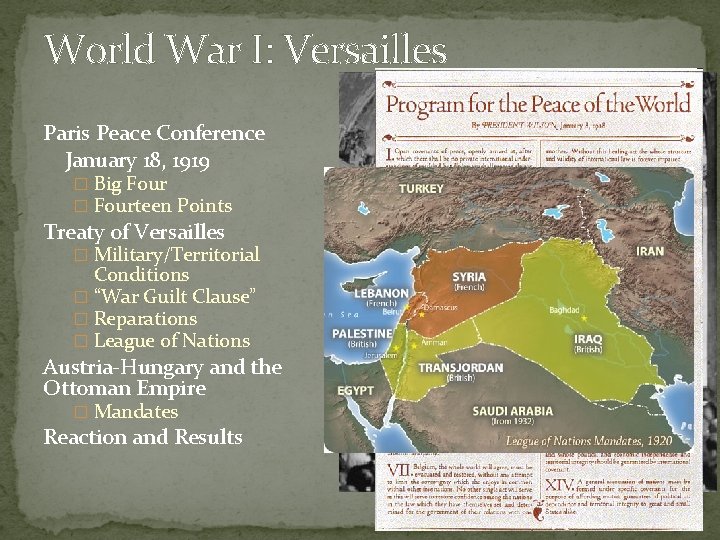
World War I: Versailles Paris Peace Conference January 18, 1919 � Big Four � Fourteen Points Treaty of Versailles � Military/Territorial Conditions � “War Guilt Clause” � Reparations � League of Nations Austria-Hungary and the Ottoman Empire � Mandates Reaction and Results
- Slides: 23