
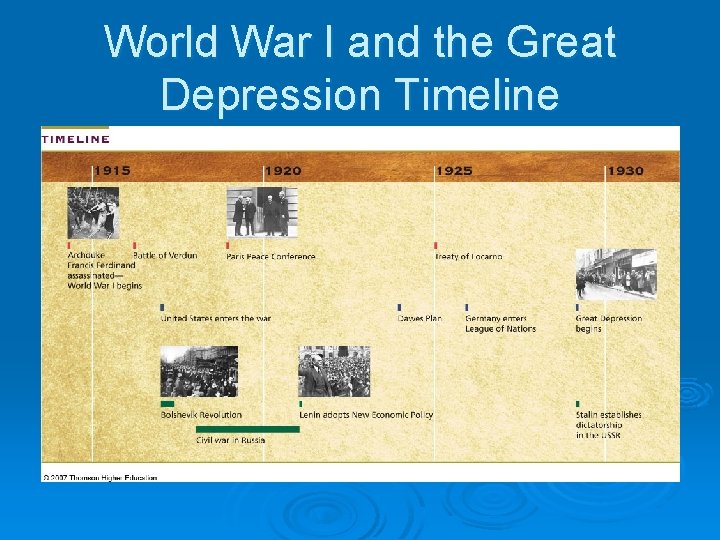
World War I and the Great Depression Timeline

- Slides: 33
World War I and the Great Depression Timeline
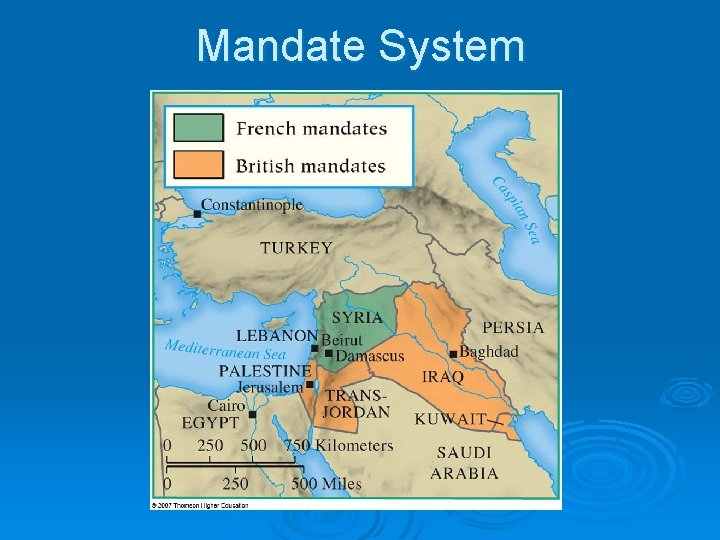
League of Nations ØWhat did it do? l Established the mandate system l Mandates – former colonies/territories of defeated Central Powers administered by mainly France and Great Britain. l Iraq, Palestine, Lebanon, and Syria are examples of mandate territories
Mandate System
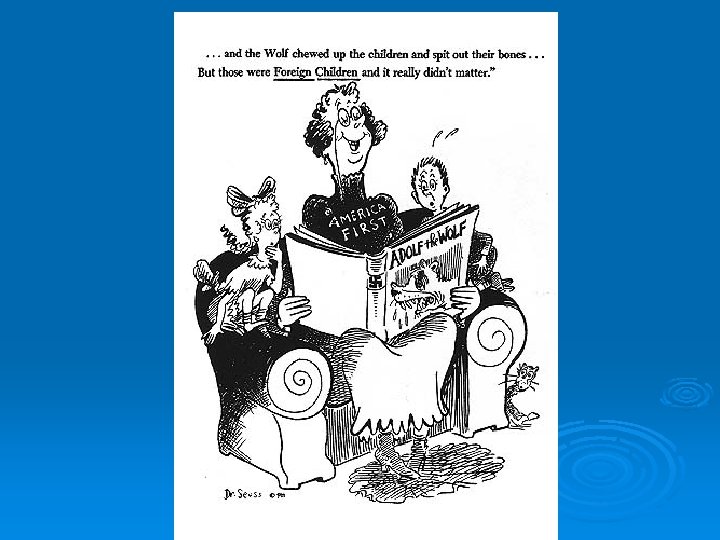
League of Nations ØWhy did it fail? United States did not become a member – US wants to “isolate” itself from Europe (isolationism) l L of N did not have the power to enforce its decisions l
United States ØWanted isolation from the rest of the world. ØDominant world economy after WWI ØLed to economic “boom” = immense prosperity. ØPeople borrowed money on credit for goods and stocks.
Great Britain ØHorrors of war deeply impacted British society and economy. ØLost factory jobs to USA and Japan ØLabour Party (worker’s party) won general elections in the 1920’s.
France Ø Devastated by WWI Ø Economic hardship l High unemployment, gov’t nearly bankrupt Ø Political chaos l No party could get a majority Ø Horrors of War l 50% of men ages 18 -32 killed in war
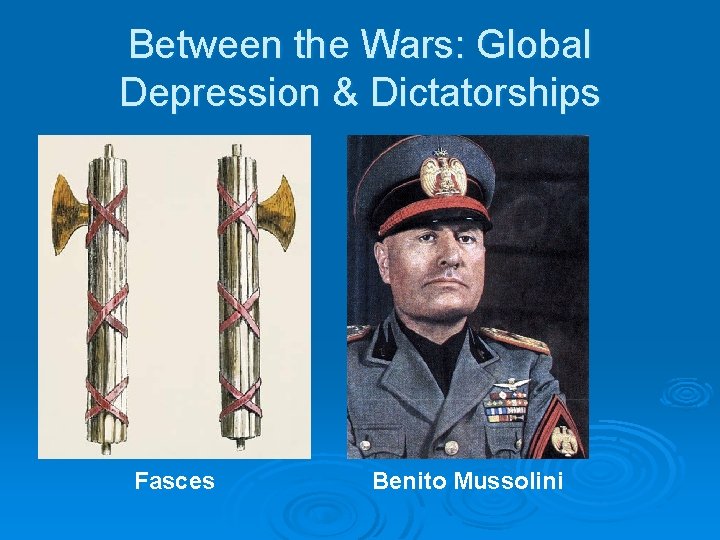
Italy ØResented Treaty of Versailles Did not give enough rewards to Italy ØHigh unemployment and inflation ØPolitical and economic chaos led to the election of Mussolini and his Fascist government in 1924. l
Between the Wars: Global Depression & Dictatorships Fasces Benito Mussolini
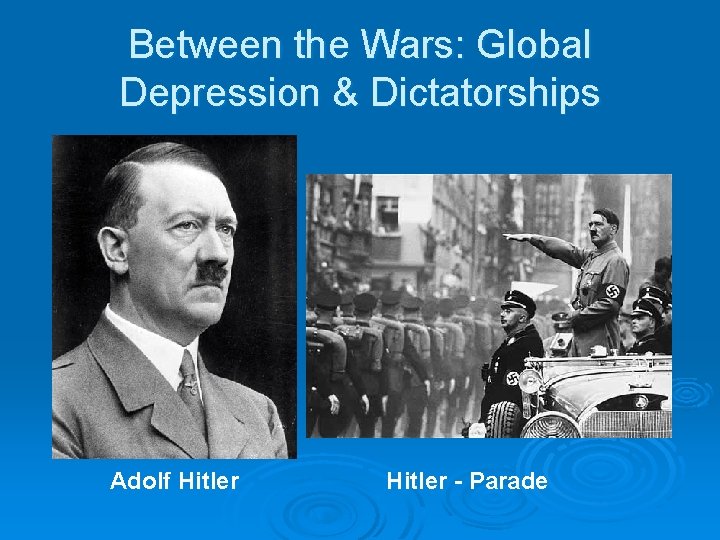
Germany Ø Anger and Resentment over the Treaty of Versailles. Ø Weimar Republic - democratic gov’t elected in 1919. Ø Reparations caused economic hardships in Germany Ø Loans from the US led to a period of relative prosperity in the 1920’s. Ø But…Political unrest still occurs… l Rise of Adolf Hitler
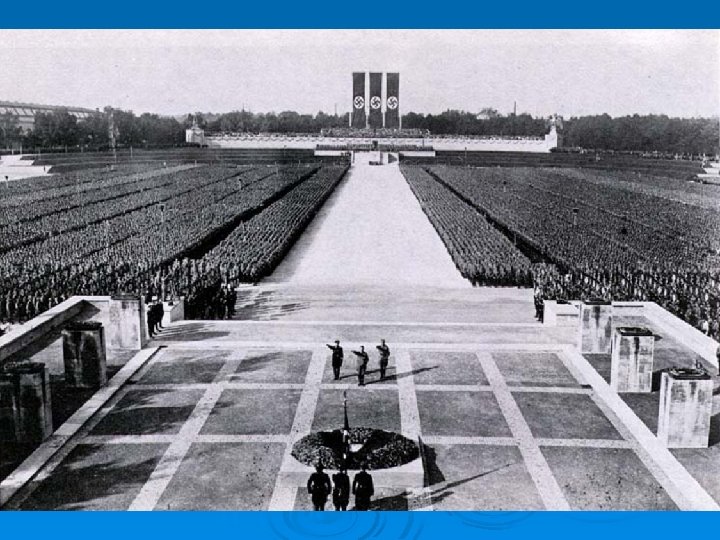
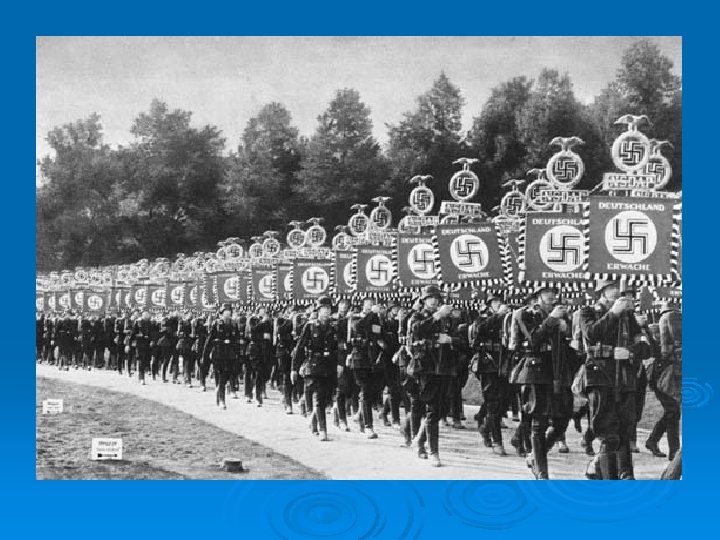
Between the Wars: Global Depression & Dictatorships Adolf Hitler - Parade
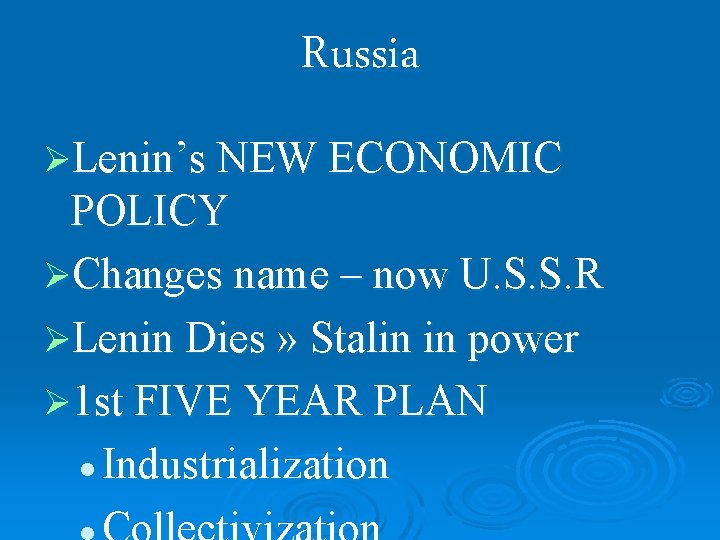
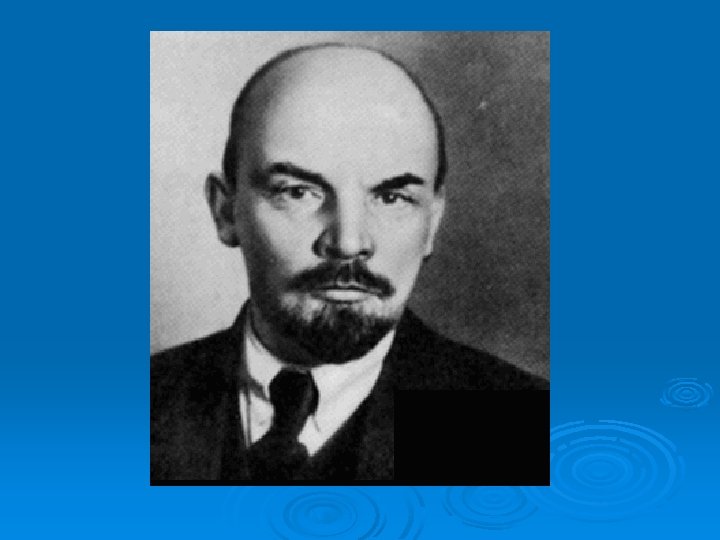
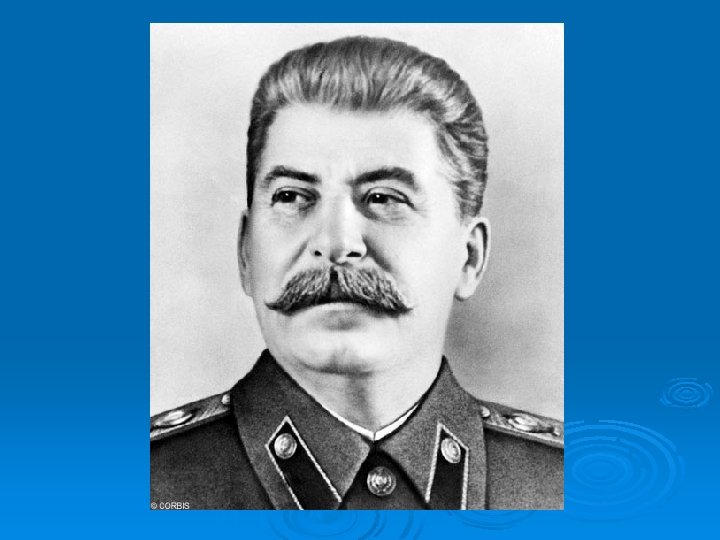
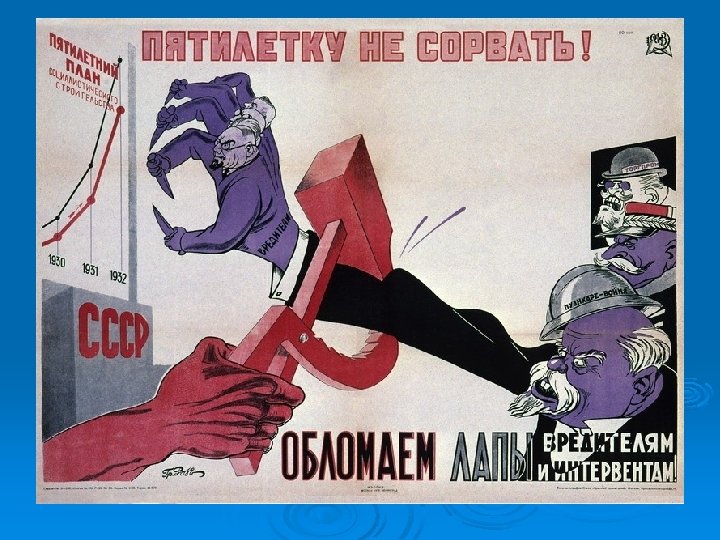
Russia ØLenin’s NEW ECONOMIC POLICY ØChanges name – now U. S. S. R ØLenin Dies » Stalin in power Ø 1 st FIVE YEAR PLAN l Industrialization
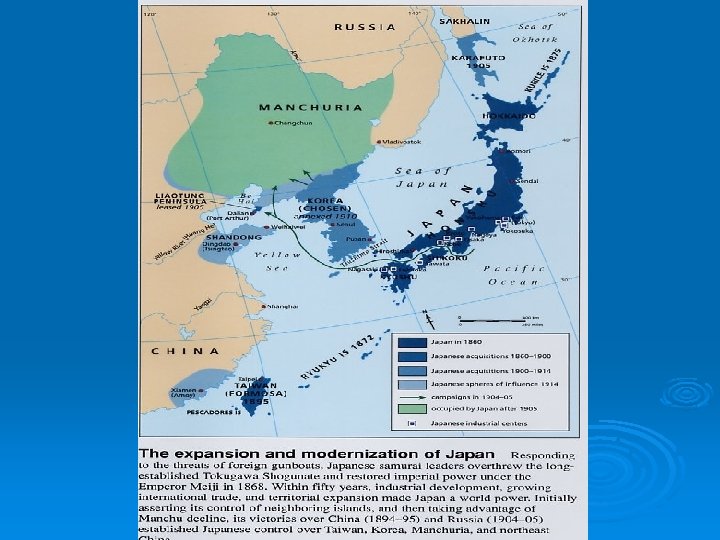
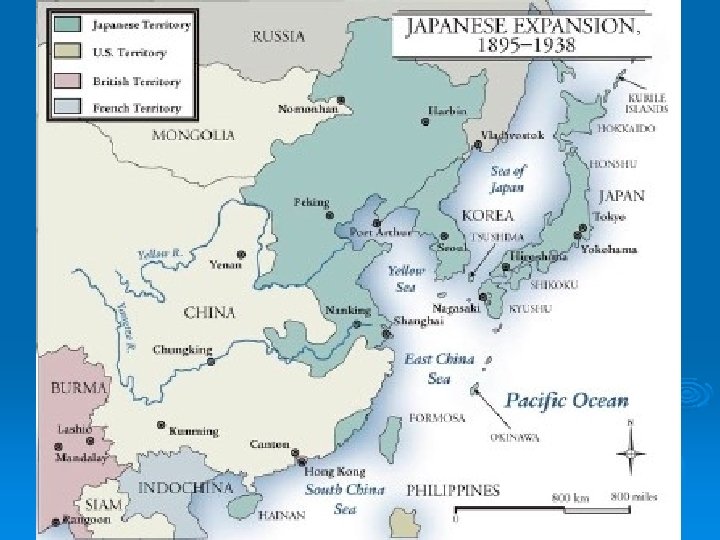
Japan Ø After WWI – felt West did not treat it as an equal. Ø Industrialization – need for raw materials Ø Wanted more control in China Ø Increasingly nationalistic and militaristic
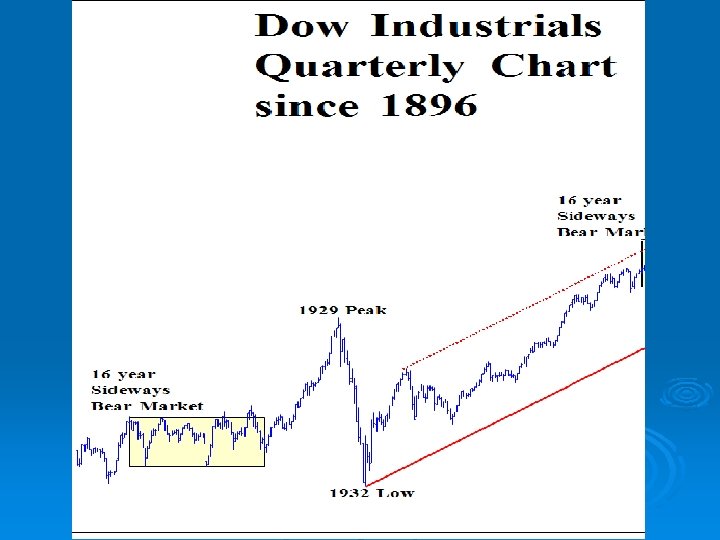
The Stock Market Crash Ø Causes Overproduction in USA – prices go down sharply l Excessive dependence on credit to buy goods and stocks – people cannot pay debts l High protective tariffs stifle world trade l
The Stock Market Crash Ø OCTOBER 1929 Banks call in loans l People unable to pay off their credit bills l Stock prices tumble l Businesses start to fail, laying off workers Ø RESULTS IN… l
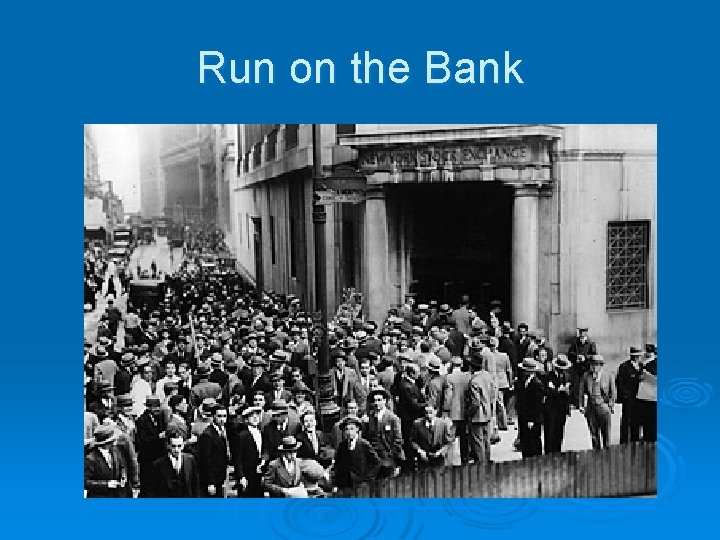
Run on the Bank
The GREAT DEPRESSION Ø WORLDWIDE effects Ø Production of goods cut around the world Ø Prices, Salaries, and Wages fell (Deflation) Ø Many workers lost their jobs l 13 million in the USA alone
United States ØFranklin D. Roosevelt elected Pres. in 1932 ØNEW DEAL –Fed gov’t would spend money, put workers back to work. ØRegulated banks, stock market ØSocial security and unemployment insurance
France Ø Fascists and Communists constantly battled for influence among workers Ø 1934 – Socialist-led gov’t comes to power Ø Passed many laws that benefited workers and farmers
Germany Ø 1929 – Hitler appeals to German workers - He can bring back economic prosperity/German national pride (nationalism). Ø 1930’s – NAZI’s win big in elections Ø 1933 – Hitler is appointed “Chancellor” or leader of the German gov’t
Russia Ø Results of the FIVE YEAR PLAN Rapid Industrialization l Workers work for little, no pay l Food is scarce l Famine l Ø 1930’s - Great Purge – Stalin tries to “eliminate” his “enemies”
Japan Ø Japan dependent on US market – Great Depression in USA carried to Japan Ø Millions unemployed, starving Ø Military leaders promised stable leadership and national pride (nationalism) Ø Eyed imperial expansion in Asia