
WORLD WAR I 1914 1918 The Great War
- Slides: 43
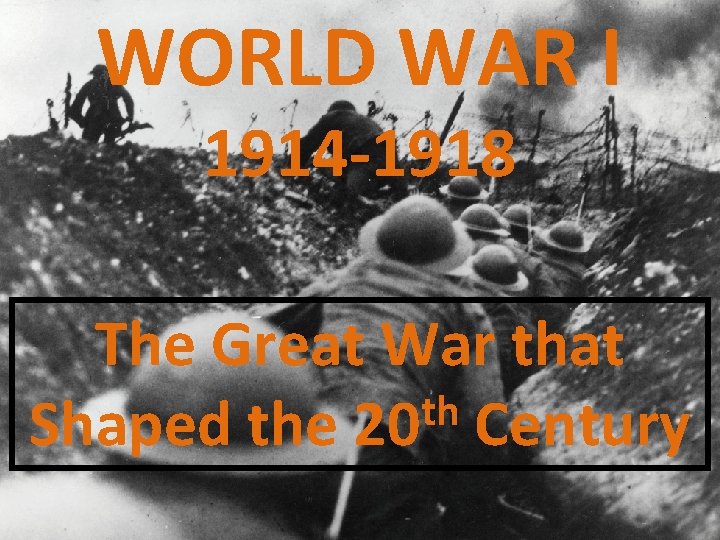
WORLD WAR I 1914 -1918 The Great War that th Shaped the 20 Century
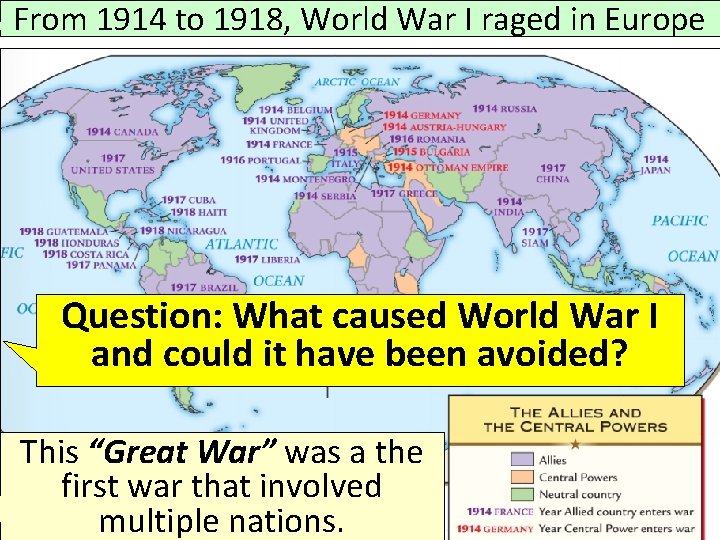
From 1914 to 1918, World War I raged in Europe • Text Question: What caused World War I and could it have been avoided? This “Great War” was a the first war that involved multiple nations.
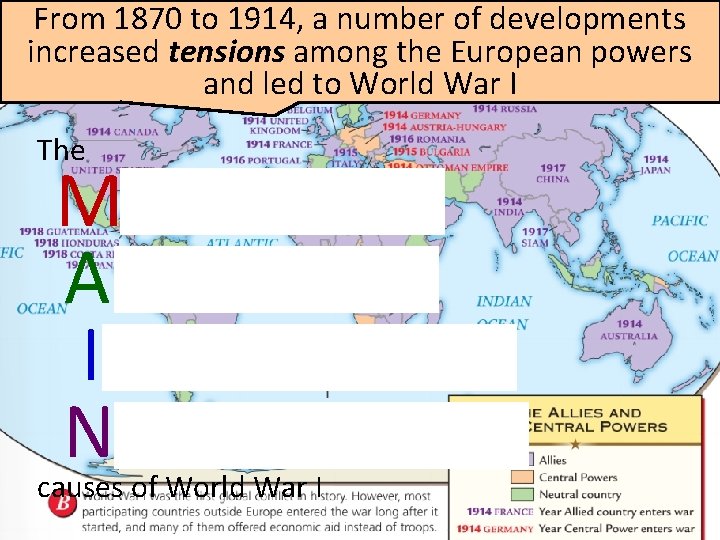
From 1870 to 1914, a number of developments increased tensions among the European powers and led to World War I The MILITARISM ALLIANCES IMPERIALISM NATIONALISM causes of World War I
What does this word mean to you? “MILITARISM”
MILITARISM defined Militarism is having a policy of aggressive military preparedness (being always ready to fight)
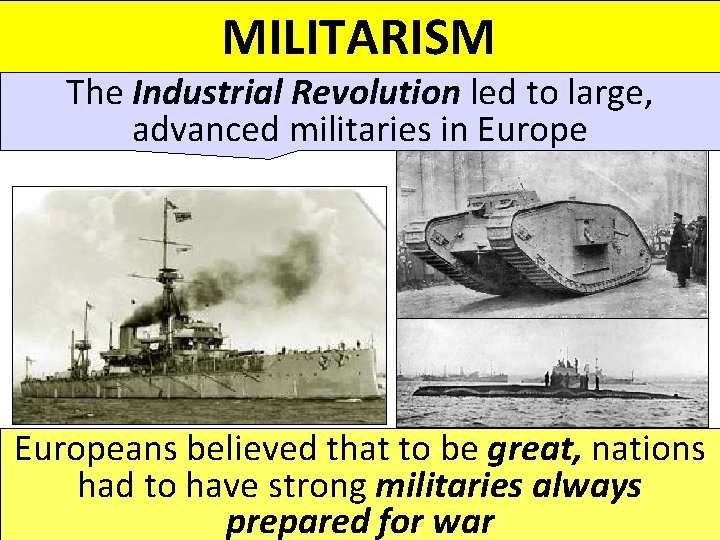
MILITARISM The Industrial Revolution led to large, advanced militaries in Europeans believed that to be great, nations had to have strong militaries always prepared for war
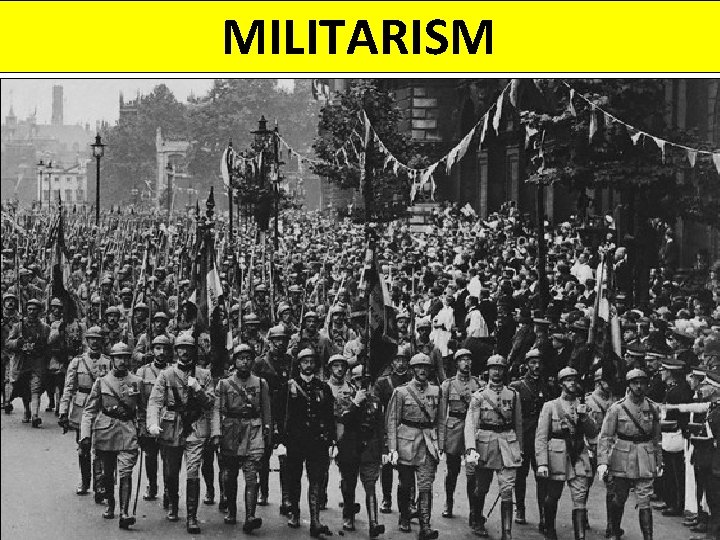
MILITARISM
HOW DID MILITARISM HELP START THE WAR? ØEvery nation was paranoid over the intentions of other nations ØBecause of this paranoia, nations engaged in an arms race. ØThey built up their armies, navies, and weaponry, wanting to be ready for war ØThe two main competitors in the arms race were Germany and Britain
What does this word mean to you? “ALLIANCE”
ALLIANCE defined An alliance is a bond or connection between nations, groups, or individuals
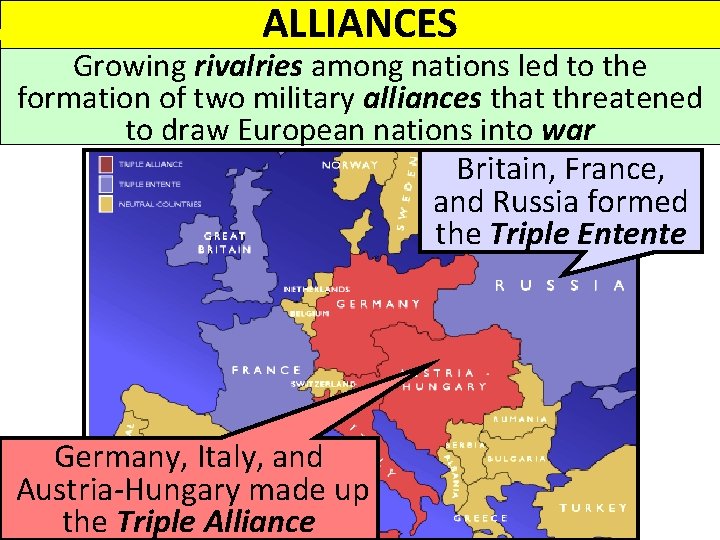
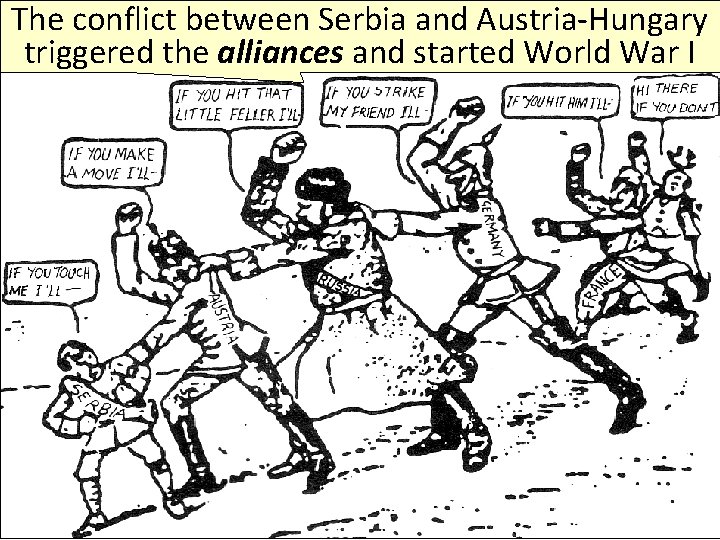
ALLIANCES Growing rivalries among nations led to the formation of two military alliances that threatened to draw European nations into war Britain, France, and Russia formed the Triple Entente Germany, Italy, and Austria-Hungary made up the Triple Alliance
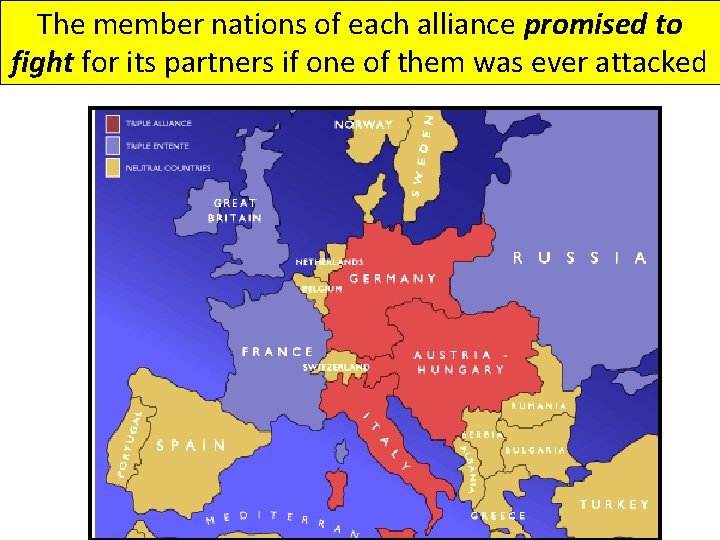
The member nations of each alliance promised to fight for its partners if one of them was ever attacked
What does this word mean to you? “IMPERIALISM”
IMPERIALISM defined Imperialism is the seizure of a country or territory by another country
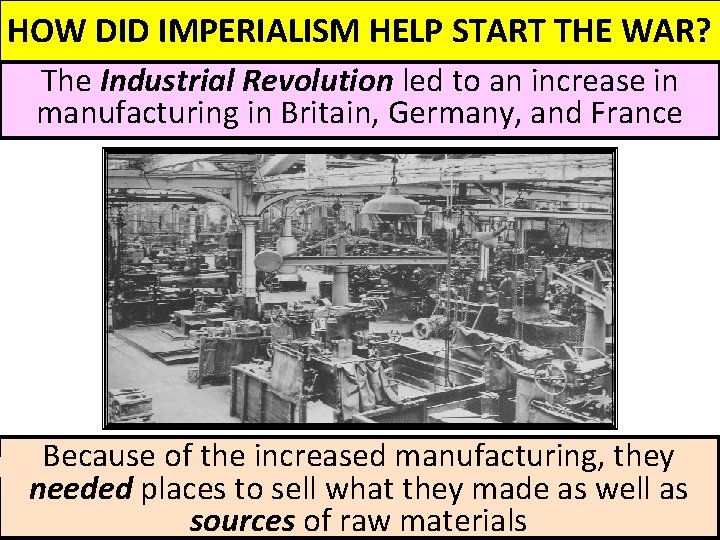
HOW DID IMPERIALISM HELP START THE WAR? The Industrial Revolution led to an increase in manufacturing in Britain, Germany, and France Because of the increased manufacturing, they needed places to sell what they made as well as sources of raw materials
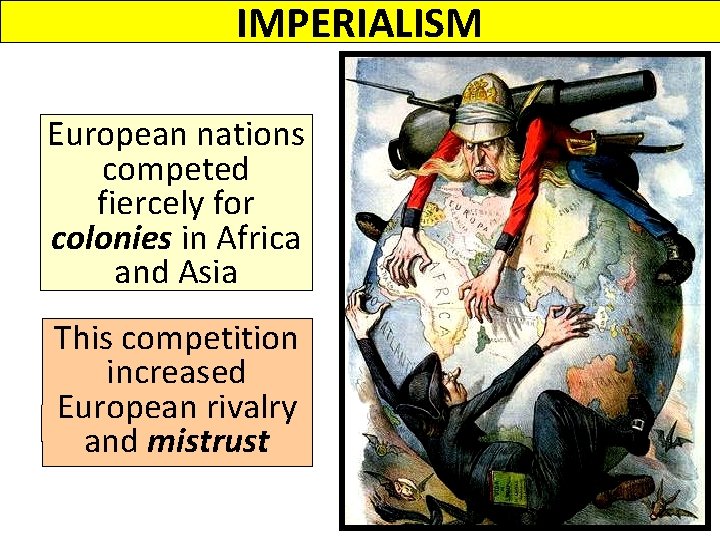
IMPERIALISM European nations competed fiercely for colonies in Africa and Asia This competition increased European rivalry and mistrust
What does this word mean to you? “NATIONALISM”
NATIONALISM defined Nationalism is a sense of national identity and pride in one’s nation It is also the seen as the desire of an ethnic group to have its own nation
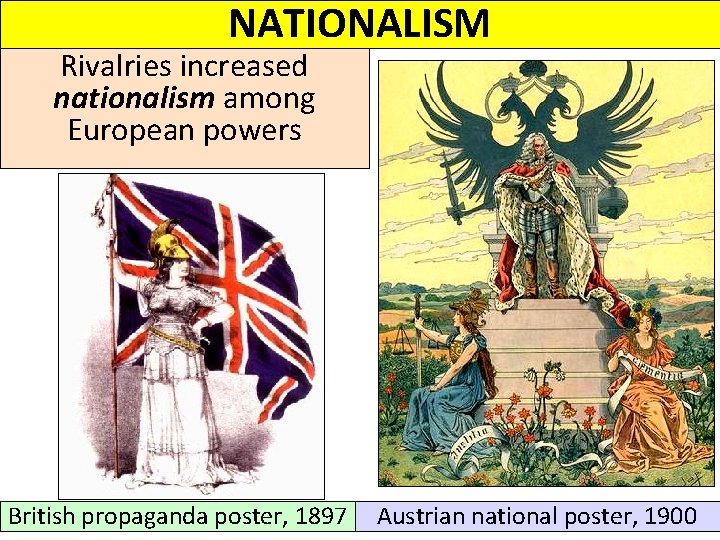
NATIONALISM Rivalries increased nationalism among European powers British propaganda poster, 1897 Austrian national poster, 1900
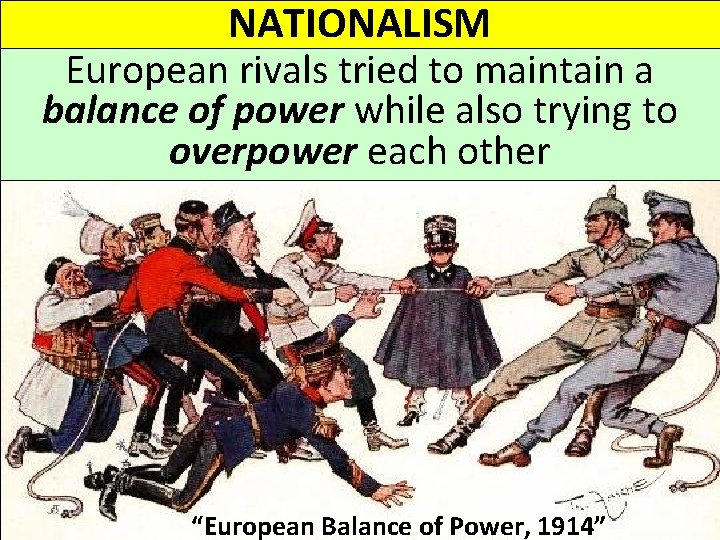
NATIONALISM European rivals tried to maintain a balance of power while also trying to overpower each other “European Balance of Power, 1914”
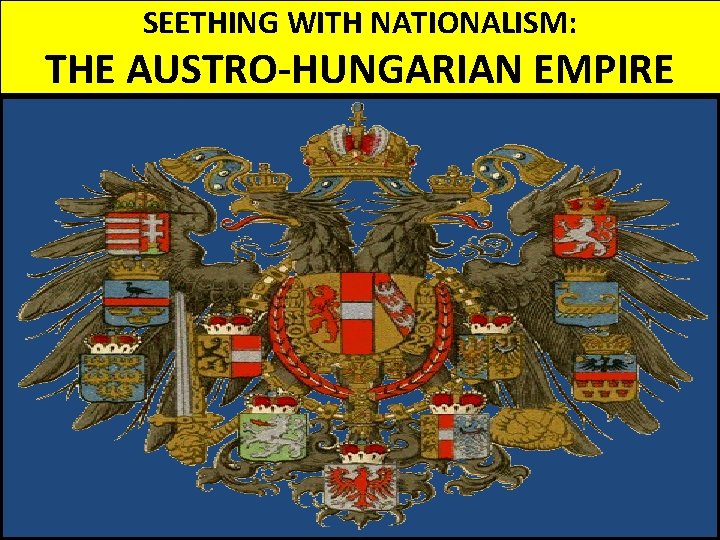
SEETHING WITH NATIONALISM: THE AUSTRO-HUNGARIAN EMPIRE
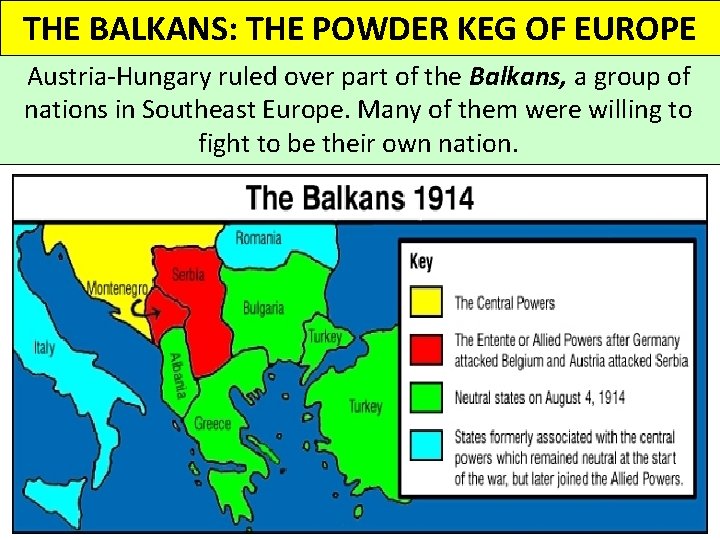
THE BALKANS: THE POWDER KEG OF EUROPE Austria-Hungary ruled over part of the Balkans, a group of nations in Southeast Europe. Many of them were willing to fight to be their own nation.
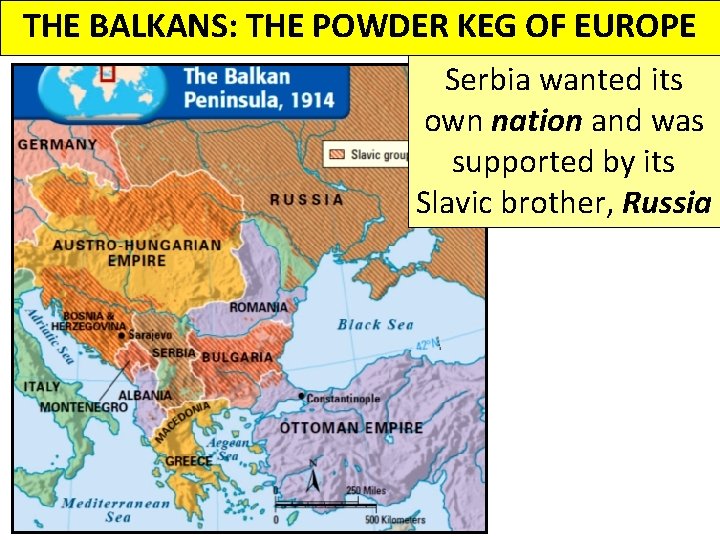
THE BALKANS: THE POWDER KEG OF EUROPE Serbia wanted its own nation and was supported by its Slavic brother, Russia
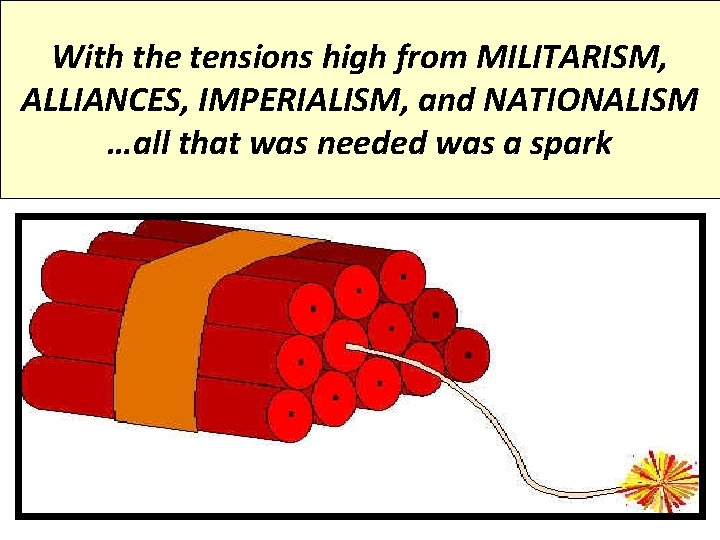
With the tensions high from MILITARISM, ALLIANCES, IMPERIALISM, and NATIONALISM …all that was needed was a spark
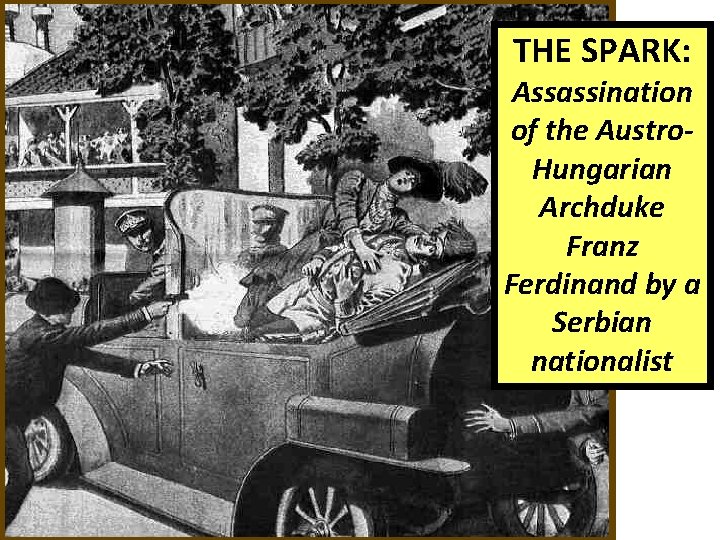
THE SPARK: Assassination of the Austro. Hungarian Archduke Franz Ferdinand by a Serbian nationalist
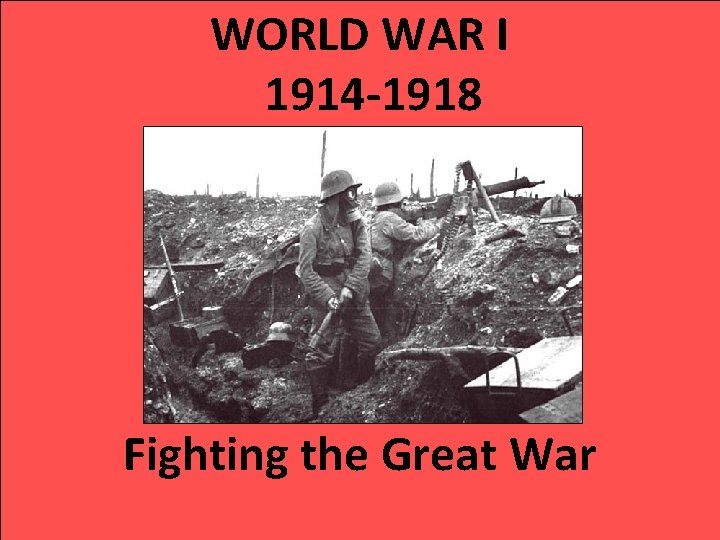
WORLD WAR I 1914 -1918 Fighting the Great War
The conflict between Serbia and Austria-Hungary triggered the alliances and started World War I
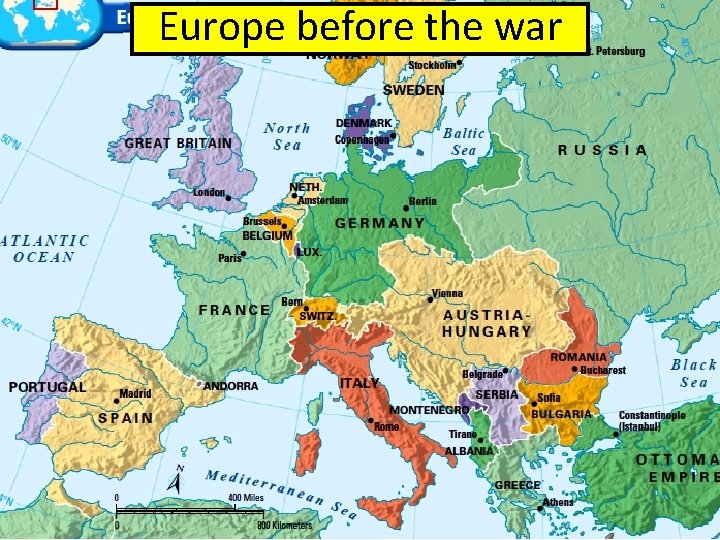
Europe before the war ■ Text
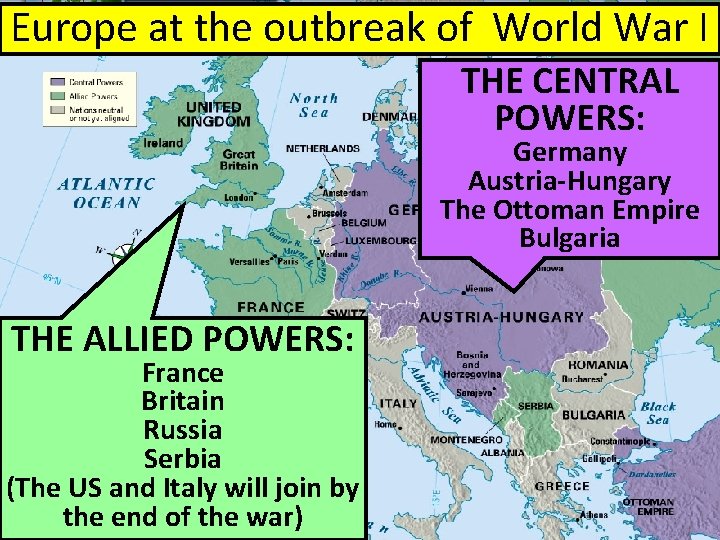
Europe at the outbreak of World War I THE CENTRAL POWERS: Germany Austria-Hungary The Ottoman Empire Bulgaria THE ALLIED POWERS: France Britain Russia Serbia (The US and Italy will join by the end of the war)
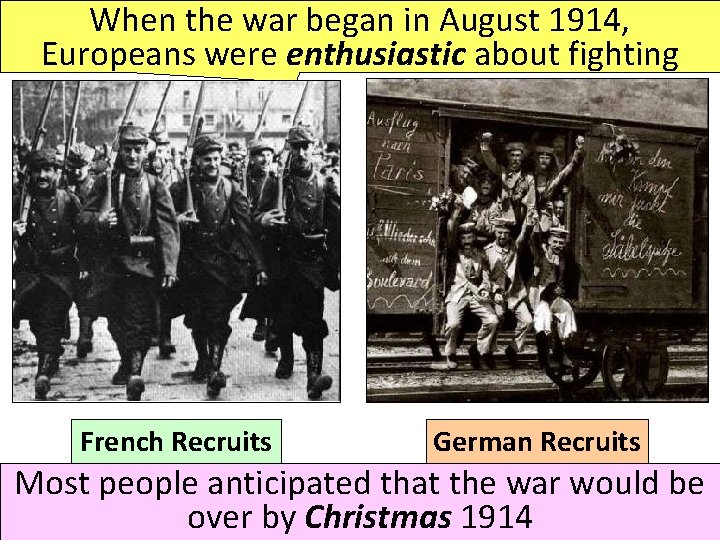
When the war began in August 1914, Europeans were enthusiastic about fighting French Recruits German Recruits Most people anticipated that the war would be over by Christmas 1914
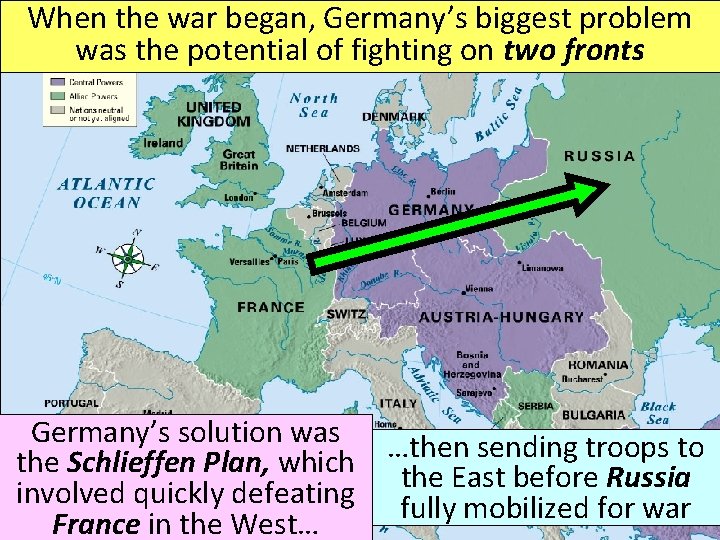
When the war began, Germany’s biggest problem was the potential of fighting on two fronts Germany’s solution was the Schlieffen Plan, which involved quickly defeating France in the West… …then sending troops to the East before Russia fully mobilized for war
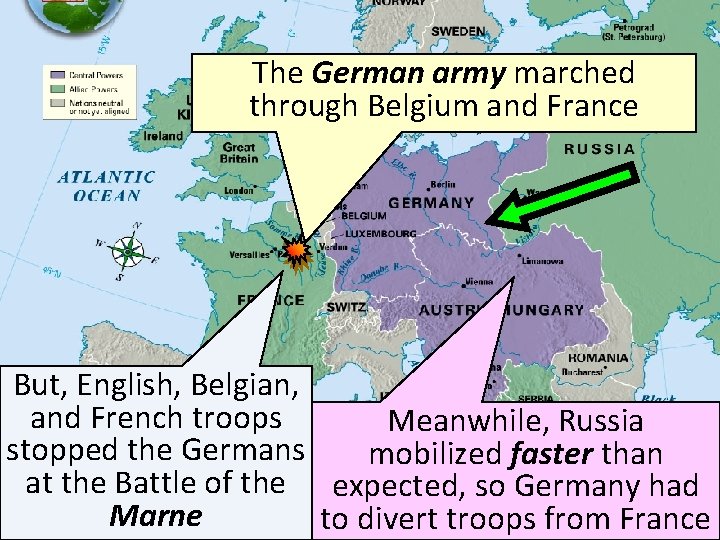
The German army marched through Belgium and France But, English, Belgian, and French troops Meanwhile, Russia stopped the Germans mobilized faster than at the Battle of the expected, so Germany had Marne to divert troops from France
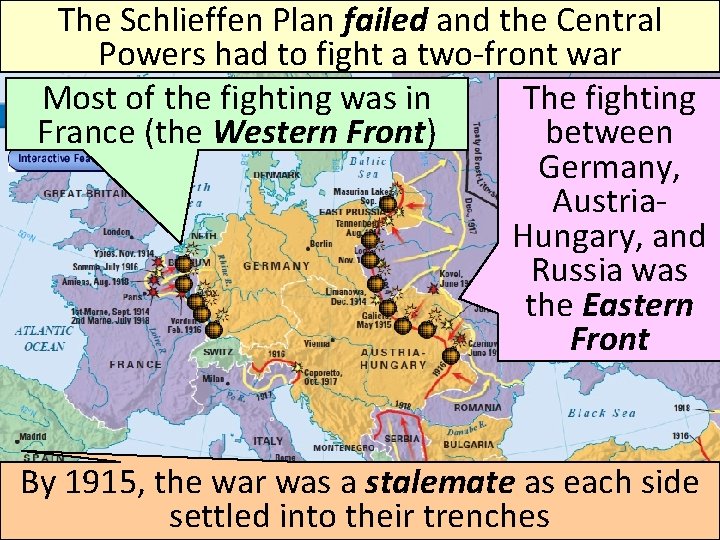
The Schlieffen Plan failed and the Central Powers had to fight a two-front war Most of the fighting was in The fighting France (the Western Front) between Germany, Austria. Hungary, and Russia was the Eastern Front By 1915, the war was a stalemate as each side settled into their trenches
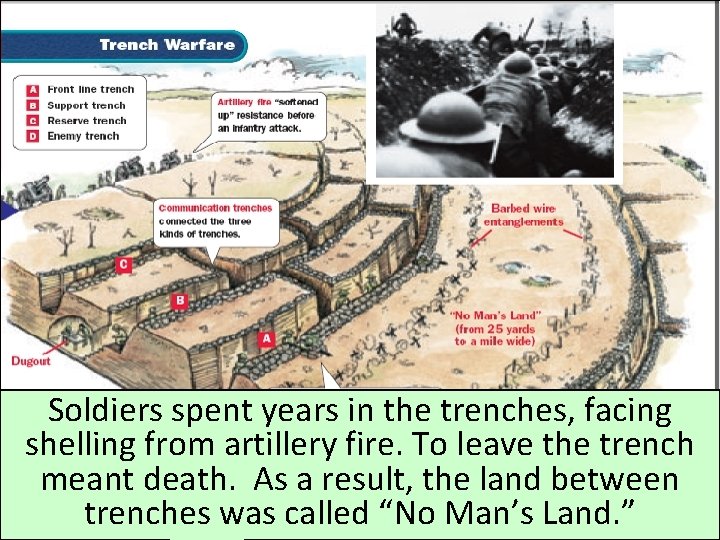
Soldiers spent years in the trenches, facing shelling from artillery fire. To leave the trench meant death. As a result, the land between trenches was called “No Man’s Land. ”
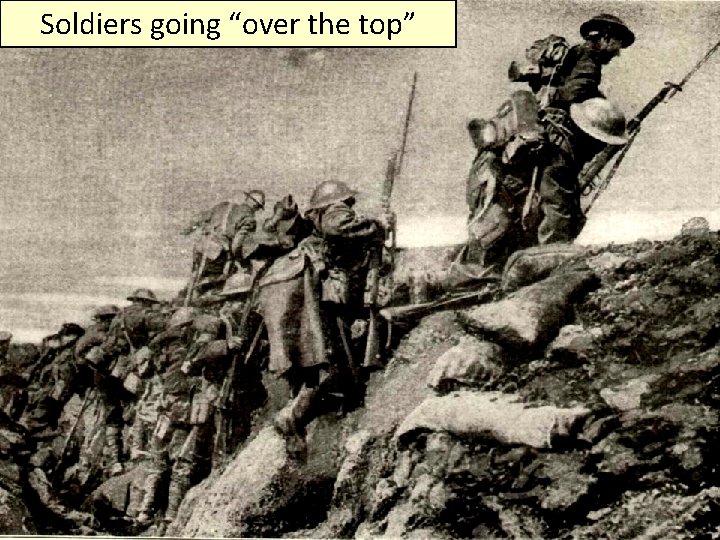
Soldiers going “over the top”
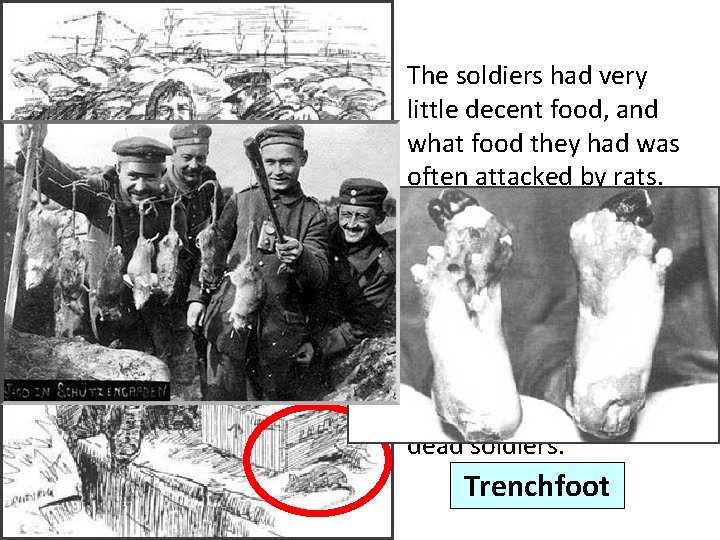
The soldiers had very little decent food, and what food they had was often attacked by rats. These rats were the size of small rabbits and badgers because they had fed on the decomposing bodies of dead soldiers. Trenchfoot
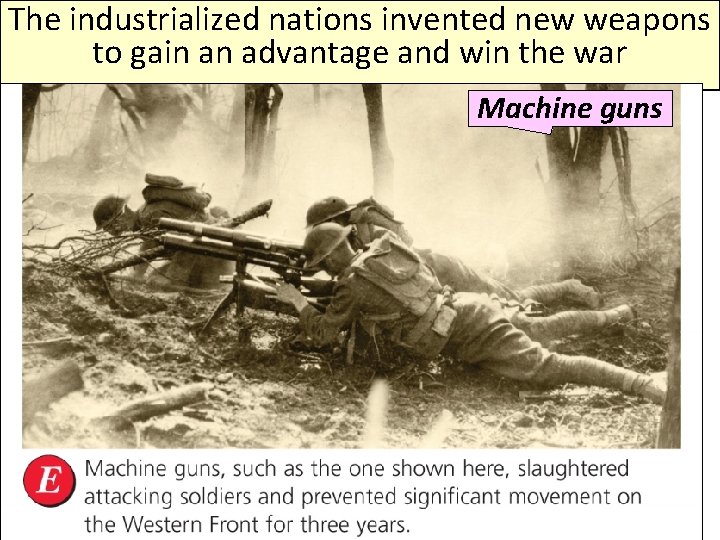
The industrialized nations invented new weapons to gain an advantage and win the war Machine guns
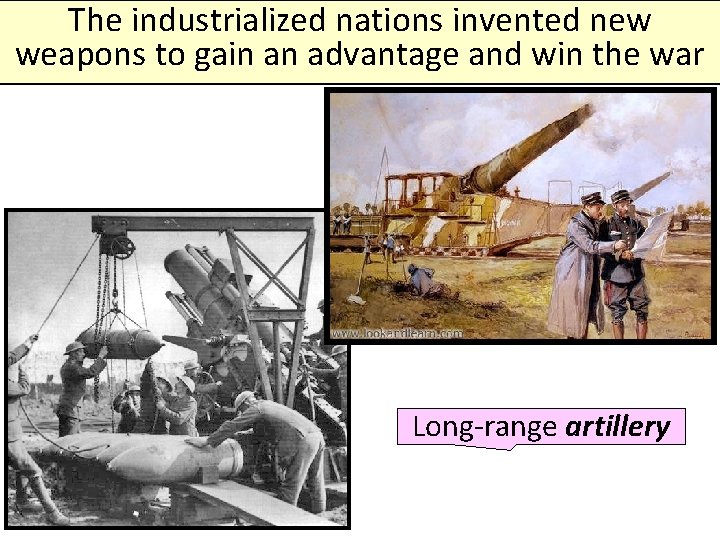
The industrialized nations invented new weapons to gain an advantage and win the war Long-range artillery
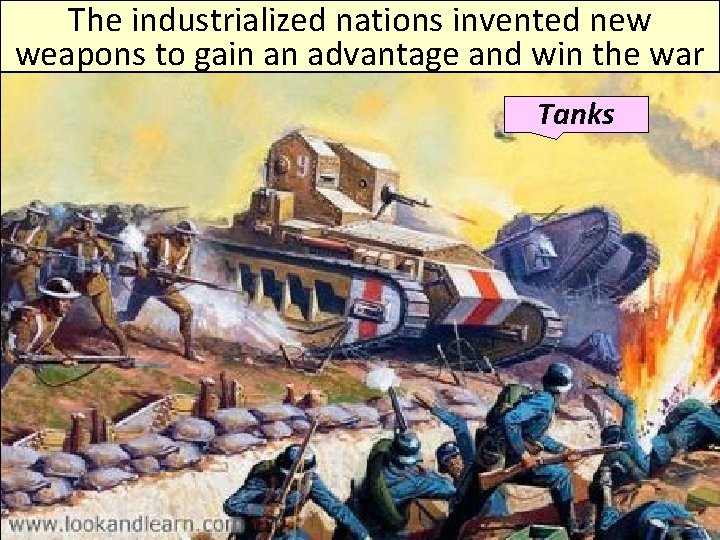
The industrialized nations invented new weapons to gain an advantage and win the war Tanks
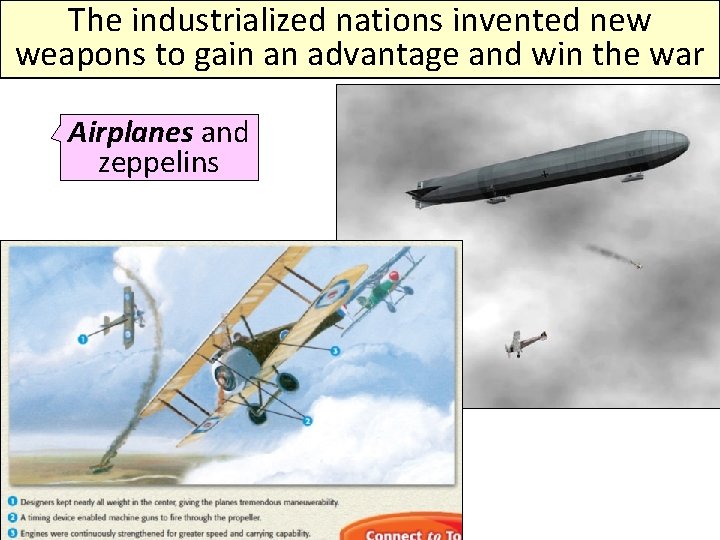
The industrialized nations invented new weapons to gain an advantage and win the war Airplanes and zeppelins
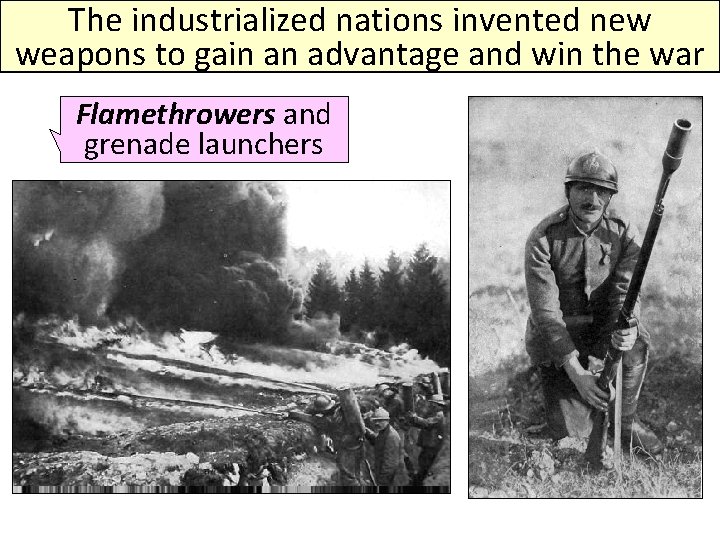
The industrialized nations invented new weapons to gain an advantage and win the war Flamethrowers and grenade launchers
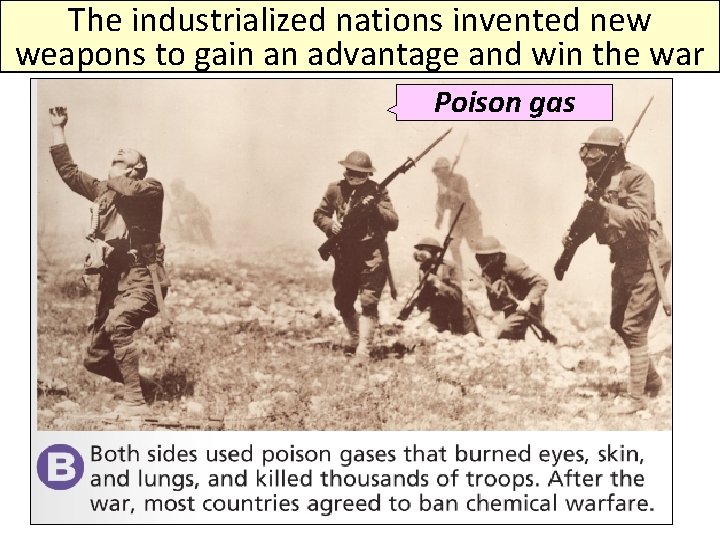
The industrialized nations invented new weapons to gain an advantage and win the war Poison gas
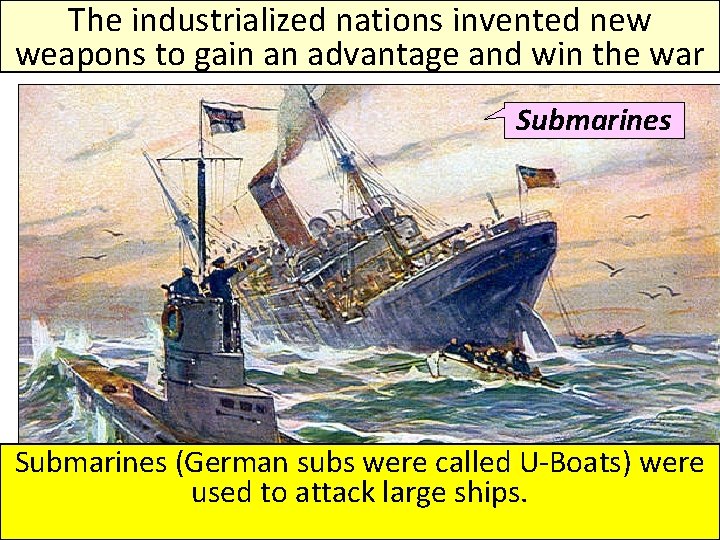
The industrialized nations invented new weapons to gain an advantage and win the war Submarines (German subs were called U-Boats) were used to attack large ships.