
World War I 1914 19 Entangling Alliance systems
- Slides: 8
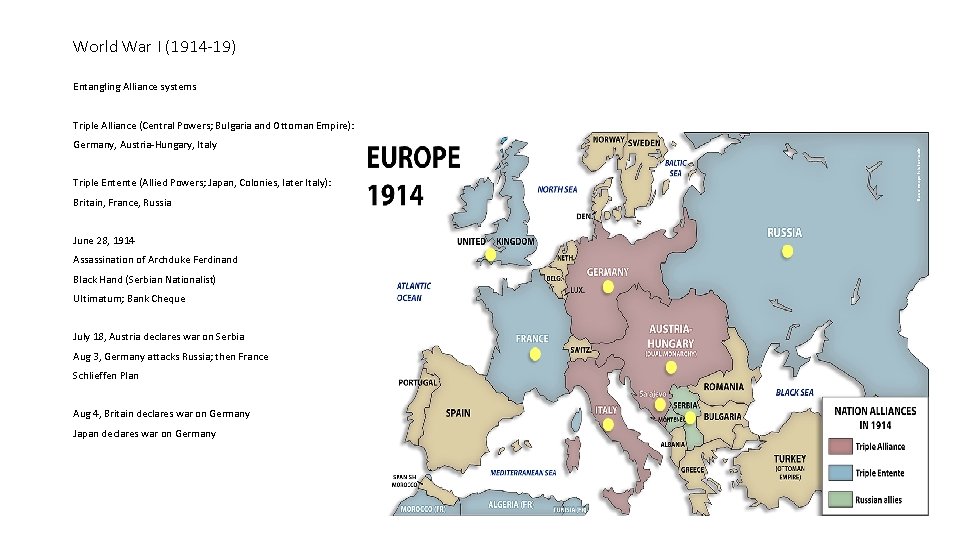
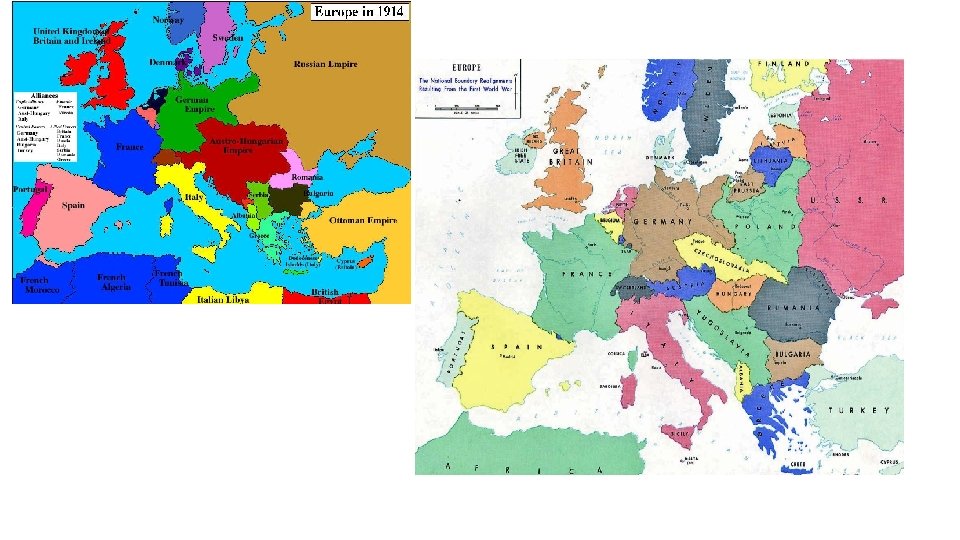
World War I (1914 -19) Entangling Alliance systems Triple Alliance (Central Powers; Bulgaria and Ottoman Empire): Germany, Austria-Hungary, Italy Triple Entente (Allied Powers; Japan, Colonies, later Italy): Britain, France, Russia June 28, 1914 Assassination of Archduke Ferdinand Black Hand (Serbian Nationalist) Ultimatum; Bank Cheque July 18, Austria declares war on Serbia Aug 3, Germany attacks Russia; then France Schlieffen Plan Aug 4, Britain declares war on Germany Japan declares war on Germany
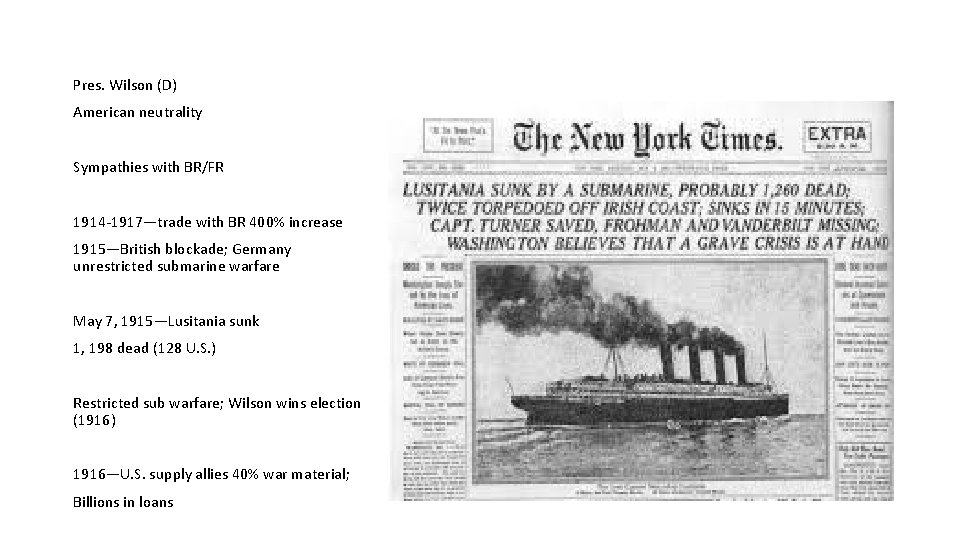
Pres. Wilson (D) American neutrality Sympathies with BR/FR 1914 -1917—trade with BR 400% increase 1915—British blockade; Germany unrestricted submarine warfare May 7, 1915—Lusitania sunk 1, 198 dead (128 U. S. ) Restricted sub warfare; Wilson wins election (1916) 1916—U. S. supply allies 40% war material; Billions in loans
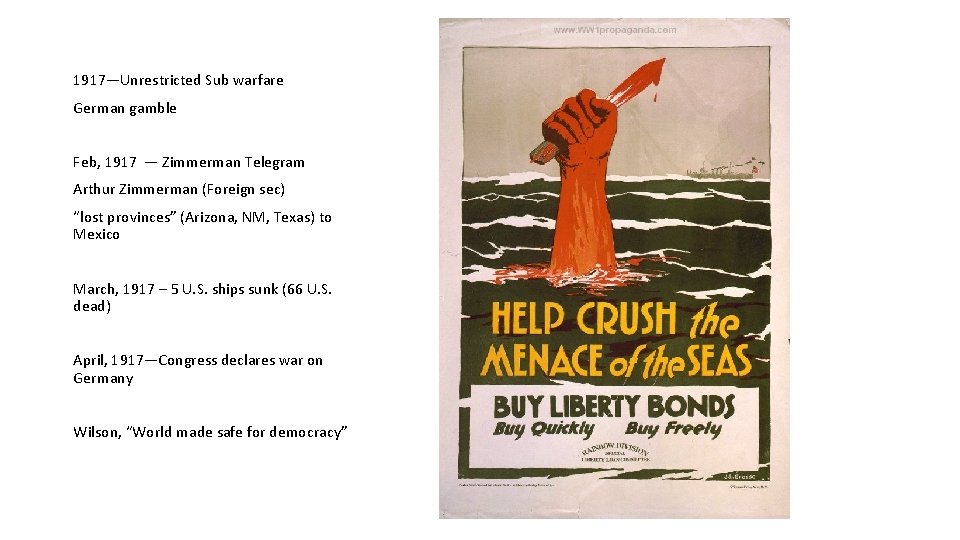
1917—Unrestricted Sub warfare German gamble Feb, 1917 — Zimmerman Telegram Arthur Zimmerman (Foreign sec) “lost provinces” (Arizona, NM, Texas) to Mexico March, 1917 – 5 U. S. ships sunk (66 U. S. dead) April, 1917—Congress declares war on Germany Wilson, “World made safe for democracy”
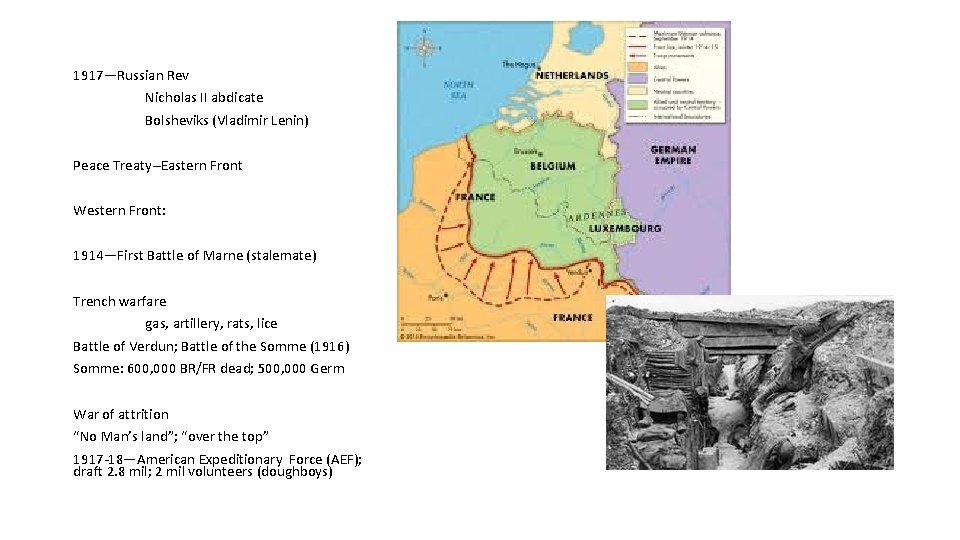
1917—Russian Rev Nicholas II abdicate Bolsheviks (Vladimir Lenin) Peace Treaty--Eastern Front Western Front: 1914—First Battle of Marne (stalemate) Trench warfare gas, artillery, rats, lice Battle of Verdun; Battle of the Somme (1916) Somme: 600, 000 BR/FR dead; 500, 000 Germ War of attrition “No Man’s land”; “over the top” 1917 -18—American Expeditionary Force (AEF); draft 2. 8 mil; 2 mil volunteers (doughboys)
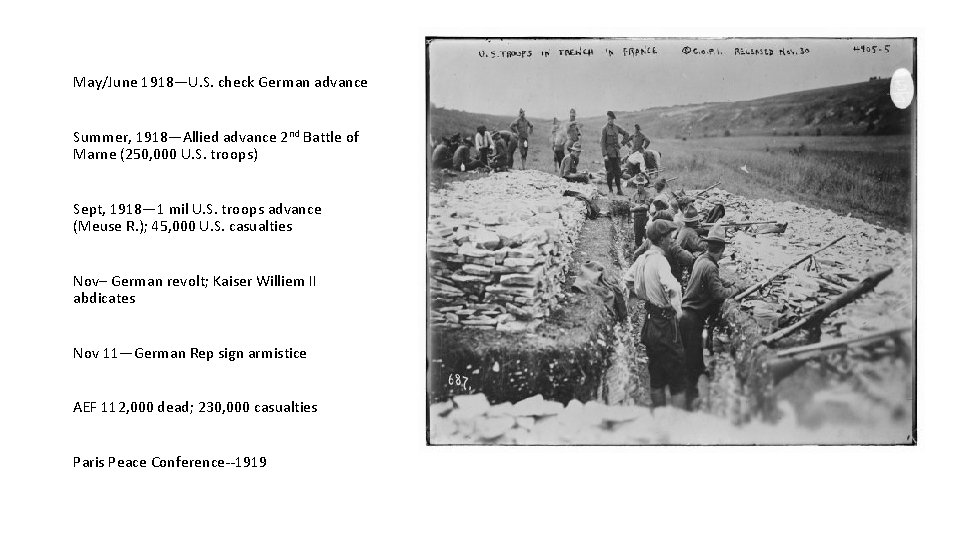
May/June 1918—U. S. check German advance Summer, 1918—Allied advance 2 nd Battle of Marne (250, 000 U. S. troops) Sept, 1918— 1 mil U. S. troops advance (Meuse R. ); 45, 000 U. S. casualties Nov– German revolt; Kaiser Williem II abdicates Nov 11—German Rep sign armistice AEF 112, 000 dead; 230, 000 casualties Paris Peace Conference--1919
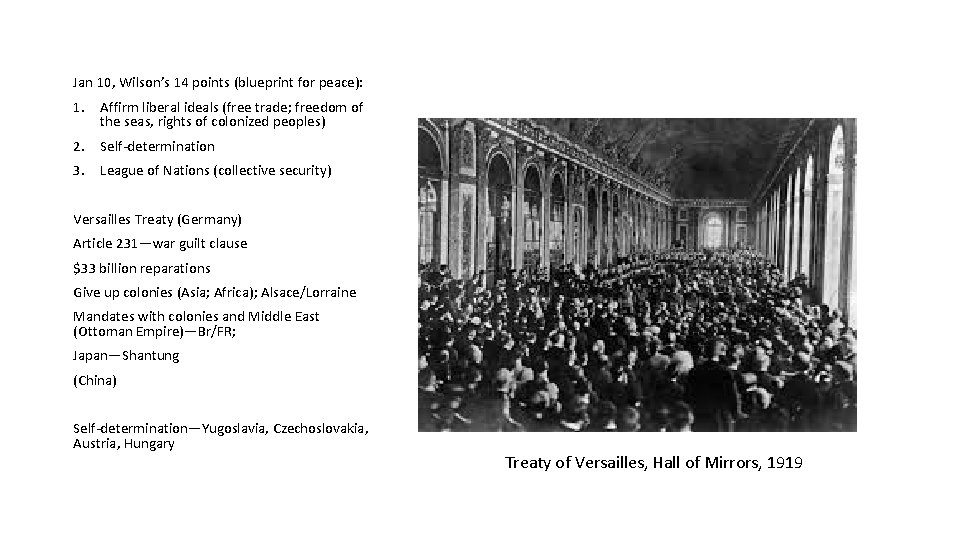
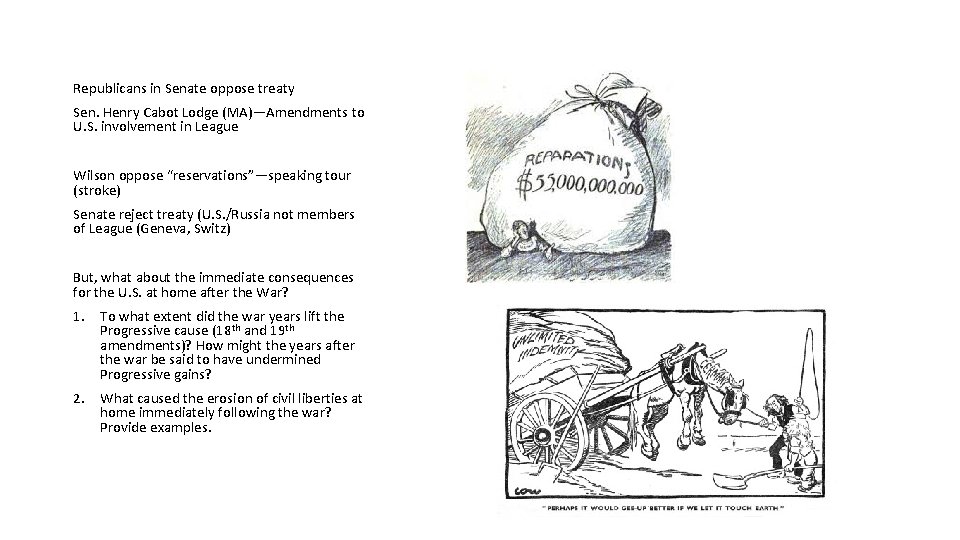
Jan 10, Wilson’s 14 points (blueprint for peace): 1. Affirm liberal ideals (free trade; freedom of the seas, rights of colonized peoples) 2. Self-determination 3. League of Nations (collective security) Versailles Treaty (Germany) Article 231—war guilt clause $33 billion reparations Give up colonies (Asia; Africa); Alsace/Lorraine Mandates with colonies and Middle East (Ottoman Empire)—Br/FR; Japan—Shantung (China) Self-determination—Yugoslavia, Czechoslovakia, Austria, Hungary Treaty of Versailles, Hall of Mirrors, 1919
Republicans in Senate oppose treaty Sen. Henry Cabot Lodge (MA)—Amendments to U. S. involvement in League Wilson oppose “reservations”—speaking tour (stroke) Senate reject treaty (U. S. /Russia not members of League (Geneva, Switz) But, what about the immediate consequences for the U. S. at home after the War? 1. To what extent did the war years lift the Progressive cause (18 th and 19 th amendments)? How might the years after the war be said to have undermined Progressive gains? 2. What caused the erosion of civil liberties at home immediately following the war? Provide examples.