
World Religions Categories Universalizing Christianity Islam Buddhism Bahai
World Religions
Categories Universalizing Christianity Islam Buddhism Baha’i Monotheistic Christianity Islam Judaism Syncretic or Ethnic Judaism Hinduism Confucianism Shintoism or Polytheistic Hinduism Vodum (Voodoo) or Orthodox

Universalizing • Religions that – claim applicability to all humans and – that seek to transmit their beliefs through missionary work and conversions – And who choose to make some sort of symbolic commitment (Fellman, 157)
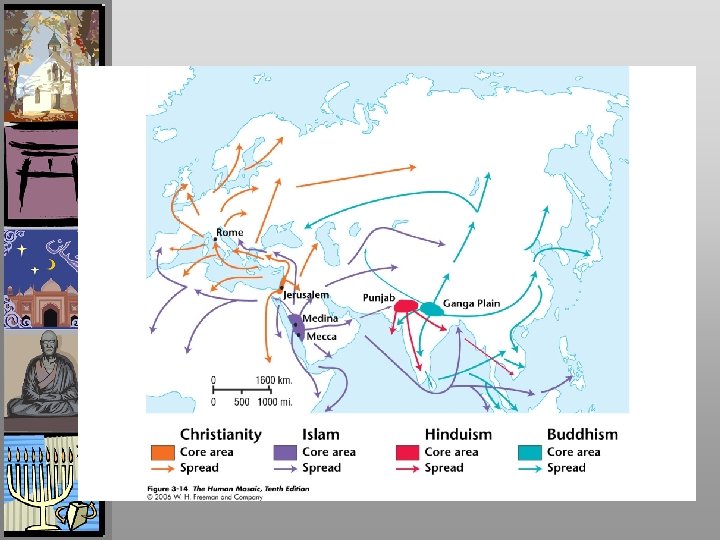
Christianity • Jesus • Spread through the Roman Empire – Roads – Military • Expansion Diffusion – Hierarchical Diffusion: Rome – Contagious Diffusion
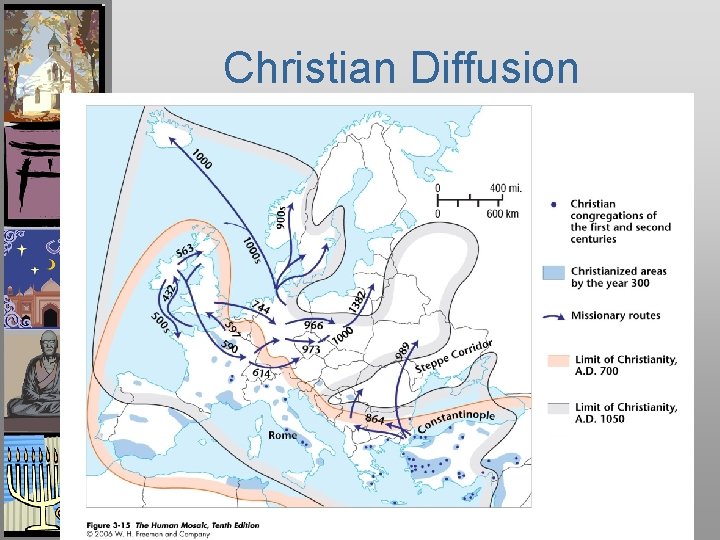
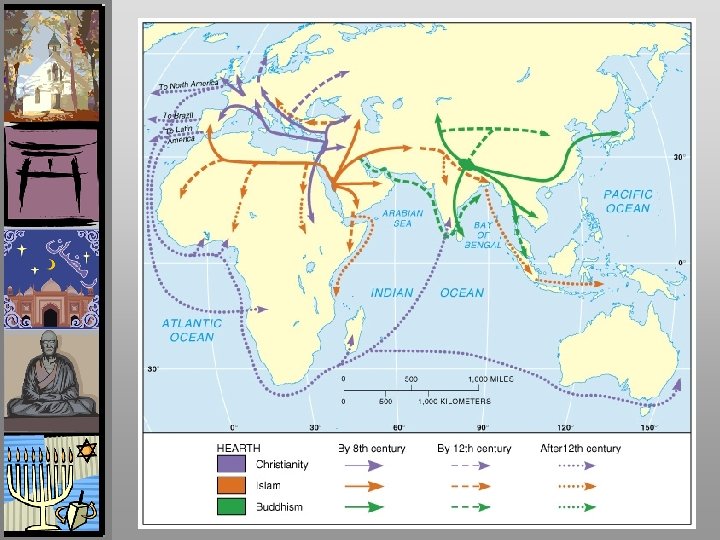
Christian Diffusion

Christian Branches • Roman Catholic • Eastern Orthodox – relocation diffusion – Russian, Armenian, Greek – Coptic • Protestant – Denominations: Baptist, Lutheran, Methodist, Presbyterians, Episcopal – etc.
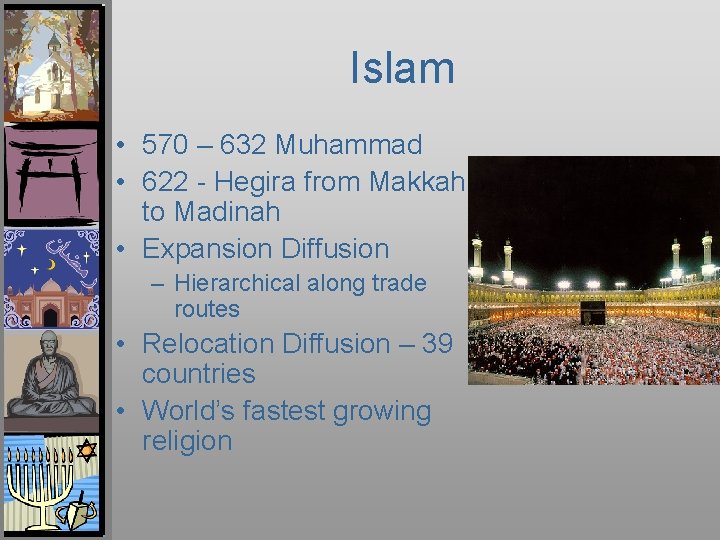
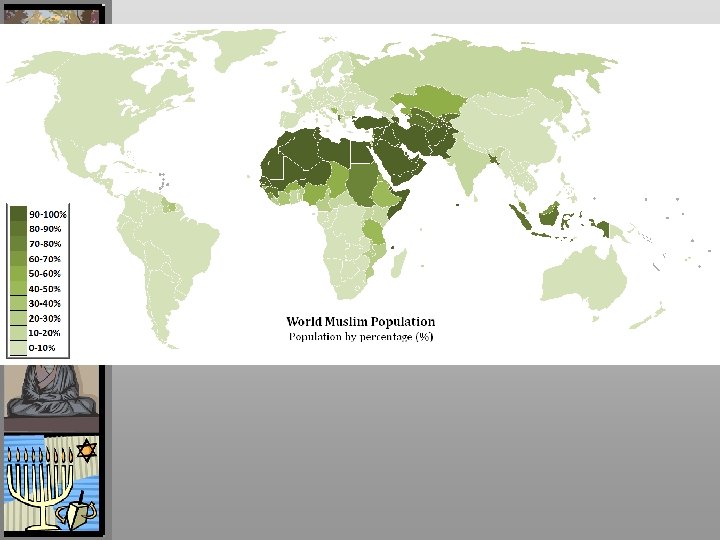
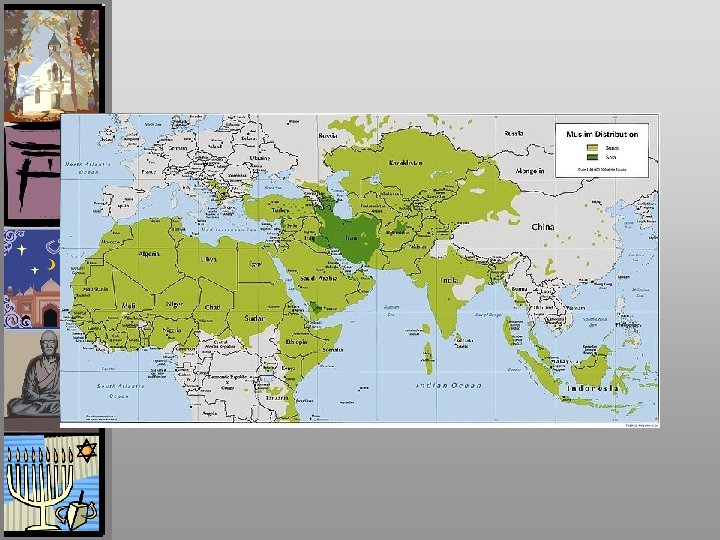
Islam • 570 – 632 Muhammad • 622 - Hegira from Makkah to Madinah • Expansion Diffusion – Hierarchical along trade routes • Relocation Diffusion – 39 countries • World’s fastest growing religion
Branches of Islam • Sunni – The majority – Supported caliphs that were not related to Muhammad • Shi’ite or Shi’a – Concentrated in Iran – Caliphs should be related to Muhammad – Believe the imams are without sin & are infallible • Sufis – Primarily in Indonesia – More mystic, less conservative

Islamic Diffusion
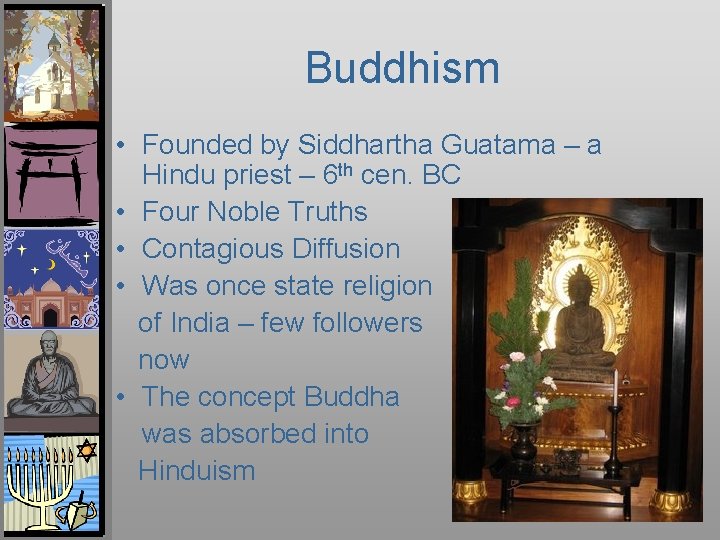
Buddhism • Founded by Siddhartha Guatama – a Hindu priest – 6 th cen. BC • Four Noble Truths • Contagious Diffusion • Was once state religion of India – few followers now • The concept Buddha was absorbed into Hinduism
Buddhism • Theravada (Vehicle of the Elders) – Personal salvation – Closer to original • Mahayana (Greater Vehicle) – “In the process of the proselytic spread, particularly in China and Japan, Buddhism fused with native ethnic religions such as Confucianism, Taoism, and Shintoism to form syncretic faiths that fall in the Mahayana division of Buddhism” Human Mosaic 78. • Vajrayana (Diamond Vehicle) – Dalai Lama – Also called Tantrayana or Lamaism – Tibet & Mongolia
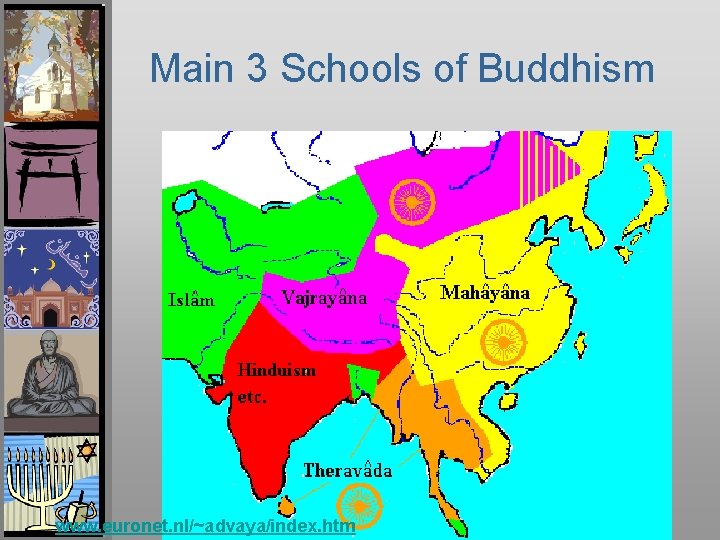
Main 3 Schools of Buddhism www. euronet. nl/~advaya/index. htm
Zoroastrianism • followers of the prophet Zarathushtra (known to the Greeks as Zoroaster) • Ahura Mazda – source of good, creator; Ahriman – the destructive principle • the dominant world religion during the Persian empires (559 BC to 651 AC) • founded by Zarathushtra, probably somewhere around 1200 BC • Followers - around 140, 000, largest populations are in India and Iran
Baha’i • Founded in Persia (Iran) in 1844 • To overcome the disunity of religions and establish a universal faith • 8 mil. Primarily in Africa & Asia • God is unknowable – except through manifestations of prophets such as: Abraham, Moses, Zoroaster, Jesus, Mohammed, the Buddha, Krishna, * Bahá'u'lláh
Sikhism • • • 1500’s – attempt to unify Hindu & Islam NW India region of Punjab Never cut beard or hair, wear turbans Militant "A Sikh is any woman or man whose faith consists of belief in one God, the ten Gurus, the teachings of the Guru Granth Sahib and of the ten Gurus, who has faith in the amrit of the tenth Guru, and who adheres to no other religion. " --Rahit Maryada (Religion Facts)
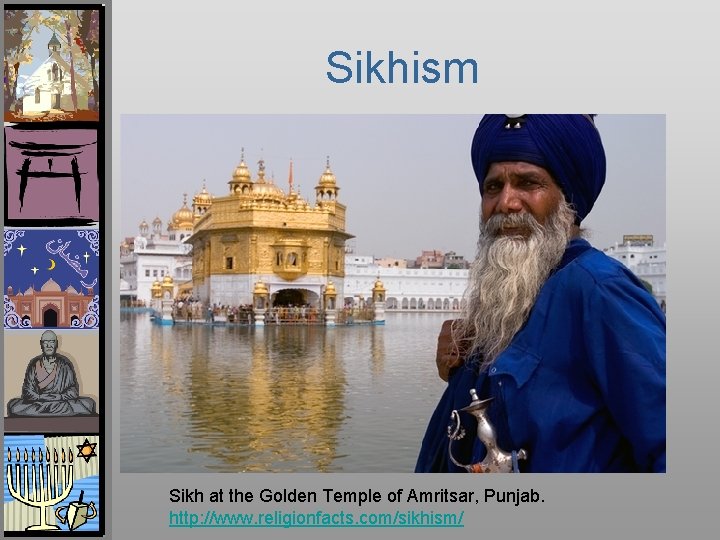
Sikhism Sikh at the Golden Temple of Amritsar, Punjab. http: //www. religionfacts. com/sikhism/
Ethnic • Religions that have – strong territorial and – cultural group identification, – usually one become a member by birth or – by adoption of a complex lifestyle and cultural identity, – not merely by a statement of faith (Fellman, 157)
Hinduism • World’s oldest religion – 4000+ yrs old • Effected social, economic, artistic, philosophical elements in society • Understanding Hindu Traditions
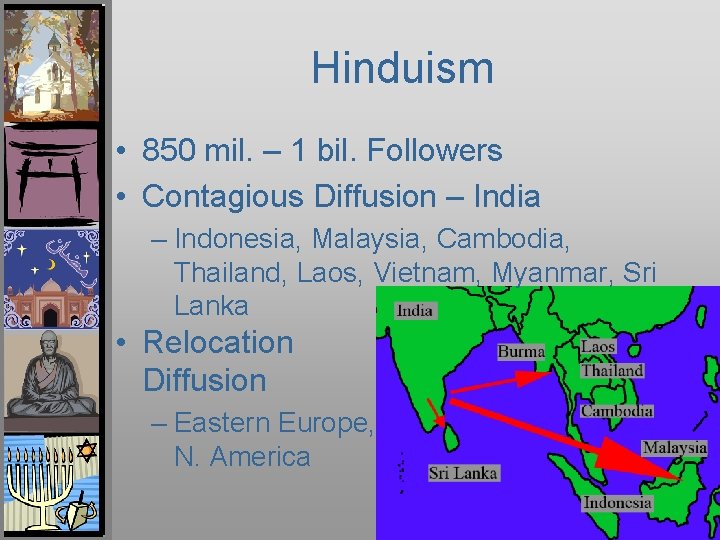
Hinduism • 850 mil. – 1 bil. Followers • Contagious Diffusion – India – Indonesia, Malaysia, Cambodia, Thailand, Laos, Vietnam, Myanmar, Sri Lanka • Relocation Diffusion – Eastern Europe, N. America
Judaism • Original Abrahamic religion • 4000 yrs. Old • Has territorial & political identity • Power of Place: Jerusalem
Judaism • Branches – Sephardim • Iberian Pen. – expelled 15 th cen. • Ties to N. Africa & Babylonian Jews – Ashkenazim • Western & Central Europe • Most came to US
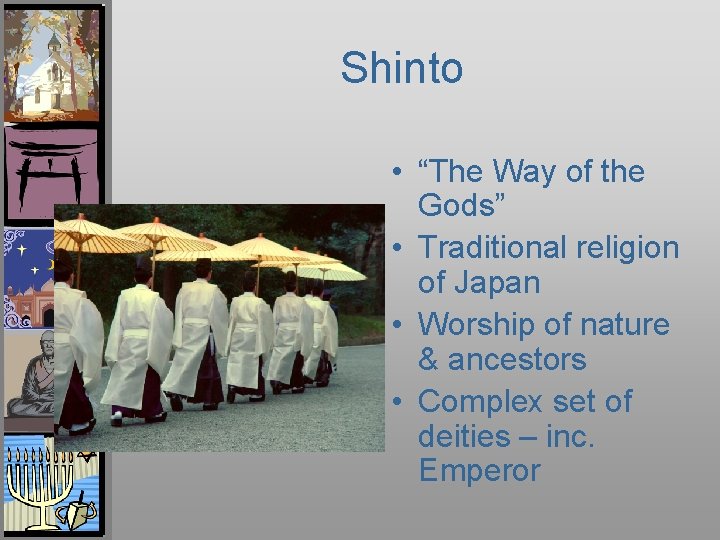
Shinto • “The Way of the Gods” • Traditional religion of Japan • Worship of nature & ancestors • Complex set of deities – inc. Emperor
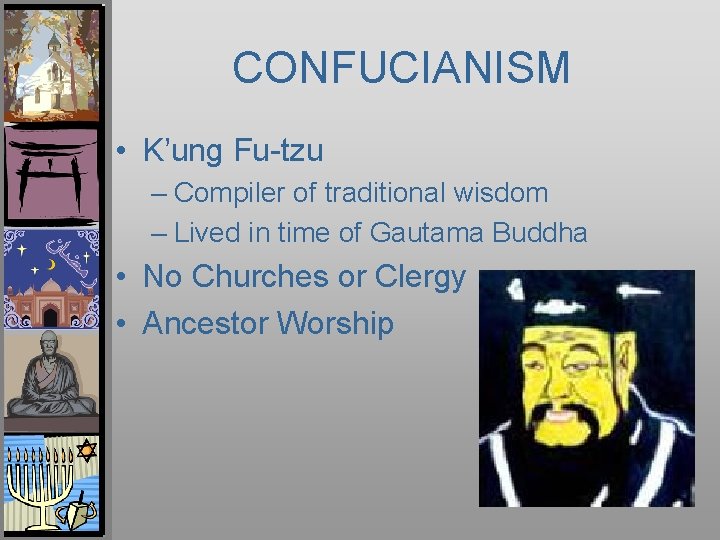
CONFUCIANISM • K’ung Fu-tzu – Compiler of traditional wisdom – Lived in time of Gautama Buddha • No Churches or Clergy • Ancestor Worship
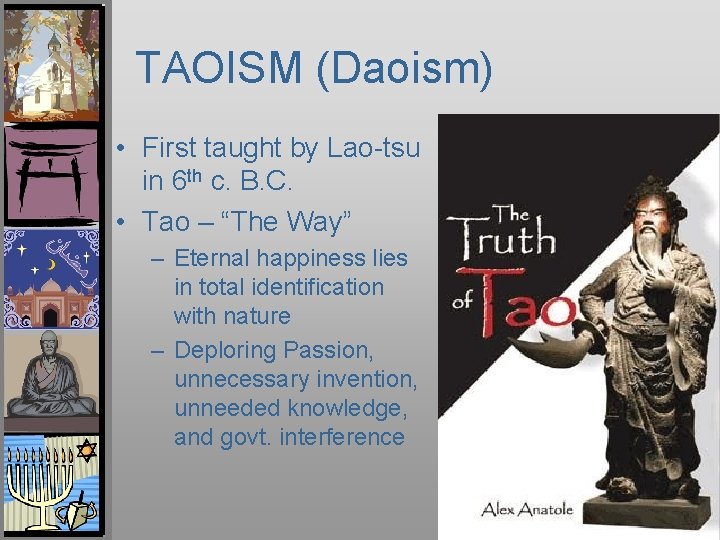
TAOISM (Daoism) • First taught by Lao-tsu in 6 th c. B. C. • Tao – “The Way” – Eternal happiness lies in total identification with nature – Deploring Passion, unnecessary invention, unneeded knowledge, and govt. interference
Tribal or Traditional • Special form of ethnic religion • Localized culture groups • Close ties to nature
Tribal or Traditional • Animism – belief that life exists in all objects (rocks, trees, etc. ) or that such inanimate objects are the abode of the dead, of spirits, and of gods
Tribal or Traditional • Shamanism – involves community acceptance of a religious leader, healer, or worker of magic, who, through special powers, can intercede w/ and interpret the spirit world
Syncretic • Combine elements of different belief systems • Umbanda – Practiced in Brazil – Blends Catholicism w/a reverence for souls of Indians, wise men, and historical figures • Caribbean & L. America often combine European, African, and indigenous beliefs
Elements of Blended Christianity • Early Christianity during the Roman Empire – The Latin paganus – root word of ? ? ? And pagan b/c the rural people continued to worship the local agricultural religion – Viliani – root of ? ? ? Derived into villian • Combined elements of pagan worship with Christian holidays – like their fertility ritual
orthodox • Purity of faith • Christian, Jews, Hindu and Islam
1. a. b. c. d. All evangelical religions are also local religions universal religions ethnic religions polytheistic religions 2. The religious practices of some Native American groups combine elements both from their traditional religion and from Christianity. This is an example of a. a cultural confluence b. A counter culture c. a diametric culture d. a cultural syncretism
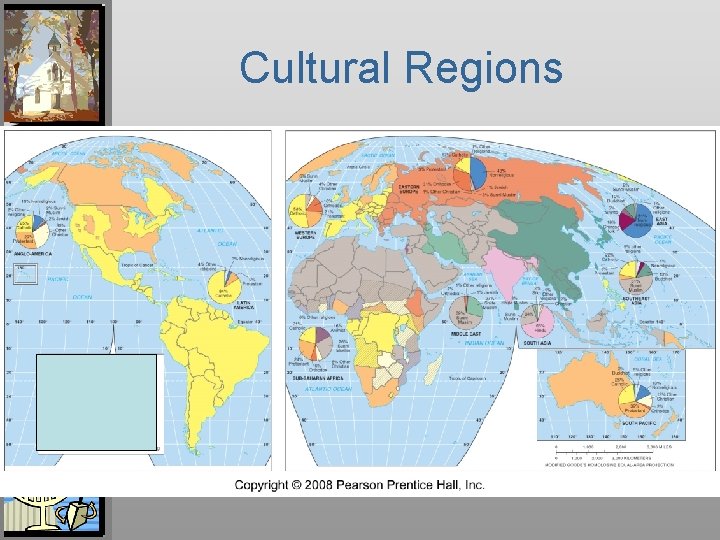
Cultural Regions
3. The youngest major religion is a. Hinduism b. Judaism c. Islam d. Christianity 4. Sikhism is a religion that centers on the teachings of Guru Nanak, but combines beliefs from a. Christianity and Buddhism b. Christianity and Islam c. Hinduism and Buddhism d. Islam and Hinduism 5. Modern-day Sh’ia Islam dominates a region centered on a. Pakistan b. Armenia c. Indonesia d. Iran
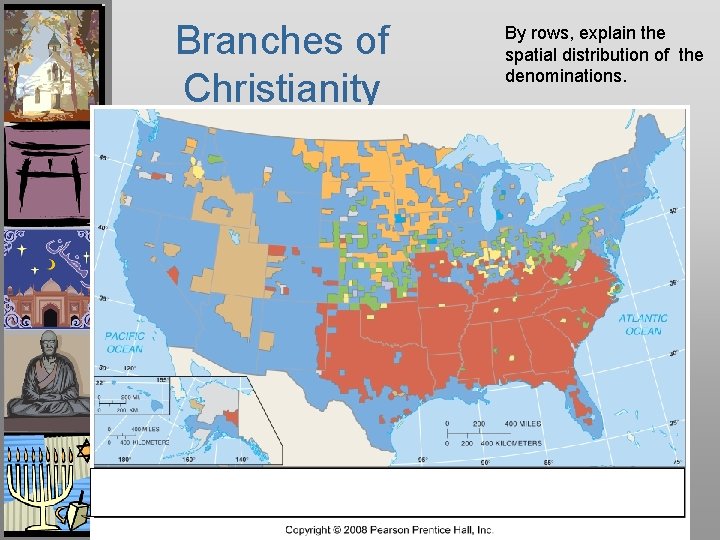
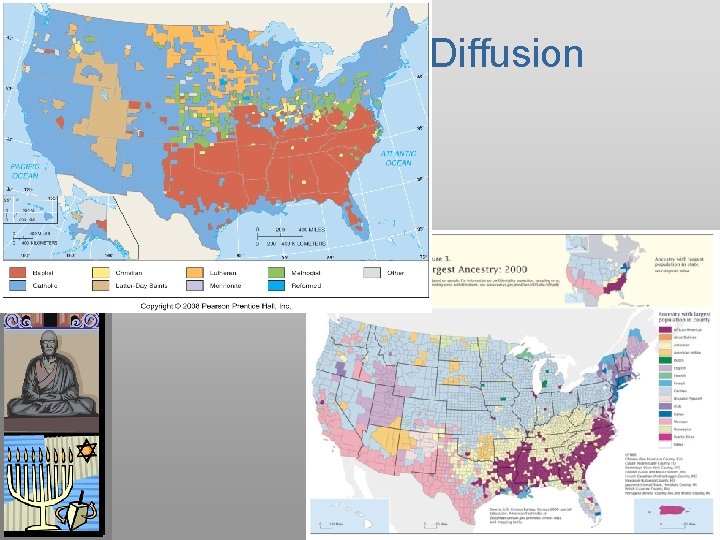
Branches of Christianity By rows, explain the spatial distribution of the denominations.
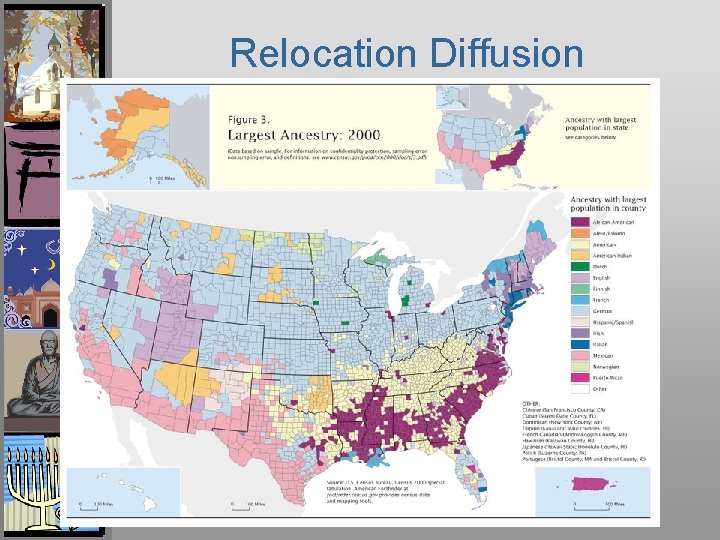
Relocation Diffusion
Relocation Diffusion
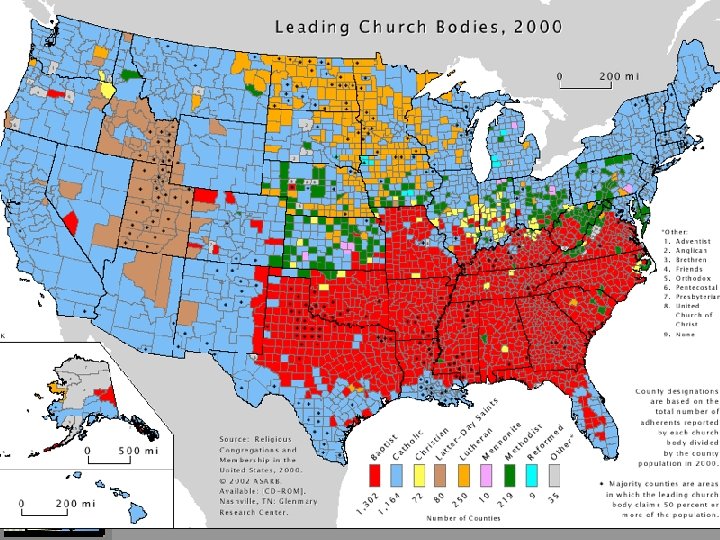
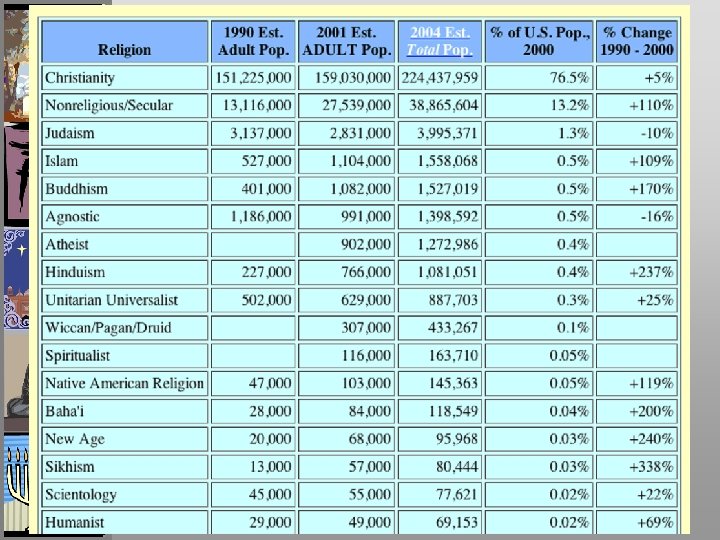
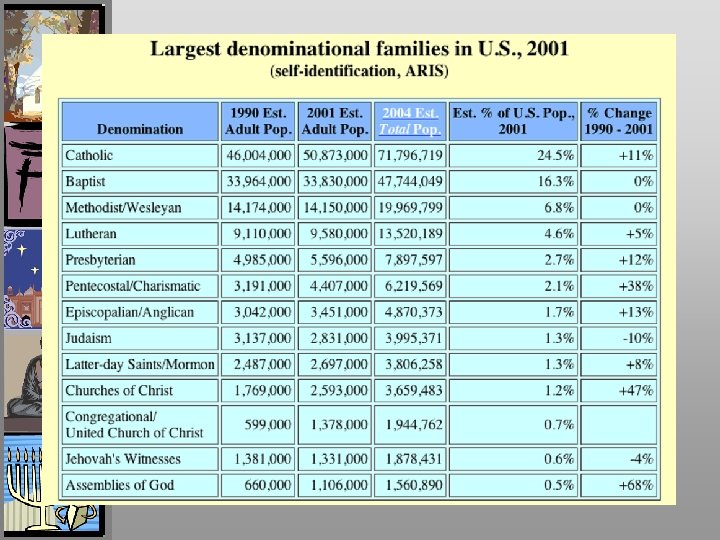
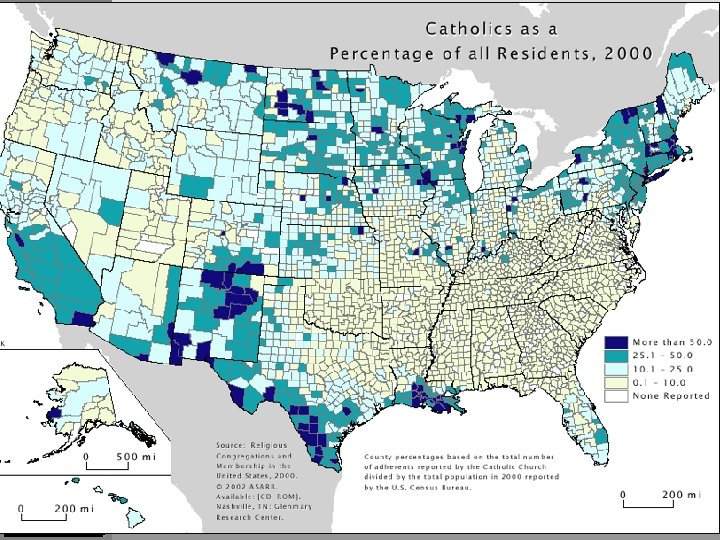
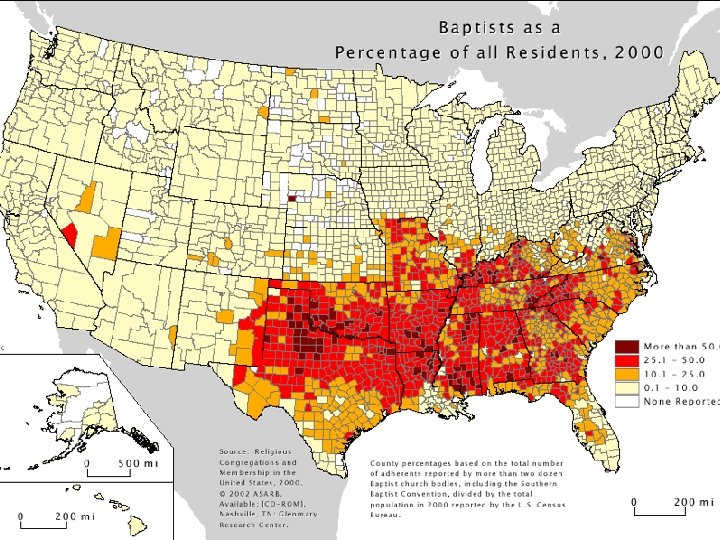
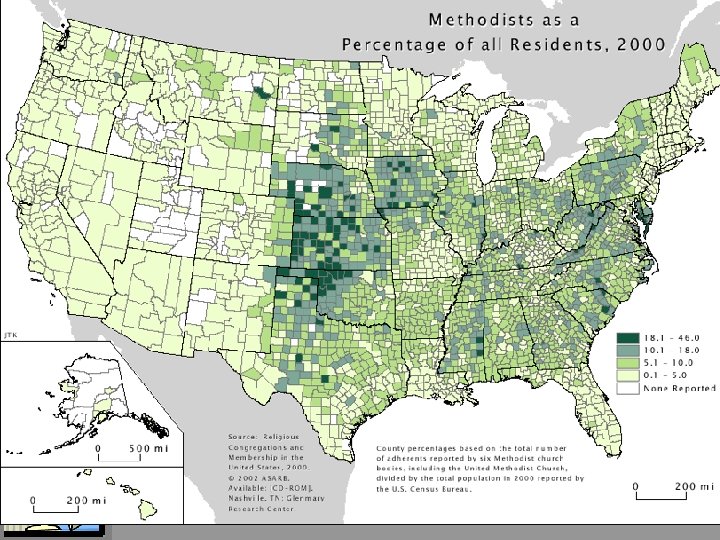
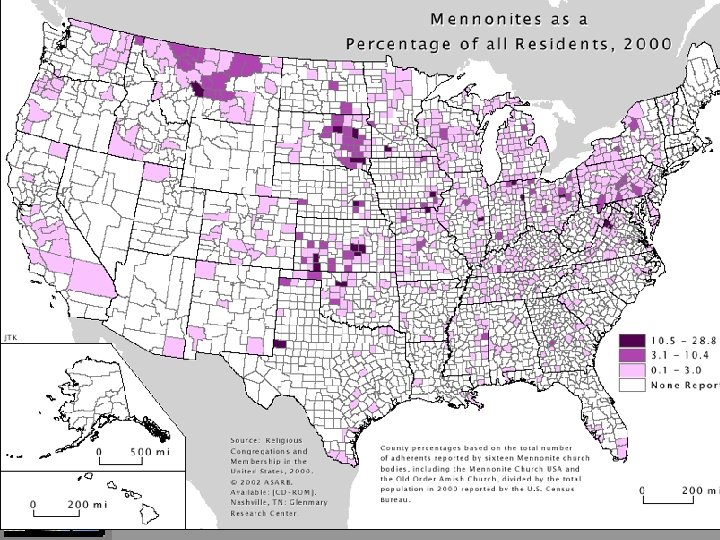
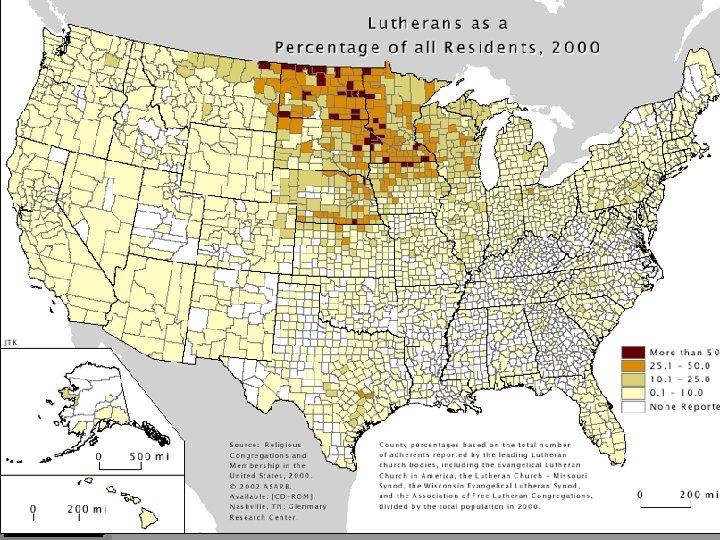
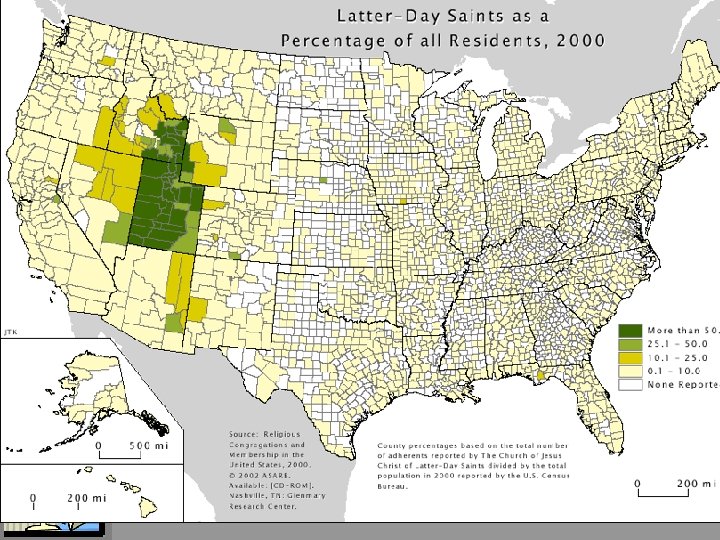
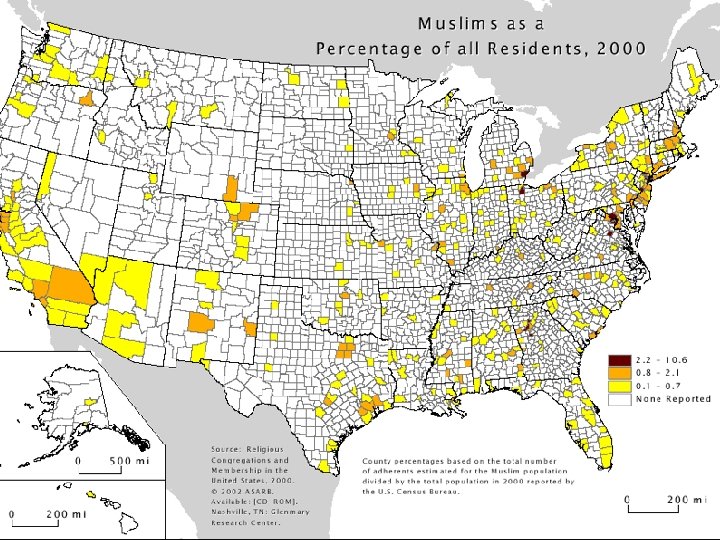
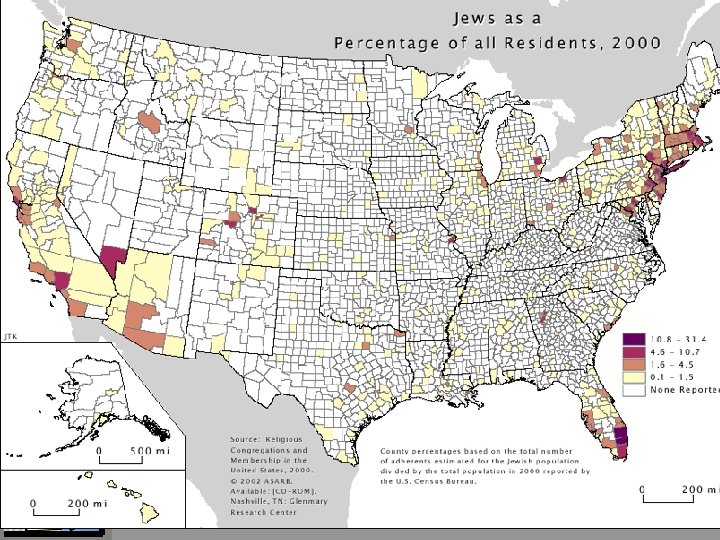
Cultural Diffusion • Culture hearth – religions spread through relocation and expansion diffusion (hierarchical or contagious) • Diffusion of religions
Diffusion • Hierarchical • Contagious • Relocation • • • Judaism Christianity Islam Buddhism Hinduism Bahai
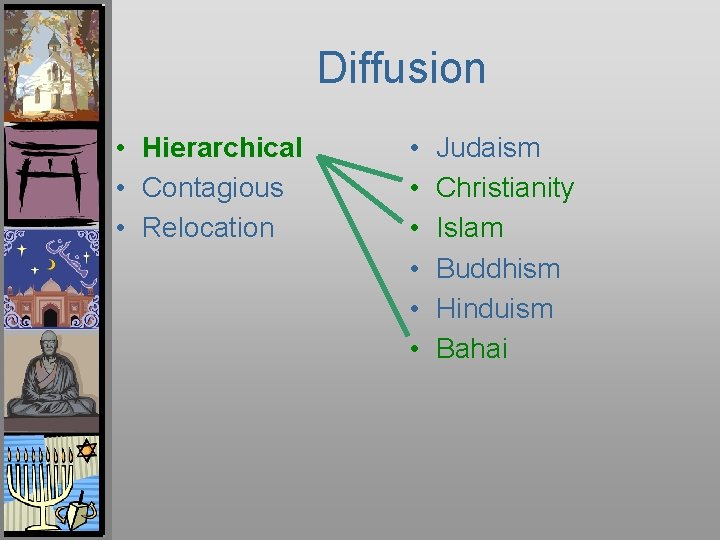
Diffusion • Hierarchical • Contagious • Relocation • • • Judaism Christianity Islam Buddhism Hinduism Bahai
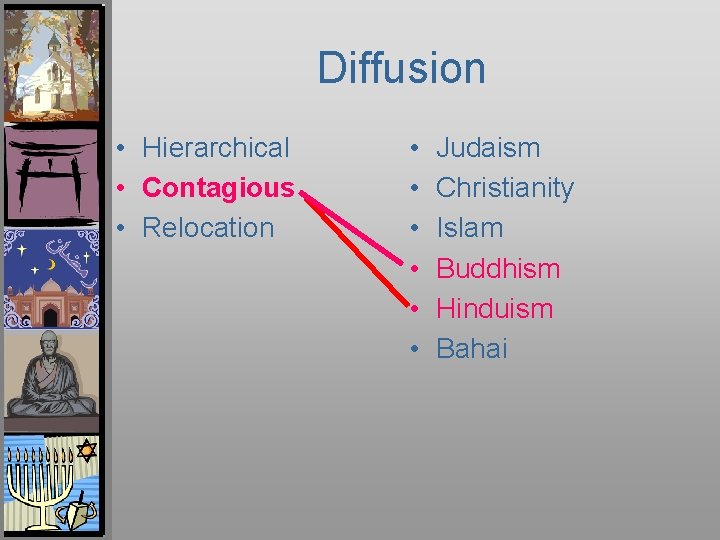
Diffusion • Hierarchical • Contagious • Relocation • • • Judaism Christianity Islam Buddhism Hinduism Bahai
Diffusion • Hierarchical • Contagious • Relocation • • • Judaism Christianity Islam Buddhism Hinduism Bahai
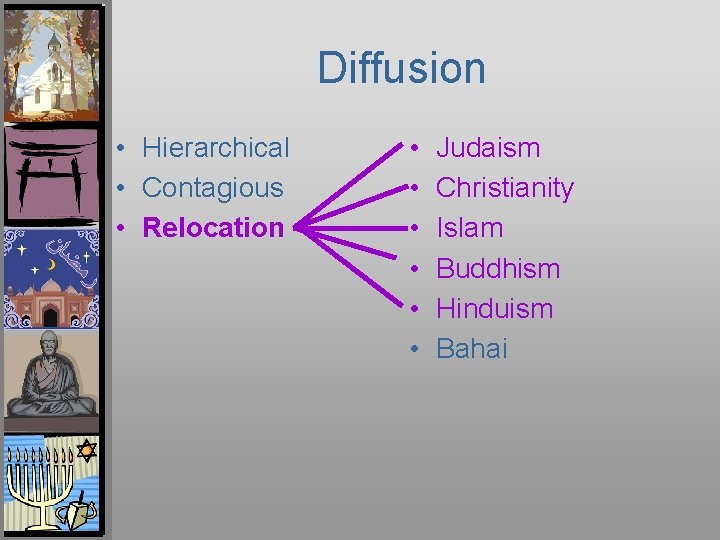
Diffusion • Hierarchical • Contagious • Relocation • • • Judaism Christianity Islam Buddhism Hinduism Bahai
Abrahamic • Christianity – hierarchical -Latin word pagus “countryside” is root of pagan and peasant – “suggesting the ancient heathen connotation of rurality” Human Mosaic 84 • Islam – hierarchical – trade routes & Military
Hearths of … • • • Taoism? Shintoism? Hinduism? Buddhism? Judaism?
Barriers & Time-Distance Decay • Christianity – China – belief that humans are inherently good, knowledge is prized (fall from grace due to too much kn. ), • Hinduism
Cultural Interaction • Religion & the Economy – Demands for certain foods • Wine for communion • No pigs – Pilgrimages • Birthplaces, natural sites, settings for miracles, administrative centers = nodes for functional regions – – Makkah & Madinah Rome & Lourdes Varanasi, India on the Ganges Ise, the hearth of Shintoism
Cultural Interaction • Religion vs. government policies – Taliban – Hinduism & the Caste system – Communist countries (Orthodox in Russia, Buddhism in Vietnam) – Blue Laws, marriage amendment Christianity
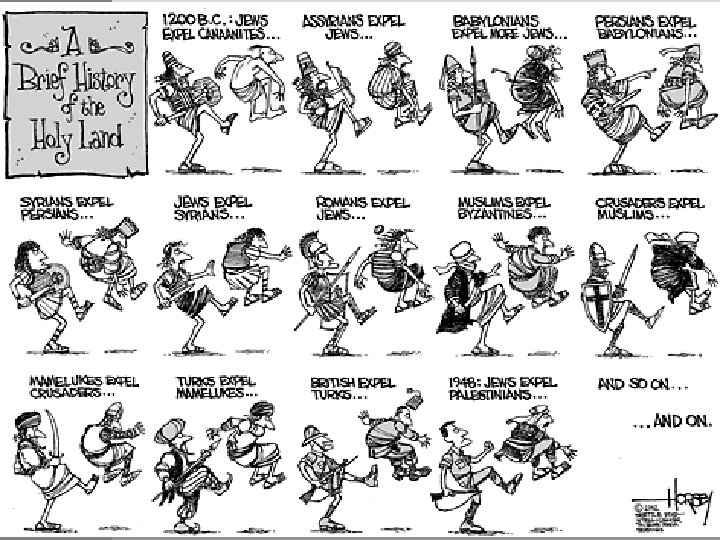
Cultural Interaction • Religion vs. other Religions – N. Ireland – Middle East – Show Po. P Jerusalem – Christian missions
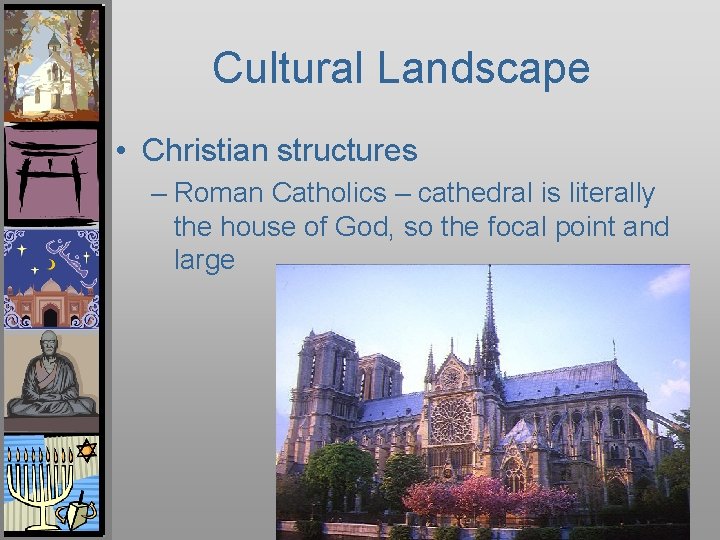
Cultural Landscape • Christian structures – Roman Catholics – cathedral is literally the house of God, so the focal point and large
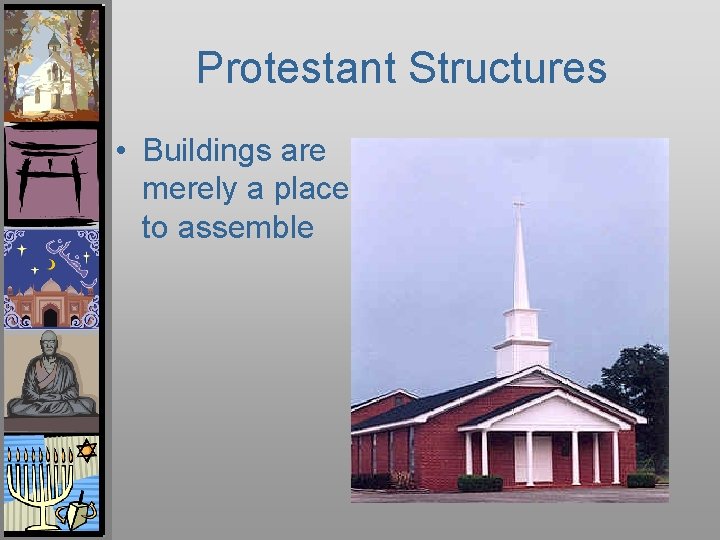
Protestant Structures • Buildings are merely a place to assemble
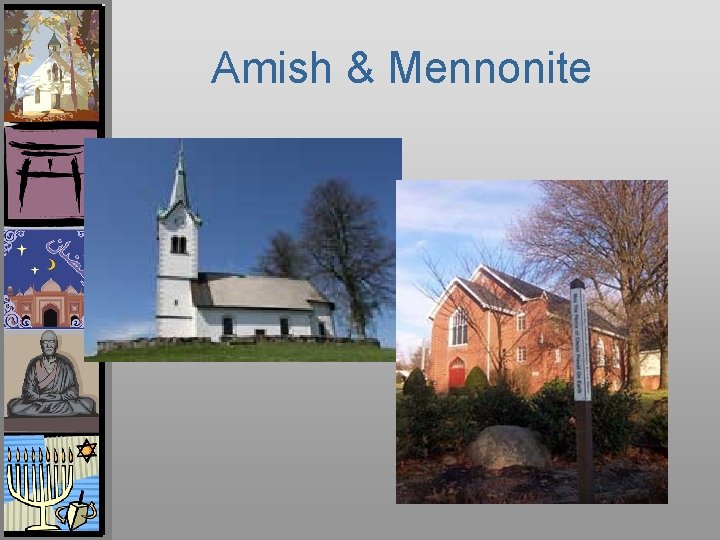
Amish & Mennonite
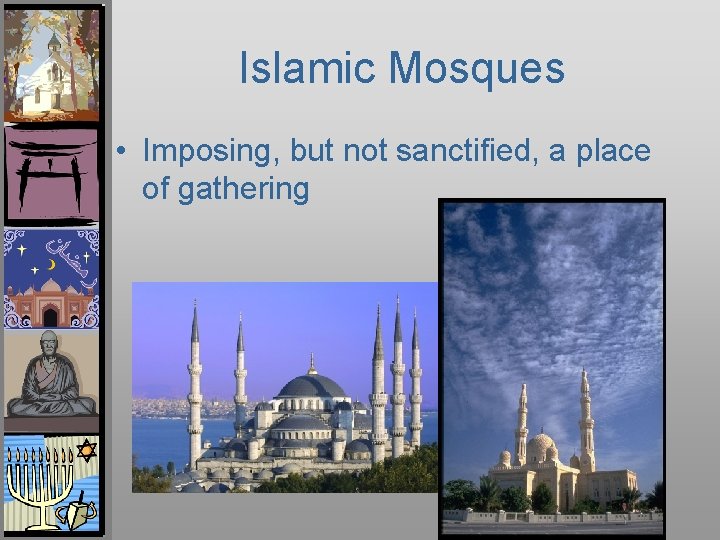
Islamic Mosques • Imposing, but not sanctified, a place of gathering
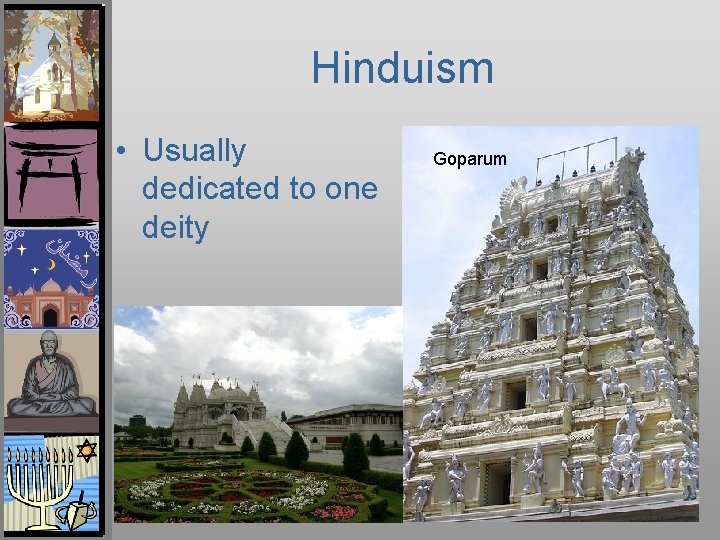
Hinduism • Usually dedicated to one deity Goparum
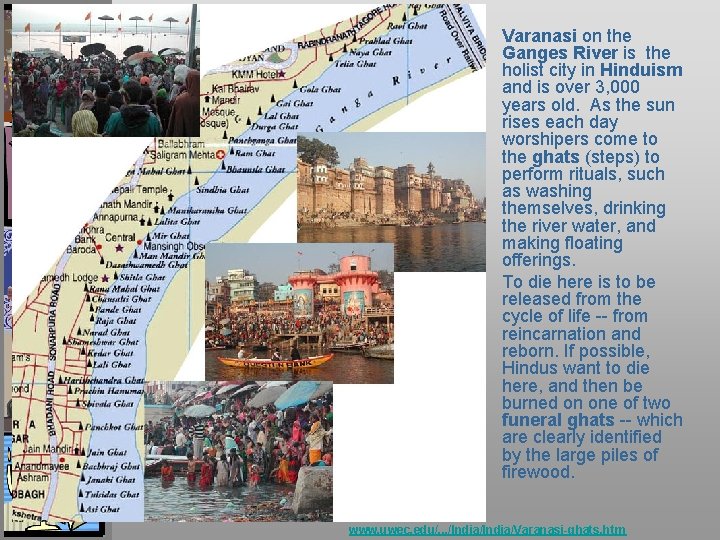
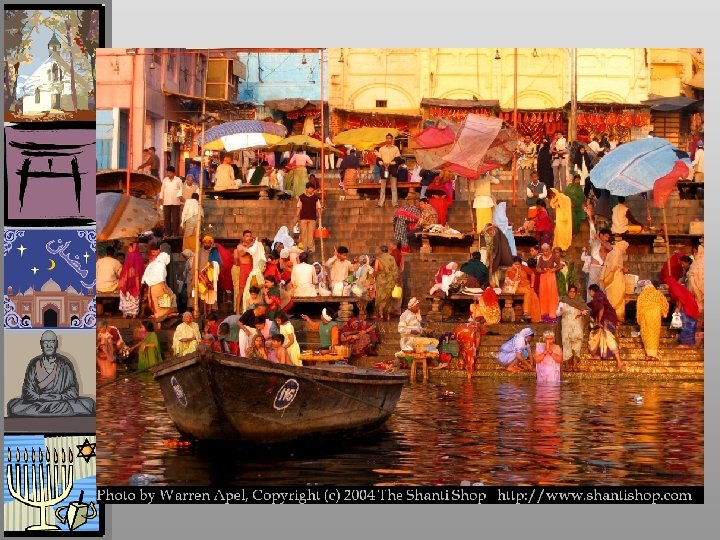
• • Varanasi on the Ganges River is the holist city in Hinduism and is over 3, 000 years old. As the sun rises each day worshipers come to the ghats (steps) to perform rituals, such as washing themselves, drinking the river water, and making floating offerings. To die here is to be released from the cycle of life -- from reincarnation and reborn. If possible, Hindus want to die here, and then be burned on one of two funeral ghats -- which are clearly identified by the large piles of firewood. www. uwec. edu/. . . /India/Varanasi-ghats. htm
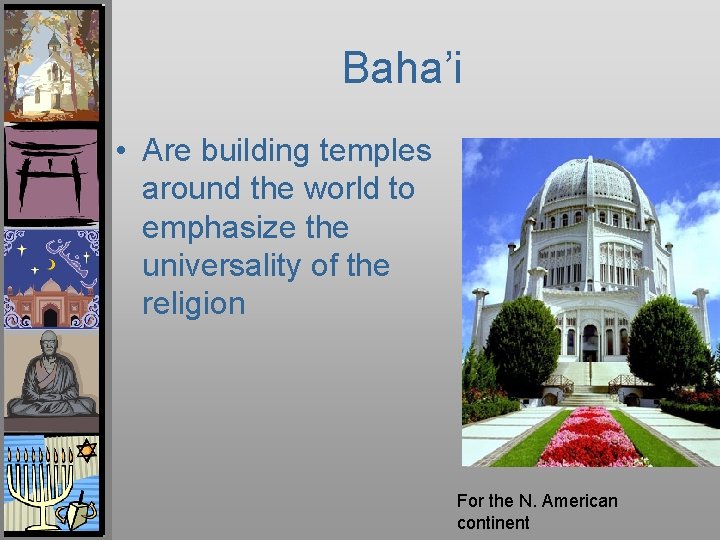
Baha’i • Are building temples around the world to emphasize the universality of the religion For the N. American continent
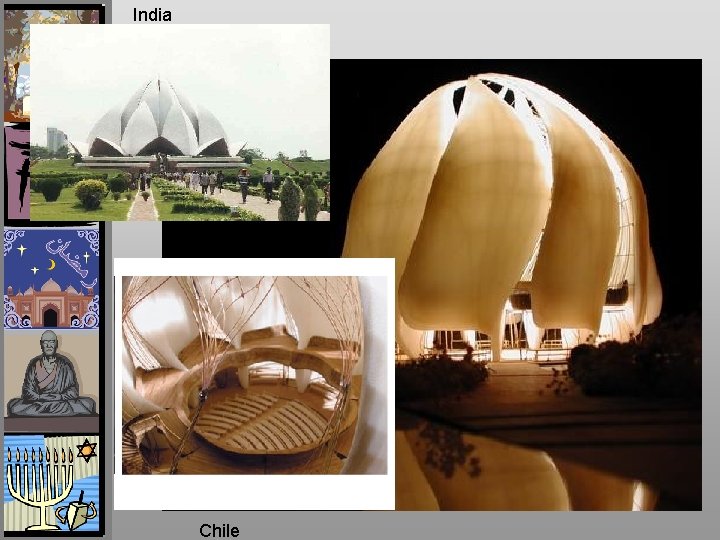
India Chile
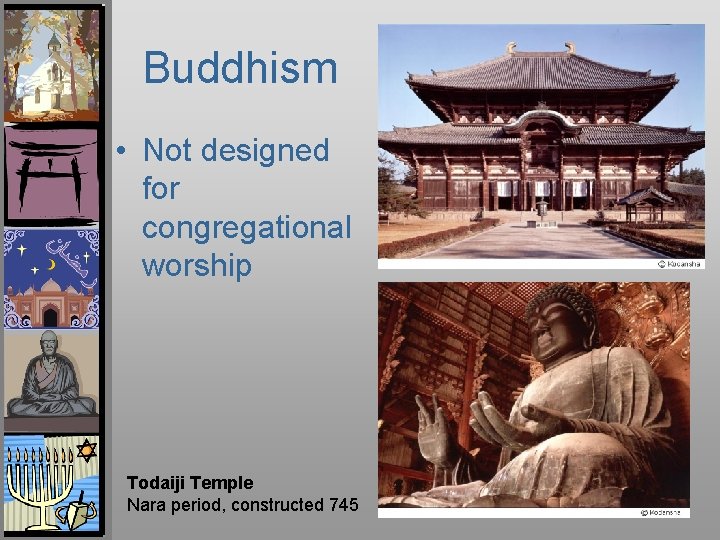
Buddhism • Not designed for congregational worship Todaiji Temple Nara period, constructed 745
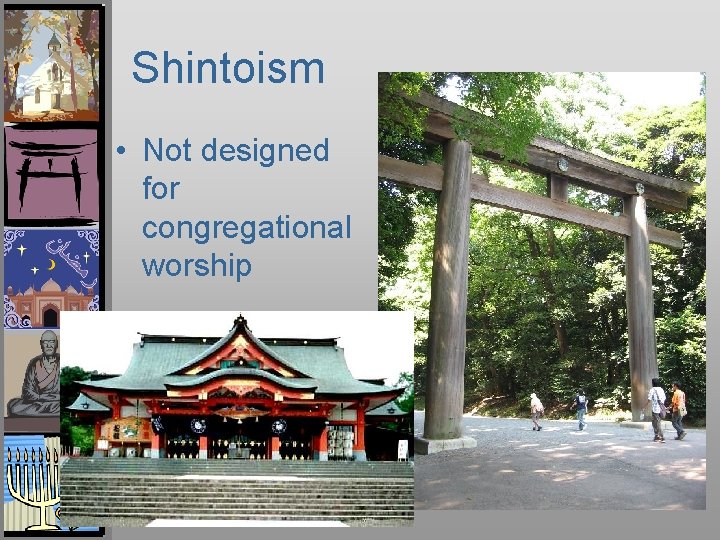
Shintoism • Not designed for congregational worship
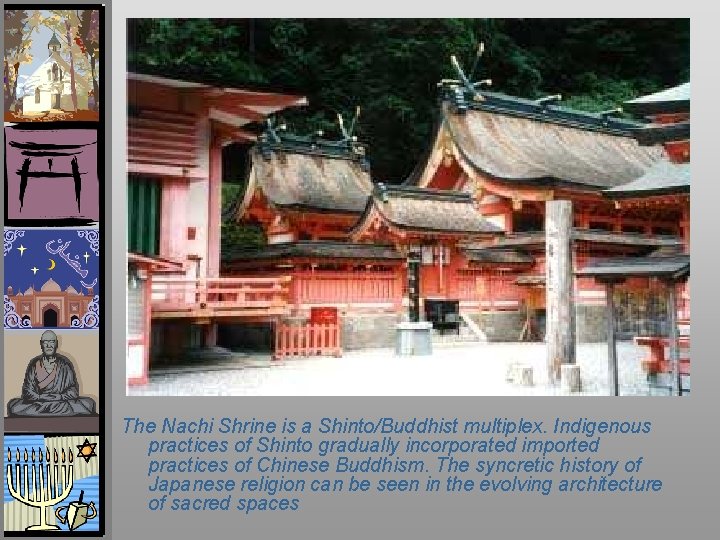
The Nachi Shrine is a Shinto/Buddhist multiplex. Indigenous practices of Shinto gradually incorporated imported practices of Chinese Buddhism. The syncretic history of Japanese religion can be seen in the evolving architecture of sacred spaces
Treatment of the Dead • Burial – Christian – Jewish – Muslim – Chinese – Bali (Hindu, animism, ancestor worship mix)
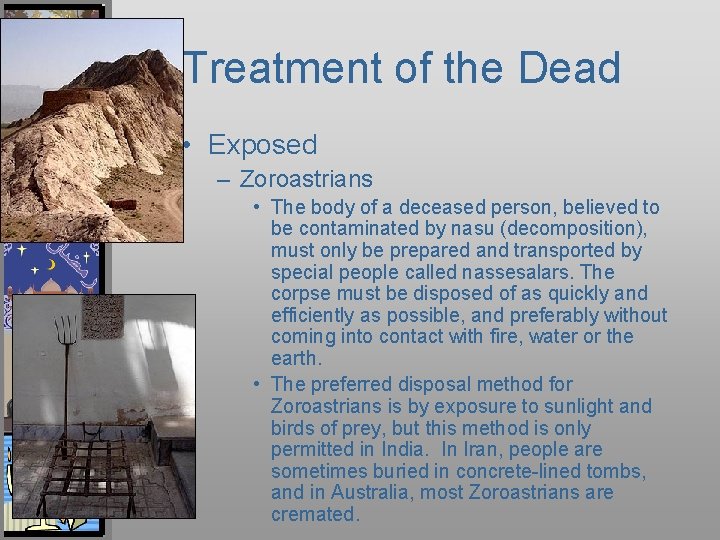
Treatment of the Dead • Exposed – Zoroastrians • The body of a deceased person, believed to be contaminated by nasu (decomposition), must only be prepared and transported by special people called nassesalars. The corpse must be disposed of as quickly and efficiently as possible, and preferably without coming into contact with fire, water or the earth. • The preferred disposal method for Zoroastrians is by exposure to sunlight and birds of prey, but this method is only permitted in India. In Iran, people are sometimes buried in concrete-lined tombs, and in Australia, most Zoroastrians are cremated.
Treatment of the Dead • Exposed – Tibetan Buddhist • or cremation • If the body is exposed to the elements, then it is taken to the cemetery, tied to a stake and undressed. Corpse-cutters throw pieces of flesh to the vultures. The bones may be buried or pounded up and mixed with meal and fed to the vultures as well. • Cremate – cremation is forbidden by Orthodox Jews and Muslims, – it is the usual method of disposal for Sikhs, Hindus and Buddhists.
- Slides: 79