
World Population Growth Through History Billions 12 11
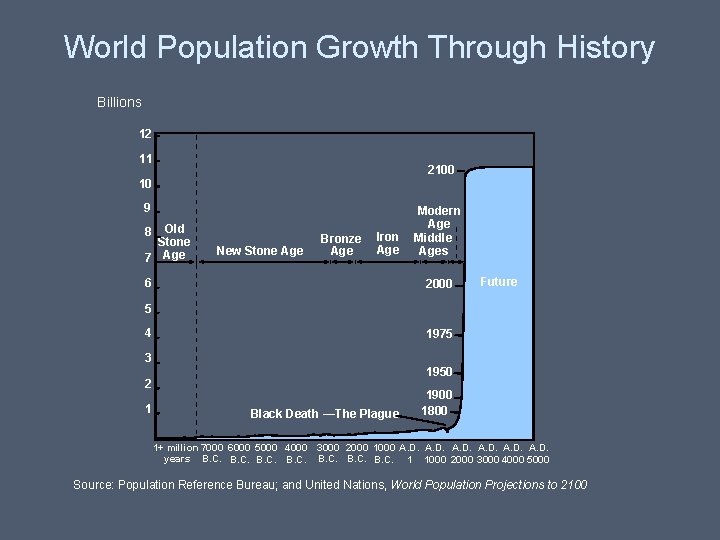
World Population Growth Through History Billions 12 11 2100 10 9 Old Stone 7 Age 8 New Stone Age Bronze Age Iron Age 6 Modern Age Middle Ages 2000 Future 5 4 1975 3 1950 2 1 Black Death —The Plague 1900 1800 1+ million 7000 6000 5000 4000 3000 2000 1000 A. D. years B. C. 1 1000 2000 3000 4000 5000 Source: Population Reference Bureau; and United Nations, World Population Projections to 2100

Demographic Transition Model
The Demographic Transition in Great Britain • Studied the change in birth rates, death rates, and natural growth rates over the course of British industrialization. • Found a transition occurred when death rates decline and then birth rates decline, resulting in a low or sustained growth rate.
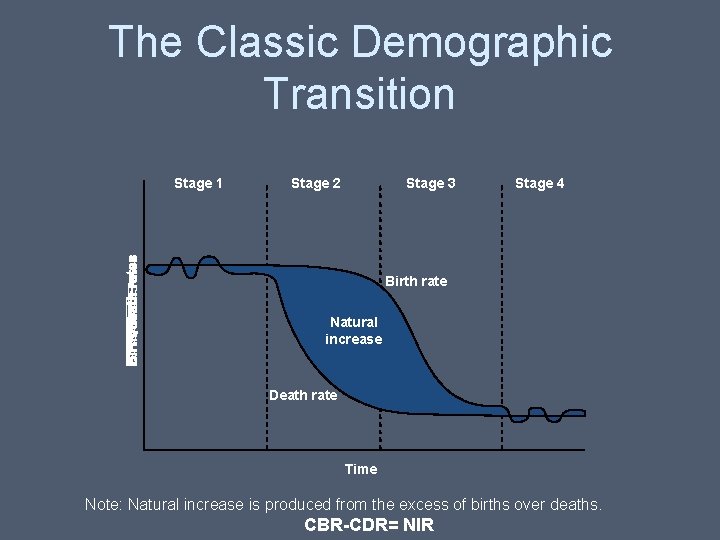
The Classic Demographic Transition Stage 1 Stage 2 Stage 3 Stage 4 Birth rate Natural increase Death rate Time Note: Natural increase is produced from the excess of births over deaths. CBR-CDR= NIR
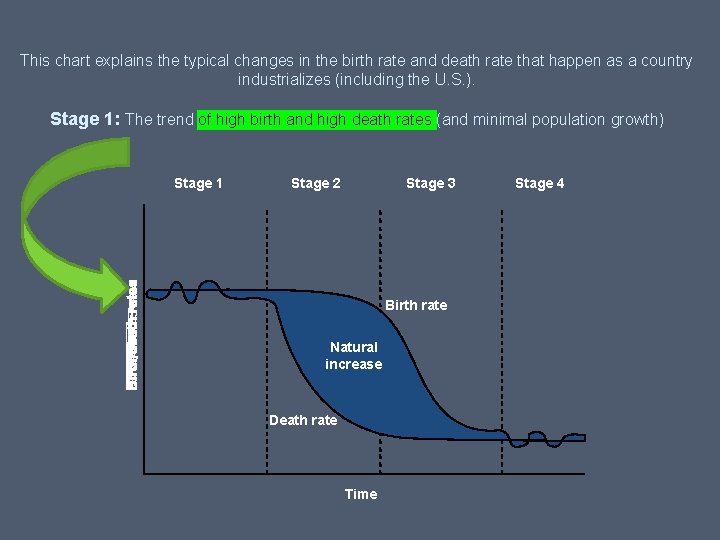
This chart explains the typical changes in the birth rate and death rate that happen as a country industrializes (including the U. S. ). Stage 1: The trend of high birth and high death rates (and minimal population growth) Stage 1 Stage 2 Stage 3 Birth rate Natural increase Death rate Time Stage 4
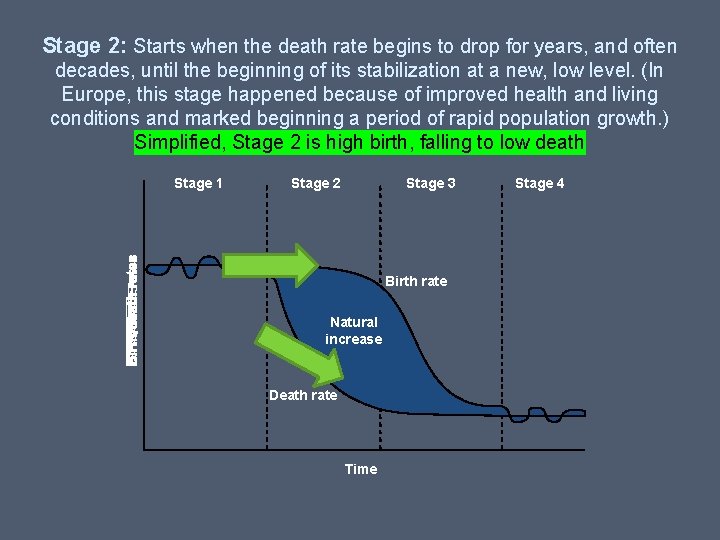
Stage 2: Starts when the death rate begins to drop for years, and often decades, until the beginning of its stabilization at a new, low level. (In Europe, this stage happened because of improved health and living conditions and marked beginning a period of rapid population growth. ) Simplified, Stage 2 is high birth, falling to low death Stage 1 Stage 2 Stage 3 Birth rate Natural increase Death rate Time Stage 4
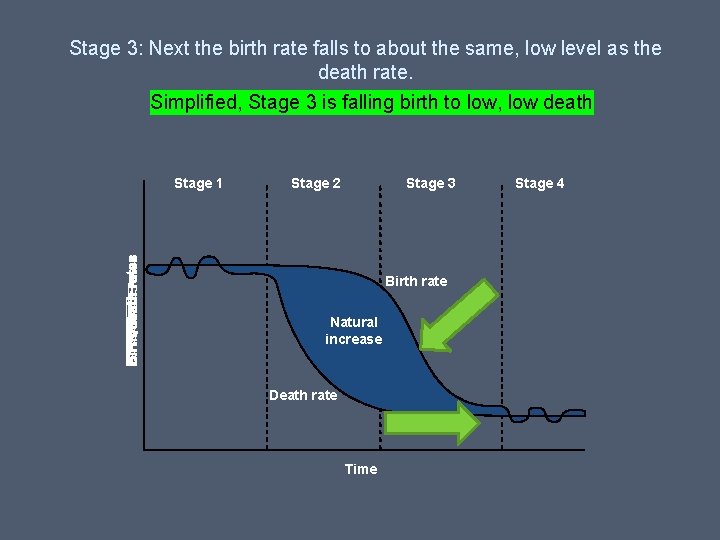
Stage 3: Next the birth rate falls to about the same, low level as the death rate. Simplified, Stage 3 is falling birth to low, low death Stage 1 Stage 2 Stage 3 Birth rate Natural increase Death rate Time Stage 4
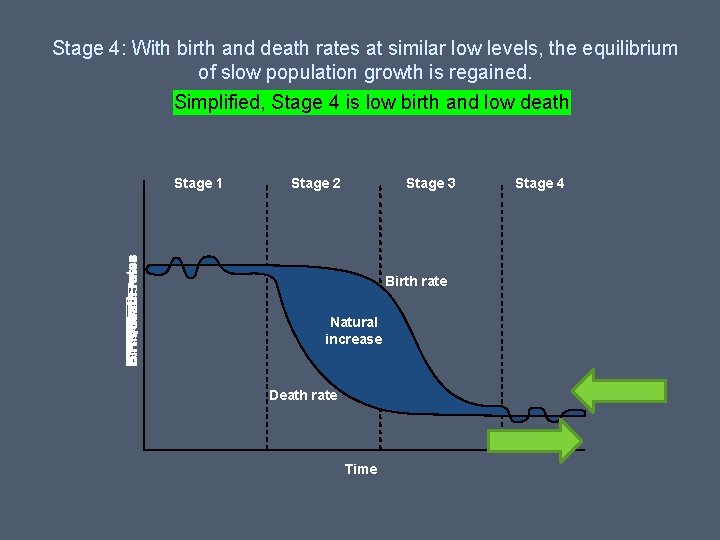
Stage 4: With birth and death rates at similar low levels, the equilibrium of slow population growth is regained. Simplified, Stage 4 is low birth and low death Stage 1 Stage 2 Stage 3 Birth rate Natural increase Death rate Time Stage 4
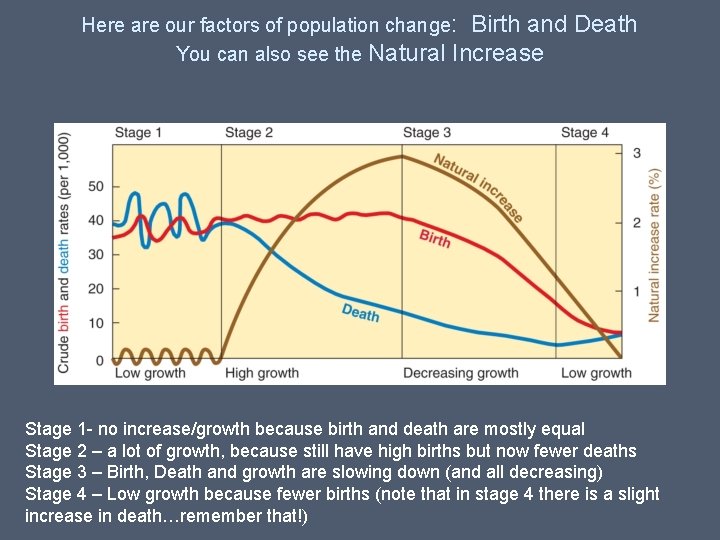
Here are our factors of population change: Birth and You can also see the Natural Increase Death Stage 1 - no increase/growth because birth and death are mostly equal Fig. transition consists fourbirths stages, but which move fromdeaths high Stage 2 2 -13: – a lot. The of demographic growth, because still have of high now fewer birth and death rates, to declines first in death rates then in birth rates, and Stage 3 – Birth, finally Death and growth are slowing down (and all decreasing) to a stage of low birth and death rates. Population growth is most Stage 4 – Low rapid growth because fewer births (note that in stage 4 there is a slight in the second stage. increase in death…remember that!)
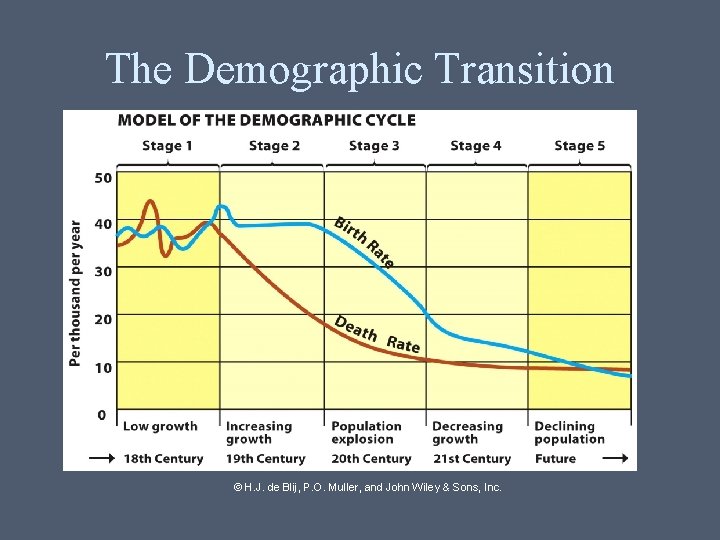
The Demographic Transition © H. J. de Blij, P. O. Muller, and John Wiley & Sons, Inc.
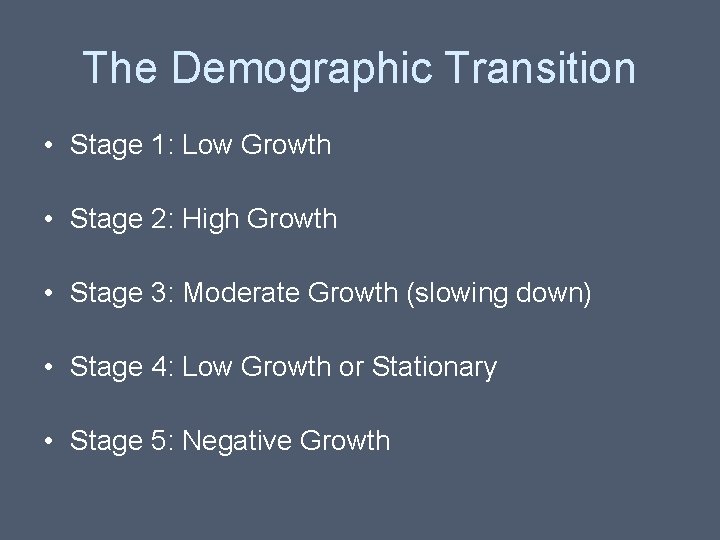
The Demographic Transition • Stage 1: Low Growth • Stage 2: High Growth • Stage 3: Moderate Growth (slowing down) • Stage 4: Low Growth or Stationary • Stage 5: Negative Growth

• https: //www. youtube. com/watch? v=d 1 d. IAt v. SFLM
- Slides: 12