
World Mythology Types of Myth Common Themes Myths

- Slides: 34
World Mythology Types of Myth Common Themes
Myths symbolize human experience and embody the spiritual values of a culture
Myths help us to understand our connection with other people
Myths told ancient people who they were & the right way to live
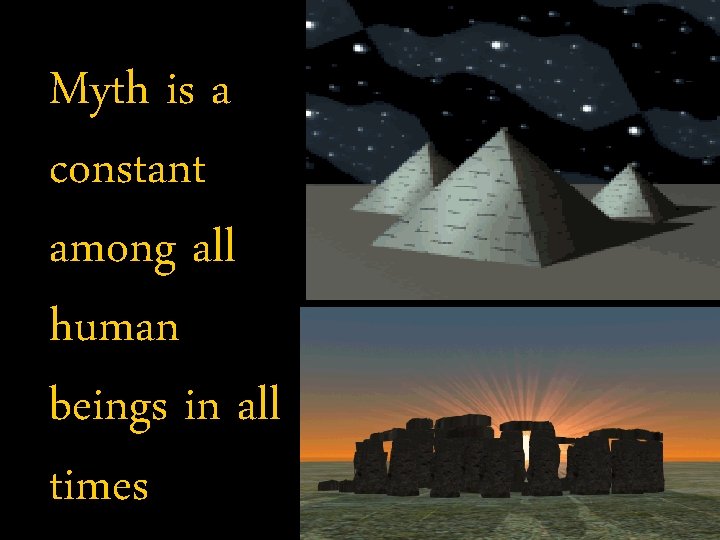
Myth is a constant among all human beings in all times
Myths are. . . • The earliest form of literature • Prehistory or oral history • Stories that have been handed down for generations
Myths are. . . • An explanation of how and why things happen • An explanation of the unknown
Myths are. . . • The ideals and moral code of a society and the relationship between people and their gods
Why study old stories? • They are good stories • Psychology, botany, astronomy, and space technology reflect knowledge of mythology
Why study old stories? • Show us the wonders of mankind’s imagination before scientific reasoning
Why study old stories? They are the basis for a humanistic education, an understanding of how humans have used myths to create art through the ages
Why study old stories? • Helps us to understand other cultures • Increases our cultural literacy
So in this class. . . We will look at a series of questions about the world and how ancient cultures believed they should live.
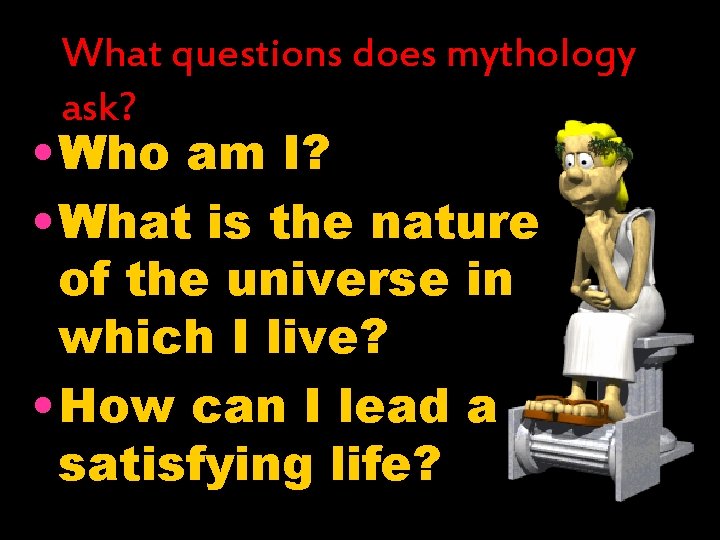
What questions does mythology ask? • Who am I? • What is the nature of the universe in which I live? • How can I lead a satisfying life?
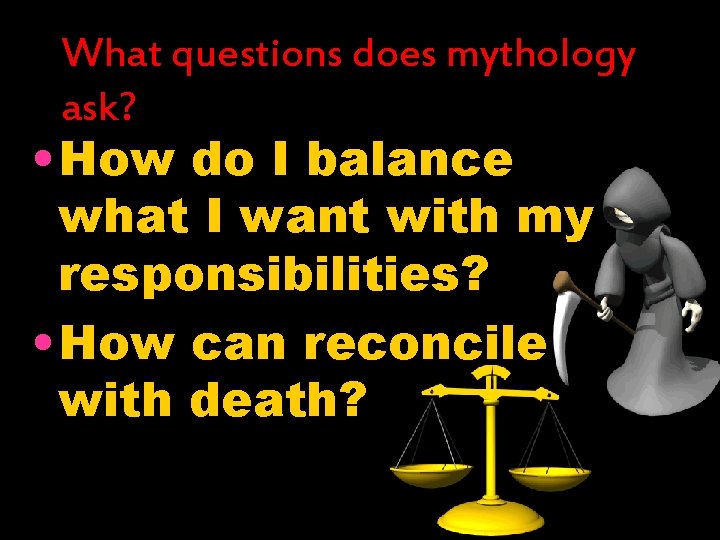
What questions does mythology ask? • How do I balance what I want with my responsibilities? • How can reconcile with death?
Types of Myths
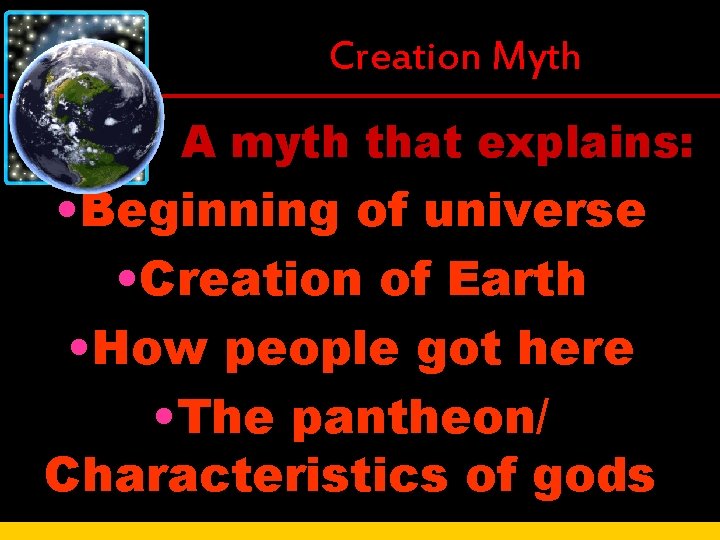
Creation Myth A myth that explains: • Beginning of universe • Creation of Earth • How people got here • The pantheon/ Characteristics of gods
Fertility Myth A myth that : • Involves a deity that must be appeased or is protecting humans • Explains a natural phenomenon • Has a cycle of rebirth
Flood Myth A myth that explains how and why a group of people were destroyed
Hero …Epic encounters …Most important function is to establish a grand past for a people and set forth the values by which a group is to live
Legends Stories that occur in the recent past and deal primarily with real people and events, although occasionally supernatural beings are involved.
Common Themes
Belief in a higher power • Myths have a belief in one of more divine powers who create life and control the directions of the universe
Belief in a higher power • These divine powers are anthropomorphic or theriomorphic • Sympathetic or indifferent • Matriarchal (Mother Earth) or Patriarchal (Father Sky)
Cycle of events • Death and Rebirth • The Great Goddess • of the underworld • of the Earth • of the sky
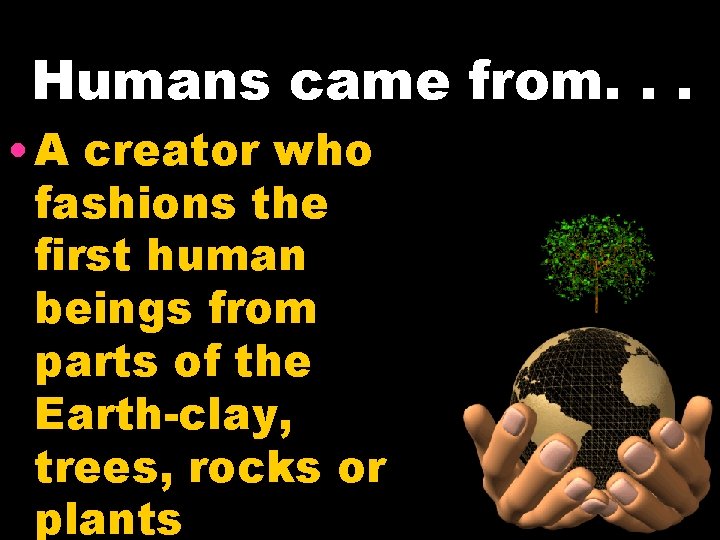
Humans came from. . . • A creator who fashions the first human beings from parts of the Earth-clay, trees, rocks or plants
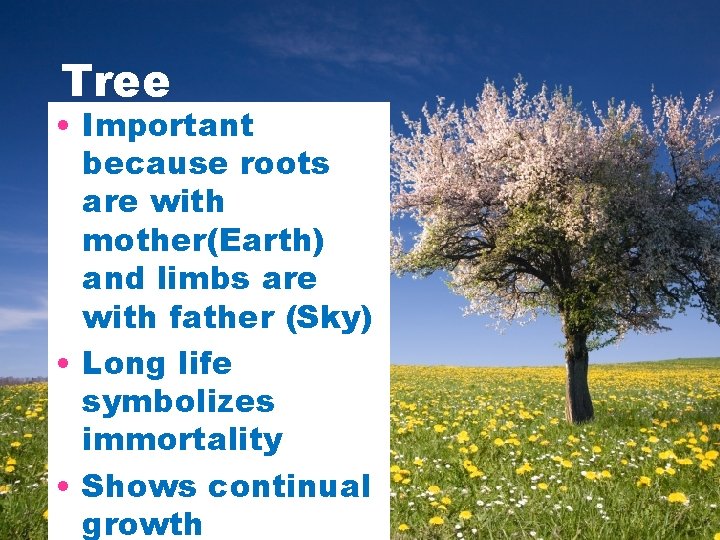
Tree • Important because roots are with mother(Earth) and limbs are with father (Sky) • Long life symbolizes immortality • Shows continual growth
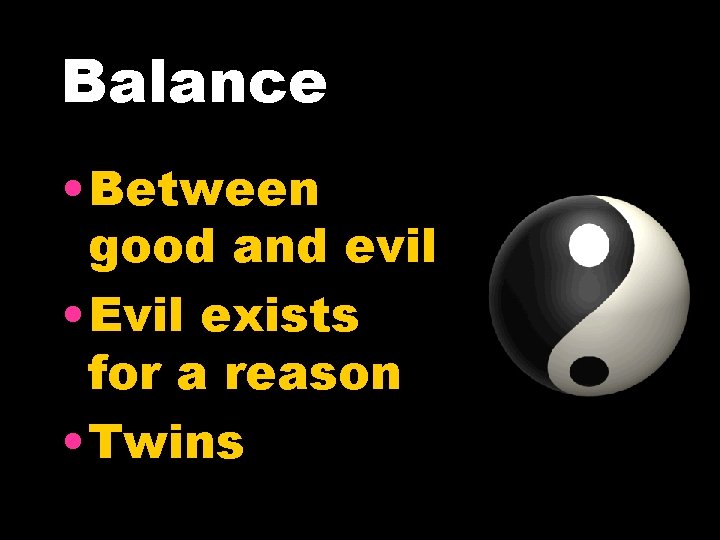
Balance • Between good and evil • Evil exists for a reason • Twins
Ages of Man • A list of all the groups of people that came beforeoften is or includes a flood myth
Magic • Those who have it have power • Sometimes good, sometimes not
Separation of Realms • Where everyone lives. • Usually includes gods, humans and the dead.
Serpent • Symbolizes rebirth because it can shed its skin • Also represents chaos
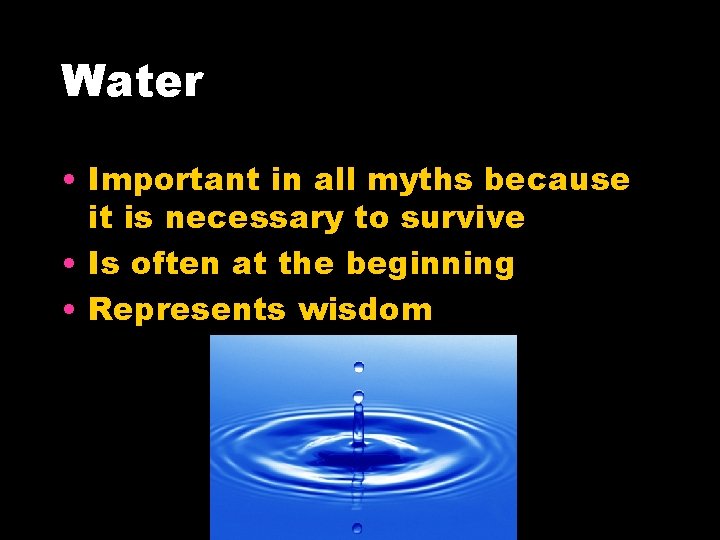
Water • Important in all myths because it is necessary to survive • Is often at the beginning • Represents wisdom