
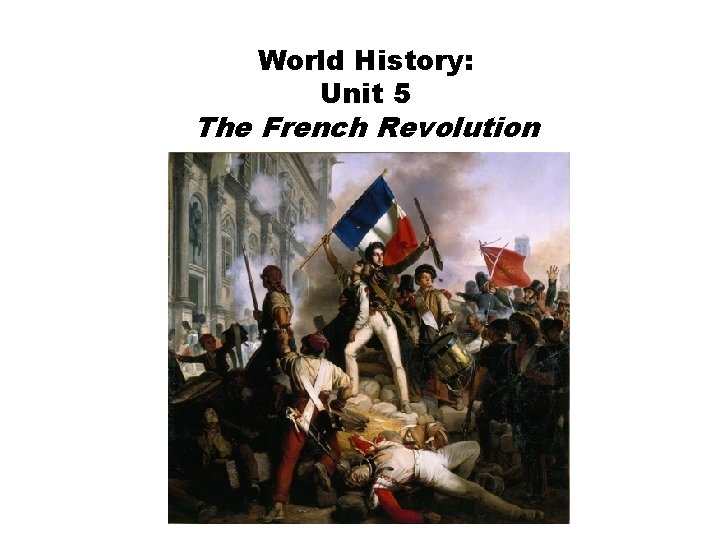
World History Unit 5 The French Revolution I






- Slides: 51
World History: Unit 5 The French Revolution
I. The Age of Absolutism A. Absolutist monarchs claim absolute authority they: 1. ruled by “divine right” 2. considered to be “alternative to anarchy” 3. controlled religion 4. sought support from nobility 5. managed armies – sought expansion 6. controlled the economy
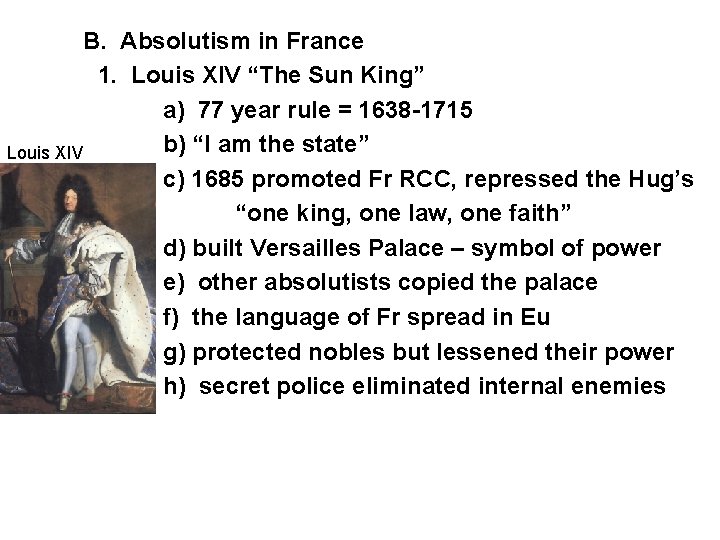
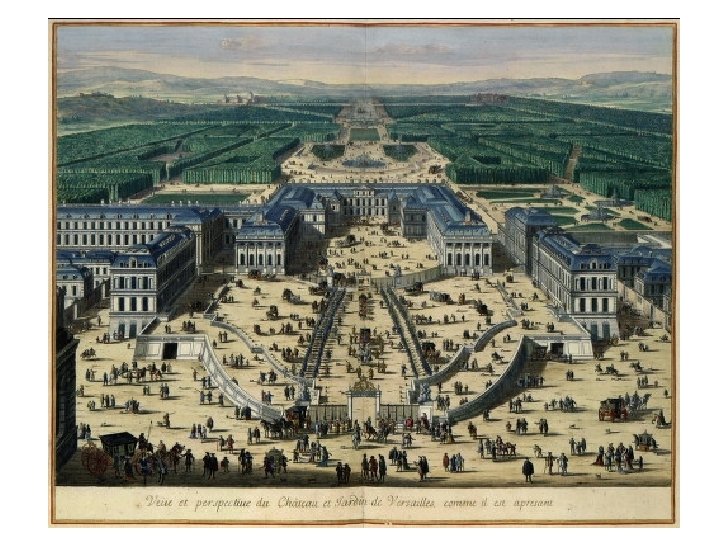
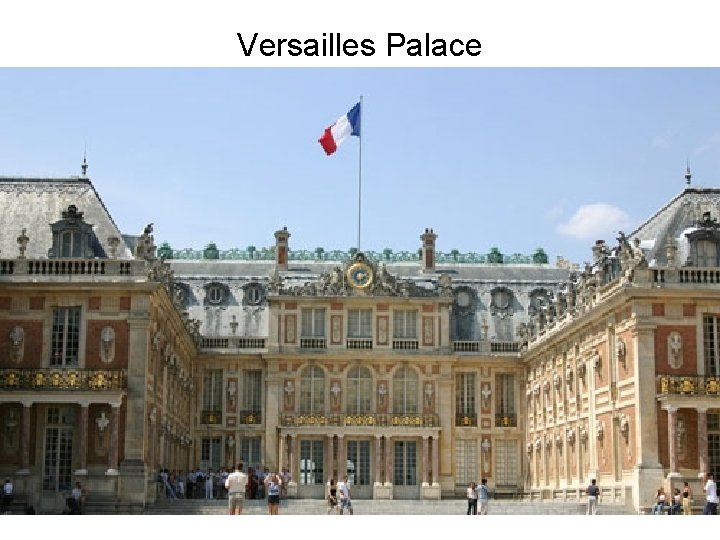
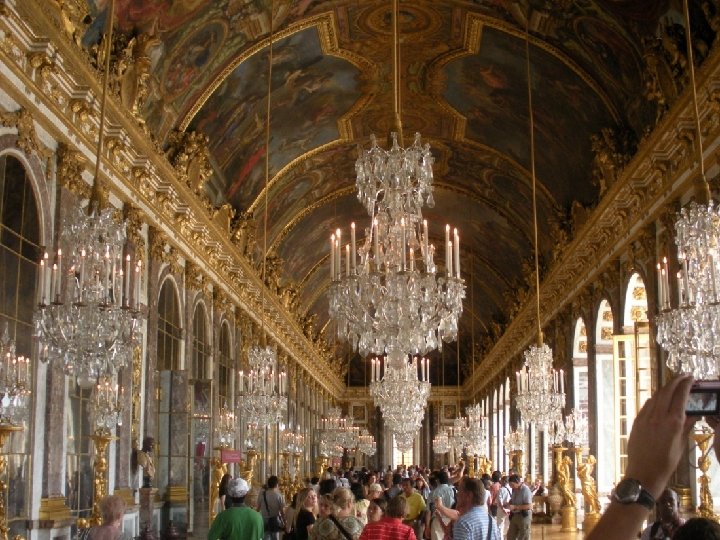
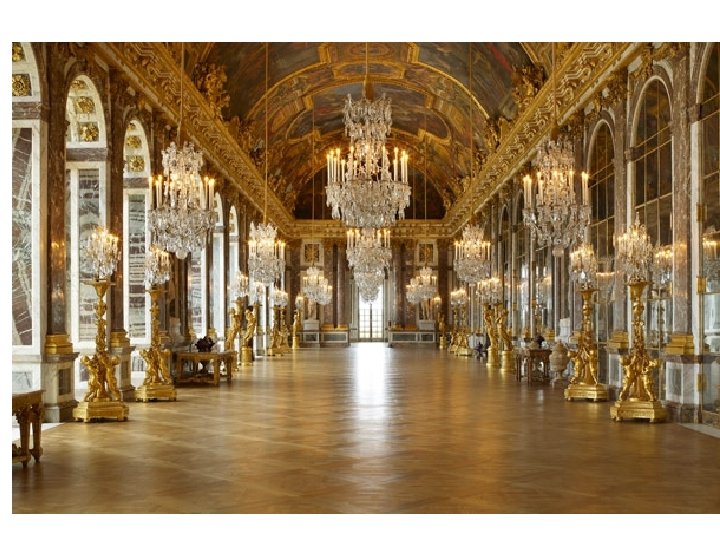
B. Absolutism in France 1. Louis XIV “The Sun King” a) 77 year rule = 1638 -1715 b) “I am the state” Louis XIV c) 1685 promoted Fr RCC, repressed the Hug’s “one king, one law, one faith” d) built Versailles Palace – symbol of power e) other absolutists copied the palace f) the language of Fr spread in Eu g) protected nobles but lessened their power h) secret police eliminated internal enemies
Versailles Palace
II. The Scientific Revolution A. Scientific Thought before 1500 1. based on ancient, medieval ideas 2. lack of questioning or skepticism - motionless earth at the center of the universe B. Causes of the Scientific Revolution 1. Medieval universities 2. The Renaissance, The Reformation 3. Medici family patronage in Italy 4. Invention of telescope, microscope C. Church Resistance to Science 1. 1632 - Galileo publicly defends Copernican theories - The Dialogue on the Two Chief Systems of the World 2. The Papal Inquisition – Galileo tried for heresy, he recants
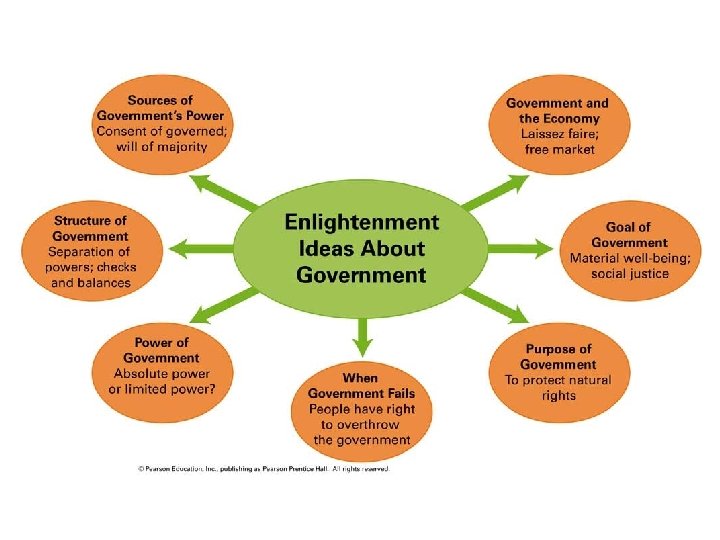
III. The Enlightenment “The Age of Reason” A. Enlightenment ideas came from liberal Philosophes 1. Natural Science and Reason can explain many aspects of life 2. Skepticism – nothing can be known beyond all doubt - question authority - question “the truth” - be open minded, creative 3. John Locke - Tabula Rasa – all are born w/blank slate - knowledge is gained through experience - therefore, positive change is possible
4. Voltaire - praised the Br for Constitutionalism - imprisoned in the Fr Bastille prison 5. Jean-Jacques Rousseau - The Social Contract –gov’t gets its power from the people - general will – “every member is a part of the whole” 6. Baron De Montesquieu - separation of powers
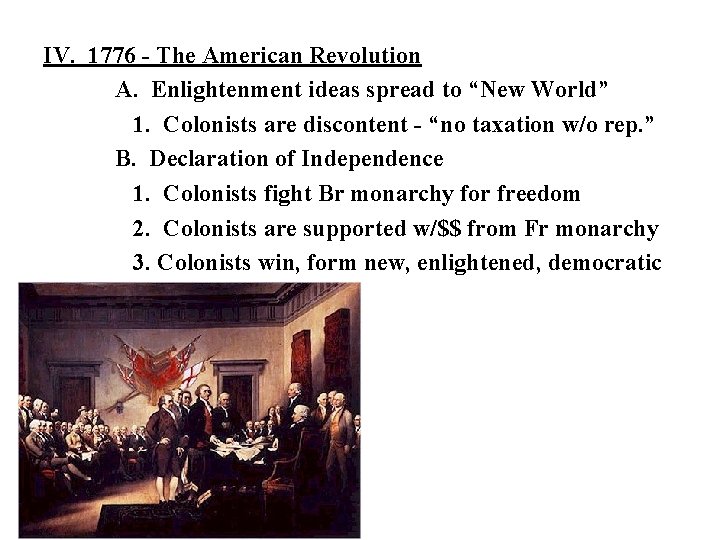
IV. 1776 - The American Revolution A. Enlightenment ideas spread to “New World” 1. Colonists are discontent - “no taxation w/o rep. ” B. Declaration of Independence 1. Colonists fight Br monarchy for freedom 2. Colonists are supported w/$$ from Fr monarchy 3. Colonists win, form new, enlightened, democratic gov’t
V. The Monarchy of Fr A. Absolute monarchy since fall of Rome 1. Capet-Bourbon Dynasty – Louis XIV, XVI 2. Society was divided in 3 parts - First Estate – clergy - Second Estate -- nobles, military - Third Estate – 98% of the pop. , tax payers a) bourgeoisie – bankers, merchants b) peasants – farmers, industry workers
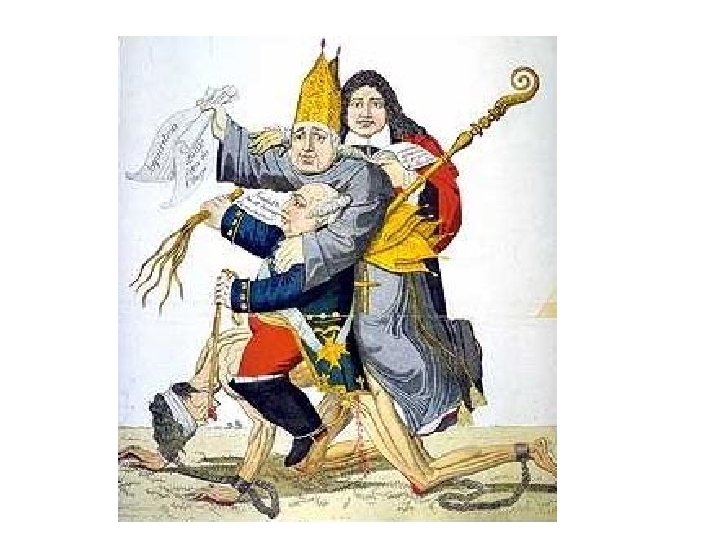
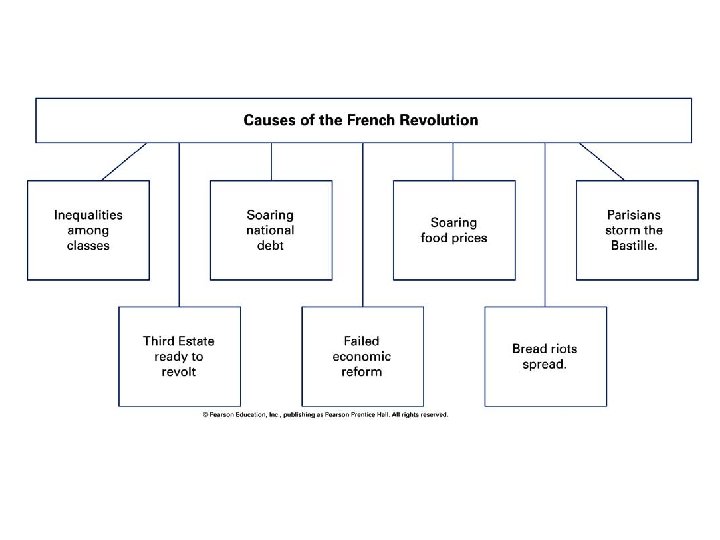
B. What causes revolution? IDEAS + DISCONTENT 1) Third estate in 1780’s: - resented the other estates - is struggling from poor harvest, high $$ ofbread - had been reading Enlightenment ideas - had heard of the Am Rev. - is overtaxed yet national treasury is depleted - is frustrated w/incompetent King Louis XVI and Queen “Madame Defecit” - began protesting, demanding liberty, equality, fraternity “Man is born free and everywhere he is in chains”
“What is the Third Estate? EVERYTHING What has it been in the political order up to now? NOTHING What is it asking for? To become SOMETHING. LIBERTÉ, EGALITÉ, FRATERNITÉ!” ~French pamphlet
C. How to restore the national treasury? 1) Jacques Necker (financial advisor) recommends taxing 1 st + 2 nd Estates 2) Necker is fired = more discontent!
VI. The Revolution Begins A) Louis XVI calls for the Estates General a) hasn’t met in 175 yrs b) Each Estate has 1 vote c) First and Second out-vote the Third B) May 5, 1789–Third refuses to vote “Tax collectors are bloodsuckers of the nation who drink the tears of the unfortunate from goblets of gold. ”
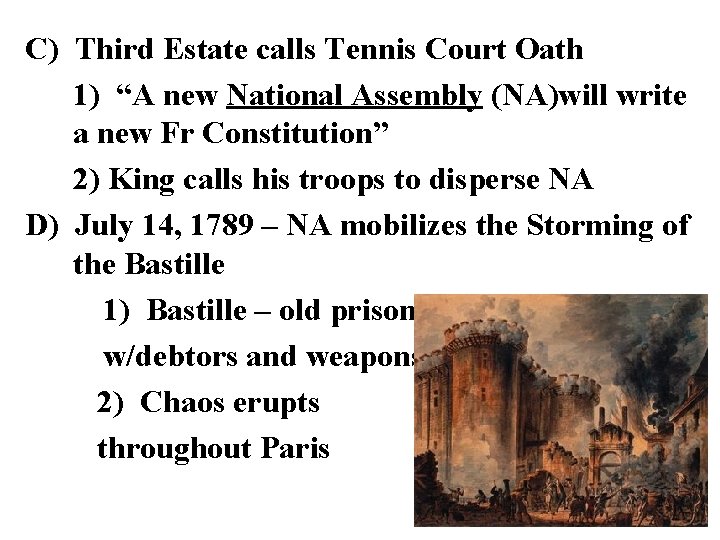
C) Third Estate calls Tennis Court Oath 1) “A new National Assembly (NA)will write a new Fr Constitution” 2) King calls his troops to disperse NA D) July 14, 1789 – NA mobilizes the Storming of the Bastille 1) Bastille – old prison w/debtors and weapons 2) Chaos erupts throughout Paris
VII. National Assembly creates a Constitutional Monarchy (Moderate Phase 1789 -1791) A) Immediate changes are forced upon the King 1) tithe tax, estate system to be abolished 2) Louis XVI is still King but must accept the Revolution 3) 1789 – “Declaration of the Rights of Man” a) ideas of the Enlightenment = freedom of speech, press, religion, etc. b) “Men are born and remain free and equal in rights. ”
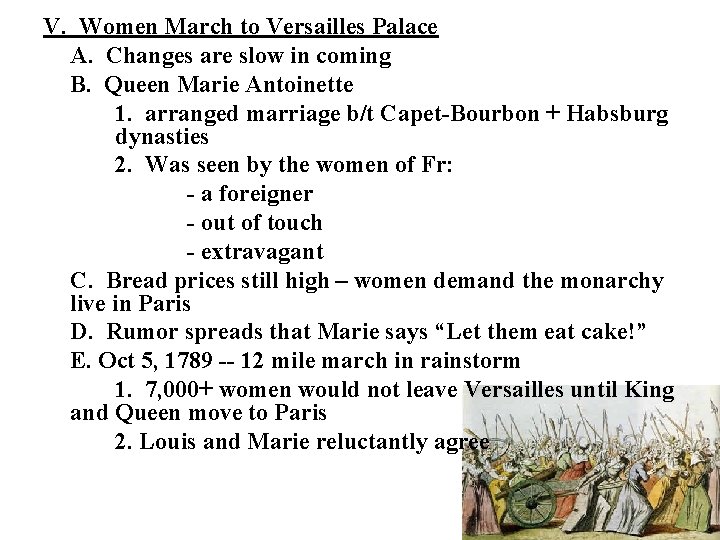
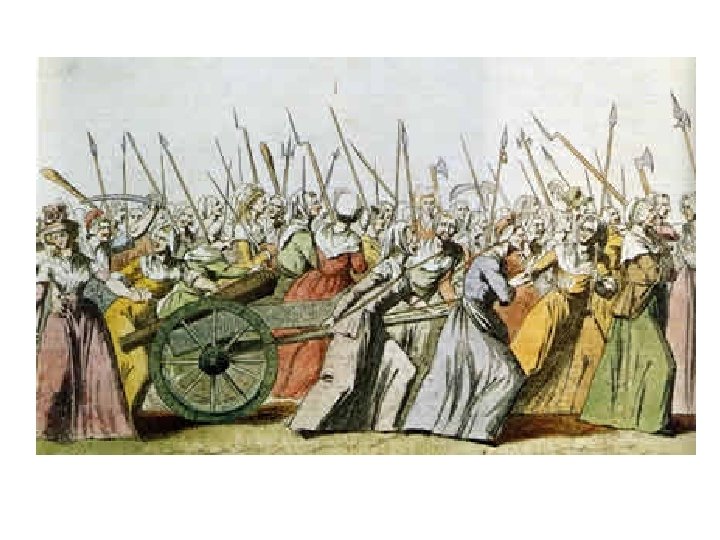
V. Women March to Versailles Palace A. Changes are slow in coming B. Queen Marie Antoinette 1. arranged marriage b/t Capet-Bourbon + Habsburg dynasties 2. Was seen by the women of Fr: - a foreigner - out of touch - extravagant C. Bread prices still high – women demand the monarchy live in Paris D. Rumor spreads that Marie says “Let them eat cake!” E. Oct 5, 1789 -- 12 mile march in rainstorm 1. 7, 000+ women would not leave Versailles until King and Queen move to Paris 2. Louis and Marie reluctantly agree
F. Louis and Marie Escape Paris 1. “The Flight to Varennes” a) June 1791 -Marie convinces Louis to flee in disguise - Recognized in Varennes, escorted back to Paris - Now seen as traitors 2. What to do with Louis and Marie?
VIII. The National Assembly Finishes the New Constitution A. The Constitution of 1791 1. Enlightenment ideas included in it a) 3 branches of gov’t b) weak, constitutional monarchy c) a new Legislative Assembly (LA) would hold the most power - Girondins -- moderates, conservatives “Revolution is complete!” - Jacobins -- radicals – “Revolution has just begun!” Jacobin “MOUNTAIN” Leader – Maximillien Robespierre
IX. War A. Declaration of Pillnitz - Au and Pr demand Fr monarchy be restored B. Sans-culottes and Jacobins - demand monarchy be abolished C. LA declares war on Au, Pr, Br –a preemptive strike D. LA votes to officially end the office of king
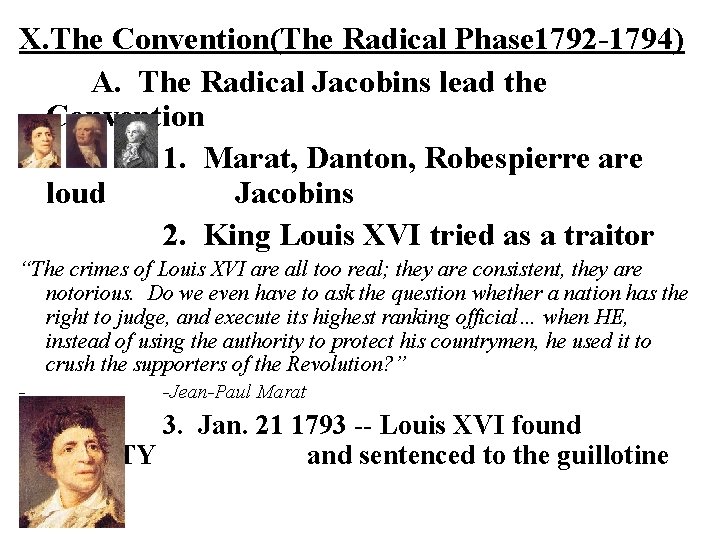
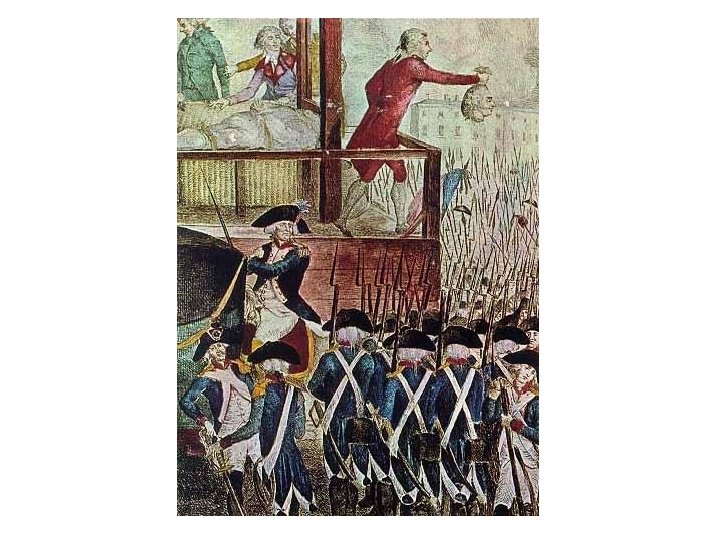
X. The Convention(The Radical Phase 1792 -1794) A. The Radical Jacobins lead the Convention 1. Marat, Danton, Robespierre are loud Jacobins 2. King Louis XVI tried as a traitor “The crimes of Louis XVI are all too real; they are consistent, they are notorious. Do we even have to ask the question whether a nation has the right to judge, and execute its highest ranking official… when HE, instead of using the authority to protect his countrymen, he used it to crush the supporters of the Revolution? ” - -Jean-Paul Marat 3. Jan. 21 1793 -- Louis XVI found GUILTY and sentenced to the guillotine
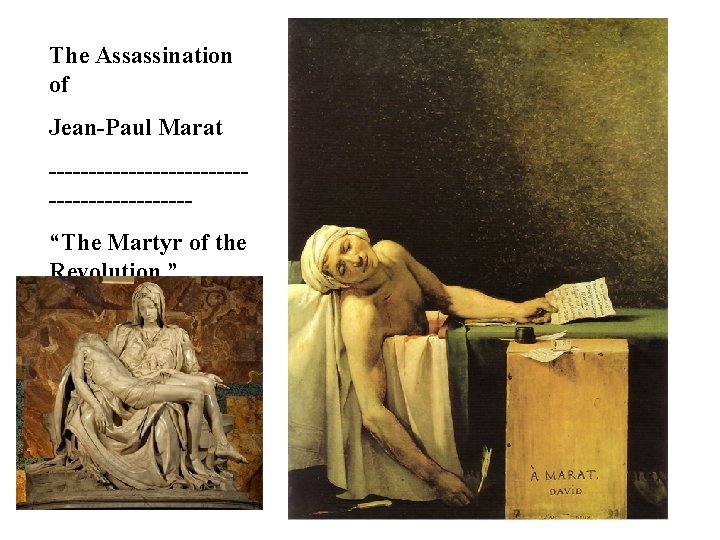
XI. The Reign of Terror (1793 -1794) A. “Threats” to the Revolution are everywhere 1. war w/ Au, Pr 2. nobles and clergy are rebelling 3. The Convention is being challenged by Girondins 4. July 1793 -- Marat is assassinated by a Girondin Charlotte Corday
The Assassination of Jean-Paul Marat ---------------------“The Martyr of the Revolution. ”
B. The Committee of Public Safety (CPS) 1. 12 Convention members who will “Save the Revolution” 2. Constitution of 1791 is suspended 3. De-Christianization is enacted - “the goddess of reason” 4. led by Robespierre - believed a republic of “virtue” could only be achieved through “terror. ” “Terror is nothing other than justice, prompt, severe, and inflexible. Terror without virtue is disastrous, but virtue without terror is powerless. Softness to traitors will destroy us all. ”
5. By July 1794 – 300, 000 “enemies of the revolution” were arrested 6. 17, 000 were beheaded by the guillotine 7. Robespierre has Danton executed 8. CPS arrests Robespierre and he is executed 9. 1793 -94 Fr war of aggression continues to defeat Au, Pr, Br, Sp, Holland = 1 st Coalition - Fr nationalism, emotional commitment, good vs. evil Danton
XII. The Directory (Napoleonic Phase 17951815) A. The Constitution of 1795 1. moderate 5 man leadership system called “The Directory” 2. a 2 house legislature 3. continued warring w/Eu 4. unsure, weak, corrupt, and unpopular with the people
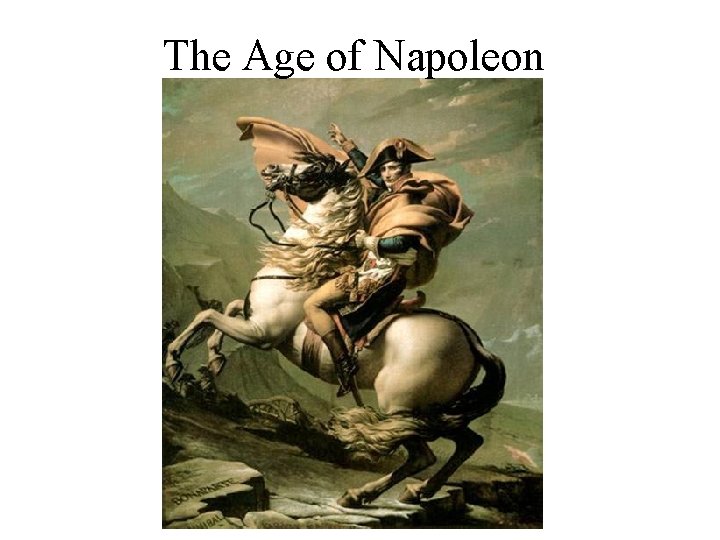
The Age of Napoleon
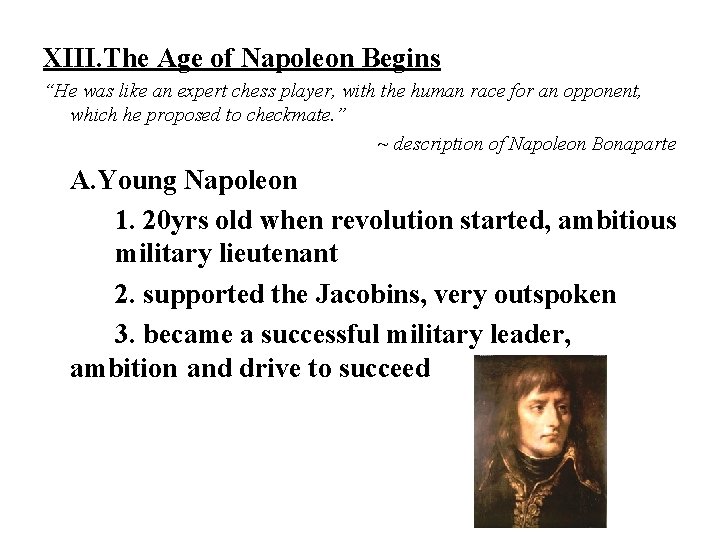
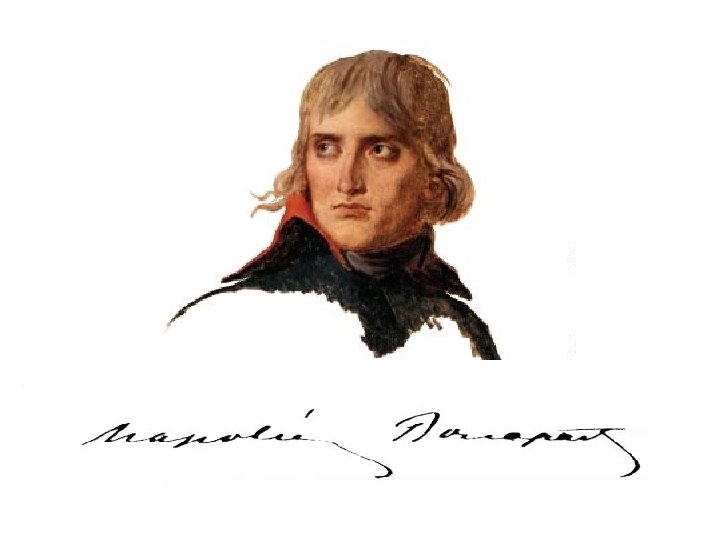
XIII. The Age of Napoleon Begins “He was like an expert chess player, with the human race for an opponent, which he proposed to checkmate. ” ~ description of Napoleon Bonaparte A. Young Napoleon 1. 20 yrs old when revolution started, ambitious military lieutenant 2. supported the Jacobins, very outspoken 3. became a successful military leader, ambition and drive to succeed
B. 1799 -- Napoleon Under the Directory 1. Fr wanted stability 2. N proposes a 3 -man governing group made up of disciplined military men 3. Directory is overthrown peacefully 4. N writes new Consulate Constitution 5. 1802 -- Names himself First Consul
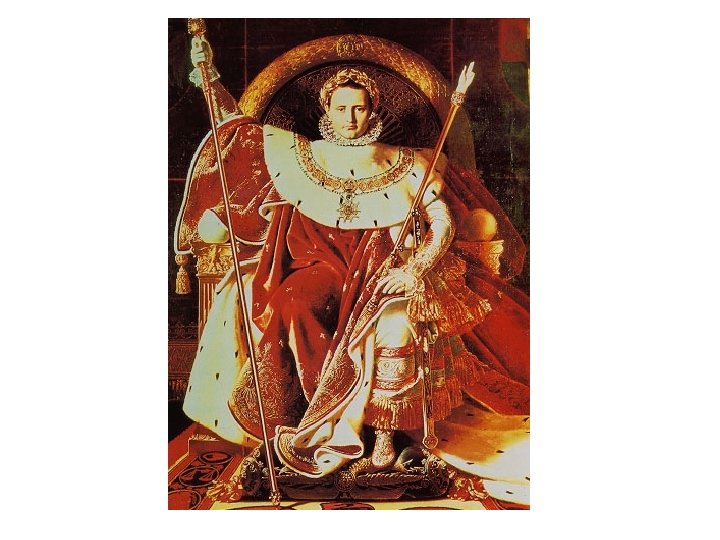
C. Napoleon’s Popularity 1. “order, security, efficiency” replaces “liberty, equality, fraternity” 2. plebiscite – voters can say yes or no to an issue 3. careers should be chosen based on talent 4. Napoleonic Code – laws of the Enlightenment were spoken but not always practiced - women excluded - freedom of press restricted - spy system created 5. Overall, N valued order over ind. rights 6. 1804 – N names himself Emperor of France
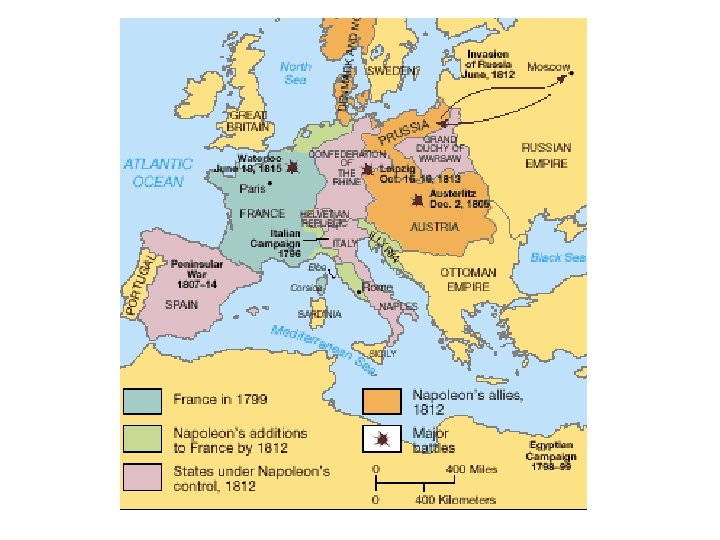
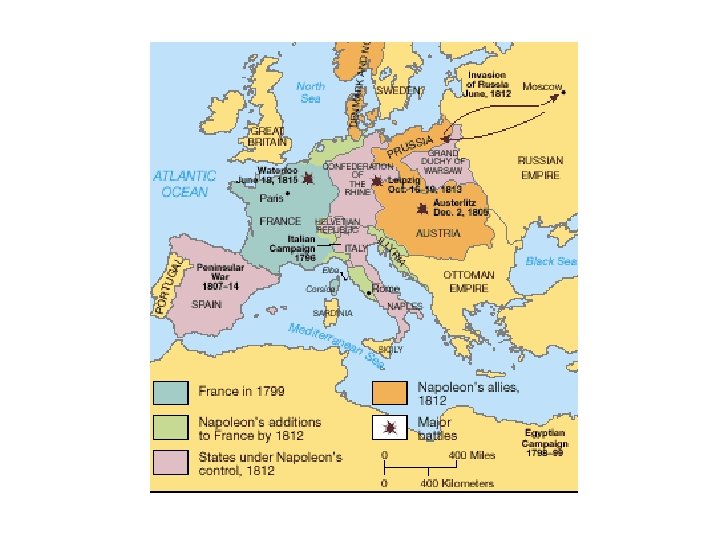
D. Napoleon: Emperor of Fr (1804 -1812) 1. Sought security for Fr a) conquered nearby territories easily “Napoleon’s presence on the battlefield was worth 40, 000 troops. ” b) threatened war w/others c) forced alliances 2. 1812 - almost all of Eu bowed to Fr 3. Fr pride soars
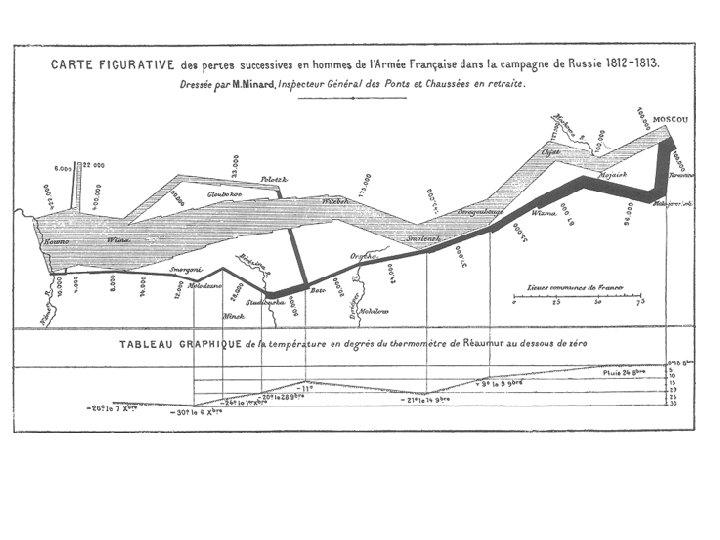
4. Br, Ru resisted Fr domination 5. The Continental System a) plan to defeat Br economically b) hurt all of Eu 6. Sp, Au citizens resist Fr influence 7. 1812 - N wanted “Madrid to Moscow” a) 600, 000 Fr troops to Ru
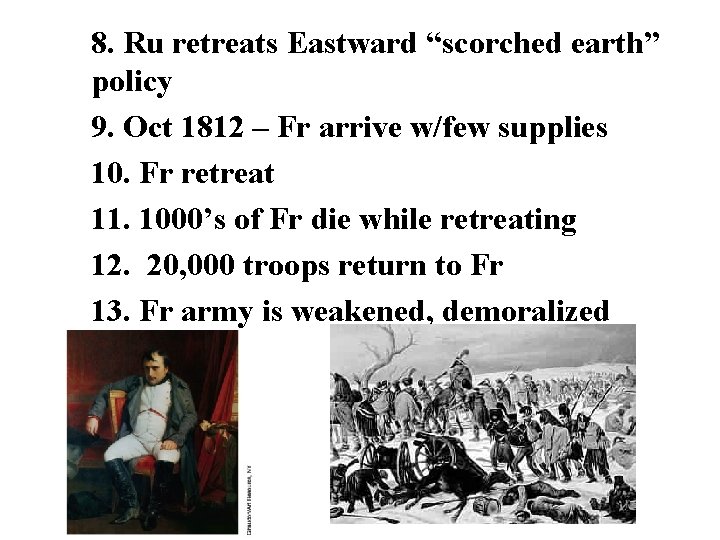
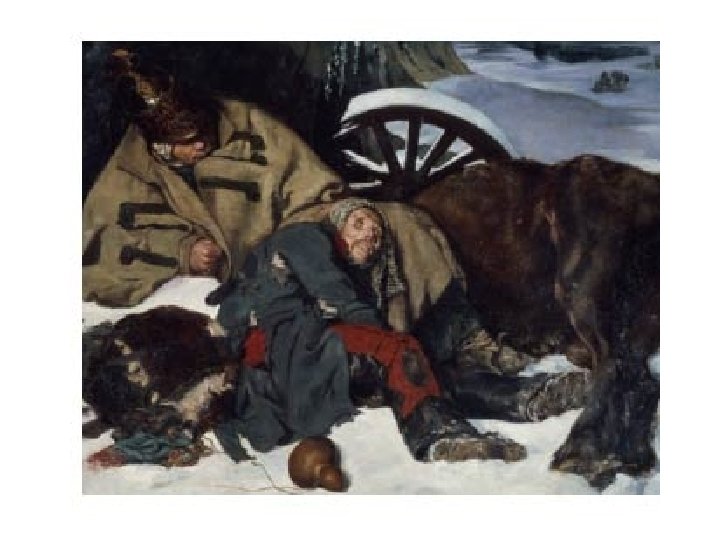
8. Ru retreats Eastward “scorched earth” policy 9. Oct 1812 – Fr arrive w/few supplies 10. Fr retreat 11. 1000’s of Fr die while retreating 12. 20, 000 troops return to Fr 13. Fr army is weakened, demoralized
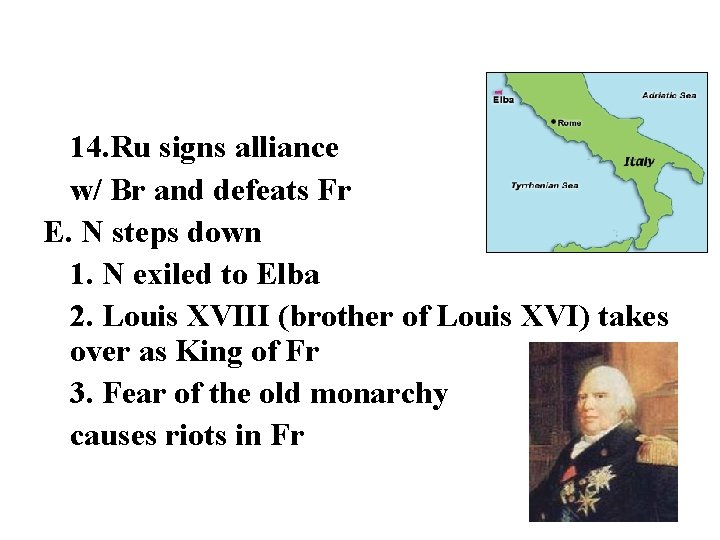
14. Ru signs alliance w/ Br and defeats Fr E. N steps down 1. N exiled to Elba 2. Louis XVIII (brother of Louis XVI) takes over as King of Fr 3. Fear of the old monarchy causes riots in Fr
F. March, 1815 -- N returns 1. Louis XVIII, fearful for his life, flees Fr 2. N is welcomed back 3. Battle of Waterloo -- Br and Pr again defeat Fr
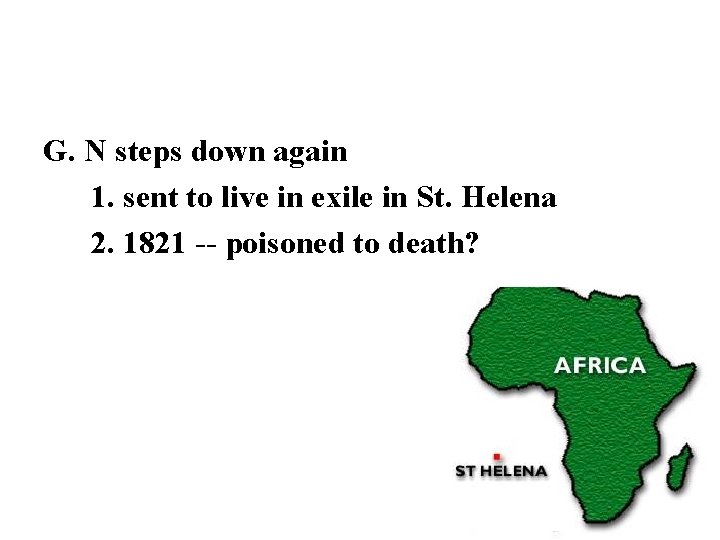
G. N steps down again 1. sent to live in exile in St. Helena 2. 1821 -- poisoned to death?
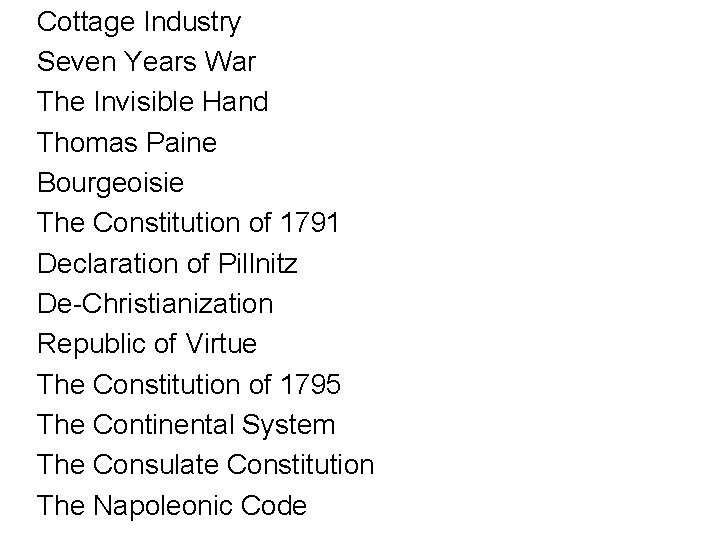
Cottage Industry Seven Years War The Invisible Hand Thomas Paine Bourgeoisie The Constitution of 1791 Declaration of Pillnitz De-Christianization Republic of Virtue The Constitution of 1795 The Continental System The Consulate Constitution The Napoleonic Code