
WORLD HISTORY Interwar Period The Middle East and
- Slides: 15
WORLD HISTORY Interwar Period The Middle East and India
Egypt Gains Independence Egypt remained a British protectorate during WWI, providing workers, food – and the Suez Canal Nationalists led resistance to British rule § Wafd party a cross-section of Egyptian society § Young, educated Egyptians wanted more opportunity Britain decided to give independence to a “friendly” government § § King Fuad leader of ‘independent’ Egypt in 1922 British interests (e. g. communication, defense) protected In 1930 s, Muslim Brotherhood sought freedom from foreign control and influence
The Father of Modern Turkey Mustafa Kemal born in Thessaloniki (now part of Greece), and received a secular education Pursued a military career and had the trust of the sultan § In Istanbul, allied with nationalists against the occupation to reclaim his country § Sultan put Mustafa Kemal in charge of restoring order in Anatolia – giving him command powers over governors Claiming sultan was under foreign control, he urged Turks to follow him to save their country Turkey became a republic in 1923 – and Mustafa Kemal became Atatürk – the father of the Turks
Atatürk’s Reforms The next fifteen years brought a wide range of reforms to Turkey under Atatürk’s leadership § § § Replaced Islamic law, Muslim calendar with Westernstyle laws, calendar Encouraged Western style dress Replaced Arabic script with Latin alphabet Opened secular state schools; closed religious ones Gave women new freedom • • § Allowed to vote, take jobs Polygamy banned; face veils not required Required citizens to take surnames Promoted industrial expansion – factories, railroads
Westernization Spreads to Iran Last of the Qajar shahs, Ahmad Shah, was an incompetent ruler with a corrupt government Reza Khan a young military officer, allied with nationalists § Imposing presence, but not seen as a real challenge to shah § Became minister of war, and later prime minister Became shah when Ahmad was deposed in 1923 (Reza Shah Pahlavi) § § § Implemented similar reforms as Atatürk had Used strong army to break power of tribes Renegotiated oil contracts in favor of Iran (profits, jobs) Had the support of wealthy Iranians – but the mullahs saw him as a heretic
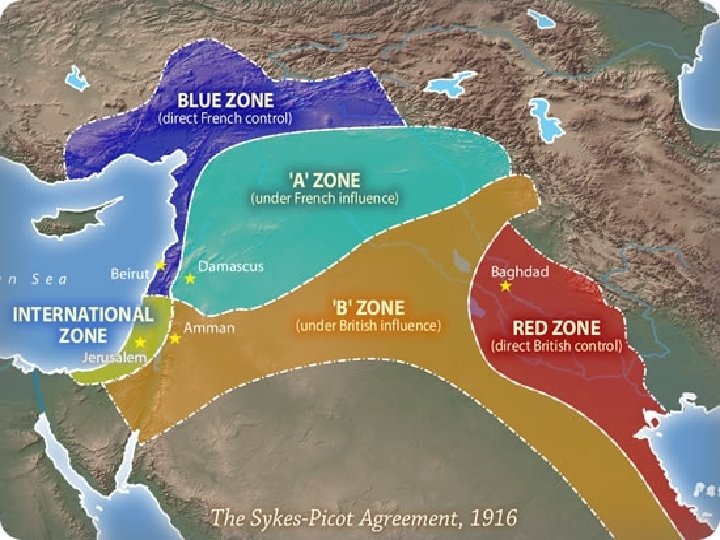
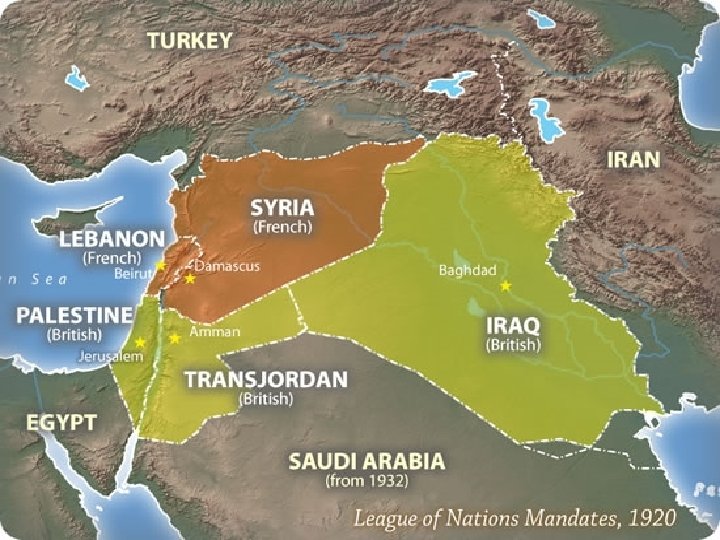
Post-war Mandates Fueled Nationalism “Middle East” Arabs felt betrayed by mandates § Wanted independence, self-determination § Territories had been divided between Britain, France Control of mandates given to local tribal leaders supportive of Western interests § § Hashemite brothers Abdullah, Faisal given control of Transjordan, Iraq New kingdoms required Western financial, political support to stay in power Ibn Saud established new Wahhabist kingdom of Saudi Arabia – making Britain’s ongoing support for the Hashemite kings critical
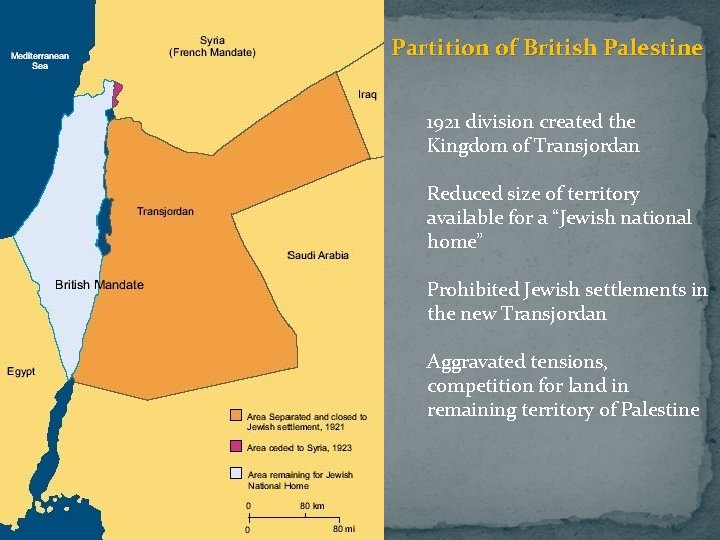
Partition of British Palestine 1921 division created the Kingdom of Transjordan Reduced size of territory available for a “Jewish national home” Prohibited Jewish settlements in the new Transjordan Aggravated tensions, competition for land in remaining territory of Palestine
The Balfour Declaration Arab nationalists, Jewish “Zionists” all believed they had an ancestral and religious claim to Palestine Zionist movement in response to European anti- Semitism § § § Many misconceptions about Jewish faith Many blamed the Jews for social, economic problems Jews often forced to live in separate ghettos Zionists worked to create a Jewish homeland in Palestine In 1917, British Foreign Secretary Arthur Balfour wrote a declaration in support of such a homeland for Jews
Promises and Conflict in Palestine Zionists – mostly from Eastern Europe and Russia – established communal farms (kibbutzim) in Palestine Jews around the world funded further land purchases, increasing settlements Balfour Declaration set up essential ongoing conflict – it supported Zionists, but also preserved the right of existing communities to live on their own land § § § Difficulties intensified as Jewish migrations increased Migrants brought money and skills, new farming methods Arabs attacked Jewish settlements; Jews sought military support to defend themselves
India Moves Toward Independence After WWI, Britain unwilling to grant independence to its most profitable colony In 1919, protests in Amritsar over taxes, conscription § British officials put city under martial law, and prohibited public meetings, to keep order § On April 13, visitors arrived for annual festivals in the city – not knowing about restrictions § British soldiers surrounded park and fired until they were out of ammunition (the Amritsar Massacre) Massacre was a turning point – time for British to go!
Satyagraha to Oppose Injustice Indian National Congress needed a leader – and found one in Mohandas K. Gandhi (also called the Mahatma) His experience with racial prejudice, segregation shaped his view of social change § § Satyagraha – insistence on truth, “soul-force” Don’t inflict violence on oppressors – demonstrate it oneself Belief in civil resistance – not obligated to obey laws that are unjust (similar to Thoreau!) Followed Hindu tradition of ahimsa – love and reverence for all life § § Rejected old order of caste system, and “untouchability” Advocated equal rights for men and women
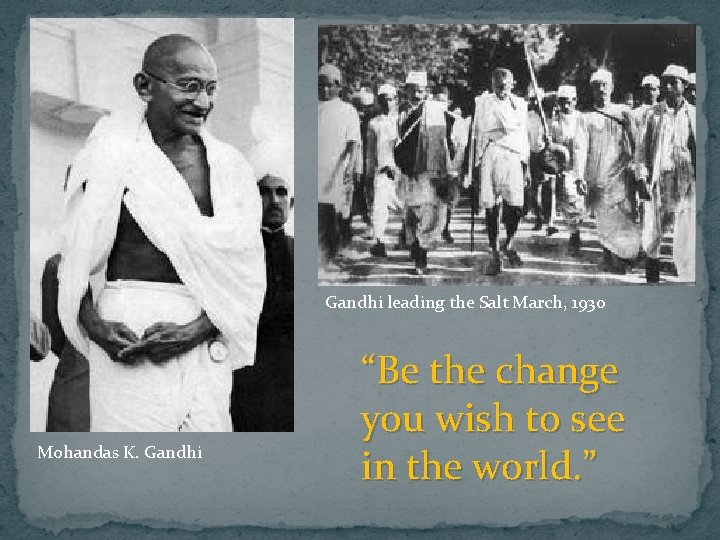
Gandhi leading the Salt March, 1930 Mohandas K. Gandhi “Be the change you wish to see in the world. ”
Leading By Example Gandhi did not ask Indians to make any sacrifice he was not willing to make himself Salt – an everyday necessity – became a symbol of British oppression, as Indians forced to buy it only from the British § § § In 1930, Gandhi led the Salt March to gather sea salt in defiance of British law Non-violent protest spurred other, similar actions across India British not sure what to do! Jailed thousands… including Gandhi British realized they could not rule India without the consent of the Indians! Gradually, gave India greater autonomy Minority Muslims sought – and got – separate state: Pakistan