
World History at a Glance Renaissance 15 th





- Slides: 20
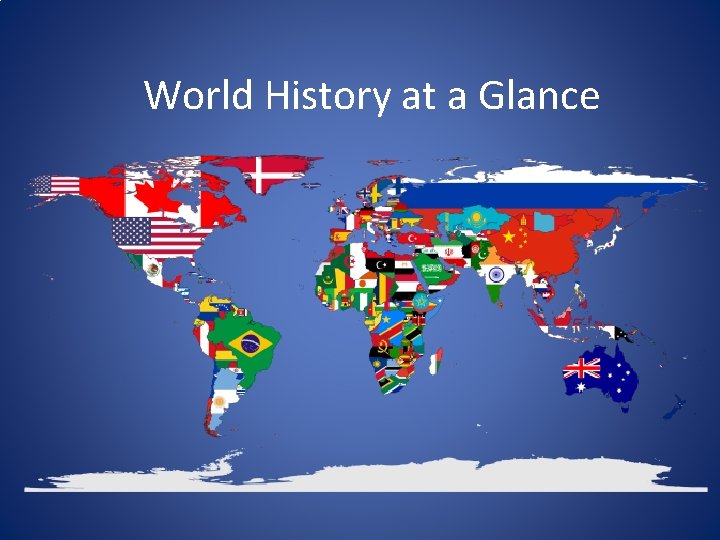
World History at a Glance
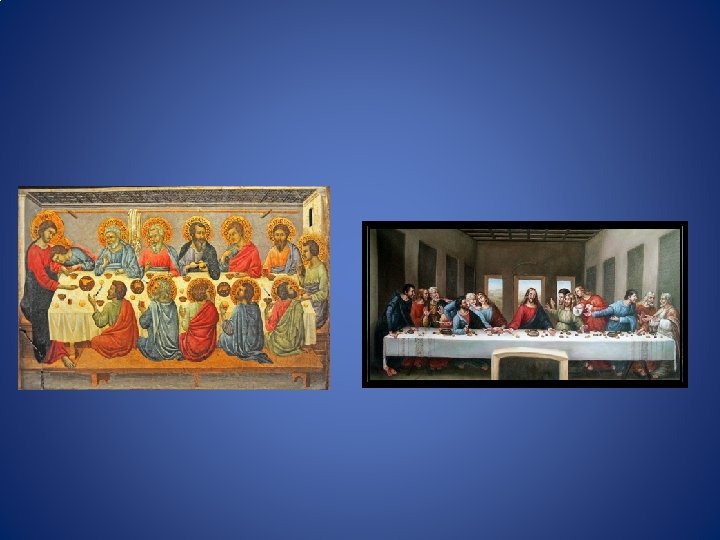
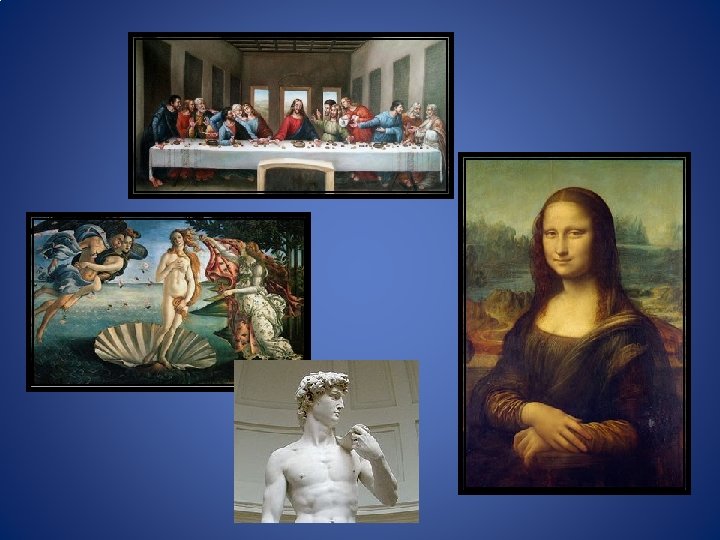
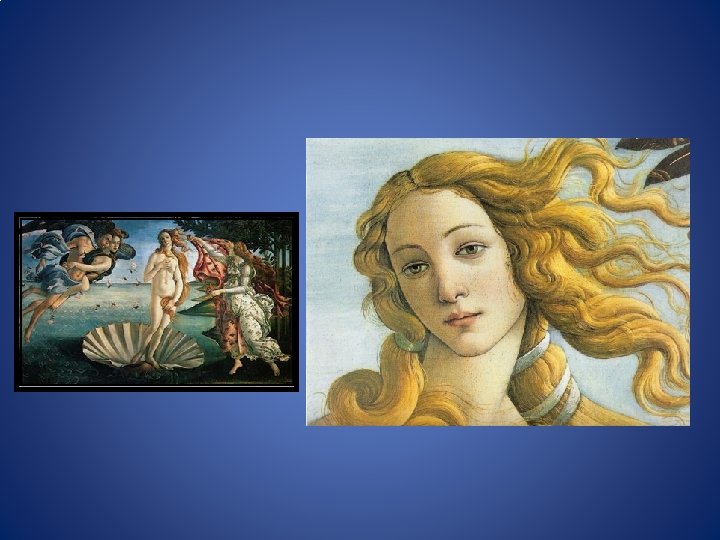
Renaissance 15 th century • Period in history after the Middle Ages (aka the Dark Ages) • Means “rebirth” • Interest in classical learning (Greeks, Romans) • New ways of thinking, exploration, art developed at this time
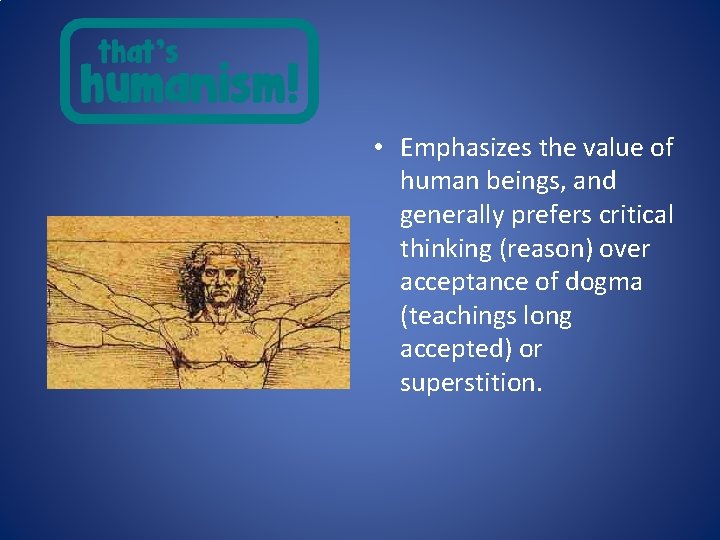
• Emphasizes the value of human beings, and generally prefers critical thinking (reason) over acceptance of dogma (teachings long accepted) or superstition.
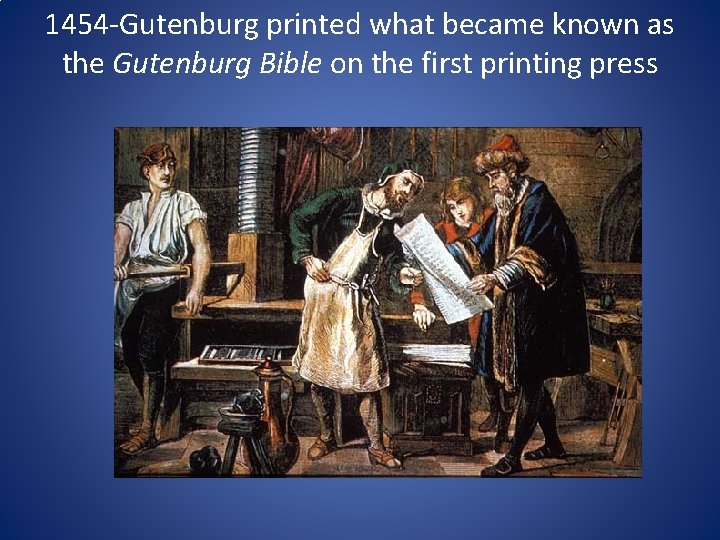
1454 -Gutenburg printed what became known as the Gutenburg Bible on the first printing press
Intertwined… • Scientific Revolution – new ways of thinking and viewing the universe • new technologies • Age of Exploration
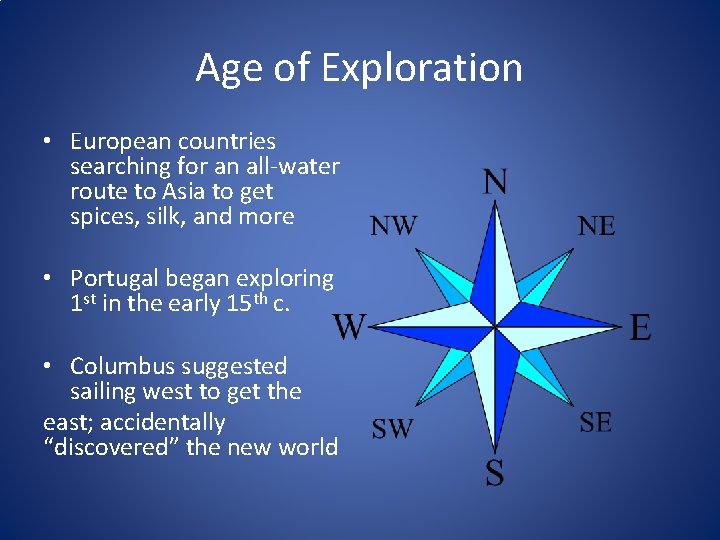
Age of Exploration • European countries searching for an all-water route to Asia to get spices, silk, and more • Portugal began exploring 1 st in the early 15 th c. • Columbus suggested sailing west to get the east; accidentally “discovered” the new world
How did Europeans influence the areas they explored/colonized? • Created colonies • Spread Christianity • Introduced new language • Regulated trade (controlled the economy)
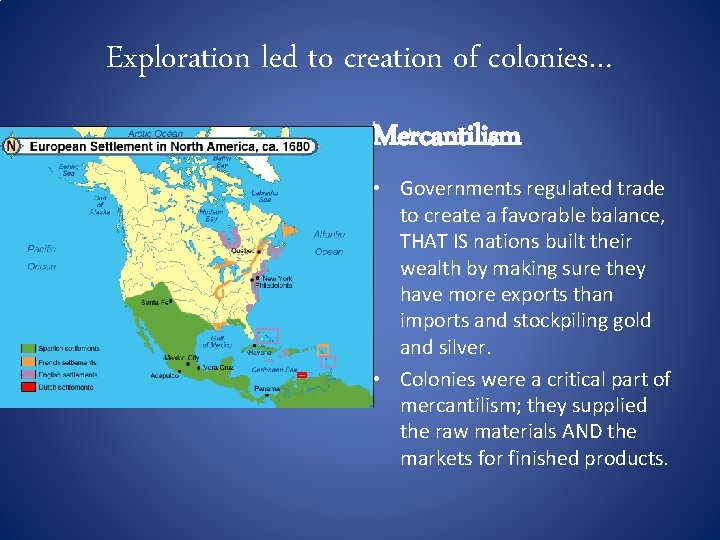
Exploration led to creation of colonies… Mercantilism • Governments regulated trade to create a favorable balance, THAT IS nations built their wealth by making sure they have more exports than imports and stockpiling gold and silver. • Colonies were a critical part of mercantilism; they supplied the raw materials AND the markets for finished products.
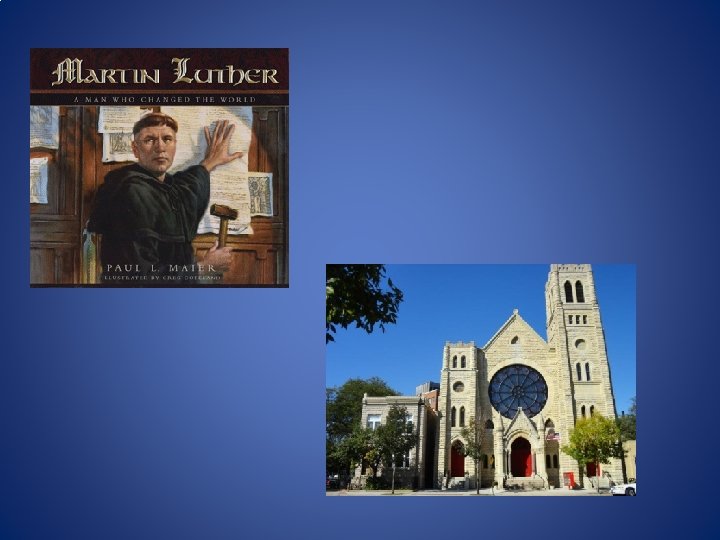
Protestant Reformation • The Protestant Reformation was a major 16 th century European movement aimed initially at reforming the beliefs and practices of the Church Key ideas of the Reformation – a call to purify the church – a belief that the Bible, not tradition, should be the sole source of spiritual authority
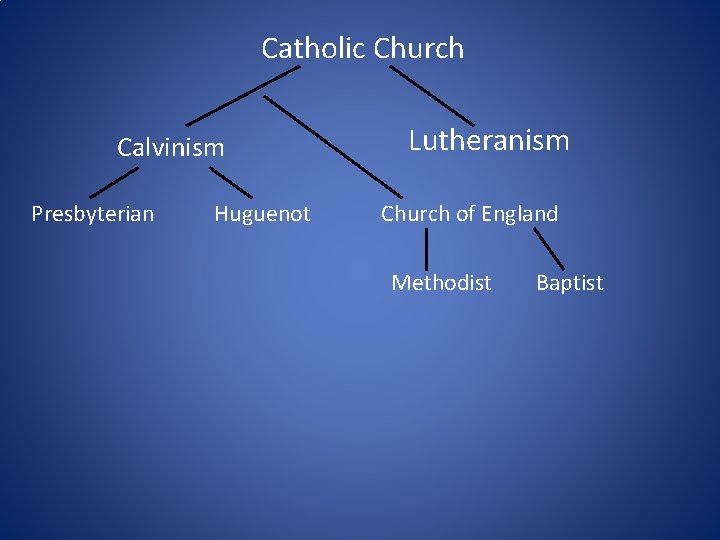
Catholic Church Calvinism Presbyterian Huguenot Lutheranism Church of England Methodist Baptist