
World History 3219 May 2017 Yugoslavia was created
- Slides: 22
World History 3219 May 2017
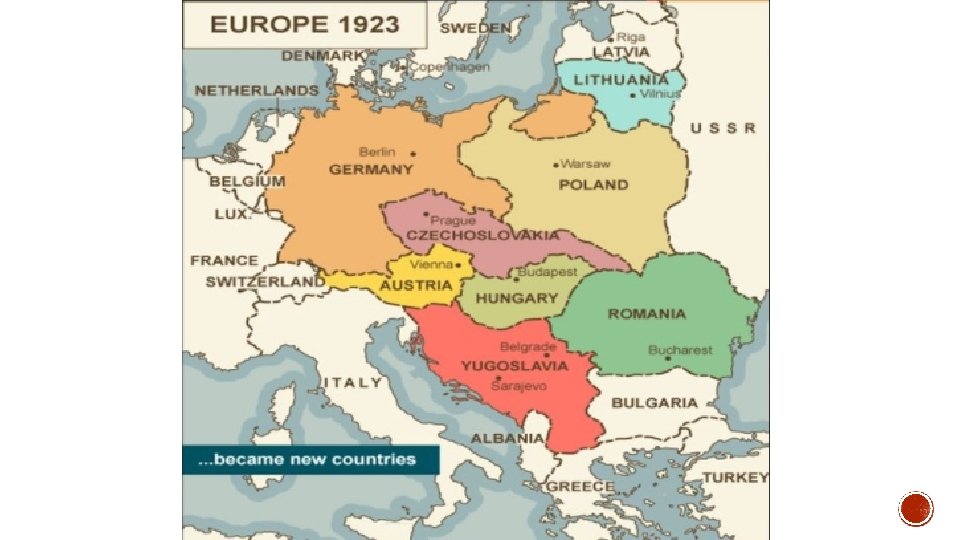
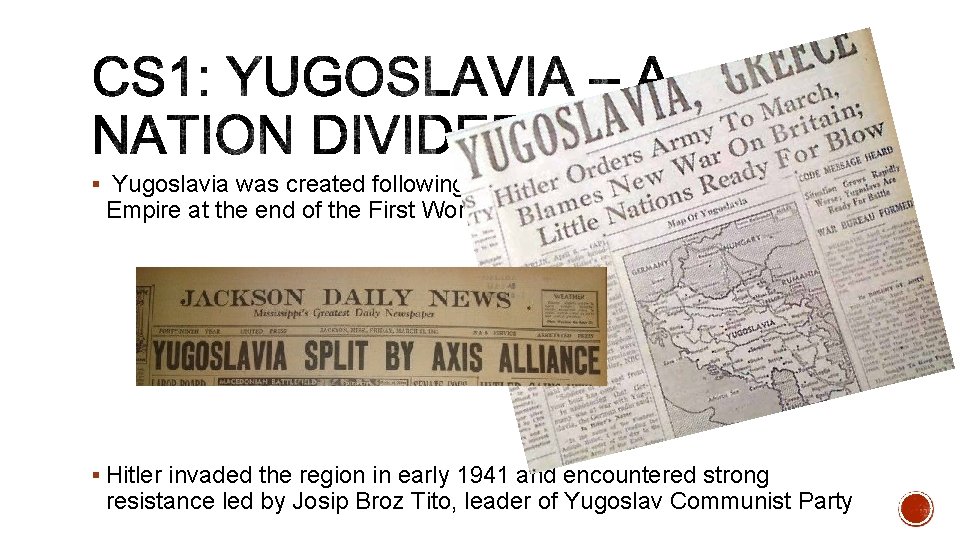
§ Yugoslavia was created following the breakup of the Austro-Hungarian Empire at the end of the First World War. § Hitler invaded the region in early 1941 and encountered strong resistance led by Josip Broz Tito, leader of Yugoslav Communist Party
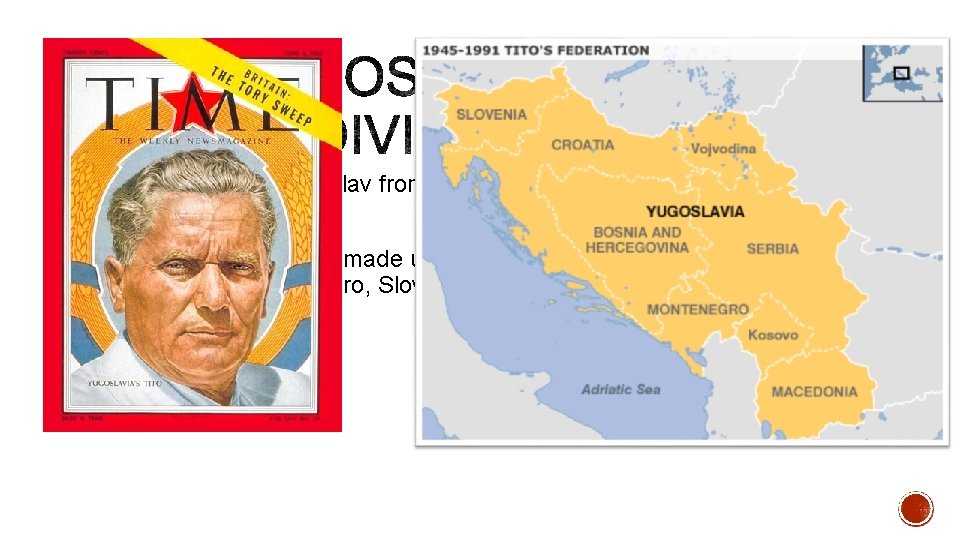
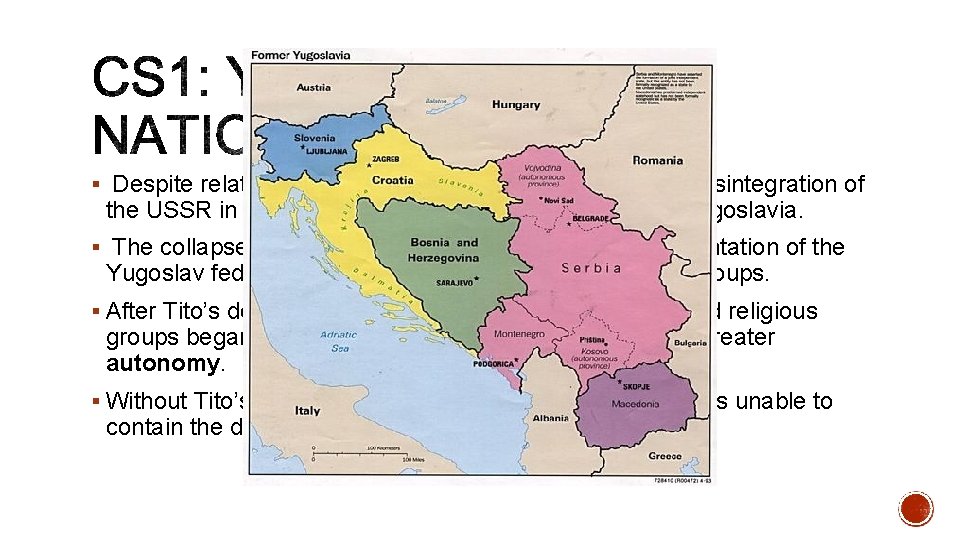
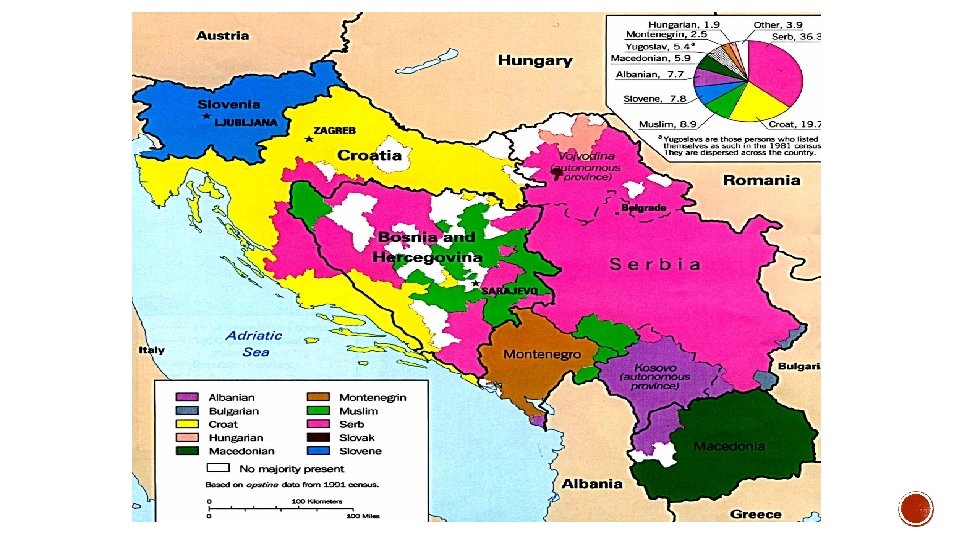
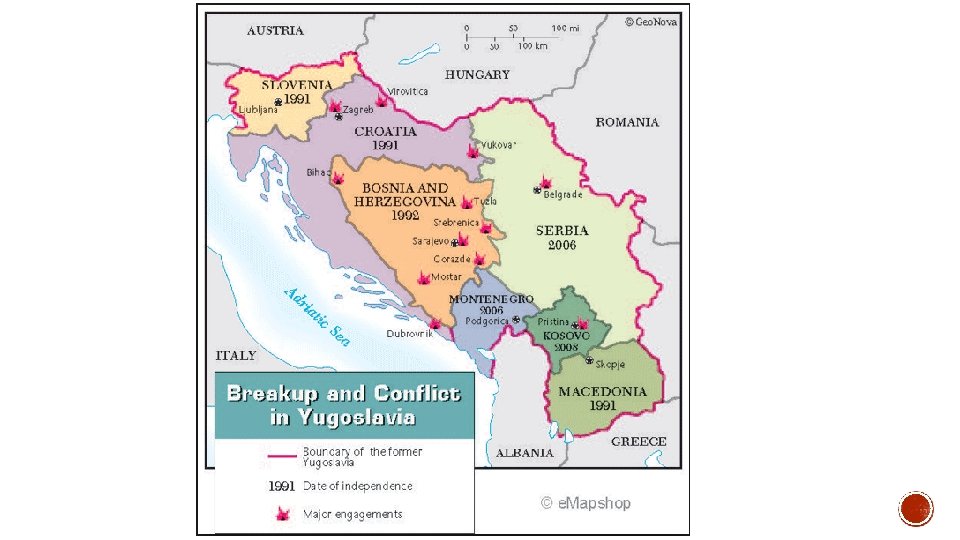
§ Tito would lead Yugoslav from 1945 – 1980 § Tito’s Yugoslavia was made up of six republics: Bosnia, Croatia, Macedonia, Montenegro, Slovenia, and Serbia.
§ Yugoslavia was made up of 6 republics with many different ethnic groups (p. 229). § Josip Tito, communist dictator of Yugo. , kept everyone in line. He did not take orders from Moscow & refused to become a satellite like communist Eastern Europe. § After Tito’s death in 1980, Yugo was prosperous, peaceful, & independent ( Olympic Winter Games held in Sarajevo in 1984)
§ Despite relative independence from Soviet control, the disintegration of the USSR in the late 1980 s had a profound impact on Yugoslavia. § The collapse of Soviet communism triggered the fragmentation of the Yugoslav federation into competing ethnic and political groups. § After Tito’s death in 1980, Yugoslavia’s various ethnic and religious groups began raising their nationalist voices to demand greater autonomy. § Without Tito’s strong leadership, the Communist Party was unable to contain the discord
§ By the late 1980 s as communism was ending across Eastern Europe & within the USSR, Communist Party in Yugoslavia was also losing grip on power § In 1990, multi-party elections were held in the republics and the communists were defeated everywhere except in Serbia and Montenegro. § By late 1990, events started that would end Yugoslavia and bring a brutal civil war and ethnic cleansing to this region
§ In June 1991, both Slovenia and Croatia declared their independence & the Serb-dominated Yugoslav army attempted to stop them an keep the country together § Militias were formed to defend the newly proclaimed nations & various ethnic communities armed themselves and dug into defensive enclaves. § The fighting raged throughout 1991, killing thousands of soldiers and civilians. § By the end of 1991 it was clear that the Serbian government had failed to prevent the breakup of Yugoslavia, it was determined to prevent the separation of Bosnia-Hercegovina
§ In 1991 fighting broke out between Serbs & Croats when Croatia declared itself a sovereign state for the Croats (Nationalism) § Croatia: 75% Croats 12% Serbs § Serbs in Croatia immediately rebelled. § Serbia supported the rebels (obviously) & thousands were killed.
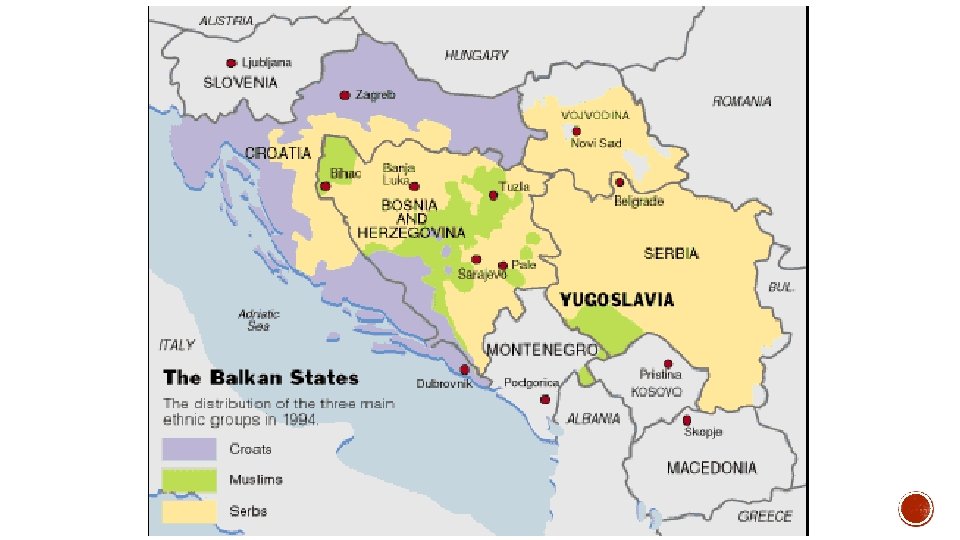
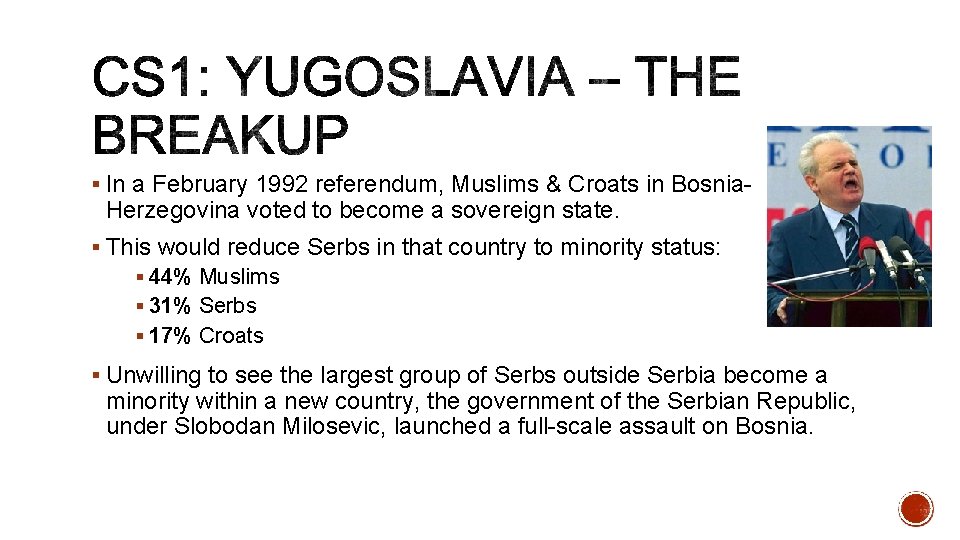
§ In a February 1992 referendum, Muslims & Croats in Bosnia- Herzegovina voted to become a sovereign state. § This would reduce Serbs in that country to minority status: § 44% Muslims § 31% Serbs § 17% Croats § Unwilling to see the largest group of Serbs outside Serbia become a minority within a new country, the government of the Serbian Republic, under Slobodan Milosevic, launched a full-scale assault on Bosnia.
§ Serb forces moved into Serbian enclaves in Bosnia-Herzegovina in an attempt to eliminate all Muslims and Croats from these regions. § People were driven out of their homes, and houses were systematically burned down to prevent the return of the expelled Muslim or Catholic residents. § This policy of forcing ethnic groups out of a region became known as “ethnic cleansing. ” § By its nature, ethnic cleansing was directed at civilians.
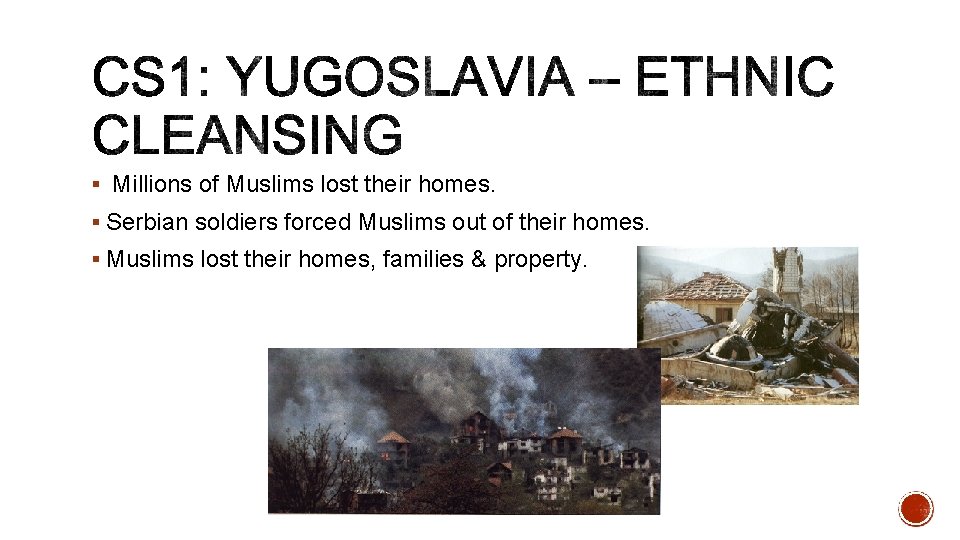
§ Millions of Muslims lost their homes. § Serbian soldiers forced Muslims out of their homes. § Muslims lost their homes, families & property.
§ Return to Sarajevo: CBC The National 20 year visit
§ UN recognized independence of B-H in April 1992. § Imposed harsh sanctions on Serbia. § Established peace. KEEPING force in Sarajevo to keep relief supplies coming in & uphold (temporary) ceasefires between Serbs & Muslims/Croats. § Forces had NO mandate to impose peace or intervene in conflict.
§ Amid escalating fighting, Yugoslavia was expelled from the UN. § It became more dangerous for UN Peacekeepers stationed there. § Feb 1994, NATO intervened & bombed a Serbian stronghold in what they deemed a peace. MAKING operation.
§ Situation became more dangerous as there were now two foreign groups involved in the Bosnian Civil War: § UN peacekeeping operation to deliver humanitarian aid & protect civilians § NATO peacemaking operation to stop Serbian offensive *Both failed to provide lasting peace Shame of Srebrenica (Video overview of the failure of Peacekeeping to prevent ethnic cleansing
§ In 1995, the B-H War ended when Milošević signed the Dayton Accord acknowledging a Serb Republic & a Muslim-Croat Federation. § War & ethnic cleansing (against Albanians) continued when Serbia invaded Kosovo until NATO forces finally defeated the Serbs in 1999.
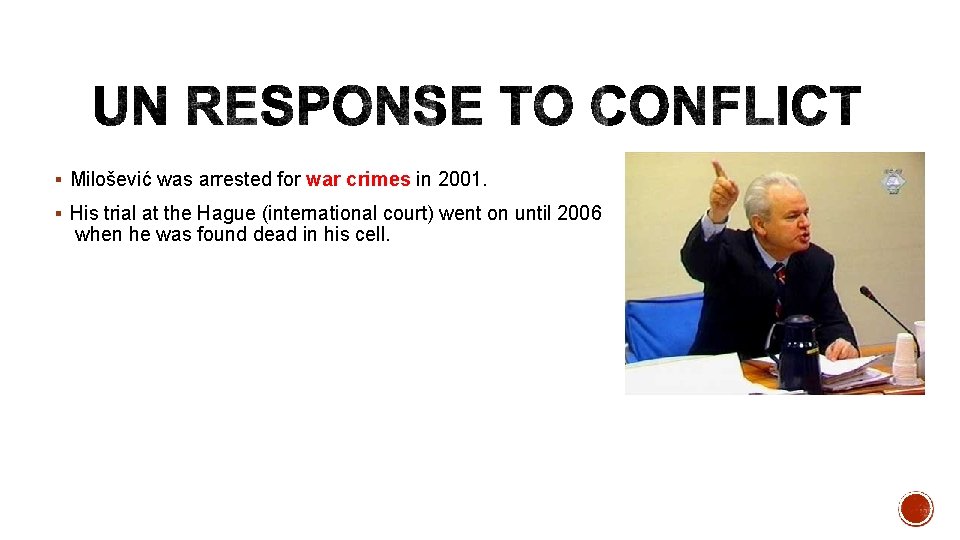
§ Milošević was arrested for war crimes in 2001. § His trial at the Hague (international court) went on until 2006 when he was found dead in his cell.