
World Economy Administrative information Libor dek Department of
World Economy
Administrative information • Libor Žídek • Department of Economics – Room No. 613 • Office hours – Tuesday 13: 00 – 14: 30 • e-mail - zidek@econ. muni. cz • IS: interactive syllabus
Administrative information • literature: Dějiny světového hospodářství • graphs and tables • supplementary literature: in IS by themes • lectures • don´t be afraid and ask questions • but, PLEASE, keep calm • play with any screen is impolite and for me highly unpleasant! • ROPOTS in IS! • obligatory for everyone on a weekly basis • absence • ONE possible during the semester • excused only in the case of written excuse in IS
Final exam • written –both textbook and lectures are required • macroeconomics included • X to pass your exams as soon as possible -> my interest • continuous learning is recommended
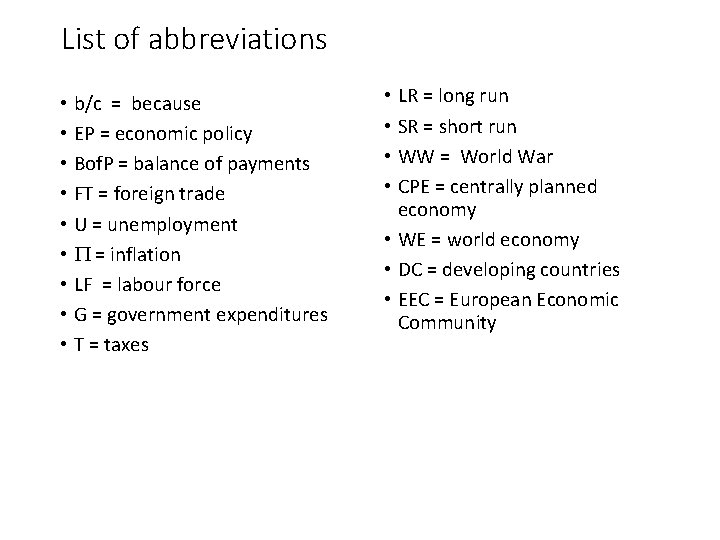
List of abbreviations • b/c = because • EP = economic policy • Bof. P = balance of payments • FT = foreign trade • U = unemployment • = inflation • LF = labour force • G = government expenditures • T = taxes • LR = long run • SR = short run • WW = World War • CPE = centrally planned economy • WE = world economy • DC = developing countries • EEC = European Economic Community
Subject matter • Goal: to get know the basics of development and current situation of the WE • information • connections • effect of policy on the WE • After the course – you would: • be familiar with basic connections of the development of the WE since 1800 • better understand the current international situation • be able to connect the current development with its historical causes
What is WE? • Definition (e. g. ): • WE as scientific discipline – subject of its study is the real global socio-economic system • WE is the single social organism in which national economies are integrated at varying degrees through international division of labour and material elements of economic relations. • We will consider within the WE • a global economy (at worldwide level) – its development as well as the development of individual economies, relations among them, relations among supranational blocs and relations to international organizations.
Course content • Lectures No. 1 -6 – chronological development of WE from the beginning of 19 th century to 1990 • Lecture No. 7 – development of the International Monetary System • Lectures No. 8 -9 – development in 3 key economic centers (USA, Europe, Japan) after WW 2 • Lectures No. 10 -12 – DC, Russia and CPR, Czechoslovakia and international institutions • Lecture No. 13 – current situation in the WE
Content of this lecture A. Short revision of basics of macroeconomics B. Global trends
Short revision of basics of macroeconomics
A. Macro • GDP real X nominal • shortcomings of GDP • econ. growth X econ. development • e. g. Human Development Index - HDI • since 1990 by UNDP • GDP per capita, literacy and life expectancy • actual data on WWW. UNDP. ORG (H) • potencial product • economic cycle
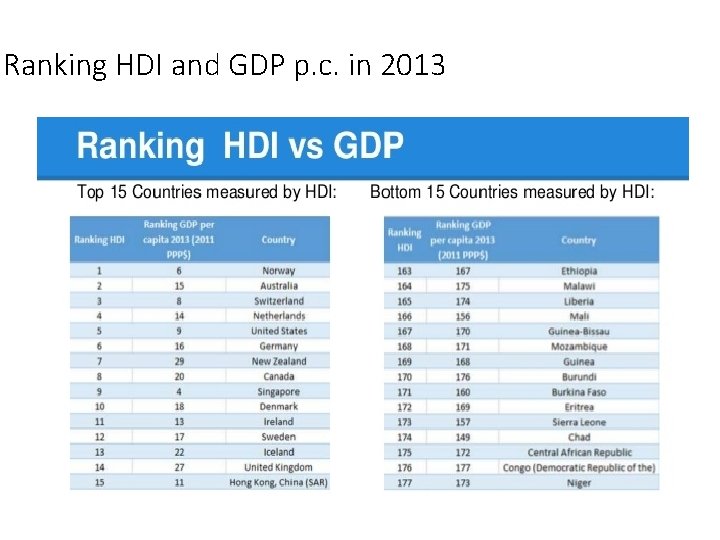
Ranking HDI and GDP p. c. in 2013
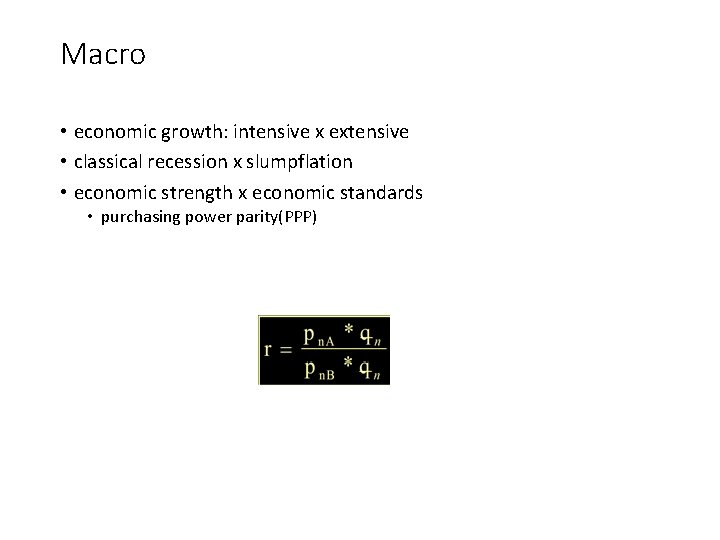
Macro • economic growth: intensive x extensive • classical recession x slumpflation • economic strength x economic standards • purchasing power parity(PPP)
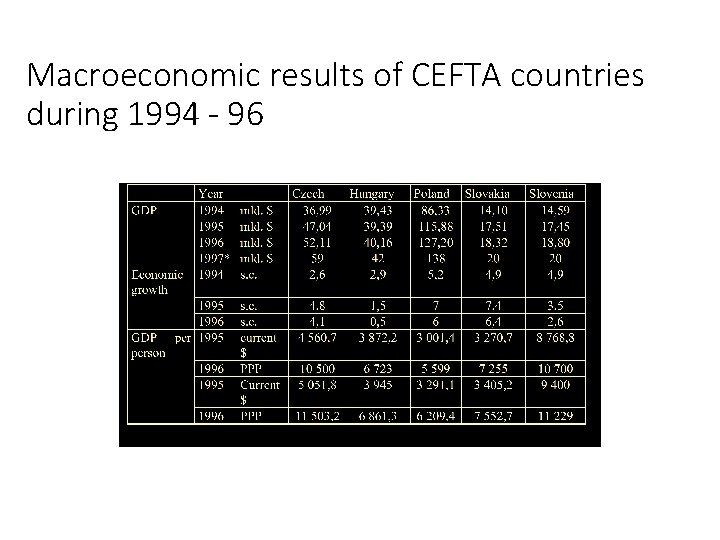
Macroeconomic results of CEFTA countries during 1994 - 96
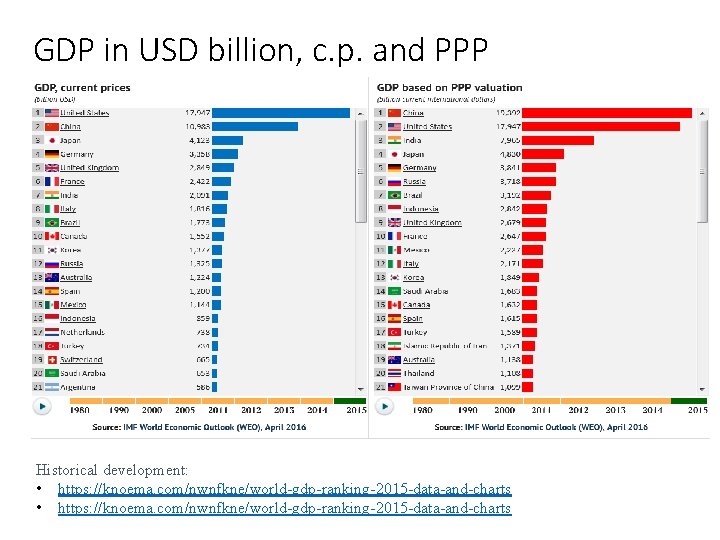
GDP in USD billion, c. p. and PPP Historical development: • https: //knoema. com/nwnfkne/world-gdp-ranking-2015 -data-and-charts
Macro – foreign trade • Absolute and comparative advantages • Economic openness • measured by e. g. EX/GDP*100 or IM/GDP*100 • negative correlation between the size of economy and the degree of its openness • positive correlation between the level of economic development and the degree of openness • Terms of trade • Rc = Ie/Ii * 100 • Ie - index of export prices in time t • Ii - index of import prices in the same time
Macro – foreign trade • balance of payments • stages of integration • • • free trade area- NAFTA, CEFTA, ESVO customs union– German Customs Union, Benelux, CR + SR common market- EEC after its establishment economic union complete economic integration (monetary union) • exchange rate regimes (floating, …, fixed) • devaluation x depreciation • impact on EX, IM, prices… • sterilizing of capital inflows • theorem of locomotive
Macro - other • Gresham´s law • Thomas Gresham (1519 -79) • If there are 2 concurrently circulating currencies „bad money“ will drive out „good one“. • in general: money with higher intrinsic value will be retained • inflation - deflation – desinflation • causes and consequencies • equation of exchange!
Global Trends
B. Global trends • tendencies (changes) during the whole analysed period • long-term – institutions, demography, technologies, … • short-term – revolutions, crises, … • during 1820 - 1990 in the western countries • • • of value of production (goods and services) by 70 times of population by 5 times of income per capita by 14 times of life expectancy by 2 times of hours worked during the year by 2 times
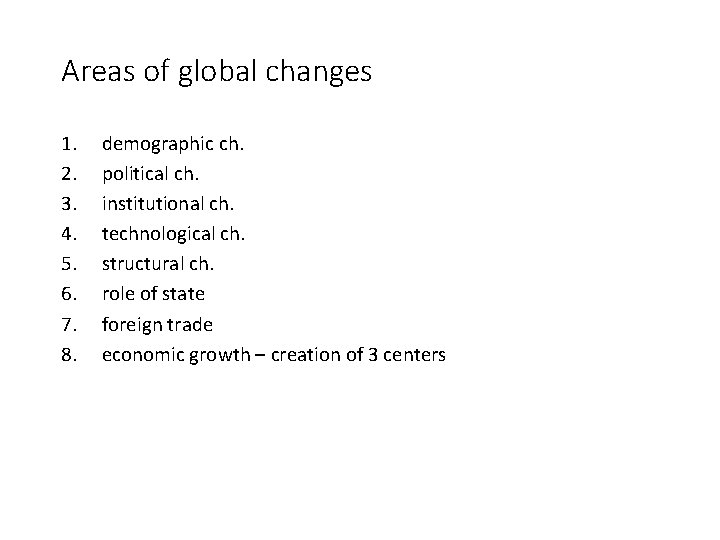
Areas of global changes 1. 2. 3. 4. 5. 6. 7. 8. demographic ch. political ch. institutional ch. technological ch. structural ch. role of state foreign trade economic growth – creation of 3 centers
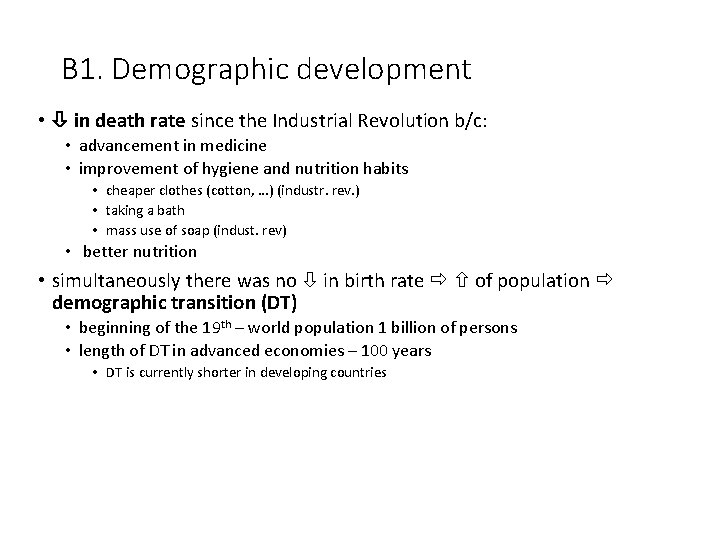
B 1. Demographic development • in death rate since the Industrial Revolution b/c: • advancement in medicine • improvement of hygiene and nutrition habits • cheaper clothes (cotton, . . . ) (industr. rev. ) • taking a bath • mass use of soap (indust. rev) • better nutrition • simultaneously there was no in birth rate of population demographic transition (DT) • beginning of the 19 th – world population 1 billion of persons • length of DT in advanced economies – 100 years • DT is currently shorter in developing countries
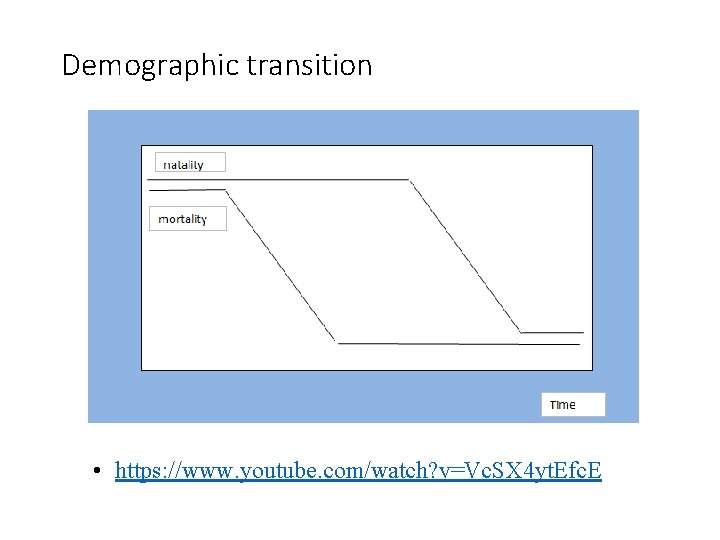
Demographic transition • https: //www. youtube. com/watch? v=Vc. SX 4 yt. Efc. E
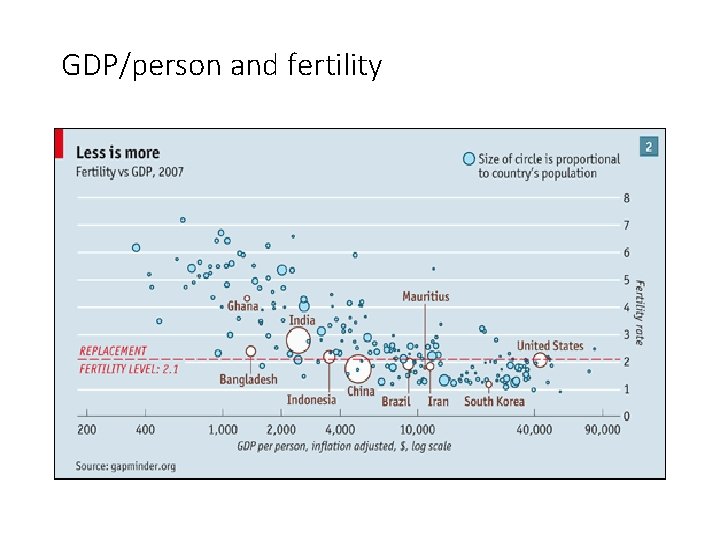
GDP/person and fertility
Life expectancy • https: //www. gapminder. org/tools/bubbles#_state_time_value=180 0
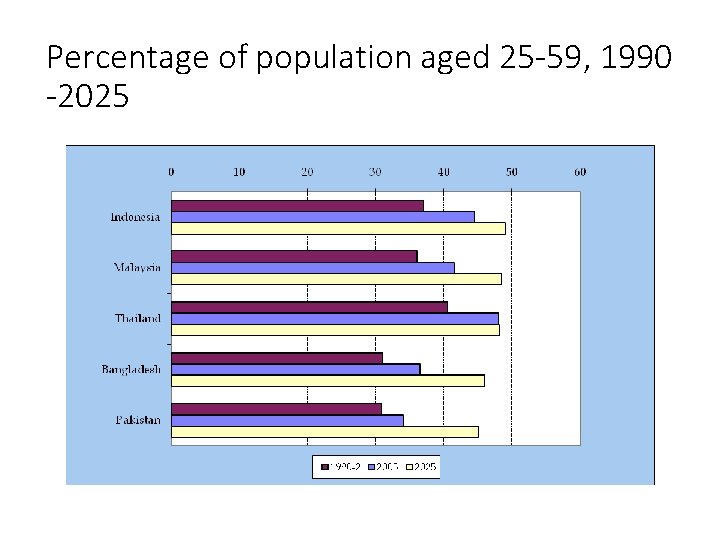
Percentage of population aged 25 -59, 1990 -2025
Demographic development • demographic characteristics countries´ level of development • relation to economic growth • economic implications
B 2. Political changes • regional and world wars • from monarchies to democratic systems • establishment and collapse of CPE • establishment and collapse of colonies • ñ of democracies • • in 1900 only 6 from 43 states with certain form of democracy democratic boom after 1945 – DE, JP, IT + India from DC in 1980 – 37 from 121 states with democratic system - 35% of world population in 1998 – 117 from 193 states with democratic system - 54% of world population
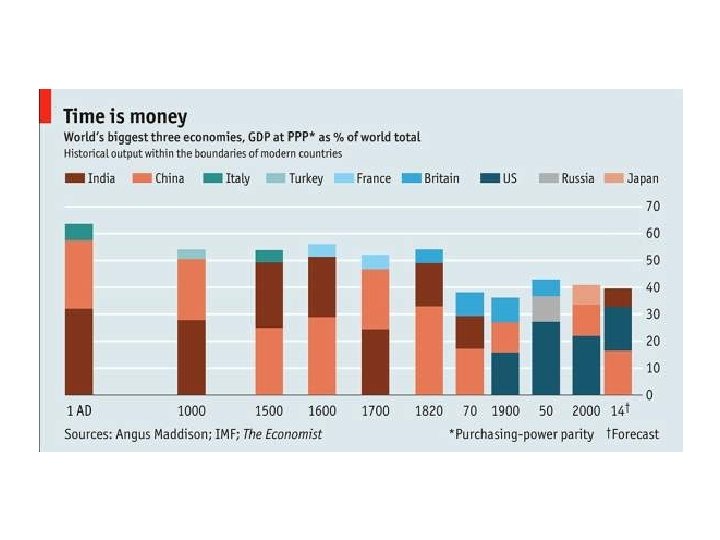
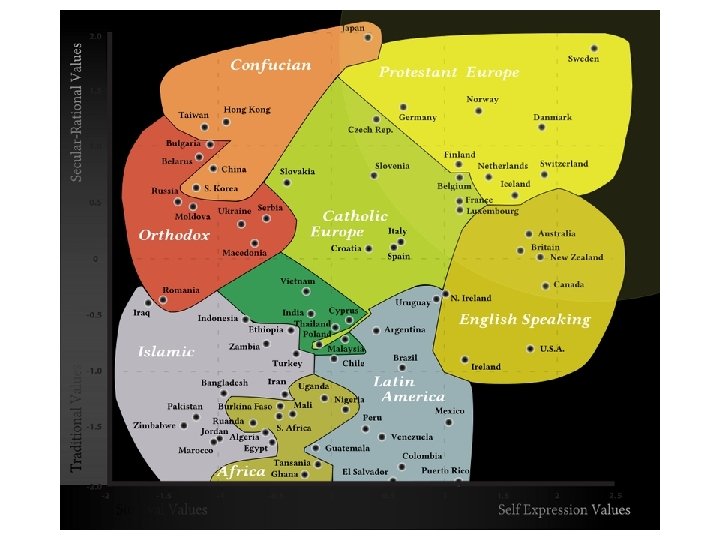
Political changes • changes in the position of superpower • Netherlands -> GB -> USA • future development • theory of Fukuyama • theory of Huntington
Fukuyama • essay: The End of History • 1989 • basic thesis : the world is heading for democracy and liberal principles
Huntington • The Clash of Civilizations- 1993 (The Clash of Civilizations and the Remaking of World Order) • national and cultural groups = civilizations • 8 major civilizations: Western, Confucian, Japanese, Islamic, Hindu, Slavic – Orthodox, Latin American, +African and Buddhist (added later) • Geographic borders among them = bloody borders • fundamental differences among civilizations • history, language, culture, traditions and primarily religion • conflicts also inside the civilizations, but less likely and intensive
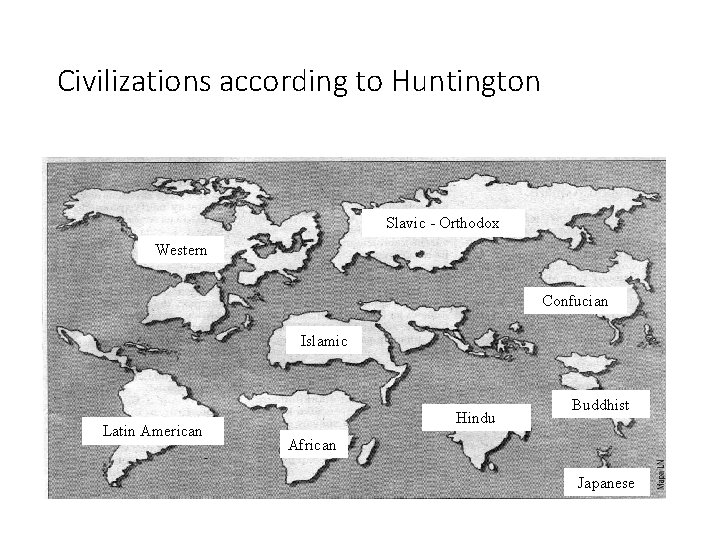
Civilizations according to Huntington Slavic - Orthodox Western Confucian Islamic Latin American Hindu Buddhist African Japanese
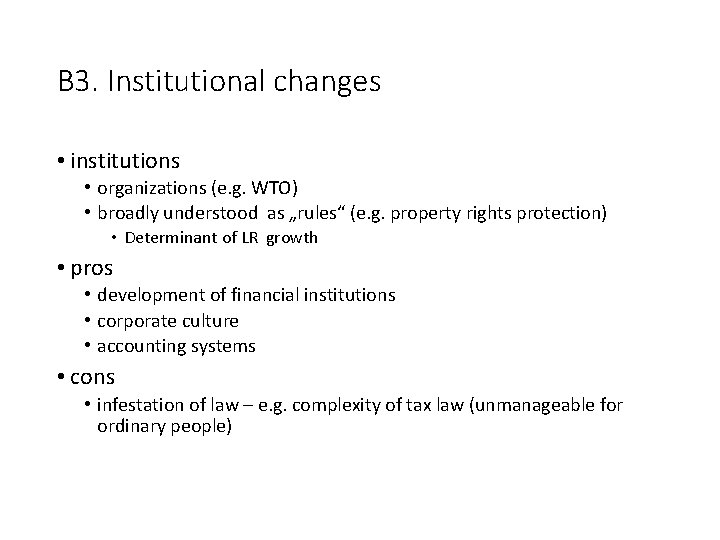
B 3. Institutional changes • institutions • organizations (e. g. WTO) • broadly understood as „rules“ (e. g. property rights protection) • Determinant of LR growth • pros • development of financial institutions • corporate culture • accounting systems • cons • infestation of law – e. g. complexity of tax law (unmanageable for ordinary people)
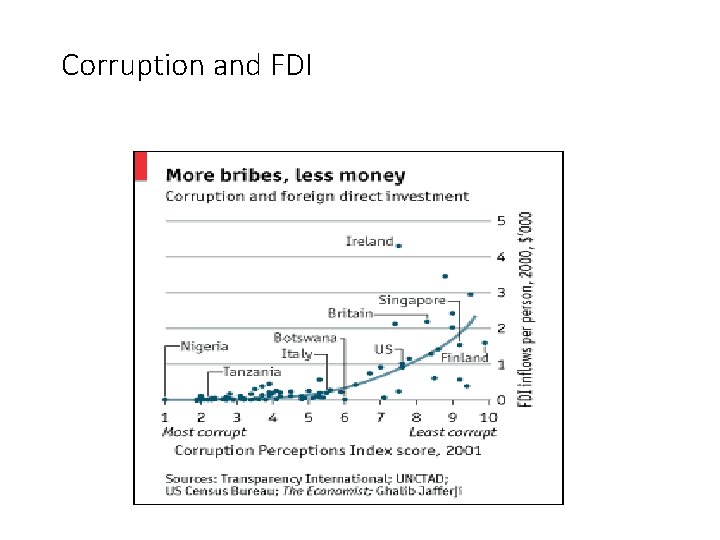
Corruption and FDI
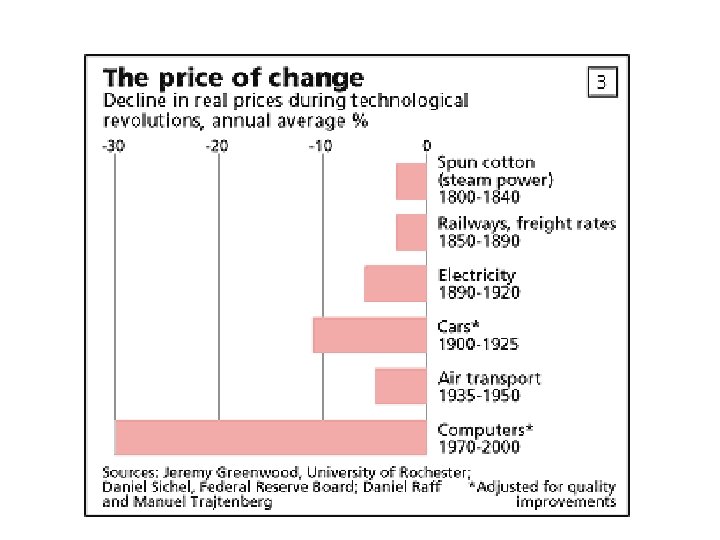
B 4. Technological changes • huge increase in technology • closely related to economic growth • changes in few waves • steam engine • electrical power • computers and biotechnology (e. g. Gmail) • changes in power sources and transportation • + increase in human capital • constant growth in education
B 5. Structural changes • division of economy: • agriculture (A), industry (I), services (S) • ASI traditional structure SIA modern structure • the ways of change from ASI to SIA • standard way– UK, France, Germany • structural shortcut - USA, Japan, Canada
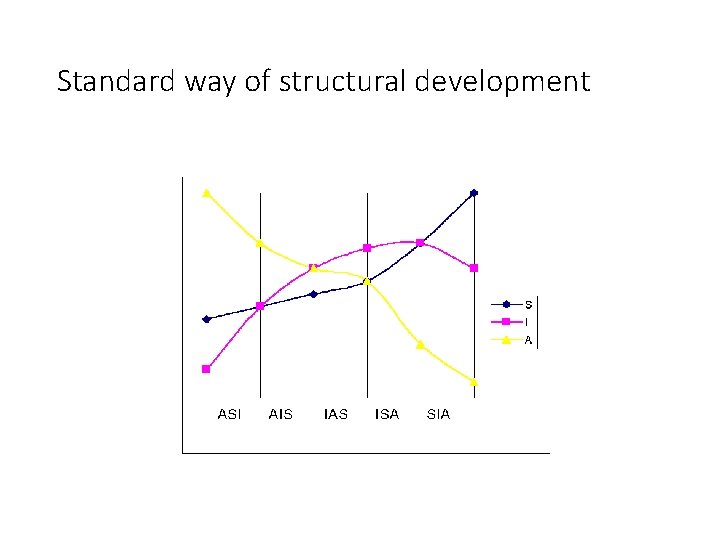
Standard way of structural development
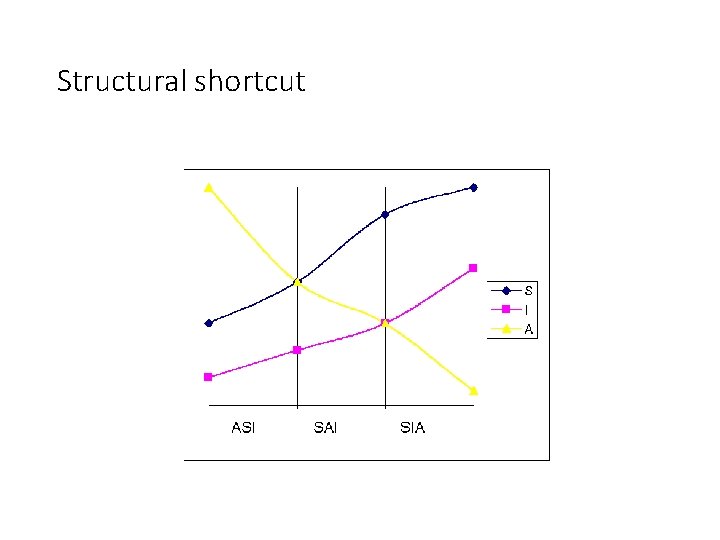
Structural shortcut
Structural changes • structure indicates the level of development • SIA insufficient sign of developed economy • small share of agriculture – with exceptions: • Chile • economic growth accompanied by small increase in share of agriculture • differences even among developed countries • share of I
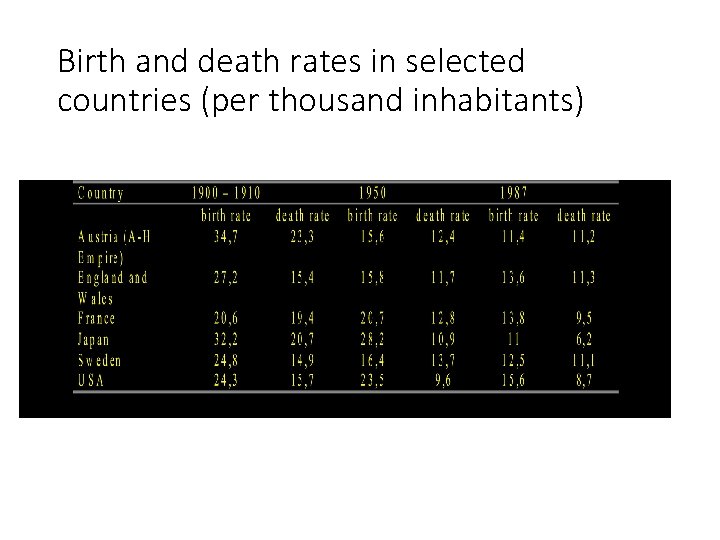
Birth and death rates in selected countries (per thousand inhabitants)
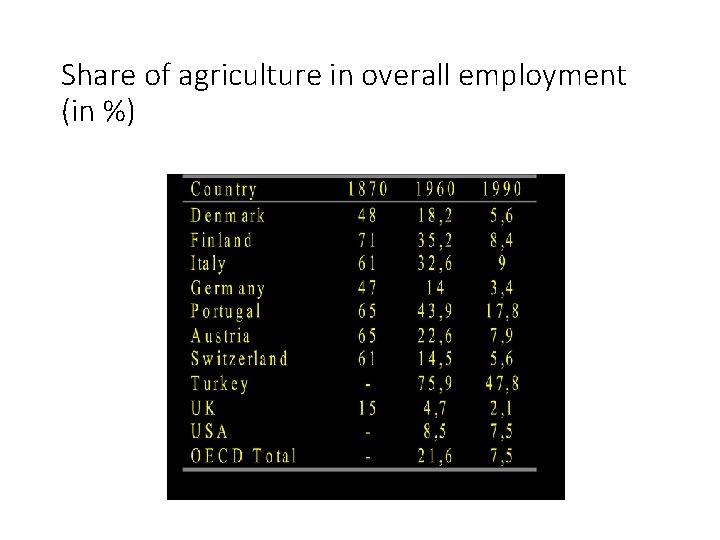
Share of agriculture in overall employment (in %)
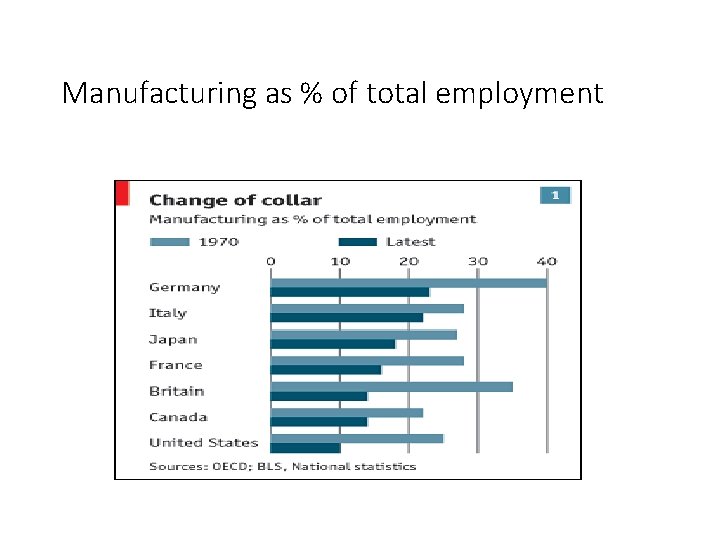
Manufacturing as % of total employment
B 6. The role of state • the role of state in economy is constantly growing • reasons: • political • economical • fiscal policies asymmetry • Wagner‘s law • unsuccessful attempts to break the trend • Reaganomics or Thatcherism • negative relationship to economic growth
Total government expenditures as percentage of GDP, 1870 -2009
B 7. Foreign trade • permanent growth of foreign trade • exceptions: • WWs or the Great Depression • after WW 2 unprecedented growth • globalization? • economic growth of countries involved in foreign trade X CPE (autarky) • bigger markets • specialization • labor division • commodity structure • increase of capital flows • specific migration
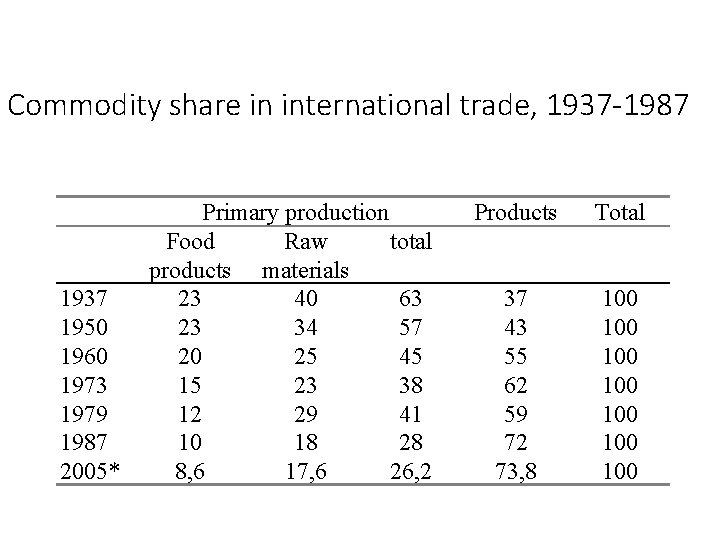
Commodity share in international trade, 1937 -1987 1937 1950 1960 1973 1979 1987 2005* Primary production Food Raw total products materials 23 40 63 23 34 57 20 25 45 15 23 38 12 29 41 10 18 28 8, 6 17, 6 26, 2 Products Total 37 43 55 62 59 72 73, 8 100 100
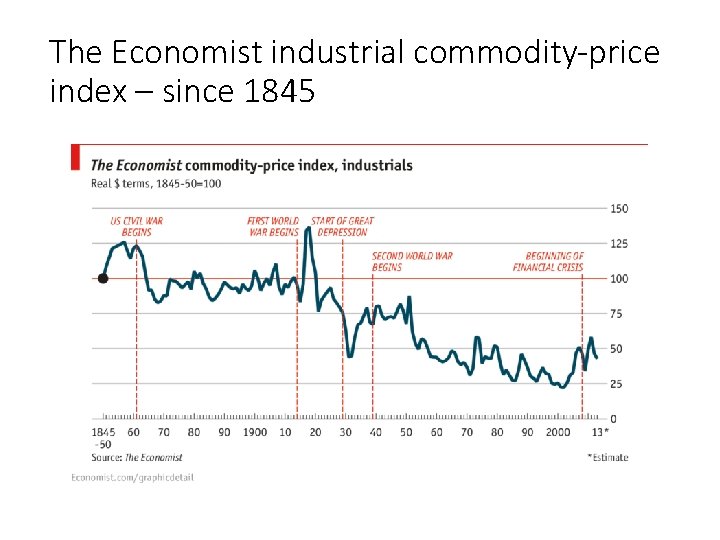
The Economist industrial commodity-price index – since 1845
B 8. Economic growth • long-term economic growth • differences: before 1800 strong tendency to take chance of capital for new technologies (promise of higher profits) X before („prior to capitalistic period“) defensive strategies • determinants of econ. growth – foreign trade, investments, institutions (!) and other changes in he WE
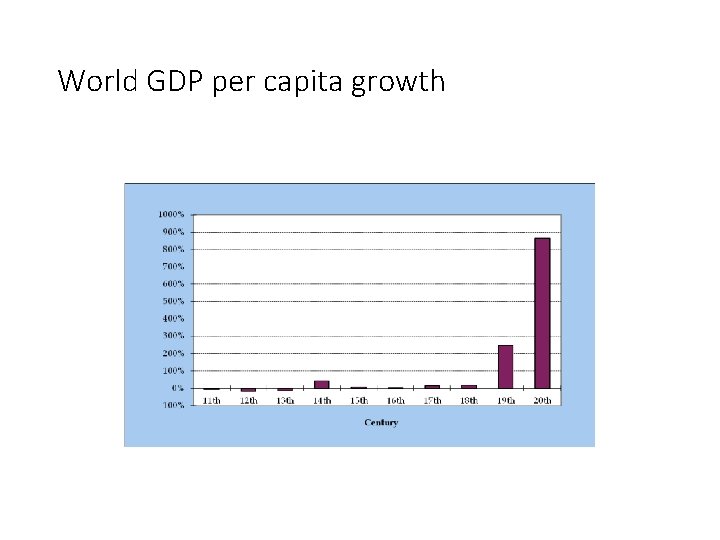
World GDP per capita growth

The End Thank you for attention!
- Slides: 53