
World Congress Tissue Engineering and Regenerative Medicine International

- Slides: 90
World Congress Tissue Engineering and Regenerative Medicine International Society Vienna, Austria September 5 -8, 2012 Industry Day Symposium SESSION 2: “The Regulatory Imperative: International Perspective” Organized by TERMIS-AM and TERMIS-EU Industry Committees
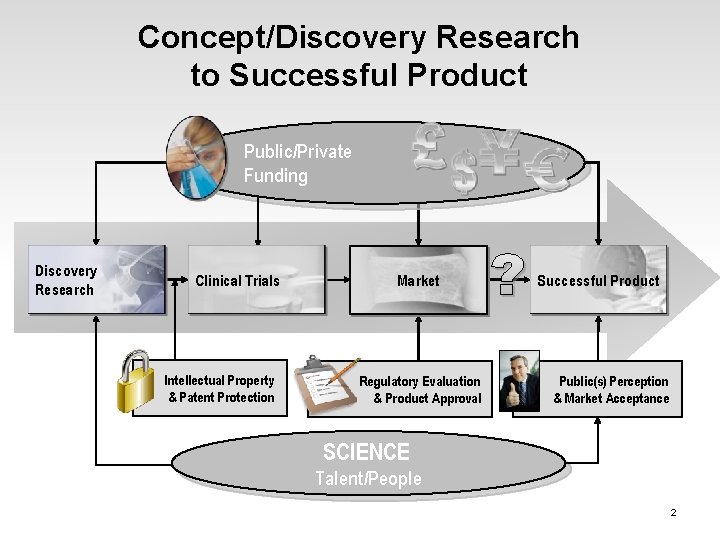
Concept/Discovery Research to Successful Product Public/Private Funding Discovery Research Clinical Trials Intellectual Property & Patent Protection Market Regulatory Evaluation & Product Approval Successful Product Public(s) Perception & Market Acceptance SCIENCE Talent/People 2
TERMIS-EU Industry Committee • Established 2011 • Mission – Motivate translation of academic research into commercial products, in Tissue Engineering/Regenerative Medicine (TE/RM) – Connect the scientific & clinical communities with TE/RM industries • Goals – Give answers to critical questions, paving the road of TE/RM commercial translation, by key stakeholders, from past experiences – Promote academia–industry meetings & partnerships for more effective commercial translation in TE/RM • Members – – – Yves Bayon, Ph. D; Covidien – Sofradim Production; Chair Simon Ellison, MBA; NHS Blood & Transplant John Barry, Ph. D; Baxter Innovations Paul Stroemer, Ph. D, Reneuron Chris Mason, Ph. D; University College of London Alain Vertes, Ph. D; London Business School Sloan Fellow 3
TERMIS-AM Industry Committee • Established 2009 • Mission – Support commercialization in Tissue Engineering/Regenerative Medicine (TE/RM) • Goals – Define and address obstacles/hurdles to product commercialization – Promote collaborations to build a viable TE/RM industry • Members – – – Kiki B. Hellman, Ph. D; The Hellman Group. LLC; Chair Timothy A. Bertram, DVM, Ph. D; Tengion Peter C. Johnson, MD; Avery Dennison Mark Van Dyke, Ph. D; Wake Forest University Health Sciences Bill Tawil, Ph. D; Baxter Biosurgery 4
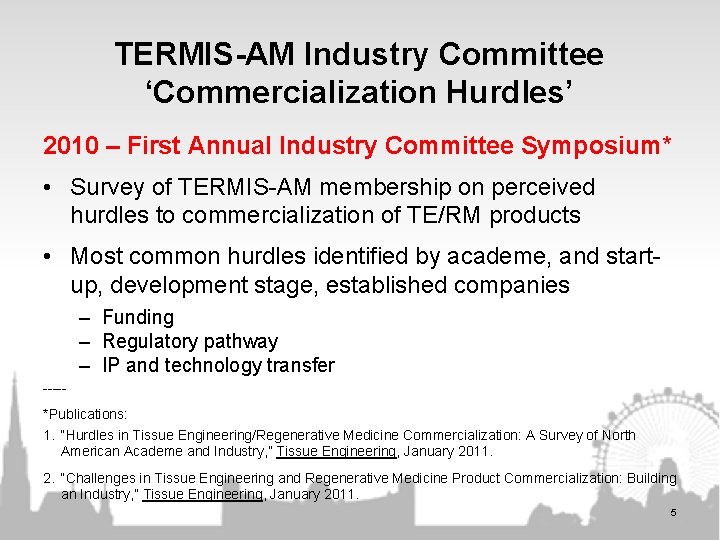
TERMIS-AM Industry Committee ‘Commercialization Hurdles’ 2010 – First Annual Industry Committee Symposium* • Survey of TERMIS-AM membership on perceived hurdles to commercialization of TE/RM products • Most common hurdles identified by academe, and startup, development stage, established companies – Funding – Regulatory pathway – IP and technology transfer ----*Publications: 1. “Hurdles in Tissue Engineering/Regenerative Medicine Commercialization: A Survey of North American Academe and Industry, ” Tissue Engineering, January 2011. 2. “Challenges in Tissue Engineering and Regenerative Medicine Product Commercialization: Building an Industry, ” Tissue Engineering, January 2011. 5
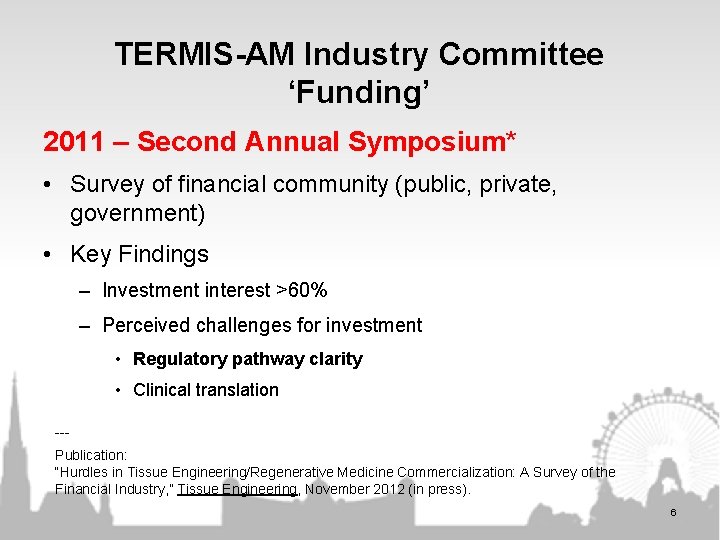
TERMIS-AM Industry Committee ‘Funding’ 2011 – Second Annual Symposium* • Survey of financial community (public, private, government) • Key Findings – Investment interest >60% – Perceived challenges for investment • Regulatory pathway clarity • Clinical translation --Publication: “Hurdles in Tissue Engineering/Regenerative Medicine Commercialization: A Survey of the Financial Industry, ” Tissue Engineering, November 2012 (in press). 6
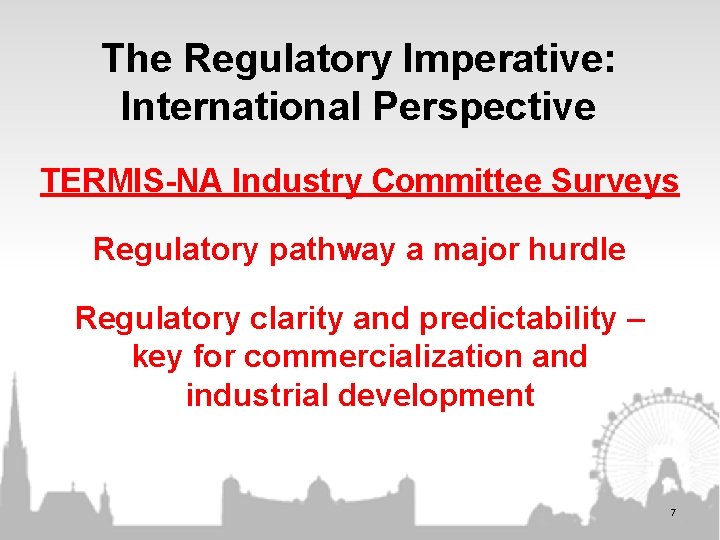
The Regulatory Imperative: International Perspective TERMIS-NA Industry Committee Surveys Regulatory pathway a major hurdle Regulatory clarity and predictability – key for commercialization and industrial development 7
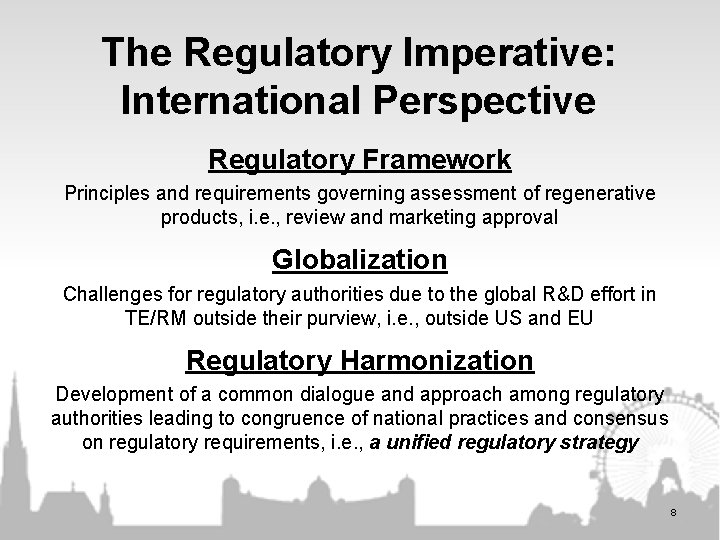
The Regulatory Imperative: International Perspective Regulatory Framework Principles and requirements governing assessment of regenerative products, i. e. , review and marketing approval Globalization Challenges for regulatory authorities due to the global R&D effort in TE/RM outside their purview, i. e. , outside US and EU Regulatory Harmonization Development of a common dialogue and approach among regulatory authorities leading to congruence of national practices and consensus on regulatory requirements, i. e. , a unified regulatory strategy 8
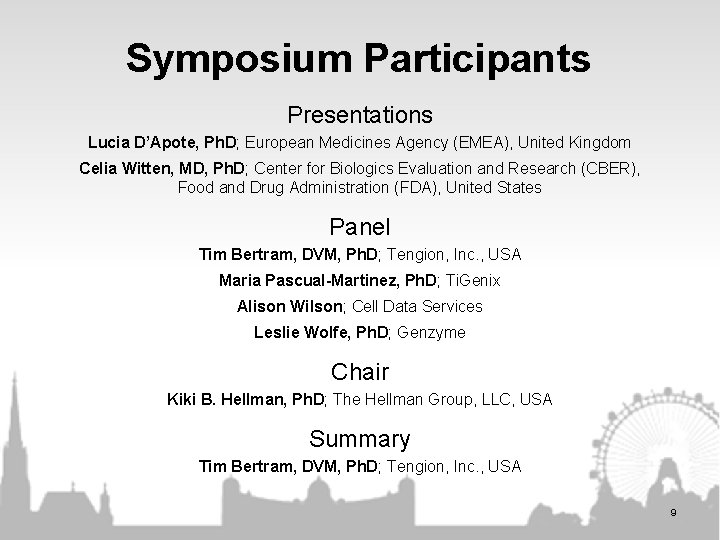
Symposium Participants Presentations Lucia D’Apote, Ph. D; European Medicines Agency (EMEA), United Kingdom Celia Witten, MD, Ph. D; Center for Biologics Evaluation and Research (CBER), Food and Drug Administration (FDA), United States Panel Tim Bertram, DVM, Ph. D; Tengion, Inc. , USA Maria Pascual-Martinez, Ph. D; Ti. Genix Alison Wilson; Cell Data Services Leslie Wolfe, Ph. D; Genzyme Chair Kiki B. Hellman, Ph. D; The Hellman Group, LLC, USA Summary Tim Bertram, DVM, Ph. D; Tengion, Inc. , USA 9
European Regulatory environment of regenerative medicine TERMIS Industry Symposium 7 September 2012, Vienna (Austria) Presented by: Lucia D’Apote, Ph. D European Medicines Agency An agency of the European Union
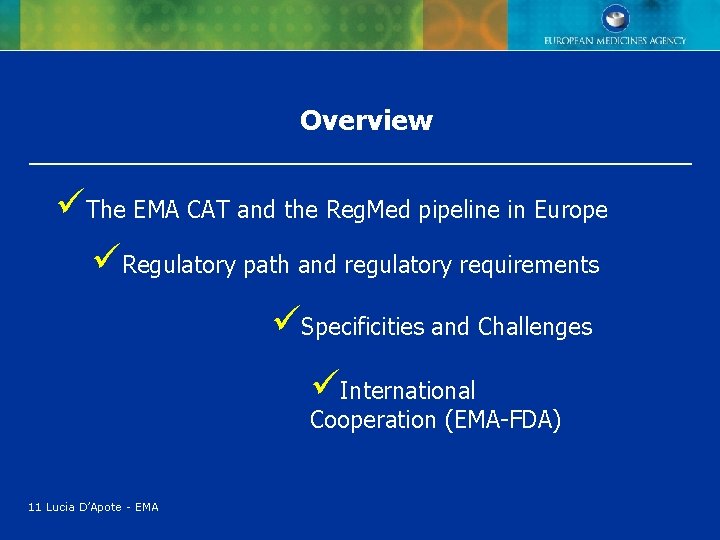
Overview üThe EMA CAT and the Reg. Med pipeline in Europe üRegulatory path and regulatory requirements üSpecificities and Challenges üInternational Cooperation (EMA-FDA) 11 Lucia D’Apote - EMA
üThe EMA CAT and the Reg. Med pipeline in Europe 12 Lucia D’Apote - EMA
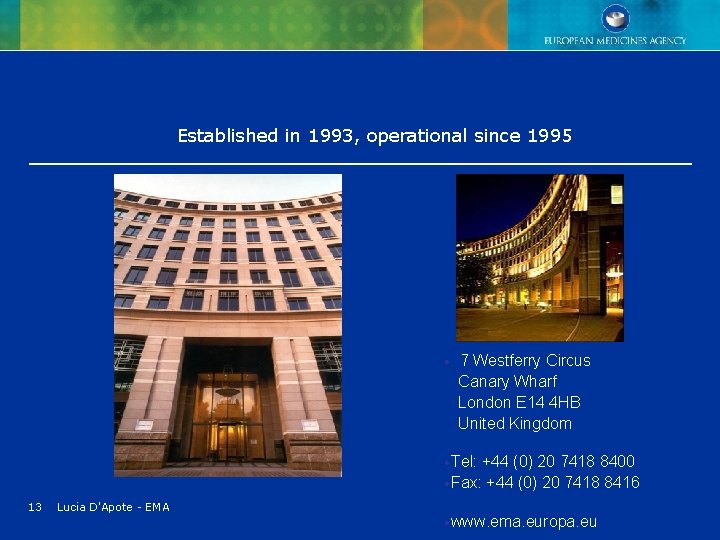
Established in 1993, operational since 1995 · 7 Westferry Circus Canary Wharf London E 14 4 HB United Kingdom ·Tel: +44 (0) 20 7418 8400 ·Fax: +44 (0) 20 7418 8416 13 Lucia D'Apote - EMA ·www. ema. europa. eu
The ATMP Regulation Committee for Advanced Therapy üNew Scientific Arena üExpertise üBeyond Traditional üResearch 14 Lucia D'Apote - EMA
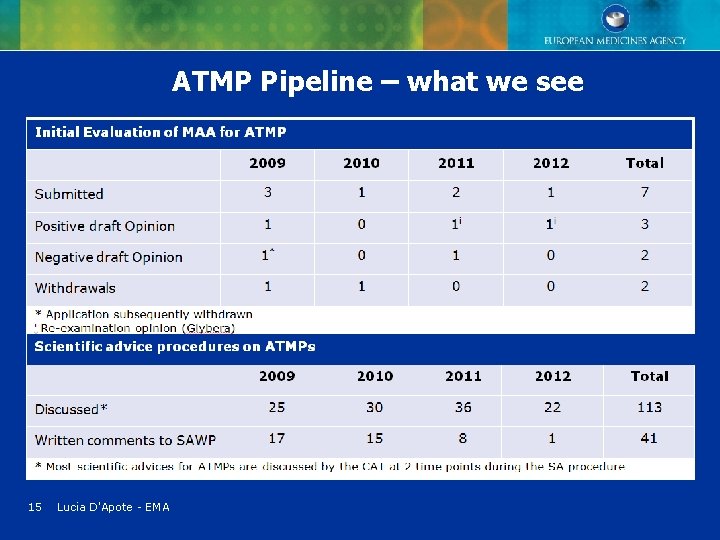
ATMP Pipeline – what we see 15 Lucia D'Apote - EMA
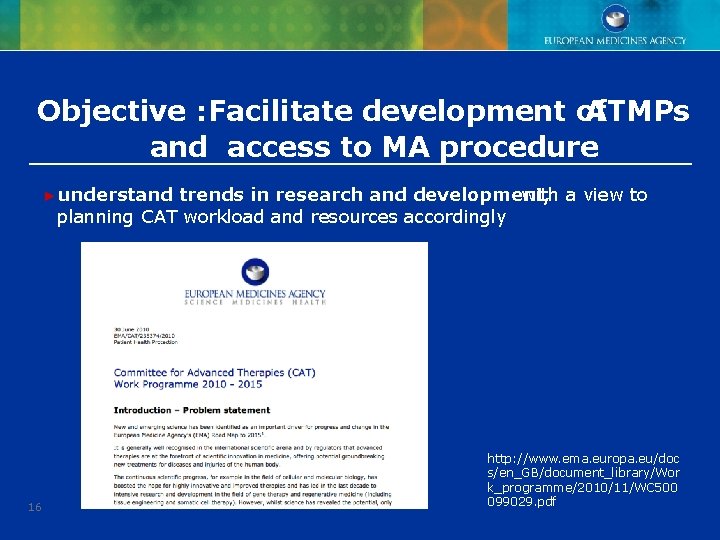
Objective : Facilitate development of ATMPs and access to MA procedure ►understand trends in research and development, with a view to planning CAT workload and resources accordingly 16 http: //www. ema. europa. eu/doc s/en_GB/document_library/Wor k_programme/2010/11/WC 500 099029. pdf
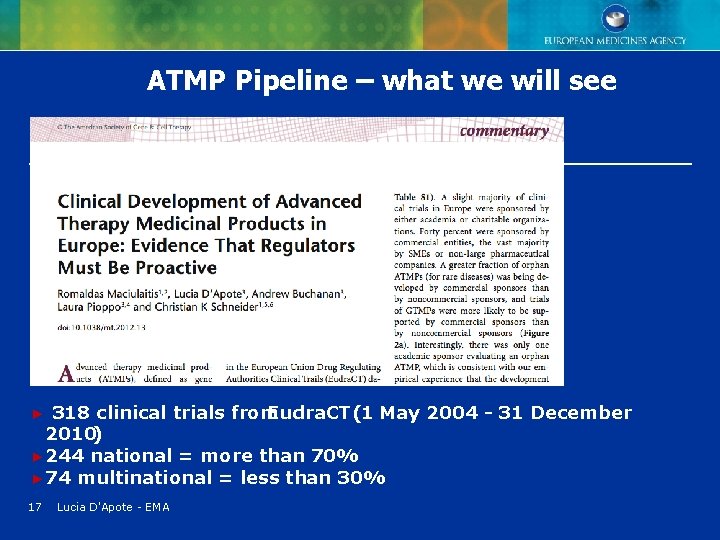
ATMP Pipeline – what we will see 318 clinical trials from Eudra. CT (1 May 2004 - 31 December 2010) ► 244 national = more than 70% ► 74 multinational = less than 30% ► 17 Lucia D'Apote - EMA
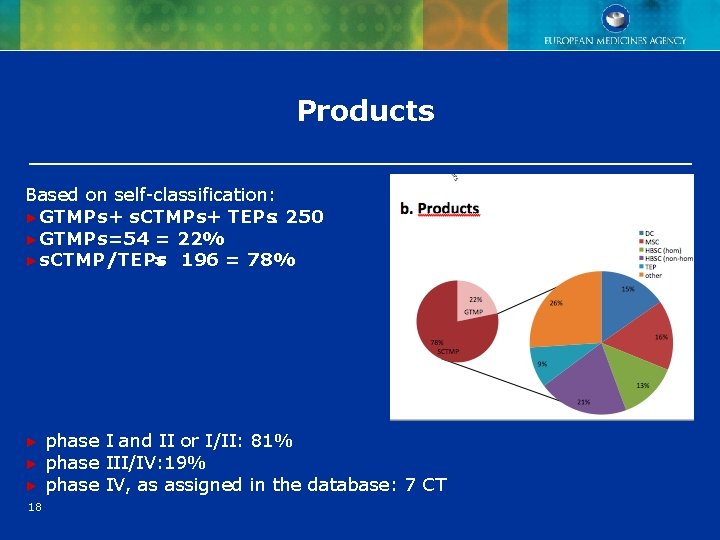
Products Based on self-classification: ►GTMPs + s. CTMPs+ TEPs: 250 ►GTMPs =54 = 22% ►s. CTMP/TEPs = 196 = 78% ► ► ► 18 phase I and II or I/II: 81% phase III/IV: 19% phase IV, as assigned in the database: 7 CT
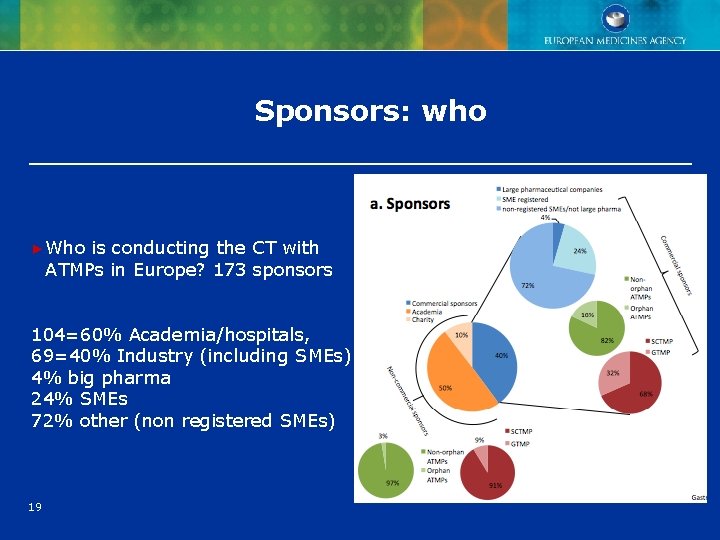
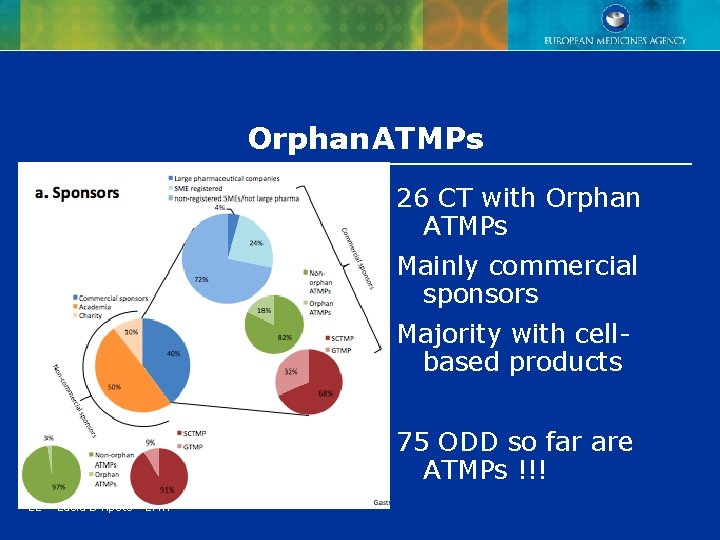
Sponsors: who ►Who is conducting the CT with ATMPs in Europe? 173 sponsors 104=60% Academia/hospitals, 69=40% Industry (including SMEs) 4% big pharma 24% SMEs 72% other (non registered SMEs) 19
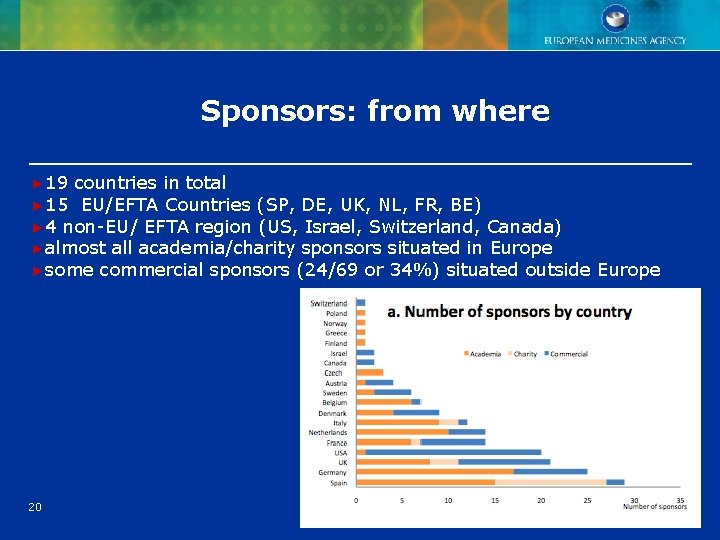
Sponsors: from where ► 19 countries in total ► 15 EU/EFTA Countries (SP, DE, UK, NL, FR, BE) ► 4 non-EU/ EFTA region (US, Israel, Switzerland, Canada) ►almost all academia/charity sponsors situated in Europe ►some commercial sponsors (24/69 or 34%) situated outside Europe 20
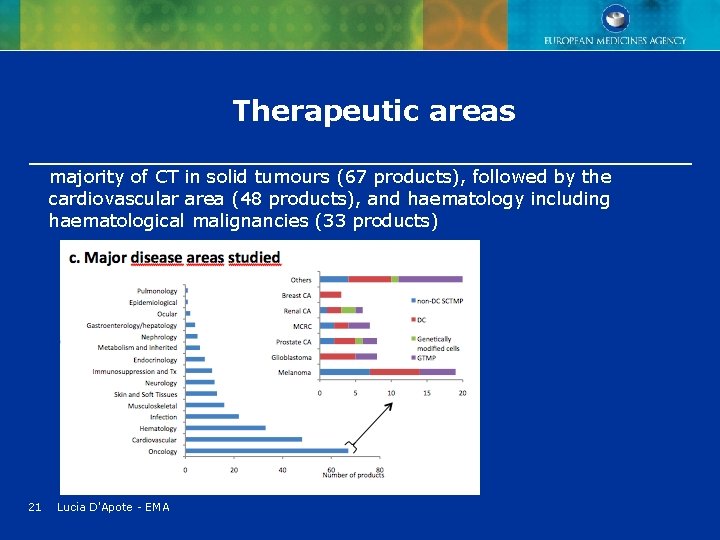
Therapeutic areas majority of CT in solid tumours (67 products), followed by the cardiovascular area (48 products), and haematology including haematological malignancies (33 products) 21 Lucia D'Apote - EMA
Orphan ATMPs 26 CT with Orphan ATMPs Mainly commercial sponsors Majority with cellbased products 75 ODD so far are ATMPs !!! 22 Lucia D'Apote - EMA
üRegulatory path and regulatory requirements 23 Lucia D’Apote - EMA
EU Marketing Authorisation (MA) for ATMPs A medicinal product may only be placed on the market in the EU, when a marketing authorisation has been issued by the European Commission (via the Centralised Procedure – EMA) or it is regulated by the competent authority of a EU Member State (hospital exemption) 24 EMA - Lucia D'APOTE 24
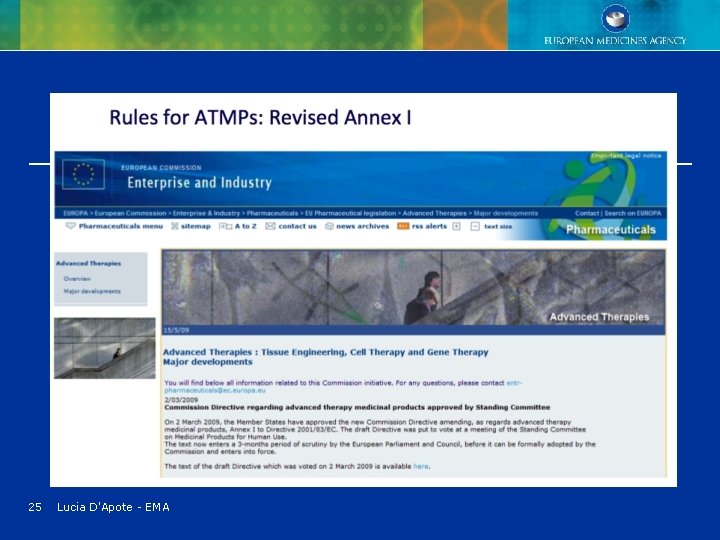
25 Lucia D'Apote - EMA
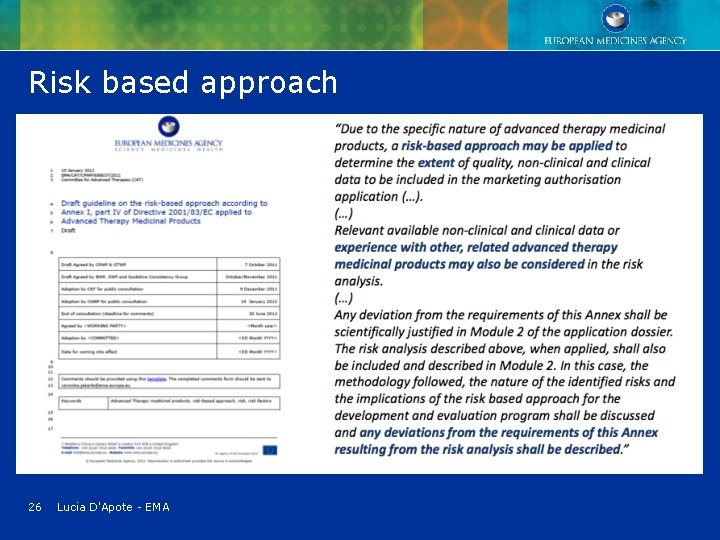
Risk based approach 26 Lucia D'Apote - EMA
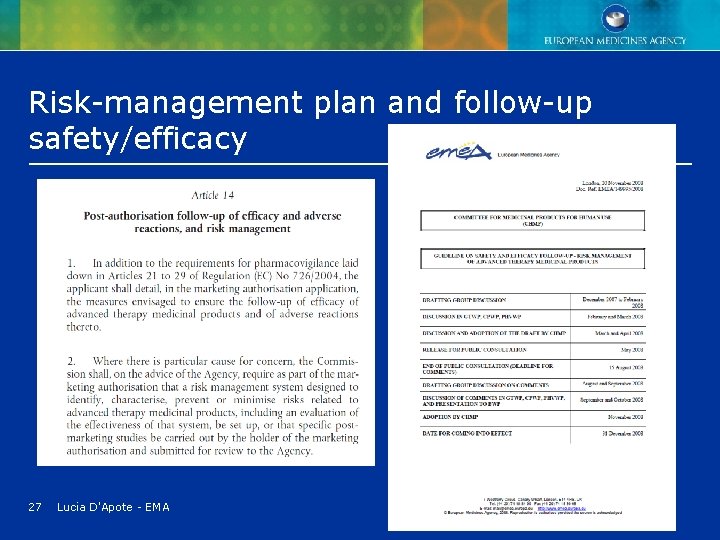
Risk-management plan and follow-up safety/efficacy 27 Lucia D'Apote - EMA
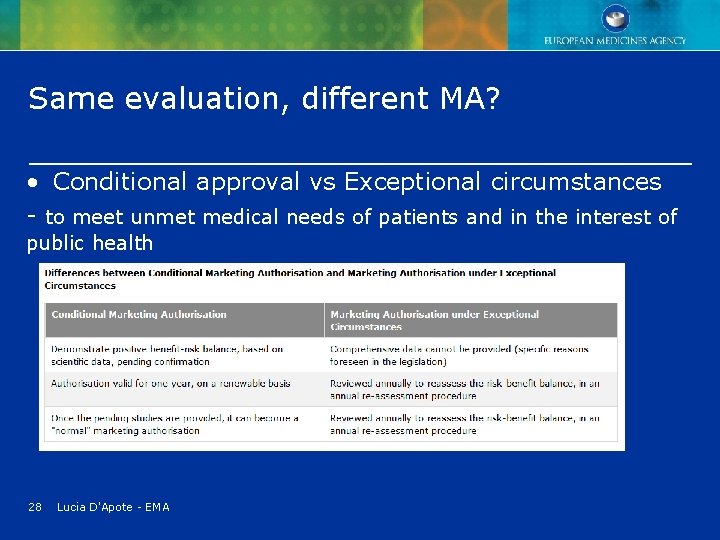
Same evaluation, different MA? • Conditional approval vs Exceptional circumstances - to meet unmet medical needs of patients and in the interest of public health 28 Lucia D'Apote - EMA
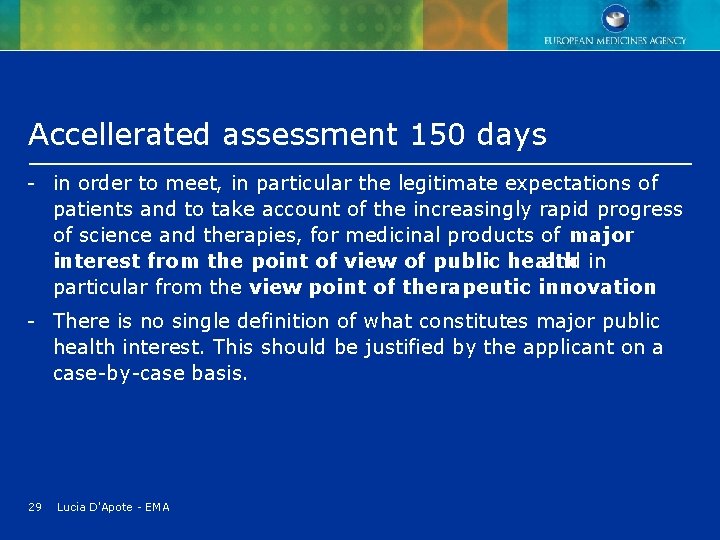
Accellerated assessment 150 days - in order to meet, in particular the legitimate expectations of patients and to take account of the increasingly rapid progress of science and therapies, for medicinal products of major interest from the point of view of public health and in particular from the view point of therapeutic innovation. - There is no single definition of what constitutes major public health interest. This should be justified by the applicant on a case-by-case basis. 29 Lucia D'Apote - EMA
üSpecificities and Challenges 30 Lucia D’Apote - EMA
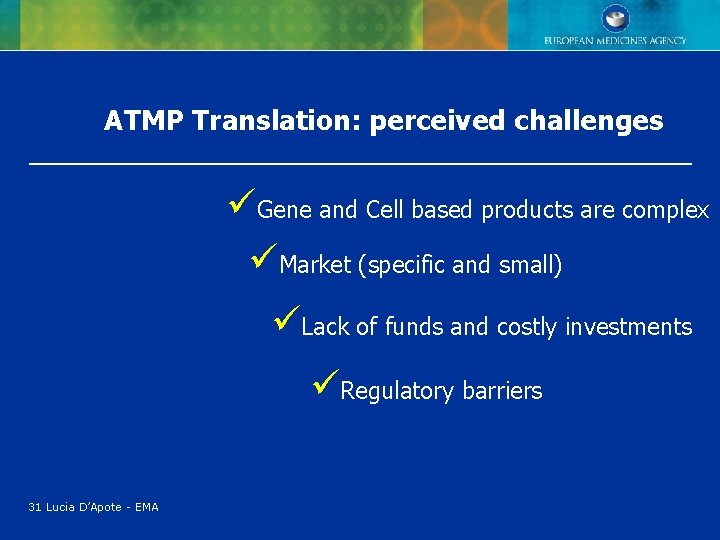
ATMP Translation: perceived challenges üGene and Cell based products are complex üMarket (specific and small) üLack of funds and costly investments üRegulatory barriers 31 Lucia D’Apote - EMA
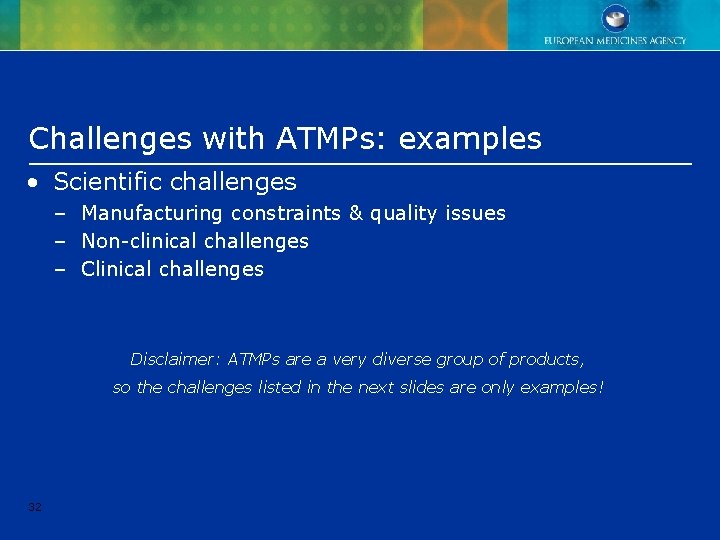
Challenges with ATMPs: examples • Scientific challenges – Manufacturing constraints & quality issues – Non-clinical challenges – Clinical challenges Disclaimer: ATMPs are a very diverse group of products, so the challenges listed in the next slides are only examples! 32
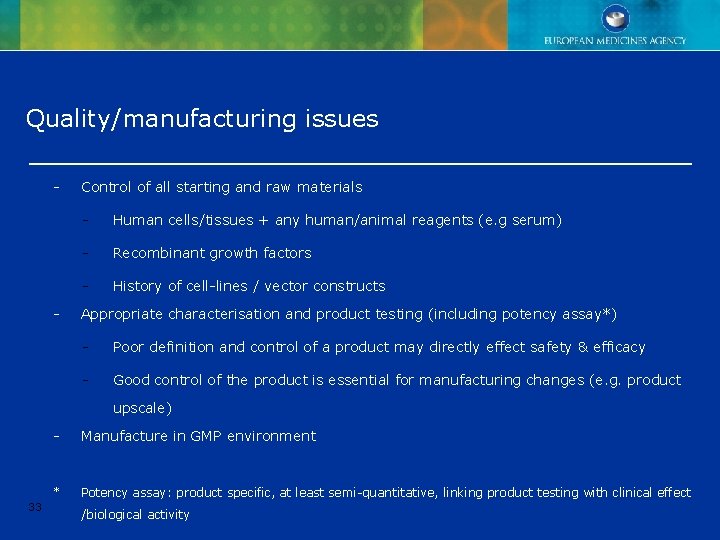
Quality/manufacturing issues - - Control of all starting and raw materials - Human cells/tissues + any human/animal reagents (e. g serum) - Recombinant growth factors - History of cell-lines / vector constructs Appropriate characterisation and product testing (including potency assay*) - Poor definition and control of a product may directly effect safety & efficacy - Good control of the product is essential for manufacturing changes (e. g. product upscale) 33 - Manufacture in GMP environment * Potency assay: product specific, at least semi-quantitative, linking product testing with clinical effect /biological activity
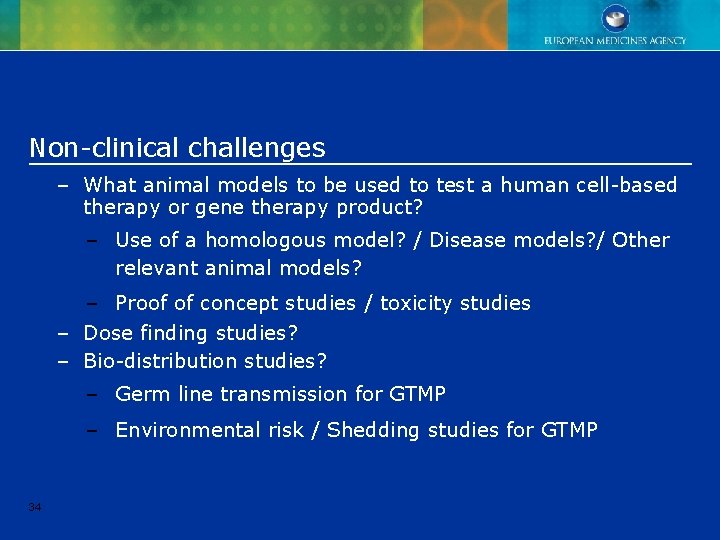
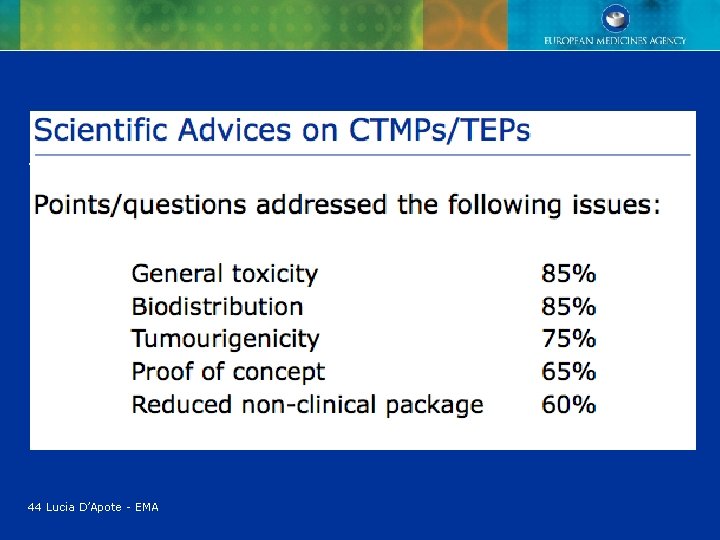
Non-clinical challenges – What animal models to be used to test a human cell-based therapy or gene therapy product? – Use of a homologous model? / Disease models? / Other relevant animal models? – Proof of concept studies / toxicity studies – Dose finding studies? – Bio-distribution studies? – Germ line transmission for GTMP – Environmental risk / Shedding studies for GTMP 34
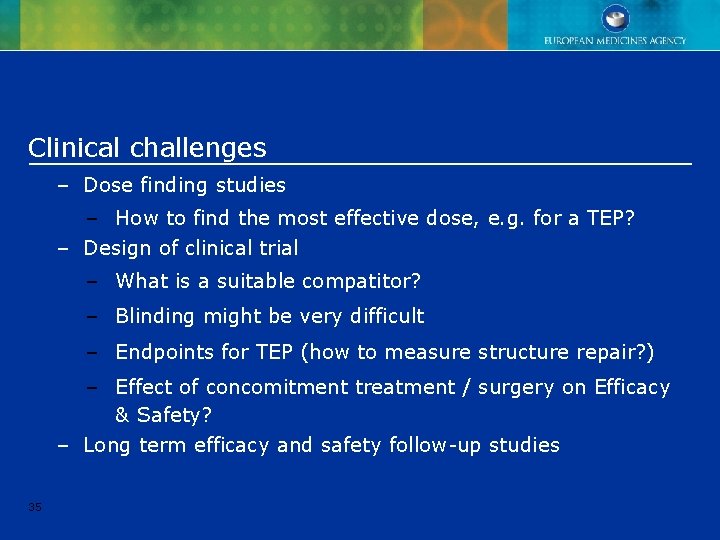
Clinical challenges – Dose finding studies – How to find the most effective dose, e. g. for a TEP? – Design of clinical trial – What is a suitable compatitor? – Blinding might be very difficult – Endpoints for TEP (how to measure structure repair? ) – Effect of concomitment treatment / surgery on Efficacy & Safety? – Long term efficacy and safety follow-up studies 35
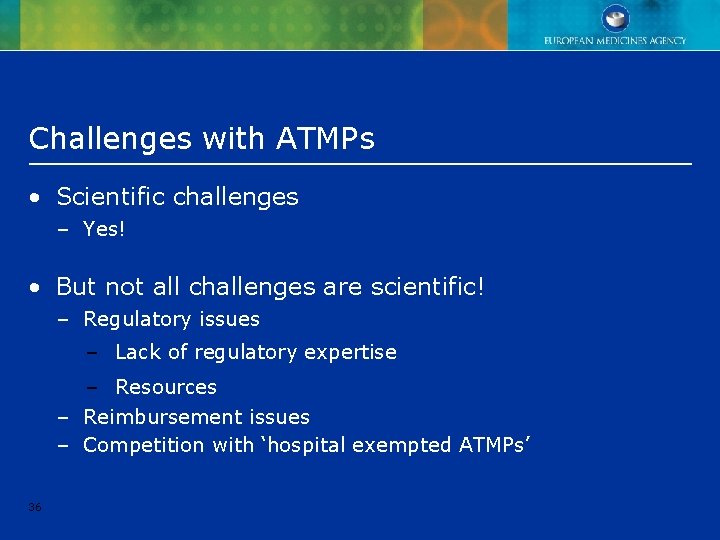
Challenges with ATMPs • Scientific challenges – Yes! • But not all challenges are scientific! – Regulatory issues – Lack of regulatory expertise – Resources – Reimbursement issues – Competition with ‘hospital exempted ATMPs’ 36
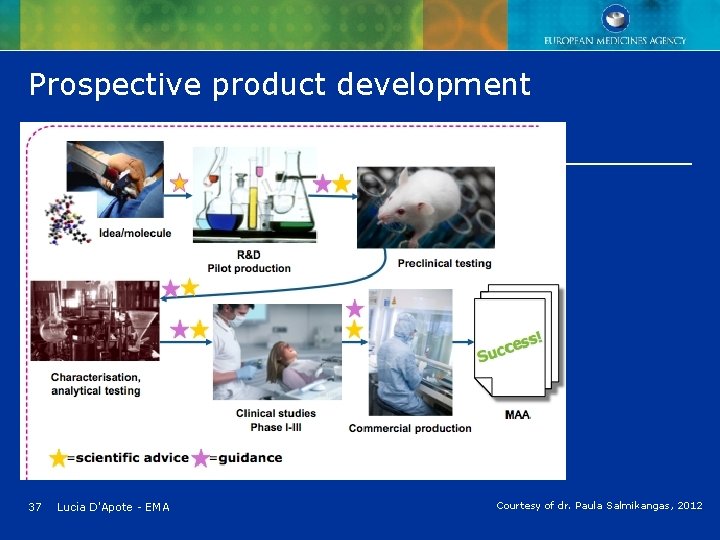
Prospective product development 37 Lucia D'Apote - EMA Courtesy of dr. Paula Salmikangas, 2012
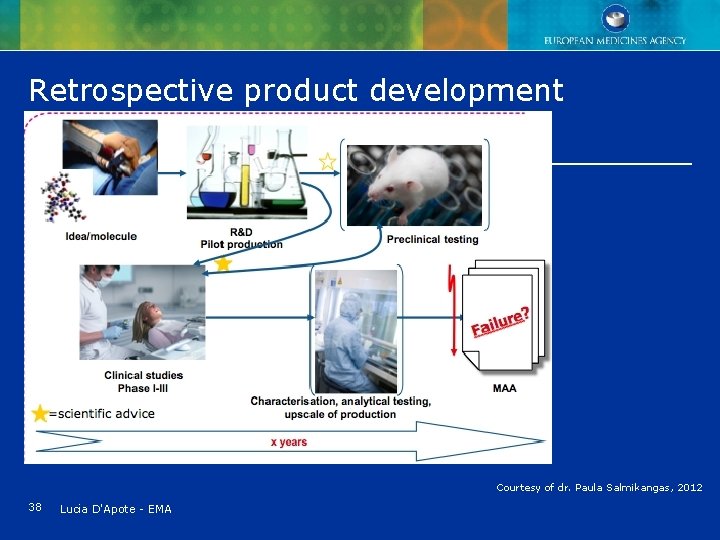
Retrospective product development Courtesy of dr. Paula Salmikangas, 2012 38 Lucia D'Apote - EMA
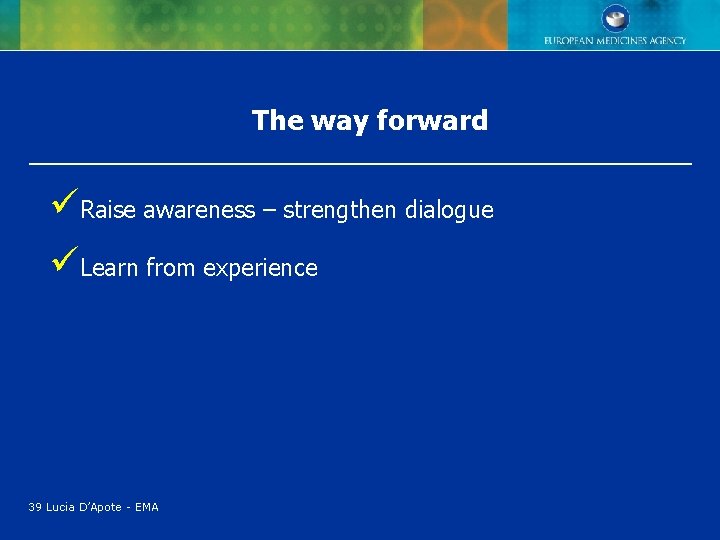
The way forward üRaise awareness – strengthen dialogue üLearn from experience 39 Lucia D’Apote - EMA
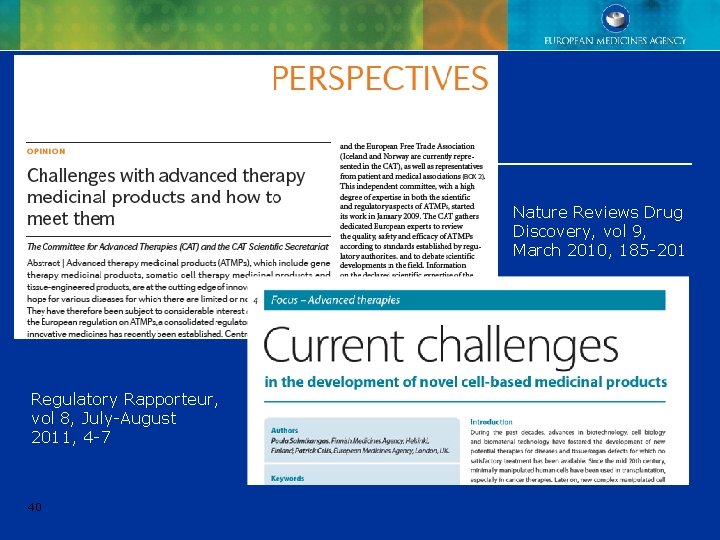
Nature Reviews Drug Discovery, vol 9, March 2010, 185 -201 Regulatory Rapporteur, vol 8, July-August 2011, 4 -7 40
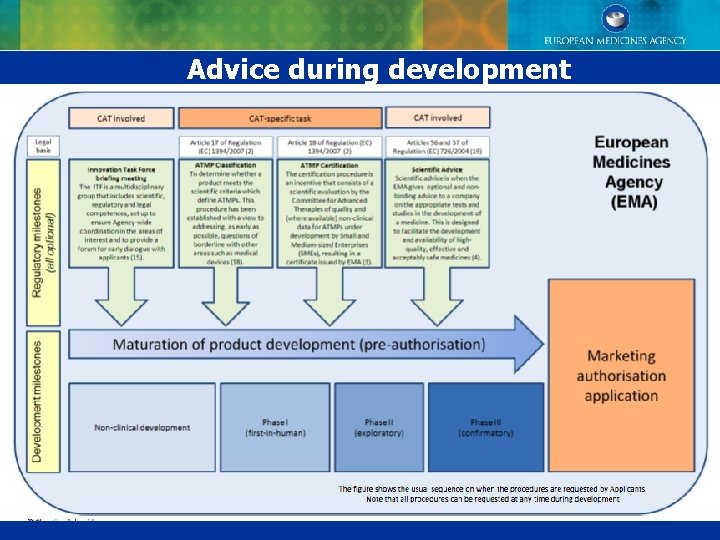
Advice during development 41 Lucia D'Apote - EMA
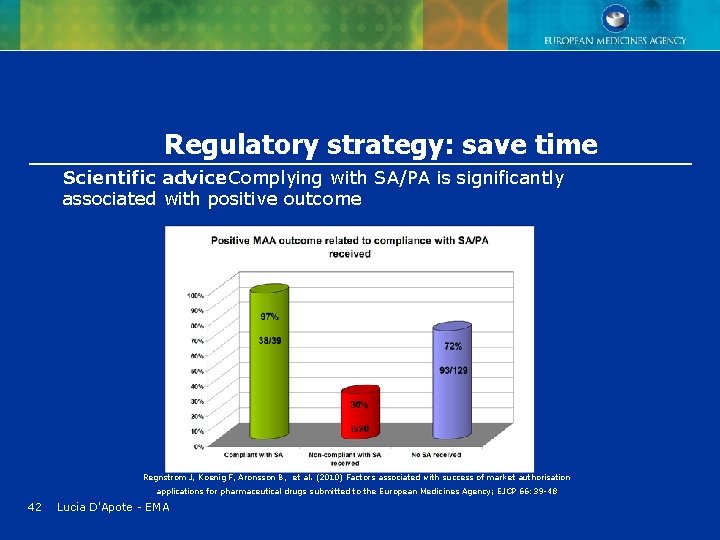
Regulatory strategy: save time Scientific advice : Complying with SA/PA is significantly associated with positive outcome Regnstrom J, Koenig F, Aronsson B, et al. (2010) Factors associated with success of market authorisation applications for pharmaceutical drugs submitted to the European Medicines Agency; EJCP 66: 39 -48 42 Lucia D'Apote - EMA
43 Lucia D’Apote - EMA
44 Lucia D’Apote - EMA
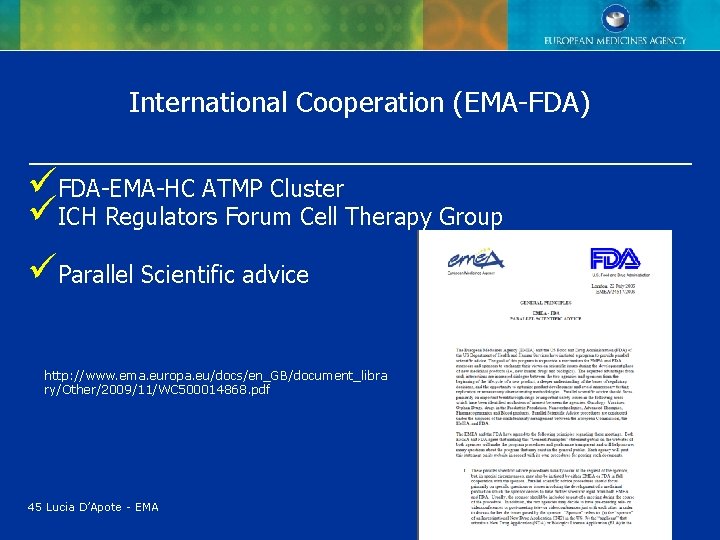
International Cooperation (EMA-FDA) üFDA-EMA-HC ATMP Cluster üICH Regulators Forum Cell Therapy Group üParallel Scientific advice http: //www. ema. europa. eu/docs/en_GB/document_libra ry/Other/2009/11/WC 500014868. pdf 45 Lucia D’Apote - EMA
Parallel Advice FDA Confidentiality Agreement FDA Applicant to address request to both Agencies Agreement principles since 2004 pilot Applicant initiative- exceptionally Agency initiative 46
Procedure Parallel Advice Initial discussion both Agencies Prime candidates-breakthrough products – no GL exist or GLs differ between Agencies Submit request in usual manner Timetable agreed between Agencies Tele-video-conference about D 60 47
Outcome No applicant involvement in draft reports Parallel separate advice given not ‘joint’ advice Confidentiality maintained Standard fee applies 48
Thank you for your attention! Lucia D’APOTE European Medicines Agency (EMA) lucia. dapote@ema. europa. eu 49 Lucia D'Apote - EMA
Regulatory and Scientific Experience in Regenerative Medicine in OCTGT Termis Industry Symposium Vienna, Austria September 7, 2012 Celia M. Witten, Ph. D, MD Office Director Office of Cellular, Tissue, and Gene Therapies Center for Biologics Evaluation and Research United States Food and Drug Administration
Outline • FDA Mission & Organization • OCTGT Activities • Special Programs 51 2
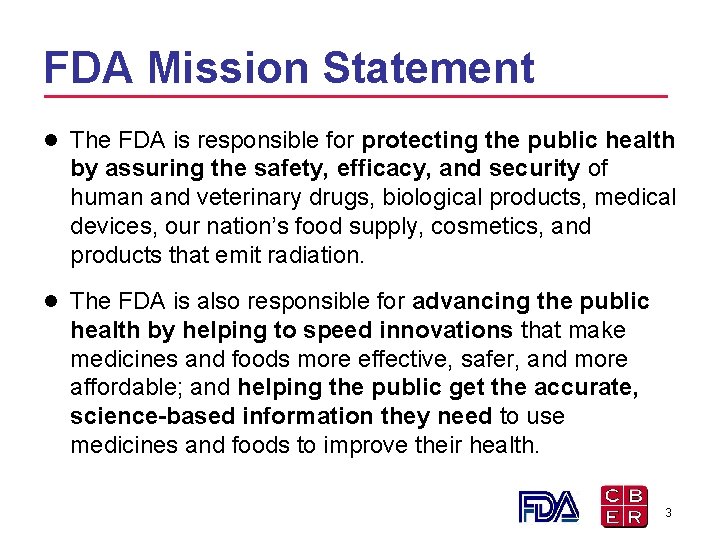
FDA Mission Statement l The FDA is responsible for protecting the public health by assuring the safety, efficacy, and security of human and veterinary drugs, biological products, medical devices, our nation’s food supply, cosmetics, and products that emit radiation. l The FDA is also responsible for advancing the public health by helping to speed innovations that make medicines and foods more effective, safer, and more affordable; and helping the public get the accurate, science-based information they need to use medicines and foods to improve their health. 52 3
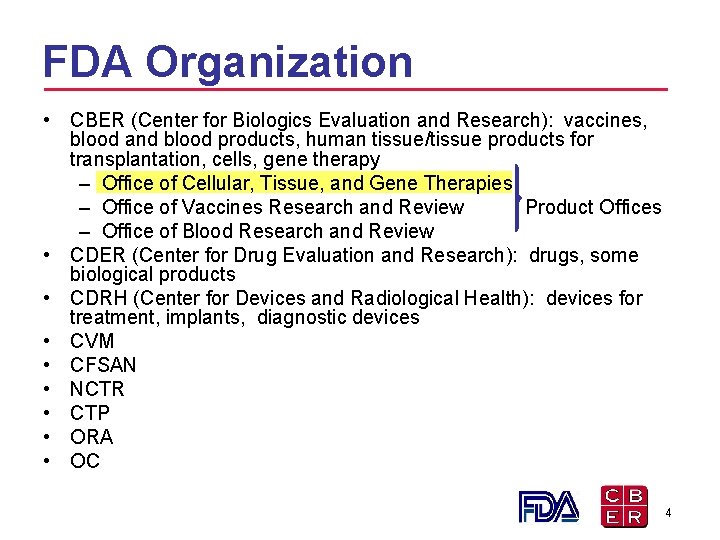
FDA Organization • CBER (Center for Biologics Evaluation and Research): vaccines, blood and blood products, human tissue/tissue products for transplantation, cells, gene therapy – Office of Cellular, Tissue, and Gene Therapies – Office of Vaccines Research and Review Product Offices – Office of Blood Research and Review • CDER (Center for Drug Evaluation and Research): drugs, some biological products • CDRH (Center for Devices and Radiological Health): devices for treatment, implants, diagnostic devices • CVM • CFSAN • NCTR • CTP • ORA • OC 4
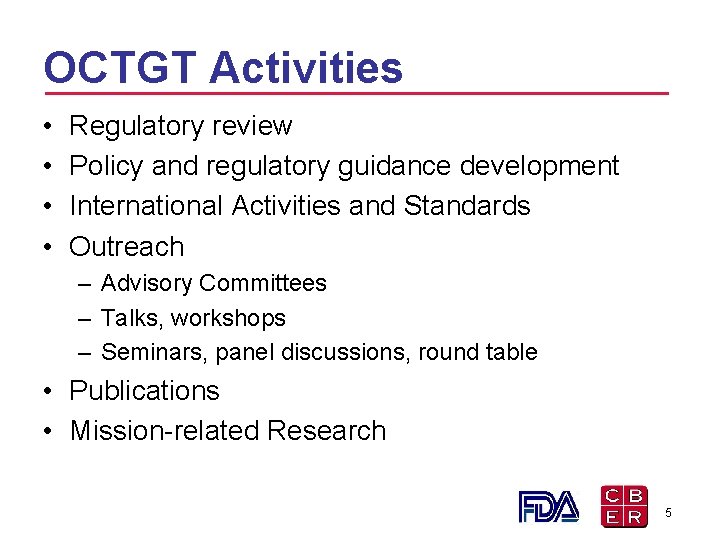
OCTGT Activities • • Regulatory review Policy and regulatory guidance development International Activities and Standards Outreach – Advisory Committees – Talks, workshops – Seminars, panel discussions, round table • Publications • Mission-related Research 5
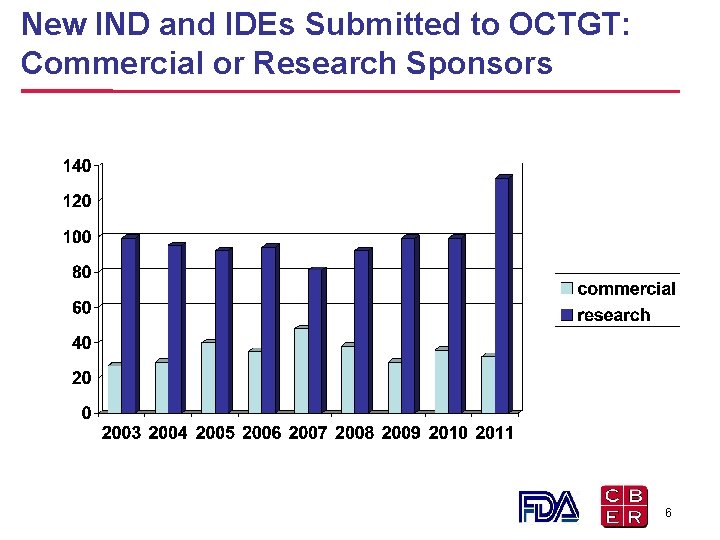
New IND and IDEs Submitted to OCTGT: Commercial or Research Sponsors 6
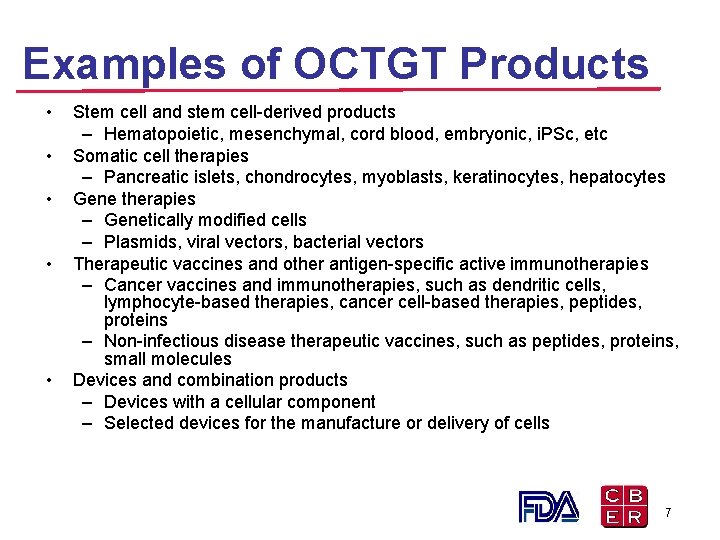
Examples of OCTGT Products • • • Stem cell and stem cell-derived products – Hematopoietic, mesenchymal, cord blood, embryonic, i. PSc, etc Somatic cell therapies – Pancreatic islets, chondrocytes, myoblasts, keratinocytes, hepatocytes Gene therapies – Genetically modified cells – Plasmids, viral vectors, bacterial vectors Therapeutic vaccines and other antigen-specific active immunotherapies – Cancer vaccines and immunotherapies, such as dendritic cells, lymphocyte-based therapies, cancer cell-based therapies, peptides, proteins – Non-infectious disease therapeutic vaccines, such as peptides, proteins, small molecules Devices and combination products – Devices with a cellular component – Selected devices for the manufacture or delivery of cells 7
Regulatory Review 8
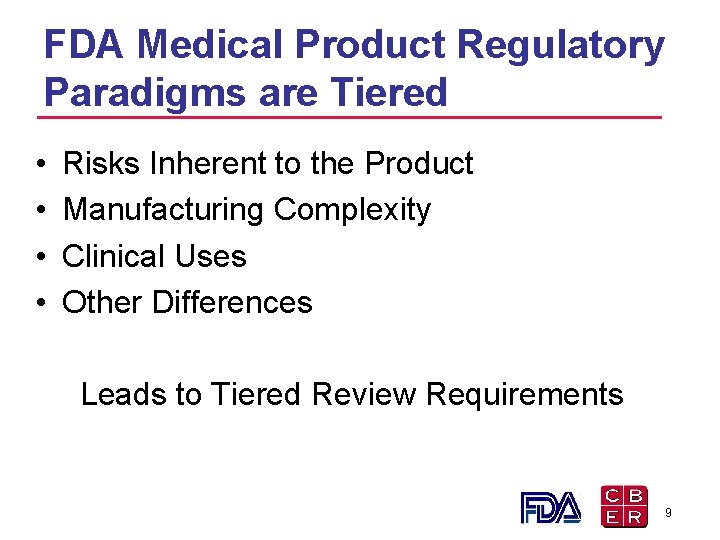
FDA Medical Product Regulatory Paradigms are Tiered • • Risks Inherent to the Product Manufacturing Complexity Clinical Uses Other Differences Leads to Tiered Review Requirements 9
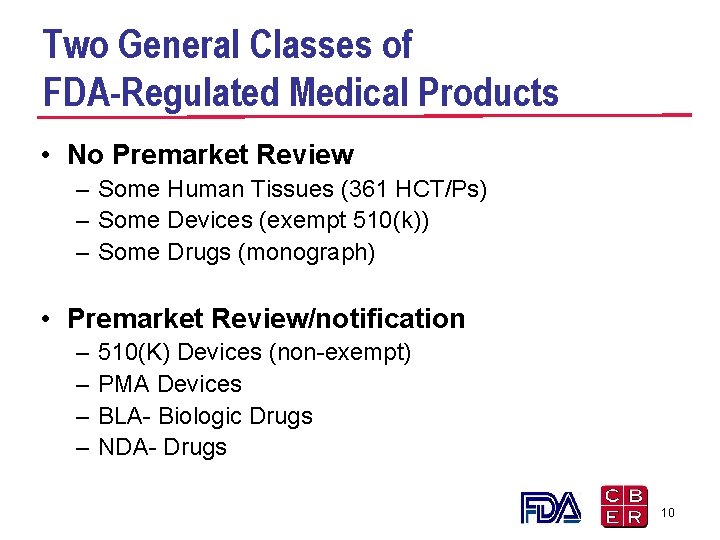
Two General Classes of FDA-Regulated Medical Products • No Premarket Review – Some Human Tissues (361 HCT/Ps) – Some Devices (exempt 510(k)) – Some Drugs (monograph) • Premarket Review/notification – – 510(K) Devices (non-exempt) PMA Devices BLA- Biologic Drugs NDA- Drugs 10
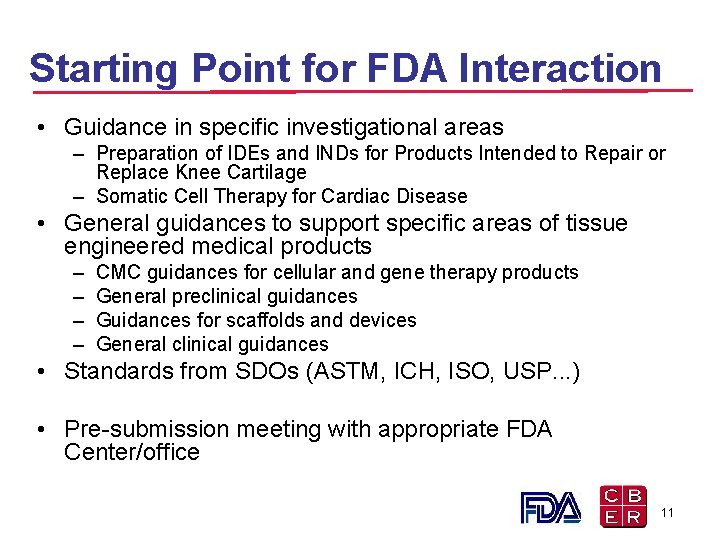
Starting Point for FDA Interaction • Guidance in specific investigational areas – Preparation of IDEs and INDs for Products Intended to Repair or Replace Knee Cartilage – Somatic Cell Therapy for Cardiac Disease • General guidances to support specific areas of tissue engineered medical products – – CMC guidances for cellular and gene therapy products General preclinical guidances Guidances for scaffolds and devices General clinical guidances • Standards from SDOs (ASTM, ICH, ISO, USP. . . ) • Pre-submission meeting with appropriate FDA Center/office 11
Policy & Regulatory Guidance Development 12
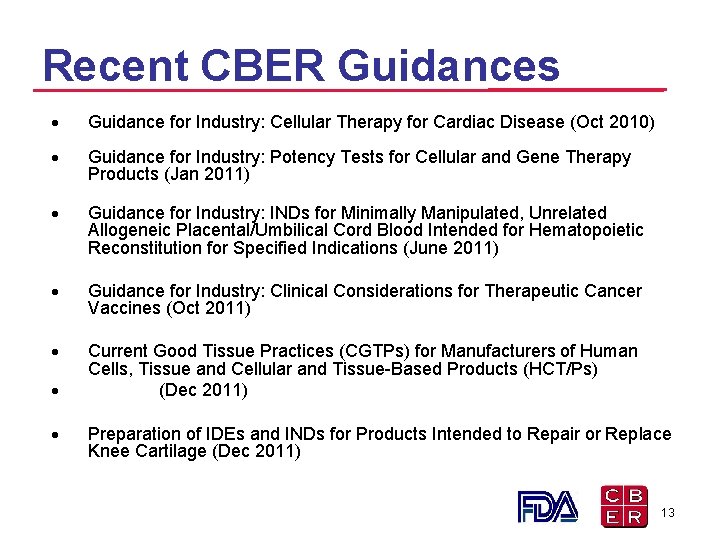
Recent CBER Guidances · Guidance for Industry: Cellular Therapy for Cardiac Disease (Oct 2010) · Guidance for Industry: Potency Tests for Cellular and Gene Therapy Products (Jan 2011) · Guidance for Industry: INDs for Minimally Manipulated, Unrelated Allogeneic Placental/Umbilical Cord Blood Intended for Hematopoietic Reconstitution for Specified Indications (June 2011) · Guidance for Industry: Clinical Considerations for Therapeutic Cancer Vaccines (Oct 2011) · Current Good Tissue Practices (CGTPs) for Manufacturers of Human Cells, Tissue and Cellular and Tissue-Based Products (HCT/Ps) (Dec 2011) · · Preparation of IDEs and INDs for Products Intended to Repair or Replace Knee Cartilage (Dec 2011) 13
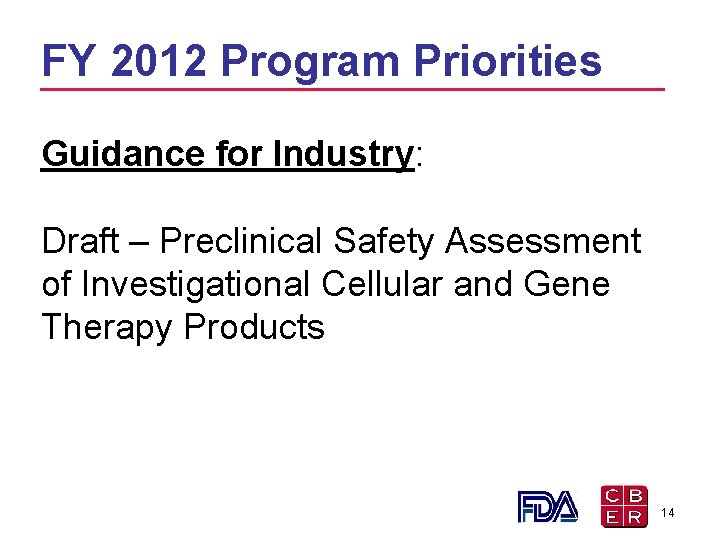
FY 2012 Program Priorities Guidance for Industry: Draft – Preclinical Safety Assessment of Investigational Cellular and Gene Therapy Products 14
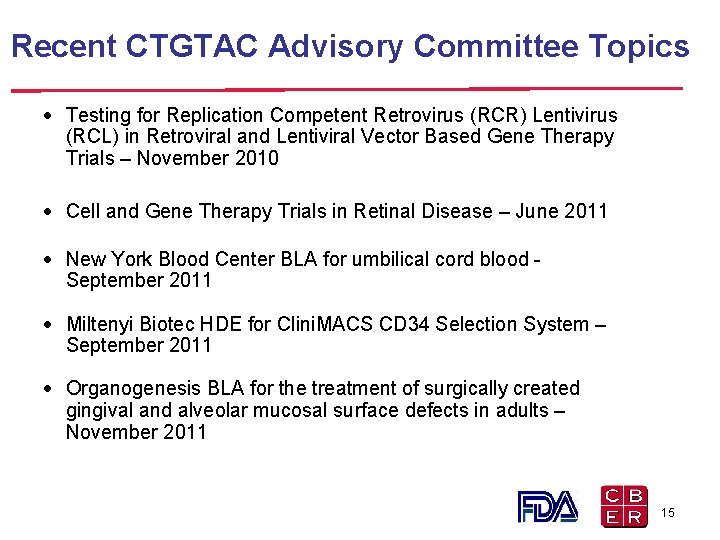
Recent CTGTAC Advisory Committee Topics · Testing for Replication Competent Retrovirus (RCR) Lentivirus (RCL) in Retroviral and Lentiviral Vector Based Gene Therapy Trials – November 2010 · Cell and Gene Therapy Trials in Retinal Disease – June 2011 · New York Blood Center BLA for umbilical cord blood - September 2011 · Miltenyi Biotec HDE for Clini. MACS CD 34 Selection System – September 2011 · Organogenesis BLA for the treatment of surgically created gingival and alveolar mucosal surface defects in adults – November 2011 15
International Activities and Standards 16
FDA’s Goals for International Collaborations • To safeguard global public health, • To assure that consumer protection standards and requirements are met, • To facilitate the availability of safe and effective products, • To develop and utilize product standards and other requirements more effectively • To minimize or eliminate inconsistent standards internationally. 17
FDA-European Medicines Agency (EMA)Health Canada (HC) ATMP Cluster • Regular teleconferences to share thinking on regulatory approaches on both general and specific issues • Share draft documents for comments • Engage reciprocally in workshops advisory committees, and working parties 18
Asia Pacific Economic Cooperation-Life Sciences Innovation Forum (APEC/LSIF) • 13 countries participated • Goal: To bring together a group of stem cell leaders from corporate, academic, and government sectors to discuss and further develop a regulatory frame work for QA/QC for stem cell products • Information Gathering Opportunities – Regulatory landscape for cell therapies – Guidance documents in place or under development for (stem) cell therapies – (Stem) cell therapy products in clinical trials or already licensed • Outcomes: Regulatory gaps for stem cell products exist among the participating countries 19
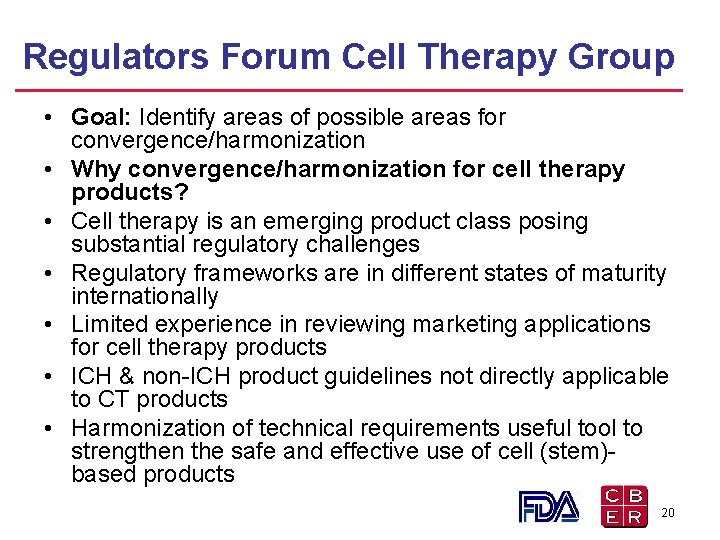
Regulators Forum Cell Therapy Group • Goal: Identify areas of possible areas for convergence/harmonization • Why convergence/harmonization for cell therapy products? • Cell therapy is an emerging product class posing substantial regulatory challenges • Regulatory frameworks are in different states of maturity internationally • Limited experience in reviewing marketing applications for cell therapy products • ICH & non-ICH product guidelines not directly applicable to CT products • Harmonization of technical requirements useful tool to strengthen the safe and effective use of cell (stem)based products 20
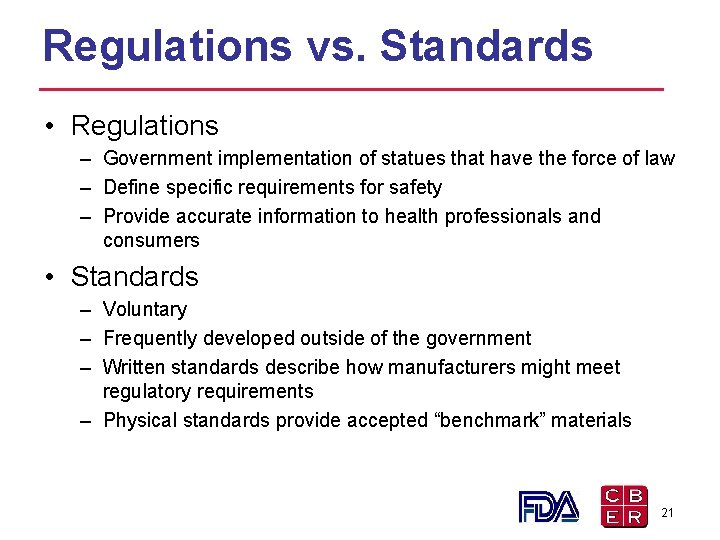
Regulations vs. Standards • Regulations – Government implementation of statues that have the force of law – Define specific requirements for safety – Provide accurate information to health professionals and consumers • Standards – Voluntary – Frequently developed outside of the government – Written standards describe how manufacturers might meet regulatory requirements – Physical standards provide accepted “benchmark” materials 21
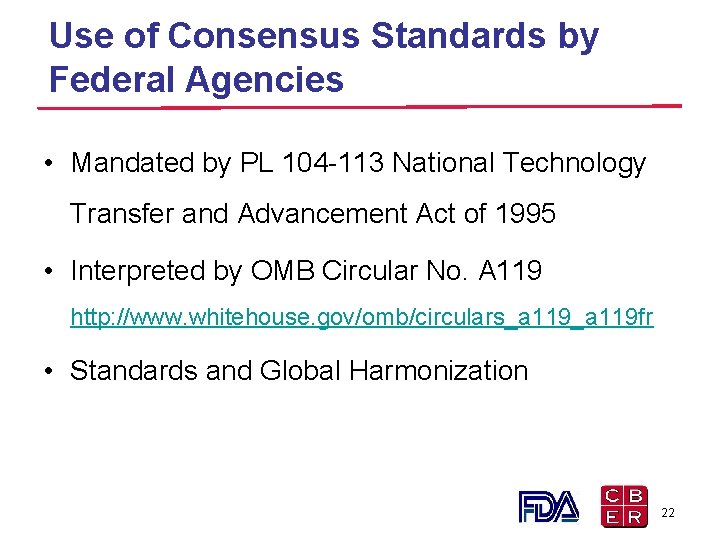
Use of Consensus Standards by Federal Agencies • Mandated by PL 104 -113 National Technology Transfer and Advancement Act of 1995 • Interpreted by OMB Circular No. A 119 http: //www. whitehouse. gov/omb/circulars_a 119 fr • Standards and Global Harmonization 22
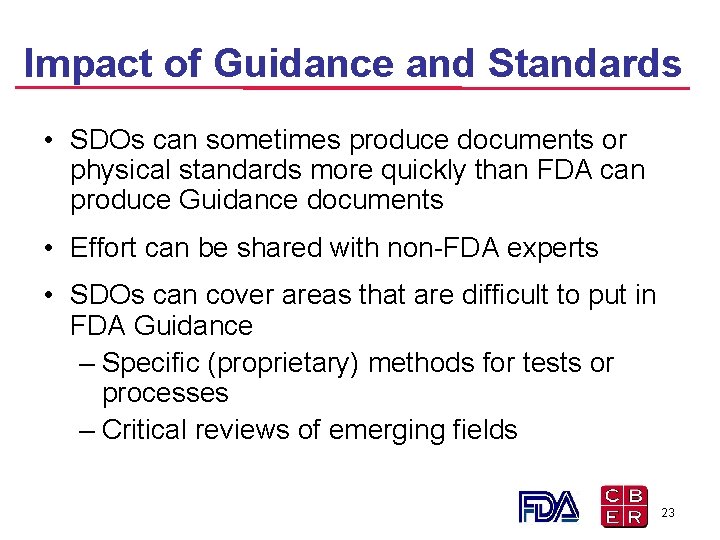
Impact of Guidance and Standards • SDOs can sometimes produce documents or physical standards more quickly than FDA can produce Guidance documents • Effort can be shared with non-FDA experts • SDOs can cover areas that are difficult to put in FDA Guidance – Specific (proprietary) methods for tests or processes – Critical reviews of emerging fields 23
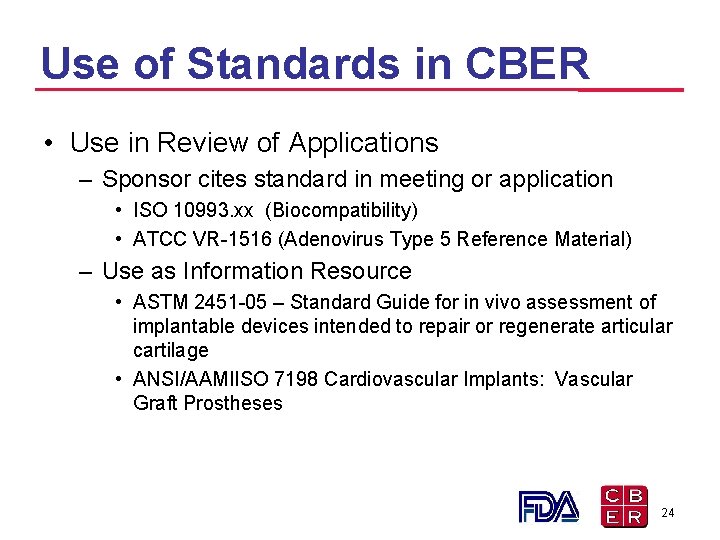
Use of Standards in CBER • Use in Review of Applications – Sponsor cites standard in meeting or application • ISO 10993. xx (Biocompatibility) • ATCC VR-1516 (Adenovirus Type 5 Reference Material) – Use as Information Resource • ASTM 2451 -05 – Standard Guide for in vivo assessment of implantable devices intended to repair or regenerate articular cartilage • ANSI/AAMIISO 7198 Cardiovascular Implants: Vascular Graft Prostheses 24
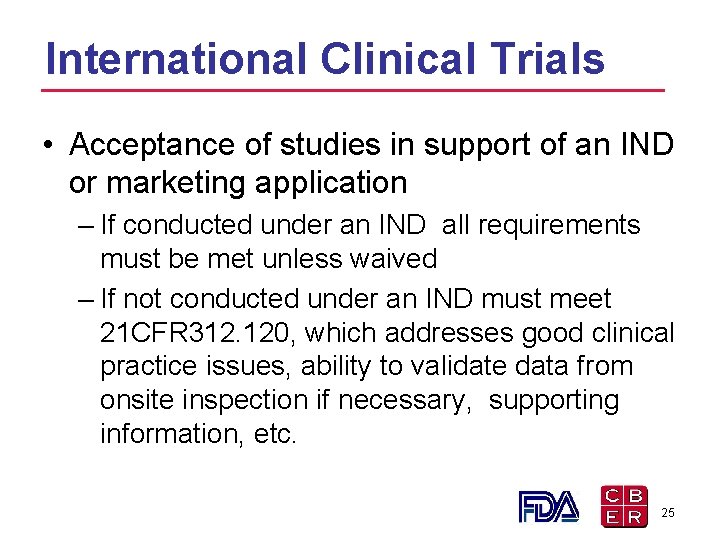
International Clinical Trials • Acceptance of studies in support of an IND or marketing application – If conducted under an IND all requirements must be met unless waived – If not conducted under an IND must meet 21 CFR 312. 120, which addresses good clinical practice issues, ability to validate data from onsite inspection if necessary, supporting information, etc. 25
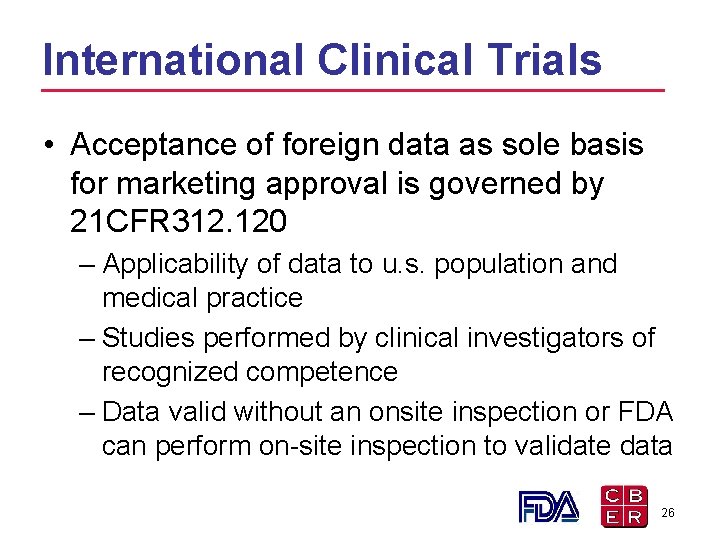
International Clinical Trials • Acceptance of foreign data as sole basis for marketing approval is governed by 21 CFR 312. 120 – Applicability of data to u. s. population and medical practice – Studies performed by clinical investigators of recognized competence – Data valid without an onsite inspection or FDA can perform on-site inspection to validate data 26
Special Programs 27
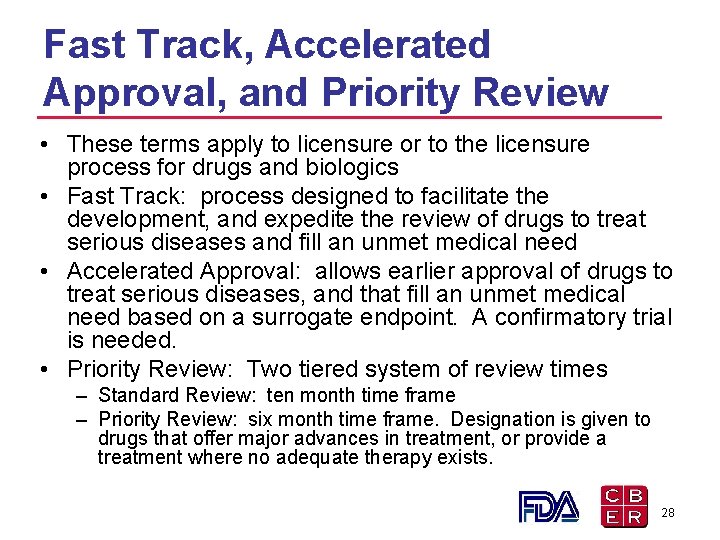
Fast Track, Accelerated Approval, and Priority Review • These terms apply to licensure or to the licensure process for drugs and biologics • Fast Track: process designed to facilitate the development, and expedite the review of drugs to treat serious diseases and fill an unmet medical need • Accelerated Approval: allows earlier approval of drugs to treat serious diseases, and that fill an unmet medical need based on a surrogate endpoint. A confirmatory trial is needed. • Priority Review: Two tiered system of review times – Standard Review: ten month time frame – Priority Review: six month time frame. Designation is given to drugs that offer major advances in treatment, or provide a treatment where no adequate therapy exists. 28
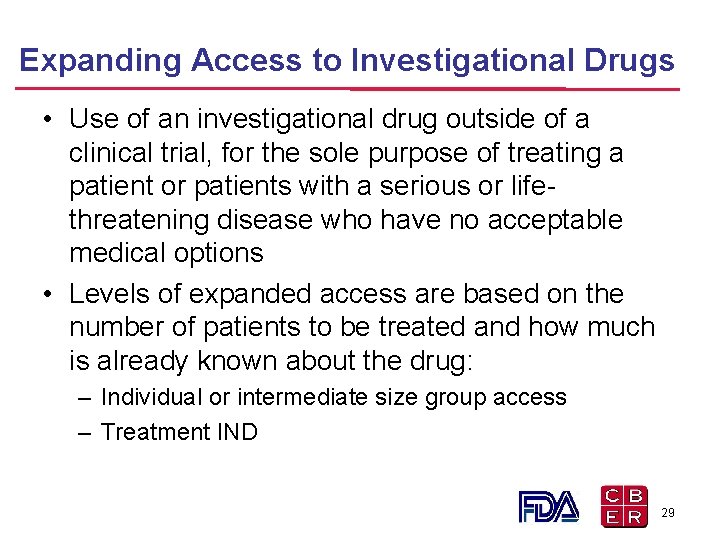
Expanding Access to Investigational Drugs • Use of an investigational drug outside of a clinical trial, for the sole purpose of treating a patient or patients with a serious or lifethreatening disease who have no acceptable medical options • Levels of expanded access are based on the number of patients to be treated and how much is already known about the drug: – Individual or intermediate size group access – Treatment IND 29
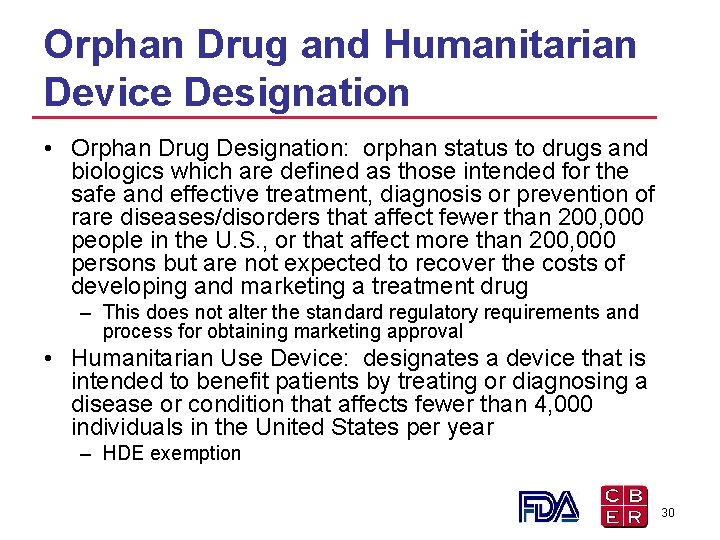
Orphan Drug and Humanitarian Device Designation • Orphan Drug Designation: orphan status to drugs and biologics which are defined as those intended for the safe and effective treatment, diagnosis or prevention of rare diseases/disorders that affect fewer than 200, 000 people in the U. S. , or that affect more than 200, 000 persons but are not expected to recover the costs of developing and marketing a treatment drug – This does not alter the standard regulatory requirements and process for obtaining marketing approval • Humanitarian Use Device: designates a device that is intended to benefit patients by treating or diagnosing a disease or condition that affects fewer than 4, 000 individuals in the United States per year – HDE exemption 30
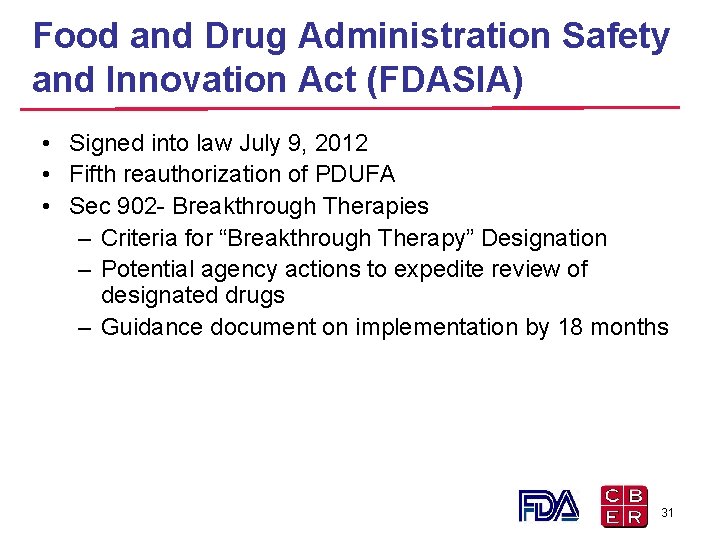
Food and Drug Administration Safety and Innovation Act (FDASIA) • Signed into law July 9, 2012 • Fifth reauthorization of PDUFA • Sec 902 - Breakthrough Therapies – Criteria for “Breakthrough Therapy” Designation – Potential agency actions to expedite review of designated drugs – Guidance document on implementation by 18 months 31
OCTGT Regulatory Resources • OCTGT Learn Webinar Series: http: //www. fda. gov/Biologics. Blood. Vaccine s/News. Events/ucm 232821. htm • Regulatory Questions: CBEROCTGTRMS@fda. hhs. gov Patrick Riggins, Ph. D. – (301)827 -6536 81 32
Public Access to CBER website: http: //www. fda. gov/Biologics. Blood. Vaccines/default. htm Phone: 1 -800 -835 -4709 or 301 -827 -1800 Consumer Affairs Branch (CAB) Email: ocod@fda. hhs. gov Phone: 301 -827 -3821 Manufacturers Assistance and Technical Training Branch (MATTB) Email: industry. biologics@fda. gov Phone: 301 -827 -4081 Follow us on Twitter https: //www. twitter. com/fdacber 33
Contact Information Celia Witten, Ph. D. , M. D. Office Director, OCTGT CBER/FDA 1401 Rockville Pike (HFM-700) Rockville, MD 20852 -1448 301 -827 -4163 celia. witten@fda. hhs. gov 34
Panel Discussion Question #1 – Since product development, including clinical studies in TE/RM is now a global enterprise, what CMC, clinical, and pharmacology/toxicology aspects of international studies may be acceptable to both EMEA and FDA? – What criteria will form the basis for regulatory decision -making in product approval? 84
Panel Discussion Question #2 – What priorities do the FDA and EMEA foresee in developing ‘best practices’ for regenerative products, i. e. , clinical trial design, manufacturing processes and release criteria, among others? – How can ‘best practices’ from various regulatory agencies be developed and adopted to accommodate reciprocity across national boundaries? – What industrial-regulatory mechanisms are the most effective in establishing a cooperative dialogue with FDA and EMEA regarding such issues? 85
Panel Discussion Question #3 The FDA and EMEA have different legislated product approval pathways permitting accelerated or expedited product approval. – What criteria would form the basis for accelerated or expedited product review of a TE/RM product? – Would any other means of rapid product approval for TE/RM products be considered as long as patient safety is demonstrated? 86
Regulatory Imperative Session Summary • Regulatory barriers are considered as major challenges for TE/RM product commercialization - academics, industrialists, financiers, and regulators. • Both FDA and EMA have recognized the regulatory challenges presented by TE/RM product technologies, raw materials, preclinical testing, and clinical assessment. • TE/RM product pipeline is broad and deep presenting unique challenges for regulators such that the EMA CAT and FDA Pre. Submission Meetings allow sponsors to obtain specific guidance on their respective technology (cells, genes, combinations, etc). • TE/RM products are complex presenting unique manufacturing, pre/non-clinical and clinical challenges for regulation 87
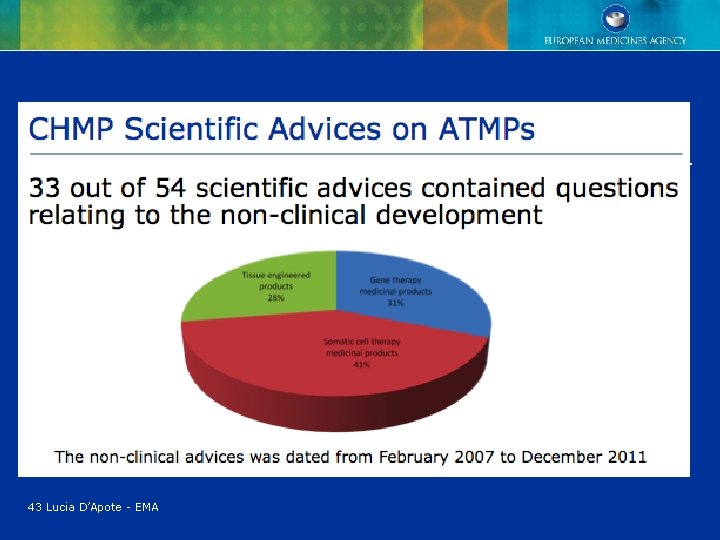
Regulatory Imperative Session Summary • Both EMA and FDA: – Take a risk-based/tiered approaches to evaluate the specific risks unique to each TE/RM product submission. – Have identified special pathways (e. g. orphan, accelerated assessments, etc) to encourage TE/RM therapies reaching the market most expeditiously and are safe and effective for the intended patient population. – Promote long-term follow-up on safety, efficacy and durability of TE/RM products – Have entered into agreement for parallel advice and collaborations with industrial organizations on regulation of TE/RM product development – Offer specific guidance to industry in key technological areas of concern: scientific advise being sought by sponsors has focused on non-clinical challenges although clinical trial design have also served as a topic of industrial interest. – Accept international studies for marketing applications if they meet specific requirements for data validity, good clinical practices and supporting information 88
Regulatory Imperative Session Summary • The way forward for TE/RM technologies and products includes: – Raise awareness of unique safety challenges and efficacy opportunities – Learn from experience as these new technologies advance to commercialization and become standards of care. – Promoting industrial-regulatory and regulatory-regulatory dialog to promote the commercialization of safe and effective TE/RM technologies for unmet medical needs 89
A copy of the slides for Session 2 will be available online via the TERMIS website, www. termis. org. 90