
World Civilizations The Global Experience AP Seventh Edition
World Civilizations The Global Experience AP® Seventh Edition Chapter 13 Reunification and Renaissance in Chinese Civilizations: The Era of the Tang and Song Dynasties World Civilizations: The Global Experience , AP® Seventh Edition Stearns | Adas | Schwartz | Gilbert Copyright © 2015, 2011, 2007 Pearson Education, Inc. All Rights Reserved
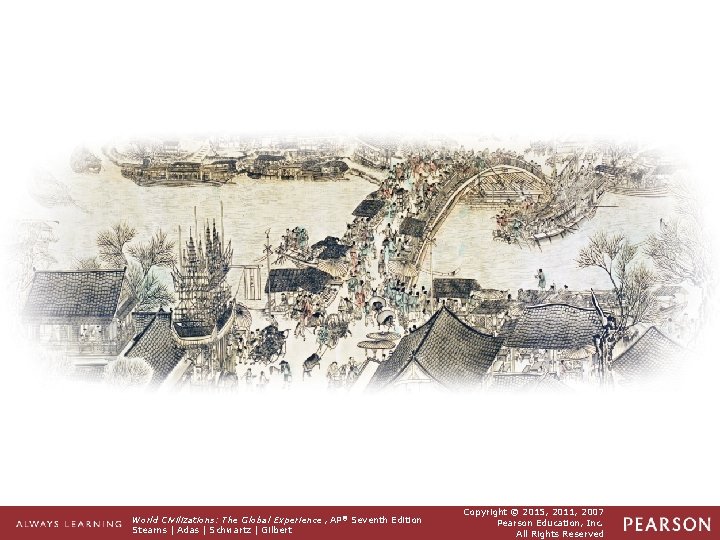
Figure 13. 1 This cityscape of the Song city of Bian Liang (Kaifeng), painted by Zhang Zeduan, conveys the energy and prosperity that characterized Chinese urban life in the Tang-Song eras. Like Hangzhou, Bian Liang’s graceful bridges, bustling river markets, and spacious parks attracted many visitors, especially at times of festival celebrations like that depicted here. World Civilizations: The Global Experience , AP® Seventh Edition Stearns | Adas | Schwartz | Gilbert Copyright © 2015, 2011, 2007 Pearson Education, Inc. All Rights Reserved
Chapter Overview I. Rebuilding the Imperial Edifice in the Sui-Tang Era II. Tang Decline and the Rise of the Song III. Tang and Song Prosperity: The Basis of a Golden Age World Civilizations: The Global Experience , AP® Seventh Edition Stearns | Adas | Schwartz | Gilbert Copyright © 2015, 2011, 2007 Pearson Education, Inc. All Rights Reserved
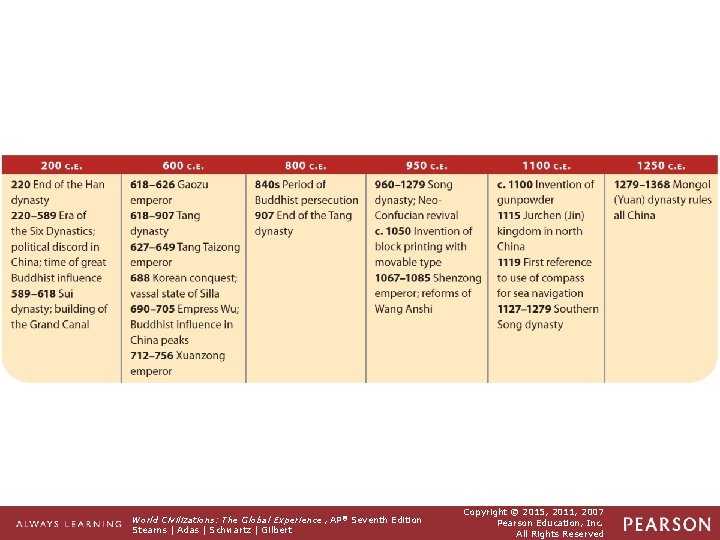
TIMELINE 200 C. E. to 1250 C. E. World Civilizations: The Global Experience , AP® Seventh Edition Stearns | Adas | Schwartz | Gilbert Copyright © 2015, 2011, 2007 Pearson Education, Inc. All Rights Reserved
Rebuilding the Imperial Edifice in the Sui-Tang Era • Wendi (Yang Jian) – Nobleman – Leads nomadic leaders to control northern China – 589, defeat of Chen kingdom § Established Sui dynasty World Civilizations: The Global Experience , AP® Seventh Edition Stearns | Adas | Schwartz | Gilbert Copyright © 2015, 2011, 2007 Pearson Education, Inc. All Rights Reserved
Rebuilding the Imperial Edifice in the Sui-Tang Era • Sui Excesses and Collapse – Yangdi § Son of Wendi § Legal reform § Reorganized Confucian education § Scholar-gentry reestablished § Loyang • New capital • Building projects World Civilizations: The Global Experience , AP® Seventh Edition Stearns | Adas | Schwartz | Gilbert Copyright © 2015, 2011, 2007 Pearson Education, Inc. All Rights Reserved
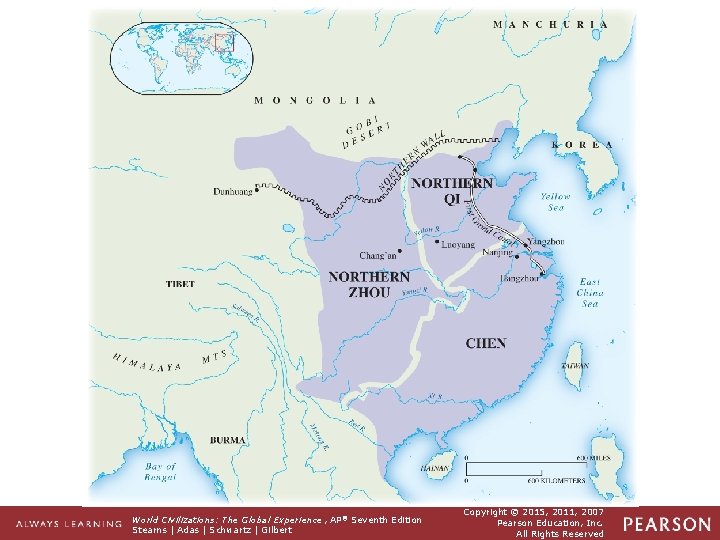
Map 13. 1 China During the Age of Division After the collapse of the Han dynasty, China fragmented into warring kingdoms for nearly 400 years. The deep divisions of this period were captured by its designation in Chinese histories as the era of the Six Dynasties. World Civilizations: The Global Experience , AP® Seventh Edition Stearns | Adas | Schwartz | Gilbert Copyright © 2015, 2011, 2007 Pearson Education, Inc. All Rights Reserved
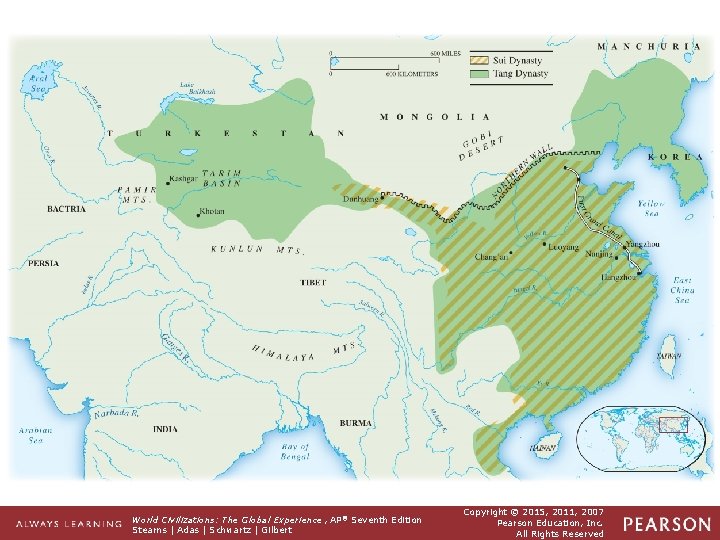
Map 13. 2 The Sui Dynasty and the Tang Dynasty The short-lived Sui dynasty laid the foundations for the expansive Tang. Under the latter the Chinese empire was restored on a scale not known since the Han era. World Civilizations: The Global Experience , AP® Seventh Edition Stearns | Adas | Schwartz | Gilbert Copyright © 2015, 2011, 2007 Pearson Education, Inc. All Rights Reserved
Rebuilding the Imperial Edifice in the Sui-Tang Era • Sui Excesses and Collapse – Yangdi § Canals built across empire § Attacked Korea § Defeated by Turks, 615 § Assassinated, 618 World Civilizations: The Global Experience , AP® Seventh Edition Stearns | Adas | Schwartz | Gilbert Copyright © 2015, 2011, 2007 Pearson Education, Inc. All Rights Reserved
Rebuilding the Imperial Edifice in the Sui-Tang Era • The Emergence of the Tang and the Restoration of the Empire – Li Yuan, Duke of Tang § Uses armies to unite China § Extends borders to Afghanistan § Use of Turks in army – Empire into Tibet, Vietnam, Manchuria, Korea § Great Wall repaired World Civilizations: The Global Experience , AP® Seventh Edition Stearns | Adas | Schwartz | Gilbert Copyright © 2015, 2011, 2007 Pearson Education, Inc. All Rights Reserved
Rebuilding the Imperial Edifice in the Sui-Tang Era • Rebuilding the World's Largest and Most Pervasive Bureaucracy – Unity § Aristocracy weakened § Confucian ideology revised § Scholar-gentry elite reestablished § Bureaucracy § Bureau of Censors – Chang'an World Civilizations: The Global Experience , AP® Seventh Edition Stearns | Adas | Schwartz | Gilbert Copyright © 2015, 2011, 2007 Pearson Education, Inc. All Rights Reserved
Rebuilding the Imperial Edifice in the Sui-Tang Era • Institutionalizing Meritocracy: The Growing Importance of the Examination System – Ministry of Rites – Birth, connections important for office – Jinshi World Civilizations: The Global Experience , AP® Seventh Edition Stearns | Adas | Schwartz | Gilbert Copyright © 2015, 2011, 2007 Pearson Education, Inc. All Rights Reserved
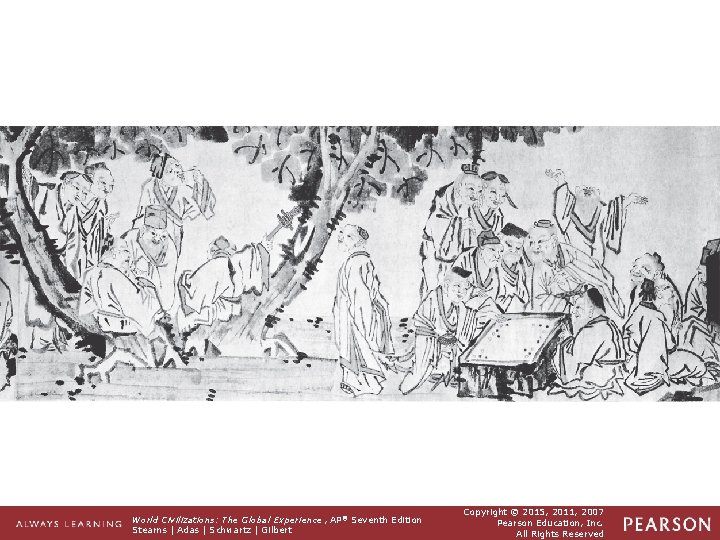
Figure 13. 2 As shown in this ink drawing of Chinese philosophers of the Song dynasty, board games and musical recitals were highly esteemed leisure activities for the scholargentry class. Members of the scholar-gentry elite might also attend poetry reading or writing parties, travel to mountains to meditate amid scenic splendors, or paint the blossoming plum trees in their gardens. As in their work, members of this highly educated elite admired those who at leisure pursued a diverse array of activities. (Handscroll “Gathering of Philosophers. ” The Metropolitan Museum of Art, New York, NY, U. S. A. Image copyright © The Metropolitan Museum of Art/Art Resource, NY. ) World Civilizations: The Global Experience , AP® Seventh Edition Stearns | Adas | Schwartz | Gilbert Copyright © 2015, 2011, 2007 Pearson Education, Inc. All Rights Reserved
Rebuilding the Imperial Edifice in the Sui-Tang Era • State and Religion in the Tang and Song Eras – Confucianism and Buddhism potential rivals § Buddhism had been central § Pure land Mahayana Buddhism popular in era of turmoil § Chan (Zen) Buddhism common among elite World Civilizations: The Global Experience , AP® Seventh Edition Stearns | Adas | Schwartz | Gilbert Copyright © 2015, 2011, 2007 Pearson Education, Inc. All Rights Reserved
Rebuilding the Imperial Edifice in the Sui-Tang Era • State and Religion in the Tang and Song Eras – Early Tang support Buddhism § Empress Wu (690– 705) • Endows monasteries • Tried to make Buddhism the state religion § 50, 000 monasteries by c. 850 World Civilizations: The Global Experience , AP® Seventh Edition Stearns | Adas | Schwartz | Gilbert Copyright © 2015, 2011, 2007 Pearson Education, Inc. All Rights Reserved
Rebuilding the Imperial Edifice in the Sui-Tang Era • The Anti-Buddhist Backlash – Confucians in administration § Support taxation of Buddhist monasteries – Persecution under Emperor Wuzong (841– 847) § Monasteries destroyed § Lands redistributed – Confucian emerges the central ideology World Civilizations: The Global Experience , AP® Seventh Edition Stearns | Adas | Schwartz | Gilbert Copyright © 2015, 2011, 2007 Pearson Education, Inc. All Rights Reserved
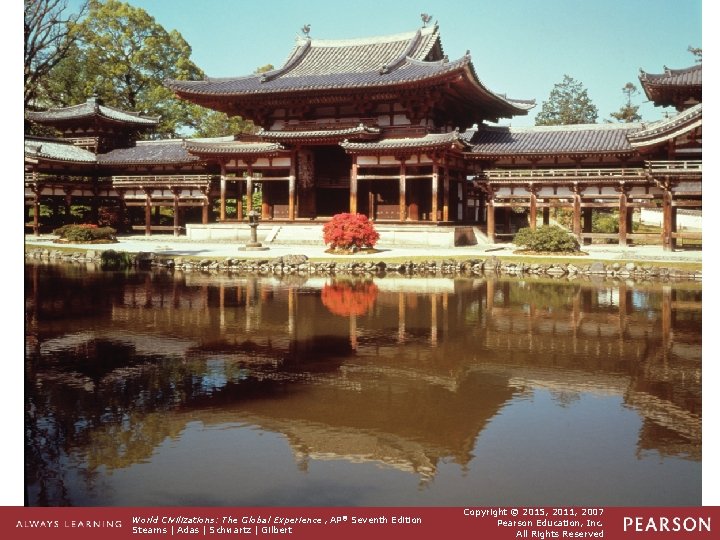
Figure 13. 3 Tang era architecture at the Phoenix Pavilion in Japan. Some of the most characteristic features of this splendid style of construction are its steeply sloping tiled roofs with upturned corners, the extensive use of fine wood in the floors, walls, and ceilings, and the sliding panels that covered doors and windows in inclement weather and opened up the temples or monasteries to the natural world on pleasant days. World Civilizations: The Global Experience , AP® Seventh Edition Stearns | Adas | Schwartz | Gilbert Copyright © 2015, 2011, 2007 Pearson Education, Inc. All Rights Reserved
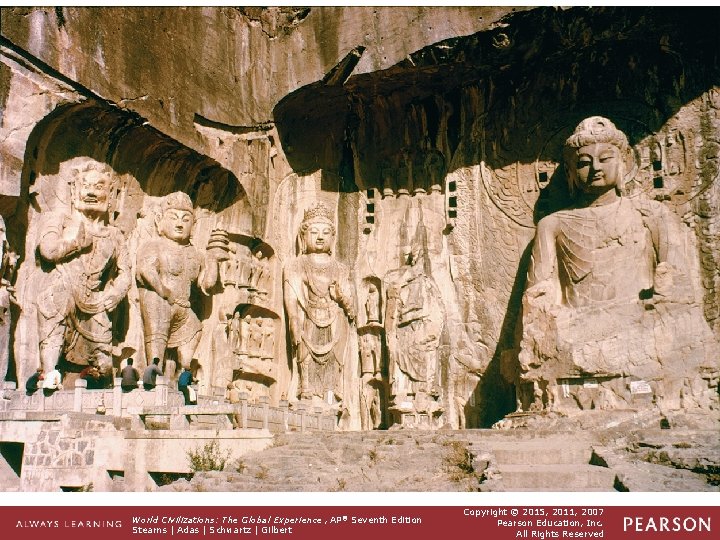
Figure 13. 4 At sites such as Longmen near the Tang capital of Luoyang on the Yellow River and Yunkang far to the north, massive statues of the Buddha were carved out of rocky cliffsides beginning in the 6 th century C. E. Before the age of Buddhist predominance, sculpture had not been highly developed in China, and the art at these centers was strongly influenced by that of central and even west Asia. Known more for their sheer size than for artistic refinement, the huge Buddhas of sites such as Longmen attest to the high level of skill the Chinese had attained in stone- and metalworking. World Civilizations: The Global Experience , AP® Seventh Edition Stearns | Adas | Schwartz | Gilbert Copyright © 2015, 2011, 2007 Pearson Education, Inc. All Rights Reserved
Tang Decline and the Rise of the Song • Emperor Xuanzong (713– 756) – Height of Tang power – Mistress, Yang Guifei § Powerful § Relatives gain power in government • 755, revolt – But leaders ineffectual – Frontier peoples, governors benefit World Civilizations: The Global Experience , AP® Seventh Edition Stearns | Adas | Schwartz | Gilbert Copyright © 2015, 2011, 2007 Pearson Education, Inc. All Rights Reserved
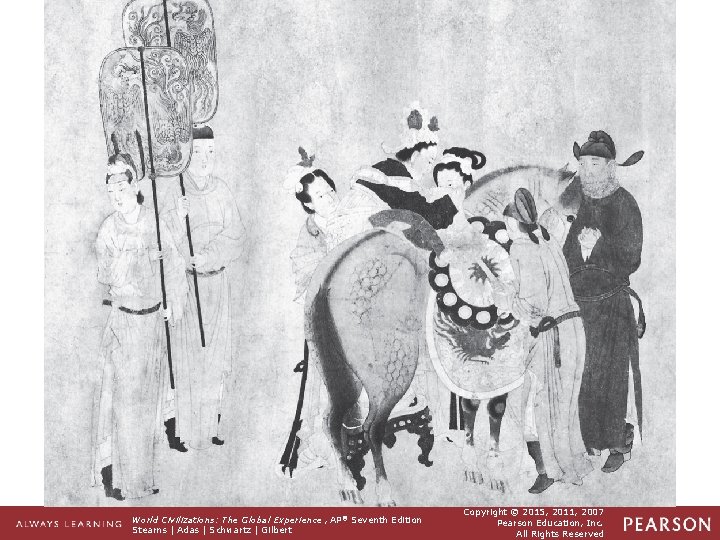
Figure 13. 5 This painting of Yang Guifei gives a vivid impression of the opulence and refinement of Chinese court life in the late Tang era. Here a very well-dressed Yang Guifei is helped by some of her servants onto a well-fed horse, presumably for a trot through the palace grounds. Two fan-bearers stand ready to accompany the now-powerful concubine on her sedate ride while other attendants prepare to lead the horse through the confined space of the royal enclosure. World Civilizations: The Global Experience , AP® Seventh Edition Stearns | Adas | Schwartz | Gilbert Copyright © 2015, 2011, 2007 Pearson Education, Inc. All Rights Reserved
Tang Decline and the Rise of the Song • The Founding of the Song Dynasty – 907, last Tang emperor resigns – Zhao Kuangyin (Taizu) § 960, founds Song dynasty § Liao dynasty, Manchuria • Khitan nomads • Unconquered by Taizu – Song unable to defeat northern nomads § Song pay tribute to Liao World Civilizations: The Global Experience , AP® Seventh Edition Stearns | Adas | Schwartz | Gilbert Copyright © 2015, 2011, 2007 Pearson Education, Inc. All Rights Reserved
Tang Decline and the Rise of the Song • Song Politics: Settling for Partial Restoration – Scholar-gentry patronized § Given power over military § Increased salaries, perks § Many more successful candidates World Civilizations: The Global Experience , AP® Seventh Edition Stearns | Adas | Schwartz | Gilbert Copyright © 2015, 2011, 2007 Pearson Education, Inc. All Rights Reserved
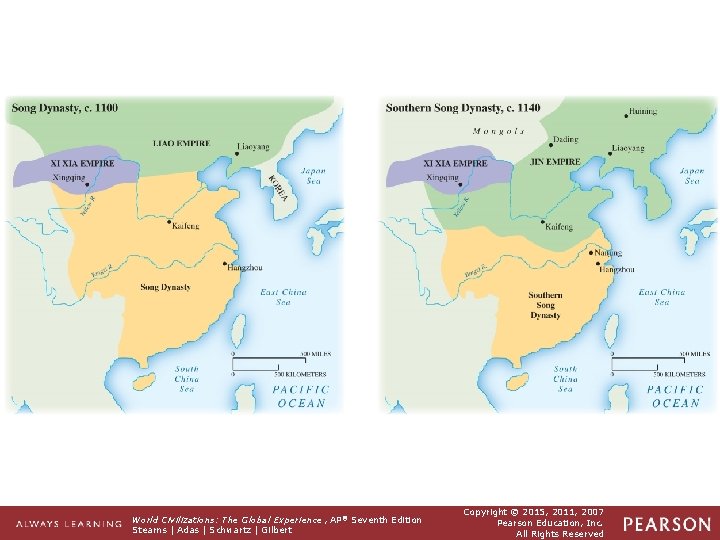
Map 13. 3 China in the Song and Southern Song Dynastic Periods A comparison of the territory controlled during the two phases of the Song dynasty clearly indicates both the growing power and pressure of nomadic peoples from the north and the weakened state of the Song rulers of China. World Civilizations: The Global Experience , AP® Seventh Edition Stearns | Adas | Schwartz | Gilbert Copyright © 2015, 2011, 2007 Pearson Education, Inc. All Rights Reserved
Tang Decline and the Rise of the Song • The Revival of Confucian Thought – Libraries established § Old texts recovered – Neo-confucians § Stress on personal morality § Zhu Xi • Importance of philosophy in everyday life § Hostility to foreign ideas § Gender, class, age distinctions reinforced World Civilizations: The Global Experience , AP® Seventh Edition Stearns | Adas | Schwartz | Gilbert Copyright © 2015, 2011, 2007 Pearson Education, Inc. All Rights Reserved
Tang Decline and the Rise of the Song • Roots of Decline: Attempts at Reform – Khitan independence encourages others – Tangut, Tibet § Xi Xia § Song pay tribute – Wang Anshi § Confucian scholar, chief minister § Reforms • Supported agricultural expansion • Landlords, scholar-gentry taxed World Civilizations: The Global Experience , AP® Seventh Edition Stearns | Adas | Schwartz | Gilbert Copyright © 2015, 2011, 2007 Pearson Education, Inc. All Rights Reserved
Tang Decline and the Rise of the Song • Reaction and Disaster: The Flight to the South – 1085, emperor supporting Wang Anshi dies § Reforms reversed – Jurchens defeat Liao § 1115, found Jin kingdom § Invade China § Song flee south • New capital at Hangzhou • Southern Song Dynasty (1127– 1279) World Civilizations: The Global Experience , AP® Seventh Edition Stearns | Adas | Schwartz | Gilbert Copyright © 2015, 2011, 2007 Pearson Education, Inc. All Rights Reserved
Tang and Song Prosperity: The Basis of a Golden Age • Canal system – Built to accommodate population shift – Yangdi's Grand Canal § Links North to South World Civilizations: The Global Experience , AP® Seventh Edition Stearns | Adas | Schwartz | Gilbert Copyright © 2015, 2011, 2007 Pearson Education, Inc. All Rights Reserved
Tang and Song Prosperity: The Basis of a Golden Age • A New Phase of Commercial Expansion – Silk routes reopened § Greater contact with Buddhist, Islamic regions – Sea trade § Developed by late Tang, Song § Junks World Civilizations: The Global Experience , AP® Seventh Edition Stearns | Adas | Schwartz | Gilbert Copyright © 2015, 2011, 2007 Pearson Education, Inc. All Rights Reserved
Tang and Song Prosperity: The Basis of a Golden Age • A New Phase of Commercial Expansion – Commerce expands § Credit § Deposit shops § Flying money – Urban growth § Chang'an • Tang capital • 2 million World Civilizations: The Global Experience , AP® Seventh Edition Stearns | Adas | Schwartz | Gilbert Copyright © 2015, 2011, 2007 Pearson Education, Inc. All Rights Reserved
Tang and Song Prosperity: The Basis of a Golden Age • Expanding Agrarian Production and Life in the Country – New areas cultivated § Canals help transport produce – Aristocratic estates § Divided among peasants § Scholar-gentry replace aristocracy World Civilizations: The Global Experience , AP® Seventh Edition Stearns | Adas | Schwartz | Gilbert Copyright © 2015, 2011, 2007 Pearson Education, Inc. All Rights Reserved
Tang and Song Prosperity: The Basis of a Golden Age • Family and Society in the Tang-Song Era – Great continuity – Marriage brokers – Elite women have broader opportunities § Empresses Wu, Wei § Yang Guifei – Divorce widely available World Civilizations: The Global Experience , AP® Seventh Edition Stearns | Adas | Schwartz | Gilbert Copyright © 2015, 2011, 2007 Pearson Education, Inc. All Rights Reserved
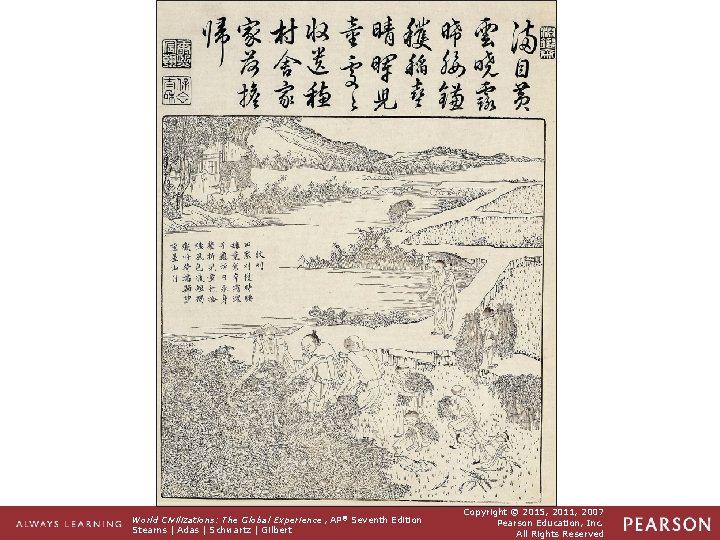
Figure 13. 6 The farming methods developed in the Song era are illustrated by this 17 thcentury engraving. Note the overseer, protected by an umbrella from the hot sun. Improved productivity, particularly of staple crops such as irrigated rice, meant that China’s long-held advantages over other civilizations in terms of the population it could support increased in this era. By the early 14 th century, as much as a quarter of humanity may have lived in the Chinese empire. (© The Trustees of the British Museum/Art Resource, NY. ) World Civilizations: The Global Experience , AP® Seventh Edition Stearns | Adas | Schwartz | Gilbert Copyright © 2015, 2011, 2007 Pearson Education, Inc. All Rights Reserved
Tang and Song Prosperity: The Basis of a Golden Age • The Neo-Confucian Assertion of Male Dominance – Neo-Confucians reduce role of women § Confinement § Men allowed great freedom § Men favored in inheritance, divorce § Women not educated § Foot binding World Civilizations: The Global Experience , AP® Seventh Edition Stearns | Adas | Schwartz | Gilbert Copyright © 2015, 2011, 2007 Pearson Education, Inc. All Rights Reserved
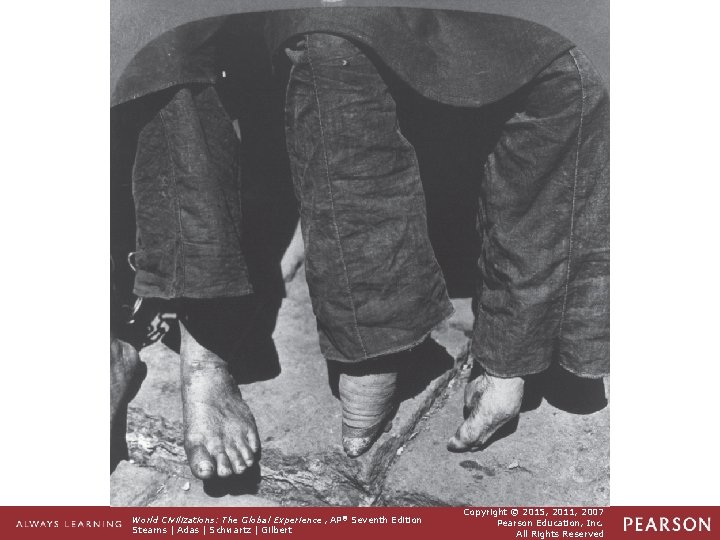
Footbinding as a Marker of Male Dominance As this photograph vividly illustrates, mature women with bound feet needed special footware since they depended heavily on the very thick heel that resulted from footbinding for support when standing and walking. Little of the sole of the foot touched the ground, and toes were fused together to make a pointed foot. World Civilizations: The Global Experience , AP® Seventh Edition Stearns | Adas | Schwartz | Gilbert Copyright © 2015, 2011, 2007 Pearson Education, Inc. All Rights Reserved
Tang and Song Prosperity: The Basis of a Golden Age • Invention, Artistic Creativity, and China's Global Impact – Influence over neighbors – Economy stimulated by advances in farming, finance – Explosives § Used by Song for armaments World Civilizations: The Global Experience , AP® Seventh Edition Stearns | Adas | Schwartz | Gilbert Copyright © 2015, 2011, 2007 Pearson Education, Inc. All Rights Reserved
Tang and Song Prosperity: The Basis of a Golden Age • Invention, Artistic Creativity, and China's Global Impact – Compasses, abacus – Bi Sheng § Printing with moveable type • Greatest level of literacy in preindustrial civilization World Civilizations: The Global Experience , AP® Seventh Edition Stearns | Adas | Schwartz | Gilbert Copyright © 2015, 2011, 2007 Pearson Education, Inc. All Rights Reserved
Tang and Song Prosperity: The Basis of a Golden Age • Scholarly Refinement and Artistic Accomplishment – Scholar-gentry key § Change from Buddhist artists § Secular scenes more common – Li Bo § Poet – Nature a common theme in poetry, art World Civilizations: The Global Experience , AP® Seventh Edition Stearns | Adas | Schwartz | Gilbert Copyright © 2015, 2011, 2007 Pearson Education, Inc. All Rights Reserved
Artistic Expression and Social Values • Art reveals much about the beliefs and values of a civilization. – Techniques, materials – Producers, purpose • China's political elite as landscape artists – Preference for civil leaders in society – Contrasted with religious paintings and sculpture in other societies World Civilizations: The Global Experience , AP® Seventh Edition Stearns | Adas | Schwartz | Gilbert Copyright © 2015, 2011, 2007 Pearson Education, Inc. All Rights Reserved
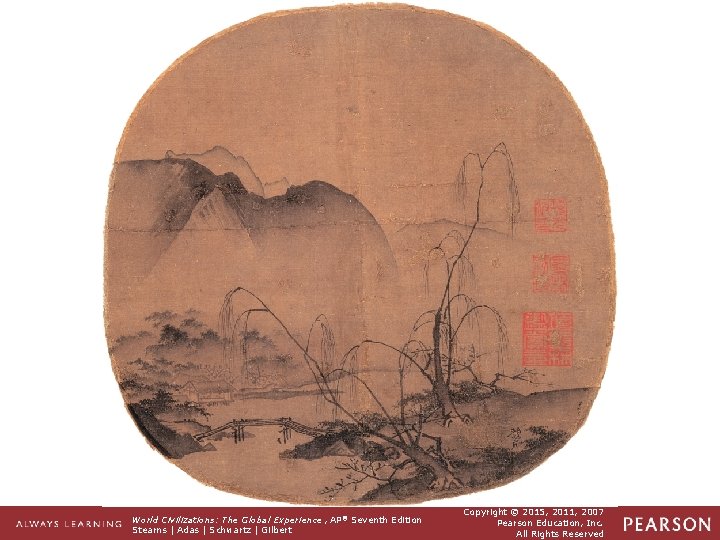
Figure 13. 7 The simplicity of composition, the use of empty space, and the emphasis on nature all characteristic of Chinese landscape painting at its height in the Song era. The colors used tended to be muted; often only brown or black ink was used. Most artists stamped their work with signature seals, like the red ones in this image, and poems describing scenes related to those in the painting floated in the empty space at the top or sides. (Ma Yuan, Chinese, 1190– 1235 “Bare Willows and Distant Mountains. ” Photograph © 2010 Museum of Fine Arts, Boston. Special Chinese and Japanese Fund, 14. 61) World Civilizations: The Global Experience , AP® Seventh Edition Stearns | Adas | Schwartz | Gilbert Copyright © 2015, 2011, 2007 Pearson Education, Inc. All Rights Reserved
- Slides: 39