
WORLD CALLIGRAPHY ETHIOPIAN WEEK 14 ETHIOPIAN The oldest
- Slides: 8
WORLD CALLIGRAPHY ETHIOPIAN WEEK 14
ETHIOPIAN ◦ The oldest African writing system that is still in use. ◦ The script itself is called Ge’ez. There a few different types; this one is called Fidel. ◦ The language it is for is actually called Amharic. ◦ Amharic is the second most spoken Semitic language in the world today and is the “official working language” of the Federal Democratic Republic of Ethiopia.
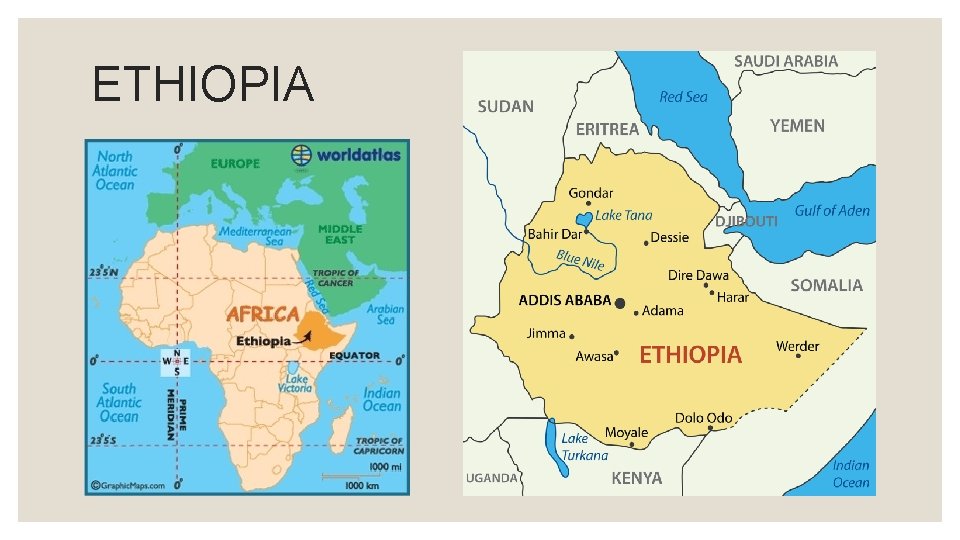
ETHIOPIA
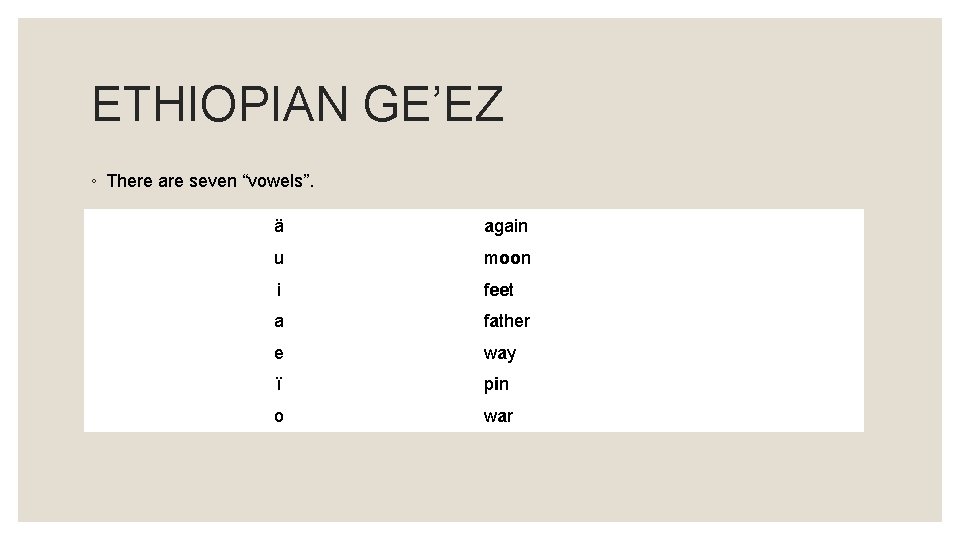
ETHIOPIAN GE’EZ ◦ There are seven “vowels”. ä again u moon i feet a father e way ï pin o war
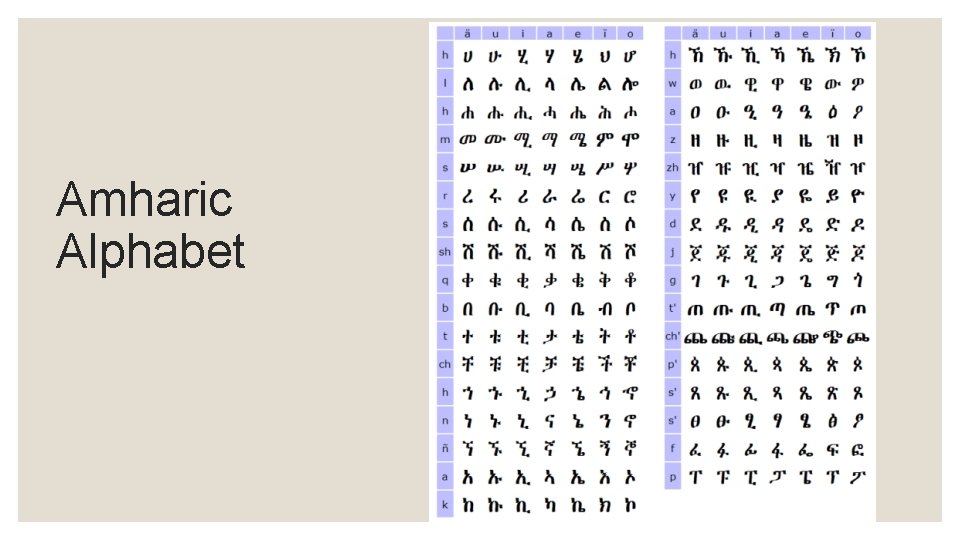
ETHIOPIAN GE’EZ ◦ Not really an alphabet, it is usually called a syllabary instead. ◦ There are 33 basic shapes, which are the consonant sound followed by the ä sound. ◦ These basic shapes are then combined with the other vowel sounds to create the rest of the “letters”. ◦ Amharic is usually presented in a grid form to help people keep track of the consonant/vowel combinations, kind of like a multiplication chart.
Amharic Alphabet
ETHIOPIC GE’EZ ◦ Some letters appear more than once (like h). ◦ This has to do with their preferred spelling, or with other sounds used to pronounce the shape, which we don’t have in our language. ◦ We will learn the shapes that have sounds closest to those in our language.
FOR HOMEWORK ◦ Practice the 25 “letters” we have learned this week in class (see your worksheets). Write them out on lined paper 1 x each. ◦ You do not need to write out the basic strokes or the vowel sounds. ◦ Remember to use a pen angle of 5 degrees and write at about 5 nib widths (this will depend on your paper; you may need to write at 4 or 6 nib widths to fit it comfortably on the lines). ◦ Due January 17