
World Breastfeeding Week 1 7 August 2019 Dr
World Breastfeeding Week 1 -7 August, 2019 Dr. JP Dadhich MD (Paediatrics), FNNF National Coordinator and Technical Director, Breastfeeding Promotion Network of India (BPNI)
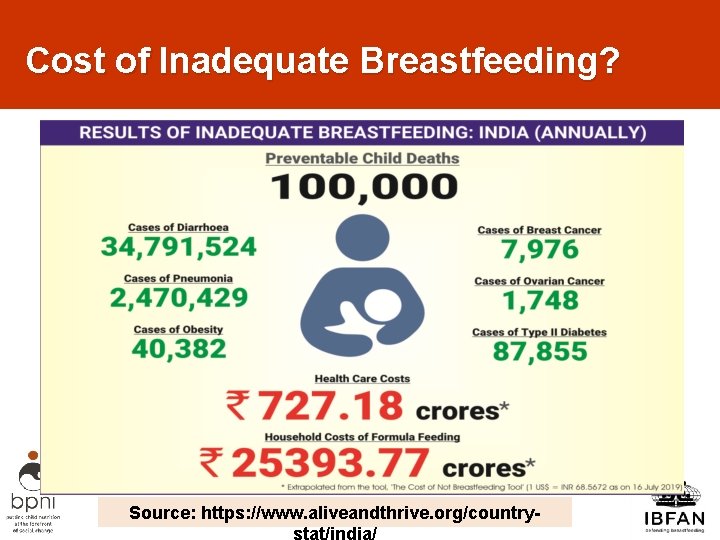
Cost of Inadequate Breastfeeding? Source: https: //www. aliveandthrive. org/country-

Breastfeeding practices are sub-optimal in India (NFHS - 4) Early Initiation – 41. 6%; Excl. Breastfeeding – 54. 9%
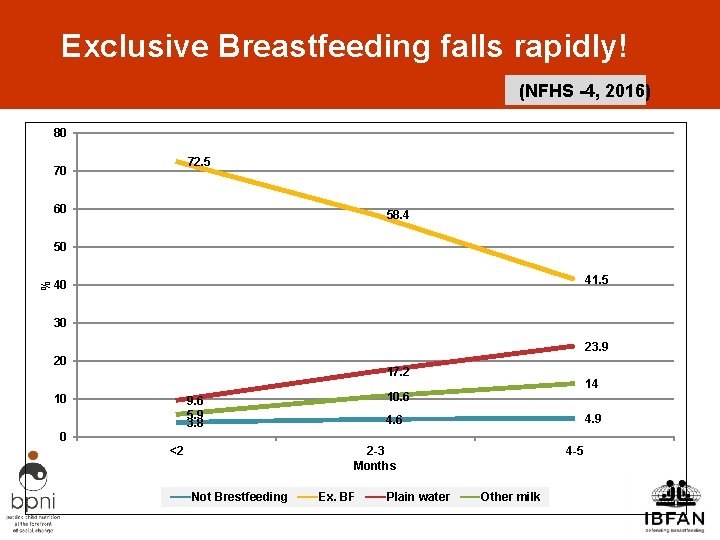
Exclusive Breastfeeding falls rapidly! (NFHS -4, 2016) 80 72. 5 70 60 58. 4 % 50 41. 5 40 30 23. 9 20 17. 2 10 14 10. 6 9. 6 5. 9 3. 8 4. 9 4. 6 0 <2 2 -3 Months Not Brestfeeding Ex. BF Plain water 4 -5 Other milk
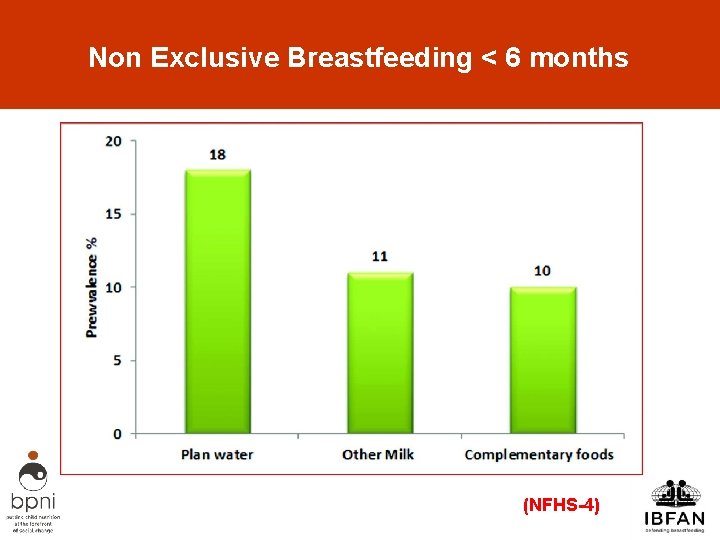
Non Exclusive Breastfeeding < 6 months (NFHS-4)
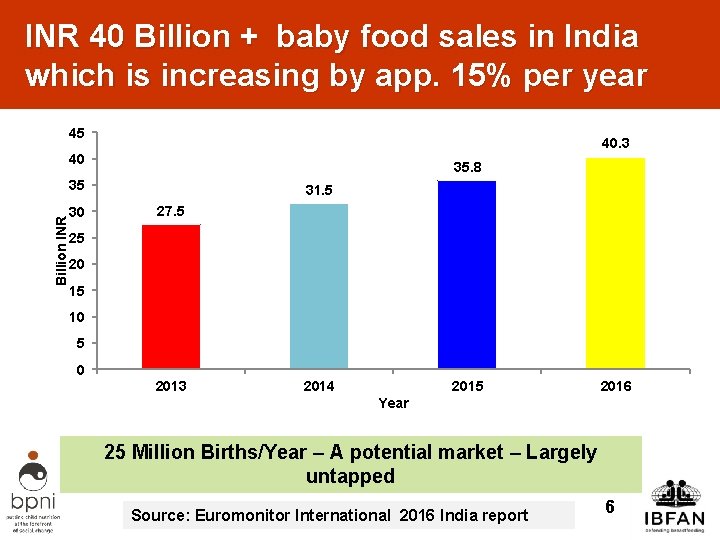
INR 40 Billion + baby food sales in India which is increasing by app. 15% per year 45 40. 3 40 35. 8 Billion INR 35 30 31. 5 27. 5 25 20 15 10 5 0 2013 2014 2015 2016 Year 25 Million Births/Year – A potential market – Largely untapped Source: Euromonitor International 2016 India report 6
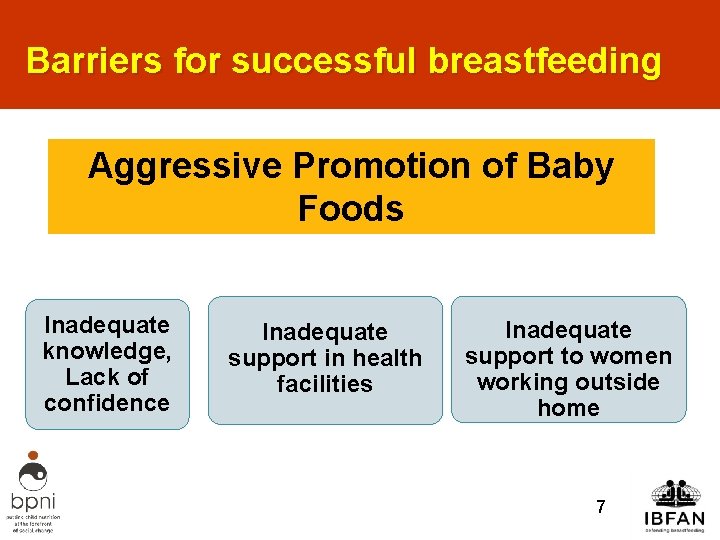
Barriers for successful breastfeeding Aggressive Promotion of Baby Foods Inadequate knowledge, Lack of confidence Inadequate support in health facilities Inadequate support to women working outside home 7
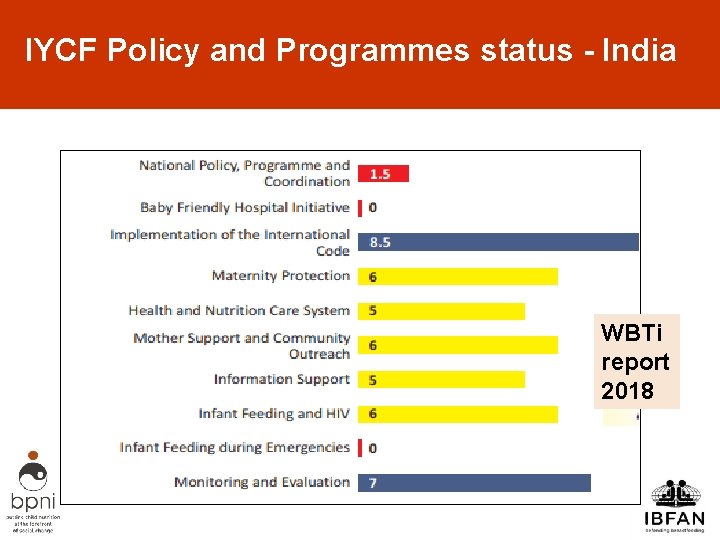
IYCF Policy and Programmes status - India WBTi report 2018
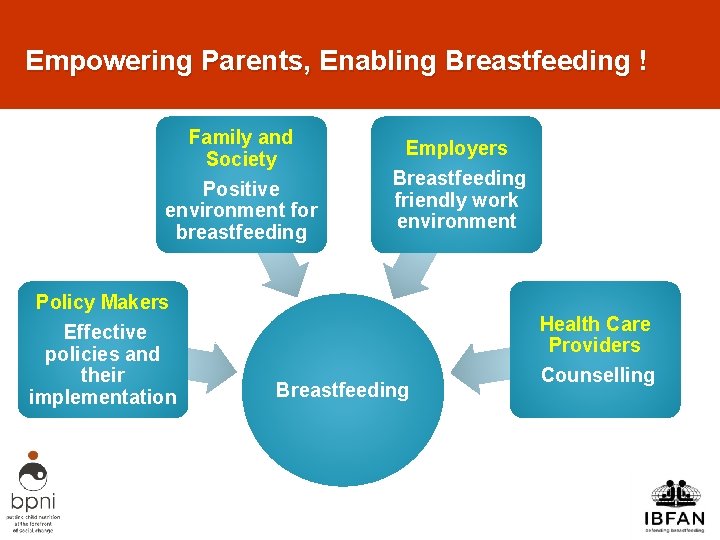
Empowering Parents, Enabling Breastfeeding ! Family and Society Positive environment for breastfeeding Policy Makers Effective policies and their implementation Employers Breastfeeding friendly work environment Breastfeeding Health Care Providers Counselling
What a Health Care Facility Should do?
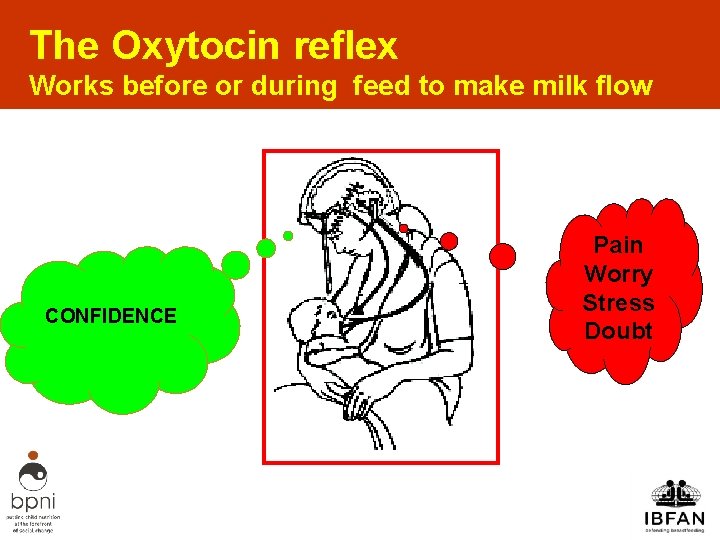
The Oxytocin reflex Works before or during feed to make milk flow CONFIDENCE Pain Worry Stress Doubt
Breastfeeding Counselling is the KEY To all pregnant women and mothers with young children as a standard of care In both the antenatal period and postnatally, and up to 24 months or longer At least six times, and additionally as needed Provided through face-toface counselling, additionally telephonically
Breastfeeding Counselling is the KEY By appropriately trained health-care professionals Should anticipate and address important challenges and contexts for breastfeeding – ◦ Primi mothers ◦ Multiple pregnancies ◦ Mothers returning to work
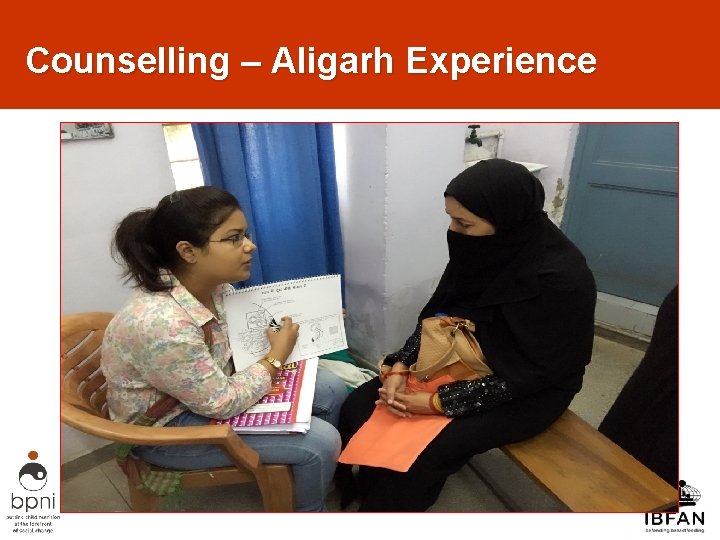
Counselling – Aligarh Experience
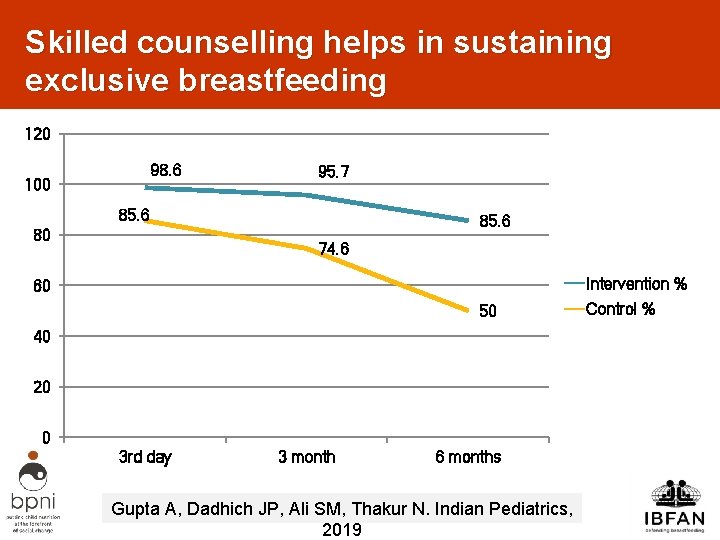
Skilled counselling helps in sustaining exclusive breastfeeding 120 98. 6 100 95. 7 85. 6 80 85. 6 74. 6 Intervention % 60 50 40 20 0 3 rd day 3 month 6 months Gupta A, Dadhich JP, Ali SM, Thakur N. Indian Pediatrics, 2019 Control %
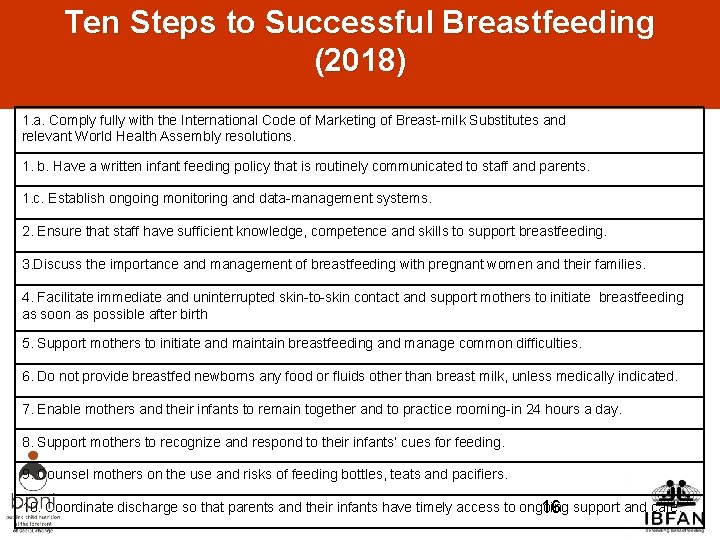
Ten Steps to Successful Breastfeeding (2018) 1. a. Comply fully with the International Code of Marketing of Breast-milk Substitutes and relevant World Health Assembly resolutions. 1. b. Have a written infant feeding policy that is routinely communicated to staff and parents. 1. c. Establish ongoing monitoring and data-management systems. 2. Ensure that staff have sufficient knowledge, competence and skills to support breastfeeding. 3. Discuss the importance and management of breastfeeding with pregnant women and their families. 4. Facilitate immediate and uninterrupted skin-to-skin contact and support mothers to initiate breastfeeding as soon as possible after birth 5. Support mothers to initiate and maintain breastfeeding and manage common difficulties. 6. Do not provide breastfed newborns any food or fluids other than breast milk, unless medically indicated. 7. Enable mothers and their infants to remain together and to practice rooming-in 24 hours a day. 8. Support mothers to recognize and respond to their infants’ cues for feeding. 9. Counsel mothers on the use and risks of feeding bottles, teats and pacifiers. 10. Coordinate discharge so that parents and their infants have timely access to ongoing 16 support and care.
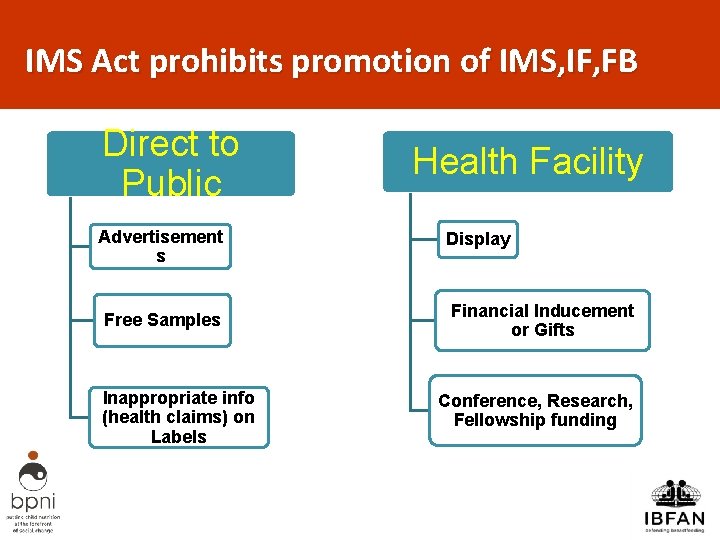
IMS Act prohibits promotion of IMS, IF, FB Direct to Public Advertisement s Free Samples Inappropriate info (health claims) on Labels Health Facility Display Financial Inducement or Gifts Conference, Research, Fellowship funding
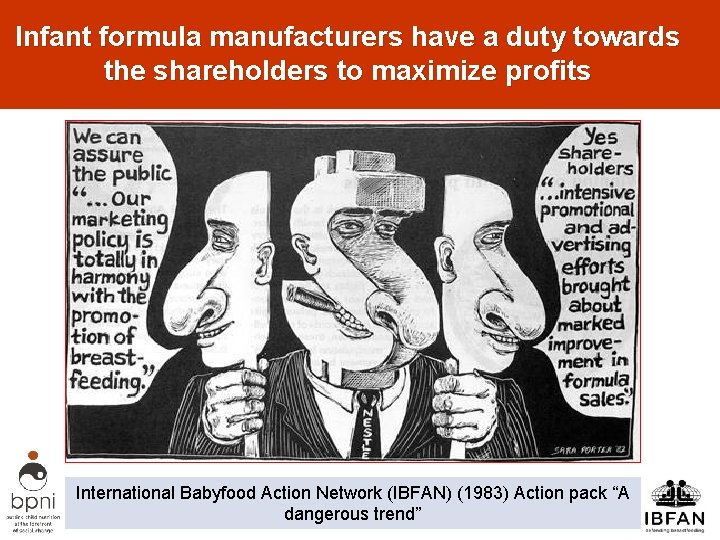
Infant formula manufacturers have a duty towards the shareholders to maximize profits International Babyfood Action Network (IBFAN) (1983) Action pack “A 18 dangerous trend”
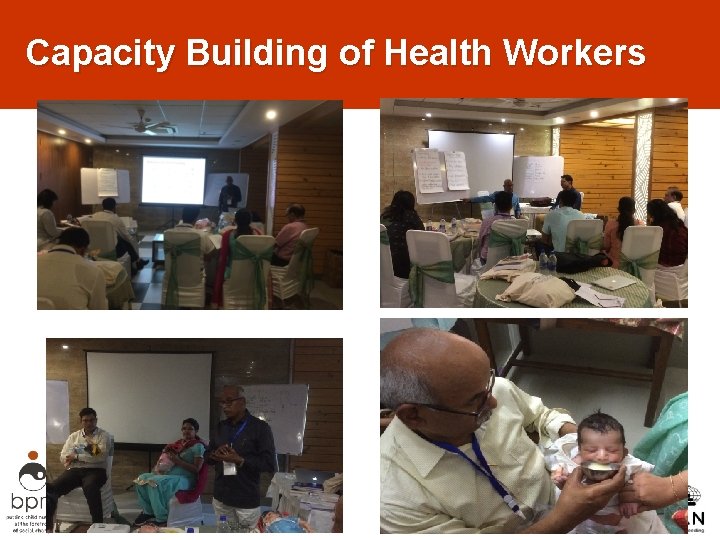
Capacity Building of Health Workers
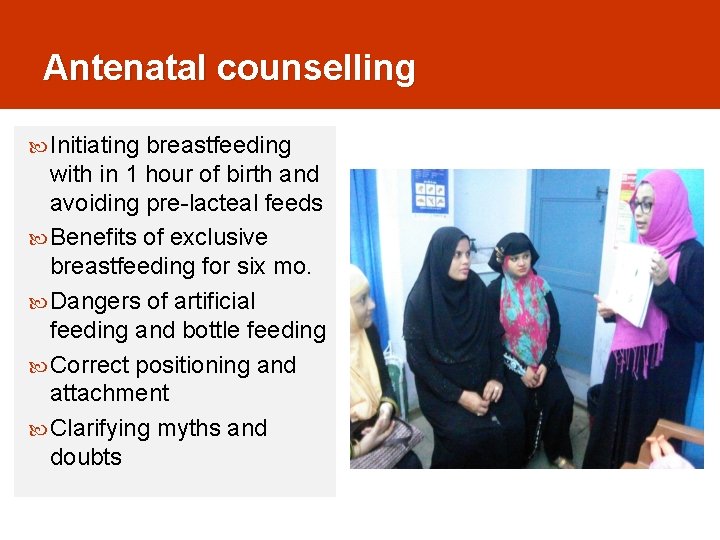
Antenatal counselling Initiating breastfeeding with in 1 hour of birth and avoiding pre-lacteal feeds Benefits of exclusive breastfeeding for six mo. Dangers of artificial feeding and bottle feeding Correct positioning and attachment Clarifying myths and doubts
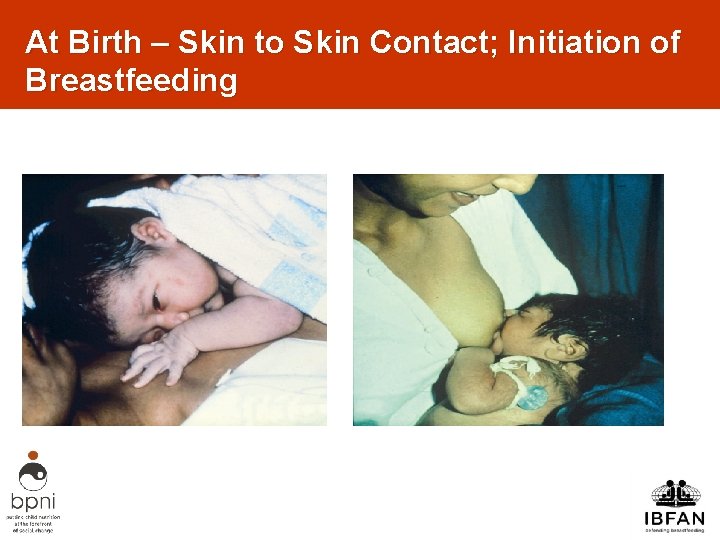
At Birth – Skin to Skin Contact; Initiation of Breastfeeding
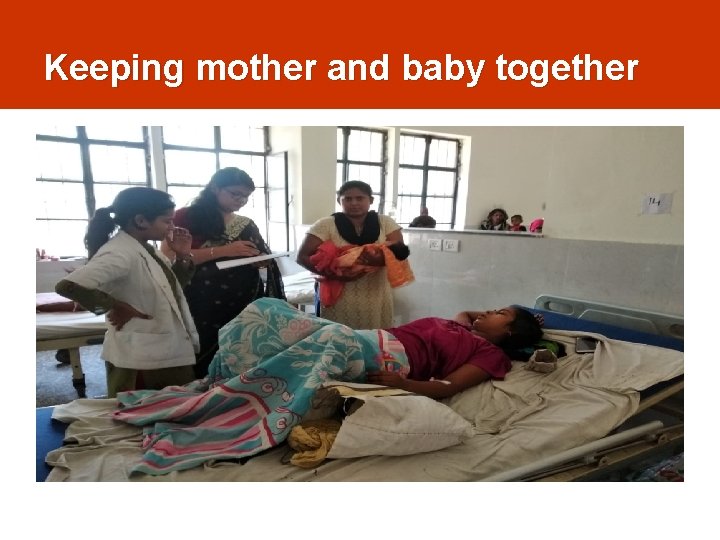
Keeping mother and baby together
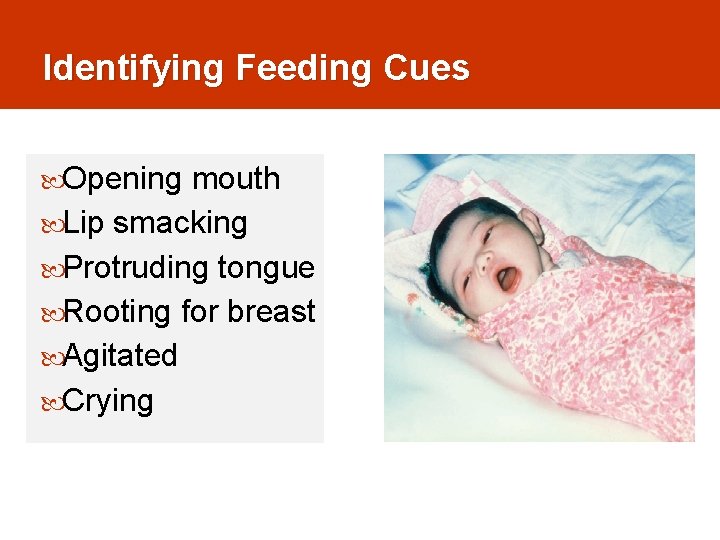
Identifying Feeding Cues Opening mouth Lip smacking Protruding tongue Rooting for breast Agitated Crying
No food/fluid other than breastmilk, unless medically indicated IEM ◦ Galactosemia ◦ MSUD ◦ Phenylketonuria Maternal drugs ◦ Cytotoxic Chemotherapy ◦ Radio-isotopes ◦ Psychotherapeutic drugs
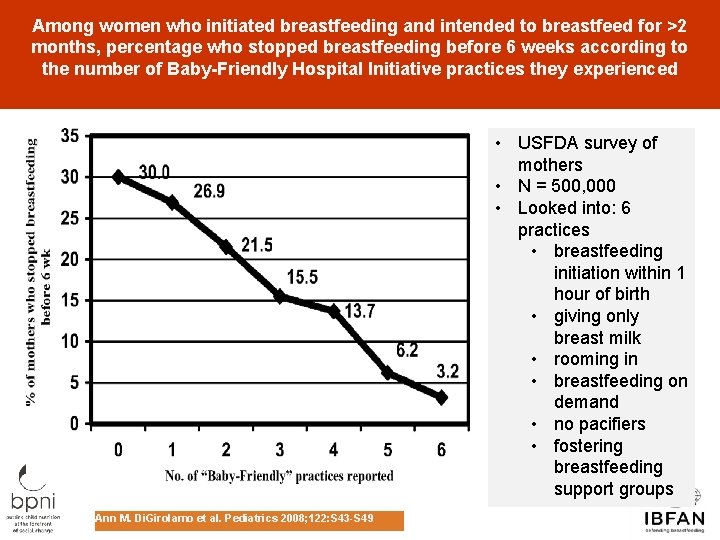
Among women who initiated breastfeeding and intended to breastfeed for >2 months, percentage who stopped breastfeeding before 6 weeks according to the number of Baby-Friendly Hospital Initiative practices they experienced • USFDA survey of mothers • N = 500, 000 • Looked into: 6 practices • breastfeeding initiation within 1 hour of birth • giving only breast milk • rooming in • breastfeeding on demand • no pacifiers • fostering breastfeeding support groups Ann M. Di. Girolamo et al. Pediatrics 2008; 122: S 43 -S 49
Concluding remarks Successful breastfeeding is a collective effort Health Care Facilities practices should be breastfeeding friendly Health Care Providers have a special responsibility Counselling is the KEY Thanks!!! jpdadhich@bpni. org
- Slides: 27