
World Biomes ClimatogramsClimatographs Graphs that summarize temperature and
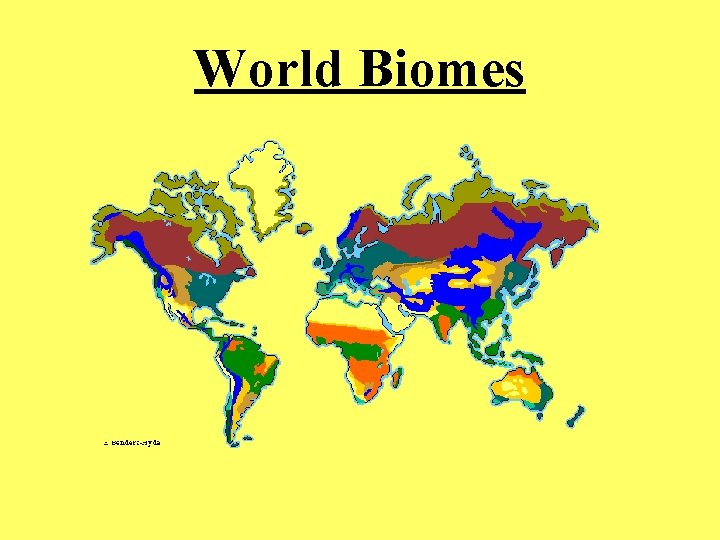
World Biomes

Climatograms/Climatographs • Graphs that summarize temperature and rainfall that can give you an idea of the climate of an area.

Arctic Tundra Northern most region of Northern Hemisphere Location: Found north of the Arctic Circle. http: //www. runet. edu/~swoodwar/CLASSES/GEOG 235/biomes/tundra. html Russia, Canada, Scandinavia and Alaska
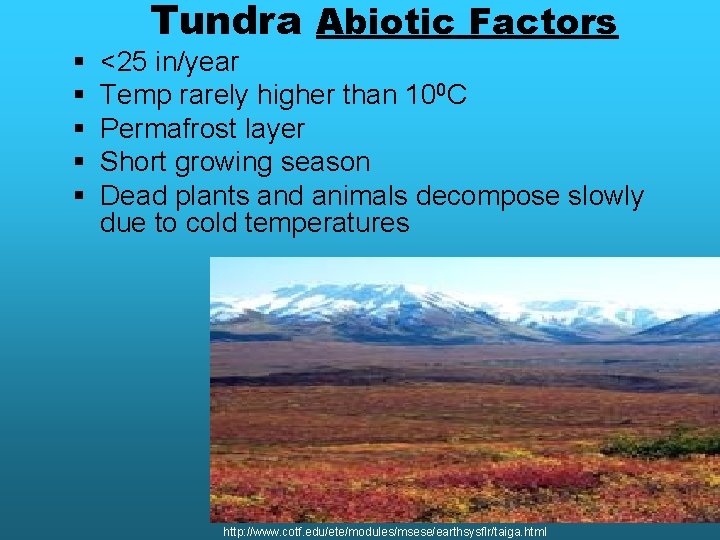
§ § § Tundra Abiotic Factors <25 in/year Temp rarely higher than 100 C Permafrost layer Short growing season Dead plants and animals decompose slowly due to cold temperatures http: //www. cotf. edu/ete/modules/msese/earthsysflr/taiga. html
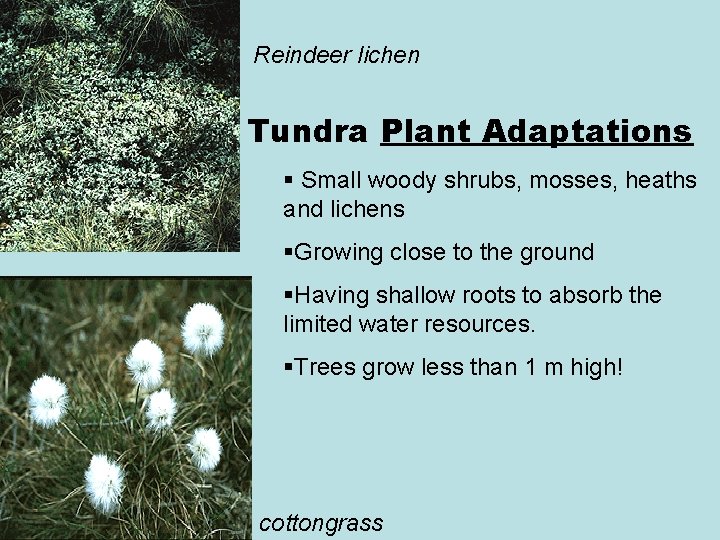
Reindeer lichen Tundra Plant Adaptations § Small woody shrubs, mosses, heaths and lichens §Growing close to the ground §Having shallow roots to absorb the limited water resources. §Trees grow less than 1 m high! cottongrass
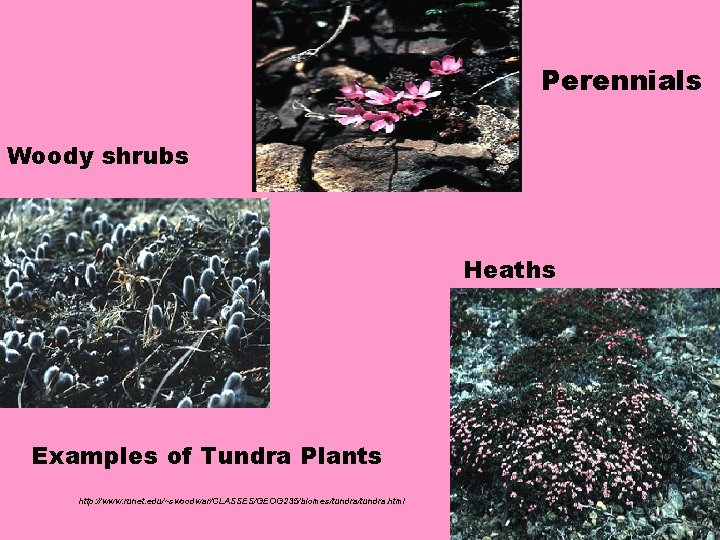
Perennials Woody shrubs Heaths Examples of Tundra Plants http: //www. runet. edu/~swoodwar/CLASSES/GEOG 235/biomes/tundra. html
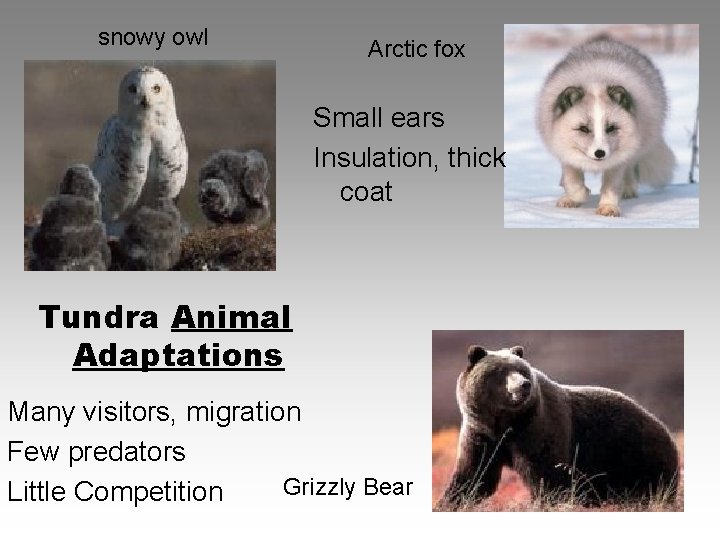
snowy owl Arctic fox Small ears Insulation, thick coat Tundra Animal Adaptations Many visitors, migration Few predators Grizzly Bear Little Competition
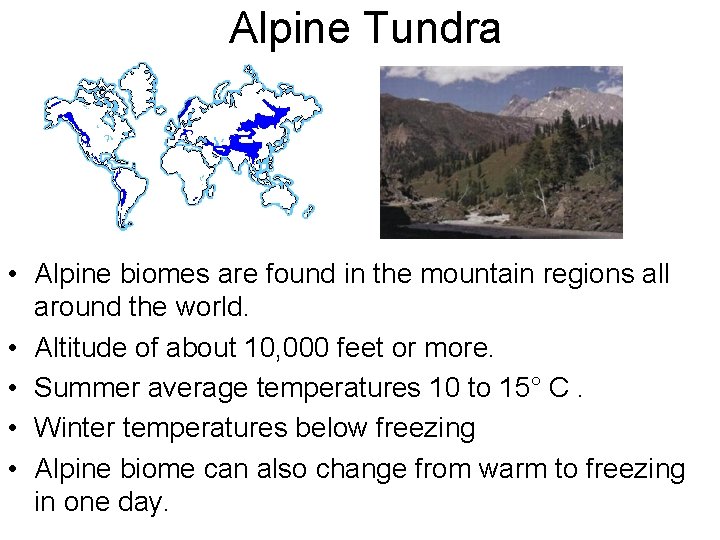
Alpine Tundra • Alpine biomes are found in the mountain regions all around the world. • Altitude of about 10, 000 feet or more. • Summer average temperatures 10 to 15° C. • Winter temperatures below freezing • Alpine biome can also change from warm to freezing in one day.
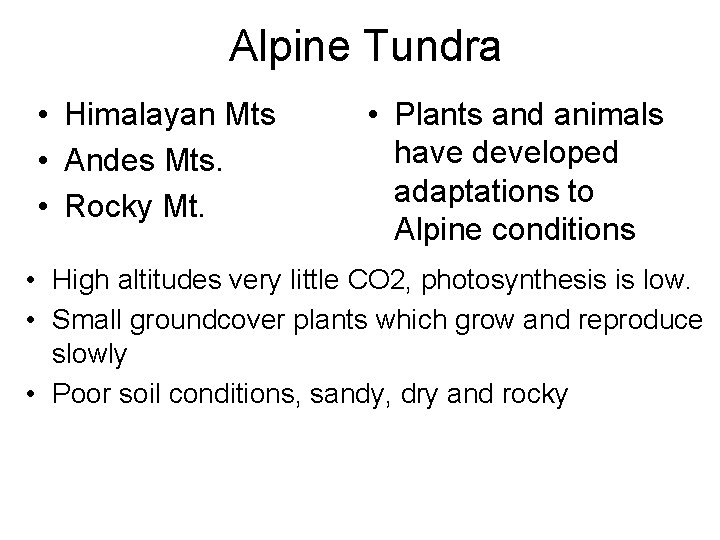
Alpine Tundra • Himalayan Mts • Andes Mts. • Rocky Mt. • Plants and animals have developed adaptations to Alpine conditions • High altitudes very little CO 2, photosynthesis is low. • Small groundcover plants which grow and reproduce slowly • Poor soil conditions, sandy, dry and rocky
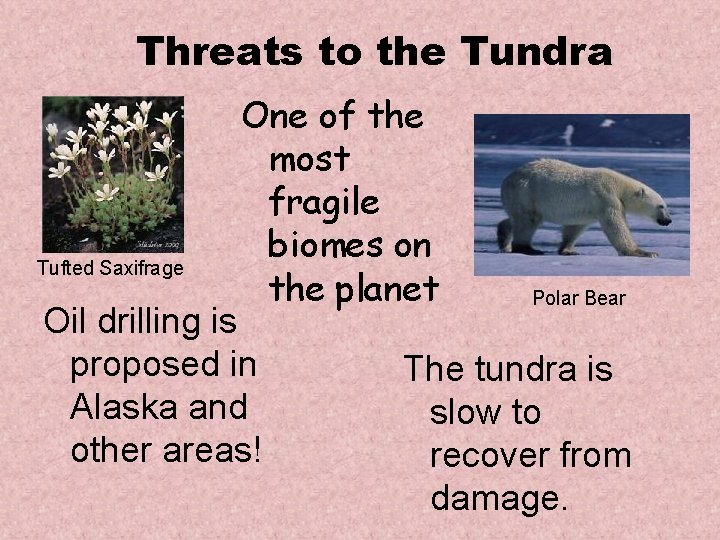
Threats to the Tundra Tufted Saxifrage One of the most fragile biomes on the planet Oil drilling is proposed in Alaska and other areas! Polar Bear The tundra is slow to recover from damage.
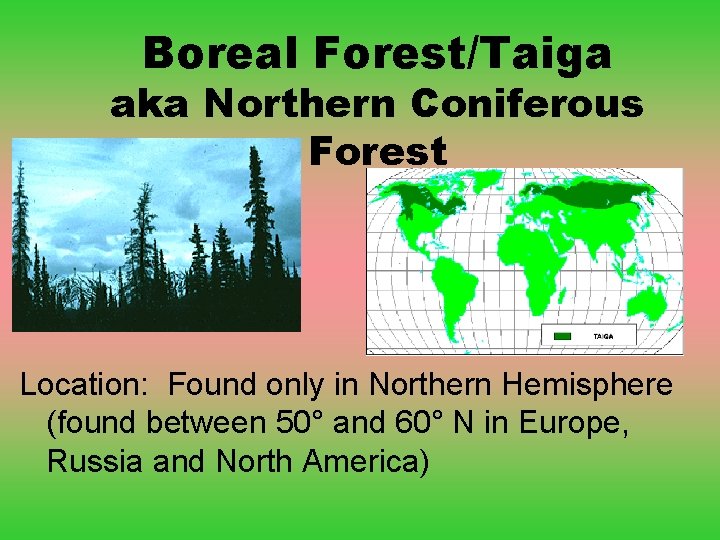
Boreal Forest/Taiga aka Northern Coniferous Forest Location: Found only in Northern Hemisphere (found between 50° and 60° N in Europe, Russia and North America)
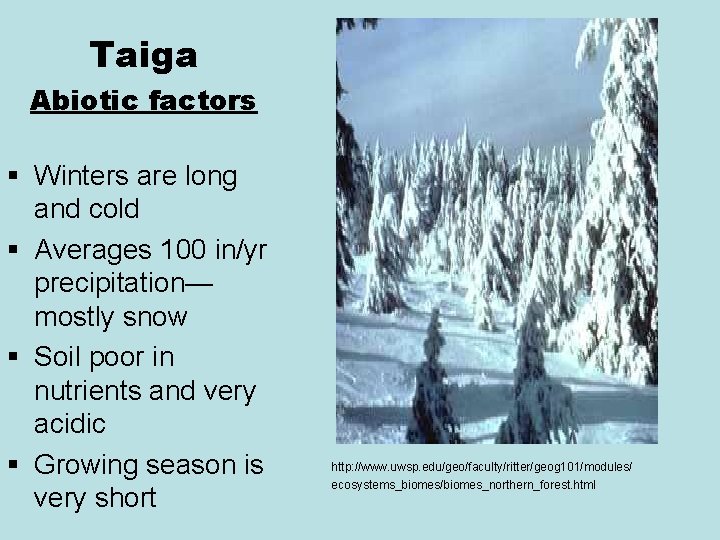
Taiga Abiotic factors § Winters are long and cold § Averages 100 in/yr precipitation— mostly snow § Soil poor in nutrients and very acidic § Growing season is very short http: //www. uwsp. edu/geo/faculty/ritter/geog 101/modules/ ecosystems_biomes/biomes_northern_forest. html
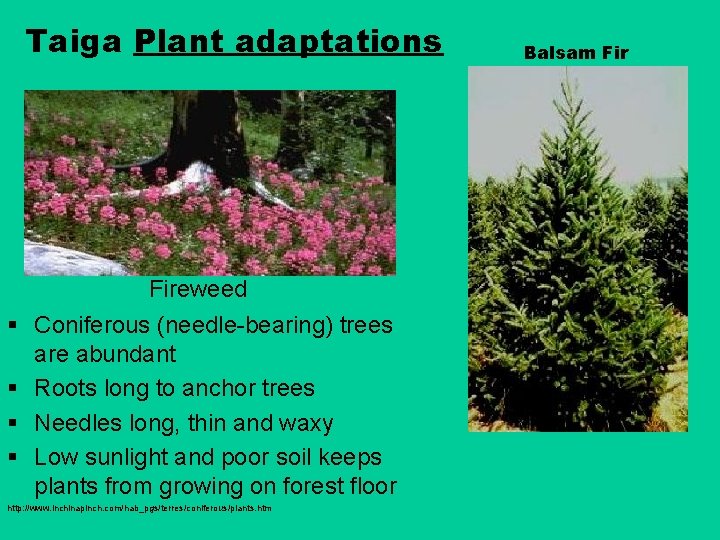
Taiga Plant adaptations § § Fireweed Coniferous (needle-bearing) trees are abundant Roots long to anchor trees Needles long, thin and waxy Low sunlight and poor soil keeps plants from growing on forest floor http: //www. inchinapinch. com/hab_pgs/terres/coniferous/plants. htm Balsam Fir
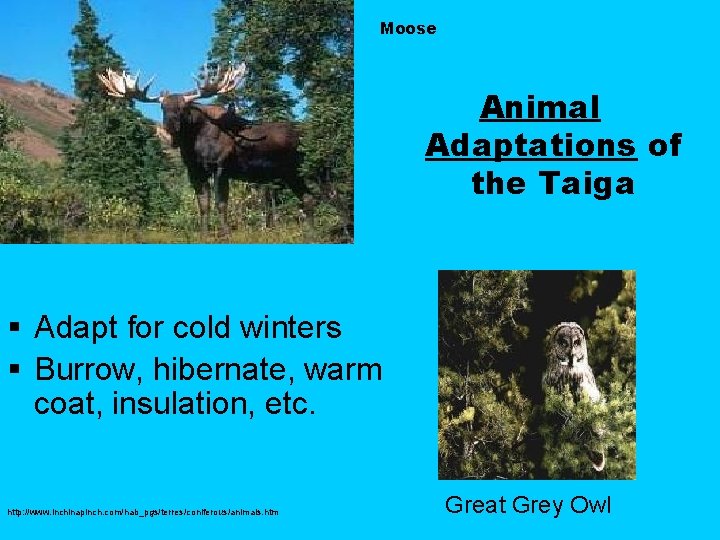
Moose Animal Adaptations of the Taiga § Adapt for cold winters § Burrow, hibernate, warm coat, insulation, etc. http: //www. inchinapinch. com/hab_pgs/terres/coniferous/animals. htm Great Grey Owl
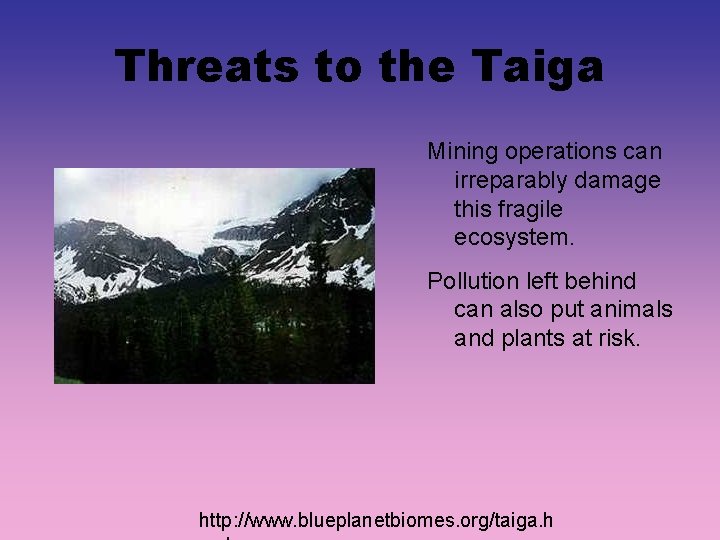
Threats to the Taiga Mining operations can irreparably damage this fragile ecosystem. Pollution left behind can also put animals and plants at risk. http: //www. blueplanetbiomes. org/taiga. h
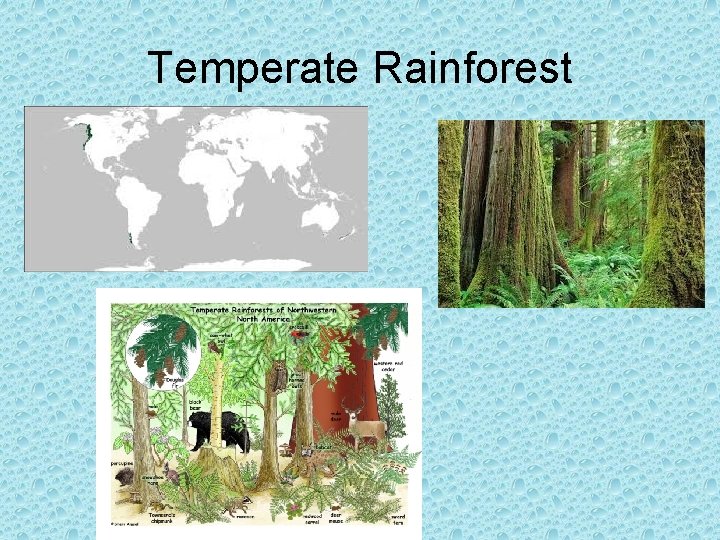
Temperate Rainforest
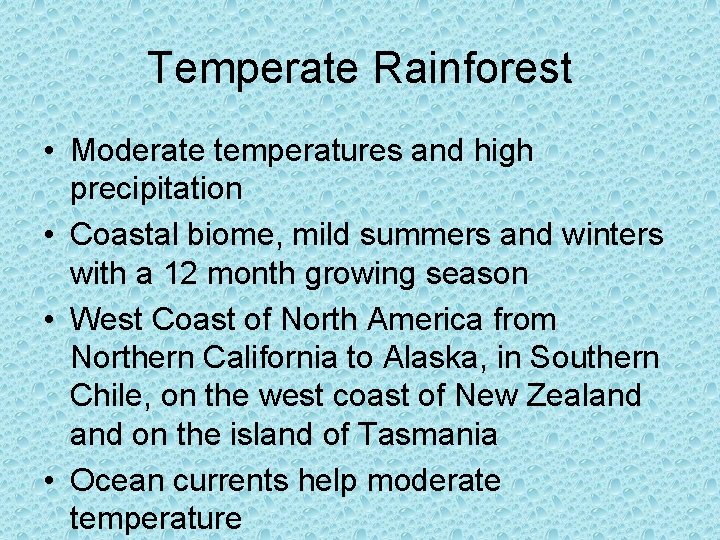
Temperate Rainforest • Moderate temperatures and high precipitation • Coastal biome, mild summers and winters with a 12 month growing season • West Coast of North America from Northern California to Alaska, in Southern Chile, on the west coast of New Zealand on the island of Tasmania • Ocean currents help moderate temperature
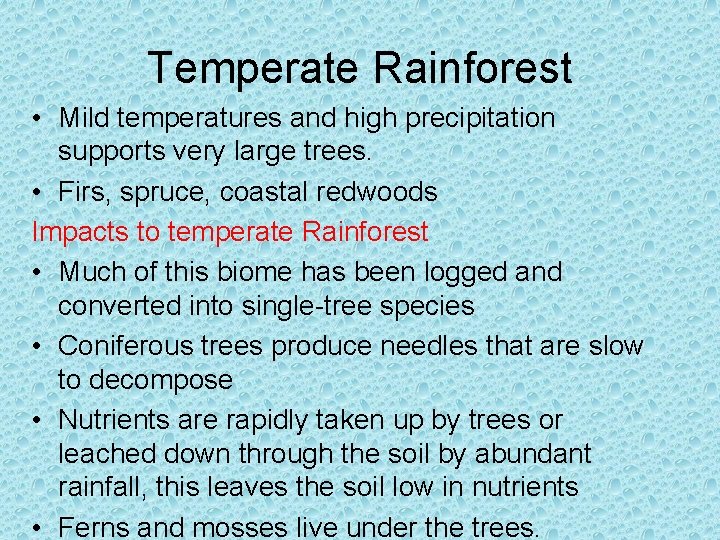
Temperate Rainforest • Mild temperatures and high precipitation supports very large trees. • Firs, spruce, coastal redwoods Impacts to temperate Rainforest • Much of this biome has been logged and converted into single-tree species • Coniferous trees produce needles that are slow to decompose • Nutrients are rapidly taken up by trees or leached down through the soil by abundant rainfall, this leaves the soil low in nutrients • Ferns and mosses live under the trees.
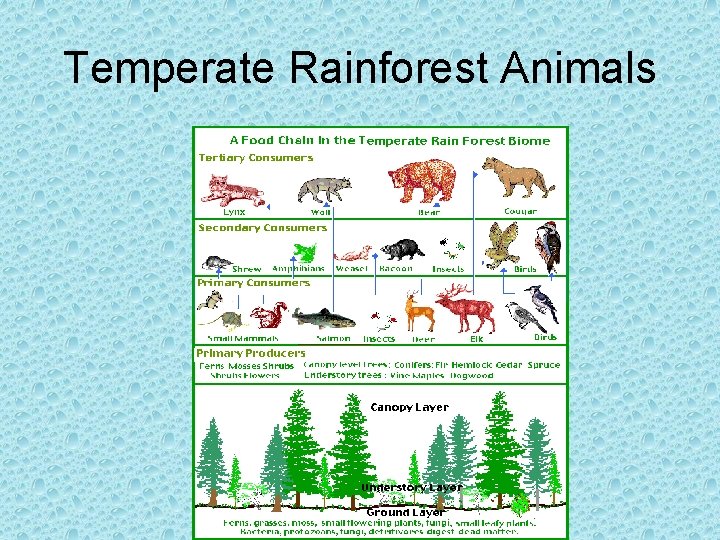
Temperate Rainforest Animals
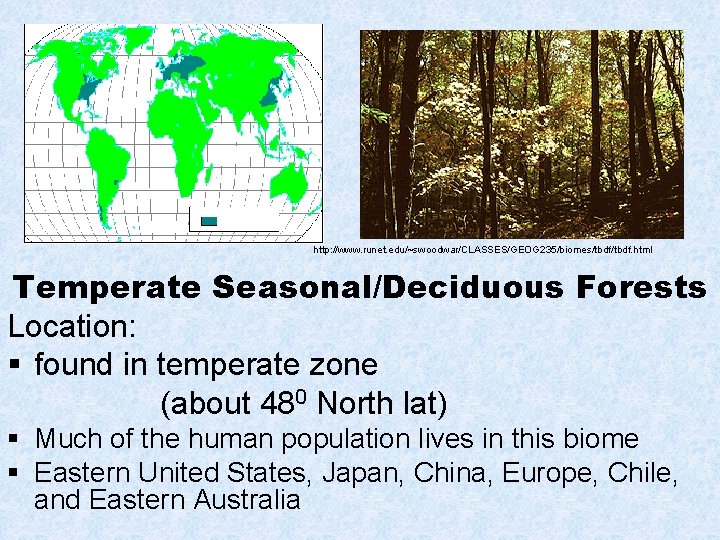
http: //www. runet. edu/~swoodwar/CLASSES/GEOG 235/biomes/tbdf. html Temperate Seasonal/Deciduous Forests Location: § found in temperate zone (about 480 North lat) § Much of the human population lives in this biome § Eastern United States, Japan, China, Europe, Chile, and Eastern Australia
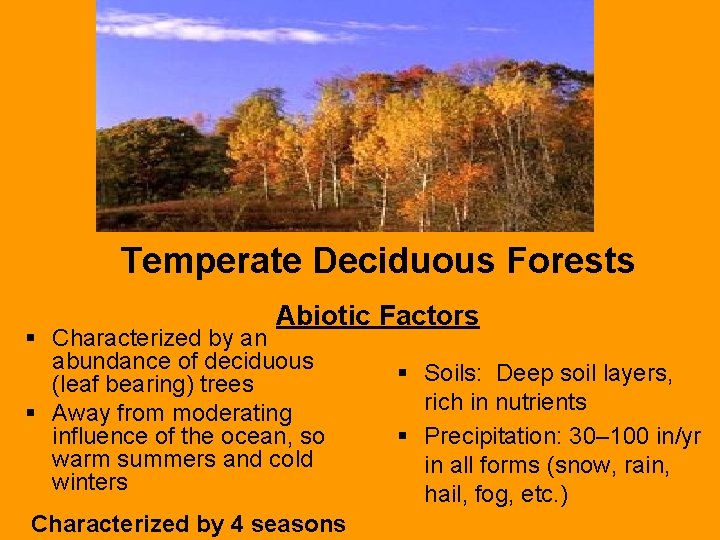
Temperate Deciduous Forests Abiotic Factors § Characterized by an abundance of deciduous (leaf bearing) trees § Away from moderating influence of the ocean, so warm summers and cold winters Characterized by 4 seasons § Soils: Deep soil layers, rich in nutrients § Precipitation: 30– 100 in/yr in all forms (snow, rain, hail, fog, etc. )
Temperate Deciduous Forests Abiotic Factors § Warm summer temps favor rapid decomposition § Leaves that fall rapidly decompose as a result, soils have high fertility § Higher productivity than boreal forests § Because of this productivity it was one of the first biomes to be converted to agriculture
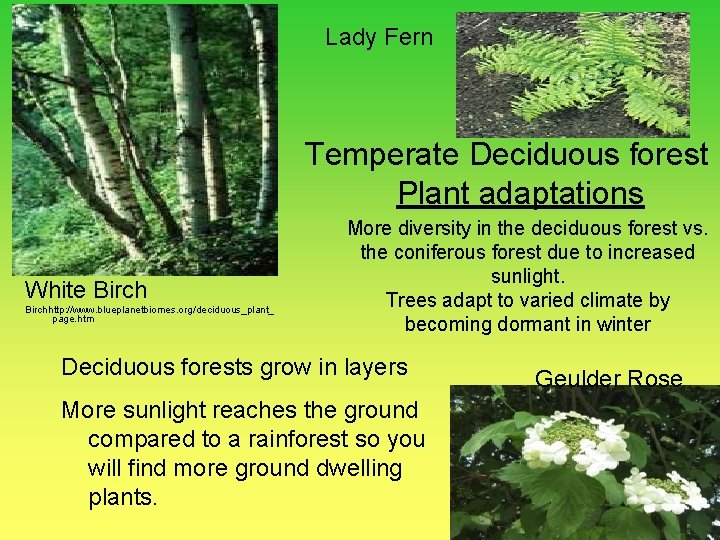
Lady Fern Temperate Deciduous forest Plant adaptations White Birchhttp: //www. blueplanetbiomes. org/deciduous_plant_ page. htm More diversity in the deciduous forest vs. the coniferous forest due to increased sunlight. Trees adapt to varied climate by becoming dormant in winter Deciduous forests grow in layers More sunlight reaches the ground compared to a rainforest so you will find more ground dwelling plants. Geulder Rose
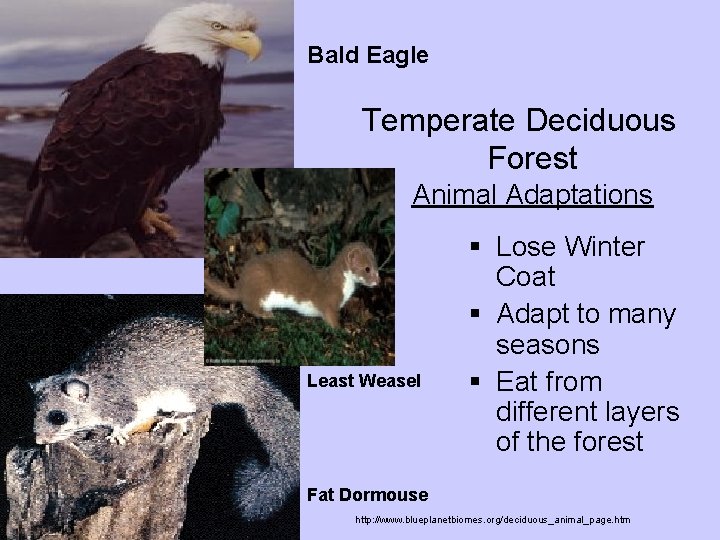
Bald Eagle Temperate Deciduous Forest Animal Adaptations Least Weasel § Lose Winter Coat § Adapt to many seasons § Eat from different layers of the forest Fat Dormouse http: //www. blueplanetbiomes. org/deciduous_animal_page. htm
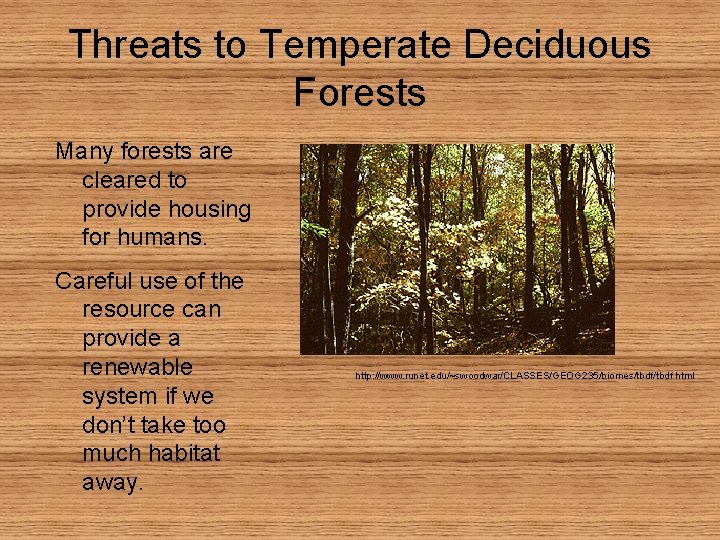
Threats to Temperate Deciduous Forests Many forests are cleared to provide housing for humans. Careful use of the resource can provide a renewable system if we don’t take too much habitat away. http: //www. runet. edu/~swoodwar/CLASSES/GEOG 235/biomes/tbdf. html
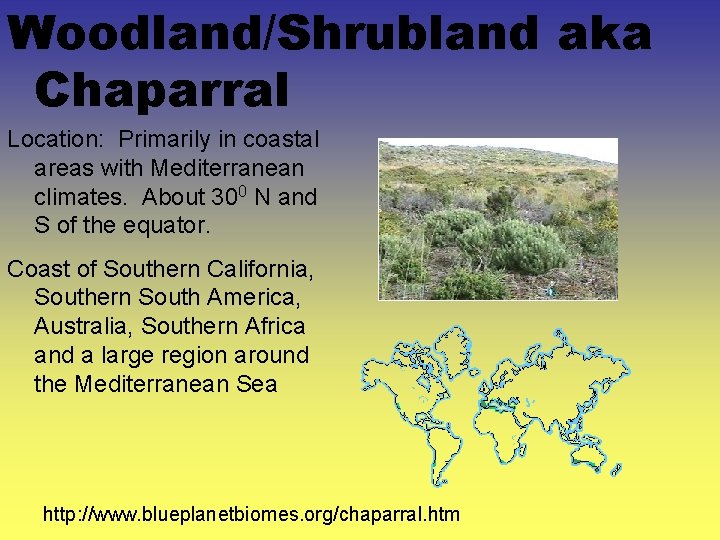
Woodland/Shrubland aka Chaparral Location: Primarily in coastal areas with Mediterranean climates. About 300 N and S of the equator. Coast of Southern California, Southern South America, Australia, Southern Africa and a large region around the Mediterranean Sea http: //www. blueplanetbiomes. org/chaparral. htm
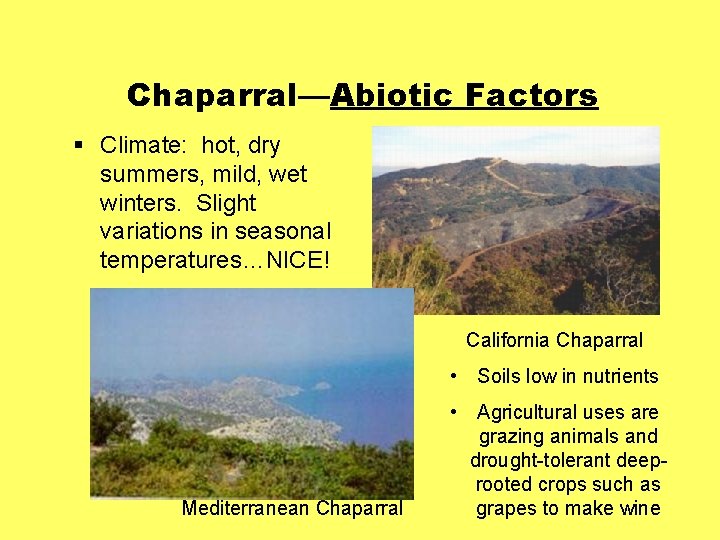
Chaparral—Abiotic Factors § Climate: hot, dry summers, mild, wet winters. Slight variations in seasonal temperatures…NICE! California Chaparral • Soils low in nutrients Mediterranean Chaparral • Agricultural uses are grazing animals and drought-tolerant deeprooted crops such as grapes to make wine
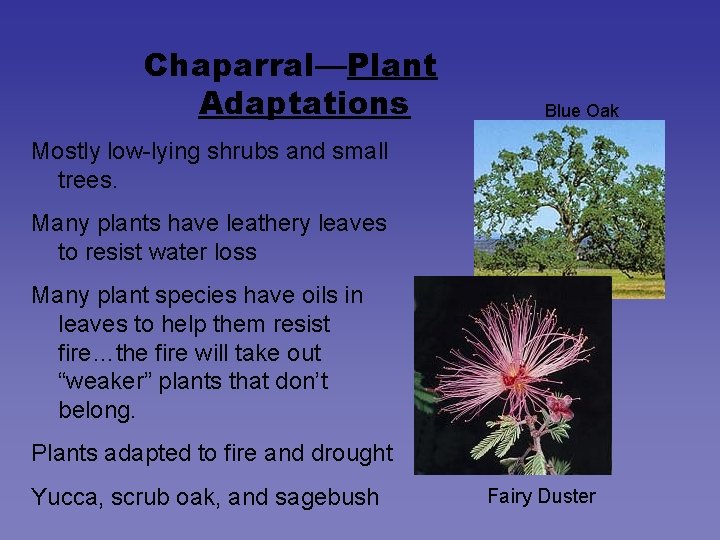
Chaparral—Plant Adaptations Blue Oak Mostly low-lying shrubs and small trees. Many plants have leathery leaves to resist water loss Many plant species have oils in leaves to help them resist fire…the fire will take out “weaker” plants that don’t belong. Plants adapted to fire and drought Yucca, scrub oak, and sagebush Fairy Duster
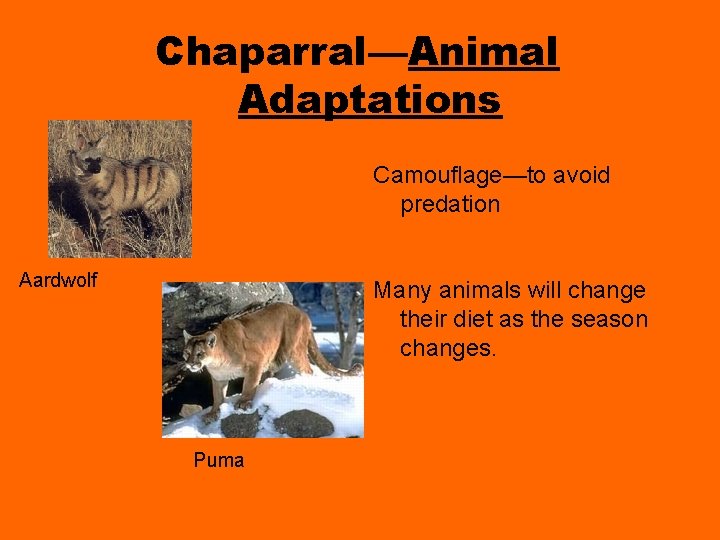
Chaparral—Animal Adaptations Camouflage—to avoid predation Aardwolf Many animals will change their diet as the season changes. Puma
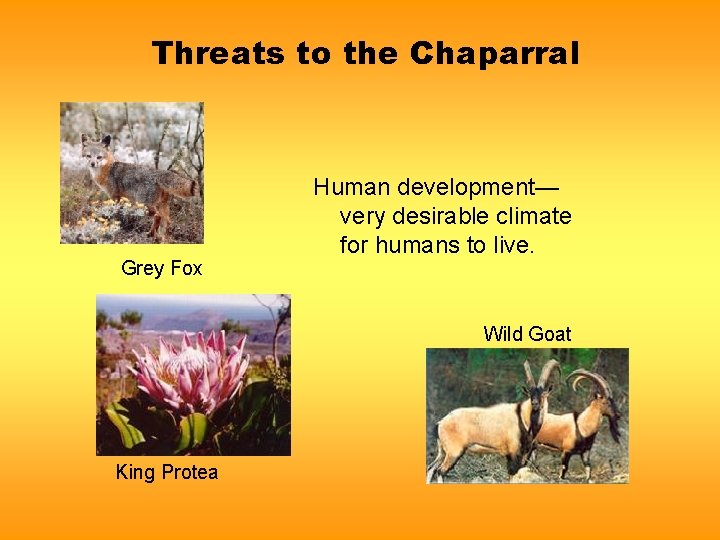
Threats to the Chaparral Grey Fox Human development— very desirable climate for humans to live. Wild Goat King Protea
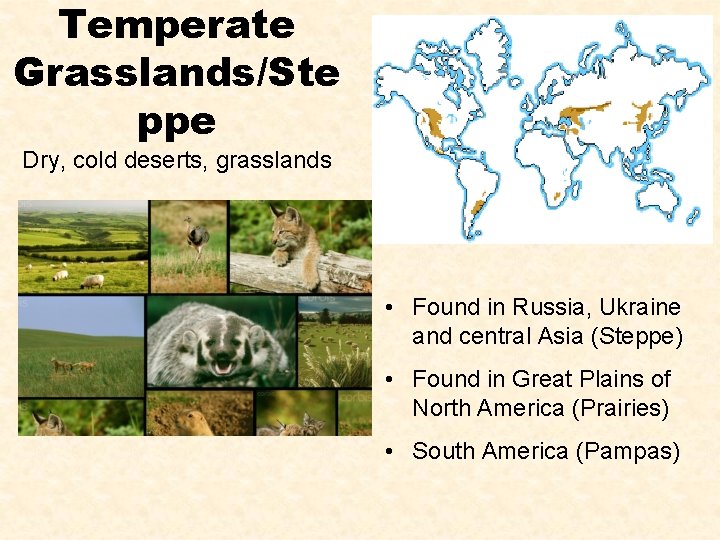
Temperate Grasslands/Ste ppe Dry, cold deserts, grasslands • Found in Russia, Ukraine and central Asia (Steppe) • Found in Great Plains of North America (Prairies) • South America (Pampas)
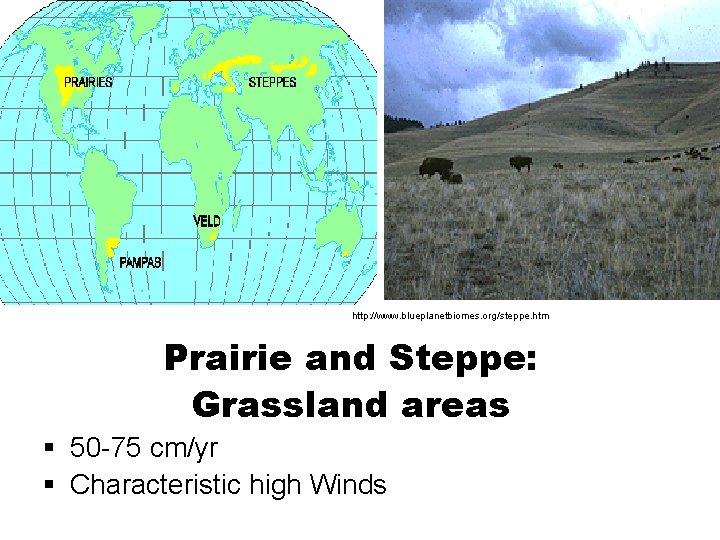
http: //www. blueplanetbiomes. org/steppe. htm Prairie and Steppe: Grassland areas § 50 -75 cm/yr § Characteristic high Winds
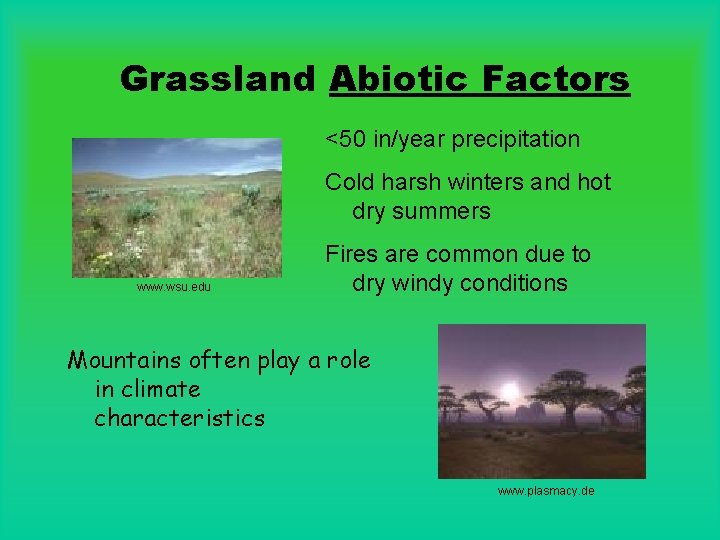
Grassland Abiotic Factors <50 in/year precipitation Cold harsh winters and hot dry summers www. wsu. edu Fires are common due to dry windy conditions Mountains often play a role in climate characteristics www. plasmacy. de
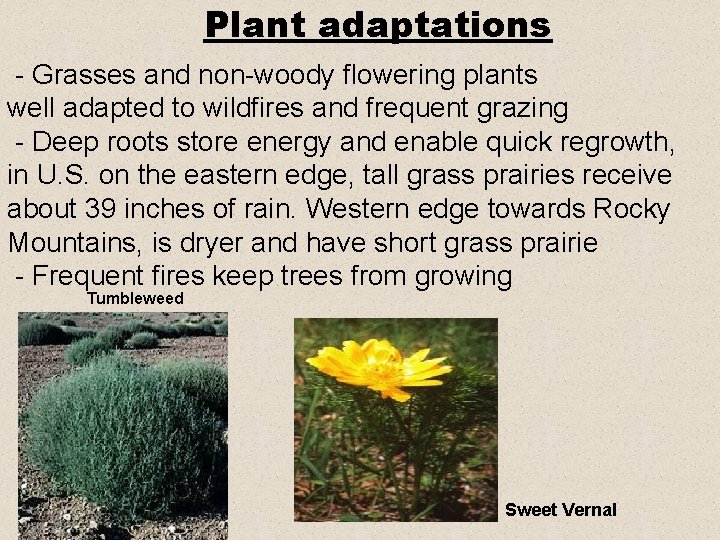
Plant adaptations - Grasses and non-woody flowering plants well adapted to wildfires and frequent grazing - Deep roots store energy and enable quick regrowth, in U. S. on the eastern edge, tall grass prairies receive about 39 inches of rain. Western edge towards Rocky Mountains, is dryer and have short grass prairie - Frequent fires keep trees from growing Tumbleweed Sweet Vernal
Temperate Cold Deserts • Short grass prairies gives way to Cold Desert • Even sparser vegetation • Much colder winters than subtropical deserts Temperate Grasslands • Long growing season and rapid decomposition • Nutrient rich soil and very productive • 98% of tall grass prairies have been converted to agricultural
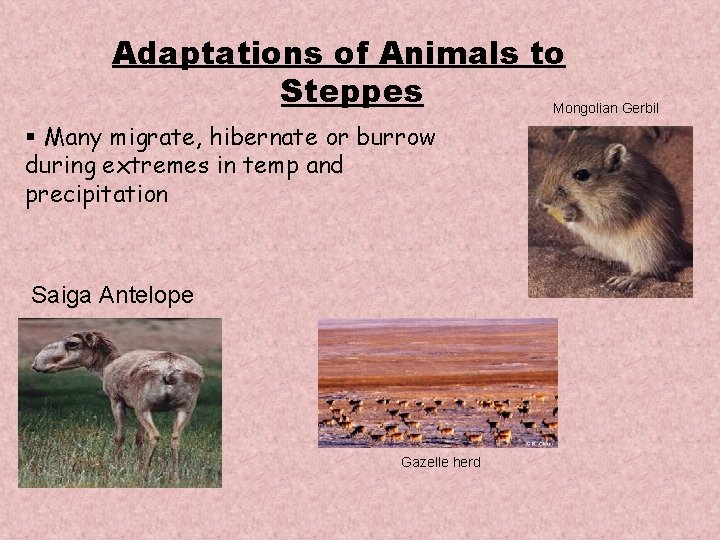
Adaptations of Animals to Steppes Mongolian Gerbil § Many migrate, hibernate or burrow during extremes in temp and precipitation Saiga Antelope Gazelle herd
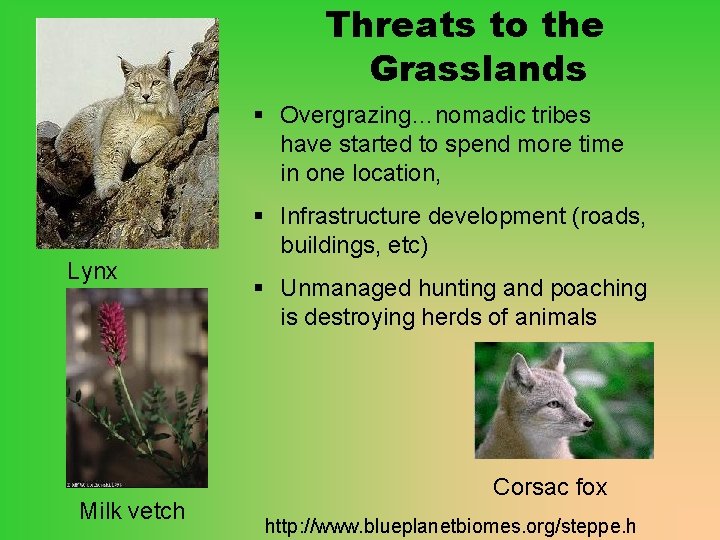
Threats to the Grasslands § Overgrazing…nomadic tribes have started to spend more time in one location, Lynx Milk vetch § Infrastructure development (roads, buildings, etc) § Unmanaged hunting and poaching is destroying herds of animals Corsac fox http: //www. blueplanetbiomes. org/steppe. h
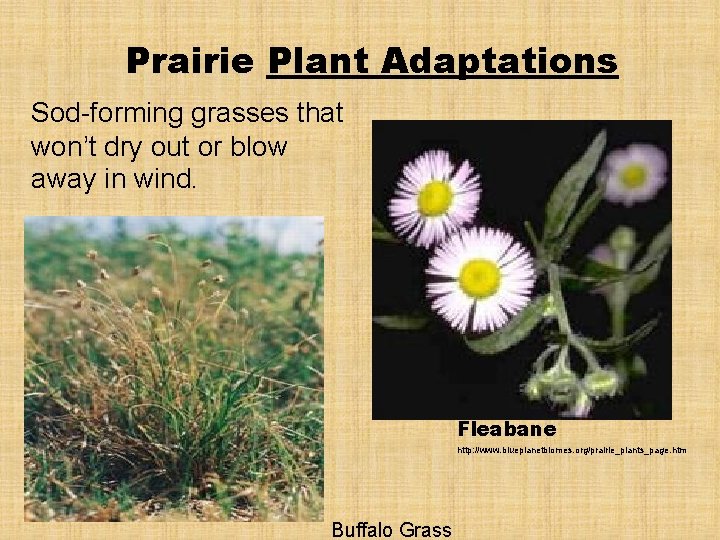
Prairie Plant Adaptations Sod-forming grasses that won’t dry out or blow away in wind. Fleabane http: //www. blueplanetbiomes. org/prairie_plants_page. htm Buffalo Grass
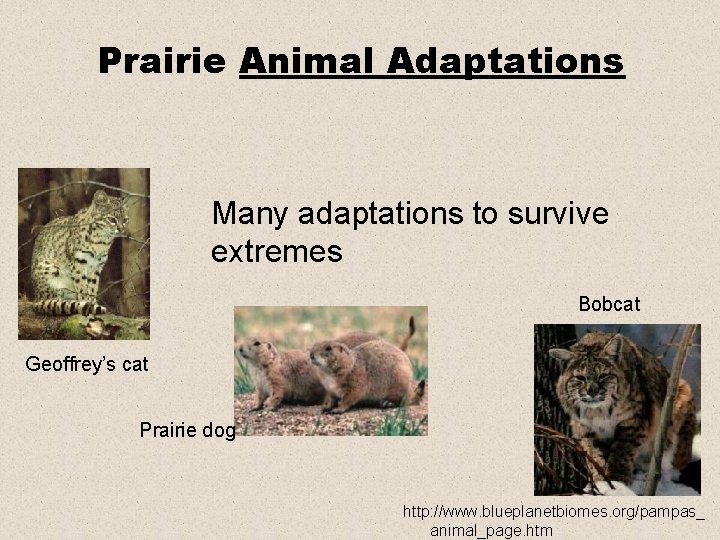
Prairie Animal Adaptations Many adaptations to survive extremes Bobcat Geoffrey’s cat Prairie dog http: //www. blueplanetbiomes. org/pampas_ animal_page. htm
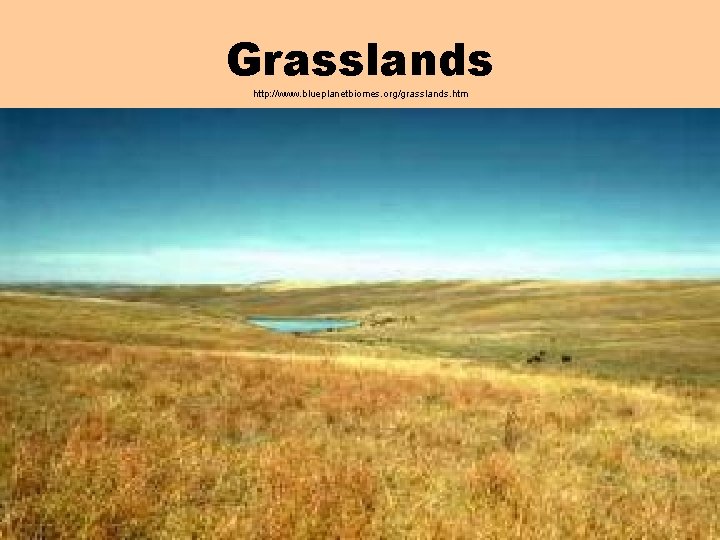
Grasslands http: //www. blueplanetbiomes. org/grasslands. htm
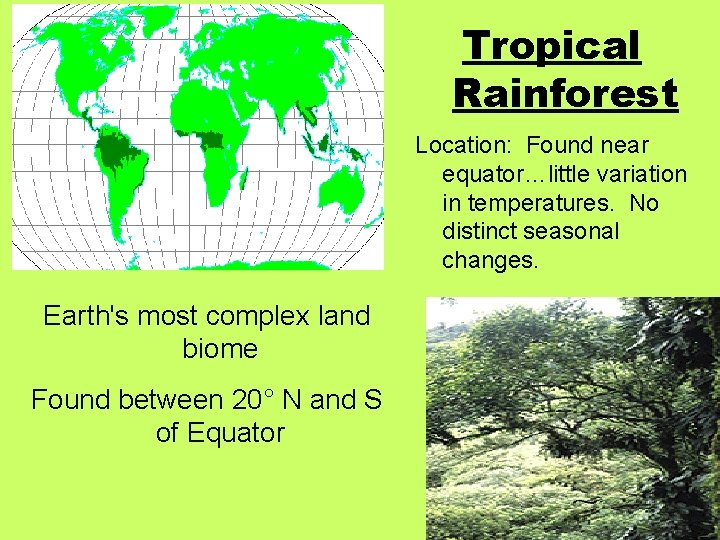
Tropical Rainforest Location: Found near equator…little variation in temperatures. No distinct seasonal changes. Earth's most complex land biome Found between 20° N and S of Equator
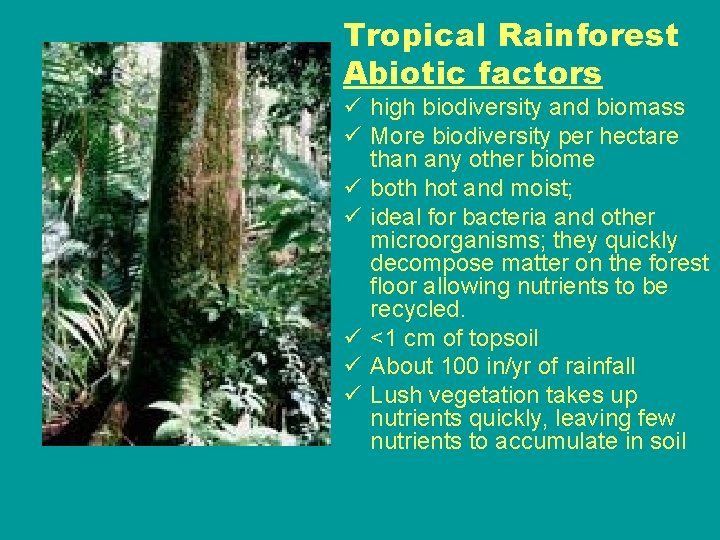
Tropical Rainforest Abiotic factors ü high biodiversity and biomass ü More biodiversity per hectare than any other biome ü both hot and moist; ü ideal for bacteria and other microorganisms; they quickly decompose matter on the forest floor allowing nutrients to be recycled. ü <1 cm of topsoil ü About 100 in/yr of rainfall ü Lush vegetation takes up nutrients quickly, leaving few nutrients to accumulate in soil
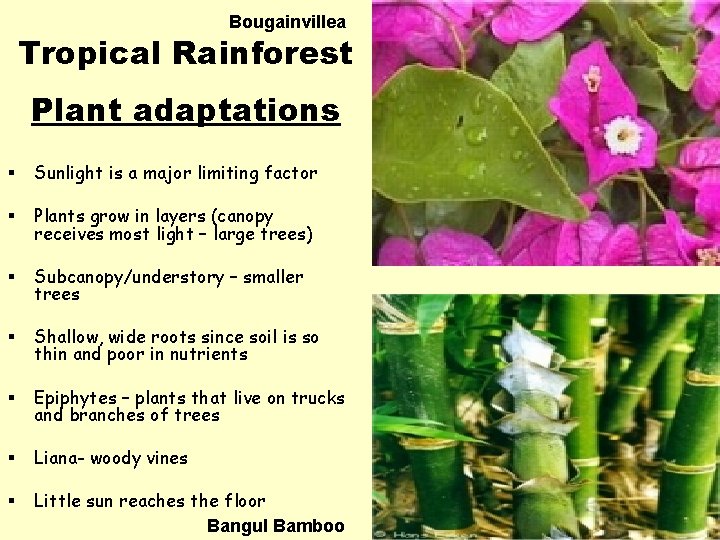
Bougainvillea Tropical Rainforest Plant adaptations § Sunlight is a major limiting factor § Plants grow in layers (canopy receives most light – large trees) § Subcanopy/understory – smaller trees § Shallow, wide roots since soil is so thin and poor in nutrients § Epiphytes – plants that live on trucks and branches of trees § Liana- woody vines § Little sun reaches the floor Bangul Bamboo
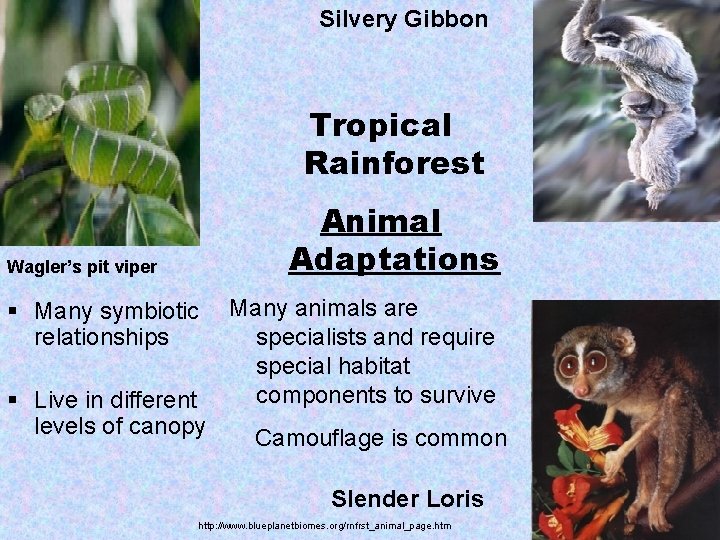
Silvery Gibbon Tropical Rainforest Animal Adaptations Wagler’s pit viper § Many symbiotic relationships § Live in different levels of canopy Many animals are specialists and require special habitat components to survive Camouflage is common Slender Loris http: //www. blueplanetbiomes. org/rnfrst_animal_page. htm
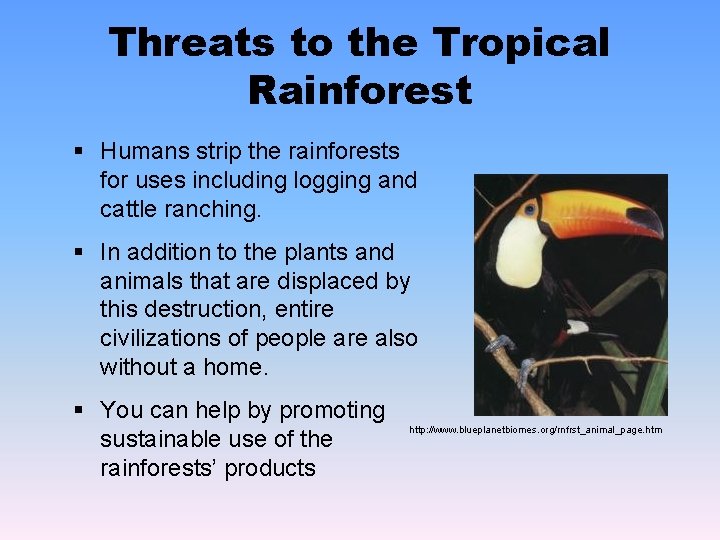
Threats to the Tropical Rainforest § Humans strip the rainforests for uses including logging and cattle ranching. § In addition to the plants and animals that are displaced by this destruction, entire civilizations of people are also without a home. § You can help by promoting sustainable use of the rainforests’ products http: //www. blueplanetbiomes. org/rnfrst_animal_page. htm
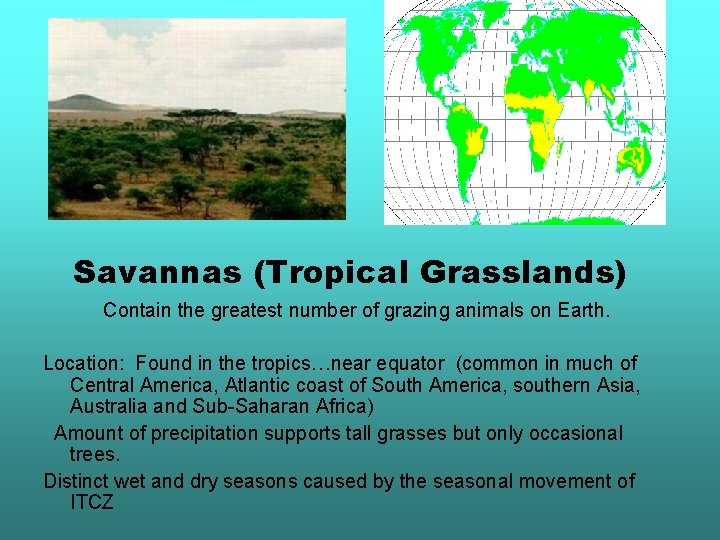
Savannas (Tropical Grasslands) Contain the greatest number of grazing animals on Earth. Location: Found in the tropics…near equator (common in much of Central America, Atlantic coast of South America, southern Asia, Australia and Sub-Saharan Africa) Amount of precipitation supports tall grasses but only occasional trees. Distinct wet and dry seasons caused by the seasonal movement of ITCZ
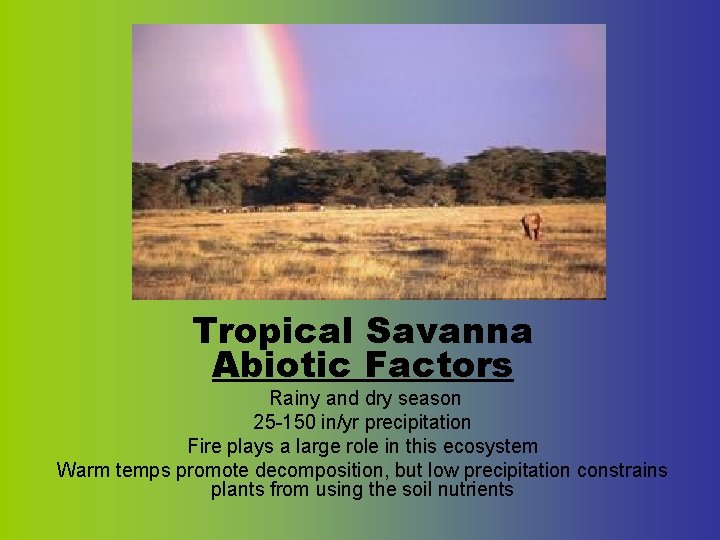
Tropical Savanna Abiotic Factors Rainy and dry season 25 -150 in/yr precipitation Fire plays a large role in this ecosystem Warm temps promote decomposition, but low precipitation constrains plants from using the soil nutrients
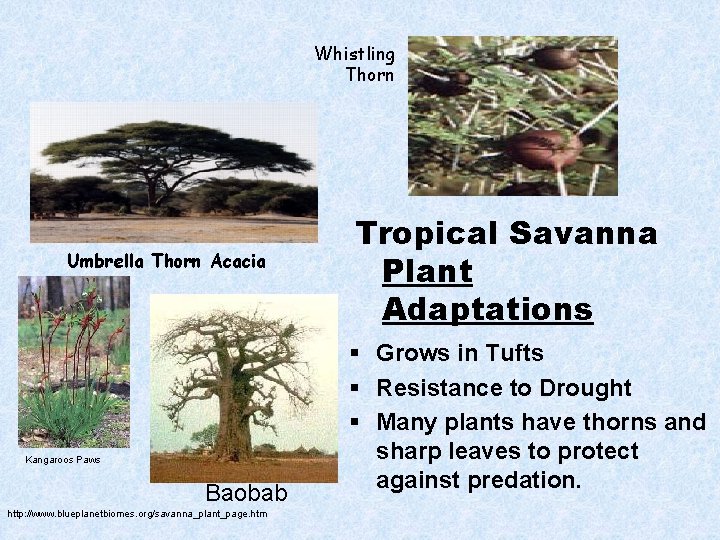
Whistling Thorn Umbrella Thorn Acacia Kangaroos Paws Baobab http: //www. blueplanetbiomes. org/savanna_plant_page. htm Tropical Savanna Plant Adaptations § Grows in Tufts § Resistance to Drought § Many plants have thorns and sharp leaves to protect against predation.
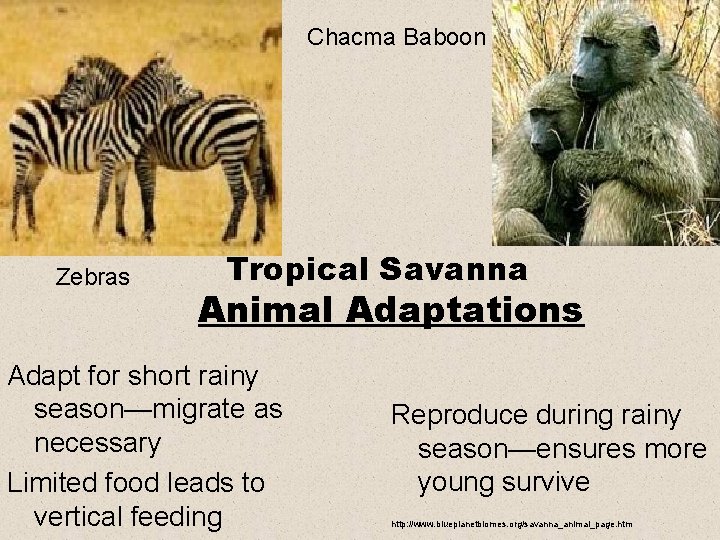
Chacma Baboon Zebras Tropical Savanna Animal Adaptations Adapt for short rainy season—migrate as necessary Limited food leads to vertical feeding Reproduce during rainy season—ensures more young survive http: //www. blueplanetbiomes. org/savanna_animal_page. htm
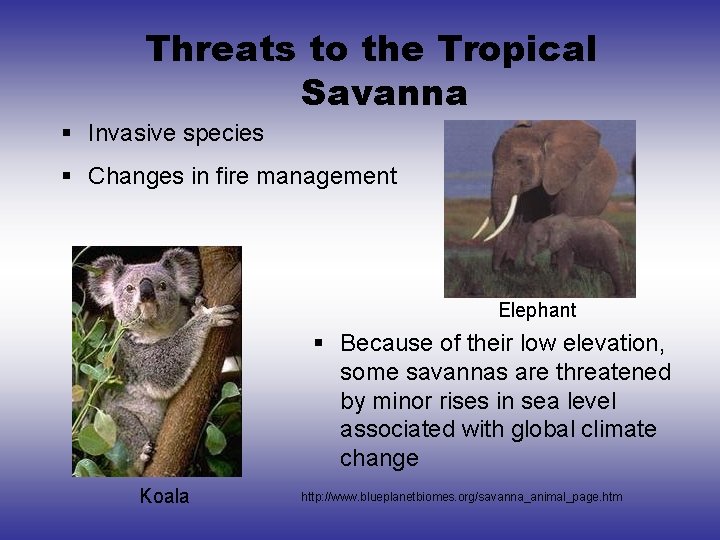
Threats to the Tropical Savanna § Invasive species § Changes in fire management Elephant § Because of their low elevation, some savannas are threatened by minor rises in sea level associated with global climate change Koala http: //www. blueplanetbiomes. org/savanna_animal_page. htm
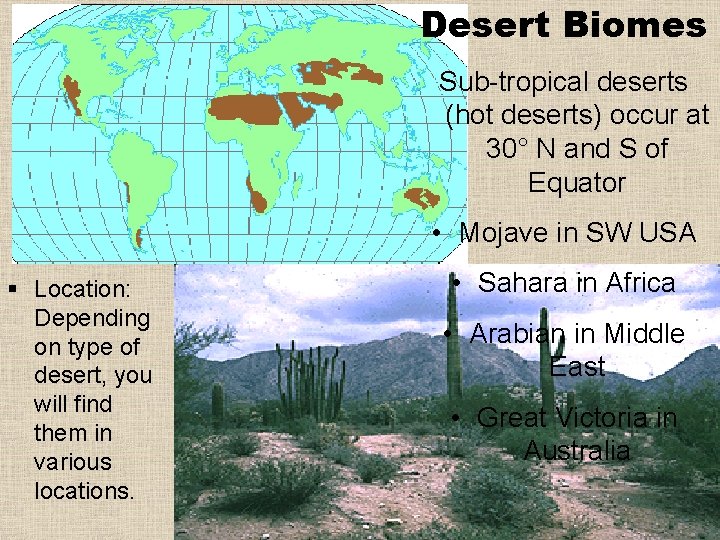
Desert Biomes Sub-tropical deserts (hot deserts) occur at 30° N and S of Equator • Mojave in SW USA § Location: Depending on type of desert, you will find them in various locations. • Sahara in Africa • Arabian in Middle East • Great Victoria in Australia
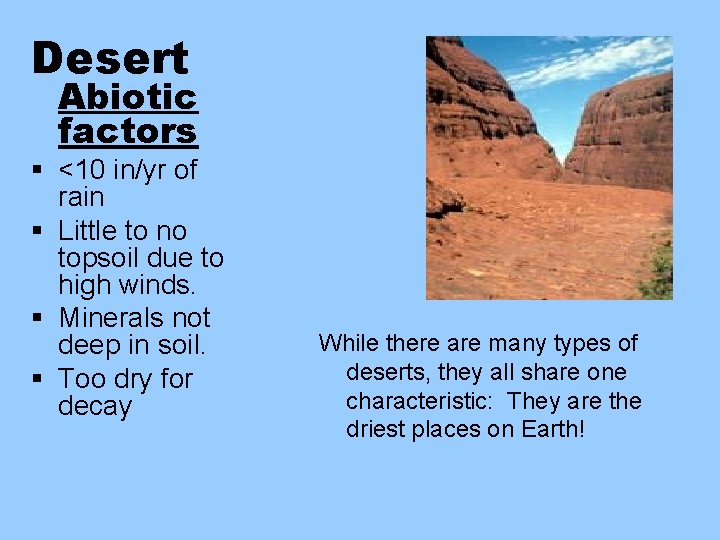
Desert Abiotic factors § <10 in/yr of rain § Little to no topsoil due to high winds. § Minerals not deep in soil. § Too dry for decay While there are many types of deserts, they all share one characteristic: They are the driest places on Earth!
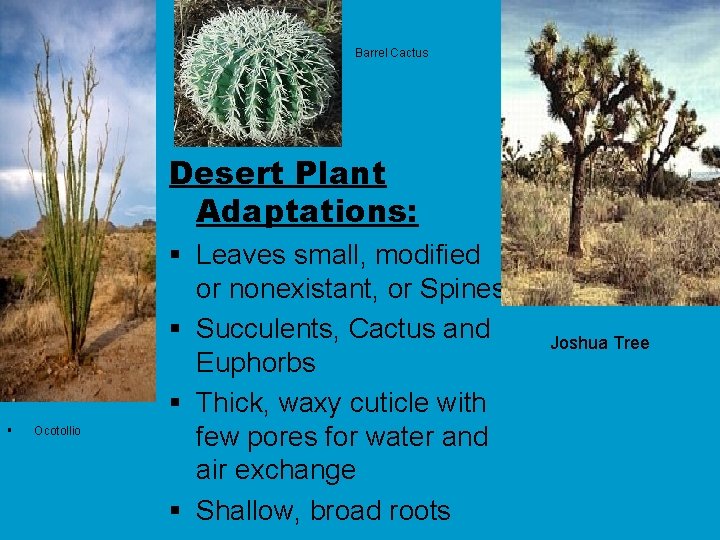
Barrel Cactus Desert Plant Adaptations: § Ocotollio § Leaves small, modified or nonexistant, or Spines § Succulents, Cactus and Euphorbs § Thick, waxy cuticle with few pores for water and air exchange § Shallow, broad roots Joshua Tree
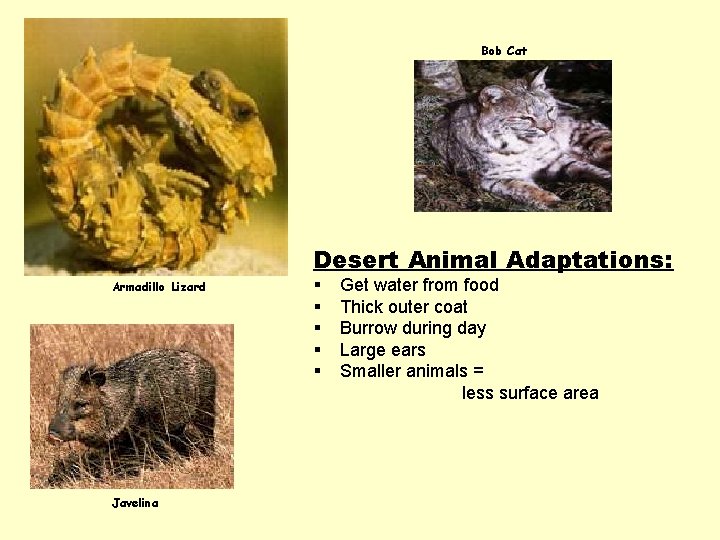
Bob Cat Desert Animal Adaptations: Armadillo Lizard Javelina § § § Get water from food Thick outer coat Burrow during day Large ears Smaller animals = less surface area
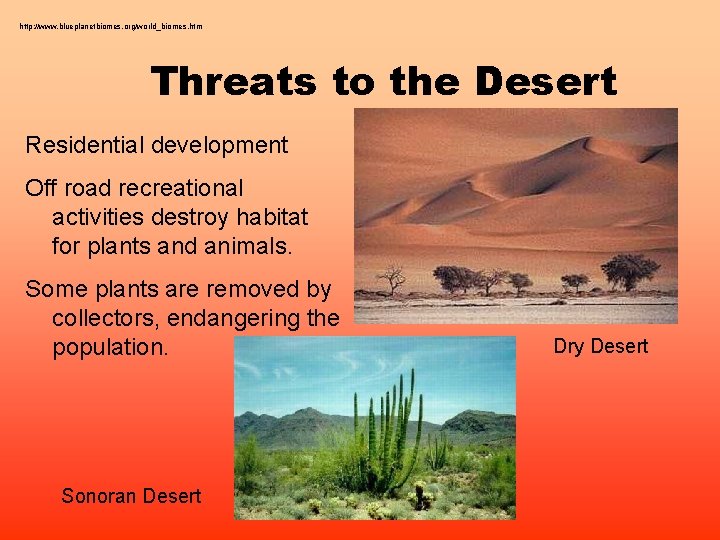
http: //www. blueplanetbiomes. org/world_biomes. htm Threats to the Desert Residential development Off road recreational activities destroy habitat for plants and animals. Some plants are removed by collectors, endangering the population. Sonoran Desert Dry Desert
- Slides: 55