
World Biomes and Climate Zones Learning Objective To

World Biomes and Climate Zones
Learning Objective • To understand what biomes are and where they are located across the world. Success Criteria • To identify where different biomes are located. • To make links between biomes and climate zones. • To implement this new knowledge in a piece of extended writing.
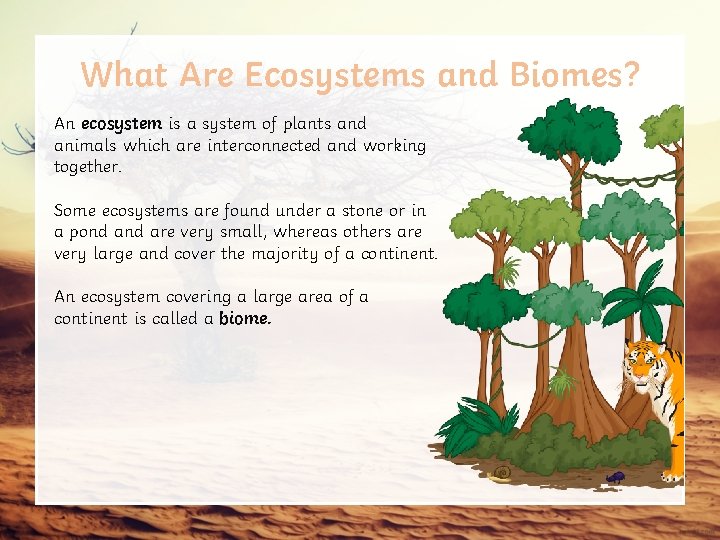
What Are Ecosystems and Biomes? An ecosystem is a system of plants and animals which are interconnected and working together. Some ecosystems are found under a stone or in a pond are very small, whereas others are very large and cover the majority of a continent. An ecosystem covering a large area of a continent is called a biome.
Types of Biomes alpine Colder climates found at high altitudes in mountain ranges. Populated with coniferous trees such as firs and pines. chaparral Hot and dry like a desert, but has more rain and therefore more plants and animals, including yucca, trees and cacti, coyotes, deer, lizards and jack rabbits. deciduous forest Warm, wet and mild areas and dominated by deciduous trees (trees that lose their leaves in the autumn). desert Deserts are dry; less than 25 cm rain per year. They can be hot and sandy or cold and icy. Both hot and cold deserts can support life as long as it is well adapted, such as cacti and silver ants in hot deserts, and penguins in cold deserts.
Types of Biomes desert scrub Very dry areas of hot deserts populated with grasses, herbs and shrubs adapted to live in very arid areas. grasslands Areas where a variety of grasses grow. There are few other trees or plants apart from near to water sources. The grasslands are very hot places in summer. Some become extremely cold in the winter. rainforest Warm, wet and humid, rainforests are home to half of the world’s species and are populated with dense vegetation and trees. Rainforest animals include sloths, howler monkeys and jaguars.
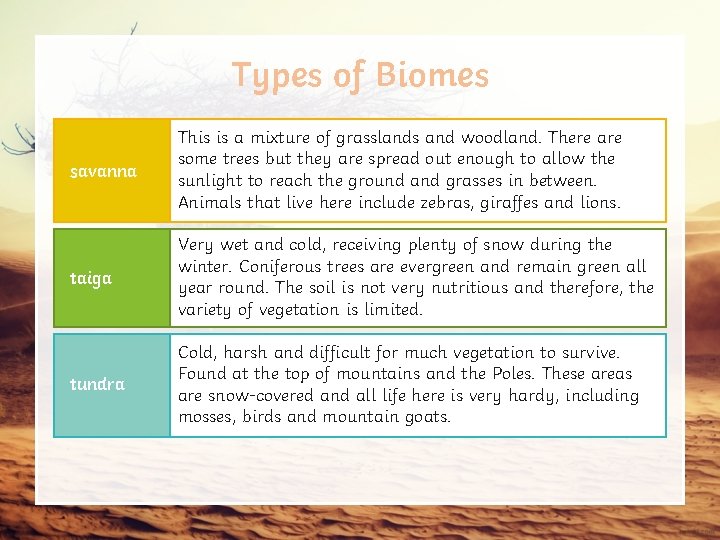
Types of Biomes savanna Grasslands This is a mixture of grasslands and woodland. There are some trees but they are spread out enough to allow the sunlight to reach the ground and grasses in between. Animals that live here include zebras, giraffes and lions. taiga Rainforest Very wet and cold, receiving plenty of snow during the winter. Coniferous trees are evergreen and remain green all year round. The soil is not very nutritious and therefore, the variety of vegetation is limited. tundra Cold, harsh and difficult for much vegetation to survive. Found at the top of mountains and the Poles. These areas are snow-covered and all life here is very hardy, including mosses, birds and mountain goats.
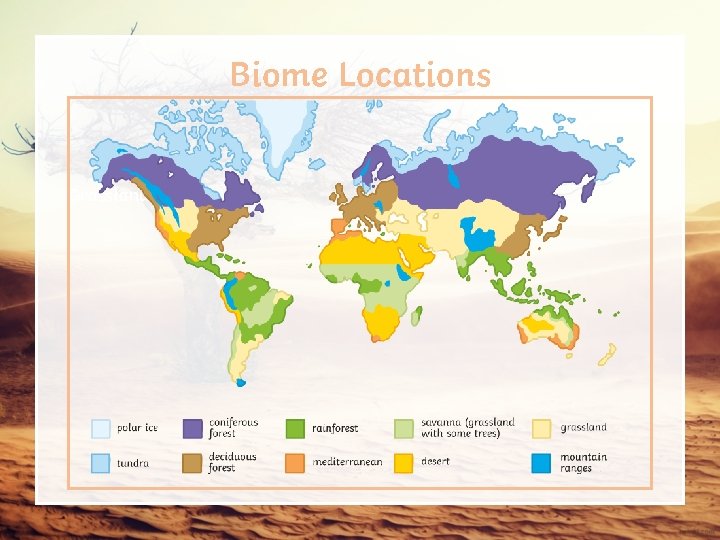
Biome Locations Grasslands
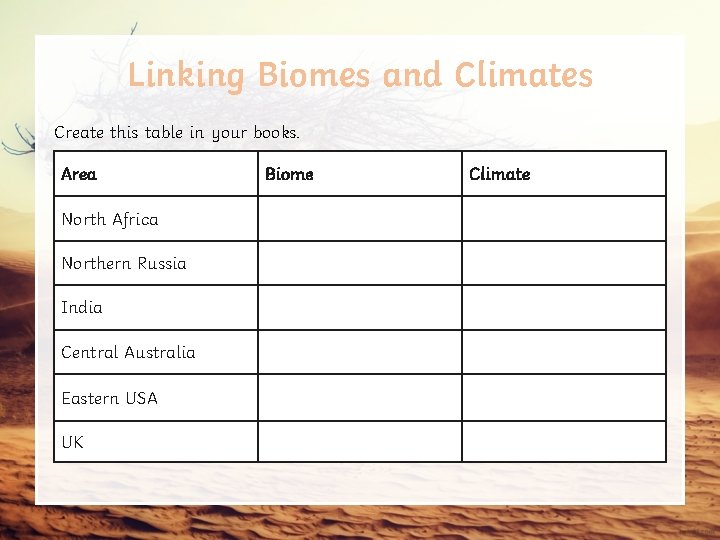
Linking Biomes and Climates Create this table in your books. Area Grasslands North Africa Northern Russia India Central Australia Eastern USA UK Biome Climate
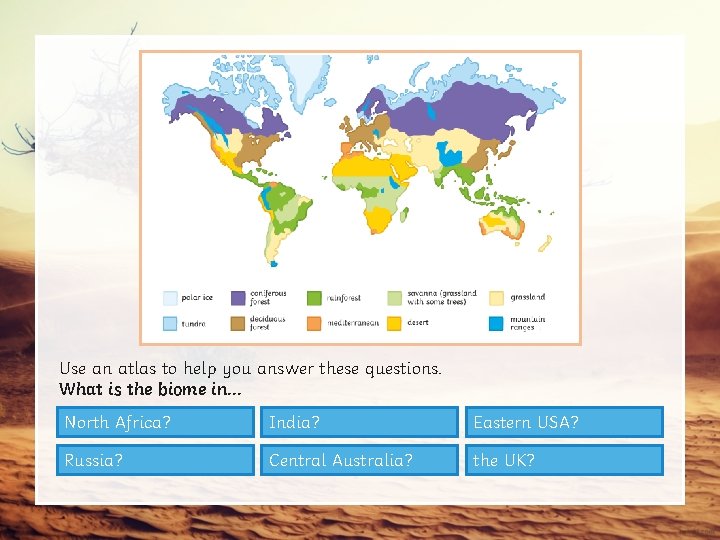
Use an atlas to help you answer these questions. What is the biome in. . . North Africa? India? Eastern USA? Russia? Central Australia? the UK?
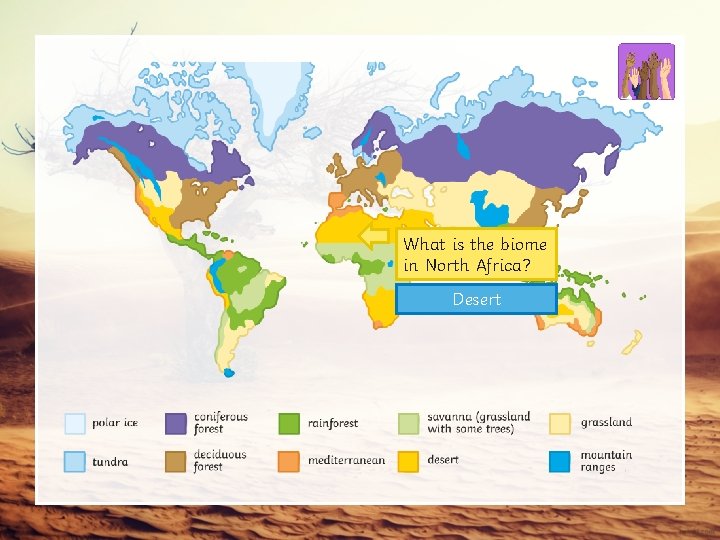
What is the biome in North Africa? Desert
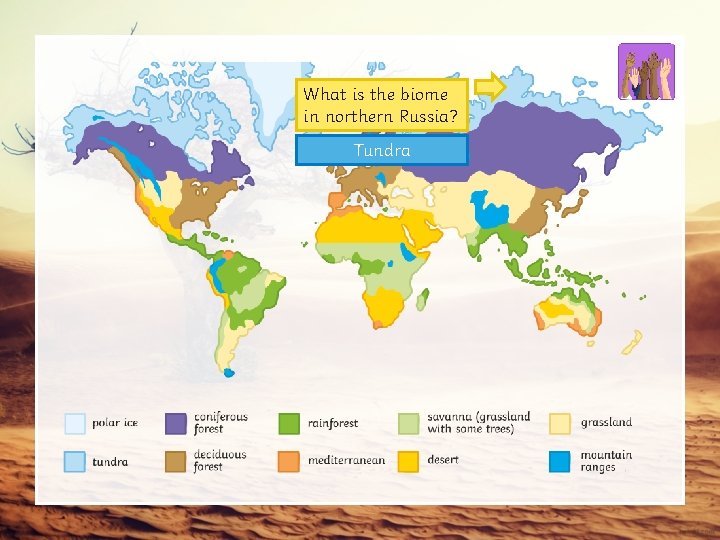
What is the biome in northern Russia? Tundra
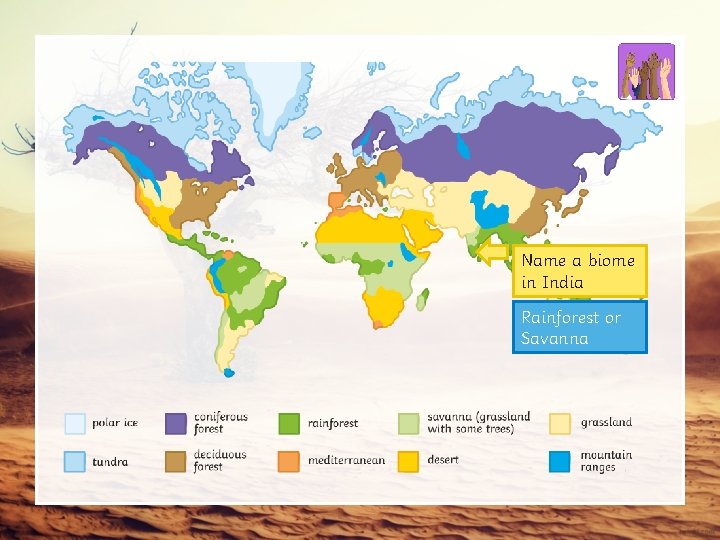
Name a biome in India Rainforest or Savanna
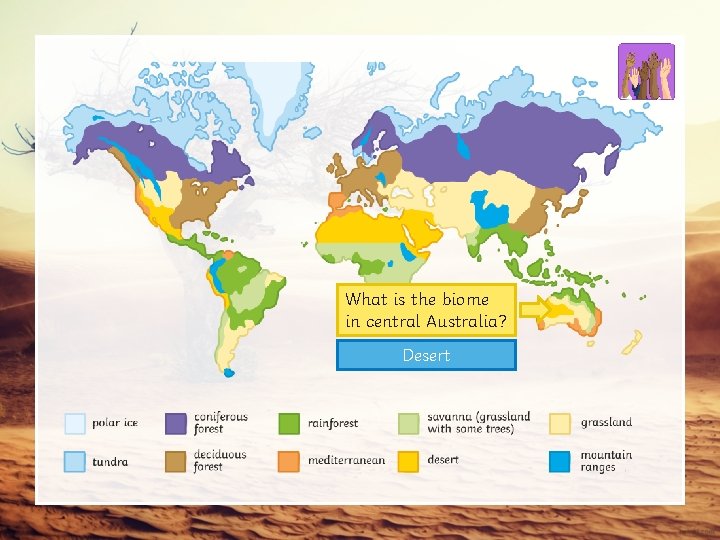
What is the biome in central Australia? Desert
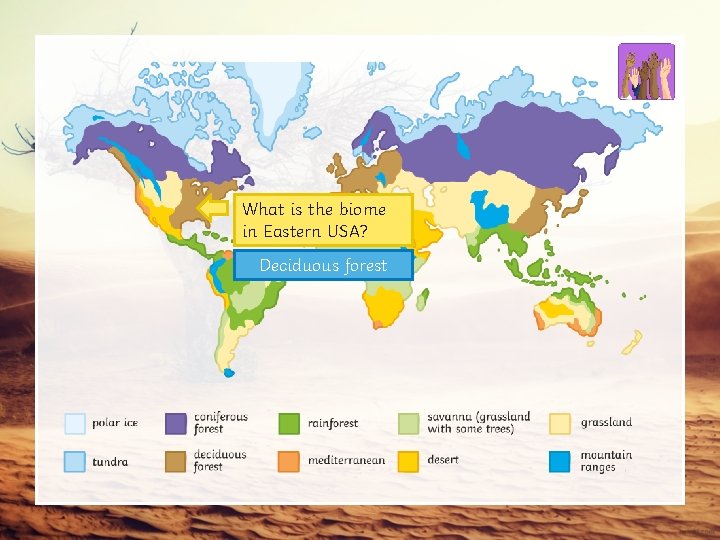
What is the biome in Eastern USA? Deciduous forest
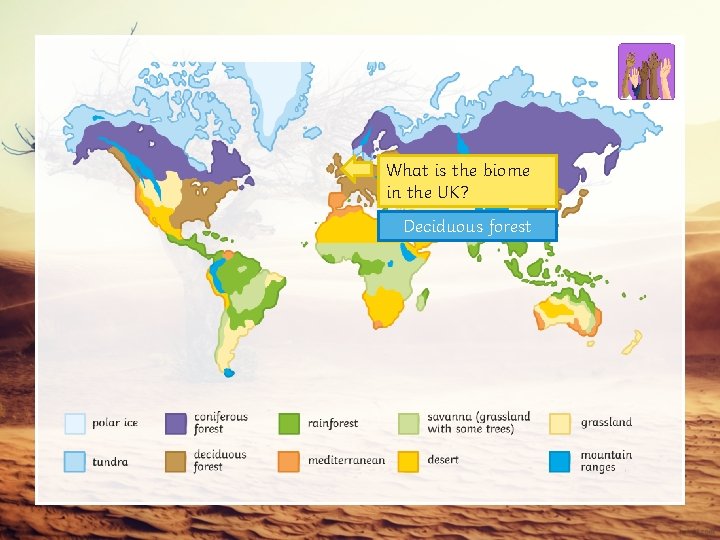
What is the biome in the UK? Deciduous forest
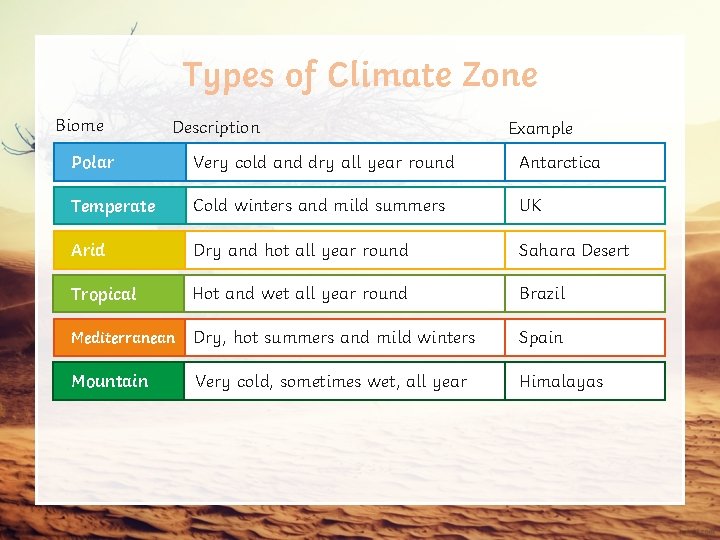
Types of Climate Zone Biome Description Example Polar Very cold and dry all year round Antarctica Temperate Cold winters and mild summers UK Arid Dry and hot all year round Sahara Desert Tropical Hot and wet all year round Brazil Mediterranean Dry, hot summers and mild winters Spain Mountain Very cold, sometimes wet, all year Himalayas
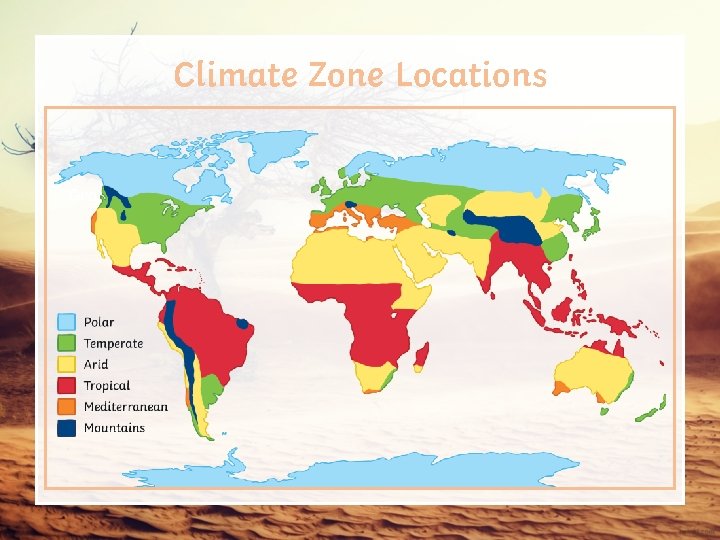
Climate Zone Locations Grasslands
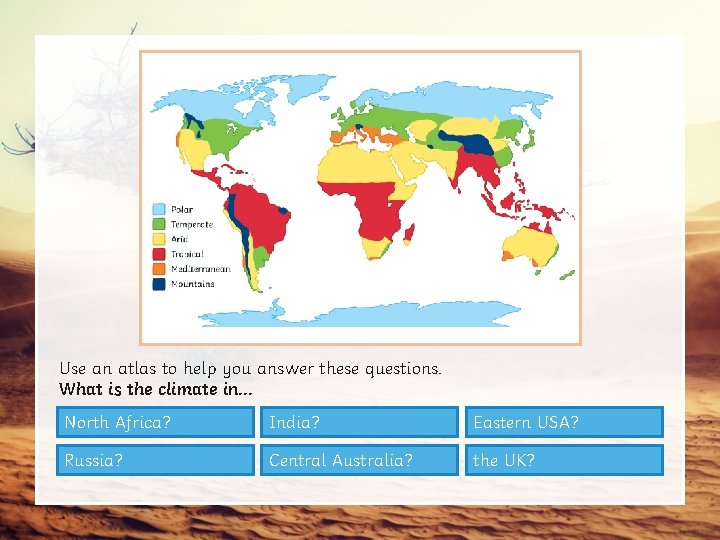
Use an atlas to help you answer these questions. What is the climate in. . . North Africa? India? Eastern USA? Russia? Central Australia? the UK?
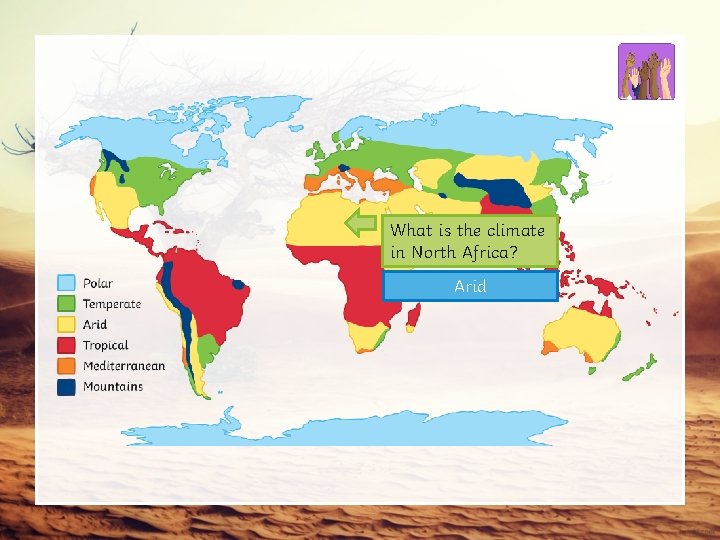
What is the climate in North Africa? Arid
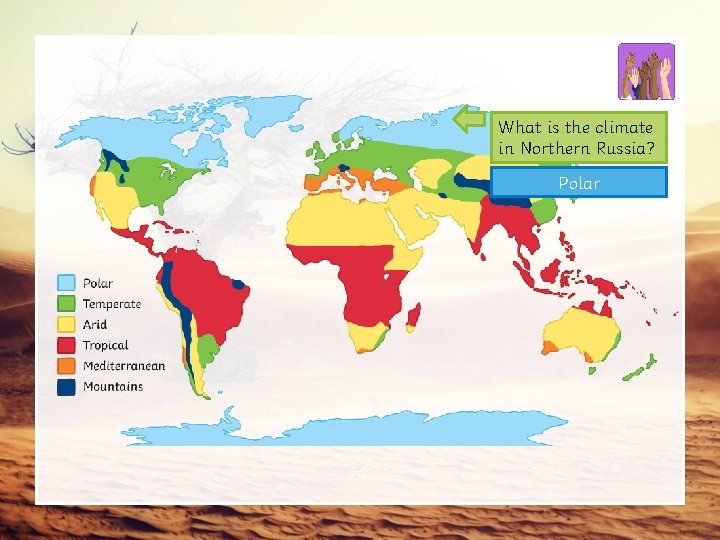
What is the climate in Northern Russia? Polar
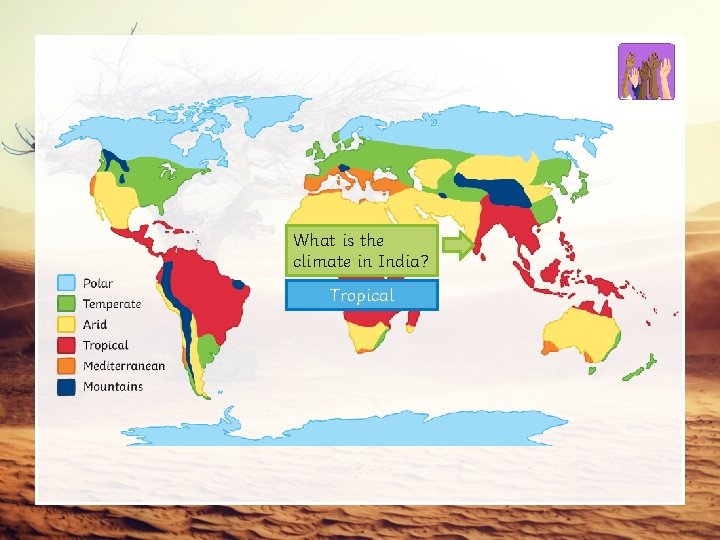
What is the climate in India? Tropical
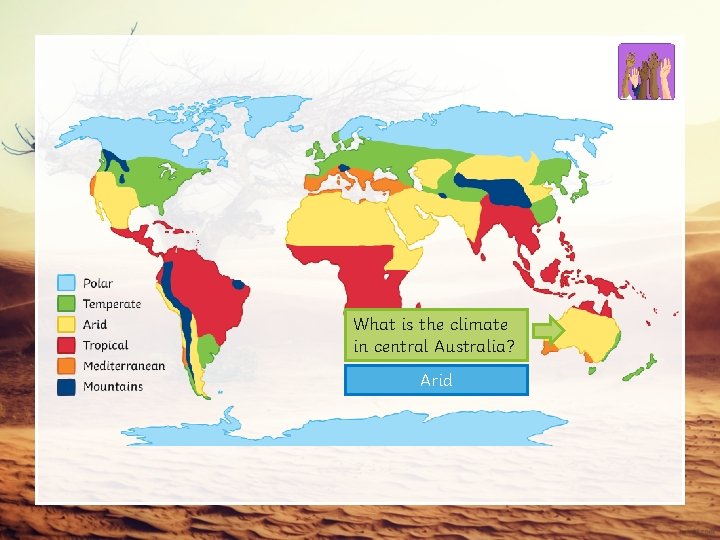
What is the climate in central Australia? Arid
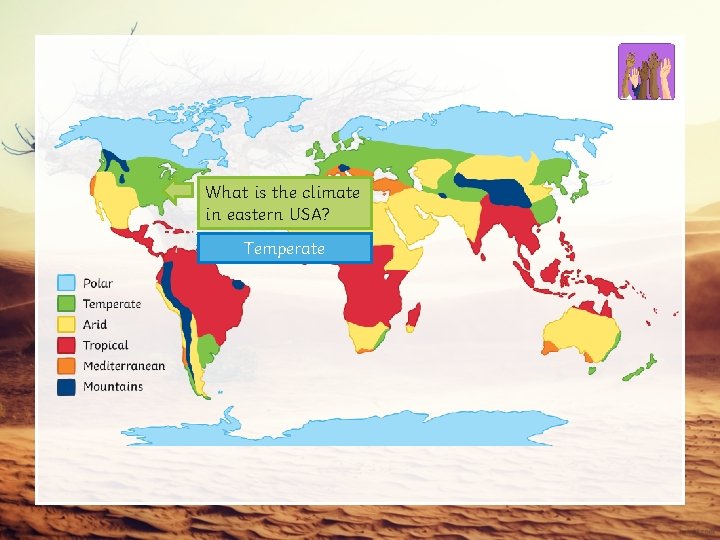
What is the climate in eastern USA? Temperate
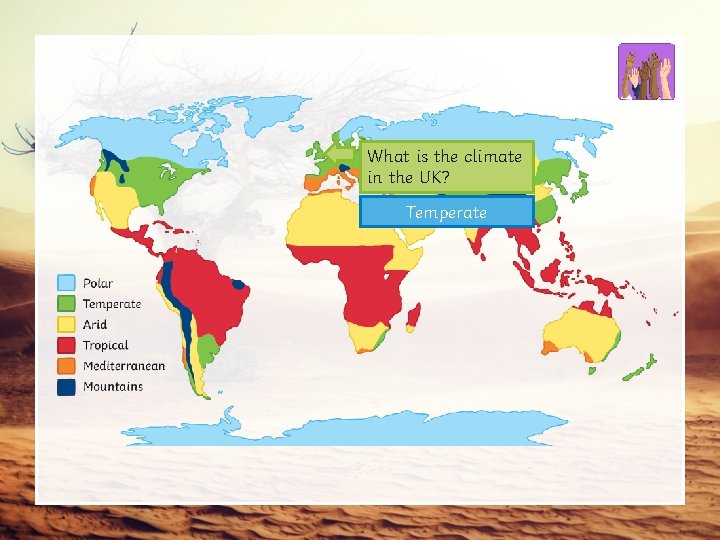
What is the climate in the UK? Temperate
Report It! Imagine you are on holiday anywhere in the world! Write a postcard, email or letter describing the climate and the landscape. You should include a description of the type of weather you are experiencing. You should describe the types of plants and animals you can see there.
- Slides: 26