
Workup and Management of Hypercalcemia in Hospitalized Patients
- Slides: 17
Work-up and Management of Hypercalcemia in Hospitalized Patients Jessica Thom PGY-3
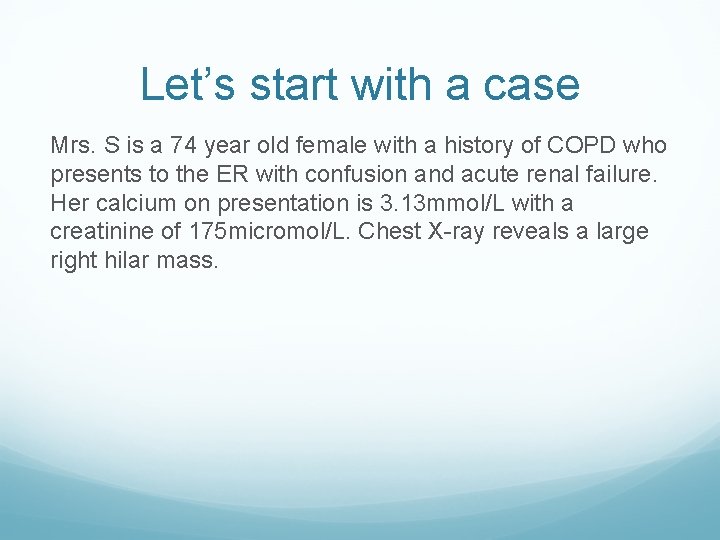
Let’s start with a case Mrs. S is a 74 year old female with a history of COPD who presents to the ER with confusion and acute renal failure. Her calcium on presentation is 3. 13 mmol/L with a creatinine of 175 micromol/L. Chest X-ray reveals a large right hilar mass.
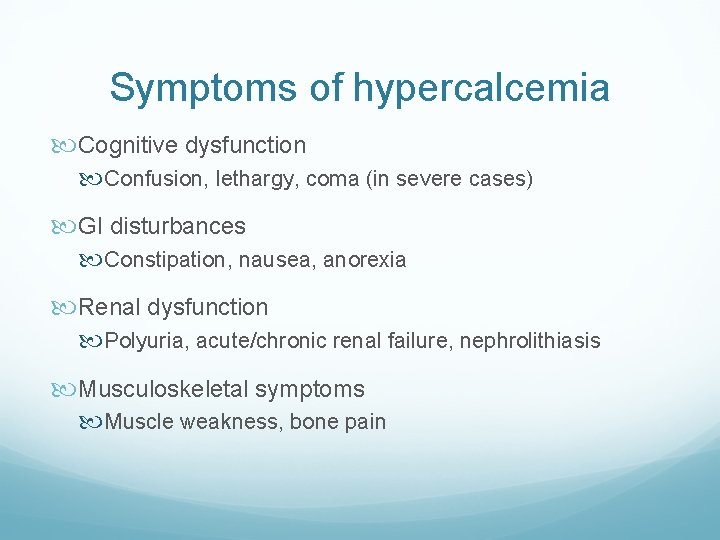
Symptoms of hypercalcemia Cognitive dysfunction Confusion, lethargy, coma (in severe cases) GI disturbances Constipation, nausea, anorexia Renal dysfunction Polyuria, acute/chronic renal failure, nephrolithiasis Musculoskeletal symptoms Muscle weakness, bone pain
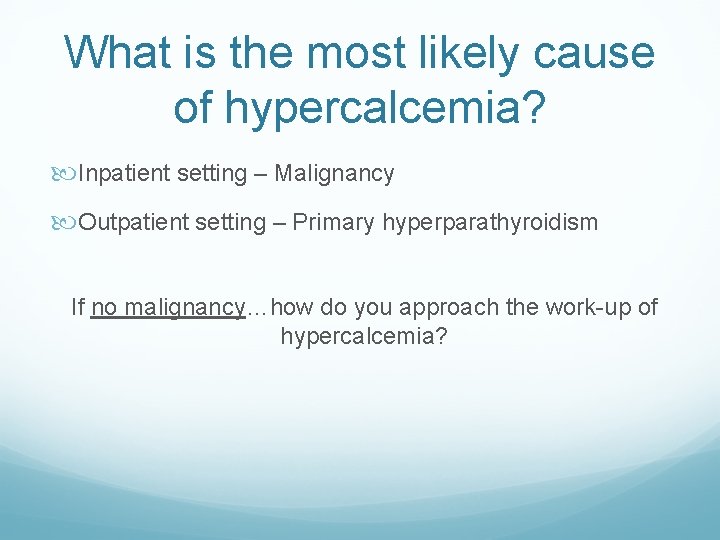
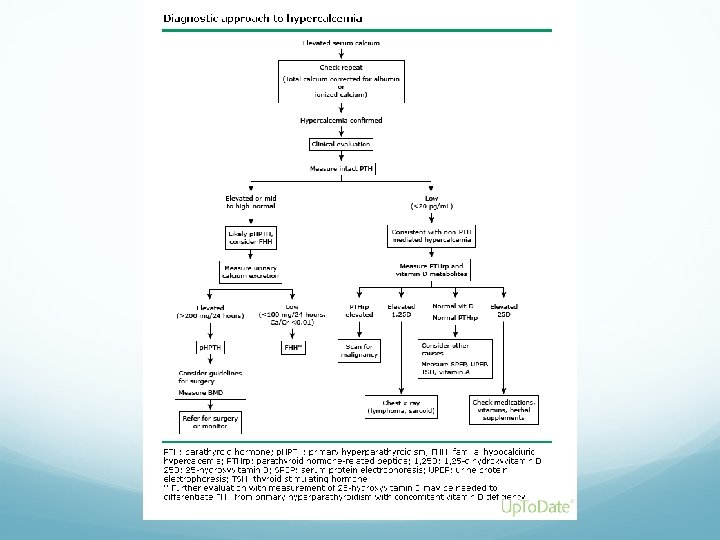
What is the most likely cause of hypercalcemia? Inpatient setting – Malignancy Outpatient setting – Primary hyperparathyroidism If no malignancy…how do you approach the work-up of hypercalcemia?
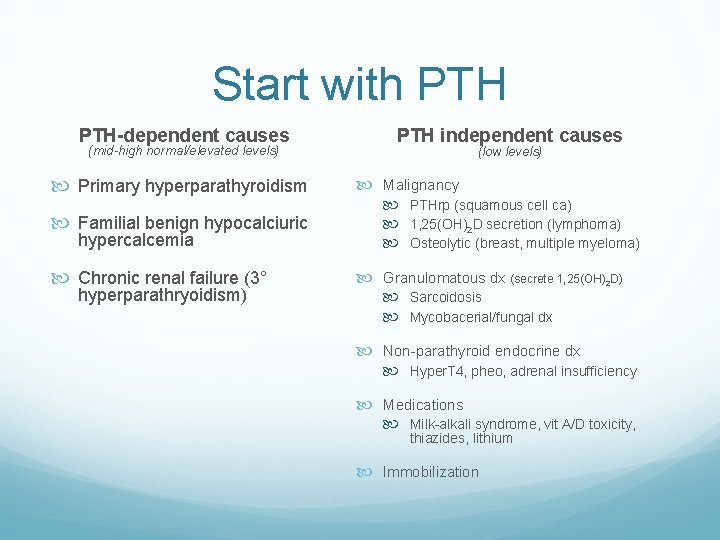
Start with PTH-dependent causes (mid-high normal/elevated levels) Primary hyperparathyroidism Familial benign hypocalciuric hypercalcemia Chronic renal failure (3° hyperparathryoidism) PTH independent causes (low levels) Malignancy PTHrp (squamous cell ca) 1, 25(OH)2 D secretion (lymphoma) Osteolytic (breast, multiple myeloma) Granulomatous dx (secrete 1, 25(OH)2 D) Sarcoidosis Mycobacerial/fungal dx Non-parathyroid endocrine dx Hyper. T 4, pheo, adrenal insufficiency Medications Milk-alkali syndrome, vit A/D toxicity, thiazides, lithium Immobilization
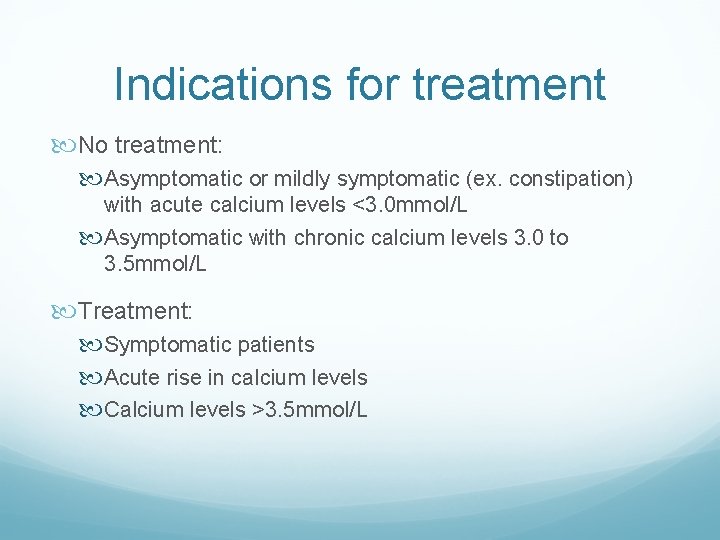
Indications for treatment No treatment: Asymptomatic or mildly symptomatic (ex. constipation) with acute calcium levels <3. 0 mmol/L Asymptomatic with chronic calcium levels 3. 0 to 3. 5 mmol/L Treatment: Symptomatic patients Acute rise in calcium levels Calcium levels >3. 5 mmol/L
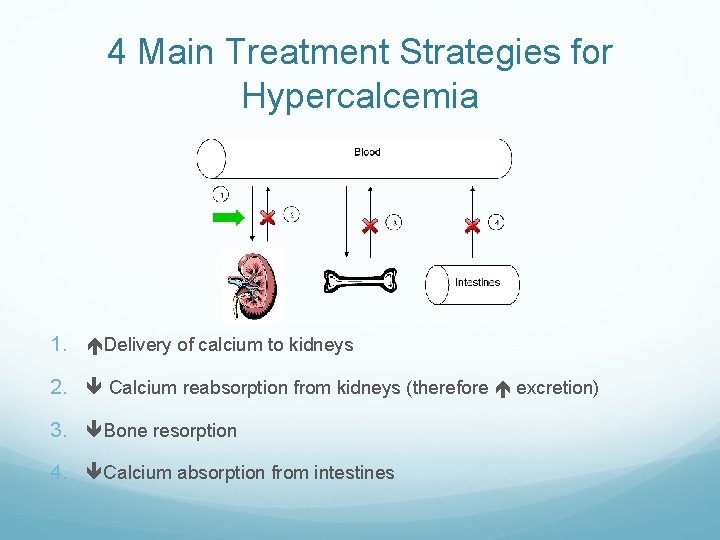
4 Main Treatment Strategies for Hypercalcemia 1. Delivery of calcium to kidneys 2. Calcium reabsorption from kidneys (therefore excretion) 3. Bone resorption 4. Calcium absorption from intestines
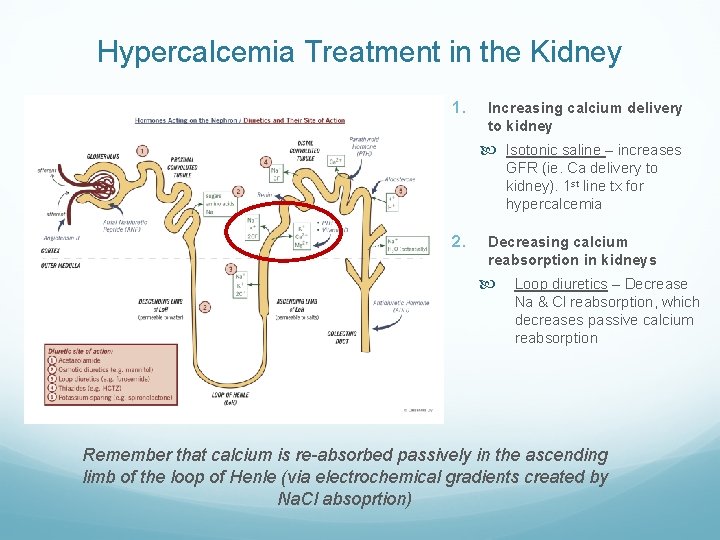
Hypercalcemia Treatment in the Kidney 1. Increasing calcium delivery to kidney Isotonic saline – increases GFR (ie. Ca delivery to kidney). 1 st line tx for hypercalcemia 2. Decreasing calcium reabsorption in kidneys Loop diuretics – Decrease Na & Cl reabsorption, which decreases passive calcium reabsorption Remember that calcium is re-absorbed passively in the ascending limb of the loop of Henle (via electrochemical gradients created by Na. Cl absoprtion)
Hypercalcemia Treatment in the Bones Very effective strategy at treating hypercalcemia Agents that are effective in decreasing bone resorption: Calcitonin Bisphonates (ex. pamidronate)
Hypercalcemia Treatment in the Intestines Decreasing calcium absorption: Only effective in the treatment of hypercalcemia secondary to granulomatous diseases and occasionally in lymphomas (where there is increased calcitriol production that enhances intestinal calcium absorption). Treatments: Glucocorticoids – Decrease calcitriol production by activating mononuclear cells in the lungs/lymph nodes. Low calcium diet
Other treatments of hypercalcemia Dialysis With little or no calcium in dialysate Reserved for severe, symptomatic hypercalcemia (4. 55 mmol/L) with neurologic symptoms and severe renal failure (Cr. Cl <10 -20 ml/min). Can also be considered severe hypercalcemia and heart failure, in which can not safely give IV fluids. Target the underlying cause… Treat the underlying malignancy, sarcoid, stop offending drug etc.
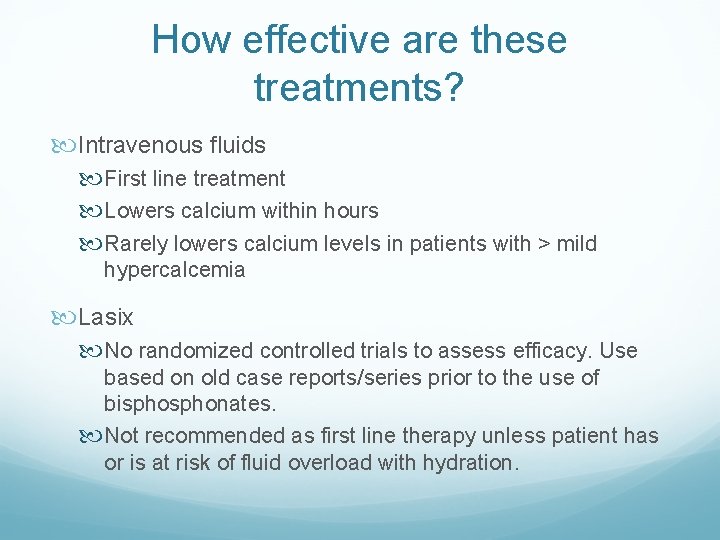
How effective are these treatments? Intravenous fluids First line treatment Lowers calcium within hours Rarely lowers calcium levels in patients with > mild hypercalcemia Lasix No randomized controlled trials to assess efficacy. Use based on old case reports/series prior to the use of bisphonates. Not recommended as first line therapy unless patient has or is at risk of fluid overload with hydration.
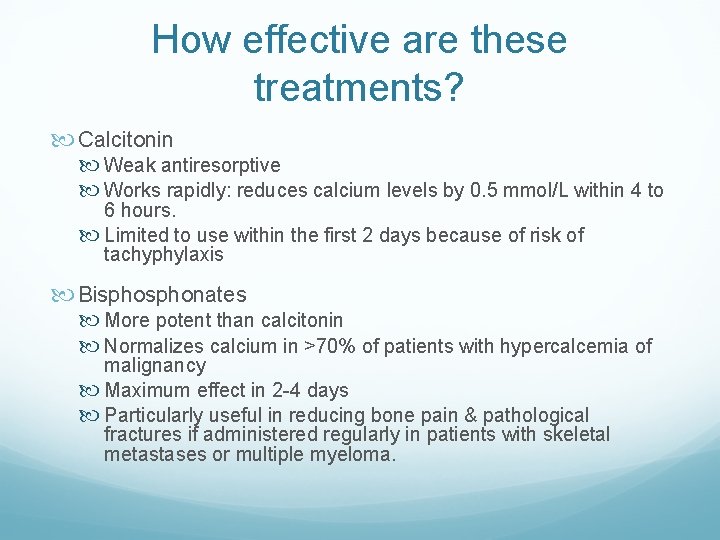
How effective are these treatments? Calcitonin Weak antiresorptive Works rapidly: reduces calcium levels by 0. 5 mmol/L within 4 to 6 hours. Limited to use within the first 2 days because of risk of tachyphylaxis Bisphonates More potent than calcitonin Normalizes calcium in >70% of patients with hypercalcemia of malignancy Maximum effect in 2 -4 days Particularly useful in reducing bone pain & pathological fractures if administered regularly in patients with skeletal metastases or multiple myeloma.
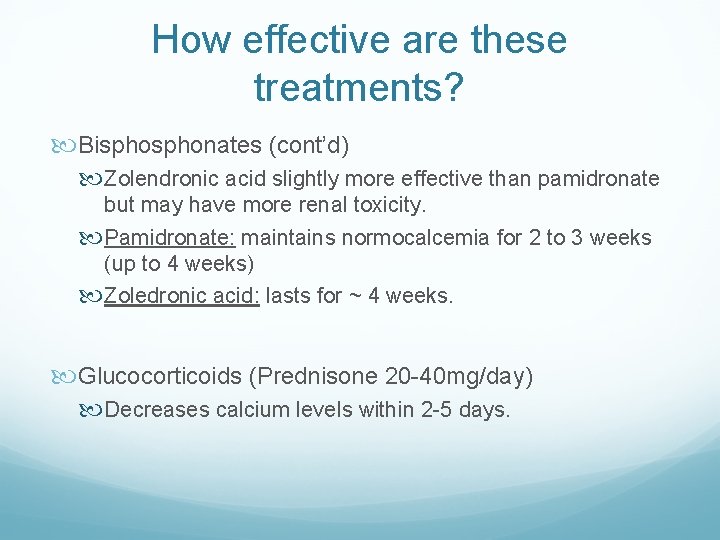
How effective are these treatments? Bisphonates (cont’d) Zolendronic acid slightly more effective than pamidronate but may have more renal toxicity. Pamidronate: maintains normocalcemia for 2 to 3 weeks (up to 4 weeks) Zoledronic acid: lasts for ~ 4 weeks. Glucocorticoids (Prednisone 20 -40 mg/day) Decreases calcium levels within 2 -5 days.
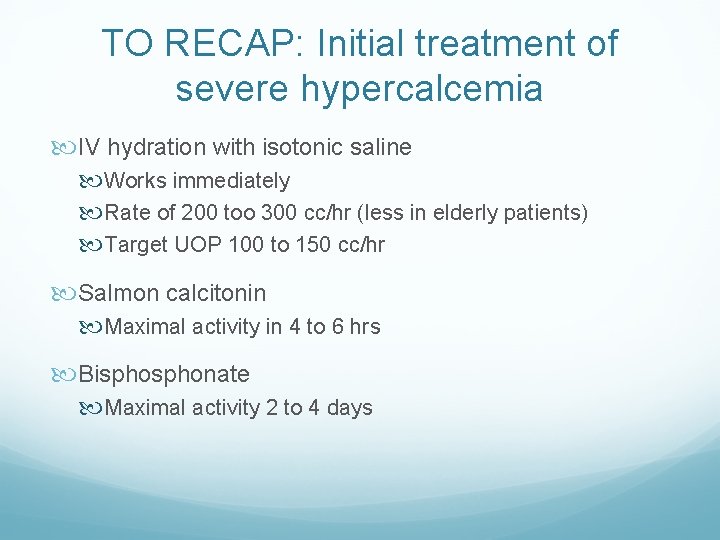
TO RECAP: Initial treatment of severe hypercalcemia IV hydration with isotonic saline Works immediately Rate of 200 too 300 cc/hr (less in elderly patients) Target UOP 100 to 150 cc/hr Salmon calcitonin Maximal activity in 4 to 6 hrs Bisphonate Maximal activity 2 to 4 days
Preventing recurrence of hypercalcemia Mainstay or therapy is treat underlying cause (ex. malignancy) If no response to tumor therapy: Infuse bisphonates every 2 to 4 weeks to maintain normocalcemia and prevent skeletal complications.