
Workshop I Identifying Problems Team Building Prof Steve
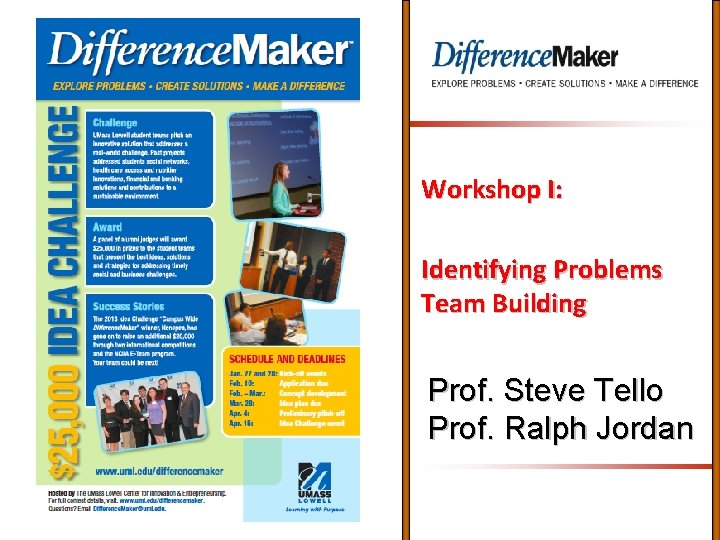
Workshop I: Identifying Problems Team Building Prof. Steve Tello Prof. Ralph Jordan
Tonight’s Agenda • 6: 00 – 6: 30 Welcome, Introductions, Overview • 6: 30 – 7: 00 What makes a “good” problem? • 7: 00 – 7: 30 Team Building around problems http: //www. uml. edu/differencemaker
Difference. Maker Team Faculty Fellows Staff • Ha Pho • Holly Butler Coops • James Abdallah • Gianni Falzone • Michael Jannino • Faith Malay • Prof. John Brown GSE • Prof. Guanling Chen • Prof. Deb. Finch MSB • Prof. Ralph Jordan • Prof. Val Kijewksi MSB • Prof. Ainat Koran CHS • Prof. Chad Montrie • Prof. Dan Sullivan ENG CS MSB FAHSS http: //www. uml. edu/differencemaker
Welcome to the $25 K Idea Challenge! • 25 applications as of today All Applications due Feb. 24! • All 6 Colleges Participating • New Products, New Services, New Causes • Thank you all for joining the Idea Challenge! • So what have you gotten yourself into? http: //www. uml. edu/differencemaker

What Is Next? • 9 weeks to Idea Challenge Event – April 15 • Build your Team • Research your Problem, Opportunity and Solution • Prepare a 3 -5 minute Rocket Pitch, Project Executive Summary and Poster • Build your online E-Portfolio • Then impress the Judges! http: //www. uml. edu/differencemaker

So Tell Us About You, Your Team & Your Challenge • Introduce your Team • Tell us about the Challenge you are solving • Do you need additional help? • In 1 minute http: //www. uml. edu/differencemaker
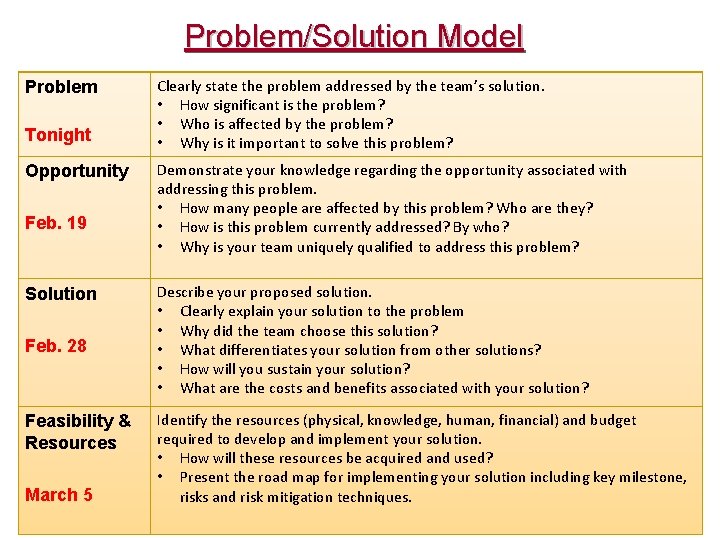
Problem/Solution Model Problem Tonight Opportunity Feb. 19 Tonight/ March 1 st Solution March Feb. 281 st Feasibility & Resources March 5 Clearly state the problem addressed by the team’s solution. • How significant is the problem? • Who is affected by the problem? • Why is it important to solve this problem? Demonstrate your knowledge regarding the opportunity associated with addressing this problem. • How many people are affected by this problem? Who are they? • How is this problem currently addressed? By who? • Why is your team uniquely qualified to address this problem? Describe your proposed solution. • Clearly explain your solution to the problem • Why did the team choose this solution? • What differentiates your solution from other solutions? • How will you sustain your solution? • What are the costs and benefits associated with your solution? Identify the resources (physical, knowledge, human, financial) and budget required to develop and implement your solution. • How will these resources be acquired and used? • Present the road map for implementing your solution including key milestone, risks and risk mitigation techniques.
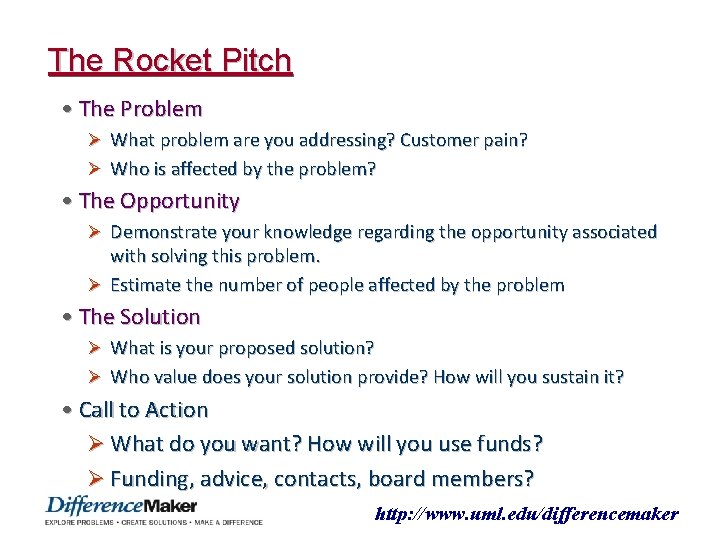
The Rocket Pitch • The Problem Ø What problem are you addressing? Customer pain? Ø Who is affected by the problem? • The Opportunity Ø Demonstrate your knowledge regarding the opportunity associated with solving this problem. Ø Estimate the number of people affected by the problem • The Solution Ø What is your proposed solution? Ø Who value does your solution provide? How will you sustain it? • Call to Action Ø What do you want? How will you use funds? Ø Funding, advice, contacts, board members? http: //www. uml. edu/differencemaker
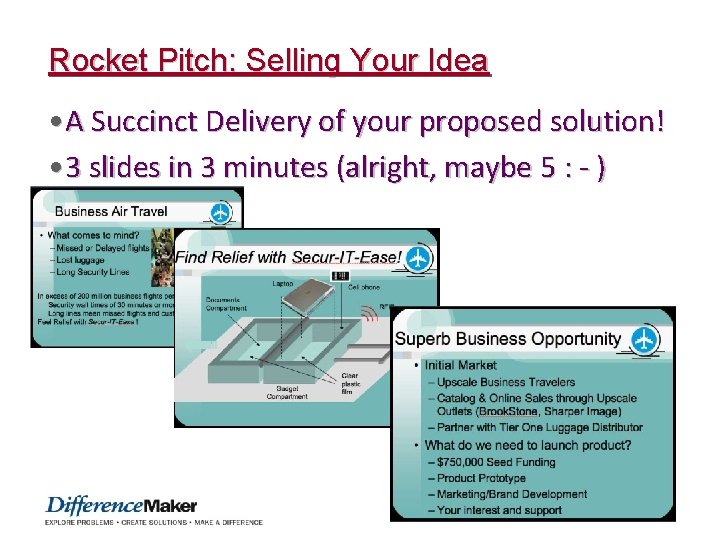
Rocket Pitch: Selling Your Idea • A Succinct Delivery of your proposed solution! • 3 slides in 3 minutes (alright, maybe 5 : - )
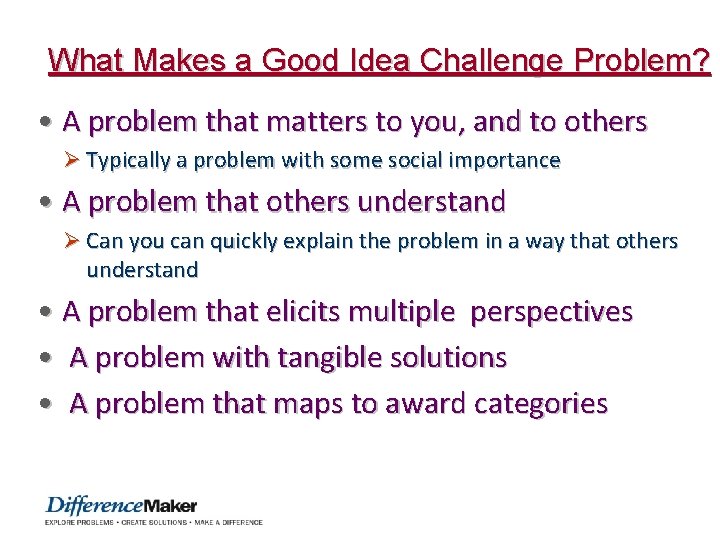
What Makes a Good Idea Challenge Problem? • A problem that matters to you, and to others Ø Typically a problem with some social importance • A problem that others understand Ø Can you can quickly explain the problem in a way that others understand • A problem that elicits multiple perspectives • A problem with tangible solutions • A problem that maps to award categories
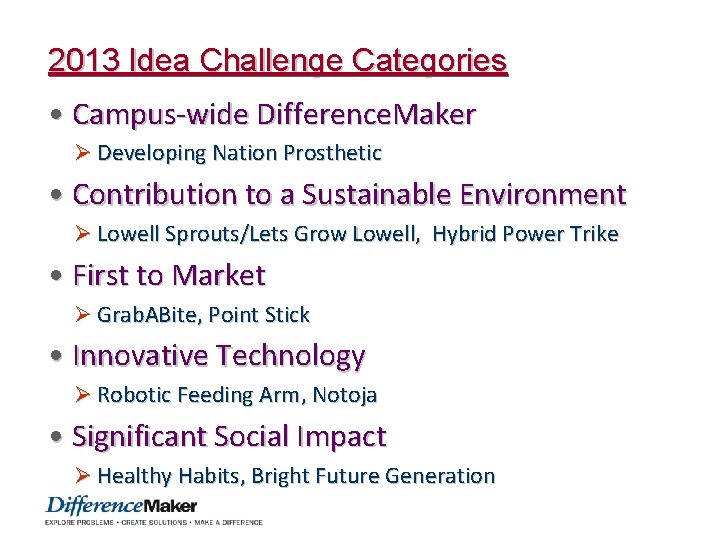
2013 Idea Challenge Categories • Campus-wide Difference. Maker Ø Developing Nation Prosthetic • Contribution to a Sustainable Environment Ø Lowell Sprouts/Lets Grow Lowell, Hybrid Power Trike • First to Market Ø Grab. ABite, Point Stick • Innovative Technology Ø Robotic Feeding Arm, Notoja • Significant Social Impact Ø Healthy Habits, Bright Future Generation

Step I – Define the Problem • Clearly state the problem you want to solve • Define who is affected by the problem Ø Specifics count here! Ø Who? How many? What color are their eyes? Ø How are they affected? • How important is it to solve this problem? • Details are important • Best way to find this information: Ø Research & Talking to People http: //www. uml. edu/differencemaker

Step I – Define the Problem • Take 5 Minutes and Start to Define the Problem • What is the problem you wish to solve? • Who is affected by the problem? • How significant is this problem? • Why is it important to solve this problem? • What don’t you know about this problem? • What do you need help with? • Where can you find answers? http: //www. uml. edu/differencemaker
Answering these Questions • Resources to help Ø First, talk to the people affected by the problem Ø Talk to the people you will implement or use your solution • Library – E Library Ø Contact the Reference Librarian for your area • DM Faculty Fellows • Fellow Students
Workshop II – Assess the Opportunity • Demonstrate your knowledge regarding the scope of the opportunity associated with solving this problem • You already started this in Step I • How is the problem currently addressed? • Who is currently addressing this problem? • How can current solutions be improved upon? http: //www. uml. edu/differencemaker
Homework • Before our next workshop, Feb. 19 Try to answer these questions • Talk to 25 people about the problem Ø Develop a list of 5 -10 questions Ø Who are the people affected by the problem? Ø Why is it important to solve this problem? Ø What bothers people the most about the problem? Ø Who else has attempted to solve the problem? Ø How effective are current solutions/attempts? Be prepared to discuss in the workshop.
What’s Next? • Wed. , Feb. 19, 6 -7: 30 PM • Identifying Opportunities • Application due Feb. 24, but get it in sooner! http: //www. uml. edu/differencemaker
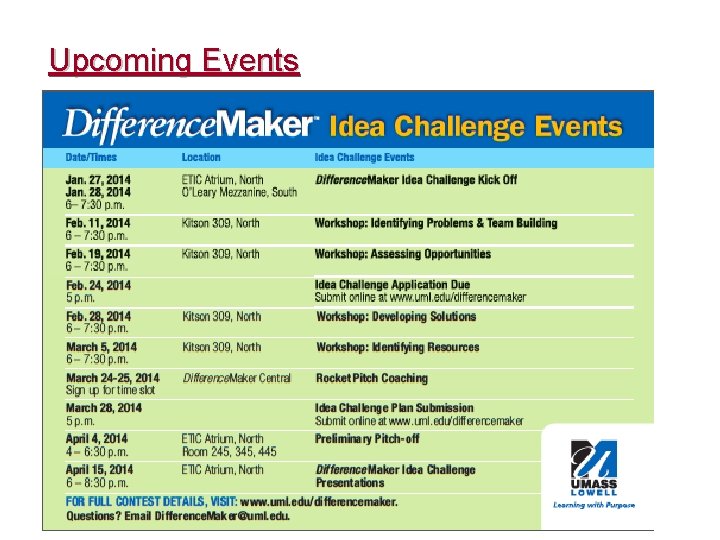
Upcoming Events
Contact Us • differencemaker@uml. edu • www. uml. edu/differencemaker • @difference_uml
- Slides: 19