
Workshop From petri dish to population and back
Workshop From petri dish to population - and back again Chairman: Anne Broe, Danish Society for Pharmacoepidemiology DSF Annual meeting 17 -01 -2019
15. 00 -16. 15 From petri dish to population - and back 17 -01 -2019
Options and possibilities with Danish register research – On its own or as a supplement Dansk Selskab for Farmako. Epidemiologi 17 -01 -2019
Pharmacoepidemiology • Pharmacology – the study of medicines and drugs, including their action, use, and effect on the body • Epidemiology – the scientific study of disease and how they are found, spread, and controlled in groups of people • The study of drugs on a population level 17 -01 -2019
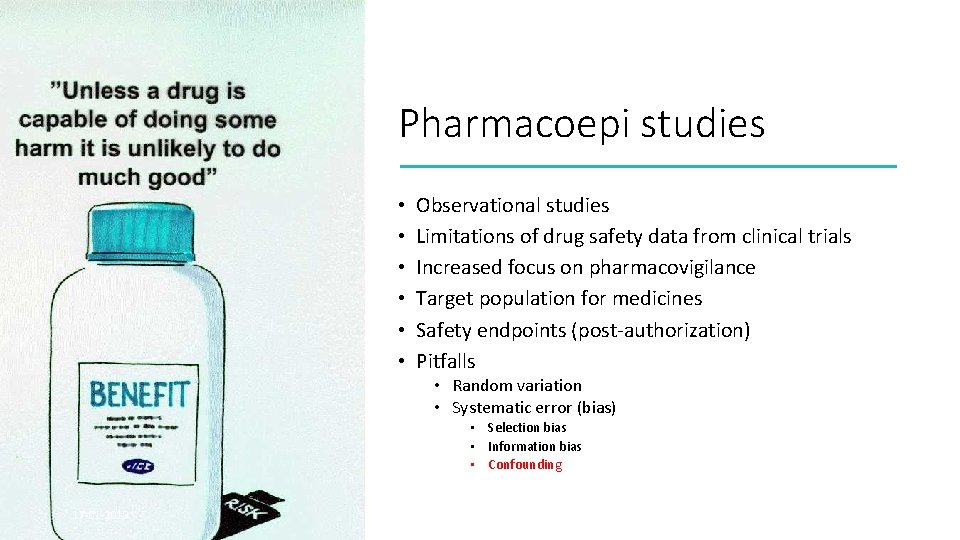
Pharmacoepi studies • • • Observational studies Limitations of drug safety data from clinical trials Increased focus on pharmacovigilance Target population for medicines Safety endpoints (post-authorization) Pitfalls • Random variation • Systematic error (bias) • Selection bias • Information bias • Confounding 17 -01 -2019
Pharmacovigilance (‘drug watch’/drug safety) • Monitoring the safety of drugs after authorization • Adverse drug effects (noxious and unintended) • Medication errors (overdose, misuse, abuse) • • • Collection, Detection, Assessment, Understanding, and prevention of adverse effects 17 -01 -2019

FALSE ADVERSE EFFECTS 17 -01 -2019

Thalidomide 17 -01 -2019
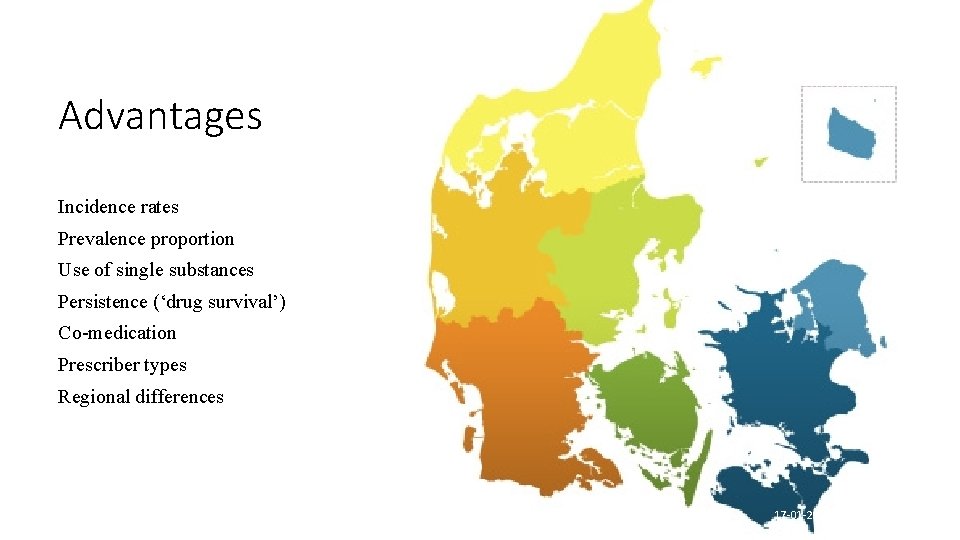
Advantages Incidence rates Prevalence proportion Use of single substances Persistence (‘drug survival’) Co-medication Prescriber types Regional differences 17 -01 -2019
Confounding • Users and non-users are not comparable • Confounding by indication/disease severity • Methods to control for confounding Design • Randomization • Cross-over • Restrictions • Matching 17 -01 -2019 Analysis Stratification Multivariate analysis Propensity score (PS) Self-controlled studies
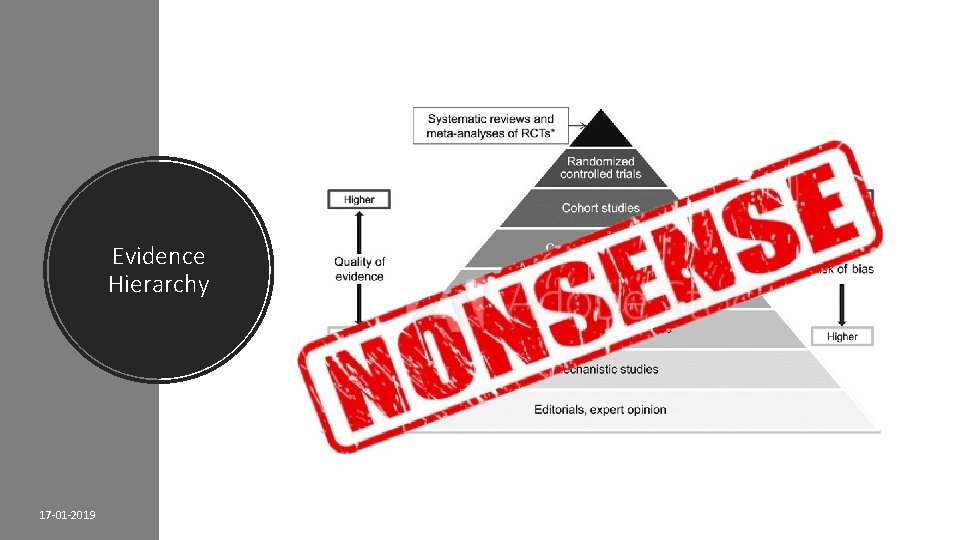
Evidence Hierarchy 17 -01 -2019
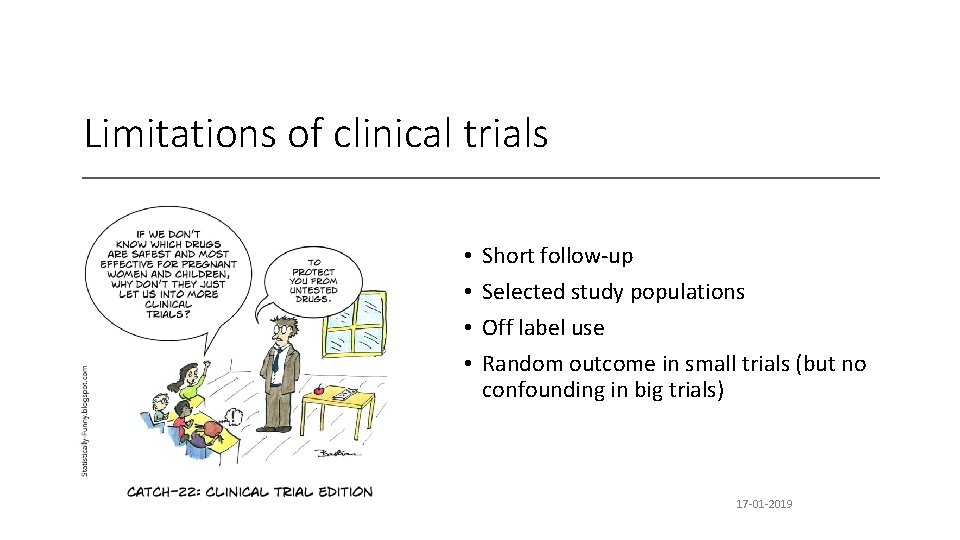
Limitations of clinical trials • • Short follow-up Selected study populations Off label use Random outcome in small trials (but no confounding in big trials) 17 -01 -2019
Conclusion • Clinical trials are not suitable for long term follow-up • Does not reflect real-life patients (only the selected study group) 17 -01 -2019
Danish data – so what? 17 -01 -2019
Danish data are pretty unique! • Long register lifetime • Population based • Government funded health care • High coverage and validity 17 -01 -2019
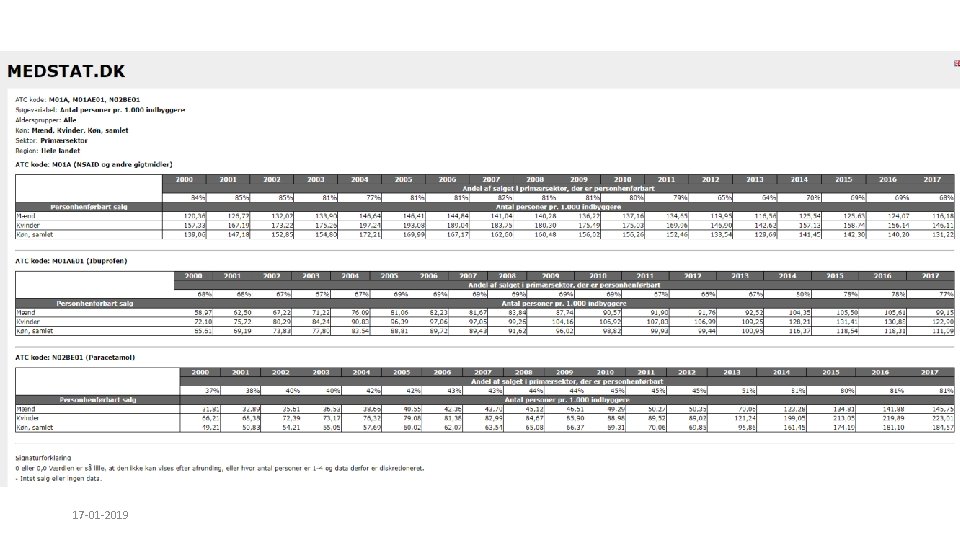
MEDSTAT. DK 17 -01 -2019
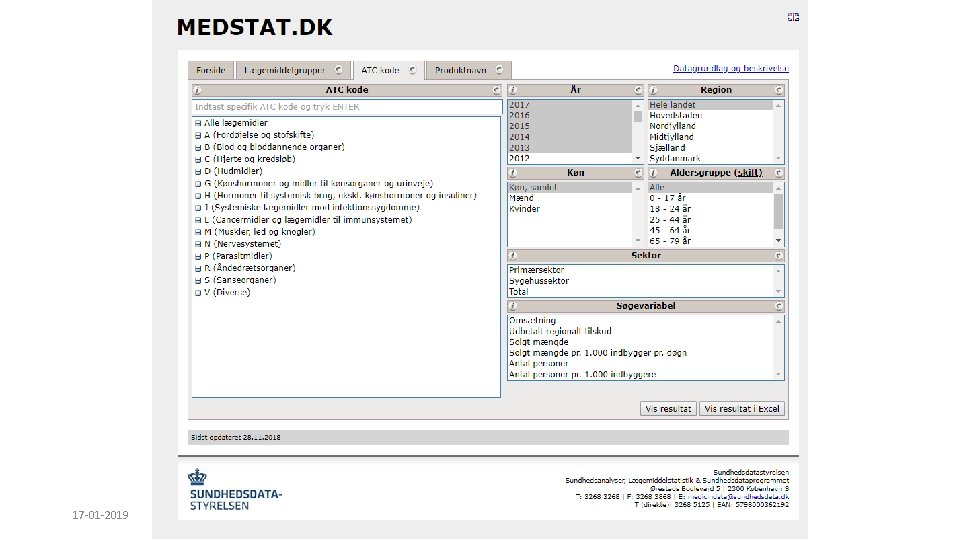
Medstat. dk • Freely available source of aggregated prescription drug statistics • Annual national aggregated sales data • Cannot describe level of individual exposure • Covers ALL sales including in hospital treatments and over the counter sales 17 -01 -2019
17 -01 -2019
Drug utilization • How much drug X is used per Danish citizen? • Among women? • In the reproductive age? • Are there differences between regions? • Estimates can be generated from aggregated sales data • Historic trend in sale • Comparison with other countries 17 -01 -2019
17 -01 -2019

17 -01 -2019
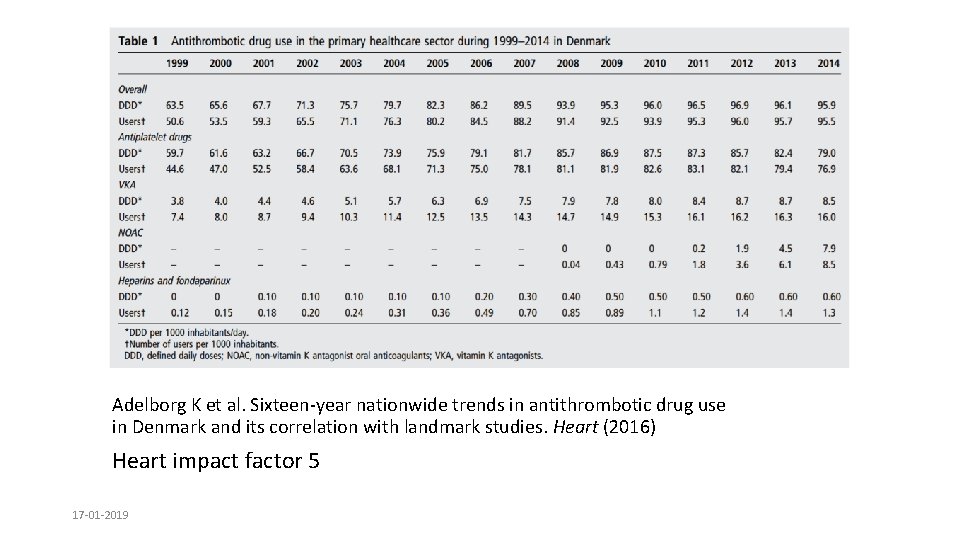
Adelborg K et al. Sixteen-year nationwide trends in antithrombotic drug use in Denmark and its correlation with landmark studies. Heart (2016) Heart impact factor 5 17 -01 -2019
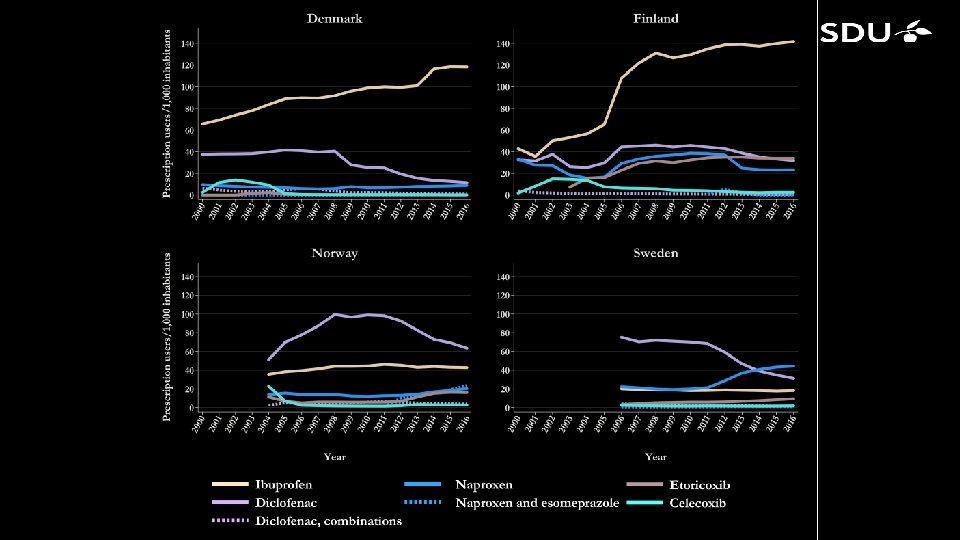
Nonaspirin Nonsteroidal Antiinflammatory Drug Use in the Nordic Countries from a Cardiovascular Risk Perspective, 2000– 2016: A Drug Utilization Study Kasper Bruun Kristensen, Øystein Karlstad, Jaana E. Martikainen, Anton Pottegård, Jonas W. Wastesson, Helga Zoega & Morten Schmidt kaskristensen@health. sdu. dk 17 -01 -2019
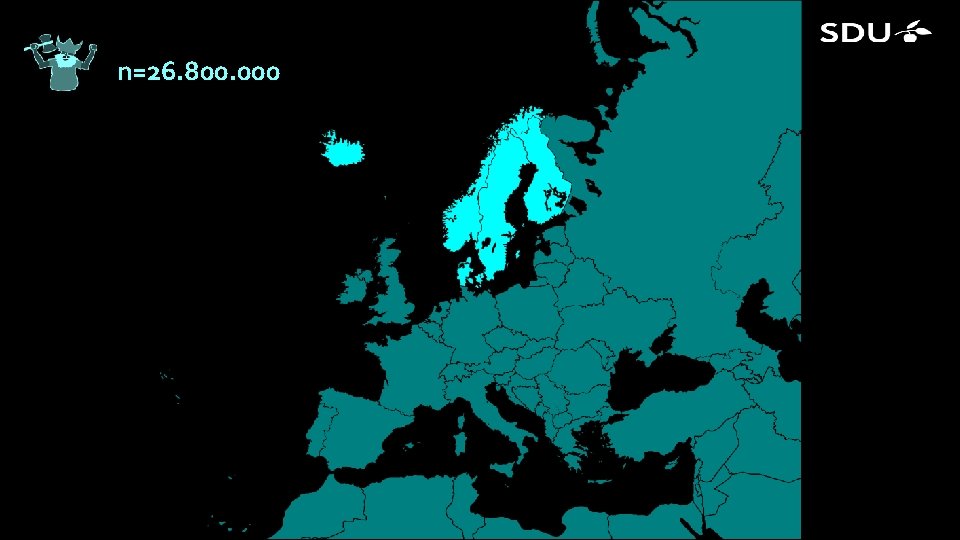
n=26. 800. 000 24
25
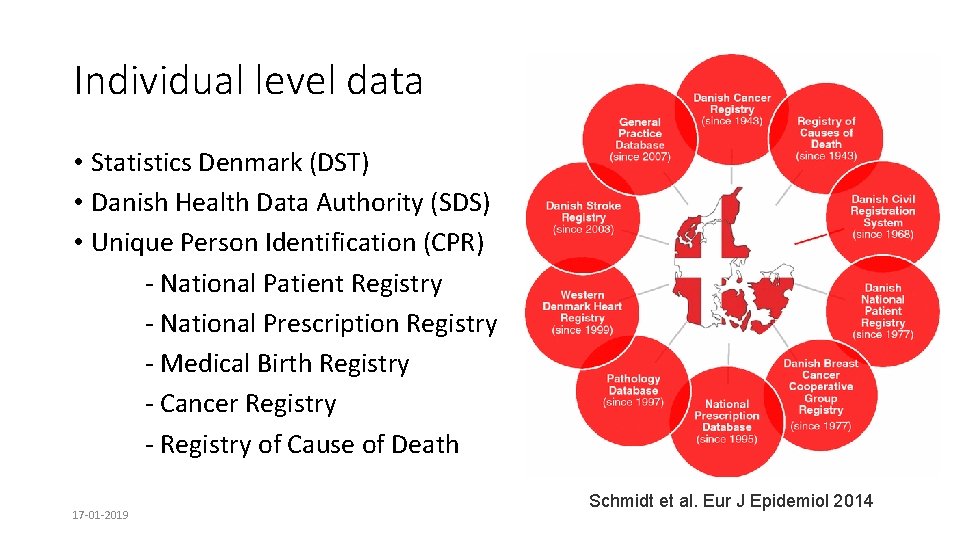
Individual level data • Statistics Denmark (DST) • Danish Health Data Authority (SDS) • Unique Person Identification (CPR) - National Patient Registry - National Prescription Registry - Medical Birth Registry - Cancer Registry - Registry of Cause of Death 17 -01 -2019 Schmidt et al. Eur J Epidemiol 2014

http: //www. dsfe. dk/danish-registries/ 17 -01 -2019
- Slides: 27