
Workshop 2 Exploring My Power and Privilege www

- Slides: 15
Workshop 2: Exploring My Power and Privilege www. seedifferent. ca
Community Commitments • • • Listening Right to Pass Appreciation Confidentiality Speak for Yourself Right to “Ouch”
Key Points from Workshop 1 • We all have diverse talents, skills and experiences. • Canada is a diverse country. This diversity brings numerous challenges and assets to society. • Diversity is a fact. Inclusion is a choice/action. • We all have complex identities, consisting of visible and invisible components.
Equality vs. Equity Classroom Scenarios Scenario A: Lisa has a diagnosed learning disability. She requires more time to write tests. Some students complain that it isn’t fair that she gets more time. Discussion with a partner: 1) Is it fair Lisa gets more time? Why or why not?
Equality vs. Equity Classroom Scenarios Scenario B: Ms. K reminds students that everyone is required to show up to class on time, at 9: 00 am sharp. Mark lives farther away than everyone else. He asks Ms. K if he can be given an exception to the rule and be allowed to come to class at 9: 15 am. Discussion with your table group: 1) Is it fair that Mark be given an exception to the rule? Why or why not?
Discussion • When is it appropriate to apply the same rule to everyone (Scenario B) and when is it appropriate to offer an accommodation (Scenario A)? • What would the consequences be if Lisa was treated the same as everyone else?
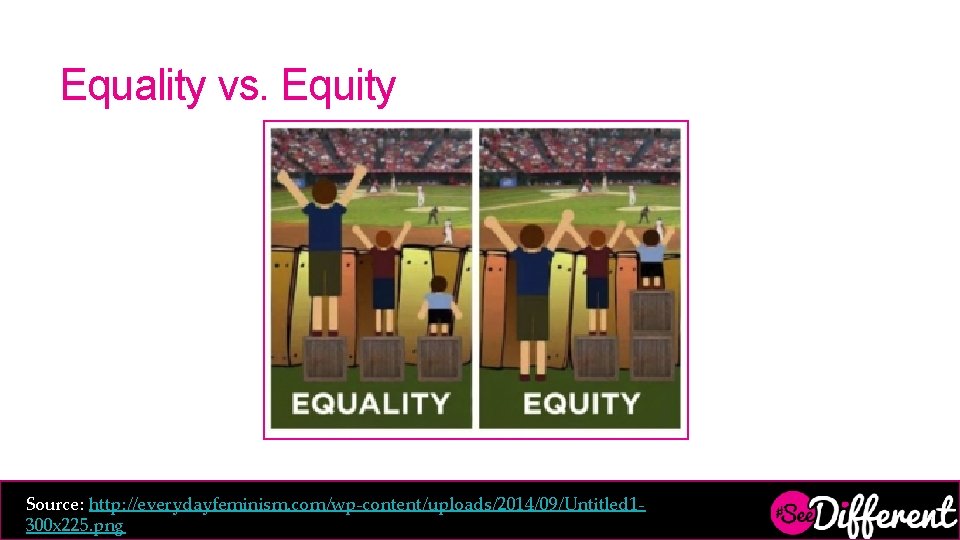
Equality vs. Equity Source: http: //everydayfeminism. com/wp-content/uploads/2014/09/Untitled 1300 x 225. png
Equality vs. Equity 1 2 Source: https: //twitter. com/cechr_uod/status/731046018633060352 3
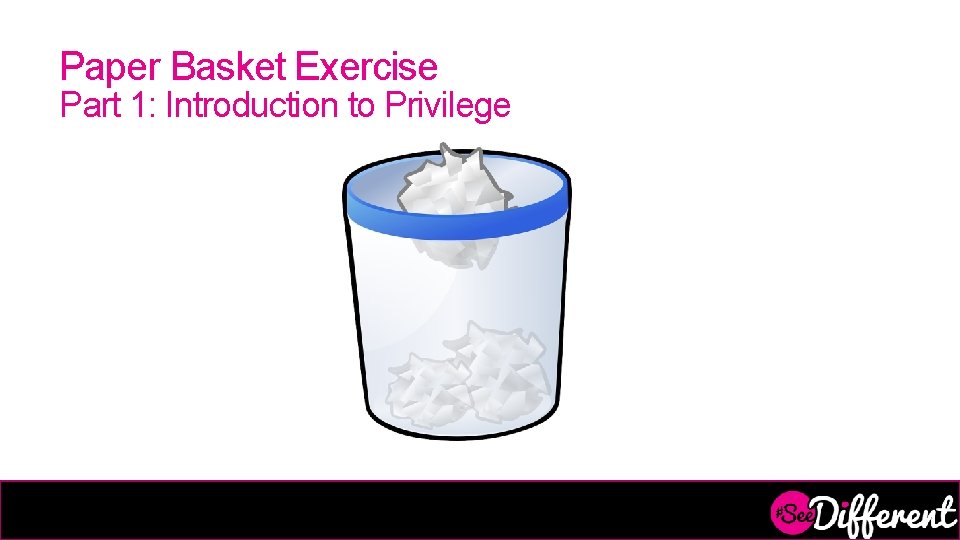
Paper Basket Exercise Part 1: Introduction to Privilege
Paper Basket Exercise Part 2: Scenarios
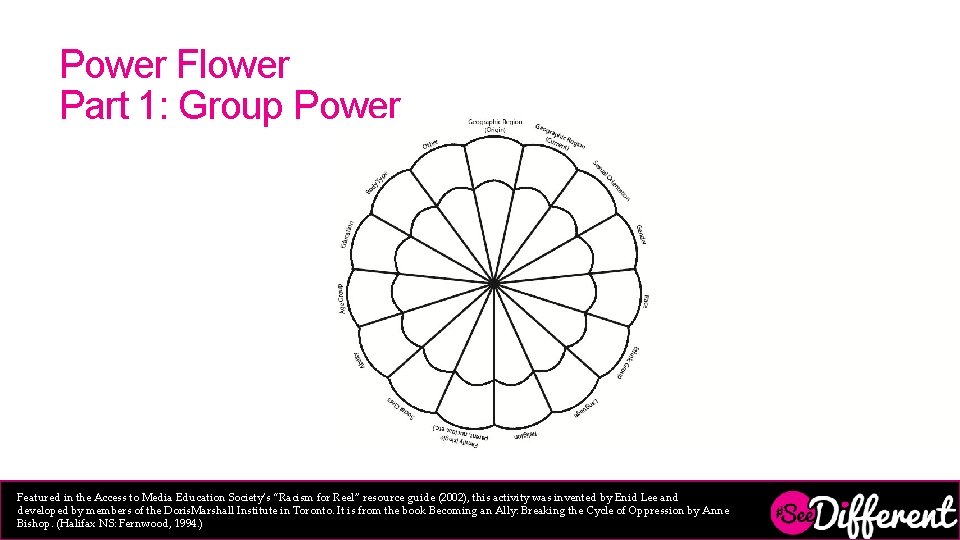
Power Flower Part 1: Group Power Featured in the Access to Media Education Society’s “Racism for Reel” resource guide (2002), this activity was invented by Enid Lee and developed by members of the Doris. Marshall Institute in Toronto. It is from the book Becoming an Ally: Breaking the Cycle of Oppression by Anne Bishop. (Halifax NS: Fernwood, 1994. )
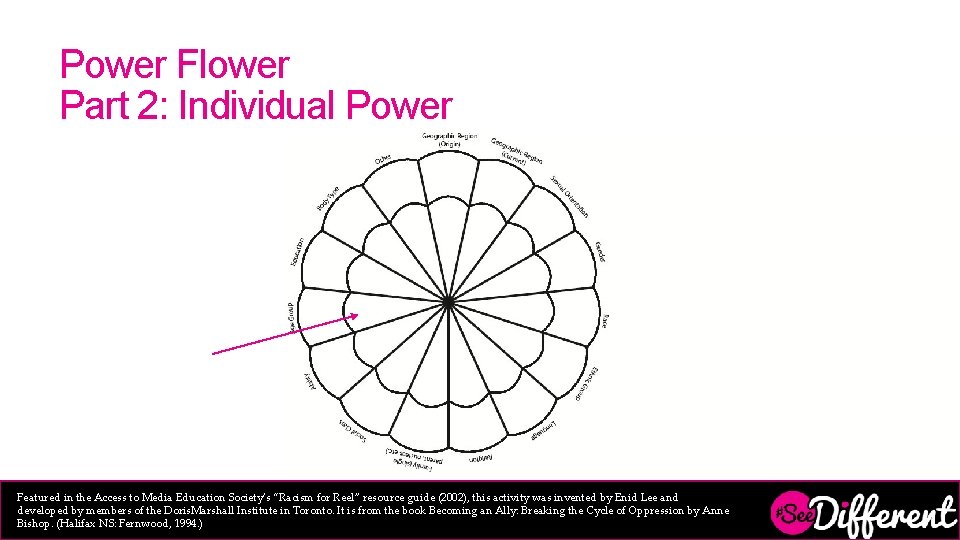
Power Flower Part 2: Individual Power Featured in the Access to Media Education Society’s “Racism for Reel” resource guide (2002), this activity was invented by Enid Lee and developed by members of the Doris. Marshall Institute in Toronto. It is from the book Becoming an Ally: Breaking the Cycle of Oppression by Anne Bishop. (Halifax NS: Fernwood, 1994. )
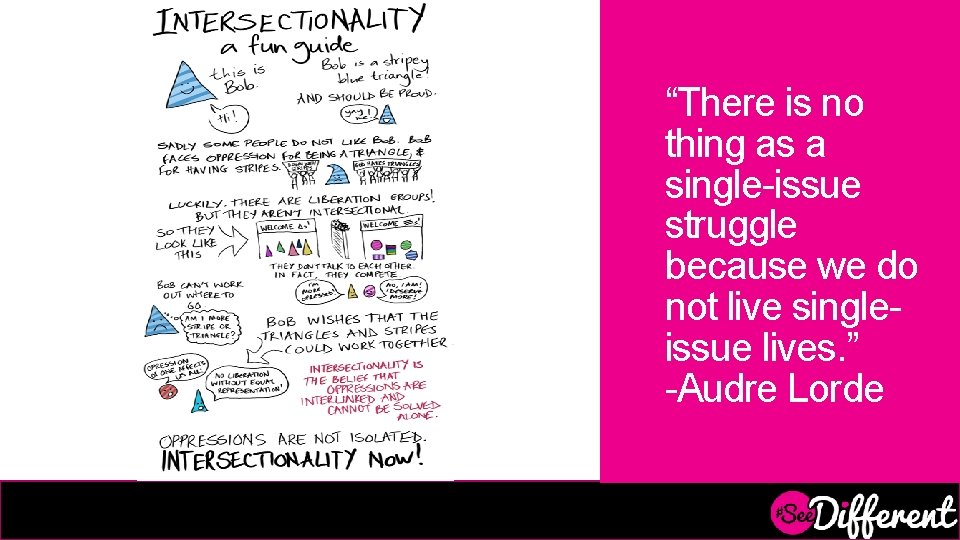
“There is no thing as a single-issue struggle because we do not live singleissue lives. ” -Audre Lorde
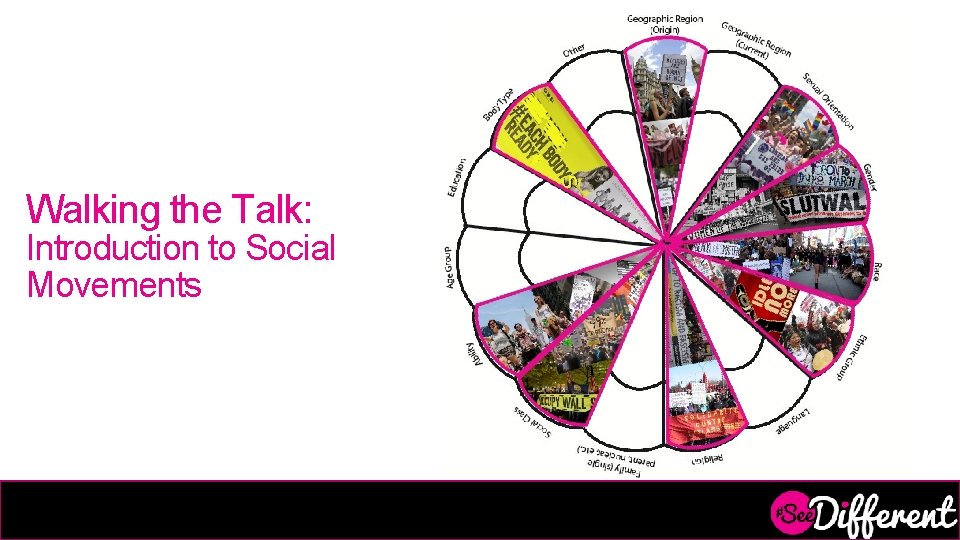
Geographic al n xu tio Se nta ie Bo dy T yp e or der Gen Walking the Talk: Race Introduction to Social Movements A li bi ty Eth G ni r ou c p Religion So cla cial ss
Key Concepts • We need to value and recognize diversity to create equity. • We need to be aware of the contextual privileges that come with our identity and work to level the playing field. • Intersectionality ought to be considered when thinking about social change. • Social movements have emerged by those who are working towards equity. • Social media has an important role in contemporary social movements.