
Workplace Violence Issues WHY DO PEOPLE TURN VIOLENT
- Slides: 40
Workplace Violence Issues
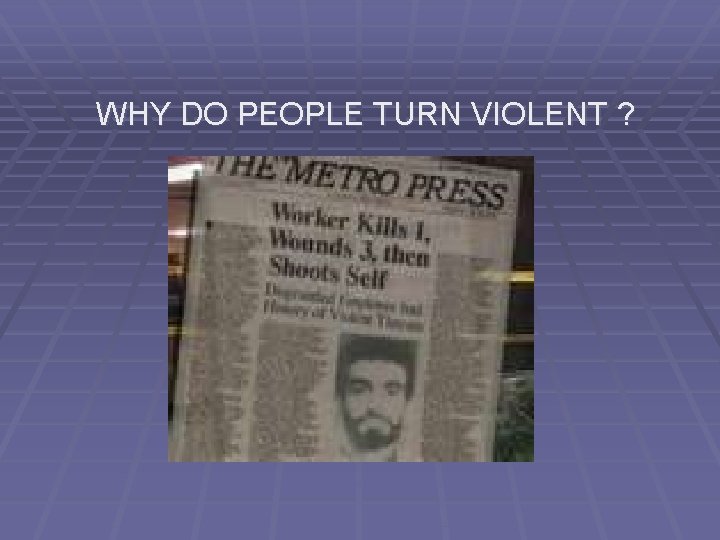
WHY DO PEOPLE TURN VIOLENT ?
§ Personal Life § Work Related Stress § Anxiety § Feeling out of Control § Hostility § Mental Illness
Clear Warning Signs 85% of Cases Had Warning Signs Recognizable Behavioral Patterns § § § Violent or threatening behavior Performance Issues Emotional matters Relationship difficulties External influences of frustration
Primary Failure of Organizations § Failure to Acknowledge Potential § Failure to Recognize Threats Two Organizations Myths It Can’t Happen here It Can’t Be Prevented
National Homicide Statistics First cause of death for women Second leading cause of death for all workers – 2 nd to motor vehicle deaths Third leading cause of death for men at work
Homicide Statistics § 76% of All Workplace Homicides are Committed with a Firearm § 71% of All Workplace Homicides are Robbery-Related Crimes § 9% Committed by Coworkers or Former Coworkers § Majority are Believed to Occur Among People who do not Know Each Other
Assaults Statistics § Estimated 1 million workers are victims of nonfatal work place assaults each year Most common - simple assaults Aggravated assaults Rapes and sexual assaults Robberies
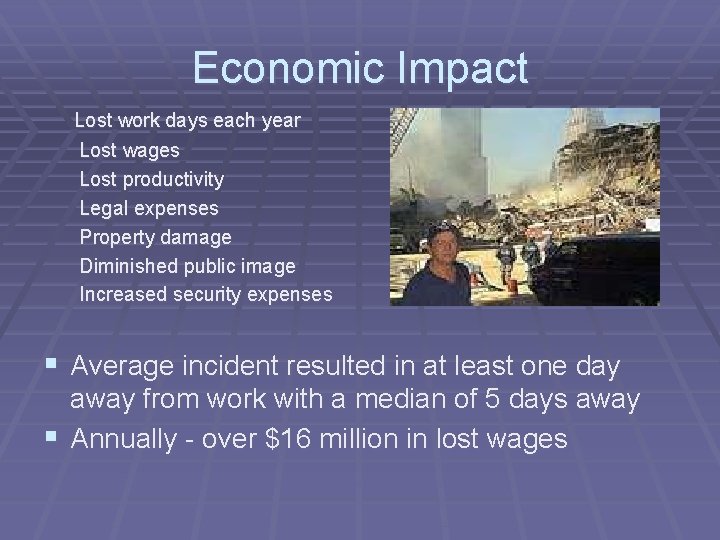
Economic Impact Lost work days each year Lost wages Lost productivity Legal expenses Property damage Diminished public image Increased security expenses § Average incident resulted in at least one day away from work with a median of 5 days away § Annually - over $16 million in lost wages
Definition Workplace Violent acts, including physical assaults and threats of assault, directed towards persons at work or on duty
Types of Violence § § § Beatings Stabbings § Threats or obscene phone § § § Near Suicides § Being followed, sworn, or shouted at§ Suicides Shootings calls Intimidation Harassment of any nature Rapes Psychological traumas Acts of sabotage/vandalism
Workplace Violence Categories § Type One - trespasser/criminal intent § Type Two - current customer or client § Type Three - someone with a previous involvement with an employee, i. e. worker on worker § Type Four - someone with a personal relationship with an employee, i. e. domestic violence
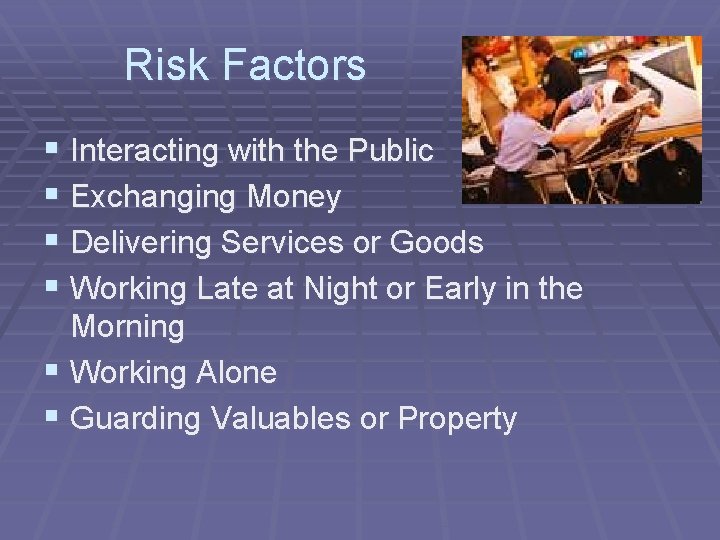
Risk Factors § Interacting with the Public § Exchanging Money § Delivering Services or Goods § Working Late at Night or Early in the Morning § Working Alone § Guarding Valuables or Property
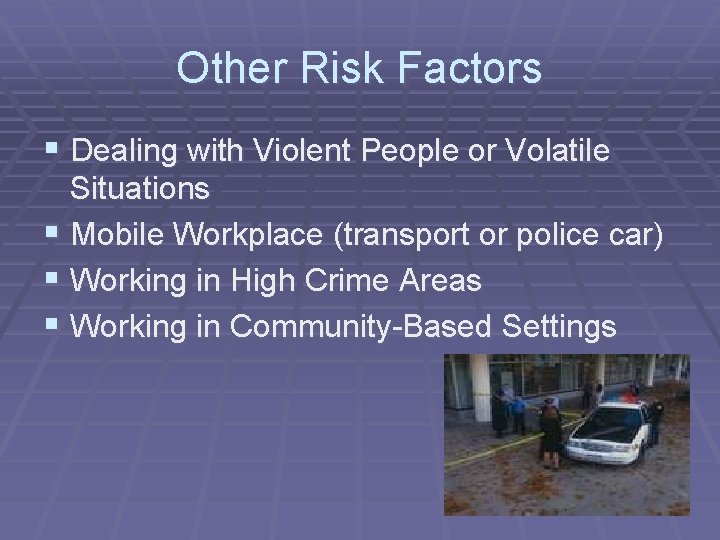
Other Risk Factors § Dealing with Violent People or Volatile Situations § Mobile Workplace (transport or police car) § Working in High Crime Areas § Working in Community-Based Settings
More Risk Factors § Prevalence of Weapons § Increasing Number of Acute and Chronically Mentally Ill Patients Being Released From Hospitals Without Followup Care § Availability of Drugs or Money - Likely Robbery Target
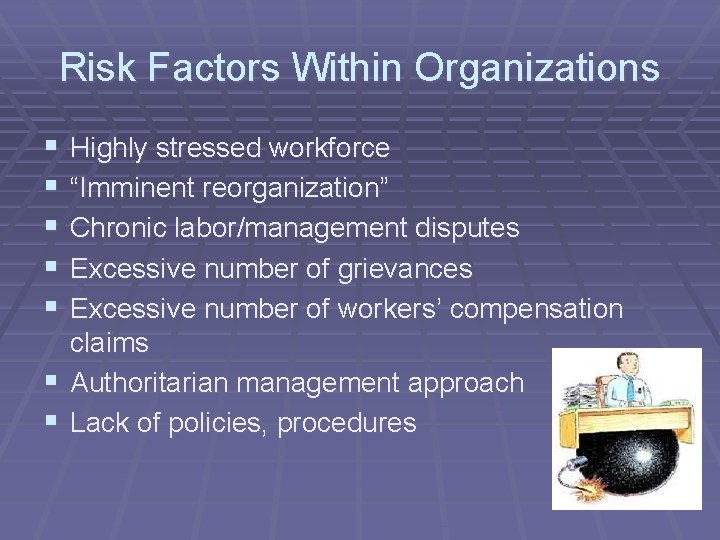
Risk Factors Within Organizations § § § Highly stressed workforce “Imminent reorganization” Chronic labor/management disputes Excessive number of grievances Excessive number of workers’ compensation claims § Authoritarian management approach § Lack of policies, procedures
Human Factors & Issues § Human Resources Issue/Security Issue § Mental health issues § HIPPA issues confuse the issue § Hiring & firing within legal guidelines
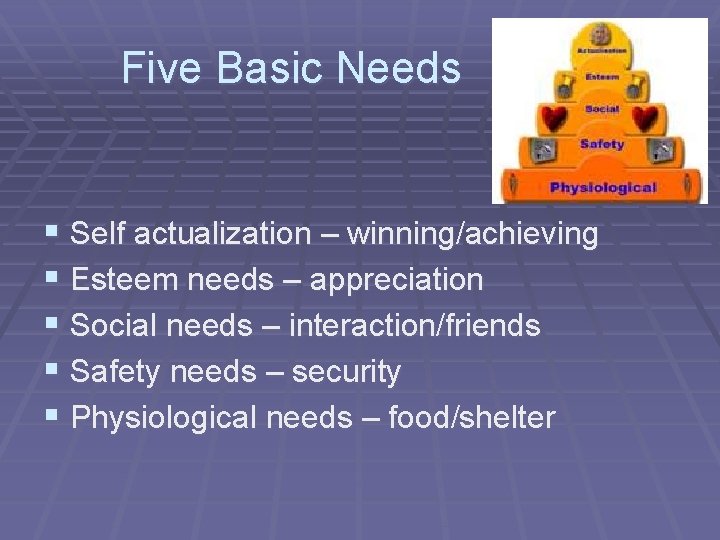
Five Basic Needs § Self actualization – winning/achieving § Esteem needs – appreciation § Social needs – interaction/friends § Safety needs – security § Physiological needs – food/shelter
Prevention Strategies Understanding the Elements of Human Behavior Desire to Achieve vs. Ability to Achieve Attending to needs of individuals will benefit the organization as a whole
Early Warning Signs § Highly stressed individual § Negative and recent change in behavior § Frequent disputes with supervisor § Routine violation of organization’s policies § Increased absenteeism § Obsessive behavior
Early Warning Signs § § § Substance abuse Depression/suicidal Isolation from others Emotional outburst out of the ordinary Verbal threats or threatening body language *One or two of these do not necessarily indicate early warning of violence*
Prevention Strategies for Minimizing Risk § Cash Handling Policies § Physical Separation of Workers from Customers § Good Lighting § Security Devices § Escort Services § Employee Training
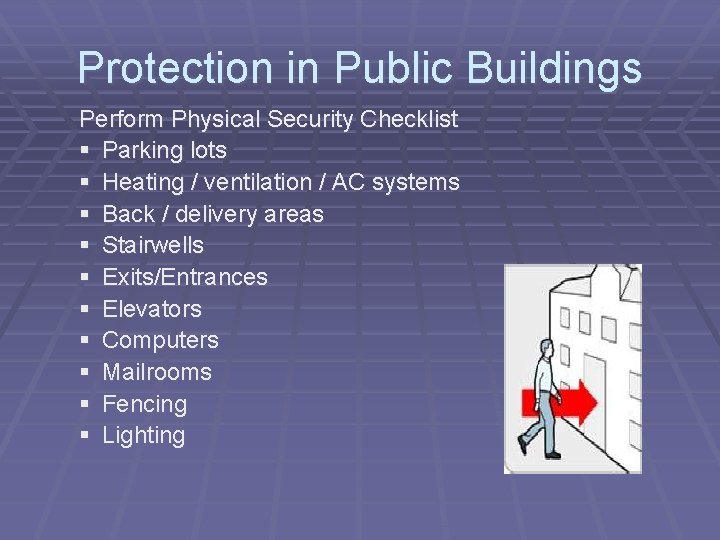
Protection in Public Buildings Perform Physical Security Checklist § Parking lots § Heating / ventilation / AC systems § Back / delivery areas § Stairwells § Exits/Entrances § Elevators § Computers § Mailrooms § Fencing § Lighting
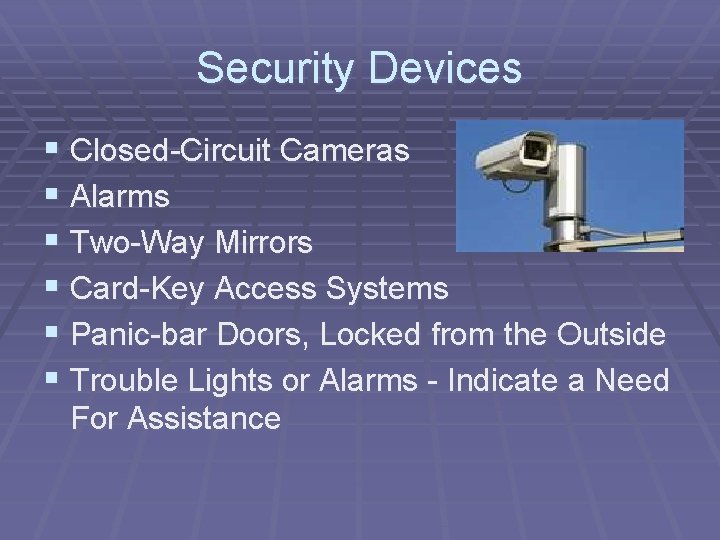
Security Devices § Closed-Circuit Cameras § Alarms § Two-Way Mirrors § Card-Key Access Systems § Panic-bar Doors, Locked from the Outside § Trouble Lights or Alarms - Indicate a Need For Assistance
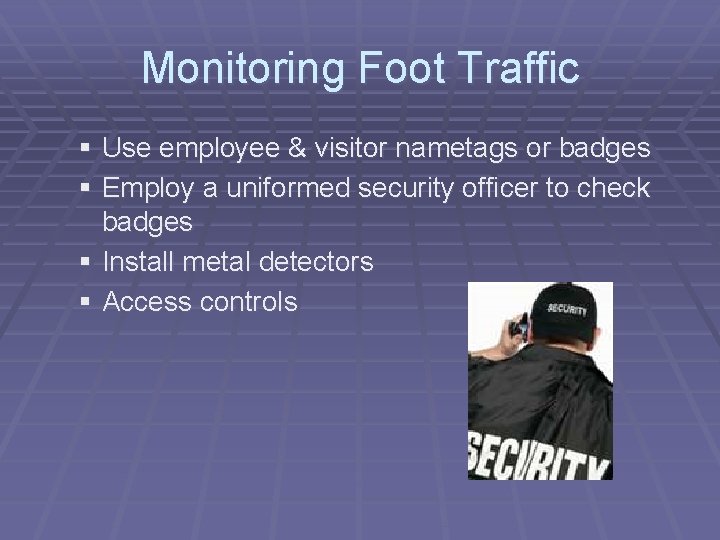
Monitoring Foot Traffic § Use employee & visitor nametags or badges § Employ a uniformed security officer to check badges § Install metal detectors § Access controls
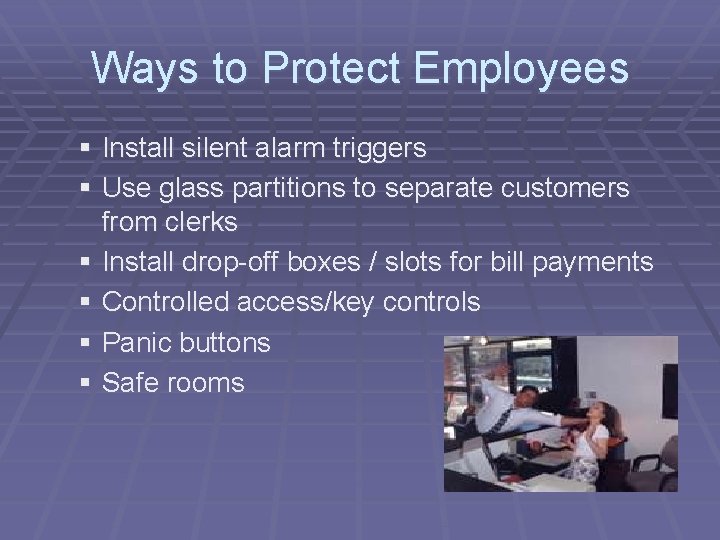
Ways to Protect Employees § Install silent alarm triggers § Use glass partitions to separate customers from clerks § Install drop-off boxes / slots for bill payments § Controlled access/key controls § Panic buttons § Safe rooms
Emerging Risk Police Policies & Procedures How to react to mentally disabled and emotionally disturbed
How Employees Can Help § Notify security if someone seems out of place § Report suspicious mail § Remember descriptive details about an intruder § Log off your computer when you leave workstation § Never open email from someone you don’t know § Keep workplace organized
Communicate New Procedures § Post Incident changes/re-training § Signage/Websites/Help Lines for public § Annual reviews on policies
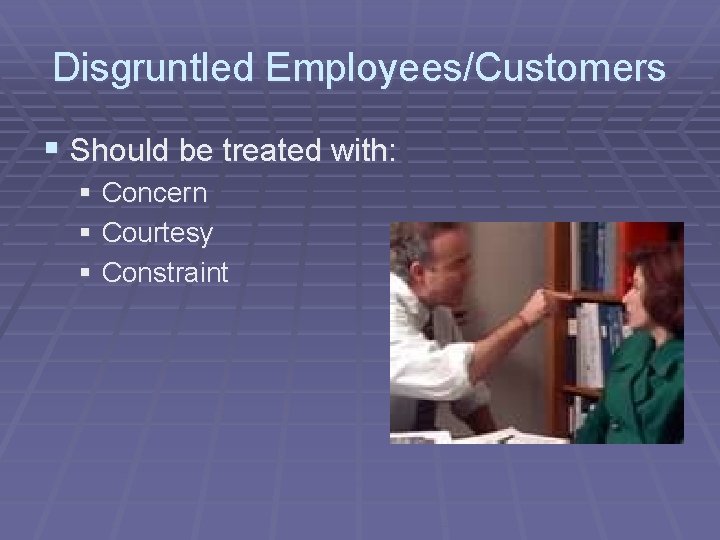
Disgruntled Employees/Customers § Should be treated with: § Concern § Courtesy § Constraint
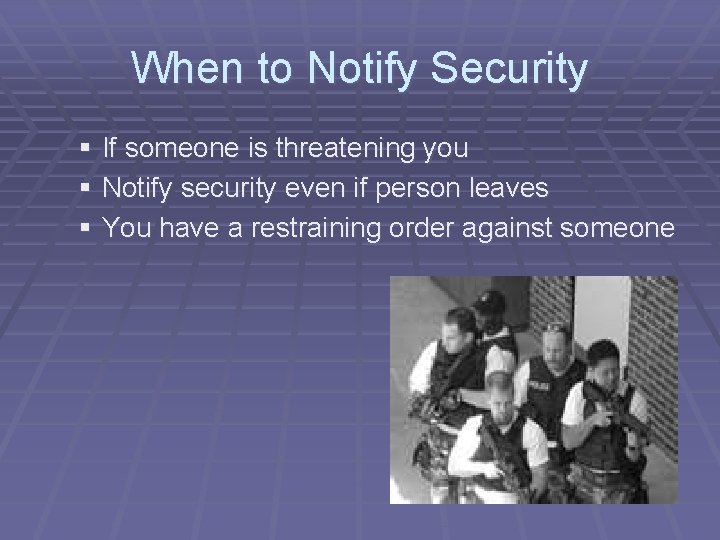
When to Notify Security § If someone is threatening you § Notify security even if person leaves § You have a restraining order against someone
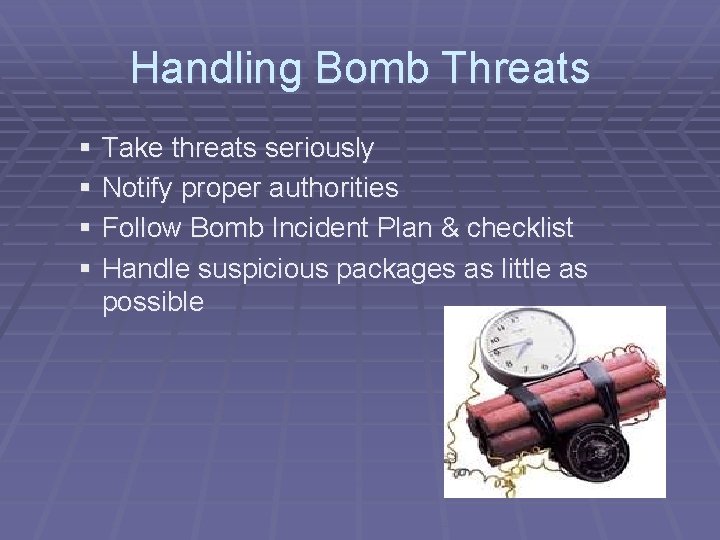
Handling Bomb Threats § Take threats seriously § Notify proper authorities § Follow Bomb Incident Plan & checklist § Handle suspicious packages as little as possible
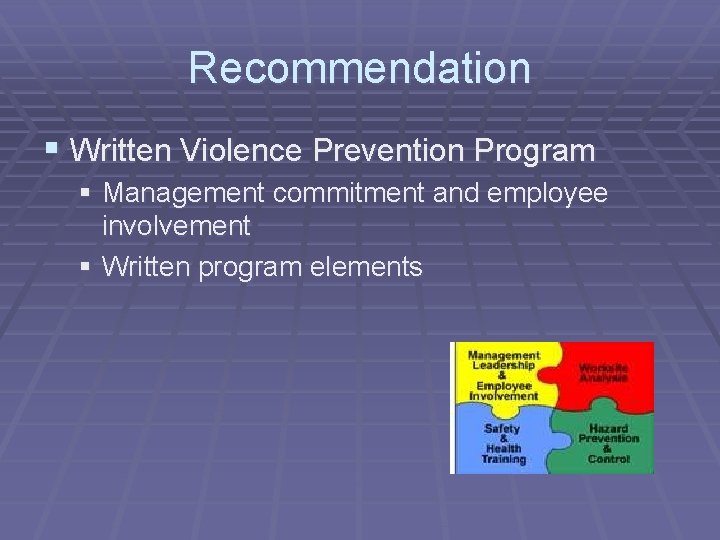
Recommendation § Written Violence Prevention Program § Management commitment and employee involvement § Written program elements
Policy Development Issues § Security vs. Open-Door Policies § Pre-Employment Screening or Testing § Employee Understanding of Concealed Weapon Laws § Privacy Issues § domestic relationships § mental status (depression, suicidal, etc. ) § Employer’s Duty to Protect Worker
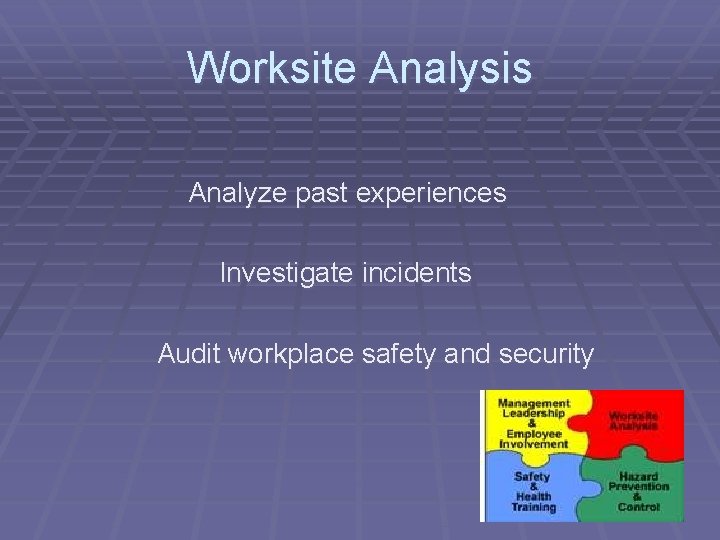
Worksite Analysis Analyze past experiences Investigate incidents Audit workplace safety and security
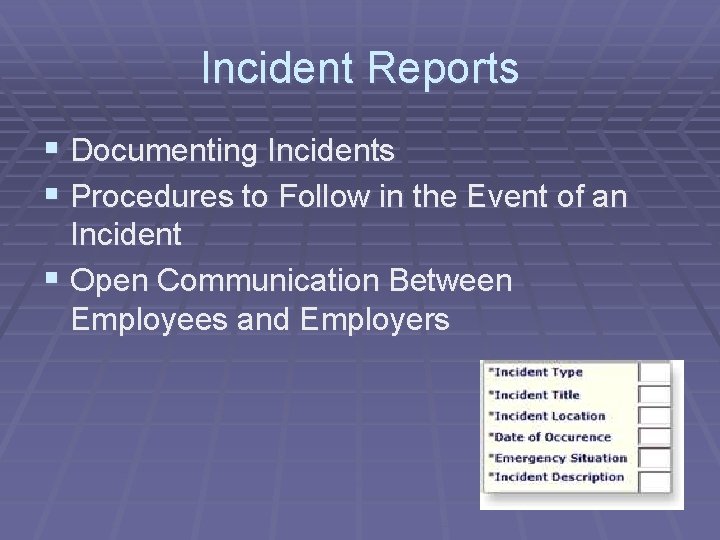
Incident Reports § Documenting Incidents § Procedures to Follow in the Event of an Incident § Open Communication Between Employees and Employers
Anxiety-Free Reporting System § Educate employees regarding the need for a system § Have employees tell you what they need to make a system work § Train employees in the details of the system
Controls for Workplace Violence 1. Set up a multi-disciplinary “violence control” team 2. Perform a needs assessment 3. Evaluate policy and procedure 4. Develop emergency plans 5. Train staff to appropriate level & drill 6. Set up “early warning” system 7. Test the system and adjust
AMIC/MWCF Video Resources § Managing the Anger To Prevent the Violence § Public Building Security § Violence in the Workplace (Part 1, Part 2) § Workplace Violence § I Could Have Saved a Life That Day § Violence in the Workplace
Website Resources § AMIC/MWCF www. alalm. org § www. osha. gov § www. fbi. gov § www. cdc. gov/niosh § www. workplaceviolence 911. com/ § www. opm. gov § www. bls. gov