
Workplace Hazardous Materials Information System The Three Components
- Slides: 12
Workplace Hazardous Materials Information System
The Three Components of WHMIS • • •
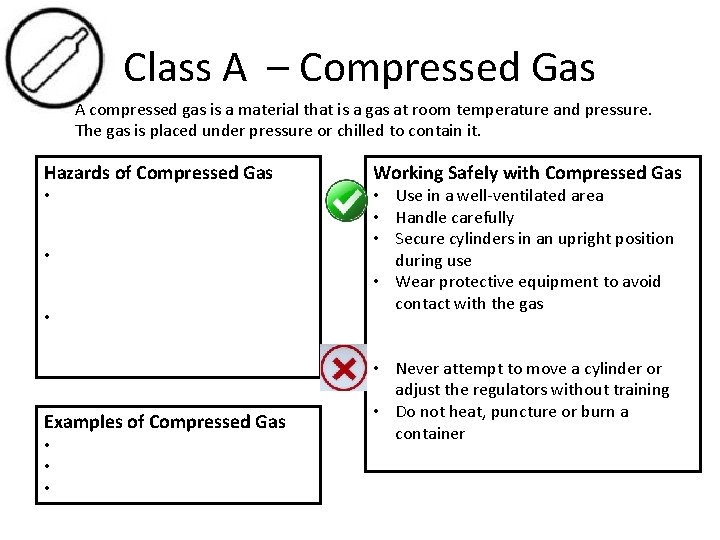
Class A – Compressed Gas A compressed gas is a material that is a gas at room temperature and pressure. The gas is placed under pressure or chilled to contain it. Hazards of Compressed Gas • • • Examples of Compressed Gas • • • Working Safely with Compressed Gas • Use in a well-ventilated area • Handle carefully • Secure cylinders in an upright position during use • Wear protective equipment to avoid contact with the gas • Never attempt to move a cylinder or adjust the regulators without training • Do not heat, puncture or burn a container
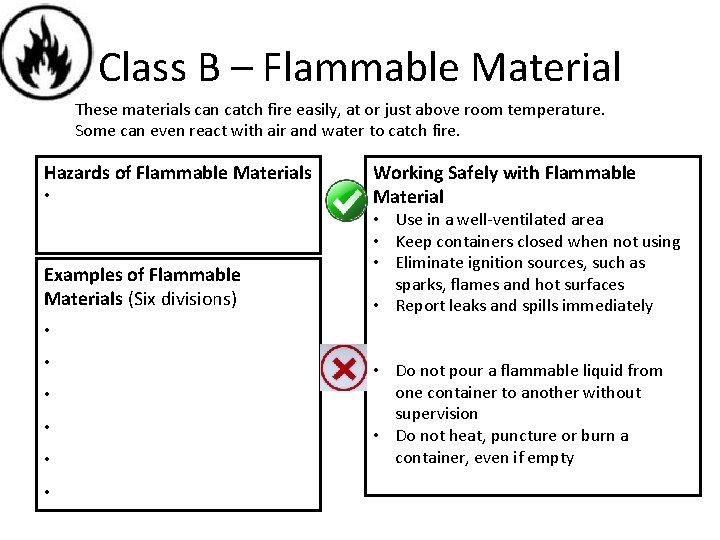
Class B – Flammable Material These materials can catch fire easily, at or just above room temperature. Some can even react with air and water to catch fire. Hazards of Flammable Materials • Examples of Flammable Materials (Six divisions) Working Safely with Flammable Material • Use in a well-ventilated area • Keep containers closed when not using • Eliminate ignition sources, such as sparks, flames and hot surfaces • Report leaks and spills immediately • • Do not pour a flammable liquid from one container to another without supervision • Do not heat, puncture or burn a container, even if empty
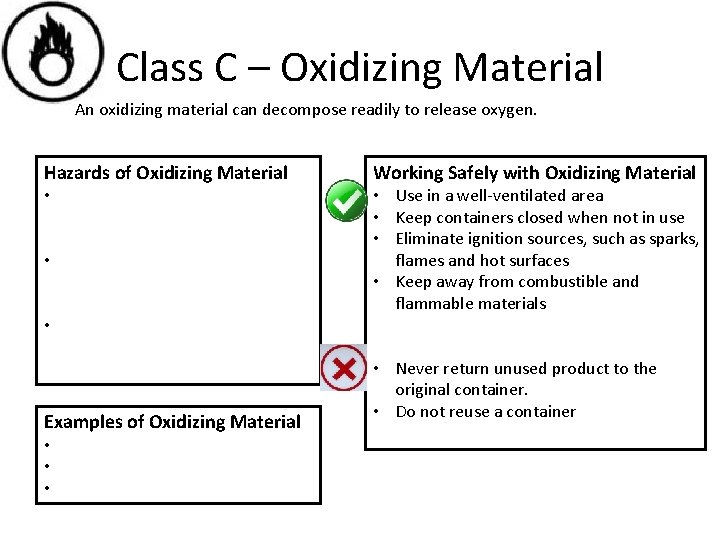
Class C – Oxidizing Material An oxidizing material can decompose readily to release oxygen. Hazards of Oxidizing Material • • Working Safely with Oxidizing Material • Use in a well-ventilated area • Keep containers closed when not in use • Eliminate ignition sources, such as sparks, flames and hot surfaces • Keep away from combustible and flammable materials • Examples of Oxidizing Material • • Never return unused product to the original container. • Do not reuse a container
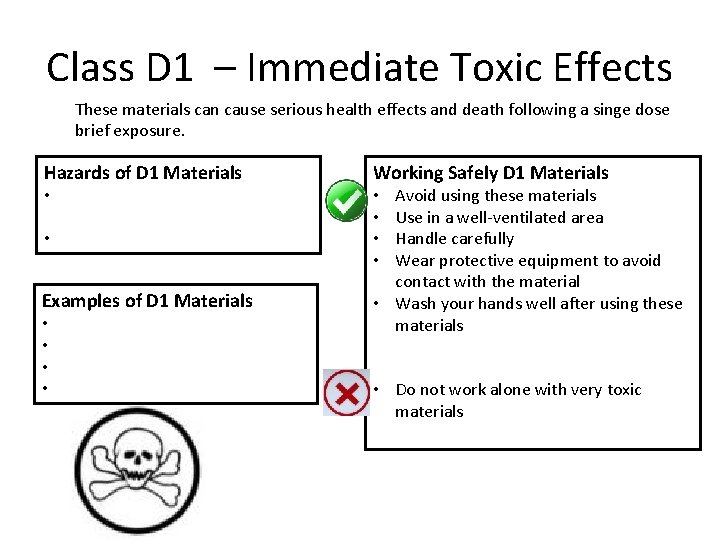
Class D 1 – Immediate Toxic Effects These materials can cause serious health effects and death following a singe dose brief exposure. Hazards of D 1 Materials Working Safely D 1 Materials • • • Examples of D 1 Materials • • Avoid using these materials Use in a well-ventilated area Handle carefully Wear protective equipment to avoid contact with the material • Wash your hands well after using these materials • Do not work alone with very toxic materials
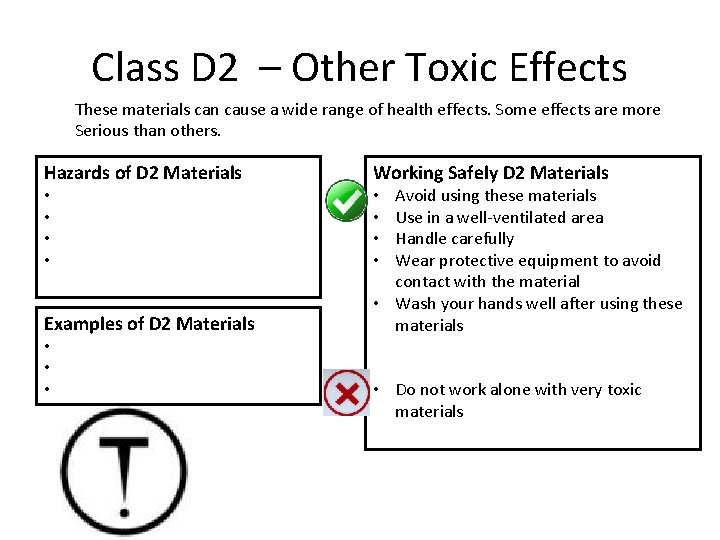
Class D 2 – Other Toxic Effects These materials can cause a wide range of health effects. Some effects are more Serious than others. Hazards of D 2 Materials Working Safely D 2 Materials • • Examples of D 2 Materials • • • Avoid using these materials Use in a well-ventilated area Handle carefully Wear protective equipment to avoid contact with the material • Wash your hands well after using these materials • Do not work alone with very toxic materials
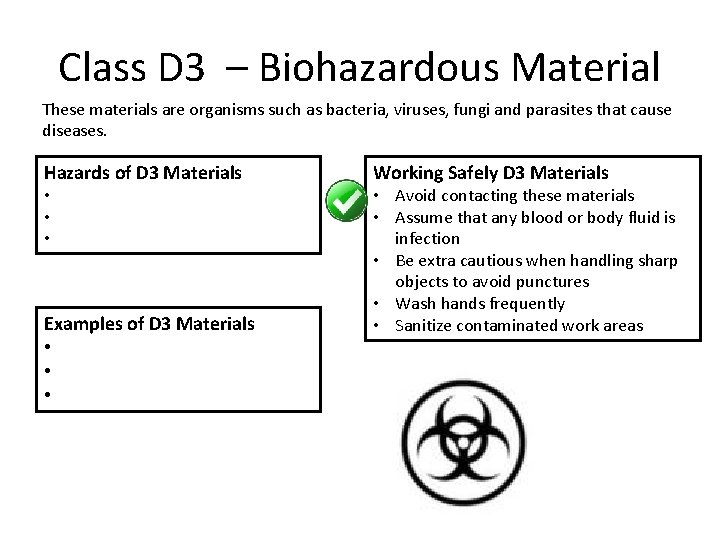
Class D 3 – Biohazardous Material These materials are organisms such as bacteria, viruses, fungi and parasites that cause diseases. Hazards of D 3 Materials • • • Examples of D 3 Materials • • • Working Safely D 3 Materials • Avoid contacting these materials • Assume that any blood or body fluid is infection • Be extra cautious when handling sharp objects to avoid punctures • Wash hands frequently • Sanitize contaminated work areas
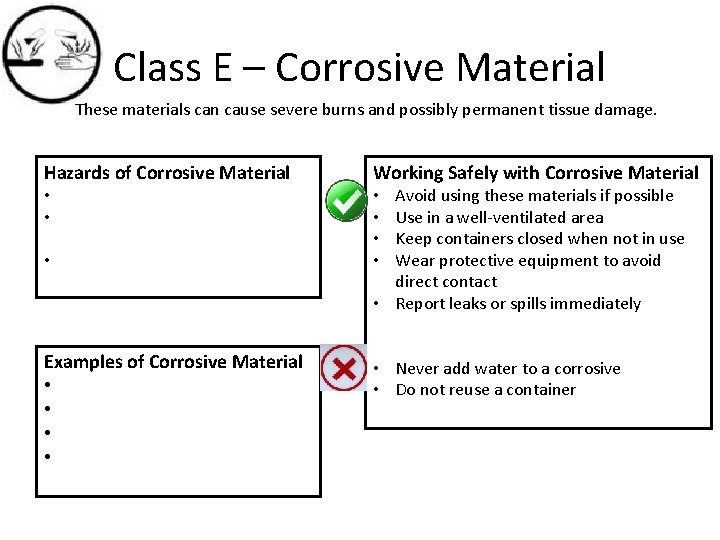
Class E – Corrosive Material These materials can cause severe burns and possibly permanent tissue damage. Hazards of Corrosive Material Working Safely with Corrosive Material • • Examples of Corrosive Material • • Avoid using these materials if possible Use in a well-ventilated area Keep containers closed when not in use Wear protective equipment to avoid direct contact • Report leaks or spills immediately • Never add water to a corrosive • Do not reuse a container
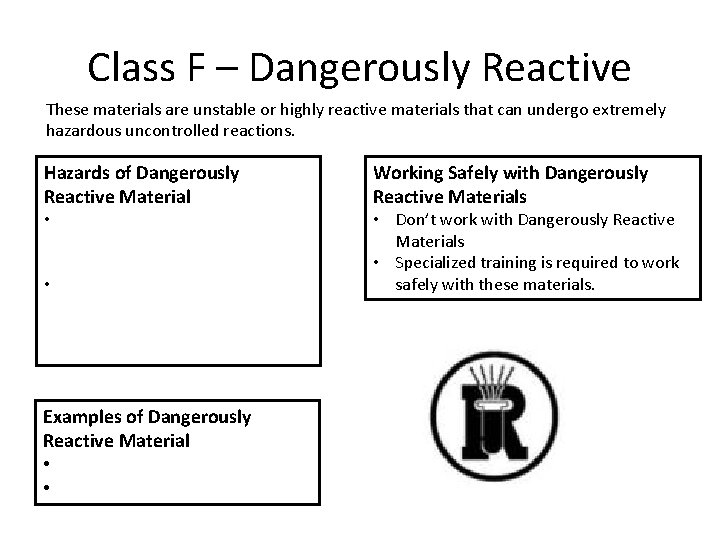
Class F – Dangerously Reactive These materials are unstable or highly reactive materials that can undergo extremely hazardous uncontrolled reactions. Hazards of Dangerously Reactive Material • • Examples of Dangerously Reactive Material • • Working Safely with Dangerously Reactive Materials • Don’t work with Dangerously Reactive Materials • Specialized training is required to work safely with these materials.
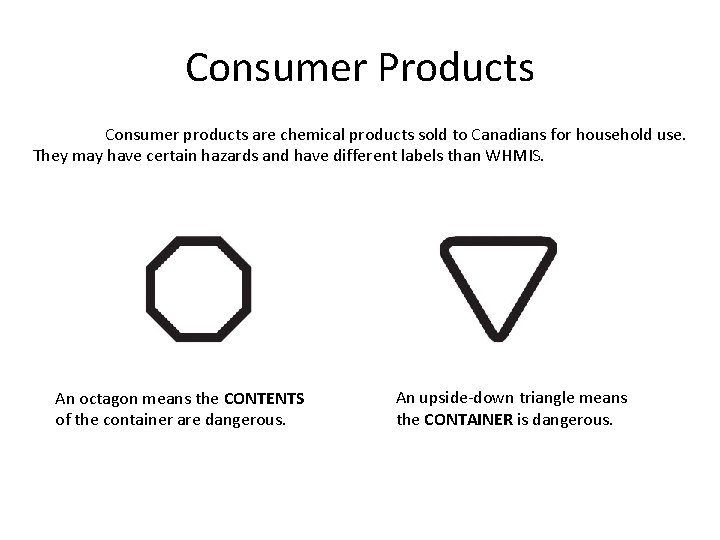
Consumer Products Consumer products are chemical products sold to Canadians for household use. They may have certain hazards and have different labels than WHMIS. An octagon means the CONTENTS of the container are dangerous. An upside-down triangle means the CONTAINER is dangerous.
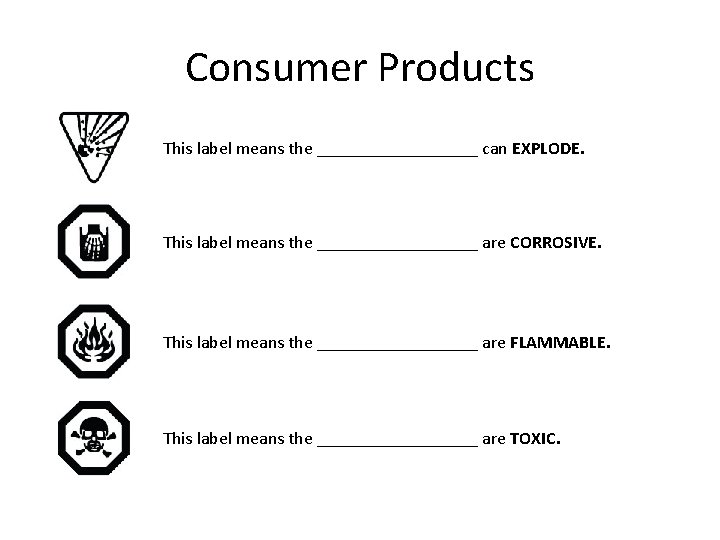
Consumer Products This label means the _________ can EXPLODE. This label means the _________ are CORROSIVE. This label means the _________ are FLAMMABLE. This label means the _________ are TOXIC.