
WORKPLACE DIVERSITY MULTIPLE GENERATIONS ETHICS CULTURAL DIFFERENCES 1
![2. Managing complexity FOUR GENERATIONS AT THE WORK PLACE* • Baby Boomer* [colonial/independence] (1946](https://slidetodoc.com/presentation_image/67095b0d076ba99f15238a27d950956d/image-18.jpg "2. Managing complexity FOUR GENERATIONS AT THE WORK PLACE* • Baby Boomer* [colonial/independence] (1946")
- Slides: 30
WORKPLACE DIVERSITY: MULTIPLE GENERATIONS, ETHICS & CULTURAL DIFFERENCES 1 ST INTERNATIONAL HR CONVENTION – Arusha, Tanzania ‘Think Regionally, Act Locally: People First. ’ Kap Kirwok
OUTLINE WORKPLACE DIVERSITY 1. MAPPING THE TERRAIN: A JOURNEY INTO INFINITY 2. MULTIPLE DIMENSIONS: MANAGING COMPLEXITY 3. PERSONAL ANECTODES ; STORIES 4. OUTLOOK: TECHNOLOGY, PSYCHOLOGY & GEOGRAPHY
I. A Journey to infinity JUST TO BE CLEAR… WORKPLACE DIVERSITY IS MORE THAN ABOUT MULTIPLE GENERATIONS, ETHICS AND CULTURAL DIFFERENCES
Before we can manage diversity, we need to understand its… …MANY DIMENSIONS
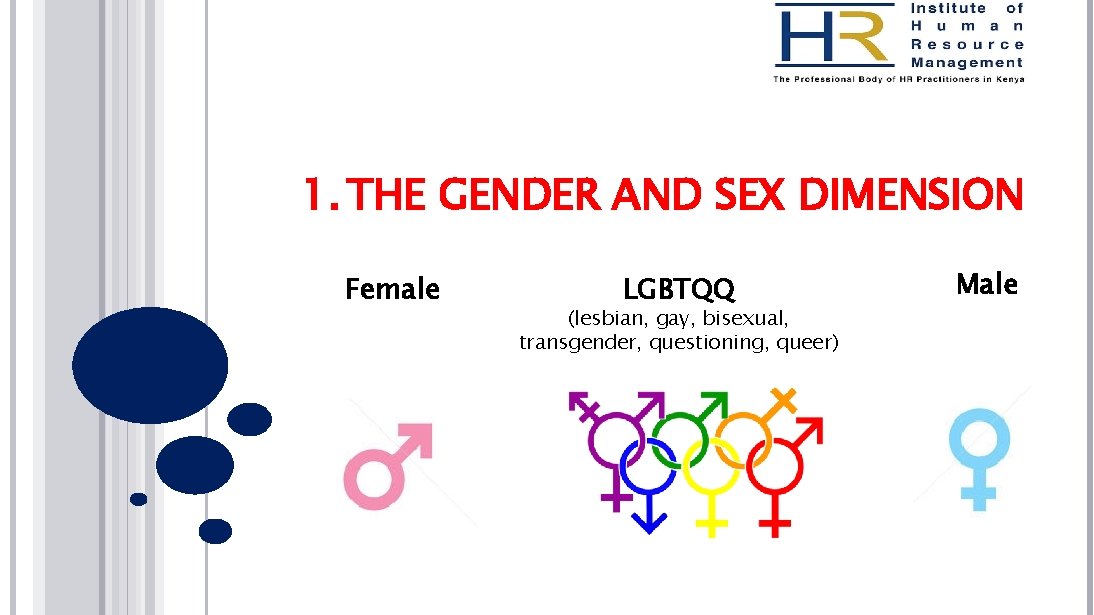
1. THE GENDER AND SEX DIMENSION Female LGBTQQ (lesbian, gay, bisexual, transgender, questioning, queer) Male
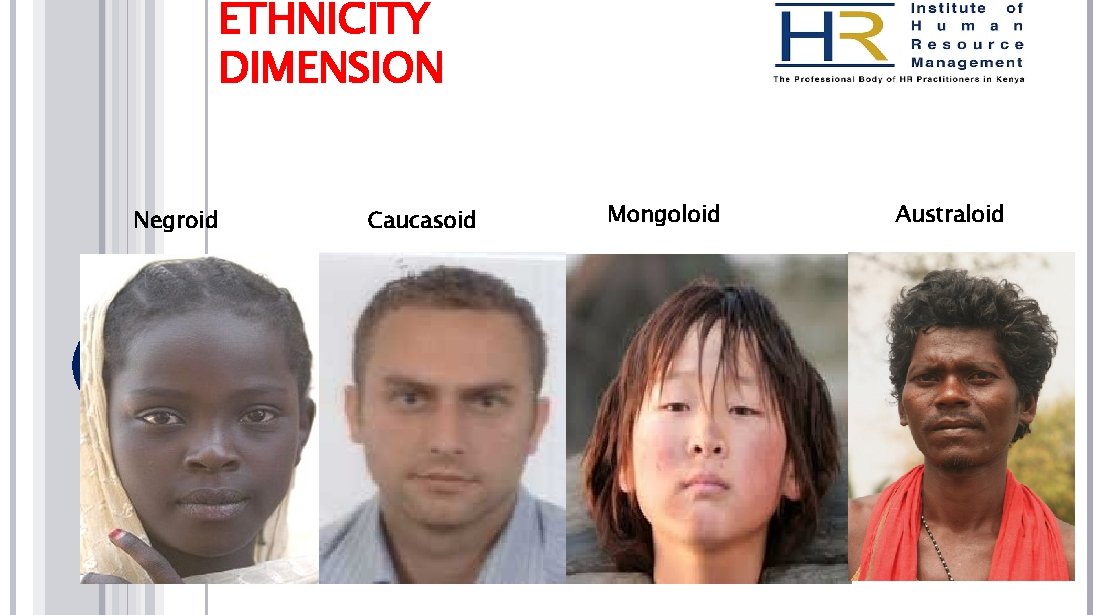
ETHNICITY DIMENSION Negroid Caucasoid Mongoloid Australoid
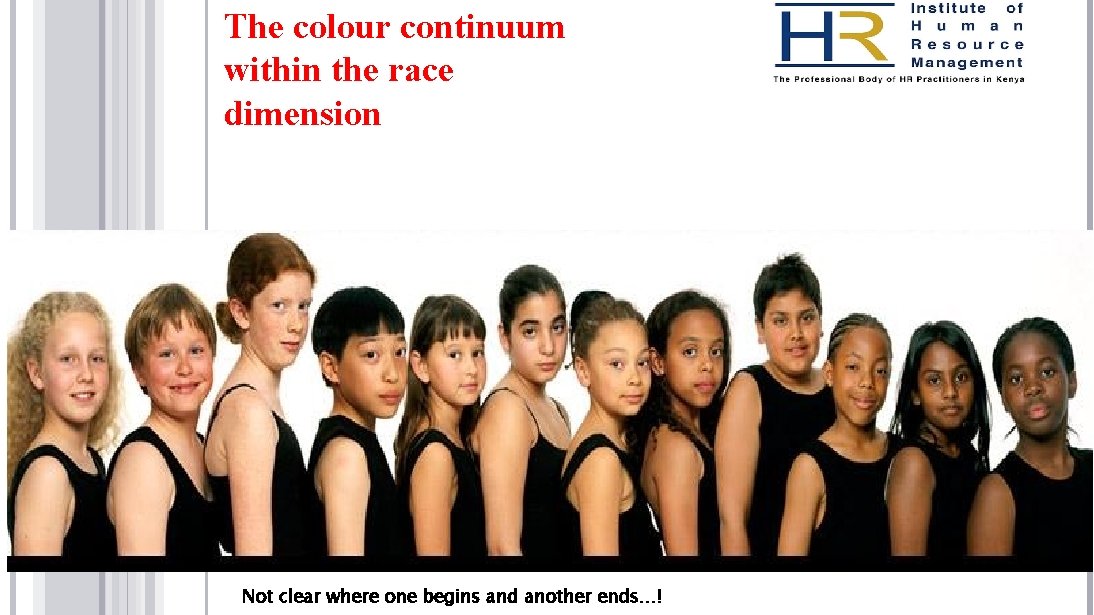
The colour continuum within the race dimension Not clear where one begins and another ends…!
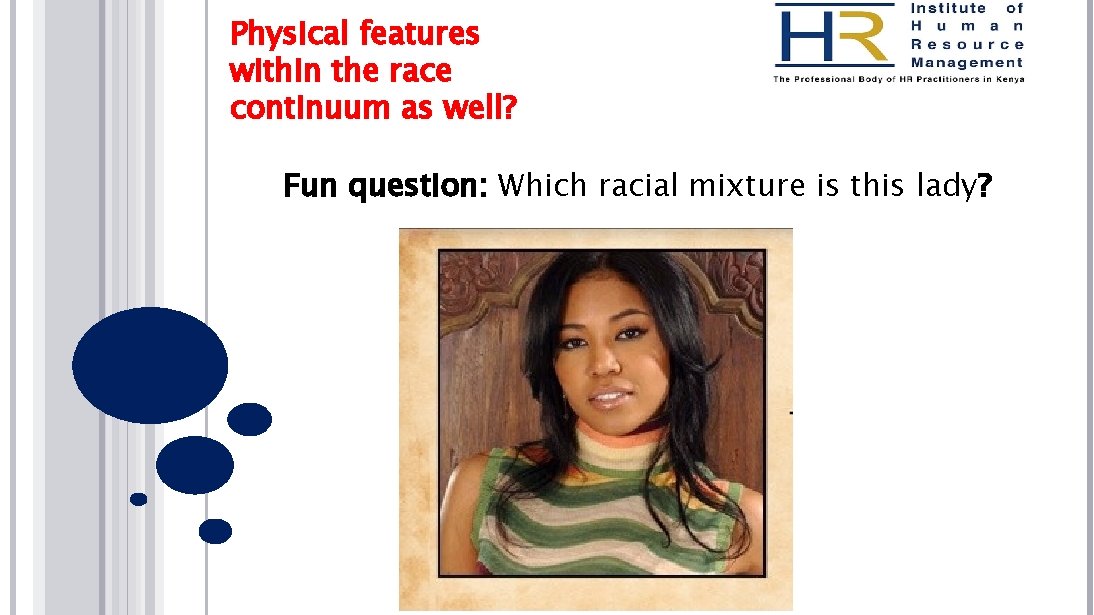
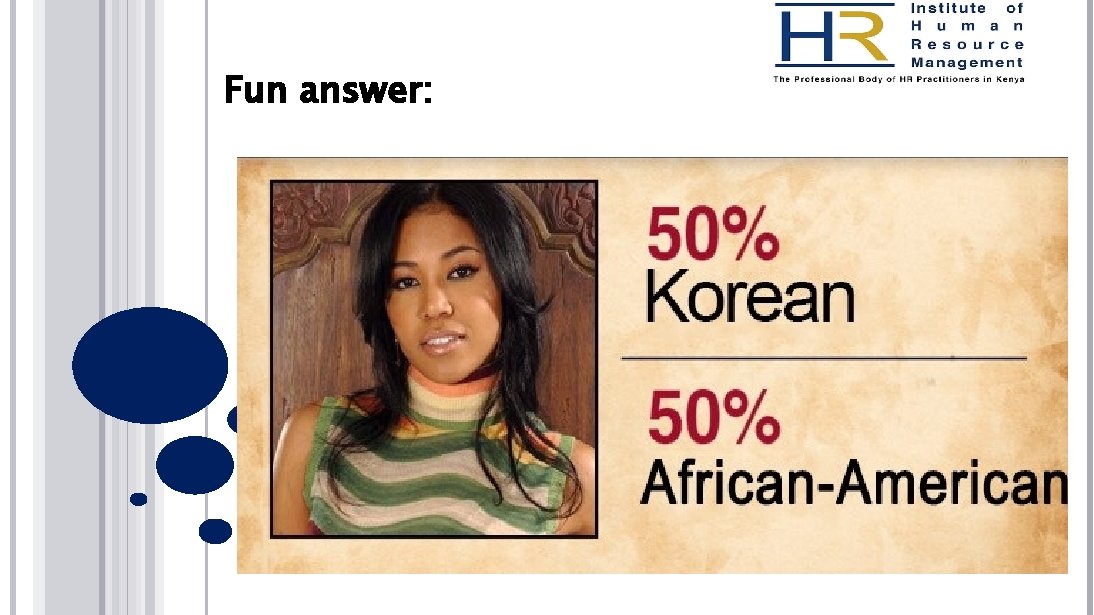
Physical features within the race continuum as well? Fun question: Which racial mixture is this lady?
Fun answer:
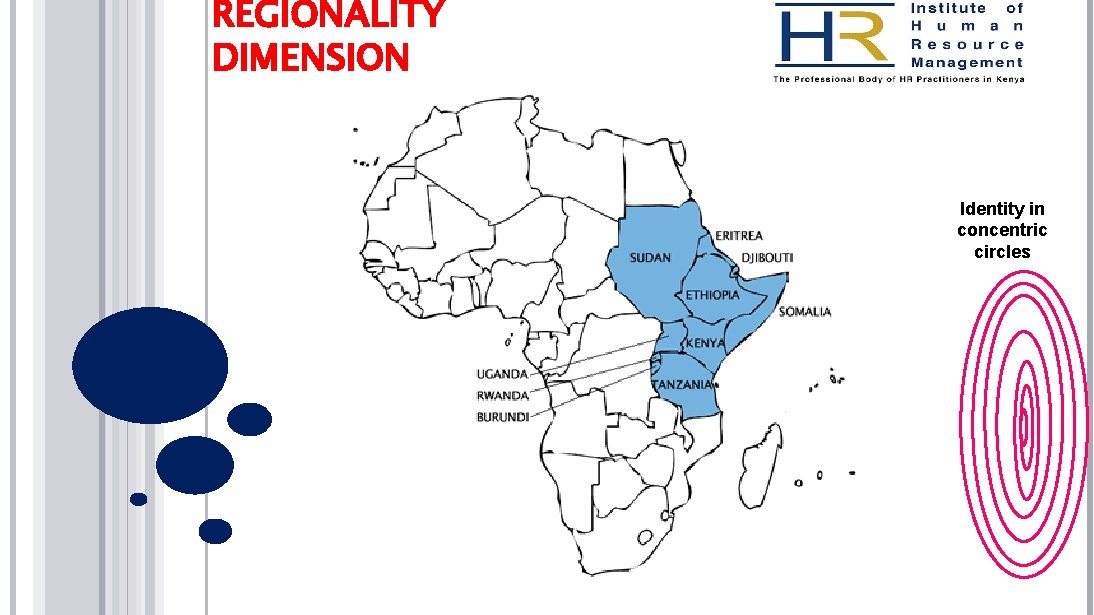
REGIONALITY DIMENSION Identity in concentric circles
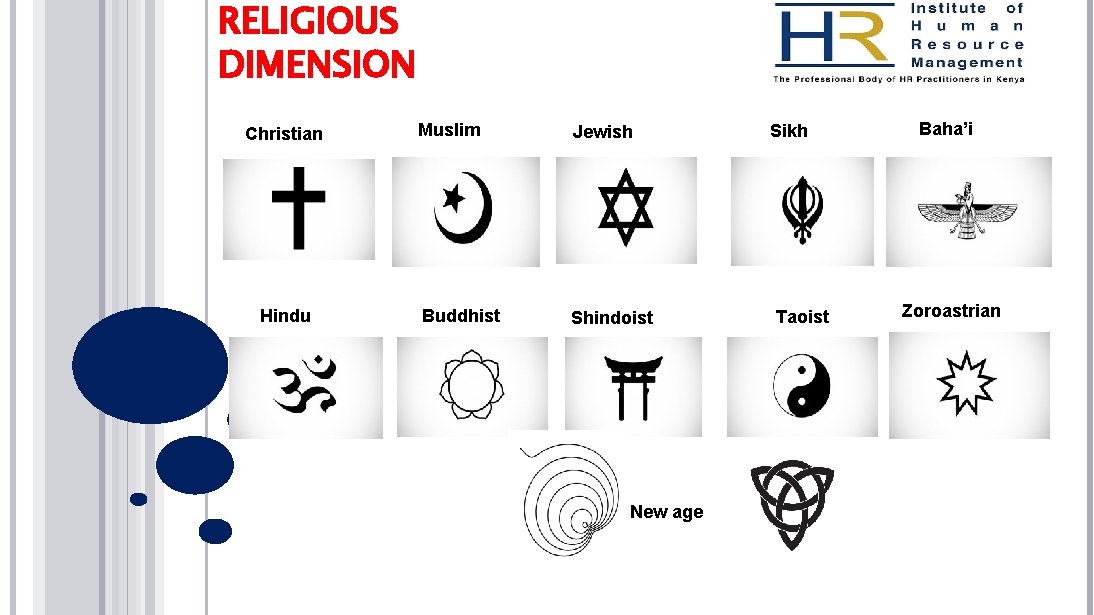
RELIGIOUS DIMENSION Christian Hindu Muslim Jewish Buddhist Shindoist New age Sikh Taoist Baha’i Zoroastrian
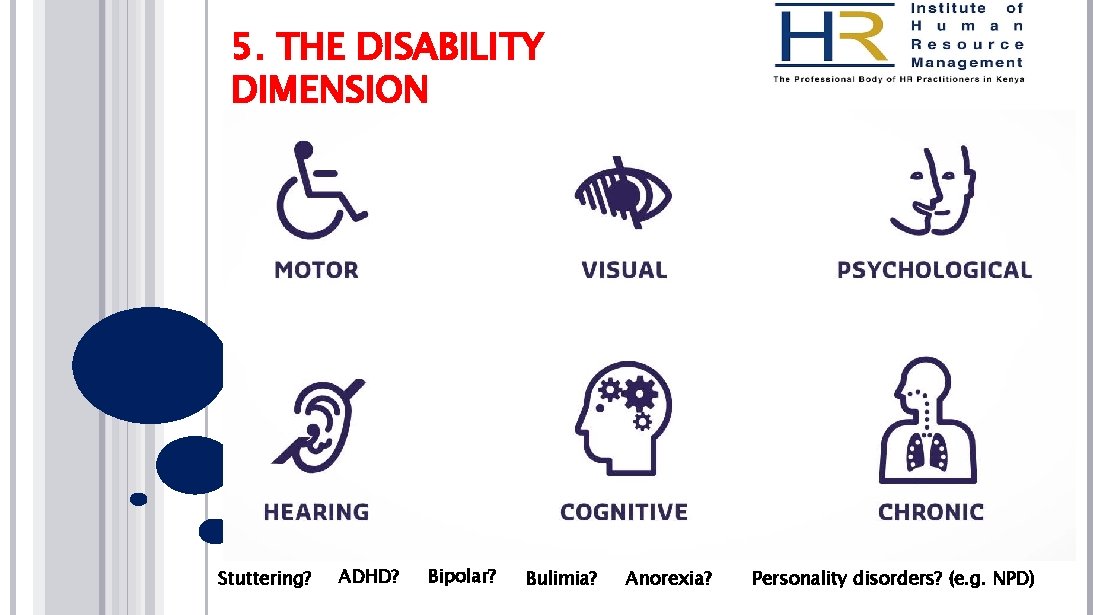
5. THE DISABILITY DIMENSION Stuttering? ADHD? Bipolar? Bulimia? Anorexia? Personality disorders? (e. g. NPD)
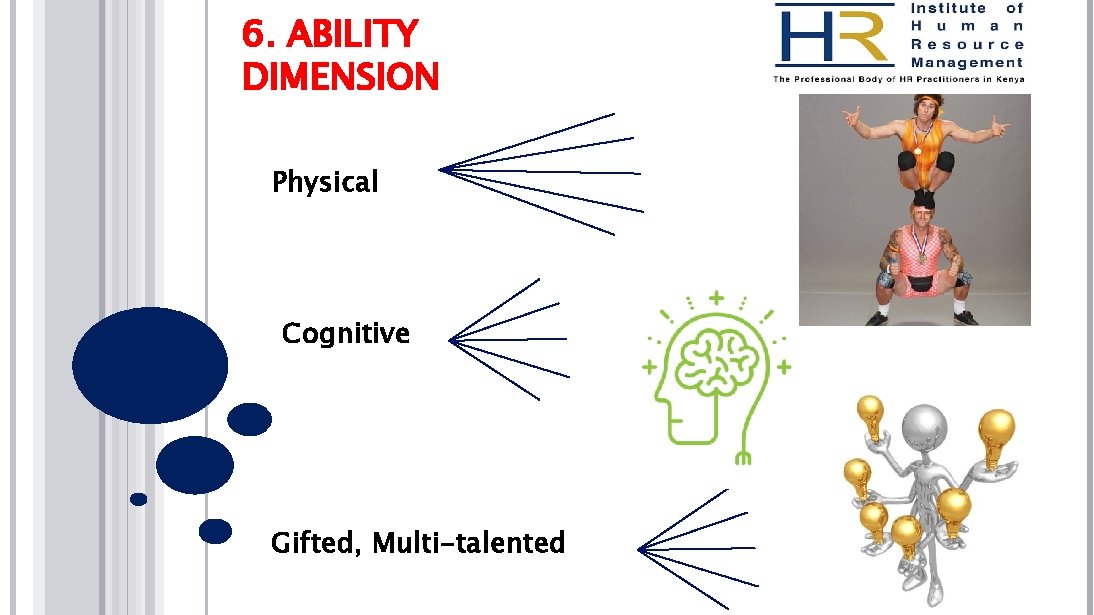
6. ABILITY DIMENSION Physical Cognitive Gifted, Multi-talented
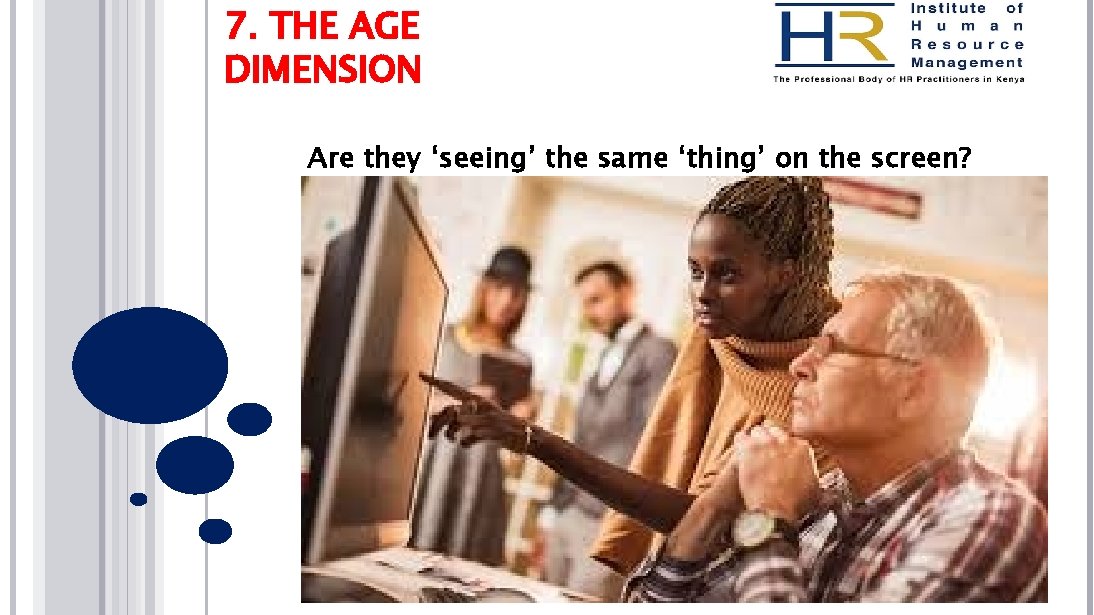
7. THE AGE DIMENSION Are they ‘seeing’ the same ‘thing’ on the screen?
So many areas of differentiation in workplace diversity 8. EDUCATION LEVEL? 9. Economic status? 10. Marital status? 11. Infinity! The more diverse, the more complex to manage - potentially
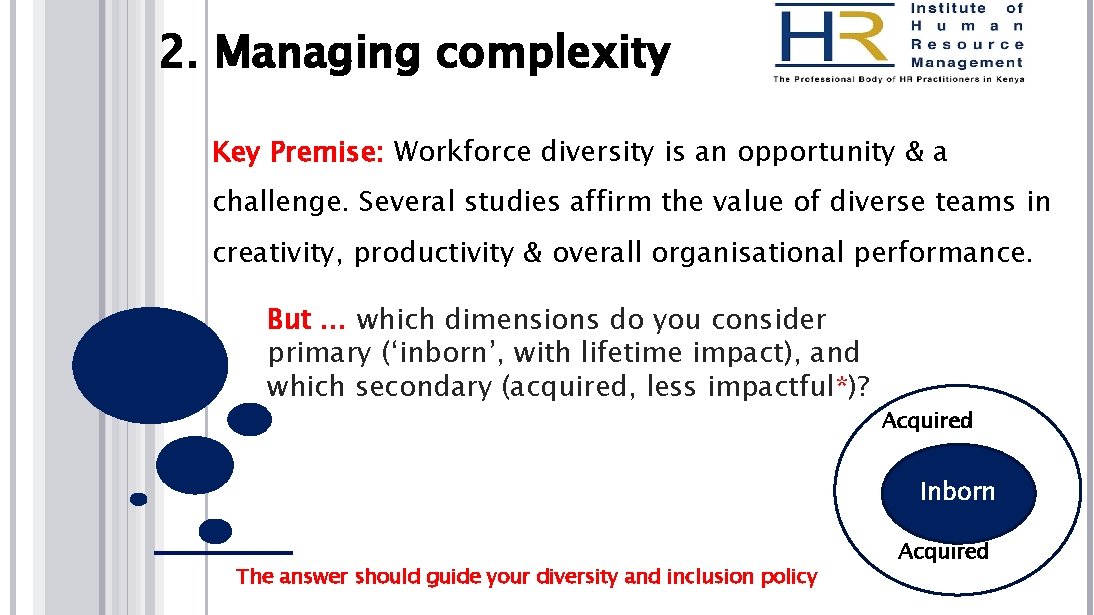
2. Managing complexity Key Premise: Workforce diversity is an opportunity & a challenge. Several studies affirm the value of diverse teams in creativity, productivity & overall organisational performance. But … which dimensions do you consider primary (‘inborn’, with lifetime impact), and which secondary (acquired, less impactful*)? Acquired Inborn The answer should guide your diversity and inclusion policy Acquired
2. Managing complexity MULTIPLE GENERATIONS, ETHICS & CULTURAL DIFFERENCES
2. Managing complexity FOUR GENERATIONS AT THE WORK PLACE* • Baby Boomer* [colonial/independence] (1946 -1964)** - Great expectations? • Generation X* [post independence] (1965 -1980)-Great disappointment? • Generation Y/Millennials* [Internet era] (1980 -2000)-Despair to hope? • Generation Z* [the social networked](2000 - date)- * American categorization Hope to hope? ** Some work beyond formal retirement age because they own/co-own firms/organizations
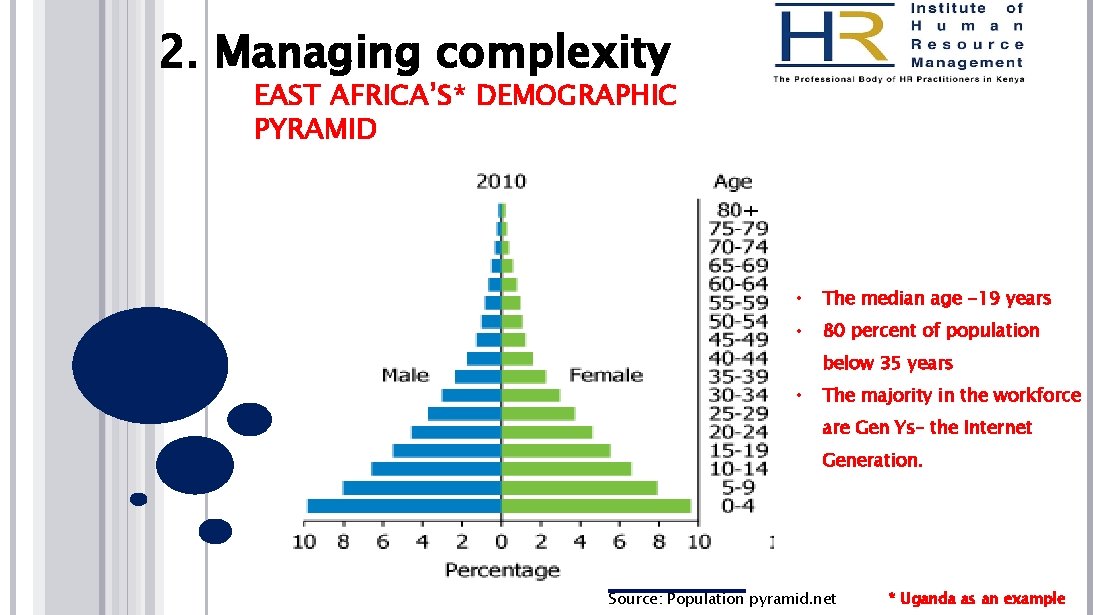
2. Managing complexity EAST AFRICA’S* DEMOGRAPHIC PYRAMID • The median age -19 years • 80 percent of population below 35 years • The majority in the workforce are Gen Ys– the Internet Generation. Source: Population pyramid. net * Uganda as an example
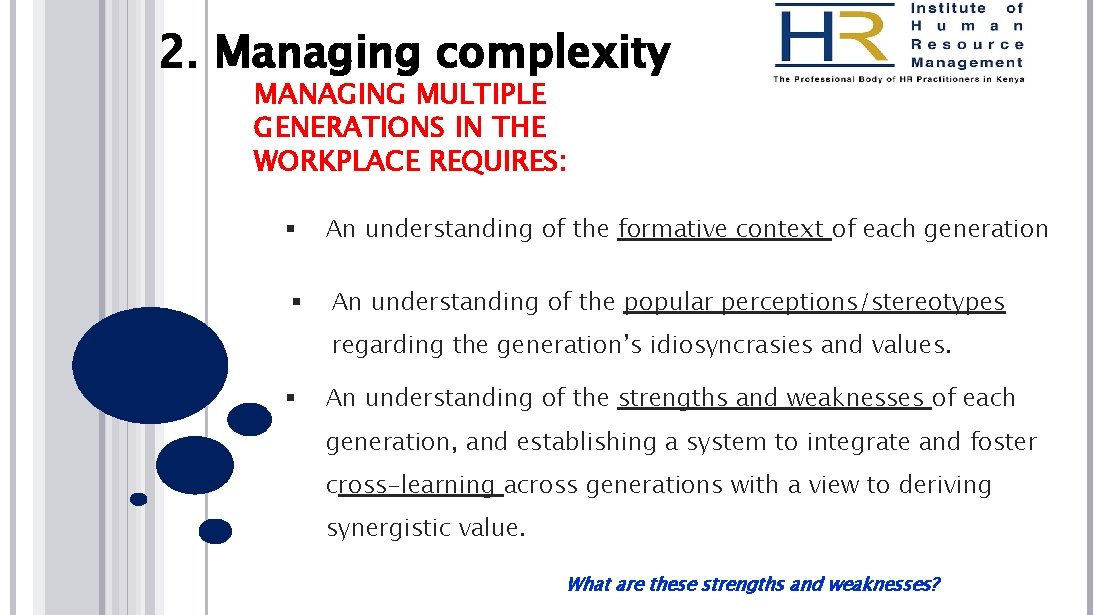
2. Managing complexity MANAGING MULTIPLE GENERATIONS IN THE WORKPLACE REQUIRES: § An understanding of the formative context of each generation § An understanding of the popular perceptions/stereotypes regarding the generation’s idiosyncrasies and values. § An understanding of the strengths and weaknesses of each generation, and establishing a system to integrate and foster cross-learning across generations with a view to deriving synergistic value. What are these strengths and weaknesses?
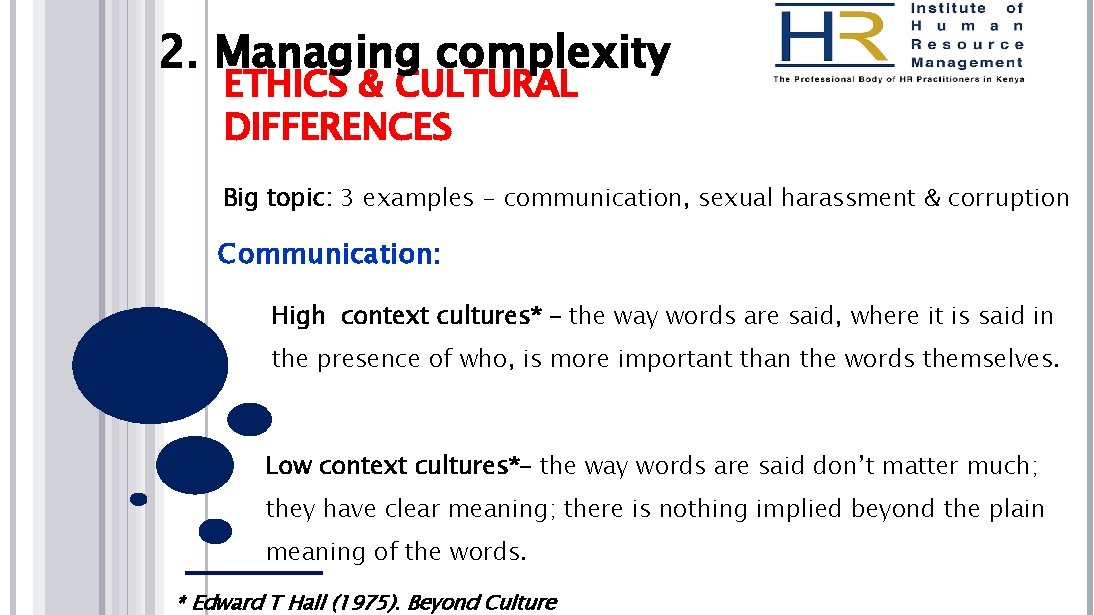
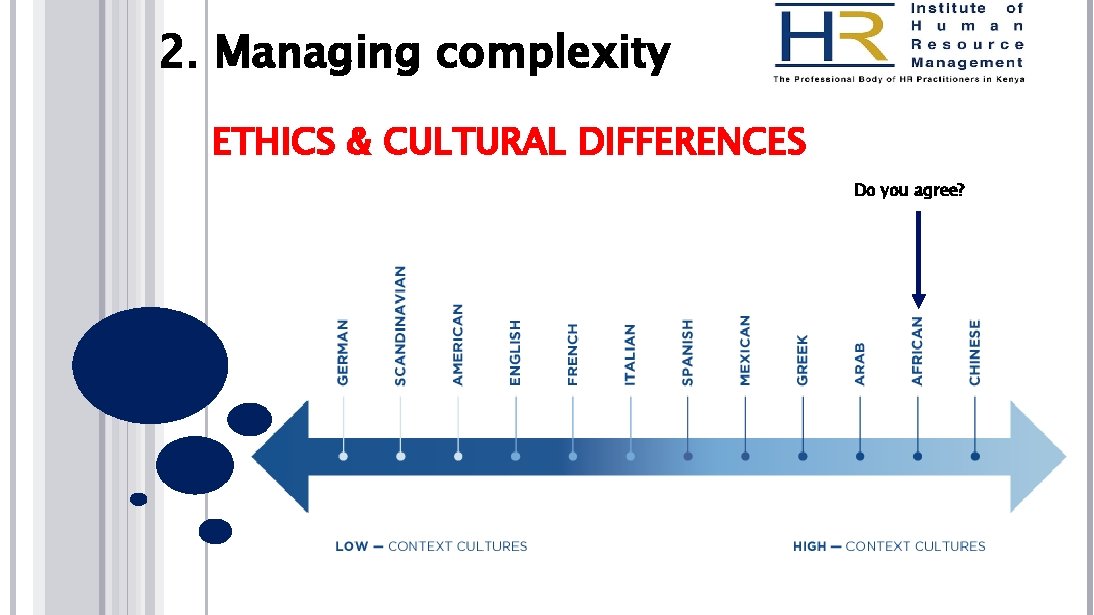
2. Managing complexity ETHICS & CULTURAL DIFFERENCES Big topic: 3 examples - communication, sexual harassment & corruption Communication: High context cultures* – the way words are said, where it is said in the presence of who, is more important than the words themselves. Low context cultures*– the way words are said don’t matter much; they have clear meaning; there is nothing implied beyond the plain meaning of the words. * Edward T Hall (1975). Beyond Culture
2. Managing complexity ETHICS & CULTURAL DIFFERENCES Do you agree?
2. Managing complexity ETHICS & CULTURAL DIFFERENCES Sexual harassment How is this perceived in: • High context cultures? • Low context cultures?
2. Managing complexity ETHICS & CULTURAL DIFFERENCES Corruption How is this perceived in: • High context cultures? • Low context cultures?
2. Managing complexity ETHICS: ARE THERE UNIVERSAL CONSTANTS? A UNIVERSAL CODE OF CONDUCT? • E. Kant: human duality – reason & impulse, need for control • K. Max/F. Engels: it is context/situation dependent! • Beyond religious edict – this seems universal: non-provoked aggression or violence, including theft and robbery. • Organizational culture is guided by universal ethics but also its vision and mission
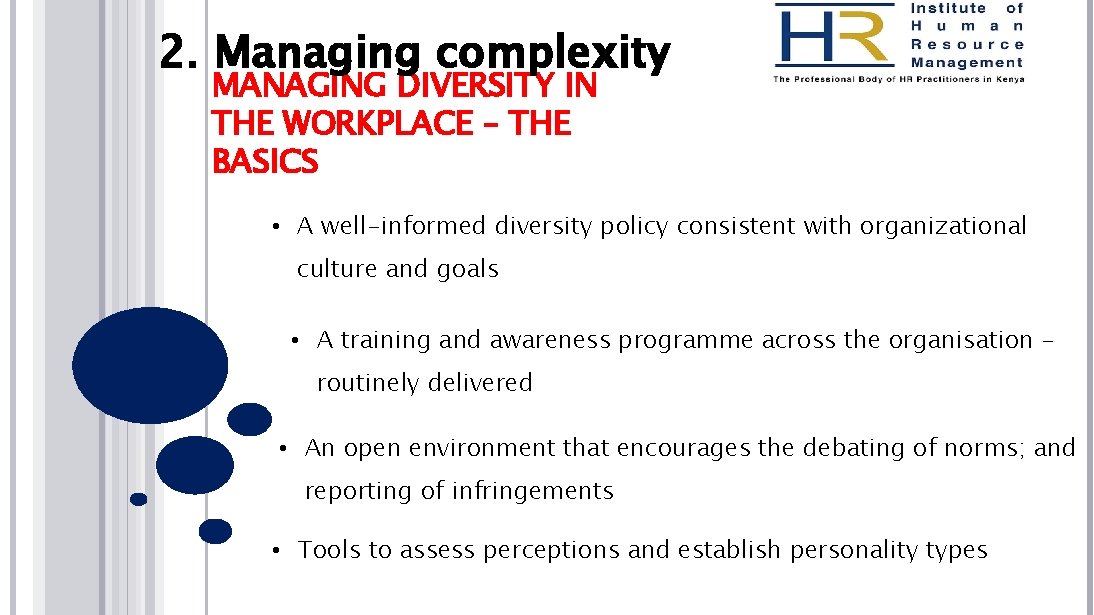
2. Managing complexity MANAGING DIVERSITY IN THE WORKPLACE – THE BASICS • A well-informed diversity policy consistent with organizational culture and goals • A training and awareness programme across the organisation – routinely delivered • An open environment that encourages the debating of norms; and reporting of infringements • Tools to assess perceptions and establish personality types
3. PERSONAL ANECTODES; STORIES
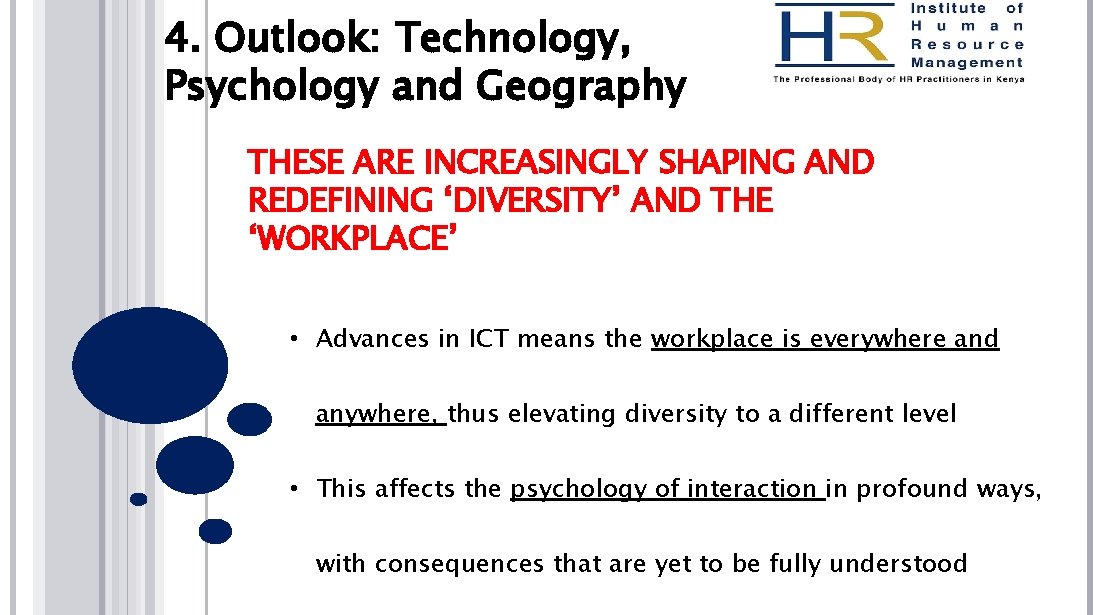
4. Outlook: Technology, Psychology and Geography THESE ARE INCREASINGLY SHAPING AND REDEFINING ‘DIVERSITY’ AND THE ‘WORKPLACE’ • Advances in ICT means the workplace is everywhere and anywhere, thus elevating diversity to a different level • This affects the psychology of interaction in profound ways, with consequences that are yet to be fully understood
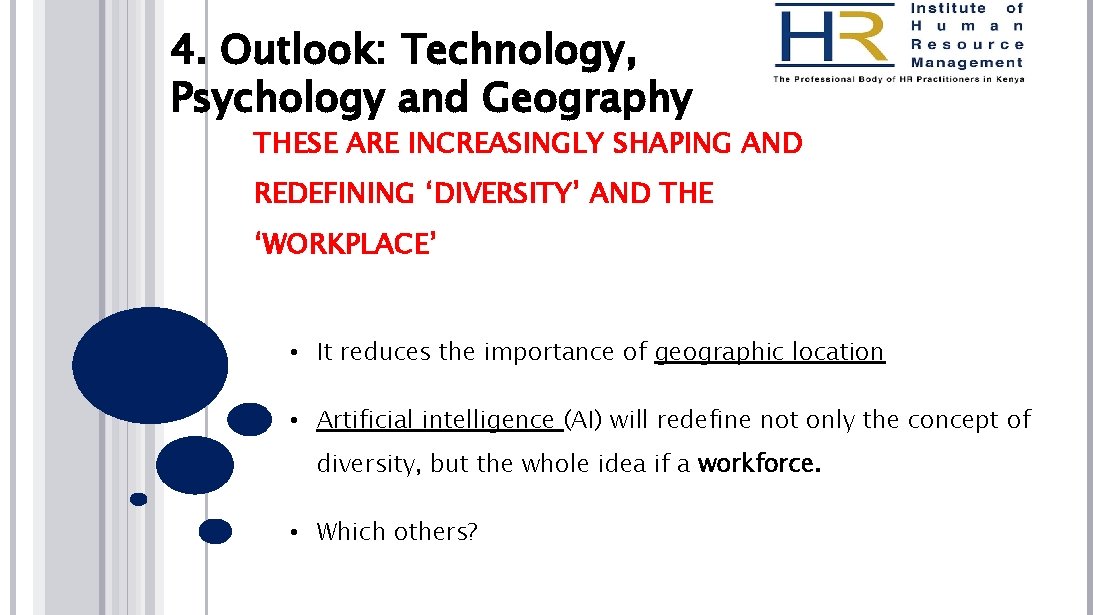
4. Outlook: Technology, Psychology and Geography THESE ARE INCREASINGLY SHAPING AND REDEFINING ‘DIVERSITY’ AND THE ‘WORKPLACE’ • It reduces the importance of geographic location • Artificial intelligence (AI) will redefine not only the concept of diversity, but the whole idea if a workforce. • Which others?
LET US ENGAGE