
Working with Primary and Secondary Sources Wylie Writing

- Slides: 21
Working with Primary and Secondary Sources Wylie Writing Center Room 217/972. 378. 8935 Wylie. APCAA@collin. edu Wylie. mywconline. com
Why Include Sources? To indicate to an audience you are not just providing your opinion To show you have done your research and are informed about the topic and what others have said about it You may disagree with some sources, and that is okay!
Quality Sources Before you begin to search for reliable sources, ask yourself: WHO is communicating? Trustworthy? Expert? WHAT are they saying? Facts or Opinions? HOW/WHY is this material important/relevant to the topic? Wikipedia & Spark. Notes
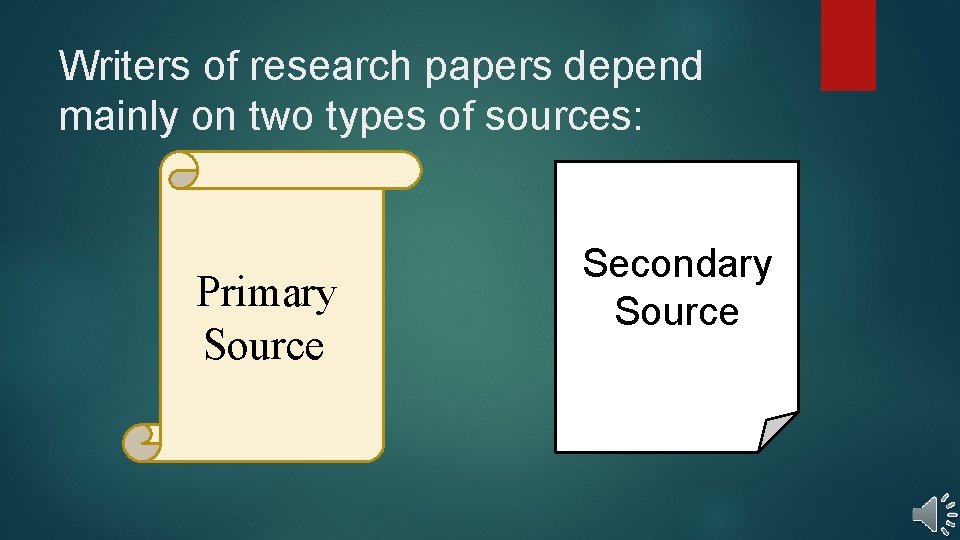
Writers of research papers depend mainly on two types of sources: Primary Source Secondary Source
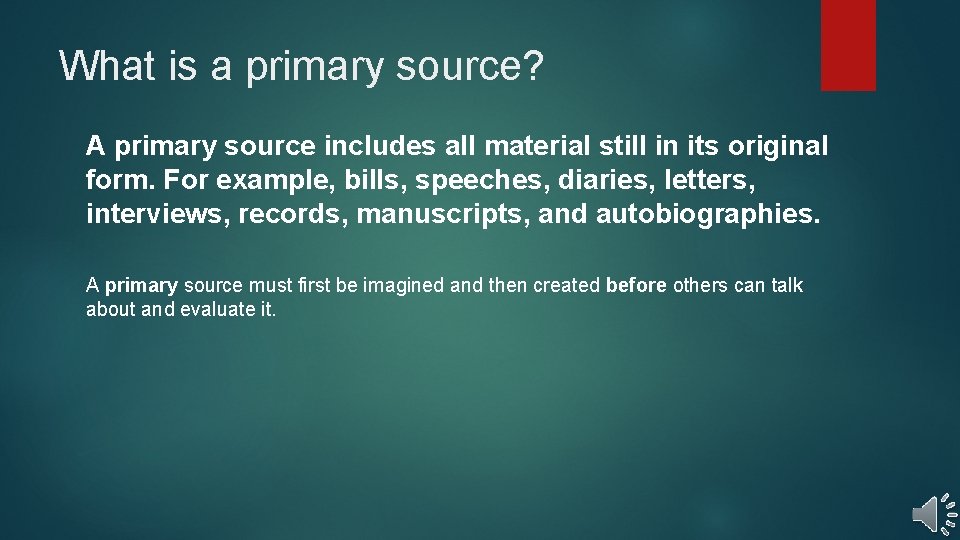
What is a primary source? A primary source includes all material still in its original form. For example, bills, speeches, diaries, letters, interviews, records, manuscripts, and autobiographies. A primary source must first be imagined and then created before others can talk about and evaluate it.
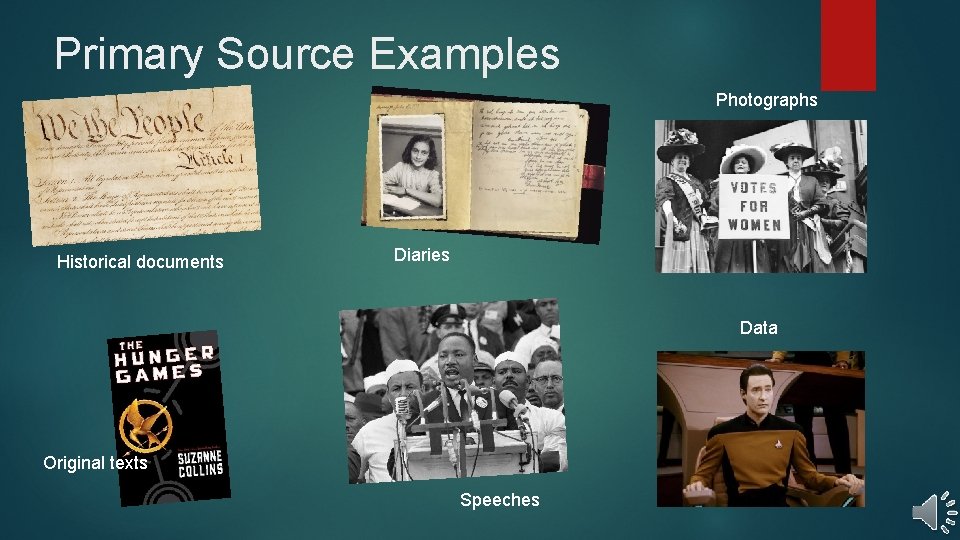
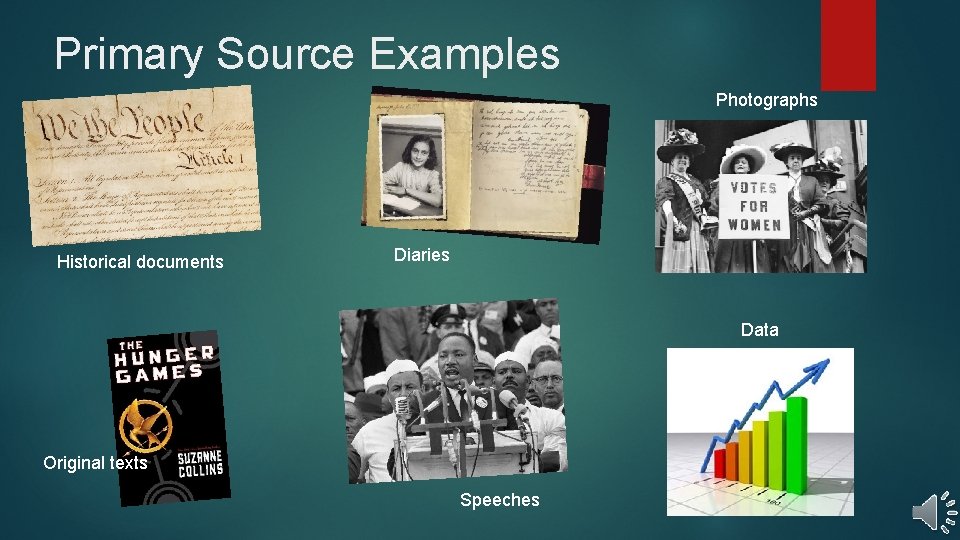
Primary Source Examples Photographs Historical documents Diaries Data Original texts Speeches
Primary Source Examples Photographs Historical documents Diaries Data Original texts Speeches
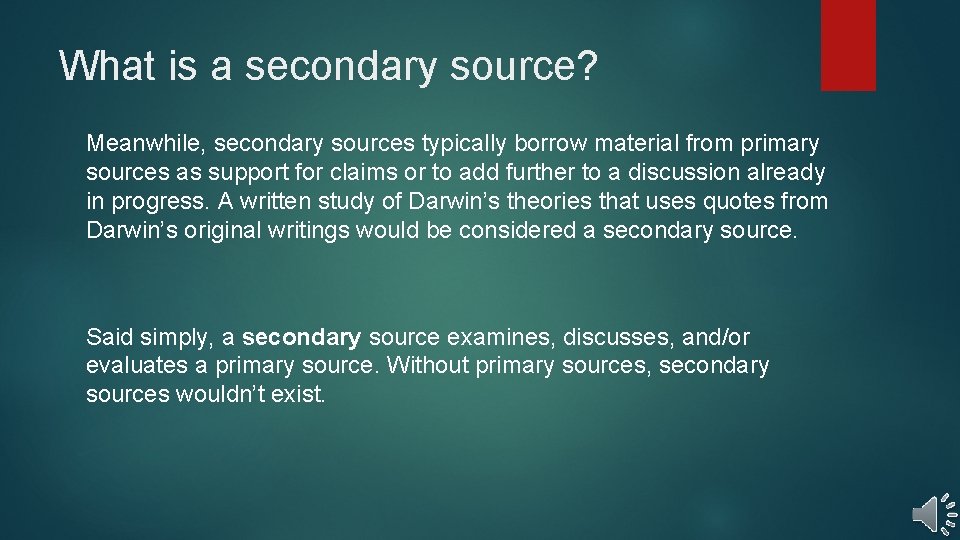
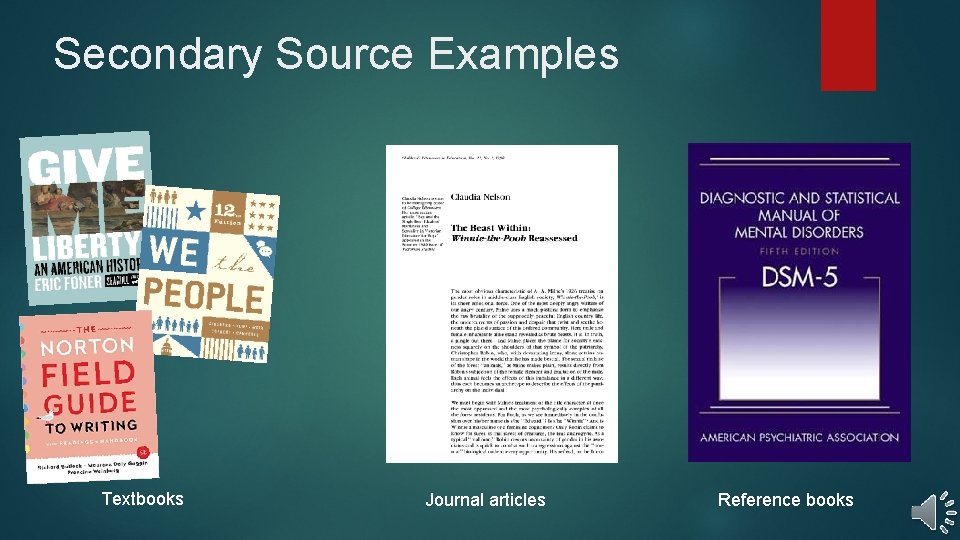
What is a secondary source? Meanwhile, secondary sources typically borrow material from primary sources as support for claims or to add further to a discussion already in progress. A written study of Darwin’s theories that uses quotes from Darwin’s original writings would be considered a secondary source. Said simply, a secondary source examines, discusses, and/or evaluates a primary source. Without primary sources, secondary sources wouldn’t exist.
Secondary Source Examples Textbooks Journal articles Reference books
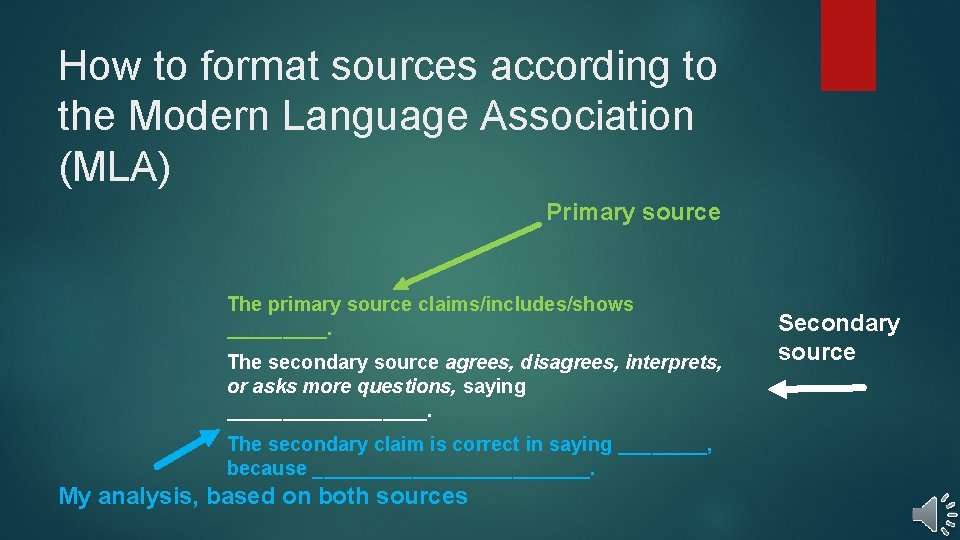
How to format sources according to the Modern Language Association (MLA) Primary source The primary source claims/includes/shows _____. The secondary source agrees, disagrees, interprets, or asks more questions, saying _________. The secondary claim is correct in saying ____, because _____________. My analysis, based on both sources Secondary source
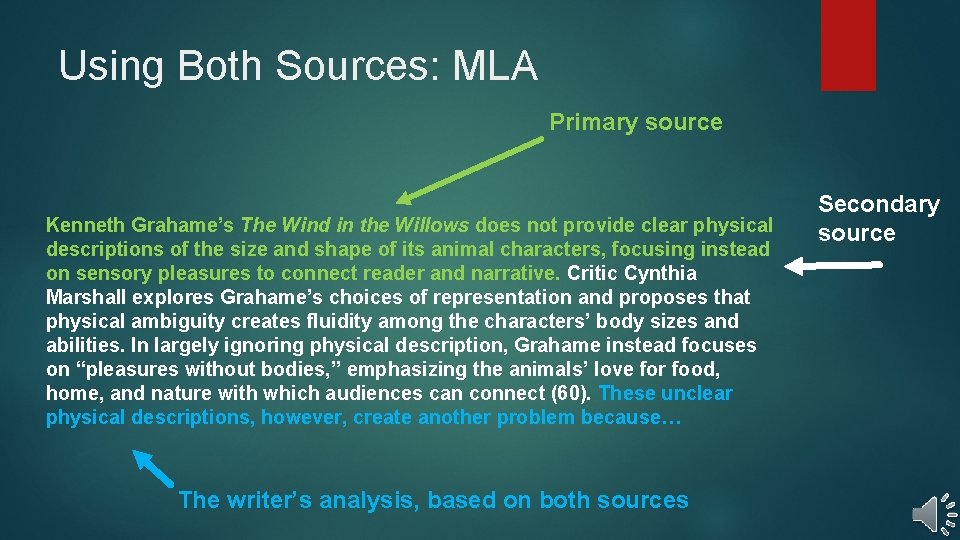
Using Both Sources: MLA Primary source Kenneth Grahame’s The Wind in the Willows does not provide clear physical descriptions of the size and shape of its animal characters, focusing instead on sensory pleasures to connect reader and narrative. Critic Cynthia Marshall explores Grahame’s choices of representation and proposes that physical ambiguity creates fluidity among the characters’ body sizes and abilities. In largely ignoring physical description, Grahame instead focuses on “pleasures without bodies, ” emphasizing the animals’ love for food, home, and nature with which audiences can connect (60). These unclear physical descriptions, however, create another problem because… The writer’s analysis, based on both sources Secondary source
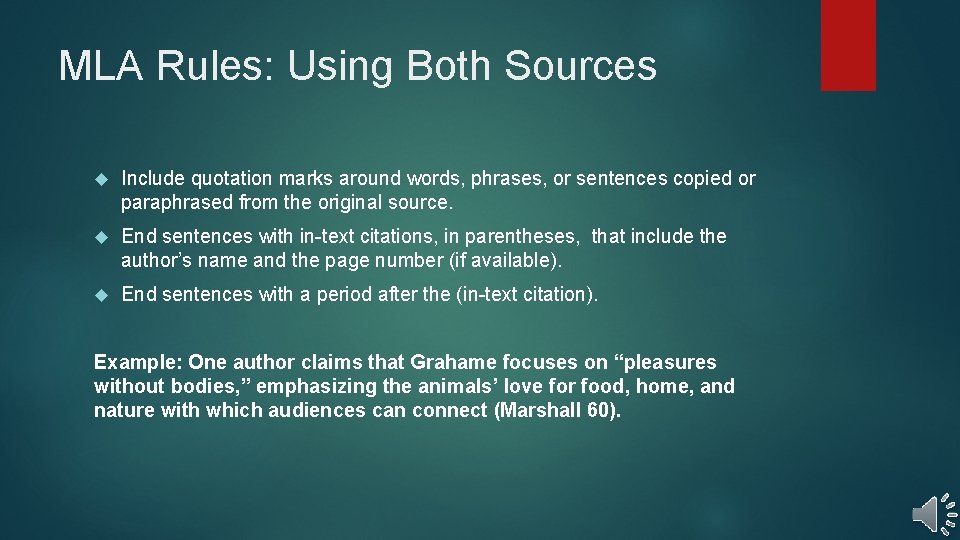
MLA Rules: Using Both Sources Include quotation marks around words, phrases, or sentences copied or paraphrased from the original source. End sentences with in-text citations, in parentheses, that include the author’s name and the page number (if available). End sentences with a period after the (in-text citation). Example: One author claims that Grahame focuses on “pleasures without bodies, ” emphasizing the animals’ love for food, home, and nature with which audiences can connect (Marshall 60).
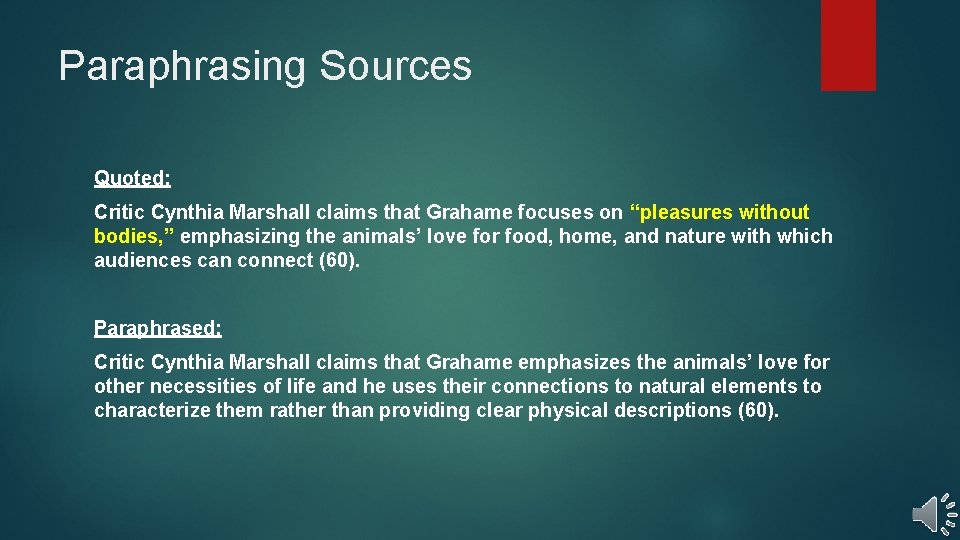
Paraphrasing Sources Quoted: Critic Cynthia Marshall claims that Grahame focuses on “pleasures without bodies, ” emphasizing the animals’ love for food, home, and nature with which audiences can connect (60). Paraphrased: Critic Cynthia Marshall claims that Grahame emphasizes the animals’ love for other necessities of life and he uses their connections to natural elements to characterize them rather than providing clear physical descriptions (60).
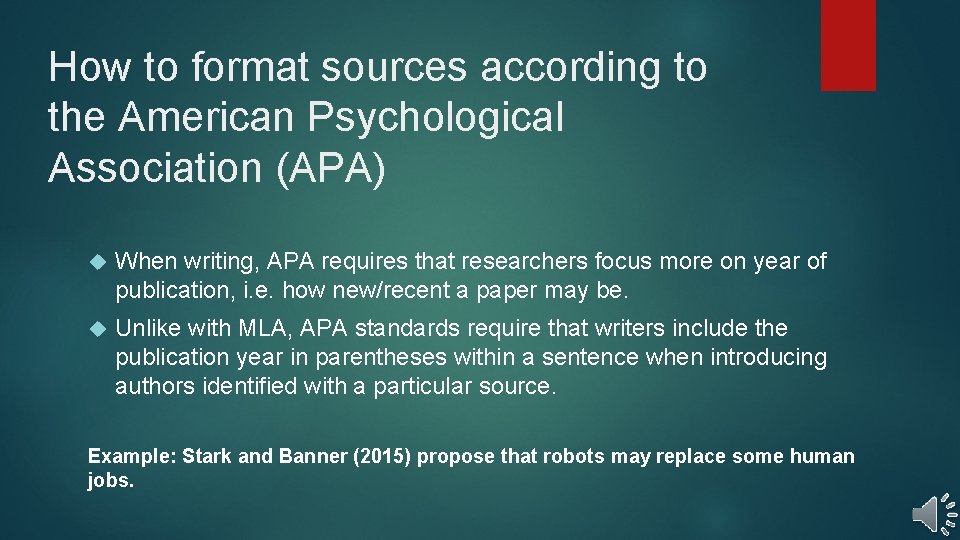
How to format sources according to the American Psychological Association (APA) When writing, APA requires that researchers focus more on year of publication, i. e. how new/recent a paper may be. Unlike with MLA, APA standards require that writers include the publication year in parentheses within a sentence when introducing authors identified with a particular source. Example: Stark and Banner (2015) propose that robots may replace some human jobs.
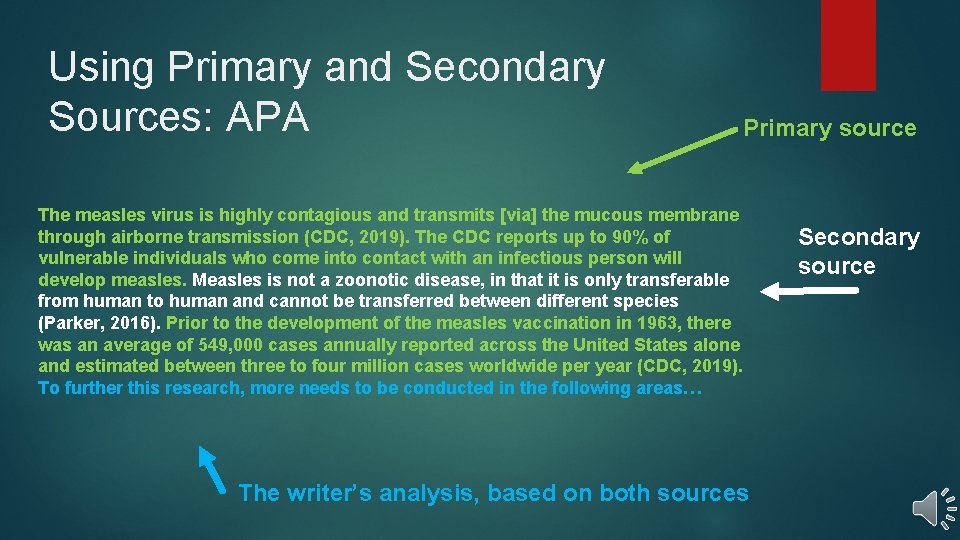
Using Primary and Secondary Sources: APA Primary source The measles virus is highly contagious and transmits [via] the mucous membrane through airborne transmission (CDC, 2019). The CDC reports up to 90% of vulnerable individuals who come into contact with an infectious person will develop measles. Measles is not a zoonotic disease, in that it is only transferable from human to human and cannot be transferred between different species (Parker, 2016). Prior to the development of the measles vaccination in 1963, there was an average of 549, 000 cases annually reported across the United States alone and estimated between three to four million cases worldwide per year (CDC, 2019). To further this research, more needs to be conducted in the following areas… The writer’s analysis, based on both sources Secondary source
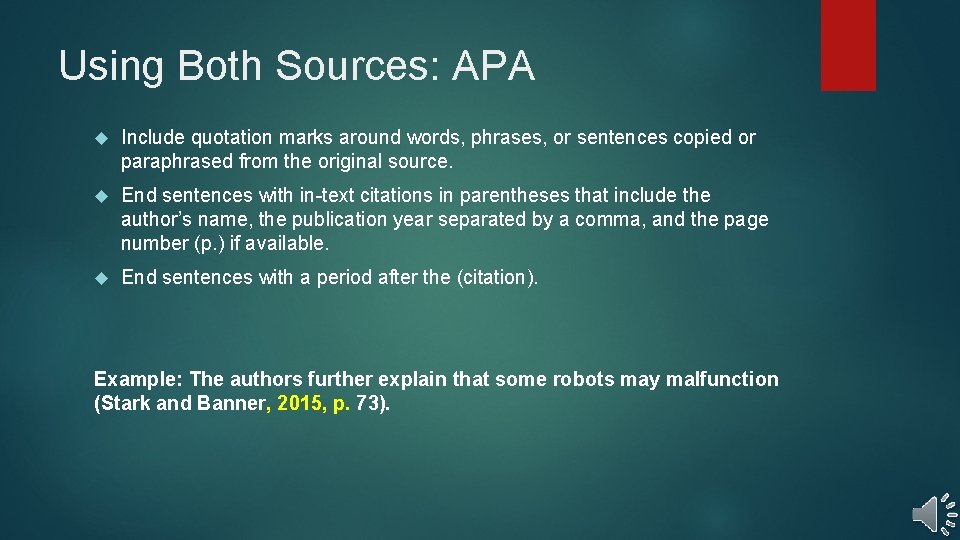
Using Both Sources: APA Include quotation marks around words, phrases, or sentences copied or paraphrased from the original source. End sentences with in-text citations in parentheses that include the author’s name, the publication year separated by a comma, and the page number (p. ) if available. End sentences with a period after the (citation). Example: The authors further explain that some robots may malfunction (Stark and Banner, 2015, p. 73).
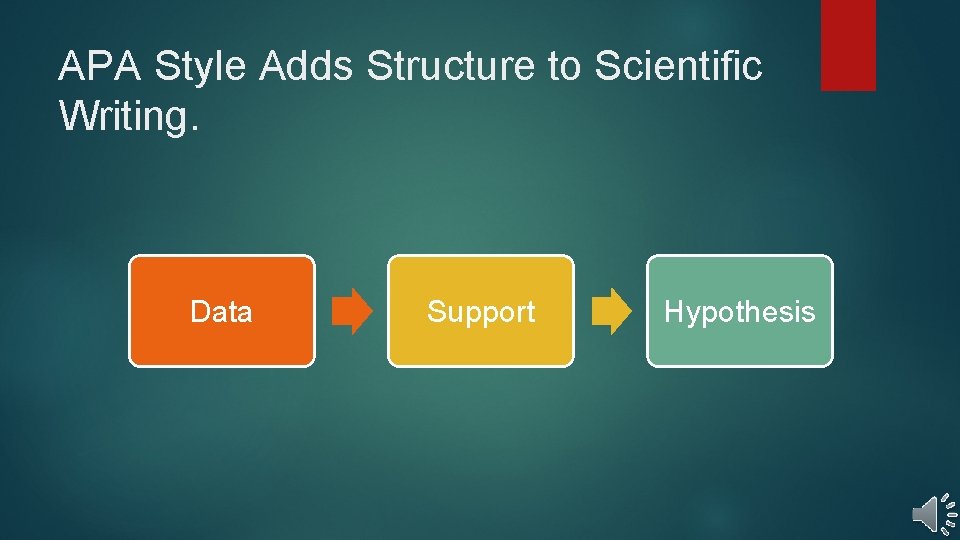
APA Style Adds Structure to Scientific Writing. Data Support Hypothesis
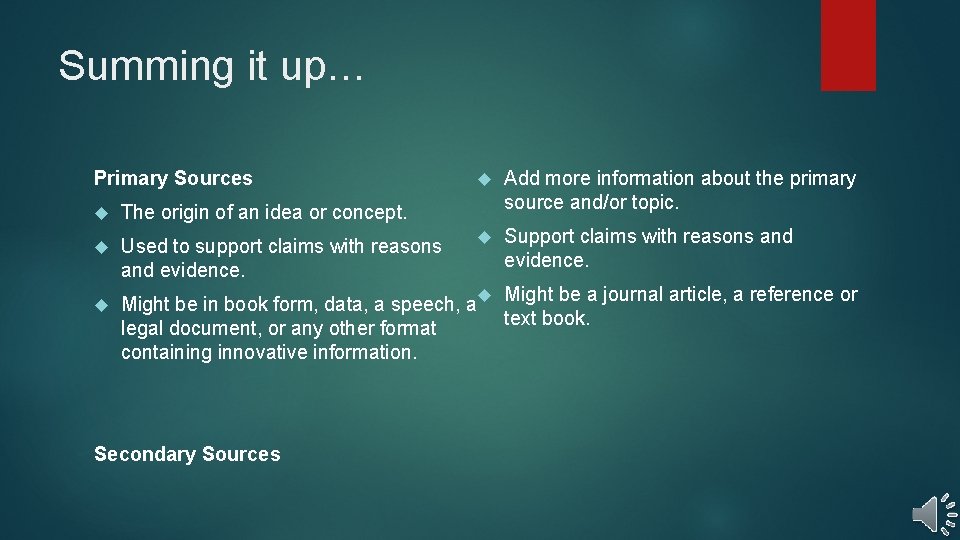
Summing it up… Primary Sources Add more information about the primary source and/or topic. Support claims with reasons and evidence. Might be a journal article, a reference or text book. The origin of an idea or concept. Used to support claims with reasons and evidence. Might be in book form, data, a speech, a legal document, or any other format containing innovative information. Secondary Sources
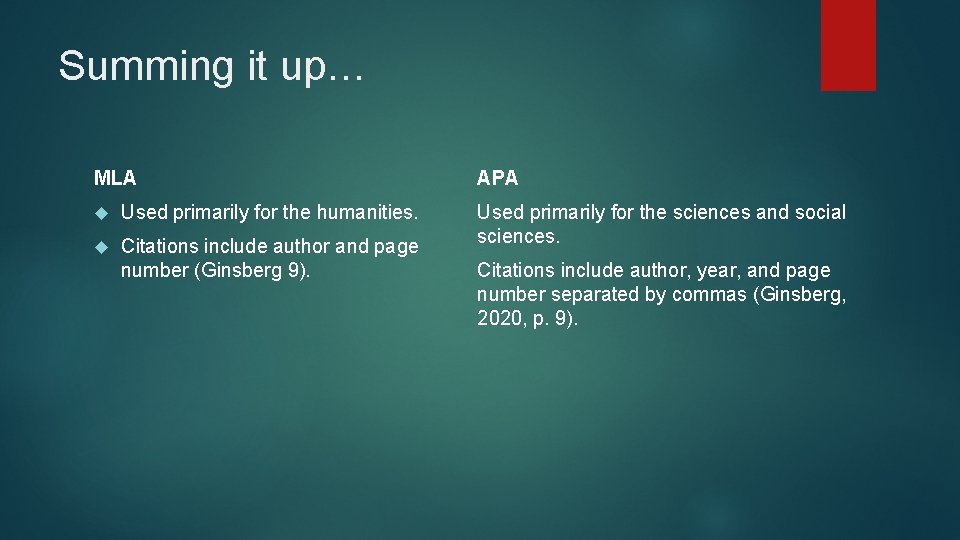
Summing it up… MLA Used primarily for the humanities. Citations include author and page number (Ginsberg 9). APA Used primarily for the sciences and social sciences. Citations include author, year, and page number separated by commas (Ginsberg, 2020, p. 9).
Works Cited Centers for Disease Control and Prevention. (2019). Measles (Rubeola). https: //www. cdc. gov/measles/index. html. Marshall, Cynthia. “Bodies and Pleasures in The Wind in the Willows. ” Children's Literature, 22, 1994, pp. 58 -68. Project MUSE, doi: 10. 1353/chl. 0. 0454. vol. Nelson, Claudia. “The Beast Within: Winnie-the-Pooh Reassessed. ” Children’s Literature in Education, vol. 21, 1990, pp. 17 -22. Parker, N. , Schneegurt, M. , Thi Tu, A. , Forster, B. M. , Lister, P. , and Open. Stax. (2016). Microbiology. Open. Stax. To set up a R. A. P. S. appointment to find trustworthy sources for research papers with a reference librarian at Wylie, write to wyliereference@collin. edu To set up a Writing Center appointment to discuss your draft, go to wylie. wconline. com and register for our online appointment system or simply come to Wylie Library room 217 to schedule an appointment with an expert today.
Wylie Campus wylieapcaa@collin. edu 972. 378. 8935 wylie. mywconline. com