
Working with Colleagues and Customers SITXCOM 001 A
- Slides: 23
Working with Colleagues and Customers - SITXCOM 001 A WORKING WITH COLLEGUES AND CUSTOMERS AGENDA TOPIC 2: Communication Basics -A Communicating with Colleagues, Customers, Suppliers etc. -Communication Process -Forms of Communication (non verbal etc. . ) -Barriers of Communication -Questioning Skills -Listening Skills / Empathy-active listening skills -Body language in Communication. Presentation_7 // 13 TAFE NSI Ryde/MB_ZGtbc_2013
On successful completion of this module you will be able to: � Communicate with others � Maintain personal presentation standards � Provide service to colleagues and customers � Respond to conflicts and customer complaints � Work in a team. 2
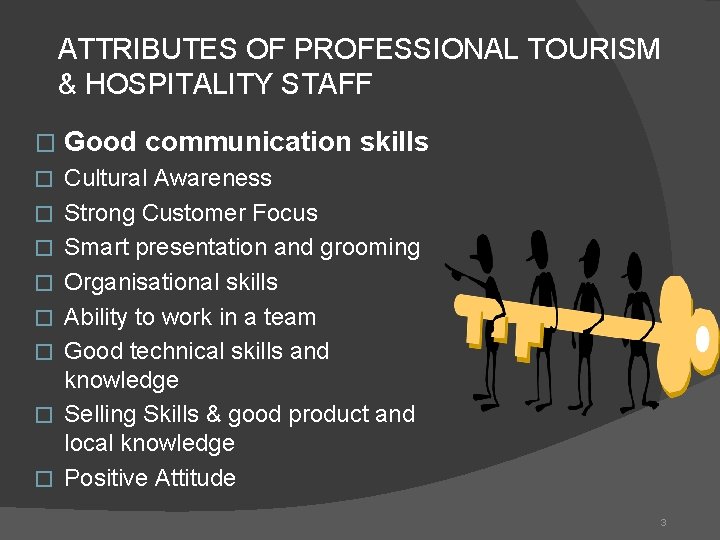
ATTRIBUTES OF PROFESSIONAL TOURISM & HOSPITALITY STAFF � Good communication skills � Cultural Awareness Strong Customer Focus Smart presentation and grooming Organisational skills Ability to work in a team Good technical skills and knowledge Selling Skills & good product and local knowledge Positive Attitude � � � � 3
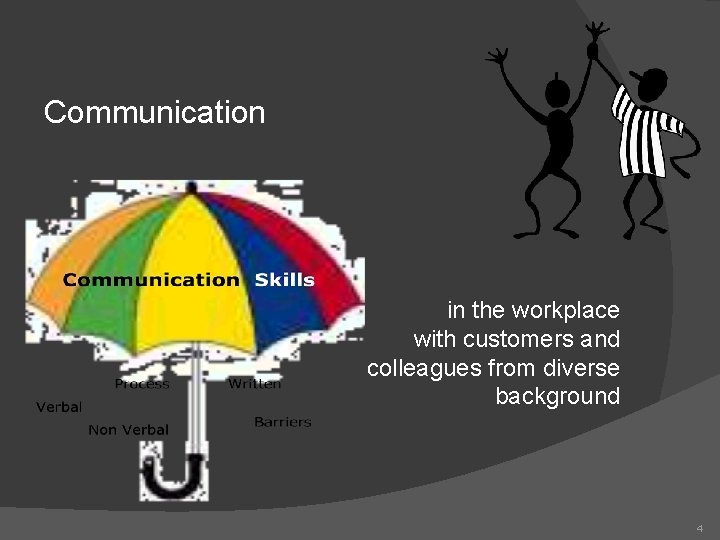
Communication in the workplace with customers and colleagues from diverse background 4
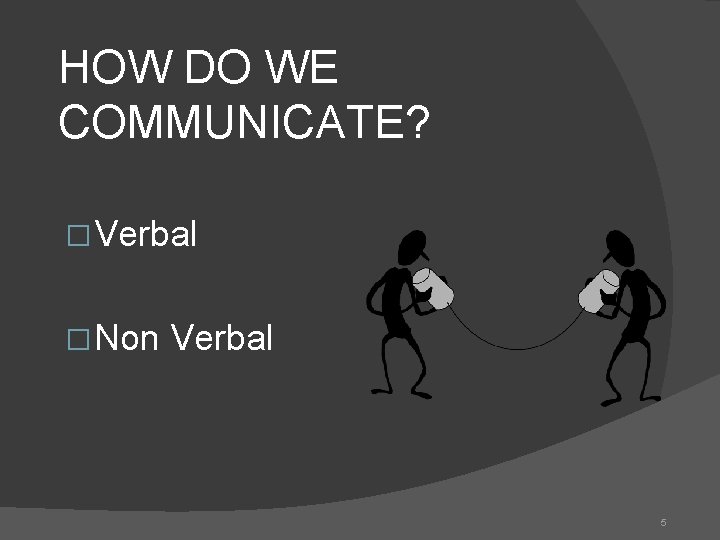
HOW DO WE COMMUNICATE? � Verbal � Non Verbal 5
WHO DO WE COMMUNICATE WITH? INTERNAL CUSTOMERS All the people with whom we work � EXTERNAL CUSTOMERS All our customers that use our services � 6
WHEN WE COMMUNICATE IS IT IMPORTANT TO BE: � Polite, professional and friendly � Use a appropriate tone � Use appropriate body language � Show sensitivity to cultural and social difference � Actively listen � Ask questions to facilitate understanding 7
VERBAL COMMUNICATION We should always � Have an open, friendly manner � Be Professional - our pitch, tone and speed of speech � Use appropriate language - no slang or ‘jargon’ 8
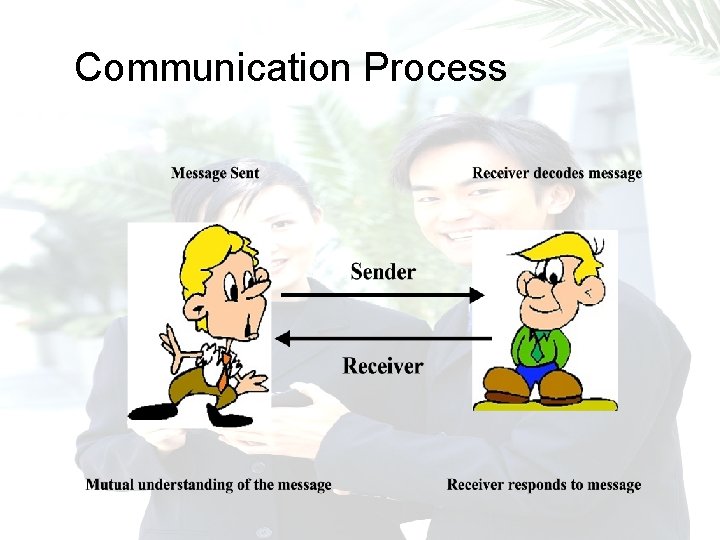
Communication Process 9
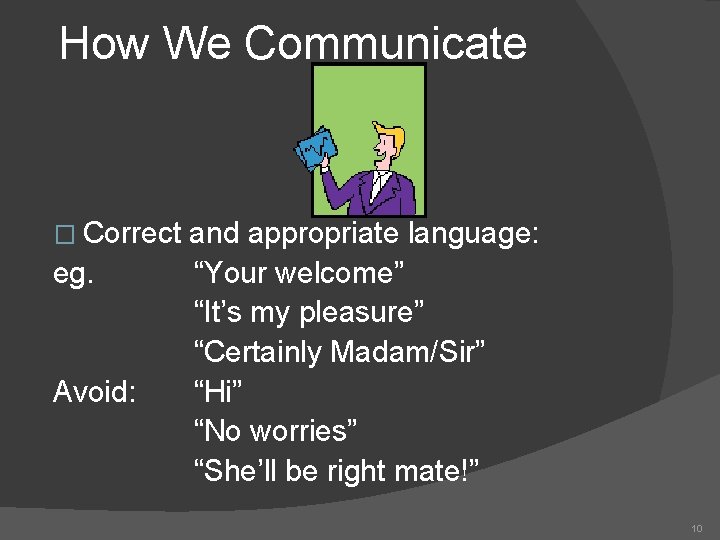
How We Communicate � Correct eg. Avoid: and appropriate language: “Your welcome” “It’s my pleasure” “Certainly Madam/Sir” “Hi” “No worries” “She’ll be right mate!” 10
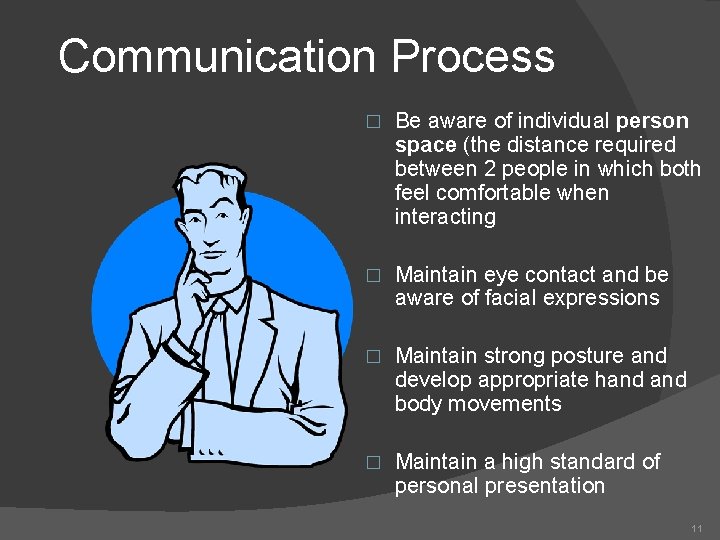
Communication Process � Be aware of individual person space (the distance required between 2 people in which both feel comfortable when interacting � Maintain eye contact and be aware of facial expressions � Maintain strong posture and develop appropriate hand body movements � Maintain a high standard of personal presentation 11
TONE OF VOICE • Conveys your attitude • Conveys your feelings • Can show if we are: Genuine Rushed Rude Professional Tired/Bored Warm and Friendly 12
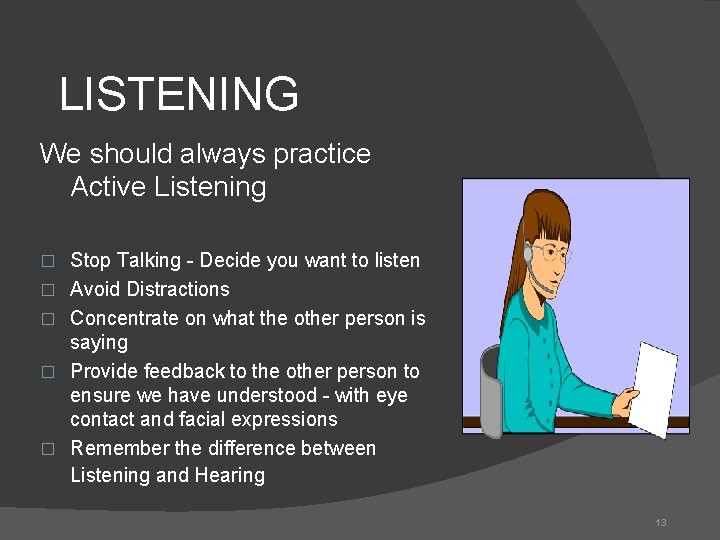
LISTENING We should always practice Active Listening � � � Stop Talking - Decide you want to listen Avoid Distractions Concentrate on what the other person is saying Provide feedback to the other person to ensure we have understood - with eye contact and facial expressions Remember the difference between Listening and Hearing 13
LISTENING Remember � If there is no listening - there is no communication � Active listening is a skill � Good listening skills need practice � Don’t be judgmental or make assumptions – � BE A GOOD LISTENER 14
QUESTIONING OPEN QUESTIONS � CLOSED QUESTIONS We should always try to � These only require a yes or no reply and should be use open questions avoided where possible using sentences beginning with How, Why, When, What to REFLECTIVE QUESTIONS find out exactly what � Provide feedback to the customer wants customer and show we are listening and understanding 15
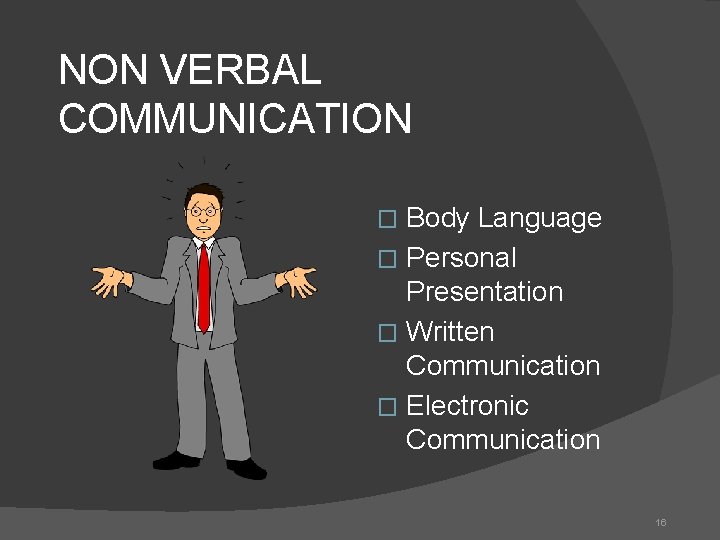
NON VERBAL COMMUNICATION Body Language � Personal Presentation � Written Communication � Electronic Communication � 16
NON-VERBAL COMMUNICATION In the hospitality industry, egs. of written communication include: - Recording and confirming accommodation reservations and restaurant reservations - Letters of appointment - Memos - Incident reports - Guest requests - Telephone messages - Policies and procedures - Stock orders - Resumes and job applications - reports 17
NON VERBAL COMMUNICATION -Written. Convey message clearly � Use correct grammar � Check your spelling � Record date and time � Write legible � Record message � 18
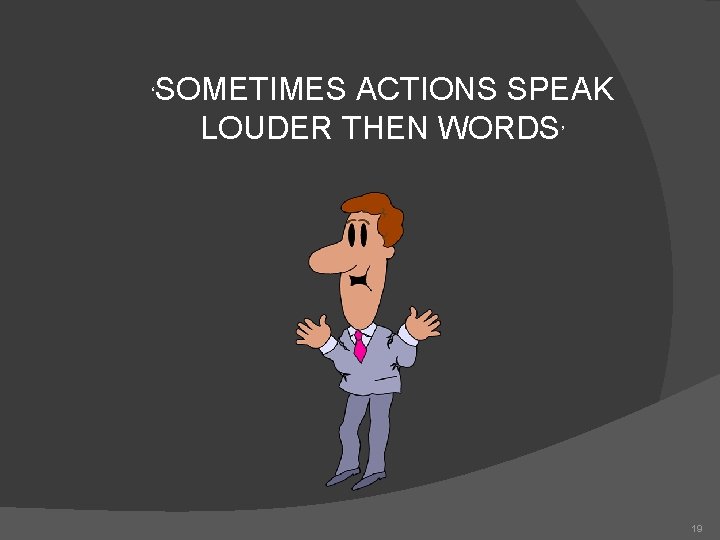
‘ SOMETIMES ACTIONS SPEAK LOUDER THEN WORDS’ 19
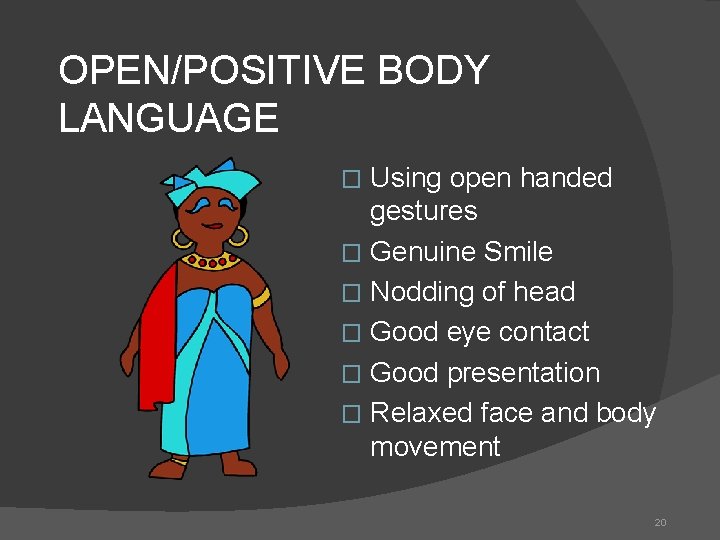
OPEN/POSITIVE BODY LANGUAGE Using open handed gestures � Genuine Smile � Nodding of head � Good eye contact � Good presentation � Relaxed face and body movement � 20
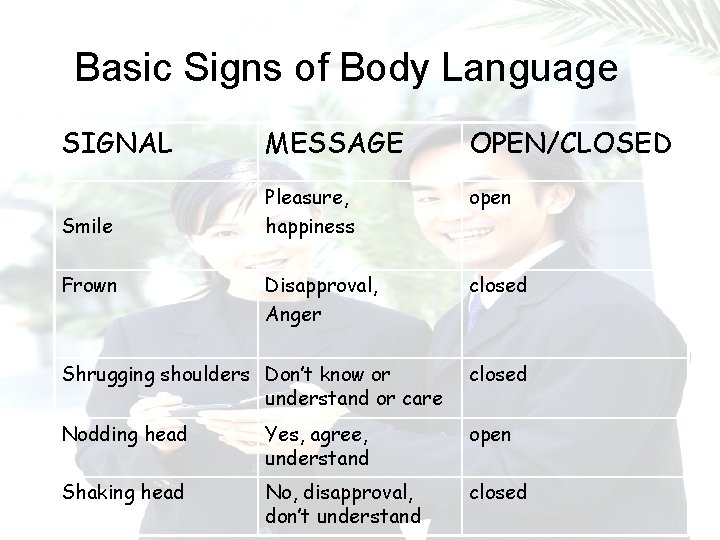
Basic Signs of Body Language SIGNAL MESSAGE OPEN/CLOSED open Smile Pleasure, happiness Disapproval, Anger closed Frown Shrugging shoulders Don’t know or understand or care closed Nodding head Yes, agree, understand open Shaking head No, disapproval, don’t understand closed 21
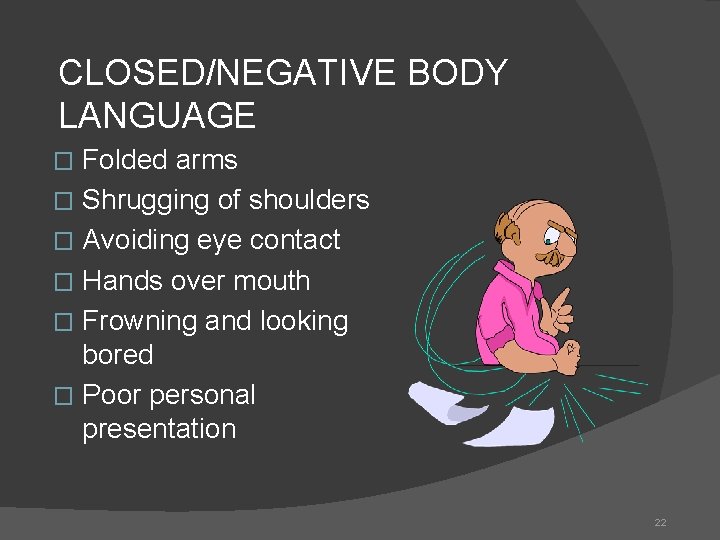
CLOSED/NEGATIVE BODY LANGUAGE Folded arms � Shrugging of shoulders � Avoiding eye contact � Hands over mouth � Frowning and looking bored � Poor personal presentation � 22
BARRIERS TO COMMUNICATION A barrier to effective communication is anything that gets in the way or inhibits the communication process and may include: � Communication chain too long � Message Overload � Physical barriers - noise, etc � Using the wrong words - especially industry ‘jargon’ � Cultural differences - people who speak different languages � Poor listening skills 23