
Working with Colleagues and Customers SITXCOM 001 A
- Slides: 20
Working with Colleagues and Customers - SITXCOM 001 A WORKING WITH COLLEGUES AND AGENDA CUSTOMERS TOPIC 3: Customers -Customer Service -3 steps of Service -Internal – External Customers -Determining and satisfying customers needs -Service delivery / Quality standards and assurance -Resolving customer service problems -Effective managing Customer complaints -Procedures and Policies -Quality service surveys how and why? -How to turn a complaining Customer to a Customer for Life -Complaints handling and dealings -How to “Wow your Customers” TOPIC 4: -Personal Presentation_8 // 14 TAFE NSI Ryde/MB_ZGtbc_2013
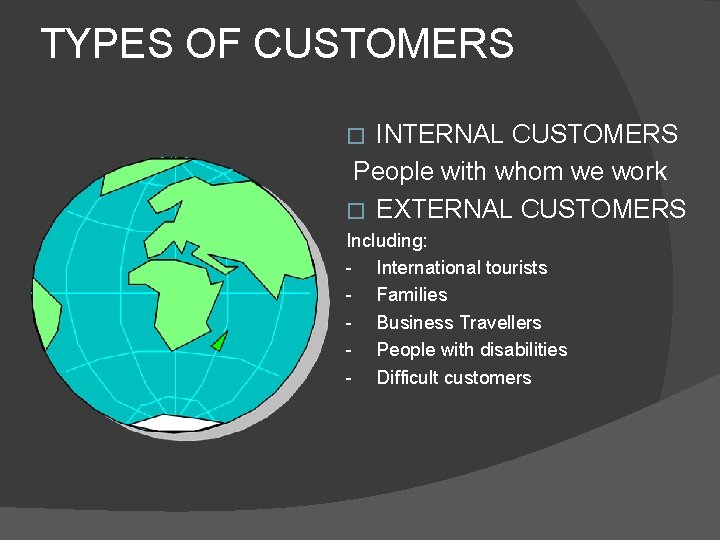
TYPES OF CUSTOMERS INTERNAL CUSTOMERS People with whom we work � EXTERNAL CUSTOMERS � Including: - International tourists - Families - Business Travellers - People with disabilities - Difficult customers
NEEDS AND EXPECTATIONS OF CUSTOMERS Basic Human Needs Food, Shelter, Security, Social and Esteem � Special services and facilities � Entertainment � Information �
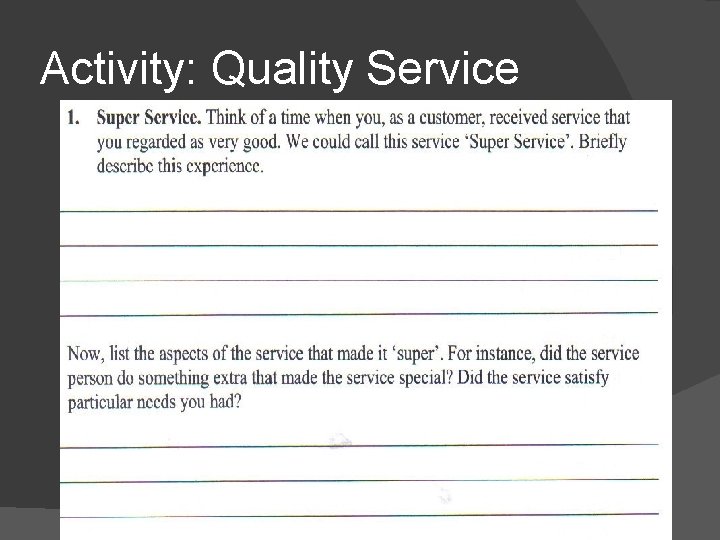
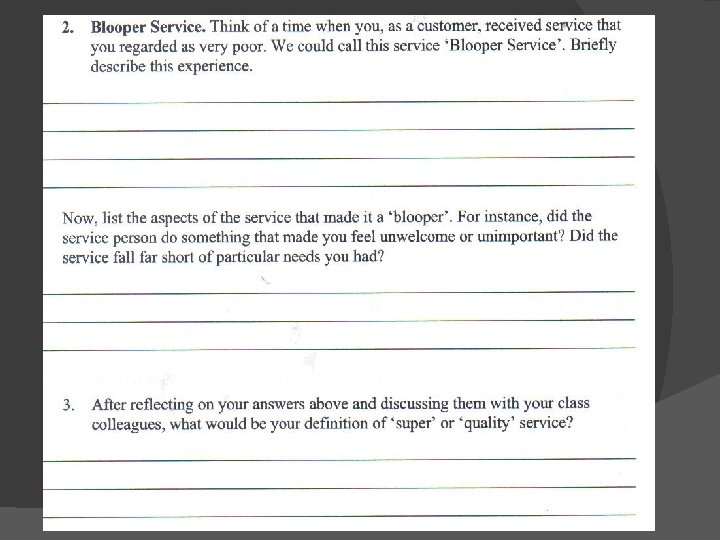
Activity: Quality Service
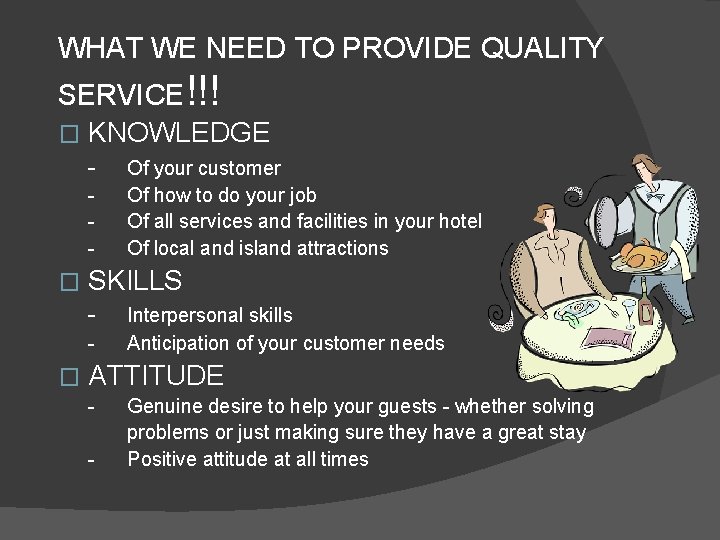
WHAT WE NEED TO PROVIDE QUALITY SERVICE!!! � KNOWLEDGE - � SKILLS - � Of your customer Of how to do your job Of all services and facilities in your hotel Of local and island attractions Interpersonal skills Anticipation of your customer needs ATTITUDE - Genuine desire to help your guests - whether solving problems or just making sure they have a great stay Positive attitude at all times
ANTICIPATE THE NEEDS OF YOUR CUSTOMERS ASK YOURSELF: • Have I considered all the customer needs? • What could the customer need next? • How can I improve the service now for the customer? Then offer to provide that service - without the customer having to ask!
Steps to Ensure we give Quality Service! � � � � Anticipate needs Welcome customers warmly Listen and probe - ask open questions Reflective listen Offer an action plan to deliver what they want Agree on this plan What? Where? When? How? Avoid broken promises Follow up to check everything is up to their expectations
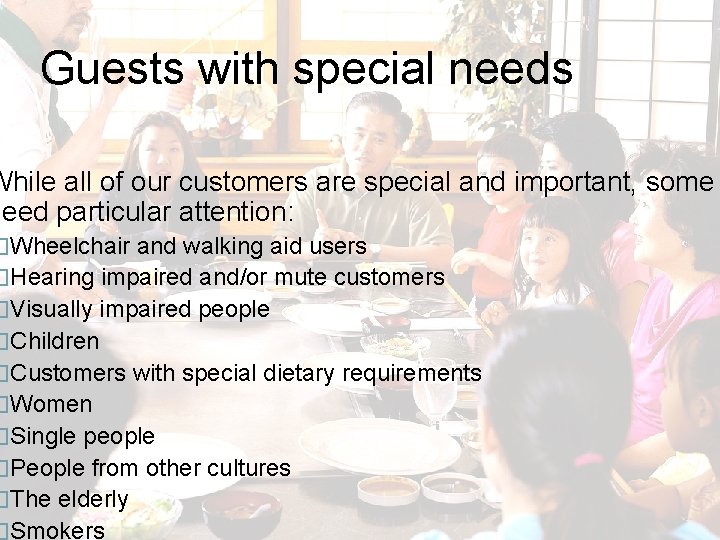
Guests with special needs While all of our customers are special and important, some need particular attention: �Wheelchair and walking aid users �Hearing impaired and/or mute customers �Visually impaired people �Children �Customers with special dietary requirements �Women �Single people �People from other cultures �The elderly �Smokers
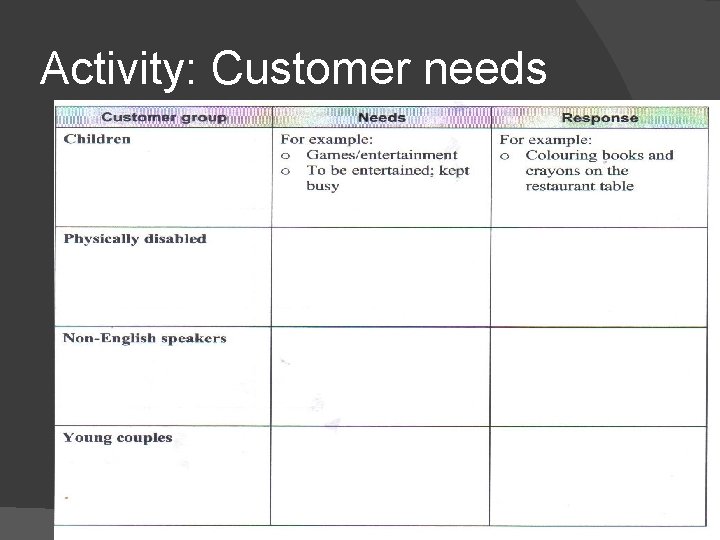
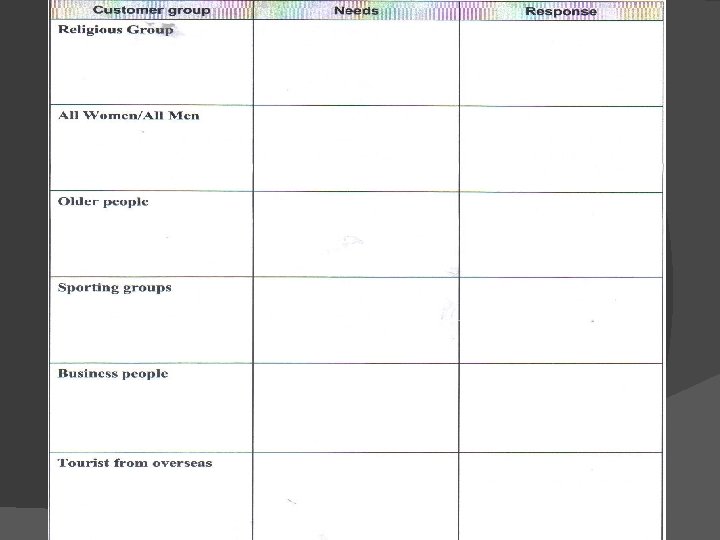
Activity: Customer needs
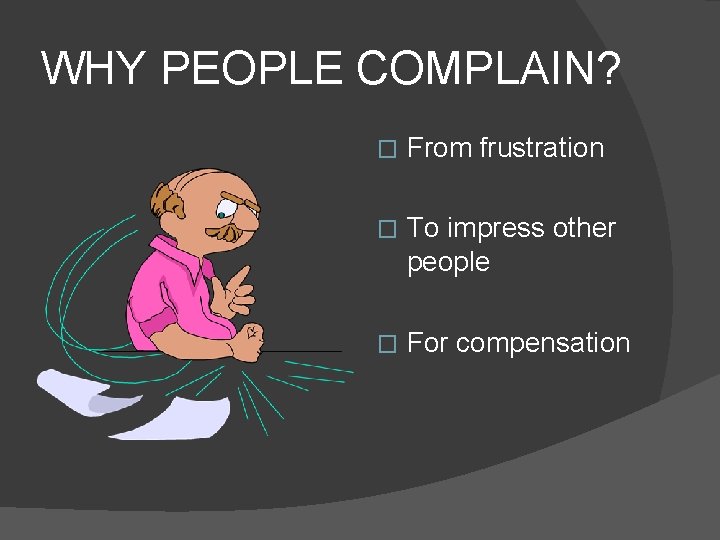
WHY PEOPLE COMPLAIN? � From frustration � To impress other people � For compensation
COMPLAINT HANDLING PROCEDURE � � � � � Listen without interruption Don’t get defensive Use a ‘sad but glad’ expression Express concern and empathy - apologise sincerely Establish the problem - ask questions Find out what they want Explain what you can and cannot do Fully discuss alternatives Take Action Follow up to ensure they are happy
DIFFERENCE BETWEEN A COMPLAINING CUSTOMER AND A DIFFICULT CUSTOMER • A complaining customer is somebody whose needs and expectations have not been met • A difficult customer is somebody who is a challenge to serve because of their personality, for example, they may be rude, impatient or talkative
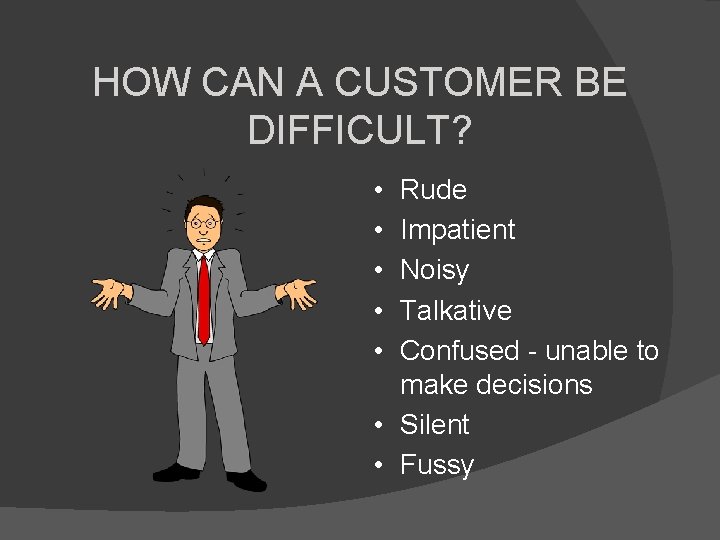
HOW CAN A CUSTOMER BE DIFFICULT? • • • Rude Impatient Noisy Talkative Confused - unable to make decisions • Silent • Fussy
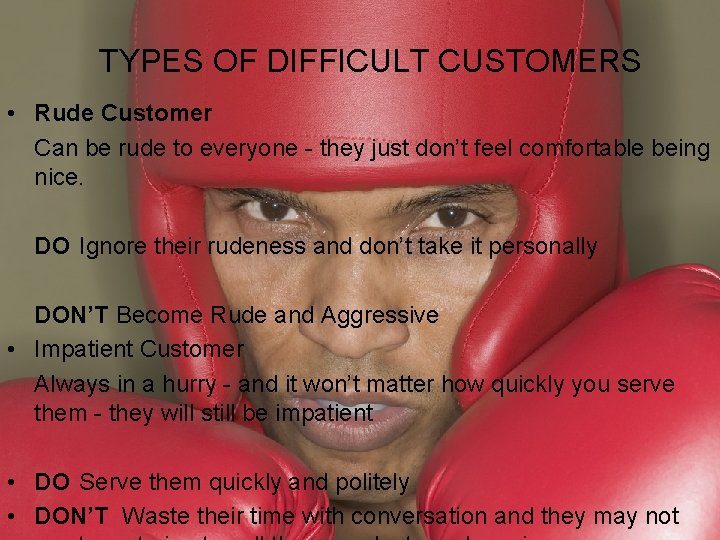
TYPES OF DIFFICULT CUSTOMERS • Rude Customer Can be rude to everyone - they just don’t feel comfortable being nice. DO Ignore their rudeness and don’t take it personally DON’T Become Rude and Aggressive • Impatient Customer Always in a hurry - and it won’t matter how quickly you serve them - they will still be impatient • DO Serve them quickly and politely • DON’T Waste their time with conversation and they may not
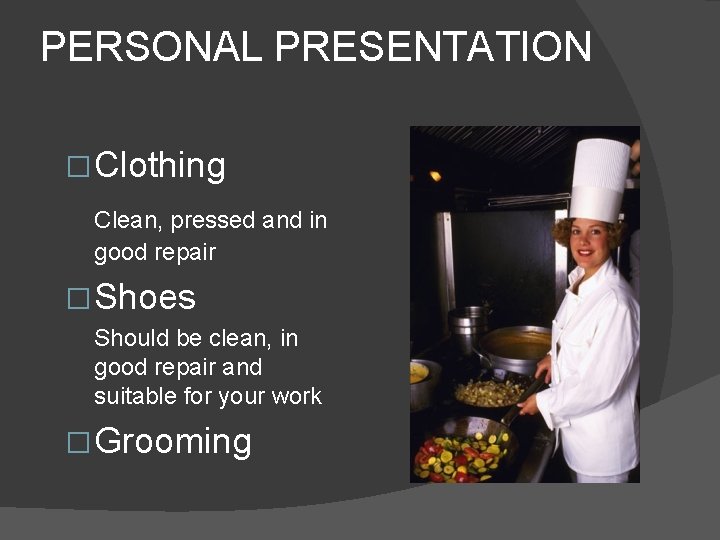
PERSONAL PRESENTATION � Clothing Clean, pressed and in good repair � Shoes Should be clean, in good repair and suitable for your work � Grooming
HEALTH AND HYGIENE Good Skin Care � Personal Freshness � Good oral hygiene - looking after your teeth � Attention to hair care and styling � Nail and hand care �
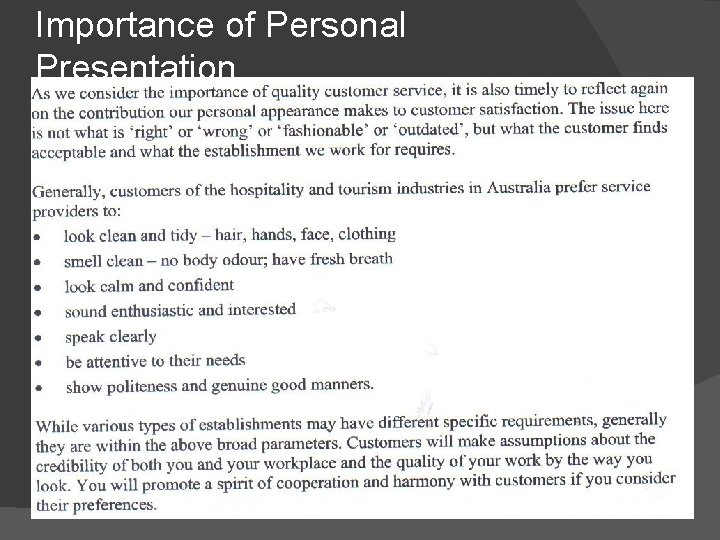
Importance of Personal Presentation
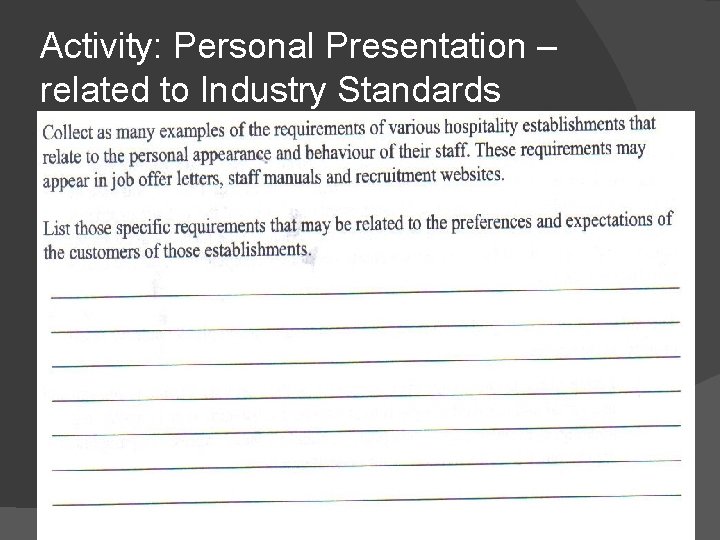
Activity: Personal Presentation – related to Industry Standards