
Working with Children with Challenging Behaviors May 17
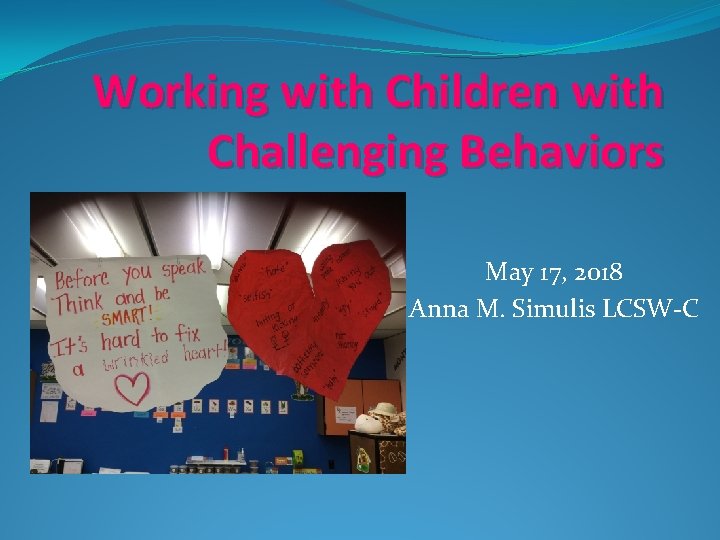
Working with Children with Challenging Behaviors May 17, 2018 Anna M. Simulis LCSW-C
Classroom Consultation �Weekly SEFEL coaching at each elementary school ages 3 to 1 st grade �Observations and Implementation of SEFEL and socialemotional strategies �Make and obtain appropriate materials �Home visits and meetings with families to facilitate communication between school and home and assist in parenting support and community resource allocation �Collaborate with administration to develop groups and programs to promote pro social behaviors. �Attending community appointments and IEP meetings as needed �Providing support for staff
Quick Disclaimer Children will be LOVINGLY referred to as: �Little monsters �Twerps �Gremlins �Turkeys �Critters �And in one instance a jerk If you do not have a sense of humor, you are in the wrong room and possibly the wrong profession. Laugh, or these little monsters will eat you alive.
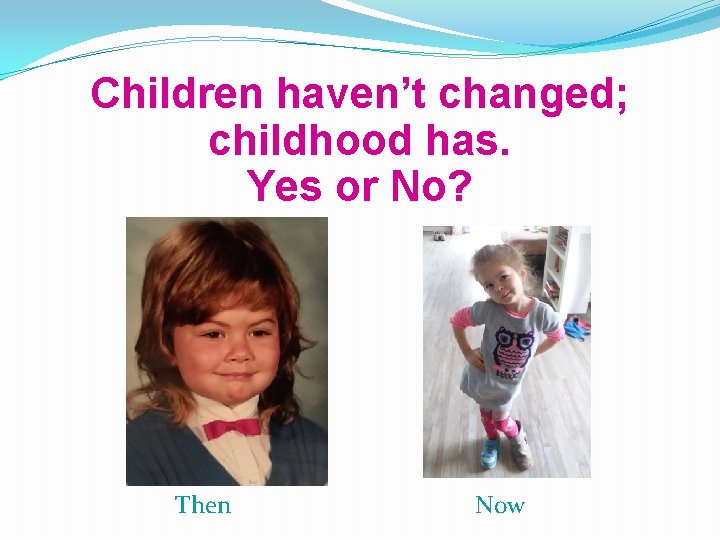
Children haven’t changed; childhood has. Yes or No? Then Now
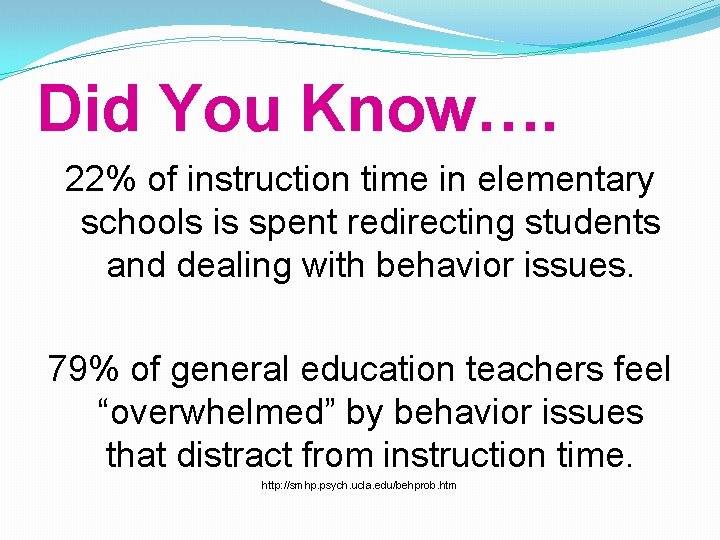
Did You Know…. 22% of instruction time in elementary schools is spent redirecting students and dealing with behavior issues. 79% of general education teachers feel “overwhelmed” by behavior issues that distract from instruction time. http: //smhp. psych. ucla. edu/behprob. htm
Early Childhood Mental Health “The science of child development shows that the foundation for sound mental health is built early in life, as early experiences— which include children’s relationships with parents, caregivers, relatives, teachers, and peers—shape the architecture of the developing brain. Disruptions in this developmental process can impair a child’s capacities for learning and relating to others, with lifelong implications. For society, many costly problems, ranging from the failure to complete high school to incarceration to homelessness, could be dramatically reduced if attention were paid to improving children’s environments of relationships and experiences early in life. ” Center on the Developing Child (2013). Early Childhood Mental Health (In. Brief).
In other words… Education determines who lives and who dies
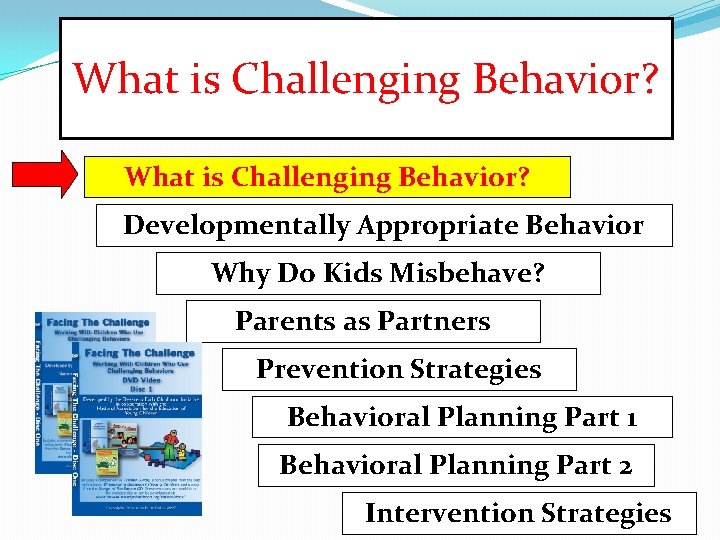
What is Challenging Behavior? Developmentally Appropriate Behavior Why Do Kids Misbehave? Parents as Partners Prevention Strategies Behavioral Planning Part 1 Behavioral Planning Part 2 Intervention Strategies
Don’t push my buttons! �On post it write down your #1 button �When I say go find your partners with the same button �Chart why that is your #1 button!!!
Let’s Watch and Discuss… �With a partner, list reasons this behavior would be considered “challenging”.
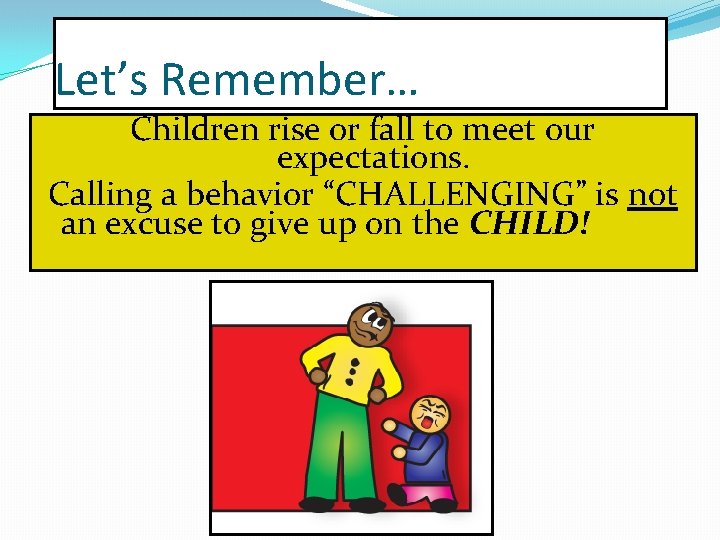
Let’s Remember… Children rise or fall to meet our expectations. Calling a behavior “CHALLENGING” is not an excuse to give up on the CHILD!
When Challenging Behavior Becomes the “Go-to” Response � While all children will use challenging behaviors from time to time, only 3 -7% of children come to rely on challenging behavior as the most common response! � Most children will “dabble” and find better ways to respond. � Most adults become concerned when the child is not moving past the challenging behavior to more positive responses.

Internalizing and Externalizing Behaviors Internalizing Behavior Externalizing Behavior • Why do we hear more about externalizing? • Why do we need more focus on internalizing? • Was anyone’s button an internalizing
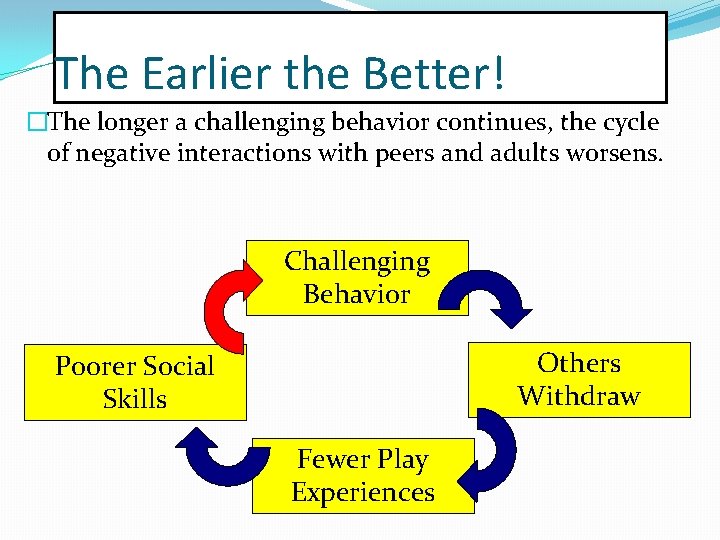
The Earlier the Better! �The longer a challenging behavior continues, the cycle of negative interactions with peers and adults worsens. Challenging Behavior Others Withdraw Poorer Social Skills Fewer Play Experiences
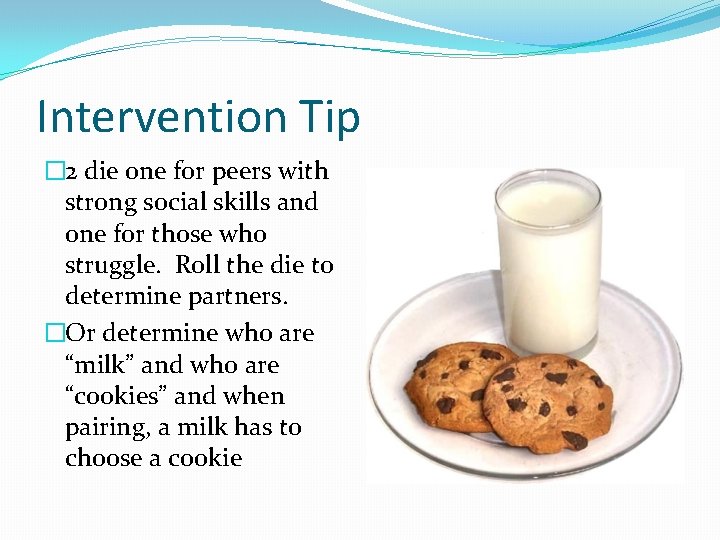
Intervention Tip � 2 die one for peers with strong social skills and one for those who struggle. Roll the die to determine partners. �Or determine who are “milk” and who are “cookies” and when pairing, a milk has to choose a cookie
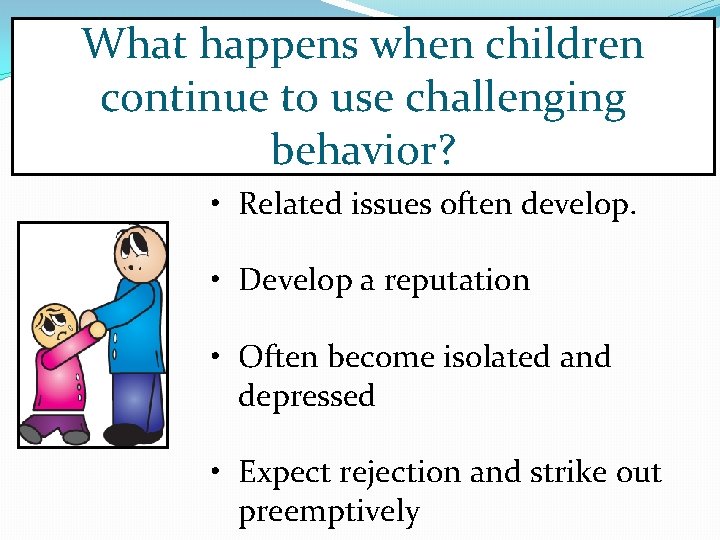
What happens when children continue to use challenging behavior? • Related issues often develop. • Develop a reputation • Often become isolated and depressed • Expect rejection and strike out preemptively
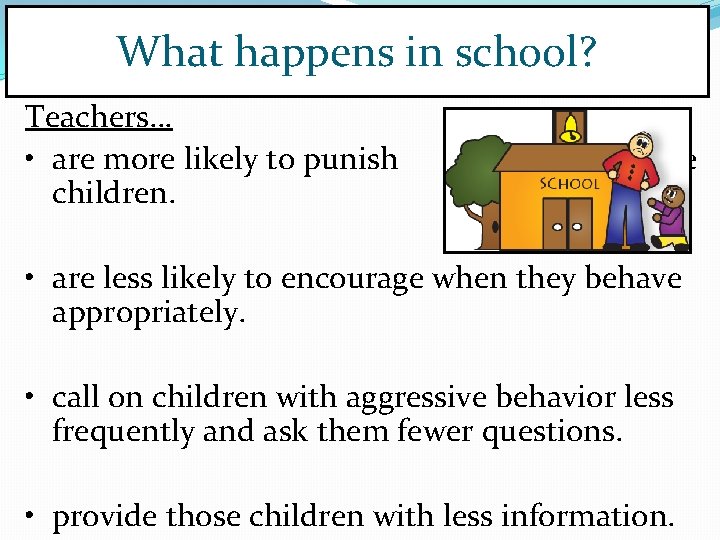
What happens in school? Teachers… • are more likely to punish children. those • are less likely to encourage when they behave appropriately. • call on children with aggressive behavior less frequently and ask them fewer questions. • provide those children with less information.
The earlier we can recognize challenging behavior and begin to help those children, the better chance of success they will have.

That means… Don’t wait to look like this before you ask for help!!!
Let’s Watch and Discuss…
Peaches Tantrum �What were the antecedents? �What did Josh do and say (his behaviors) �What were the consequences? �What do you think the goal of his behavior might have been? �If you were the coach, what strategies might you offer this teacher?
Time to Reflect How does actively looking for strengths in every child help you better work with a child with challenging behavior?
Developmentally Appropriate Behavior What is Challenging Behavior? Developmentally Appropriate Behavior Why Do Kids Misbehave? Parents as Partners Prevention Strategies Behavioral Planning Part 1 Behavioral Planning Part 2 Intervention Strategies
Why is it SO Important to Know What Behaviors are Developmentally Appropriate? �More realistic expectations �Stronger bond with trusting children �Guide to our developmentally appropriate practices �Resource to parents/guardians �Less frustration!
Let’s Watch and Discuss…
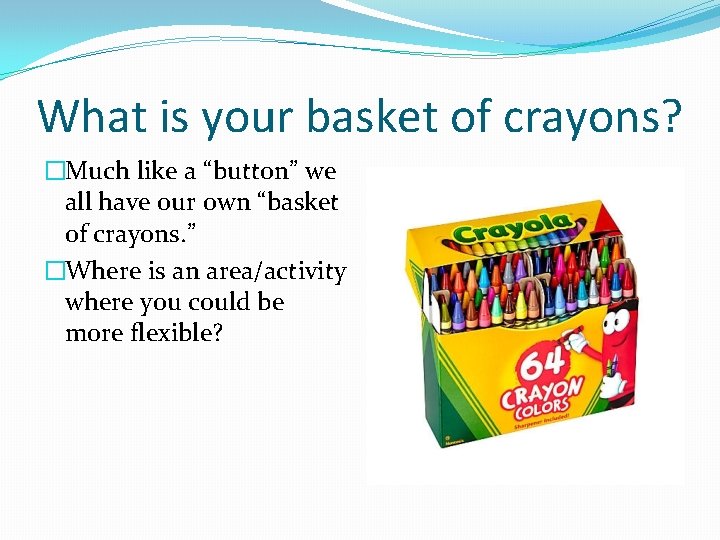
What is your basket of crayons? �Much like a “button” we all have our own “basket of crayons. ” �Where is an area/activity where you could be more flexible?
Why Do Kids Misbehave? What is Challenging Behavior? Developmentally Appropriate Behavior Why Do Kids Misbehave? Parents as Partners Prevention Strategies Behavioral Planning Part 1 Behavioral Planning Part 2 Intervention Strategies
So, Why Do They Misbehave? �BECAUSE THE BEHAVIOR IS WORKING FOR THEM! �All children use challenging behaviors from time to time. Most find ways to meet their needs in a more positive manner. �The key is to find out WHY they are acting the way they are, and design strategies that make sense for that child.
The Three Main Reasons for Misbehavior �The three main reasons are: 1. ) to avoid/escape a situation or person(s) 2. ) to obtain an object or attention 3. ) to change level of stimulation �Example: How could “Kicking” stem from each of these three reasons? How would your response differ in each situation?
Why Shouldn’t We Ask Children WHY They “Misbehaved”? �They may not really know why! • Is there any “good reason” for using challenging behavior to meet a need? • Any answer they give us will lead us to say, “I know you were (upset, angry, scared, frustrated…) but what else could you have done? ” • This often comes out more as a threat than a question.
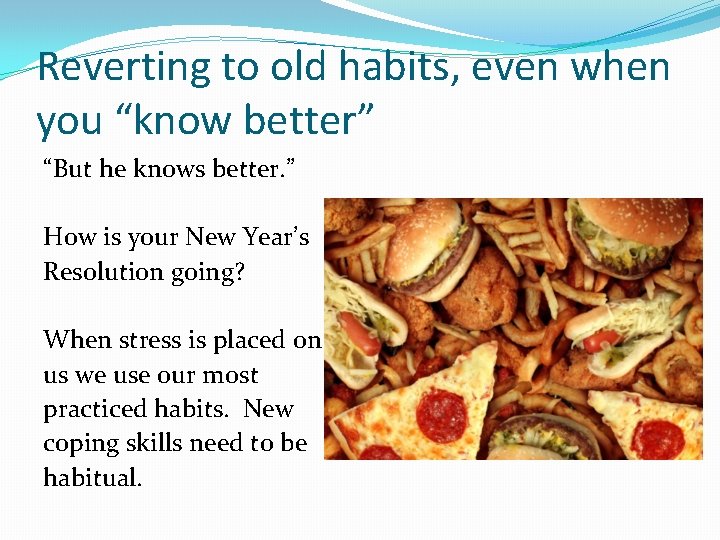
Reverting to old habits, even when you “know better” “But he knows better. ” How is your New Year’s Resolution going? When stress is placed on us we use our most practiced habits. New coping skills need to be habitual.
Why do kiddos misbehave?
How Risk and Protective Factors affect use of Challenging Behaviors �Main categories of risk and protective factors: 1. ) biological, or within-child 2. ) environmental/family �Risk alone does not determine a child’s future life outcome. Protective Factors play a major role in how the child will be able to “bounceback”.
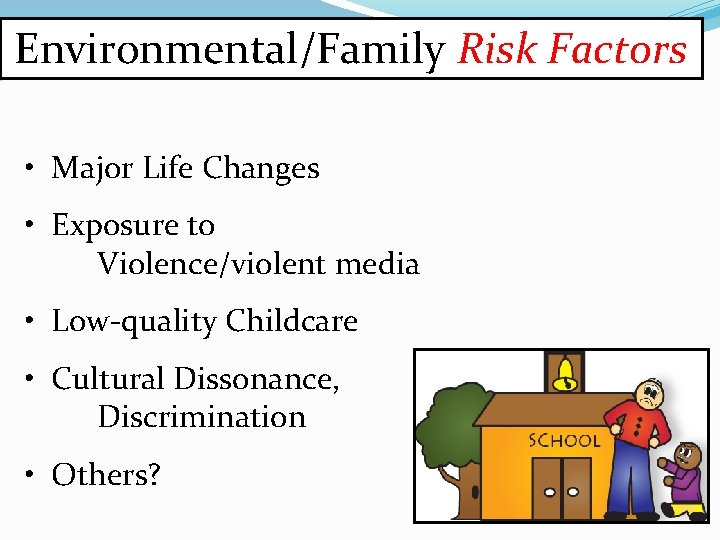
Environmental/Family Risk Factors • Major Life Changes • Exposure to Violence/violent media • Low-quality Childcare • Cultural Dissonance, Discrimination • Others?
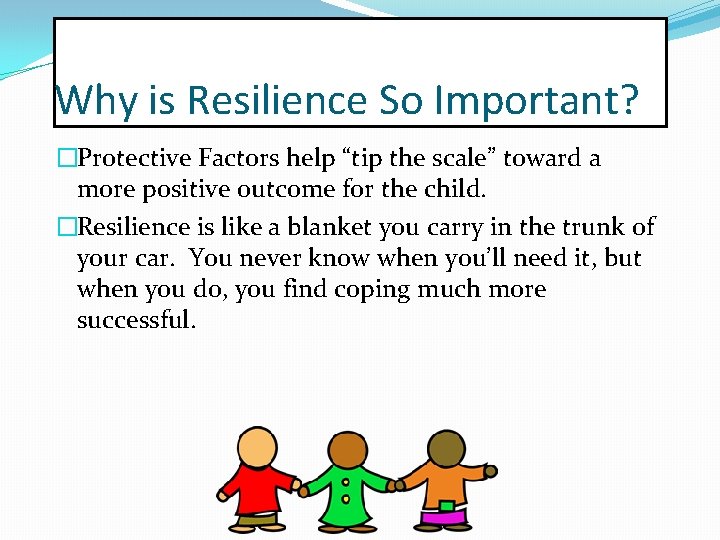
Why is Resilience So Important? �Protective Factors help “tip the scale” toward a more positive outcome for the child. �Resilience is like a blanket you carry in the trunk of your car. You never know when you’ll need it, but when you do, you find coping much more successful.
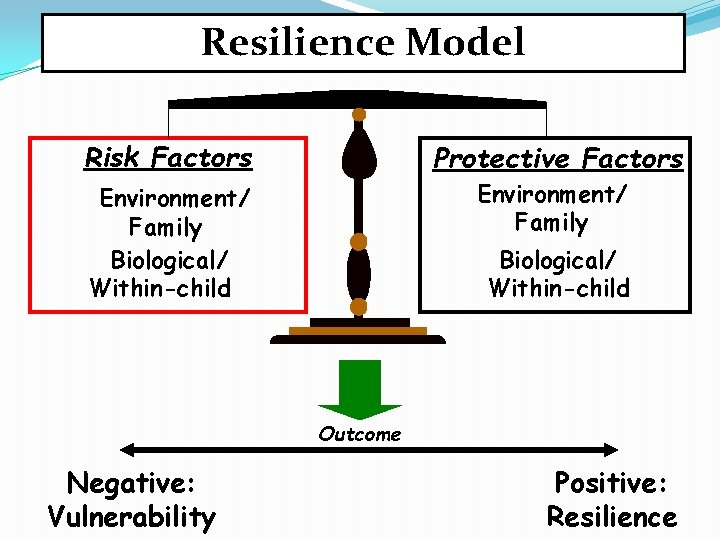
Resilience Model Risk Factors Protective Factors Environment/ Family Biological/ Within-child Outcome Negative: Vulnerability Positive: Resilience
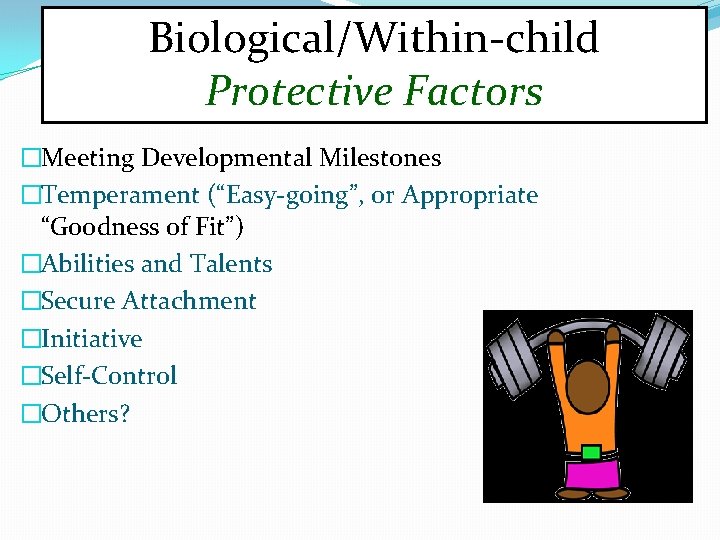
Biological/Within-child Protective Factors �Meeting Developmental Milestones �Temperament (“Easy-going”, or Appropriate “Goodness of Fit”) �Abilities and Talents �Secure Attachment �Initiative �Self-Control �Others?
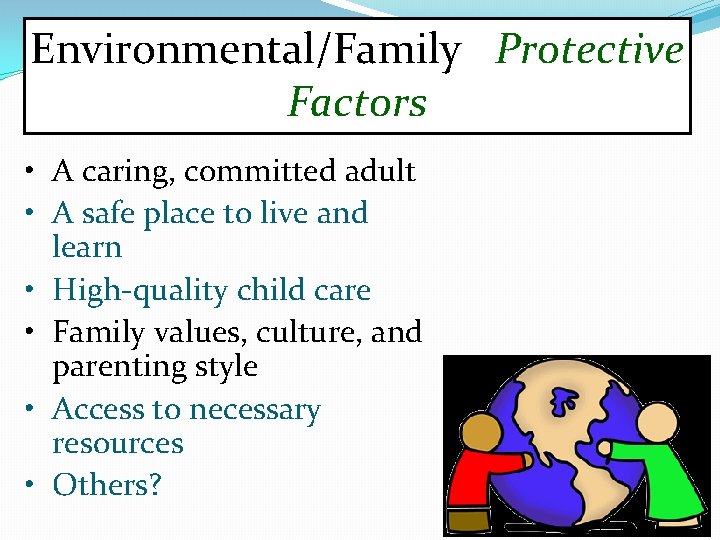
Environmental/Family Protective Factors • A caring, committed adult • A safe place to live and learn • High-quality child care • Family values, culture, and parenting style • Access to necessary resources • Others?
Resiliency
Parents as Partners What is Challenging Behavior? Developmentally Appropriate Behavior Why Do Kids Misbehave? Parents as Partners Prevention Strategies Behavioral Planning Part 1 Behavioral Planning Part 2 Intervention Strategies
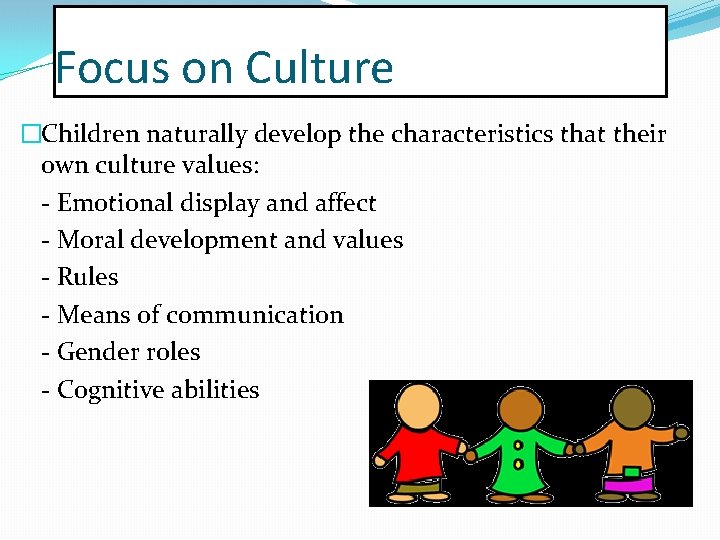
Focus on Culture �Children naturally develop the characteristics that their own culture values: - Emotional display and affect - Moral development and values - Rules - Means of communication - Gender roles - Cognitive abilities
Some Guidelines for Planning with Parents 1. ) Schedule a time to meet. Is there anyone else who needs to be invited to this meeting aside from the teacher(s) and parent(s)? 2. ) Give a list of questions/discussion topics in advance of meeting. 3. ) Start the meeting by discussing strengths. 4. ) Really listen to concerns and suggestions.
Some Guidelines for Planning with Parents 5. ) Do not assume, blame, or judge the child or family. Be positive and open-minded! 6. ) Brainstorm goals and ideas for home and school. 7. ) Discuss follow-up and next time to meet. 8. ) End on a hopeful, positive note.
Working with the Family �Welcome family’s input in selecting which strategies to use. �Make sure that the strategies are effective both at school and at home. �Discuss how these responses will be implemented both at school and at home. �Selected strategies must be culturally sensitive. �How will you communicate with family and document the effectiveness of the planned responses you have chosen?
What About These Tough Topics? 1. ) When you and the parents don’t see eye-to-eye… 2. ) When the parents are afraid of “labeling”… 3. ) What to say to other parents in the class… 4. ) When the child needs more help… 5. ) When you may have to ask the child to leave…
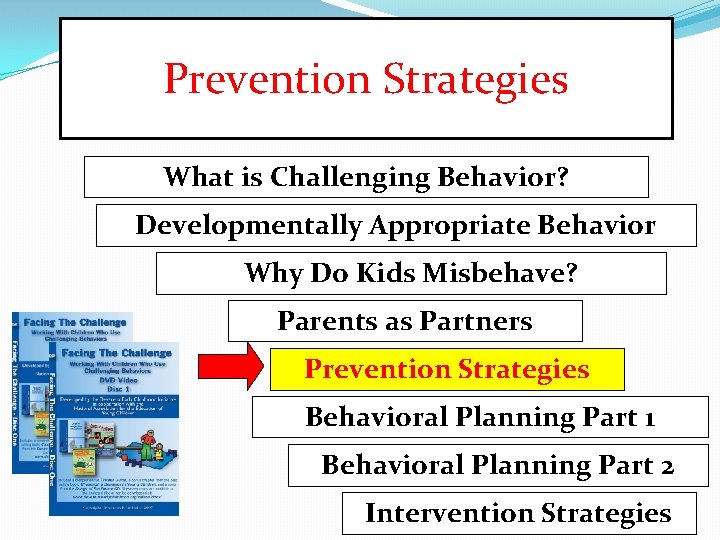
Prevention Strategies What is Challenging Behavior? Developmentally Appropriate Behavior Why Do Kids Misbehave? Parents as Partners Prevention Strategies Behavioral Planning Part 1 Behavioral Planning Part 2 Intervention Strategies
Let’s Watch and Discuss…
What is Prevention? 1. ) Knowing your children each as individuals through Careful Observation 2. ) Reflecting on situations and practices to know how/what to improve 3. ) Setting up the room, routine, and activities in Quality ways that promote healthy social/emotional behaviors 4. ) Having a Positive Outlook each day
Careful Observation • How is observation a tool to prevention of and response to challenging behaviors? • What type of observation does your program conduct? What are the purposes of these observations? • Are your observations Accurate, Objective and Complete?
The Importance of Reflecting • Be flexible - every child and every group is different • Taking the time to really think about what we do and WHY we do it • What is going well in the program? • What areas need improvement? • What steps need to be taken to help your classroom be the best place it can be? • Set a deadline for yourself!
Quality Classroom Practices These 6 areas should be examined for quality and developmental appropriateness: • Environment • Daily Program/Schedule • Activities and Experiences • Supportive Interactions • Family Involvement • Respect of Cultural Values
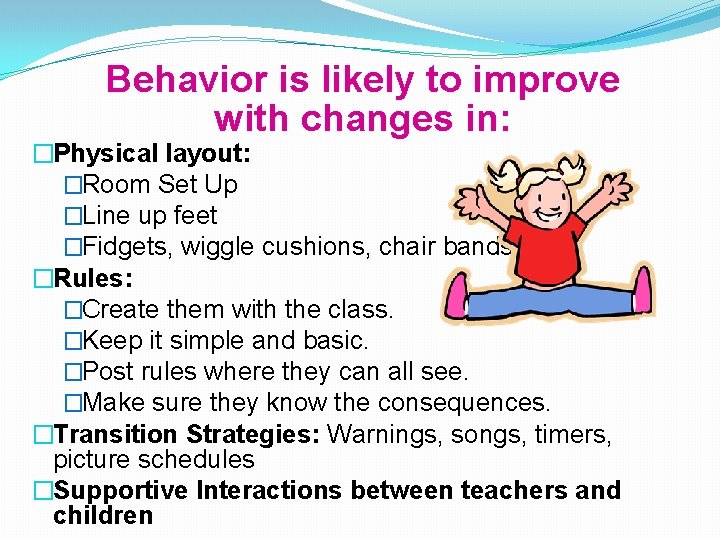
Behavior is likely to improve with changes in: �Physical layout: �Room Set Up �Line up feet �Fidgets, wiggle cushions, chair bands �Rules: �Create them with the class. �Keep it simple and basic. �Post rules where they can all see. �Make sure they know the consequences. �Transition Strategies: Warnings, songs, timers, picture schedules �Supportive Interactions between teachers and children
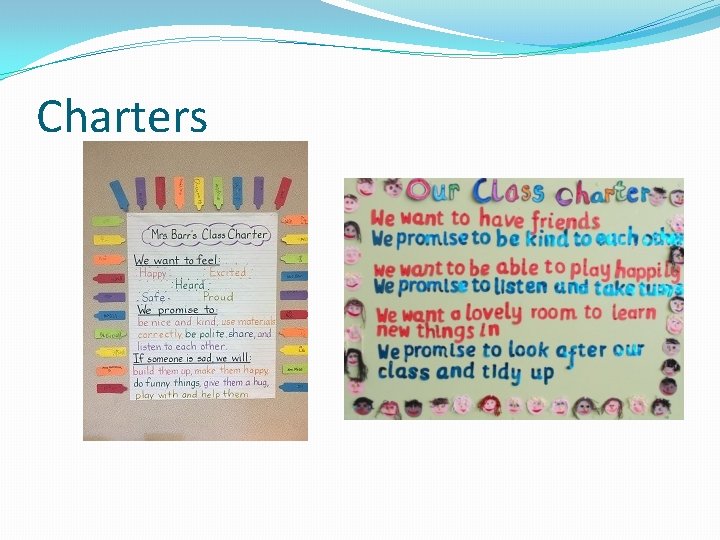
Rules and Charters �In this class we want to feel… Happy Loved Smart Kind Safe Etc… and have all kids “sign” Rules Be kind Listen Clean Up Nicely
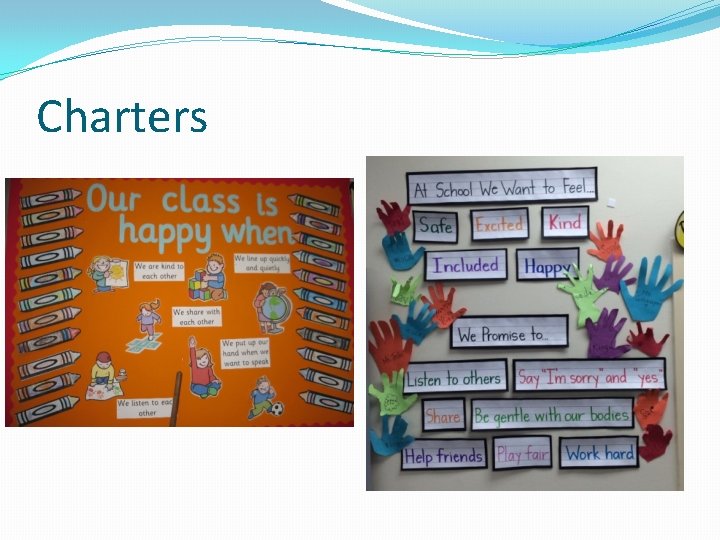
Charters
Charters
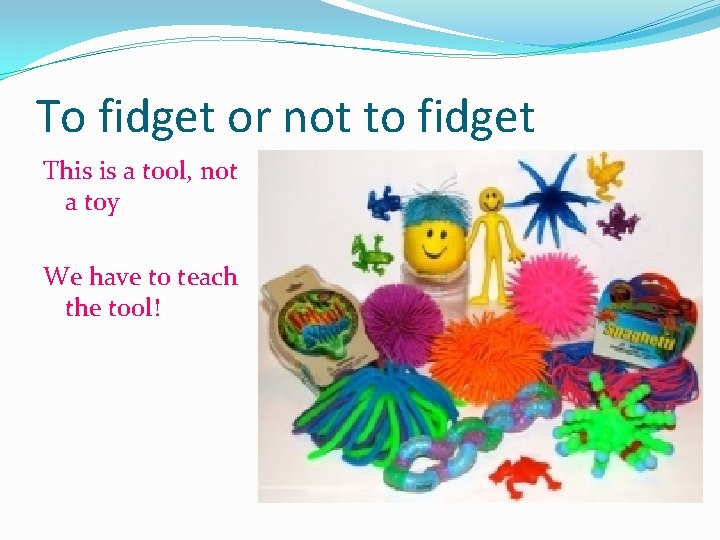
To fidget or not to fidget This is a tool, not a toy We have to teach the tool!
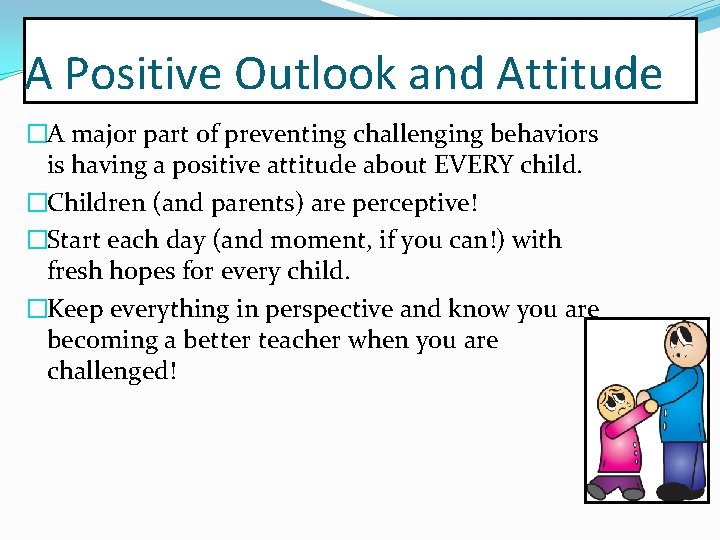
A Positive Outlook and Attitude �A major part of preventing challenging behaviors is having a positive attitude about EVERY child. �Children (and parents) are perceptive! �Start each day (and moment, if you can!) with fresh hopes for every child. �Keep everything in perspective and know you are becoming a better teacher when you are challenged!
Prevention Strategies
Lets talk about choices �Start with 2 preferred choices: gummies or m&m’s �Then move towards things that are not as high preference: do you want to sit next to Amy or Jason �Attempting to maintain control is a coping skill for many children with anxiety or chaotic home lives. �Sit in your seat or I am calling your mom is a threat, not a choice! We often take control away from children with the exception of self control and then we expect them to suddenly know what to do without being taught or reinforced.
Time to Reflect How does observation, if done correctly and consistently, actually help prevent certain challenging behaviors?
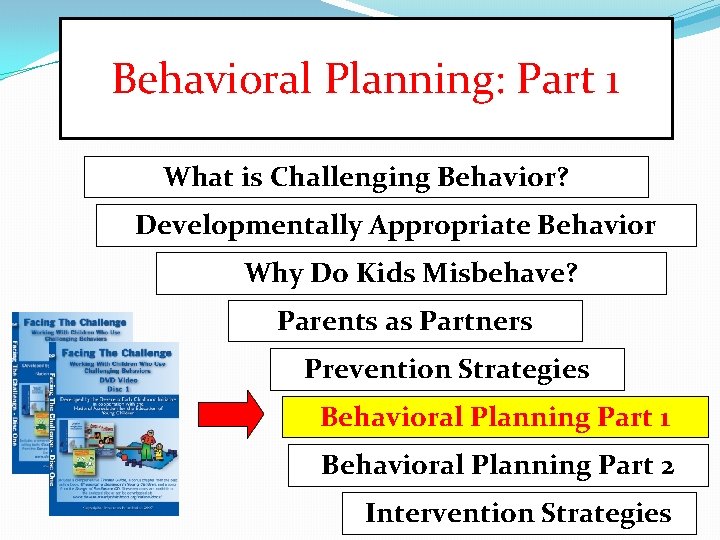
Behavioral Planning: Part 1 What is Challenging Behavior? Developmentally Appropriate Behavior Why Do Kids Misbehave? Parents as Partners Prevention Strategies Behavioral Planning Part 1 Behavioral Planning Part 2 Intervention Strategies
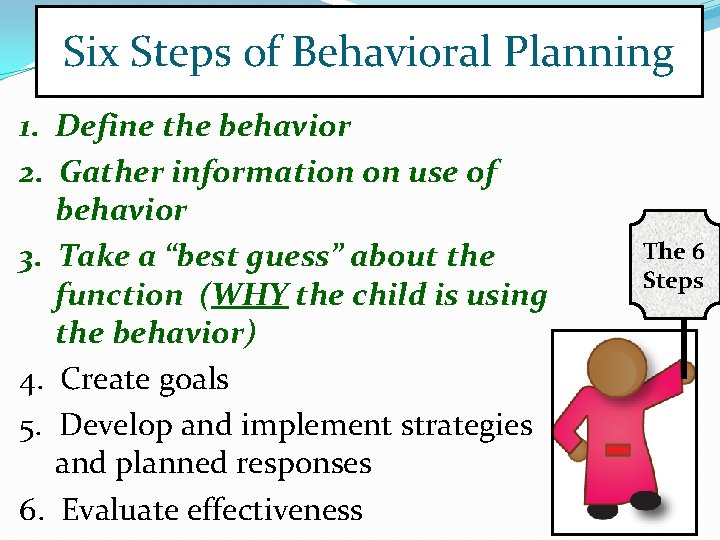
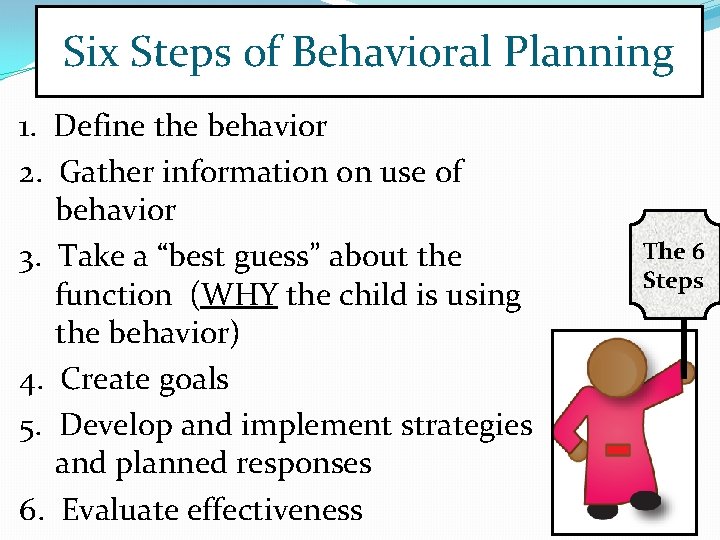
Six Steps of Behavioral Planning 1. Define the behavior 2. Gather information on use of behavior 3. Take a “best guess” about the function (WHY the child is using the behavior) 4. Create goals 5. Develop and implement strategies and planned responses 6. Evaluate effectiveness The 6 Steps
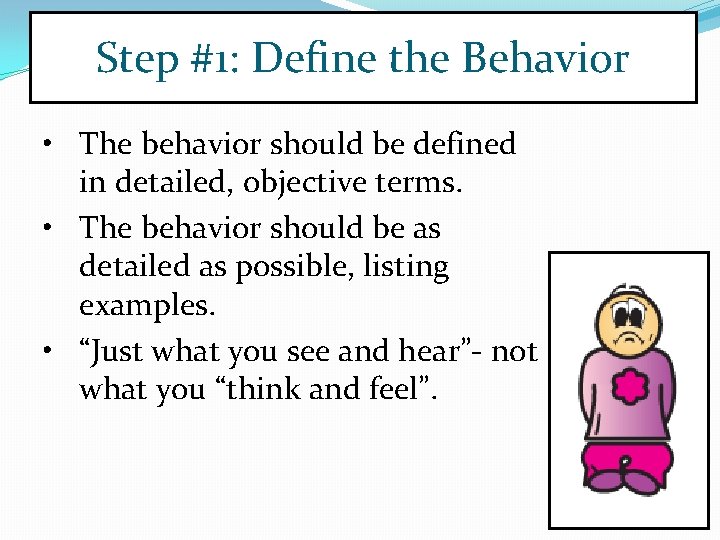
Step #1: Define the Behavior • The behavior should be defined in detailed, objective terms. • The behavior should be as detailed as possible, listing examples. • “Just what you see and hear”- not what you “think and feel”.
Describe the behavior
Describe the behavior
What opportunities were missed?
Step #2 - Gather Information �When and where does the behavior occur? �When and where does the behavior NOT occur? �How frequently does the behavior occur? �What is the intensity of the behavior? �Who else is involved?
Useful Information • Parent interview • Observations • Assessments • Health information • Family background and living situation • Culture/religion/ethnicity • Behavioral incident reports
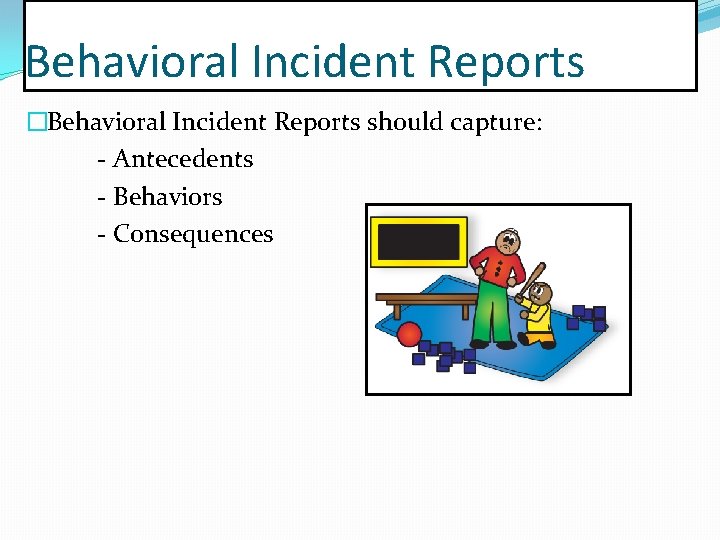
Behavioral Incident Reports �Behavioral Incident Reports should capture: - Antecedents - Behaviors - Consequences
Step #3: Take a Best Guess �What patterns are there? �What seems to be the goal? �Did something happen at home or school? �Which of the three reasons for misbehavior does this behavior serve for the child? 1. ) Obtain an object or attention 2. ) Avoid/escape activity, person, situation 3. ) Change level of stimulation)
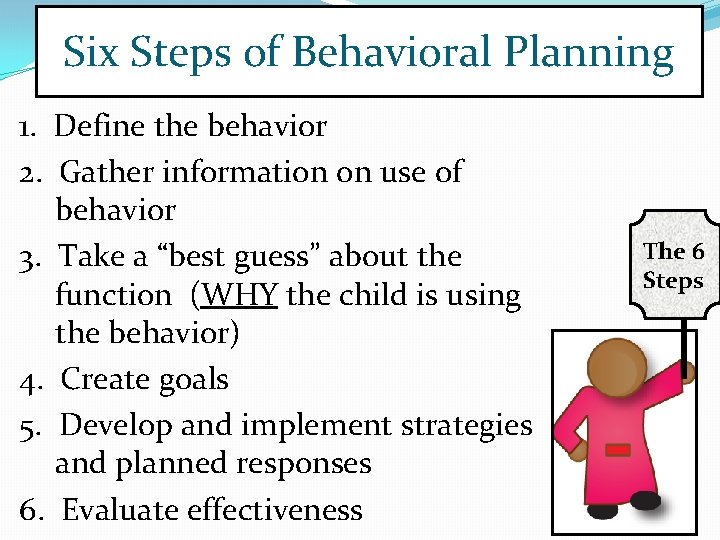
Six Steps of Behavioral Planning 1. Define the behavior 2. Gather information on use of behavior 3. Take a “best guess” about the function (WHY the child is using the behavior) 4. Create goals 5. Develop and implement strategies and planned responses 6. Evaluate effectiveness The 6 Steps
Behavioral Planning: Part 2 What is Challenging Behavior? Developmentally Appropriate Behavior Why Do Kids Misbehave? Parents as Partners Prevention Strategies Behavioral Planning Part 1 Behavioral Planning Part 2 Intervention Strategies
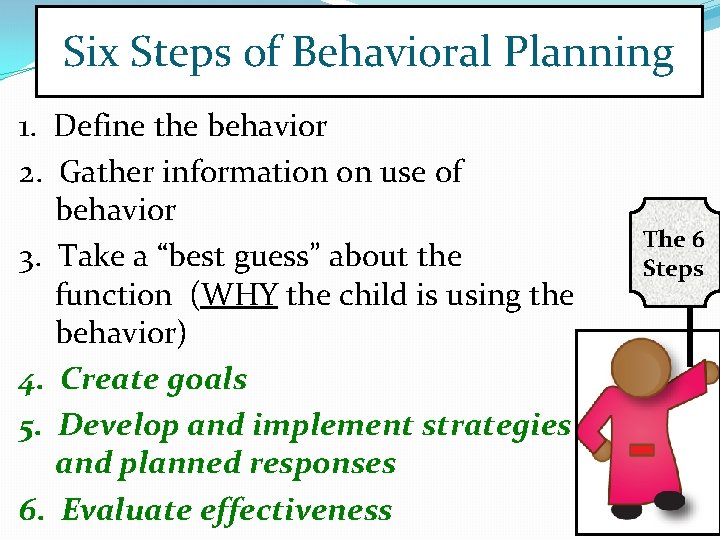
Six Steps of Behavioral Planning 1. Define the behavior 2. Gather information on use of behavior 3. Take a “best guess” about the function (WHY the child is using the behavior) 4. Create goals 5. Develop and implement strategies and planned responses 6. Evaluate effectiveness The 6 Steps
Behavioral Planning: Goal Setting
Planned Responses �Discuss how adults will respond each time a shortterm goal is met. �Determine how adults will respond if/when the challenging behavior is used. �Patience and Consistency are KEY.
Step #4: Set Goals • Set long-term and several short-term goals. • Make sure the goals apply to both the home and school environments. • ELA can be a tool as an objective sequence https: //pd. kready. org/99155
Step #5: Develop and Implement Strategies �Consider the child’s existing strengths. �Make sure the strategies are “function-based”: revisit the “Best Guess” as to WHY the child was using the behavior: - To obtain an object or attention - To escape/avoid person(s) and/or situations - To change level of stimulation
Some Successful Strategies that Worked with Josh • Creating a more stimulating environment. • Working with the more positive caregiver when possible. • Responding quicker to Josh’s use of positive behaviors. • Finding a peer-partner for him to develop social skills.
Before the Meeting Ends… • Decide how to document progress and how to keep communication open between home and school. • Discuss the importance of persistence, and that the behavior may get worse at first! • Schedule a date to meet again to evaluate progress and decide next steps.
Step #6: Evaluate Effectiveness �Give the plan and strategies a chance to work (usually 4 -6 weeks). �Look over progress notes and observations of the child (note frequency and intensity). �Celebrate small improvements. �Meet with the team to review and revise the child’s progress and plans. �Consider involving more expanded services if necessary.
Six Steps of Behavioral Planning 1. Define the behavior 2. Gather information on use of behavior 3. Take a “best guess” about the function (WHY the child is using the behavior) 4. Create goals 5. Develop and implement strategies and planned responses 6. Evaluate effectiveness The 6 Steps
Intervention Strategies What is Challenging Behavior? Developmentally Appropriate Behavior Why Do Kids Misbehave? Parents as Partners Prevention Strategies Behavioral Planning Part 1 Behavioral Planning Part 2 Intervention Strategies
Intervention Strategies
When a Child is Out-of-Control �The child is driven by emotion. �Doesn’t hear anything you say �Words escalate the behavior �Reasoning does not work. �Non verbal communication is key. �Where and how you stand is important.
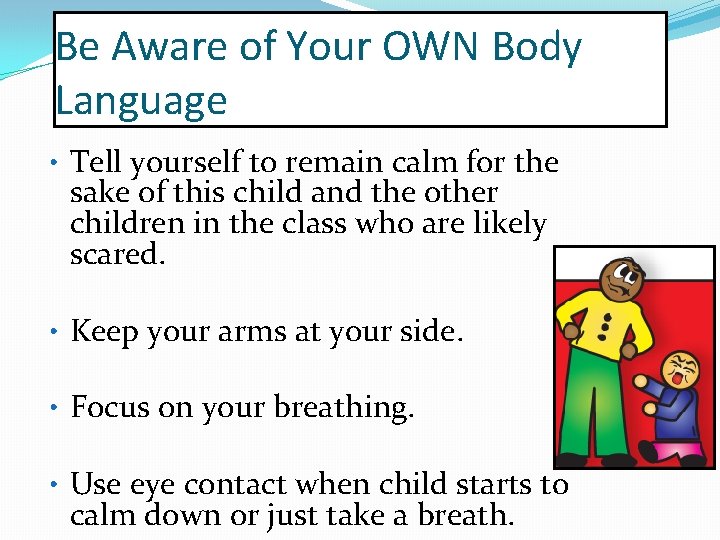
Be Aware of Your OWN Body Language • Tell yourself to remain calm for the sake of this child and the other children in the class who are likely scared. • Keep your arms at your side. • Focus on your breathing. • Use eye contact when child starts to calm down or just take a breath.
After the Child has Settled Down… • When the child is ready, find the right time and place to talk where you will (likely) not be interrupted. • Mirror the child’s speech: – tone, volume speed, cadence • Lead the child’s speech: – calmer, quieter, slower • Acknowledge the child’s feelings. • Use your words carefully: – “And” in place of “but” (does not discount child) – “We” in place of “you” (suggests support) – “Can” in place of “should” (Implies ability/choice)
Time to Reflect Why and how should a child's strengths play into the intervention strategies that are chosen?

Success!

Wait for it…
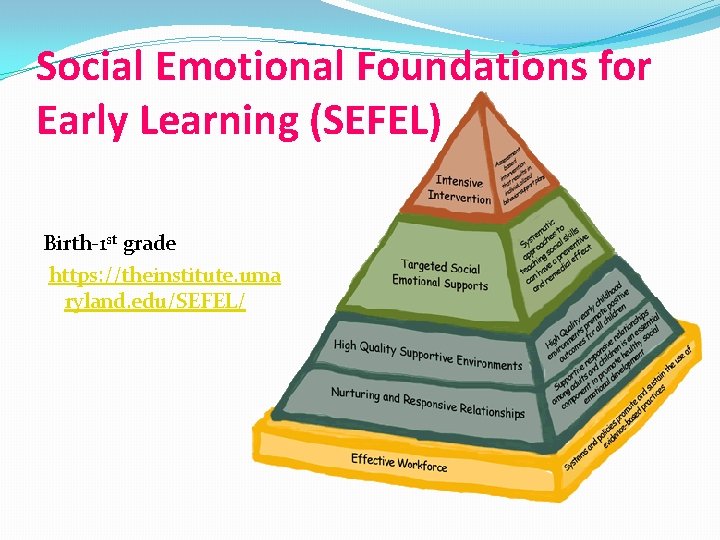
Social Emotional Foundations for Early Learning (SEFEL) Birth-1 st grade https: //theinstitute. uma ryland. edu/SEFEL/
Being Vulnerable https: //www. youtube. com/watch? v=Zk. Da. KKk. Fi 6 Y You do Not have to have all the answers. The behavior did not happen overnight and it will not subside instantly because of a sticker chart! Just keep swimming
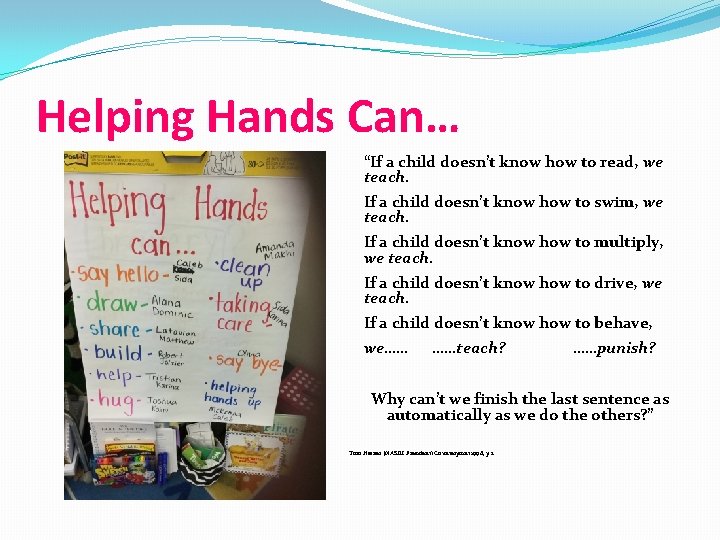
Helping Hands Can… “If a child doesn’t know how to read, we teach. If a child doesn’t know how to swim, we teach. If a child doesn’t know how to multiply, we teach. If a child doesn’t know how to drive, we teach. If a child doesn’t know how to behave, we…… ……teach? ……punish? Why can’t we finish the last sentence as automatically as we do the others? ” Tom Herner (NASDE President) Counterpoint 1998, p. 2
- Slides: 92