
WORKING TOGETHER TO MAKE STANDARDS AND ASSESSMENT STRONGER
- Slides: 30
WORKING TOGETHER TO MAKE STANDARDS AND ASSESSMENT STRONGER: COLLABORATIVE STRATEGIES AT ALL SYSTEMS LEVELS Lindy Buch, Ph. D. , Director Office of Early Childhood Education and Family Services Michigan Department of Education Past-President, National Association of Early Childhood Specialists in State Departments of Education (NAECS/SDE) (517)373 -8483 Buch. L@michigan. gov Marilou Hyson, Ph. D. Senior Advisor for Research and Professional Practice National Association for the Education of Young Children 1509 16 th Street, NW Washington, DC 20036 (202)328 -4581 mhyson@naeyc. org Jana Martella Director of Early Childhood and Family Education Council of Chief State School Officers One Massachusetts Avenue, NW, Suite 700 Washington, DC 2001 (202)336 -7057 janam@ccsso. org
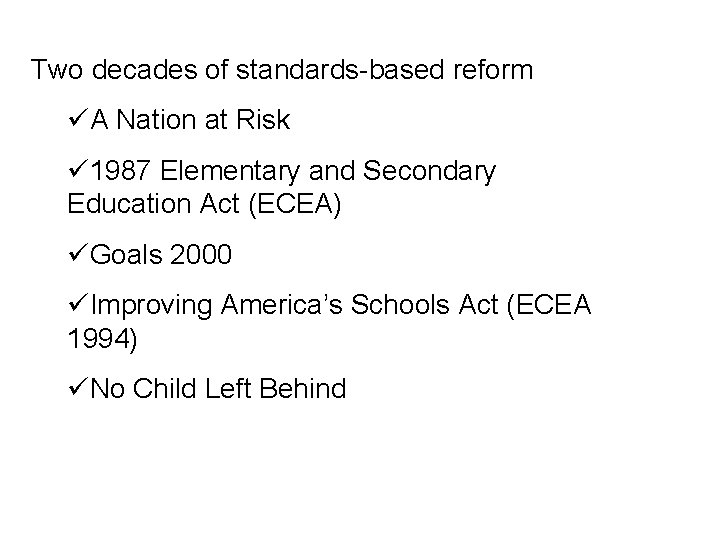
Two decades of standards-based reform üA Nation at Risk ü 1987 Elementary and Secondary Education Act (ECEA) üGoals 2000 üImproving America’s Schools Act (ECEA 1994) üNo Child Left Behind
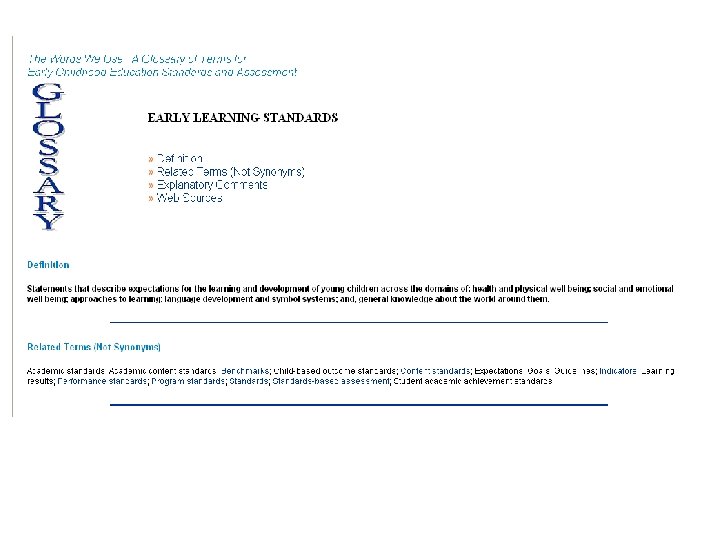
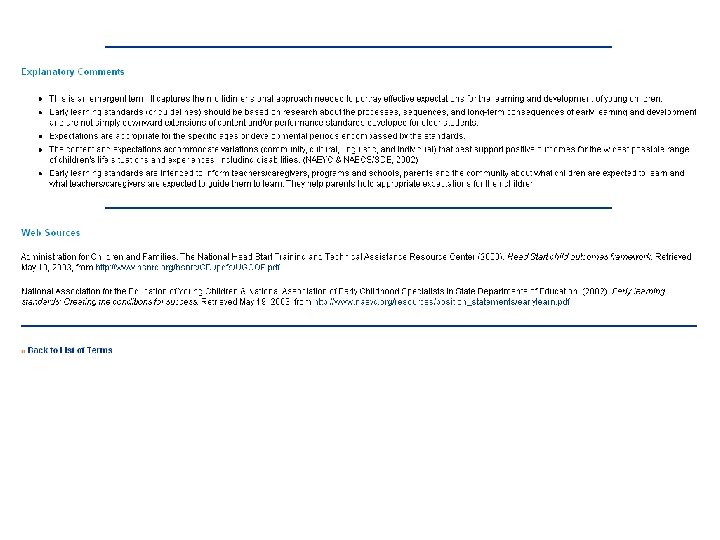
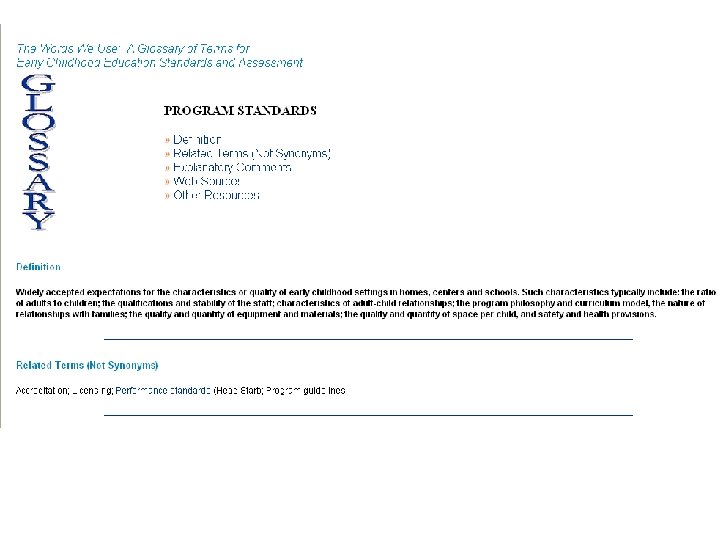
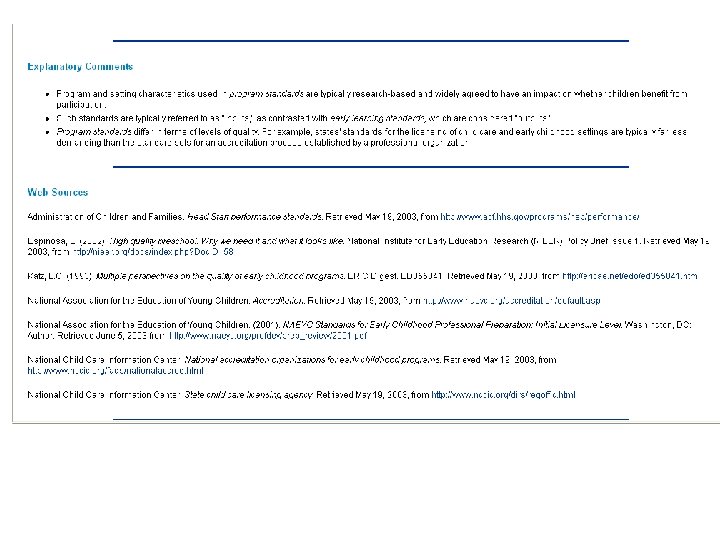
Some definitions……
Some resources from CCSSO www. ccsso. org/ECEAglossary www. ccsso. org/ECEAstandards
FOOD FOR THOUGHT……
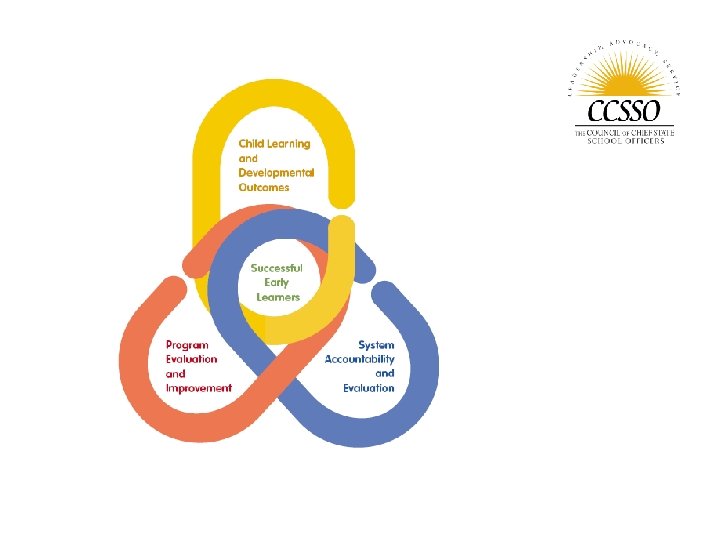
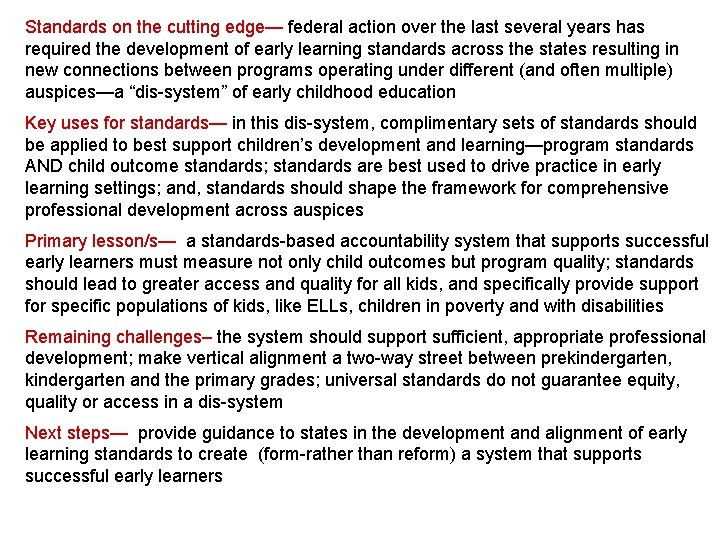
Standards on the cutting edge— federal action over the last several years has required the development of early learning standards across the states resulting in new connections between programs operating under different (and often multiple) auspices—a “dis-system” of early childhood education Key uses for standards— in this dis-system, complimentary sets of standards should be applied to best support children’s development and learning—program standards AND child outcome standards; standards are best used to drive practice in early learning settings; and, standards should shape the framework for comprehensive professional development across auspices Primary lesson/s— a standards-based accountability system that supports successful early learners must measure not only child outcomes but program quality; standards should lead to greater access and quality for all kids, and specifically provide support for specific populations of kids, like ELLs, children in poverty and with disabilities Remaining challenges– the system should support sufficient, appropriate professional development; make vertical alignment a two-way street between prekindergarten, kindergarten and the primary grades; universal standards do not guarantee equity, quality or access in a dis-system Next steps— provide guidance to states in the development and alignment of early learning standards to create (form-rather than reform) a system that supports successful early learners
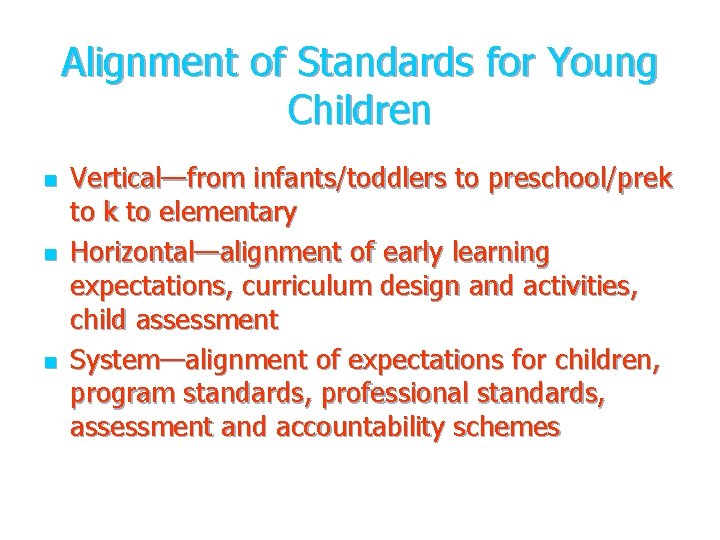
Alignment of Standards for Young Children n Vertical—from infants/toddlers to preschool/prek to elementary Horizontal—alignment of early learning expectations, curriculum design and activities, child assessment System—alignment of expectations for children, program standards, professional standards, assessment and accountability schemes
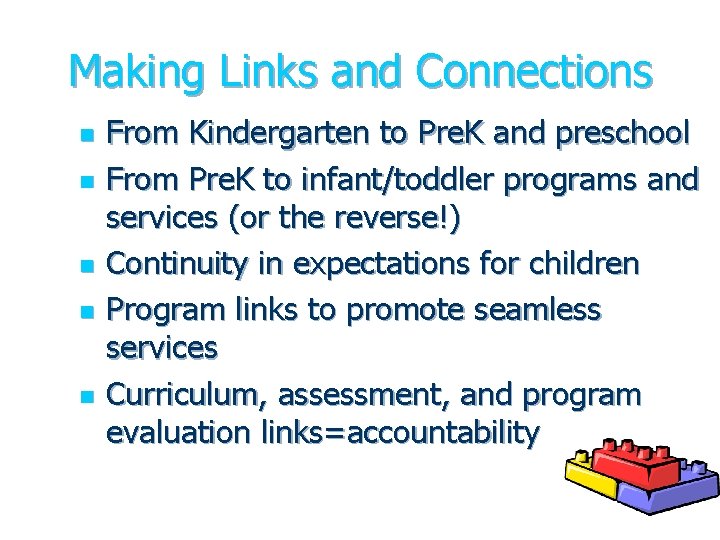
Making Links and Connections n n n From Kindergarten to Pre. K and preschool From Pre. K to infant/toddler programs and services (or the reverse!) Continuity in expectations for children Program links to promote seamless services Curriculum, assessment, and program evaluation links=accountability
Working Together n n National organizations developing positions on standards, accountability, appropriate assessment, etc. Issues of inclusion States working across agencies and sectors to develop frameworks Who is accountable for what?
Is My Child Ready? (AKA Transition) The Specific Example of “School Readiness” n n n What’s ready? Is readiness a normreferenced or criterionreferenced concept? Does mastery of Pre. K mean ready for K?
From Infants and Toddlers to Pre. K n n Developmental milestones to developmental domains—and content areas? Assessment is only possible when skills have developed; infant responses are mostly motoric Mapping points: multiple connections rather than one-to -one correspondence Developmental precursors of skills are not always domain specific
From Pre. K to Kindergarten and Primary Grades n n n Replace developmental milestones and domains with academic content areas What gets tested gets taught Teachers report/discuss social competence, emotional issues, “approaches to learning, ” but they aren’t assessed
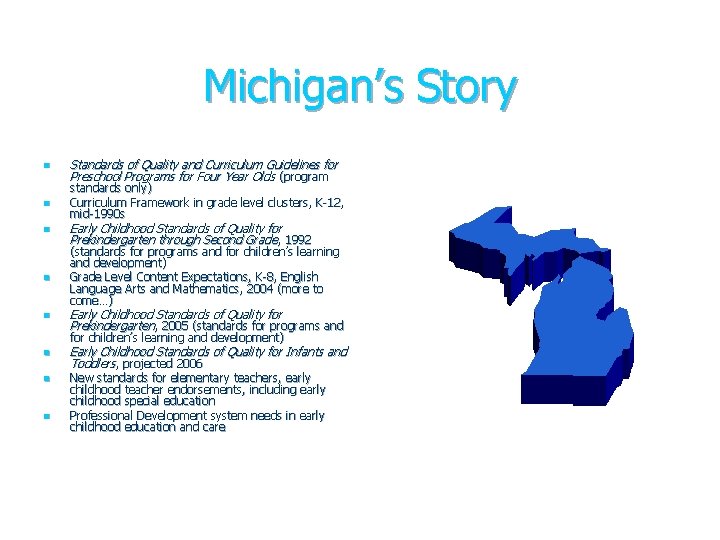
Michigan’s Story n n n Standards of Quality and Curriculum Guidelines for Preschool Programs for Four Year Olds (program standards only) Curriculum Framework in grade level clusters, K-12, mid-1990 s Early Childhood Standards of Quality for Prekindergarten through Second Grade , 1992 (standards for programs and for children’s learning and development) Grade Level Content Expectations, K-8, English Language Arts and Mathematics, 2004 (more to come…) Early Childhood Standards of Quality for Prekindergarten , 2005 (standards for programs and for children’s learning and development) n n n Early Childhood Standards of Quality for Infants and Toddlers, projected 2006 New standards for elementary teachers, early childhood teacher endorsements, including early childhood special education Professional Development system needs in early childhood education and care
Linking Concept _______
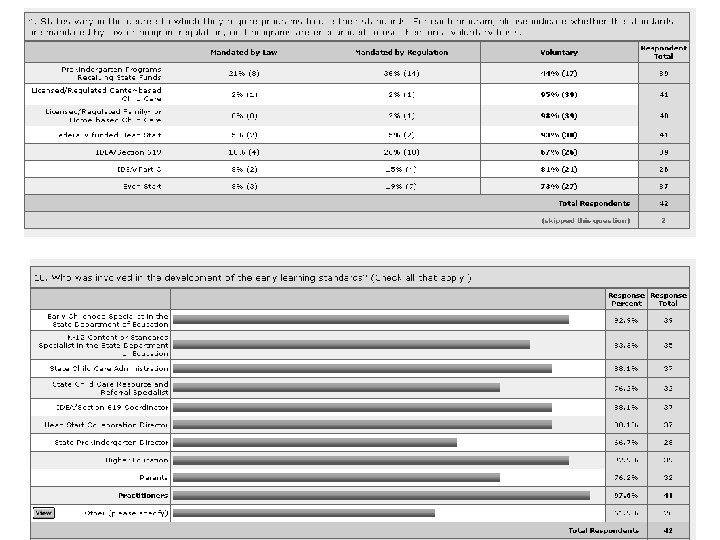
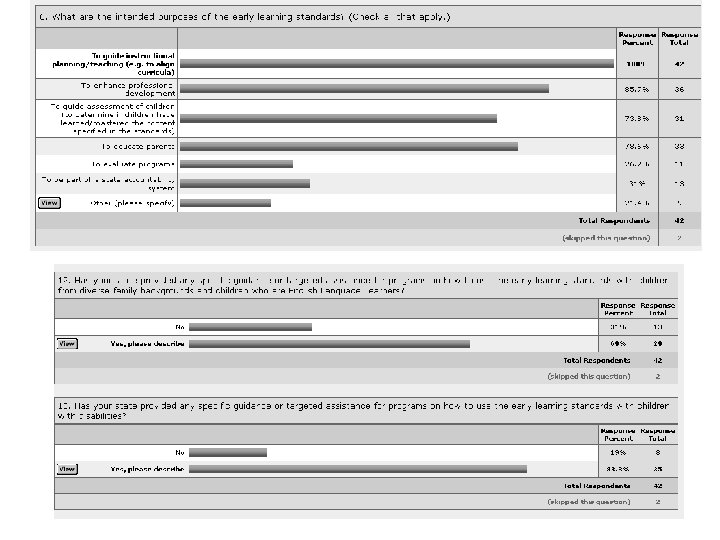
Results n n Variable process Most useful for parent/family information May be very useful for classroom planning Important policy issues n n ELL Children with disabilities
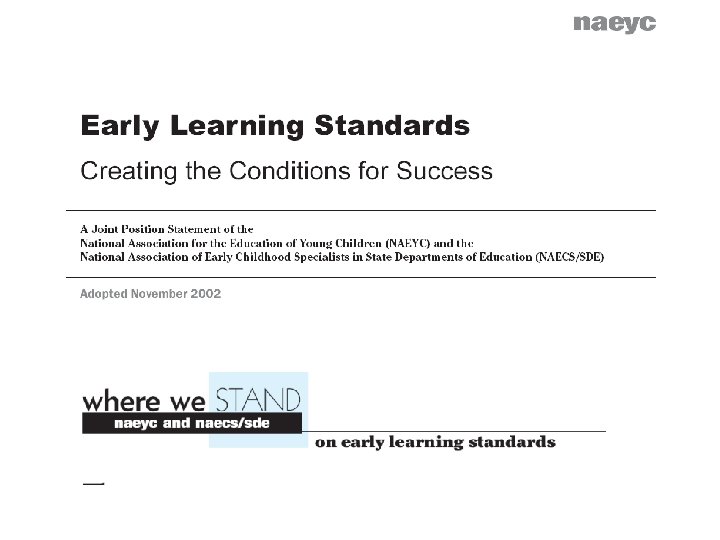
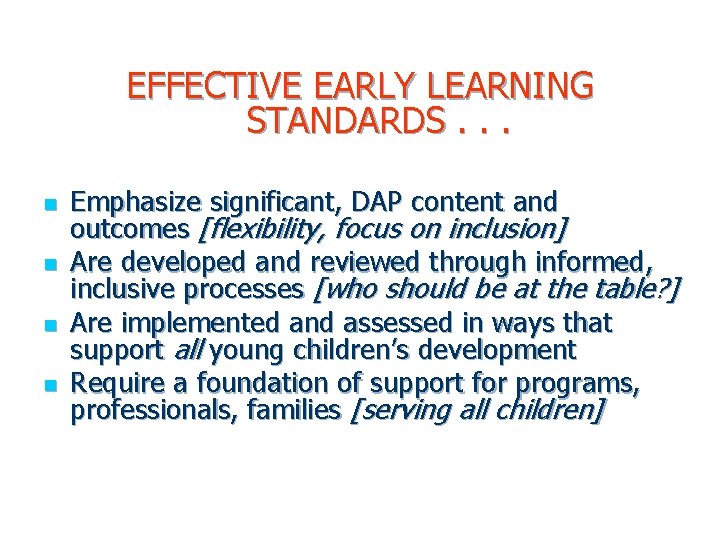
EFFECTIVE EARLY LEARNING STANDARDS. . . n n Emphasize significant, DAP content and outcomes [flexibility, focus on inclusion] Are developed and reviewed through informed, inclusive processes [who should be at the table? ] Are implemented and assessed in ways that support all young children’s development Require a foundation of support for programs, professionals, families [serving all children]
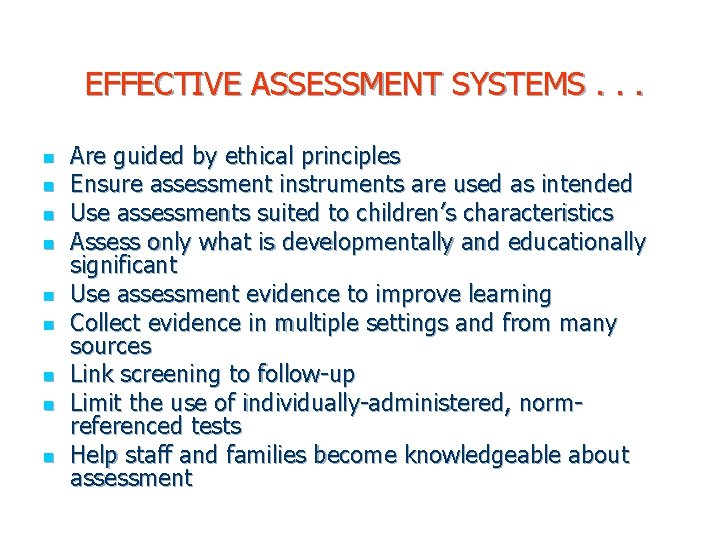
EFFECTIVE ASSESSMENT SYSTEMS. . . n n n n n Are guided by ethical principles Ensure assessment instruments are used as intended Use assessments suited to children’s characteristics Assess only what is developmentally and educationally significant Use assessment evidence to improve learning Collect evidence in multiple settings and from many sources Link screening to follow-up Limit the use of individually-administered, normreferenced tests Help staff and families become knowledgeable about assessment
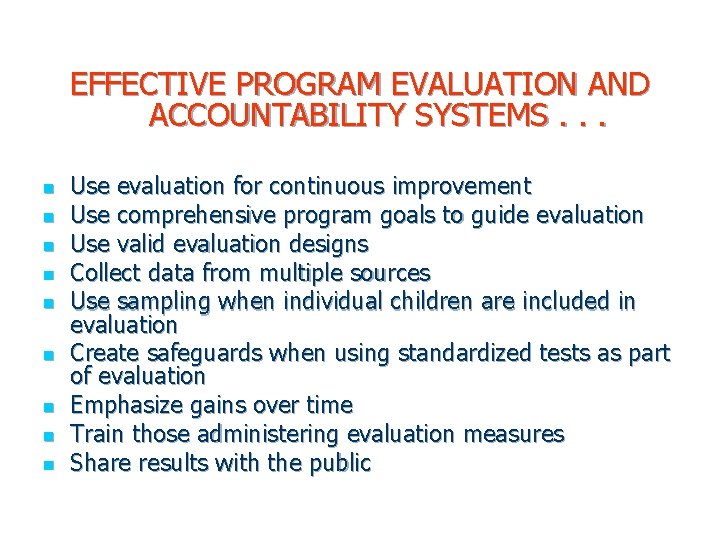
EFFECTIVE PROGRAM EVALUATION AND ACCOUNTABILITY SYSTEMS. . . n n n n n Use evaluation for continuous improvement Use comprehensive program goals to guide evaluation Use valid evaluation designs Collect data from multiple sources Use sampling when individual children are included in evaluation Create safeguards when using standardized tests as part of evaluation Emphasize gains over time Train those administering evaluation measures Share results with the public
USING POSITION STATEMENTS TO PROMOTE GOOD POLICIES AND PRACTICES: NAEYC’S EXPERIENCE
WHERE DO WE GO FROM HERE? IMPLICATIONS FOR COMPREHENSIVE SYSTEMS. . . n n n Need to clearly articulate implications for children with disabilities (e. g. , supplement to CAPE position being developed by DEC in collaboration with NAEYC) Build on, extend collaboration across organizations and disciplines—unified standards and assessment principles Reduce confusion and complexity for ECE practitioners and families