
Working in Teams Life Cycle of HIT Teams




- Slides: 20
Working in Teams Life Cycle of HIT Teams: Reforming and Repositioning Techniques This material (Comp 17 Unit 10) was developed by Johns Hopkins University, funded by the Department of Health and Human Services, Office of the National Coordinator for Health Information Technology under Award Number IU 24 OC 000013. This material was updated in 2016 by Johns Hopkins University under Award Number 90 WT 0005. This work is licensed under the Creative Commons Attribution-Non. Commercial-Share. Alike 4. 0 International License. To view a copy of this license, visit http: //creativecommons. org/licenses/by-nc-sa/4. 0/.
Life Cycle of HIT Teams: Reforming and Repositioning Techniques Learning Objectives • Classify the life-cycle stages of a team. • Apply strategies to move a team into the next formative stage. • Reposition a team for a new challenge. 2
Reactions During Team Life Cycle • How team reacts depending on life-cycle stage: – Team leader’s style – Team reaction to leadership – Team process – Trust within the team – How decisions are made 3
Team Life Cycle— 1 Team Leader’s Style Forming • More directive approach, outlining how the process will develop and laying down a clear structure. Storming • Leader needs to be supportive, actively listening to team members, and managing the conflict, generating ideas, and explaining decisions. Norming • Leader acts as a team member, as leadership is starting to be shared. Leader helps to develop consensus. Performing • Leader takes overview, but within the day-to-day running, the group is sharing leadership between members. 4
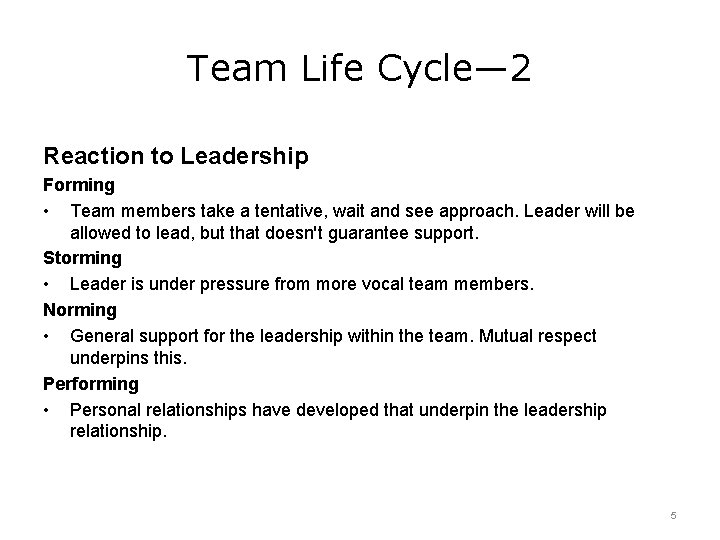
Team Life Cycle— 2 Reaction to Leadership Forming • Team members take a tentative, wait and see approach. Leader will be allowed to lead, but that doesn't guarantee support. Storming • Leader is under pressure from more vocal team members. Norming • General support for the leadership within the team. Mutual respect underpins this. Performing • Personal relationships have developed that underpin the leadership relationship. 5
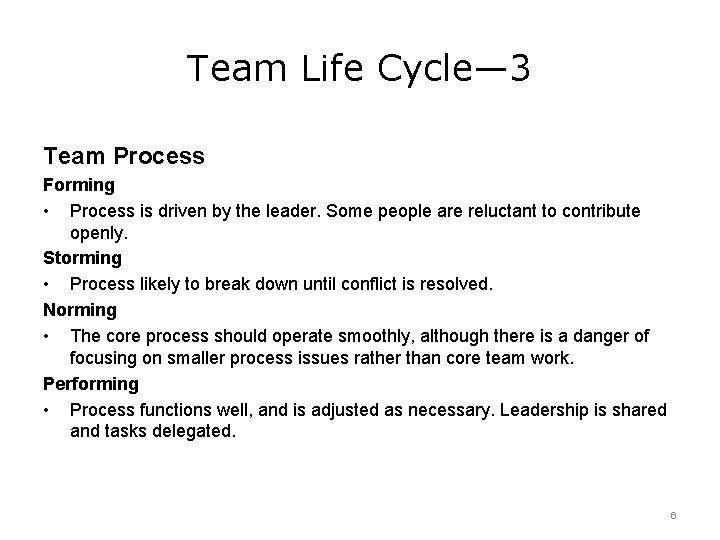
Team Life Cycle— 3 Team Process Forming • Process is driven by the leader. Some people are reluctant to contribute openly. Storming • Process likely to break down until conflict is resolved. Norming • The core process should operate smoothly, although there is a danger of focusing on smaller process issues rather than core team work. Performing • Process functions well, and is adjusted as necessary. Leadership is shared and tasks delegated. 6
Team Life Cycle— 4 Trust within the Team Forming • Individuals are not clear about their contribution. It is the “getting to know you" phase. Trust may start to be built. Storming • Trust is focused into smaller groups as sub-groups and alliances form Norming • As roles are accepted and clarified, trust and relationships start to develop to a greater degree. Performing • Team starts to operate on higher levels of trust as loyalty and relationships develop. 7
Team Life Cycle— 5 How Decisions Are Made Forming • Nominated leader is expected to make decisions. Some more vocal members may dominate. Storming • Decisions are hard to make. Members are unwilling to give way. Compromise is a frequent outcome. Norming • Group is able to common decisions. Win–win is more likely than compromise. Performing • Decision making is easier; some decisions are delegated to sub-groups or individuals. 8
Strategies for Team Movement • Change management principles • Eight steps to successful change • Use dynamic processes 9
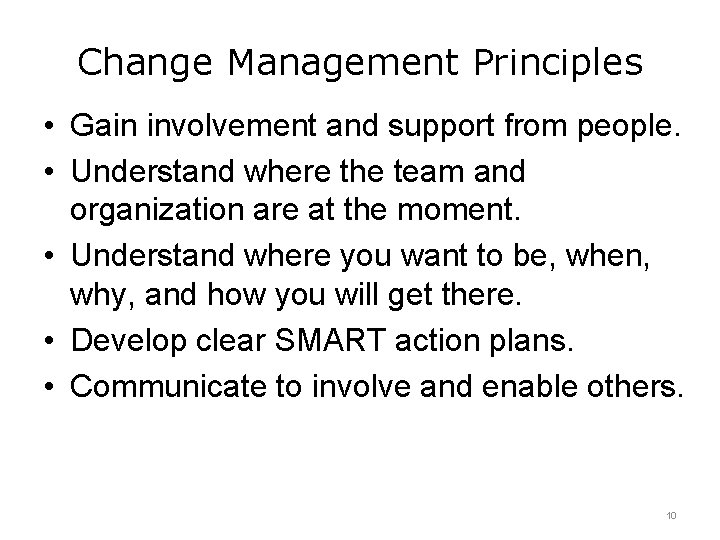
Change Management Principles • Gain involvement and support from people. • Understand where the team and organization are at the moment. • Understand where you want to be, when, why, and how you will get there. • Develop clear SMART action plans. • Communicate to involve and enable others. 10
Steps to Successful Change • • Increase urgency. Build the guiding team. Get the vision right. Communicate for buy in. 11
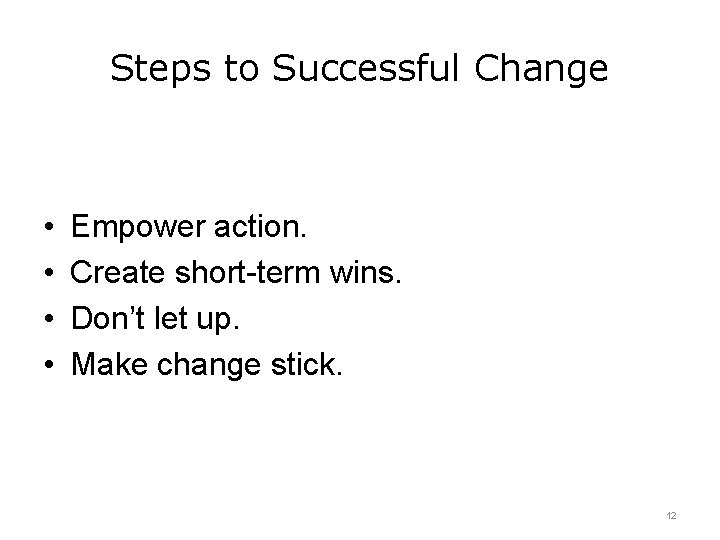
Steps to Successful Change • • Empower action. Create short-term wins. Don’t let up. Make change stick. 12
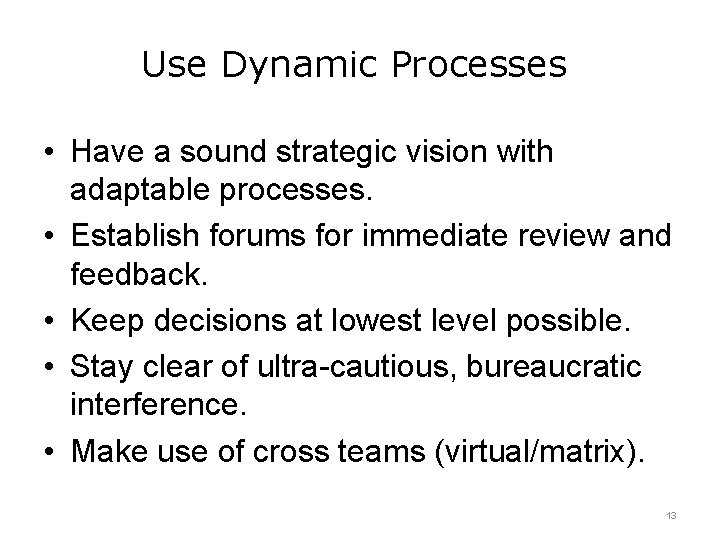
Use Dynamic Processes • Have a sound strategic vision with adaptable processes. • Establish forums for immediate review and feedback. • Keep decisions at lowest level possible. • Stay clear of ultra-cautious, bureaucratic interference. • Make use of cross teams (virtual/matrix). 13
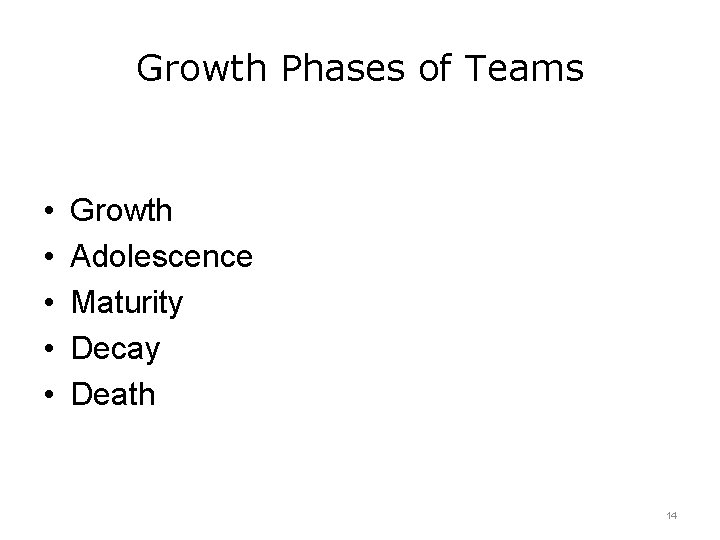
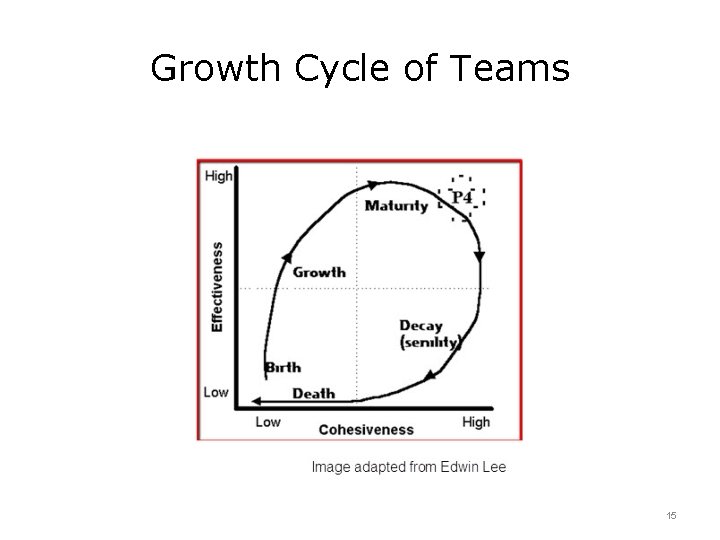
Growth Phases of Teams • • • Growth Adolescence Maturity Decay Death 14
Growth Cycle of Teams 15
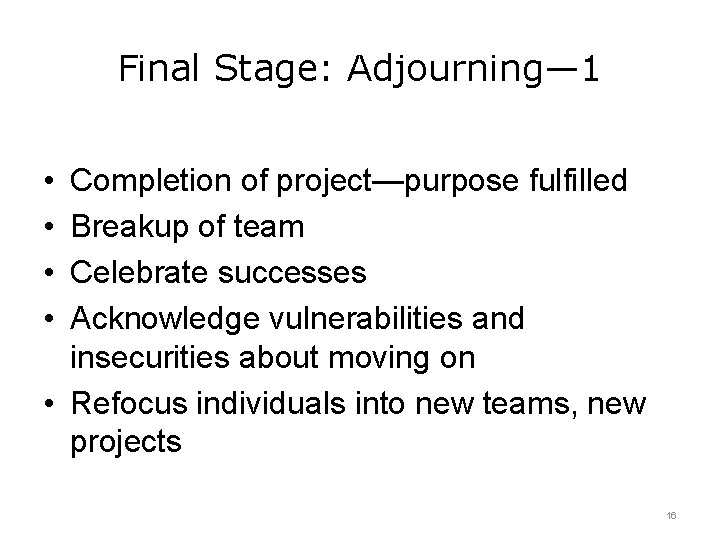
Final Stage: Adjourning— 1 • • Completion of project—purpose fulfilled Breakup of team Celebrate successes Acknowledge vulnerabilities and insecurities about moving on • Refocus individuals into new teams, new projects 16
Final Stage: Adjourning— 2 When a team is formed it focuses on the future; once it succeeds it focuses on the past. • Success breeds failure! • Failure can breed success! 17
Life Cycle of HIT Teams: Reforming and Repositioning Techniques Summary Now that you have discussed the various elements of this unit and have completed the activities, you should be able to: • Classify the life cycle stages of a team. • Apply strategies to move a team into the next formative stage. • Reposition a team for a new challenge. 18
Life Cycle of HIT Teams: Reforming and Repositioning Techniques References • Kotter, J. Kotter’s 8 -step change model: Implementing change powerfully and successfully. c 1996 -20011. Available from: http: //www. mindtools. com/pages/article/new. PPM_82. htm • Kulkarni, V. Building a Winning Team, Available from: http: //www. scribd. com/doc/14973964/Building-a-Great-Team-116 • Lee, E. The Life Cycles of Executive Teams. Available: http: //www. elew. com/lifecycl. pdf • Morgan, B. B. , Salas, E. , & Glickman, A. S. (1994). An analysis of team evolution and maturation. The Journal of General Psychology, 120 (3), 277 -291. Tuckman, B. Tuckman forming storming norming performing model. Available from: http: //www. businessballs. com/tuckmanformingstormingnormingperforming. htm • Images • Slide 15: Image adapted from Lee, E. The Life Cycles of Executive Teams. Available: http: //www. elew. com/lifecycl. pdf 19
Working in Teams Life Cycle of HIT Teams: Reforming and Repositioning Techniques This material (Comp 17 Unit 10) was developed by Johns Hopkins University, funded by the Department of Health and Human Services, Office of the National Coordinator for Health Information Technology under Award Number IU 24 OC 000013. This material was updated in 2016 by Johns Hopkins University under Award Number 90 WT 0005. 20