
WORKING IN GROUPS Group Norms Informal often unstated

- Slides: 7
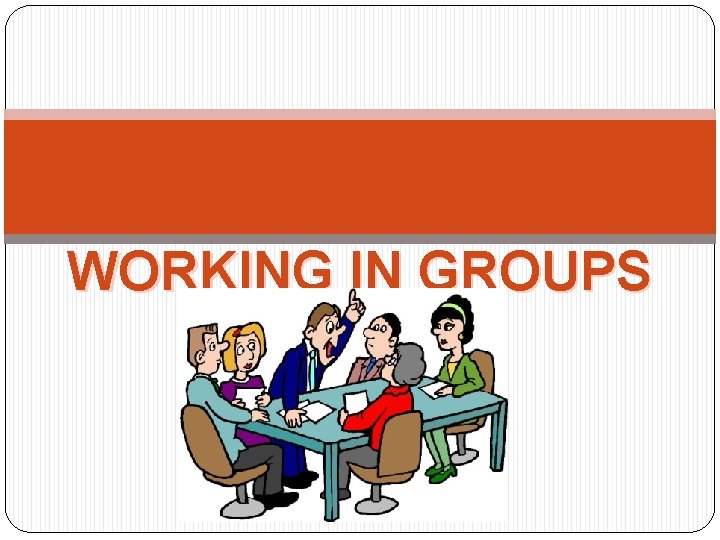
WORKING IN GROUPS
Group Norms �Informal, often unstated rules about what behavior is appropriate for a group. �What are some group norms in your school?
Prescribed Norms �A rule for appropriate behavior that is routinely taught to new members. �What are some prescribed norms in your school?
Emergent Norms �A group norm that develops from the group interaction and the mix of group members’ personalities. �Example: Group work �Make a big difference in how groups work. �Negative emergent norms can be harmful. �Examples: Be late, complain
Group Roles � 1. Initiator – Works to get the group started. �A. Positive initiator – gets the groups started by displaying positive behaviors. �B. Negative initiator – Creates a hostile environment. Can be aggressive, overly controlling, dominating, ignore the opinions of others. �Negative initiators often assume too much responsibility and do not delegate.
Agitator �Inject negative energy into the group process and slow down the group. �Work against group momentum and group goals. �Argues for the sake of argument. �If you have an agitator try to move on.
Agitator �Can be beneficial if the group has missed an important detail. �Groups with no agitators may fall to groupthink – poor decision making because group members want to agree rather than solve a problem.