
WORKING IN AMERICA THE MEN WOMEN AND CHILDREN
- Slides: 24
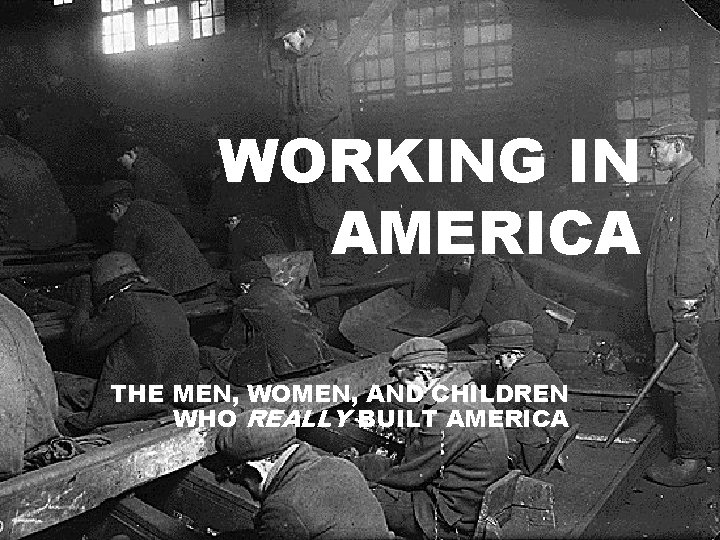
WORKING IN AMERICA THE MEN, WOMEN, AND CHILDREN WHO REALLY BUILT AMERICA
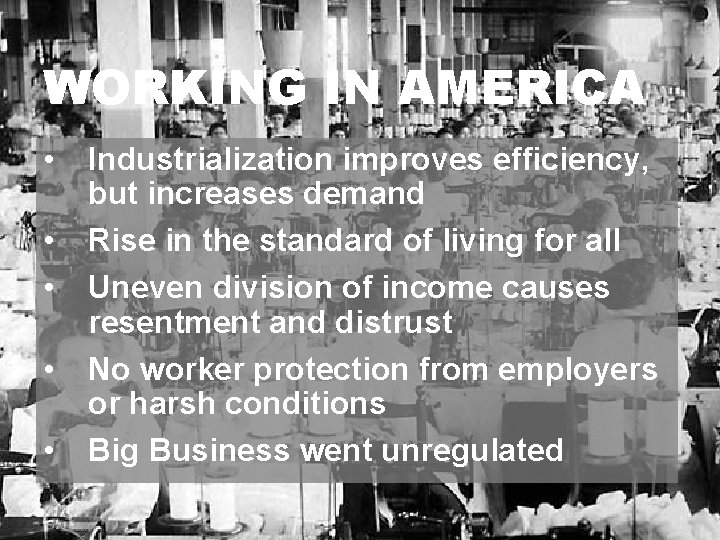
WORKING IN AMERICA • • • Industrialization improves efficiency, but increases demand Rise in the standard of living for all Uneven division of income causes resentment and distrust No worker protection from employers or harsh conditions Big Business went unregulated
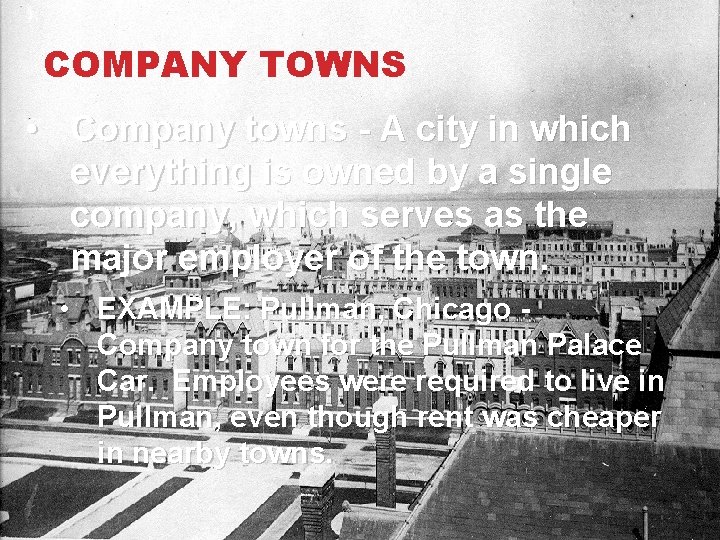
COMPANY TOWNS • Company towns - A city in which everything is owned by a single company, which serves as the major employer of the town. • EXAMPLE: Pullman, Chicago Company town for the Pullman Palace Car. Employees were required to live in Pullman, even though rent was cheaper in nearby towns.
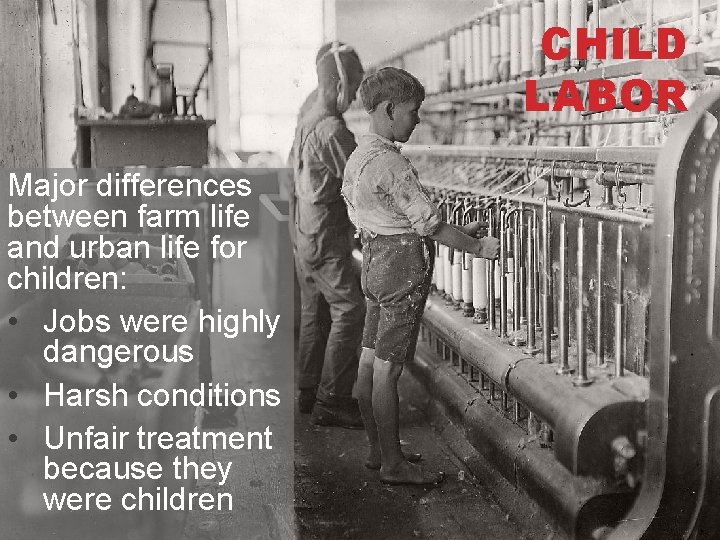
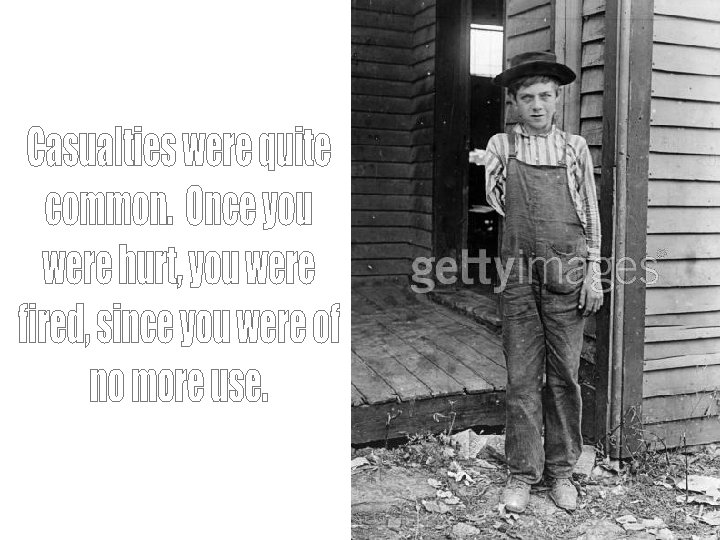
CHILD LABOR Major differences between farm life and urban life for children: • Jobs were highly dangerous • Harsh conditions • Unfair treatment because they were children
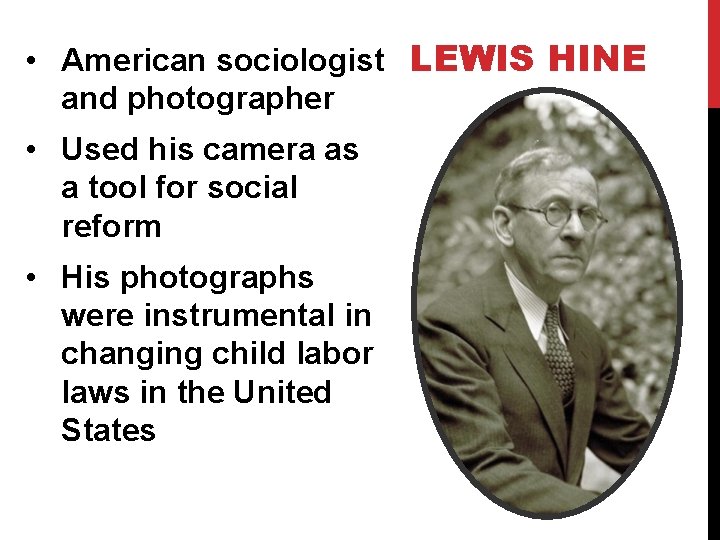
• American sociologist LEWIS HINE and photographer • Used his camera as a tool for social reform • His photographs were instrumental in changing child labor laws in the United States
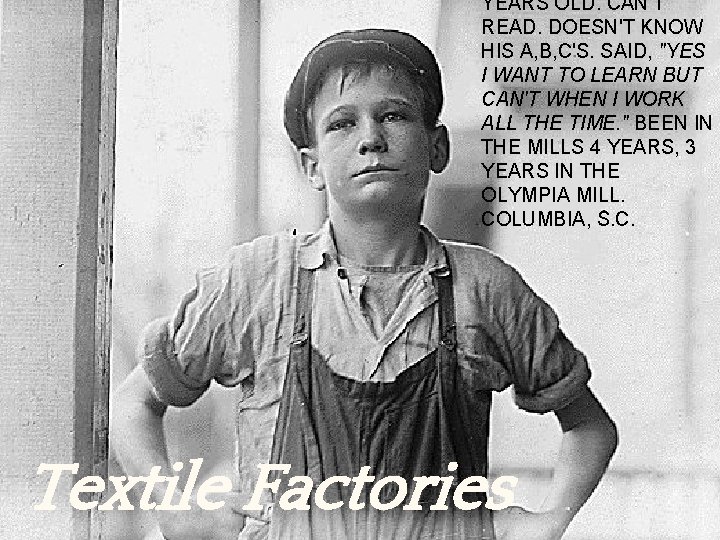
YEARS OLD. CAN'T READ. DOESN'T KNOW HIS A, B, C'S. SAID, "YES I WANT TO LEARN BUT CAN'T WHEN I WORK ALL THE TIME. " BEEN IN THE MILLS 4 YEARS, 3 YEARS IN THE OLYMPIA MILL. COLUMBIA, S. C. Textile Factories
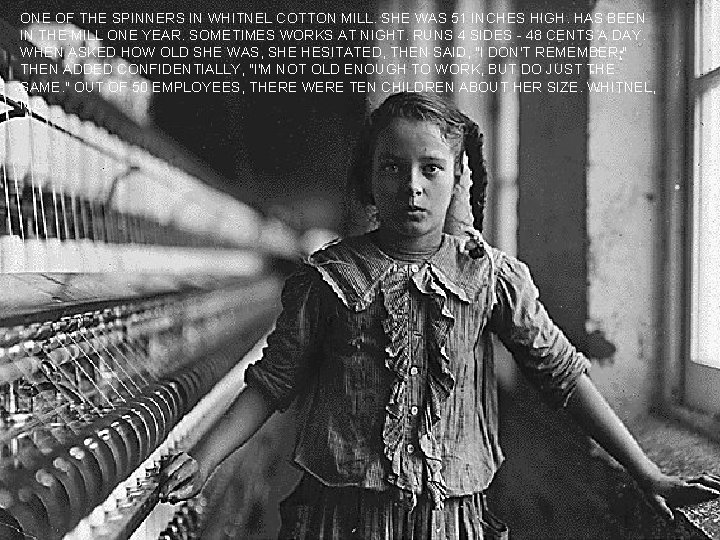
ONE OF THE SPINNERS IN WHITNEL COTTON MILL. SHE WAS 51 INCHES HIGH. HAS BEEN IN THE MILL ONE YEAR. SOMETIMES WORKS AT NIGHT. RUNS 4 SIDES - 48 CENTS A DAY. WHEN ASKED HOW OLD SHE WAS, SHE HESITATED, THEN SAID, "I DON'T REMEMBER, " THEN ADDED CONFIDENTIALLY, "I'M NOT OLD ENOUGH TO WORK, BUT DO JUST THE SAME. " OUT OF 50 EMPLOYEES, THERE WERE TEN CHILDREN ABOUT HER SIZE. WHITNEL, N. C.
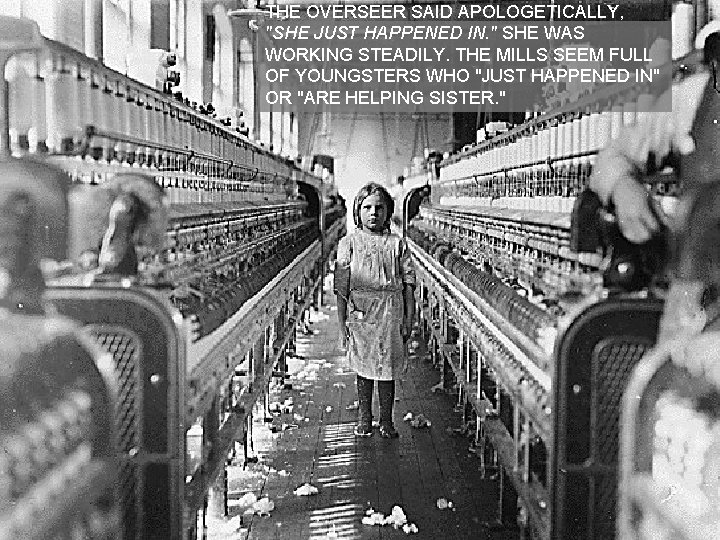
THE OVERSEER SAID APOLOGETICALLY, "SHE JUST HAPPENED IN. " SHE WAS WORKING STEADILY. THE MILLS SEEM FULL OF YOUNGSTERS WHO "JUST HAPPENED IN" OR "ARE HELPING SISTER. "
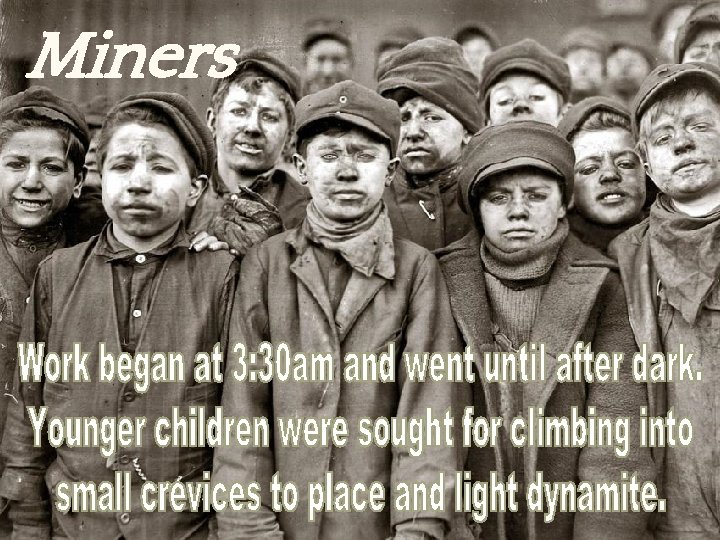
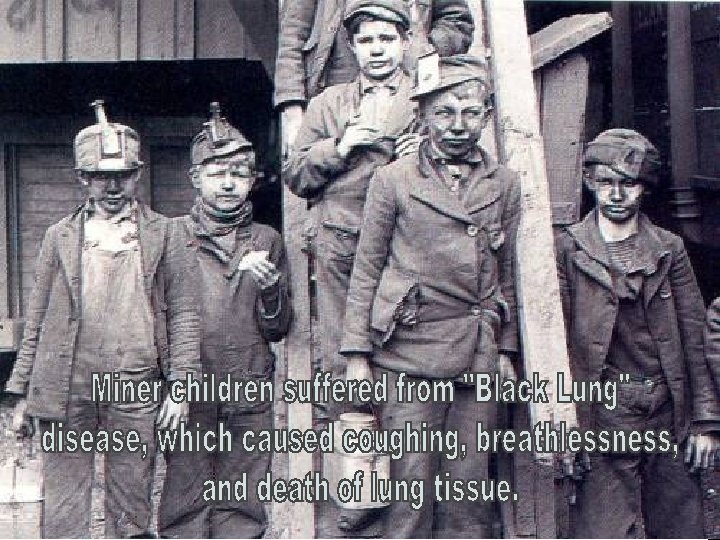
Miners
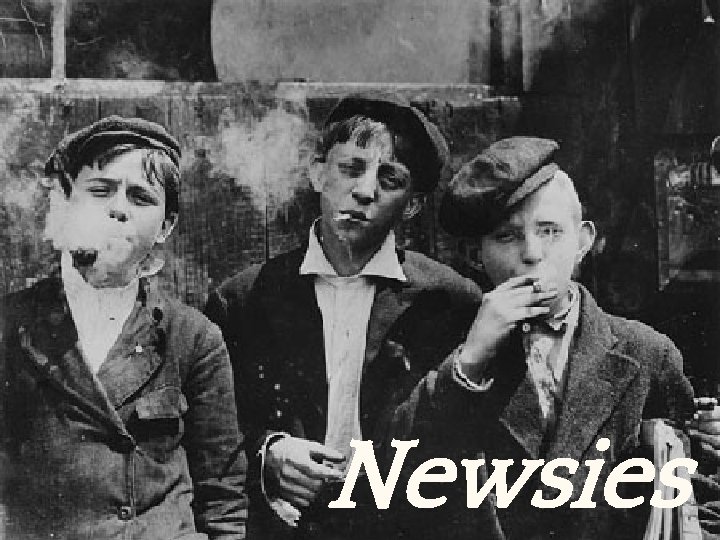
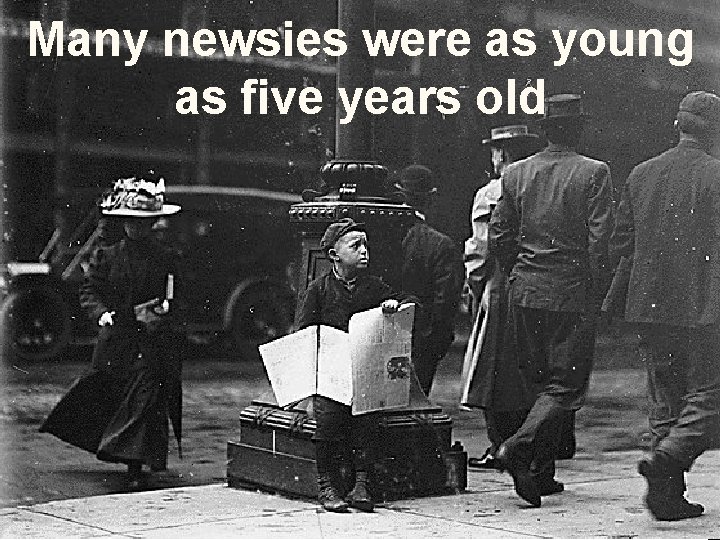
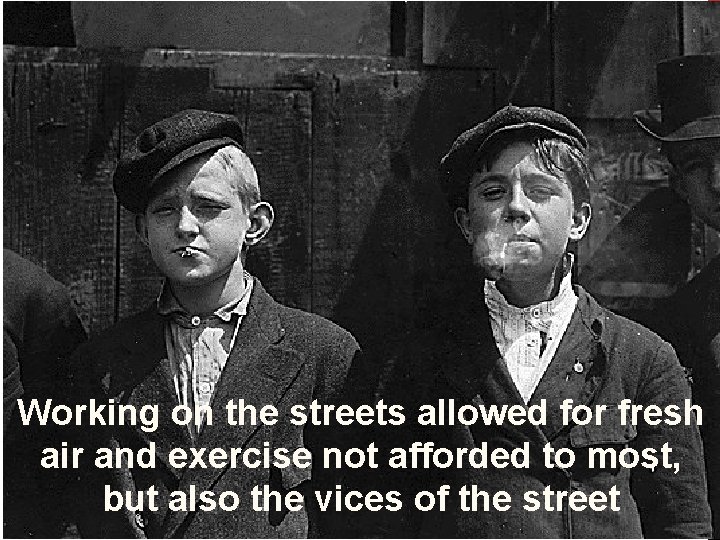
Newsies
Many newsies were as young as five years old
Working on the streets allowed for fresh air and exercise not afforded to most, but also the vices of the street
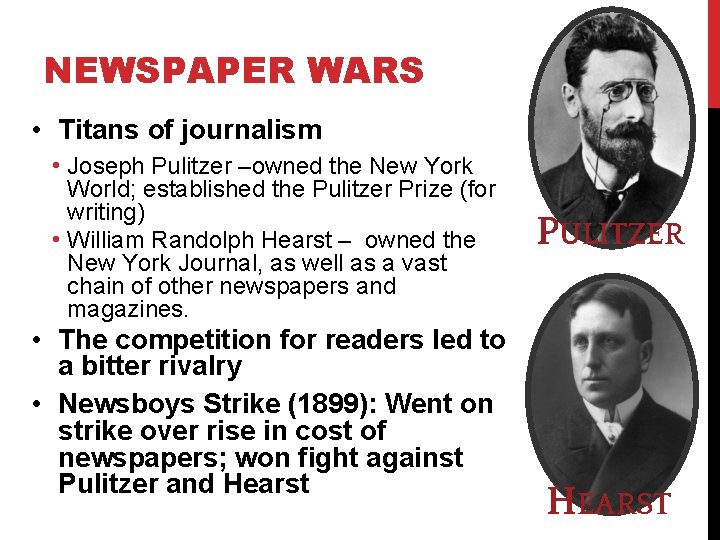
NEWSPAPER WARS • Titans of journalism • Joseph Pulitzer –owned the New York World; established the Pulitzer Prize (for writing) • William Randolph Hearst – owned the New York Journal, as well as a vast chain of other newspapers and magazines. • The competition for readers led to a bitter rivalry • Newsboys Strike (1899): Went on strike over rise in cost of newspapers; won fight against Pulitzer and Hearst PULITZER HEARST
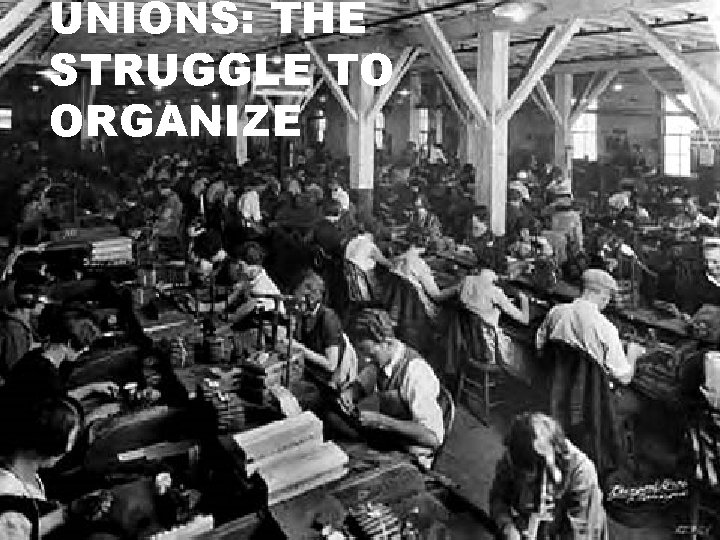
UNIONS: THE STRUGGLE TO ORGANIZE
UNIONS: THE STRUGGLE TO ORGANIZE • Unions unite workers to achieve three basic goals: • • • Better working conditions Better hours Better pay Collective bargaining: Allows employees to negotiate with employers as a group, rather than as individuals Many factory owners were against unionization because it hurt their profits.
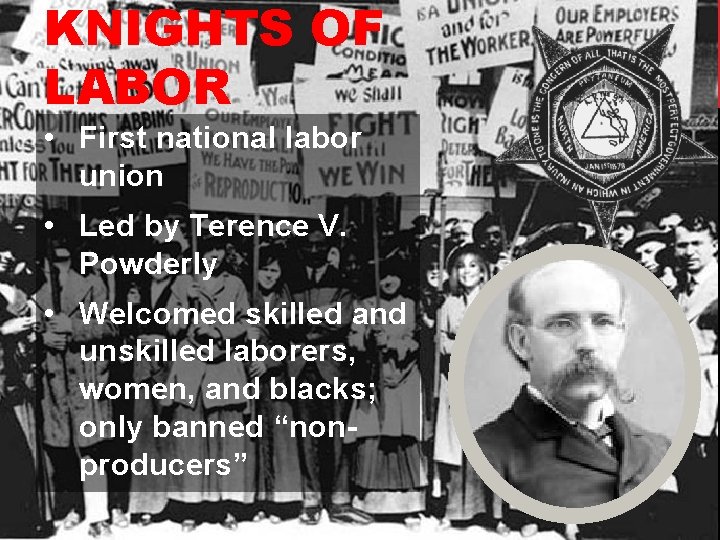
KNIGHTS OF LABOR • First national labor union • Led by Terence V. Powderly • Welcomed skilled and unskilled laborers, women, and blacks; only banned “nonproducers”
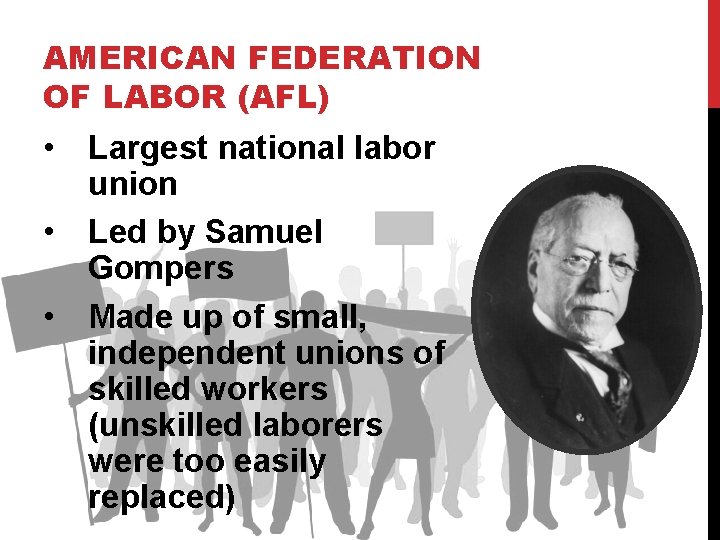
AMERICAN FEDERATION OF LABOR (AFL) • Largest national labor union • Led by Samuel Gompers • Made up of small, independent unions of skilled workers (unskilled laborers were too easily replaced)
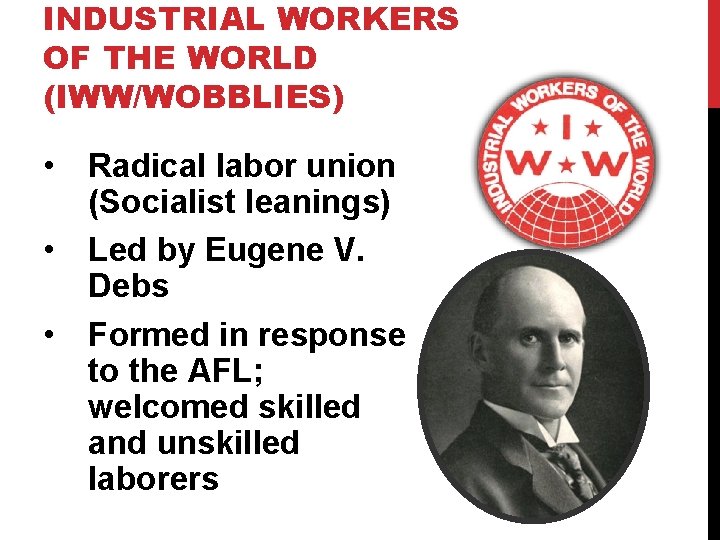
INDUSTRIAL WORKERS OF THE WORLD (IWW/WOBBLIES) • Radical labor union (Socialist leanings) • Led by Eugene V. Debs • Formed in response to the AFL; welcomed skilled and unskilled laborers
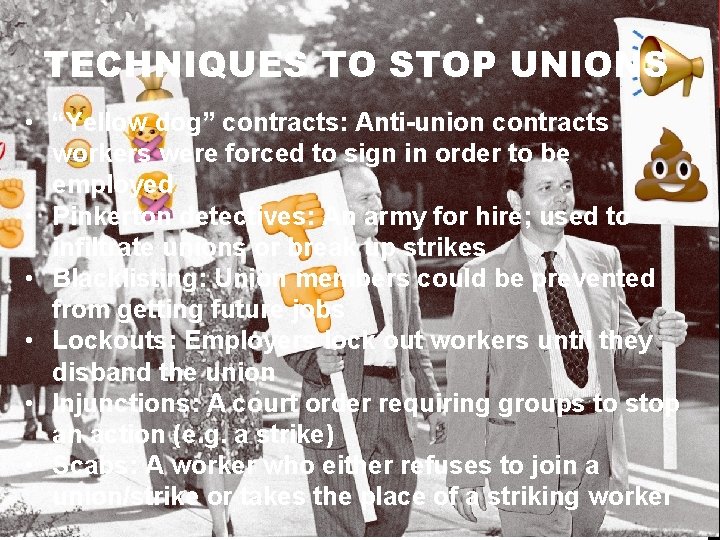
TECHNIQUES TO STOP UNIONS • “Yellow dog” contracts: Anti-union contracts workers were forced to sign in order to be employed • Pinkerton detectives: An army for hire; used to infiltrate unions or break up strikes • Blacklisting: Union members could be prevented from getting future jobs • Lockouts: Employers lock out workers until they disband the union • Injunctions: A court order requiring groups to stop an action (e. g. a strike) • Scabs: A worker who either refuses to join a union/strike or takes the place of a striking worker
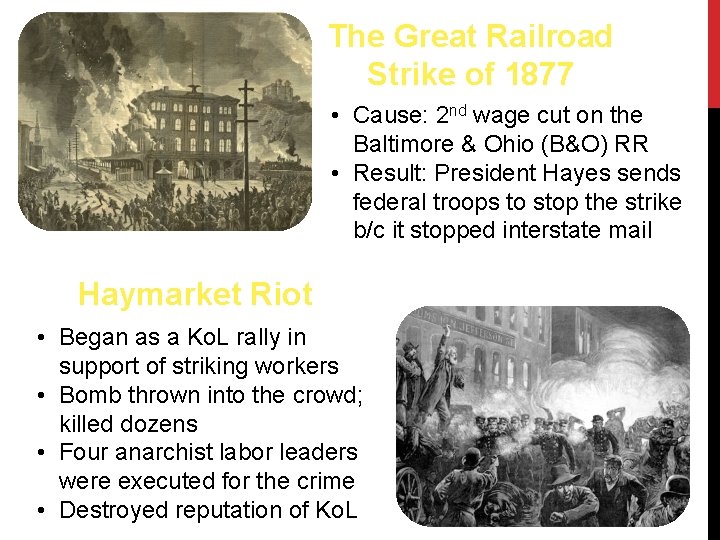
The Great Railroad Strike of 1877 • Cause: 2 nd wage cut on the Baltimore & Ohio (B&O) RR • Result: President Hayes sends federal troops to stop the strike b/c it stopped interstate mail Haymarket Riot • Began as a Ko. L rally in support of striking workers • Bomb thrown into the crowd; killed dozens • Four anarchist labor leaders were executed for the crime • Destroyed reputation of Ko. L
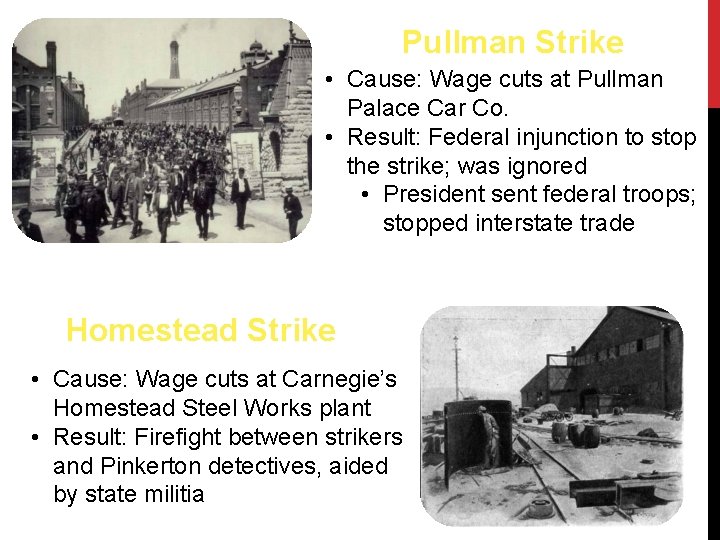
Pullman Strike • Cause: Wage cuts at Pullman Palace Car Co. • Result: Federal injunction to stop the strike; was ignored • President sent federal troops; stopped interstate trade Homestead Strike • Cause: Wage cuts at Carnegie’s Homestead Steel Works plant • Result: Firefight between strikers and Pinkerton detectives, aided by state militia
SUCCESSES OF LABOR • “closed shops”: Places where workers must join the union to work there • Weekends, holidays and holiday pay, 8 -hour workday, end of child labor, workers’ compensation, etc. • Labor Day