
Working Group Reference models for waste disposal Its
- Slides: 11
Working Group Reference models for waste disposal
Its difficult to make prediction, especially about the future Mark Twain
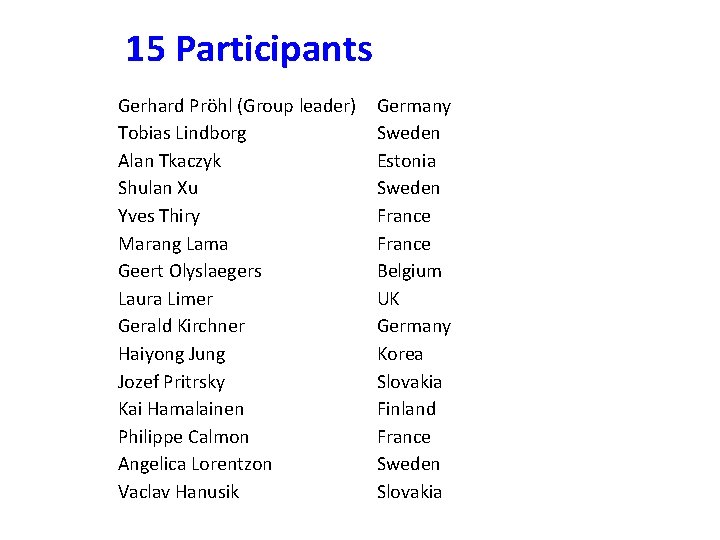
15 Participants Gerhard Pröhl (Group leader) Tobias Lindborg Alan Tkaczyk Shulan Xu Yves Thiry Marang Lama Geert Olyslaegers Laura Limer Gerald Kirchner Haiyong Jung Jozef Pritrsky Kai Hamalainen Philippe Calmon Angelica Lorentzon Vaclav Hanusik Germany Sweden Estonia Sweden France Belgium UK Germany Korea Slovakia Finland France Sweden Slovakia
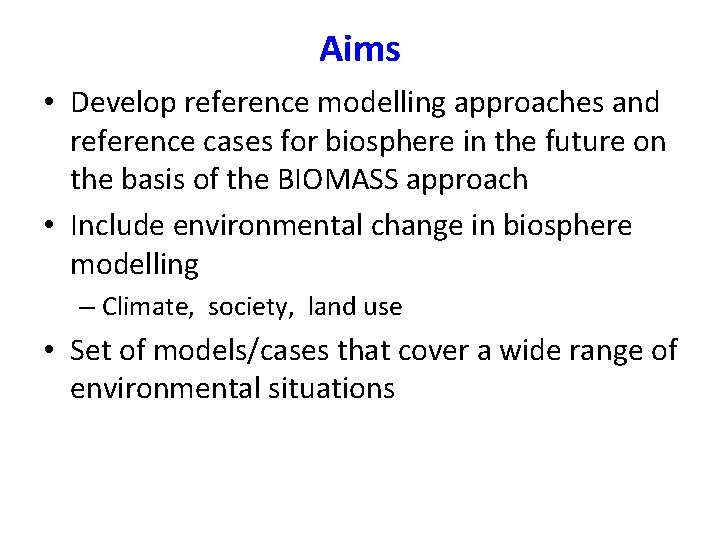
Aims • Develop reference modelling approaches and reference cases for biosphere in the future on the basis of the BIOMASS approach • Include environmental change in biosphere modelling – Climate, society, land use • Set of models/cases that cover a wide range of environmental situations
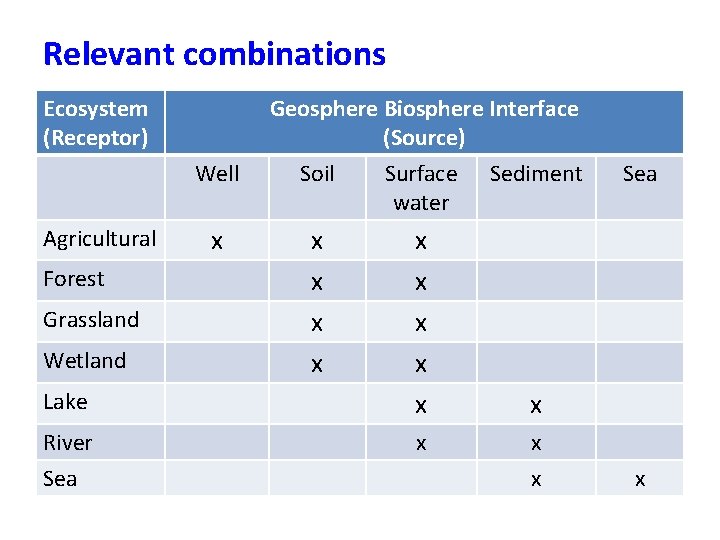
Relevant combinations Ecosystem (Receptor) Well Agricultural Forest Grassland Wetland Lake River Sea x Geosphere Biosphere Interface (Source) Soil Surface Sediment water x x x x x Sea x x
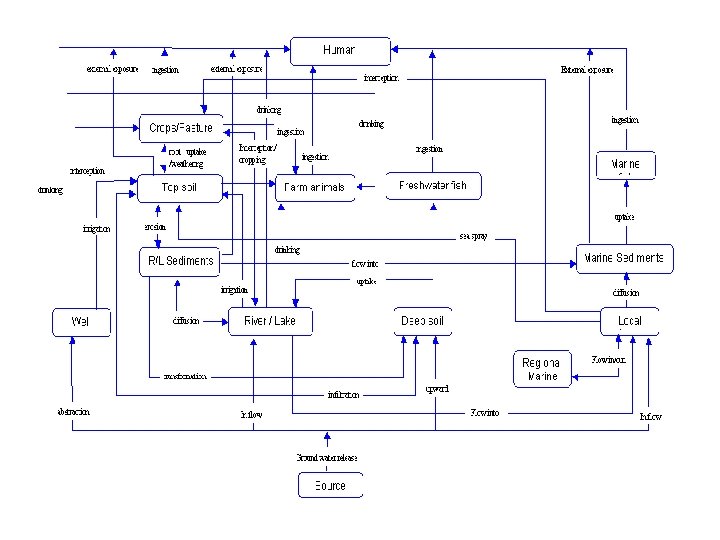
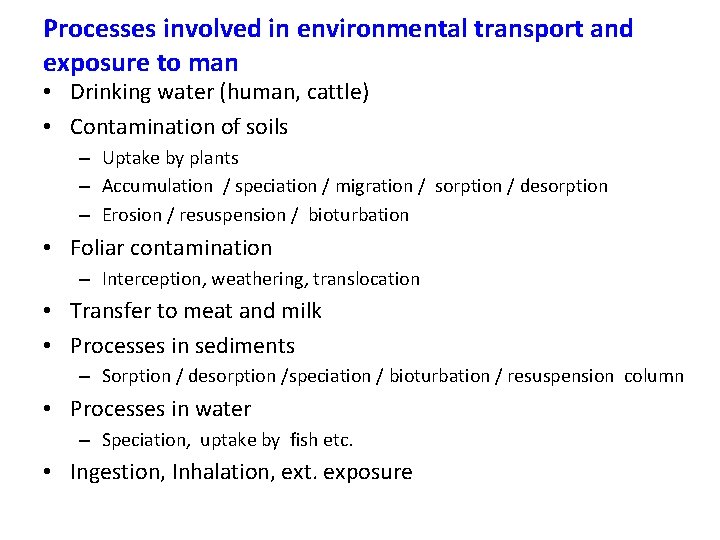
Processes involved in environmental transport and exposure to man • Drinking water (human, cattle) • Contamination of soils – Uptake by plants – Accumulation / speciation / migration / sorption / desorption – Erosion / resuspension / bioturbation • Foliar contamination – Interception, weathering, translocation • Transfer to meat and milk • Processes in sediments – Sorption / desorption /speciation / bioturbation / resuspension column • Processes in water – Speciation, uptake by fish etc. • Ingestion, Inhalation, ext. exposure
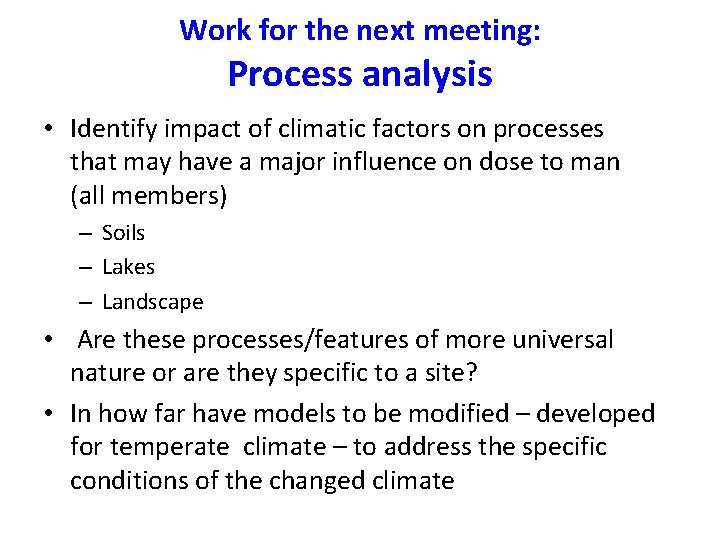
Work for the next meeting: Process analysis • Identify impact of climatic factors on processes that may have a major influence on dose to man (all members) – Soils – Lakes – Landscape • Are these processes/features of more universal nature or are they specific to a site? • In how far have models to be modified – developed for temperate climate – to address the specific conditions of the changed climate
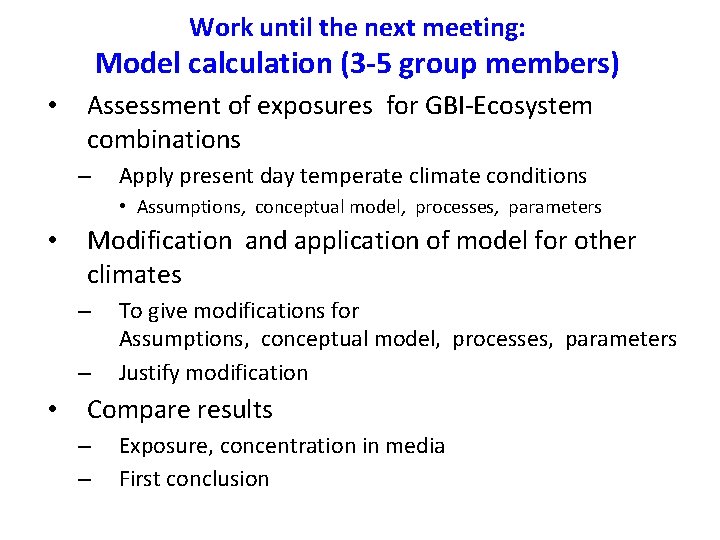
Work until the next meeting: Model calculation (3 -5 group members) • Assessment of exposures for GBI-Ecosystem combinations – Apply present day temperate climate conditions • Assumptions, conceptual model, processes, parameters • Modification and application of model for other climates – – • To give modifications for Assumptions, conceptual model, processes, parameters Justify modification Compare results – – Exposure, concentration in media First conclusion
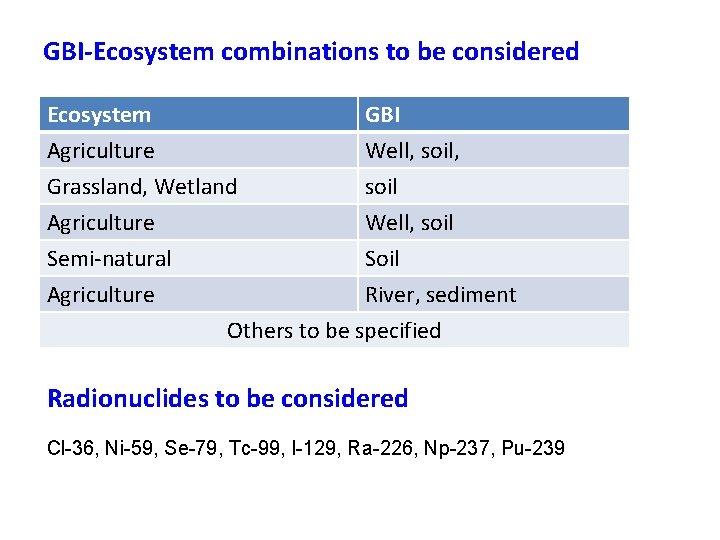
GBI-Ecosystem combinations to be considered Ecosystem GBI Agriculture Well, soil, Grassland, Wetland soil Agriculture Well, soil Semi-natural Soil Agriculture River, sediment Others to be specified Radionuclides to be considered Cl-36, Ni-59, Se-79, Tc-99, I-129, Ra-226, Np-237, Pu-239
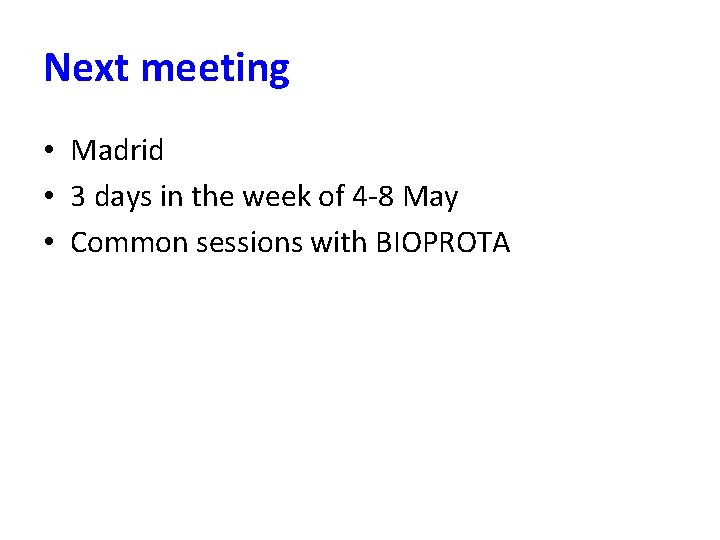
Next meeting • Madrid • 3 days in the week of 4 -8 May • Common sessions with BIOPROTA