
Workhouses A workhouse was a building that the
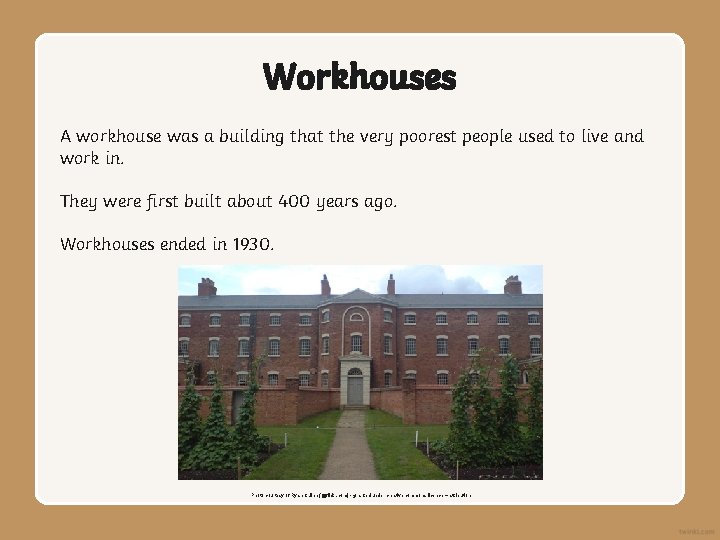
Workhouses A workhouse was a building that the very poorest people used to live and work in. They were first built about 400 years ago. Workhouses ended in 1930. Photo courtesy of Ryan Cullen (@flickr. com) - granted under creative commons licence – attribution
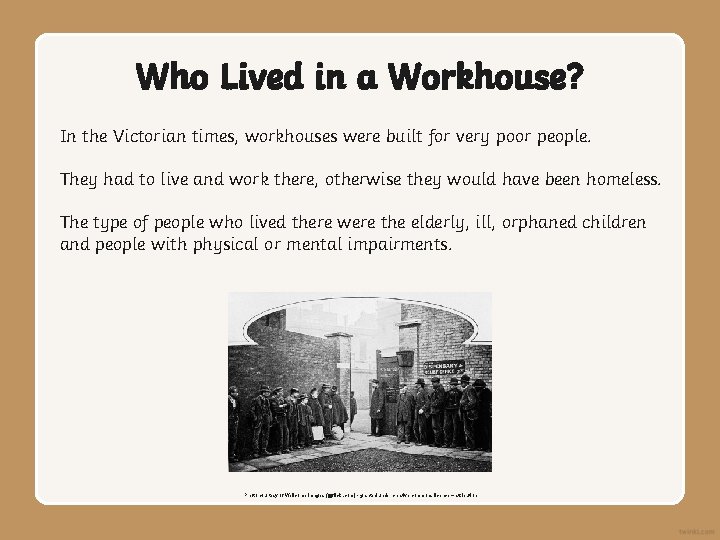
Who Lived in a Workhouse? In the Victorian times, workhouses were built for very poor people. They had to live and work there, otherwise they would have been homeless. The type of people who lived there were the elderly, ill, orphaned children and people with physical or mental impairments. Photo courtesy of Wellcome Images (@flickr. com) - granted under creative commons licence – attribution
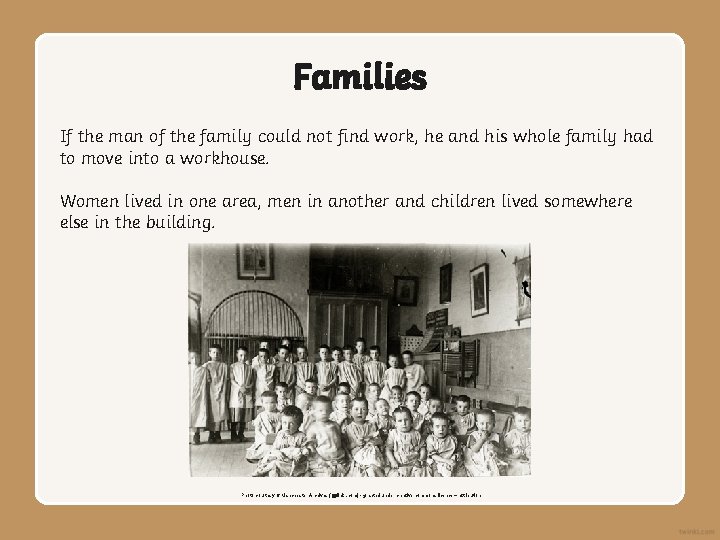
Families If the man of the family could not find work, he and his whole family had to move into a workhouse. Women lived in one area, men in another and children lived somewhere else in the building. Photo courtesy of Manchester Archives (@flickr. com) - granted under creative commons licence – attribution

Work in a Workhouse Men had to break stones apart with heavy tools, work in the fields, grind corn and chop wood. Women had to do the sewing, laundry, spinning, scrubbing floors and walls, and oakum. Oakum was picking apart old ropes for hours on end.
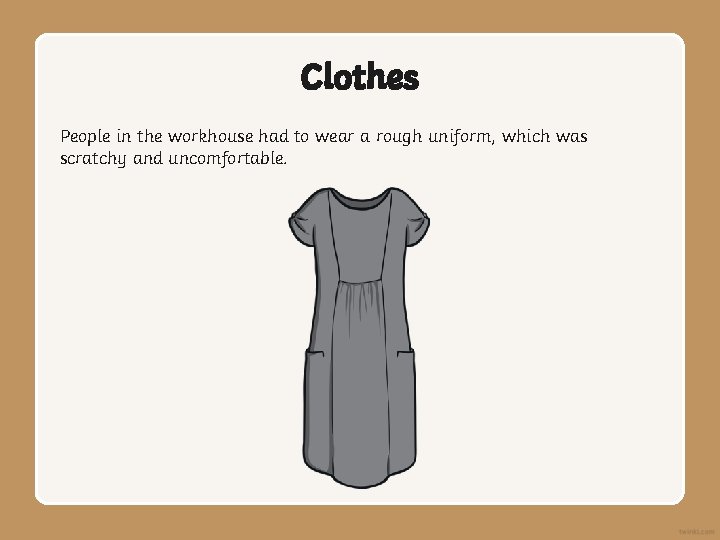
Clothes People in the workhouse had to wear a rough uniform, which was scratchy and uncomfortable.
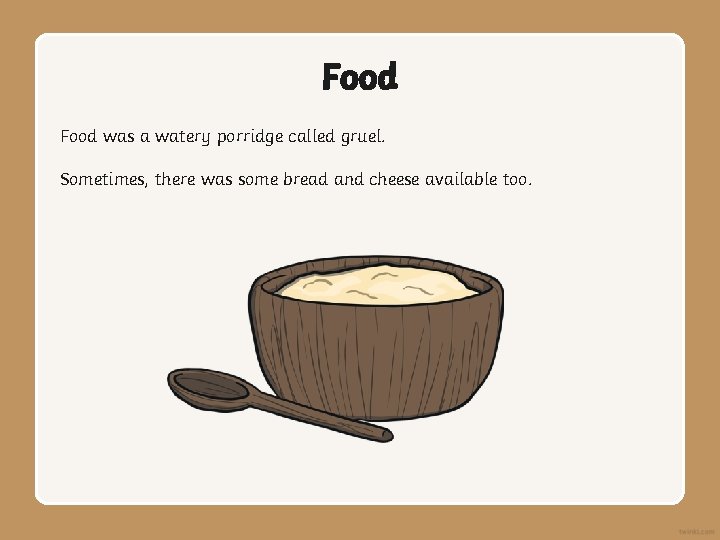
Food was a watery porridge called gruel. Sometimes, there was some bread and cheese available too.
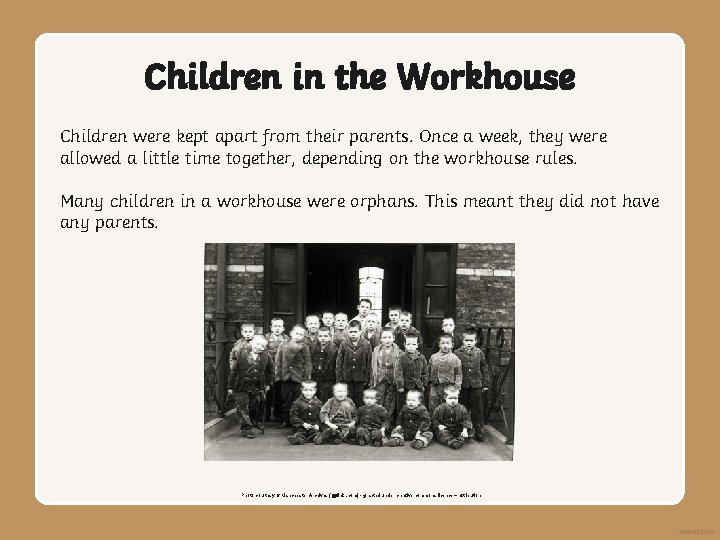
Children in the Workhouse Children were kept apart from their parents. Once a week, they were allowed a little time together, depending on the workhouse rules. Many children in a workhouse were orphans. This meant they did not have any parents. Photo courtesy of Manchester Archives (@flickr. com) - granted under creative commons licence – attribution
School For three hours a day, children had lessons in reading, writing, Christian religion and arithmetic, which was maths. In many workhouses, boys had more lessons than girls. The girls generally learned needlework and knitting.
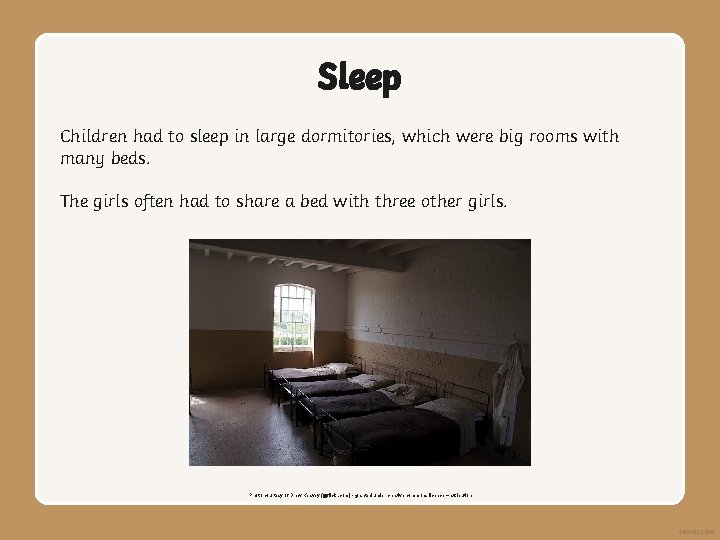
Sleep Children had to sleep in large dormitories, which were big rooms with many beds. The girls often had to share a bed with three other girls. Photo courtesy of Drew Keavey (@flickr. com) - granted under creative commons licence – attribution
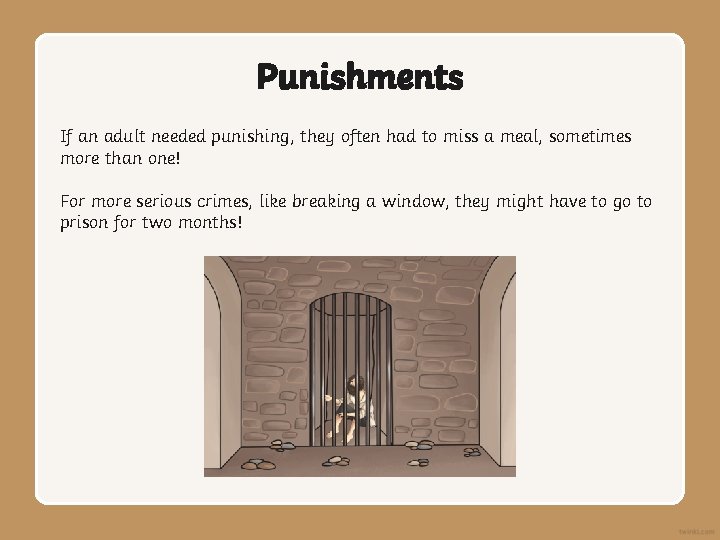
Punishments If an adult needed punishing, they often had to miss a meal, sometimes more than one! For more serious crimes, like breaking a window, they might have to go to prison for two months!
Rules There were many rules in a workhouse: • No one was allowed to leave without permission. • Reading newspapers, leaflets or books was not allowed. • Everyone had to go to church twice every Sunday. • Adults had to go to bed at 8 pm and be up at 6 am every day. • No one was allowed to play cards or any other games.
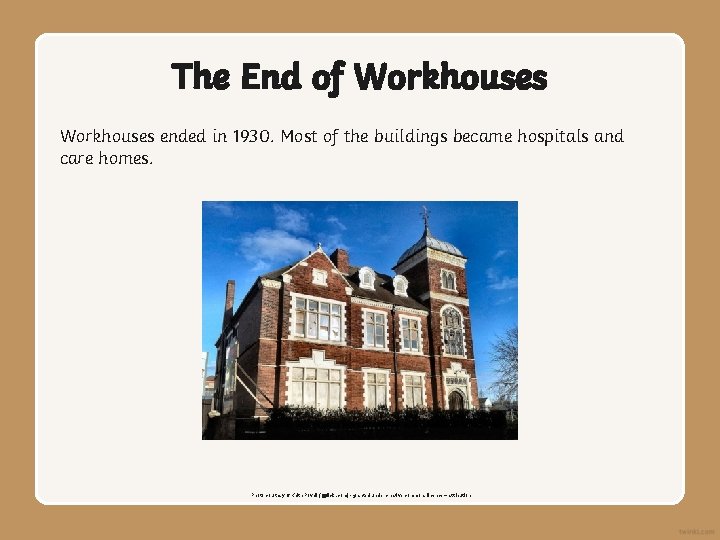
The End of Workhouses ended in 1930. Most of the buildings became hospitals and care homes. Photo courtesy of Keith Povall (@flickr. com) - granted under creative commons licence – attribution
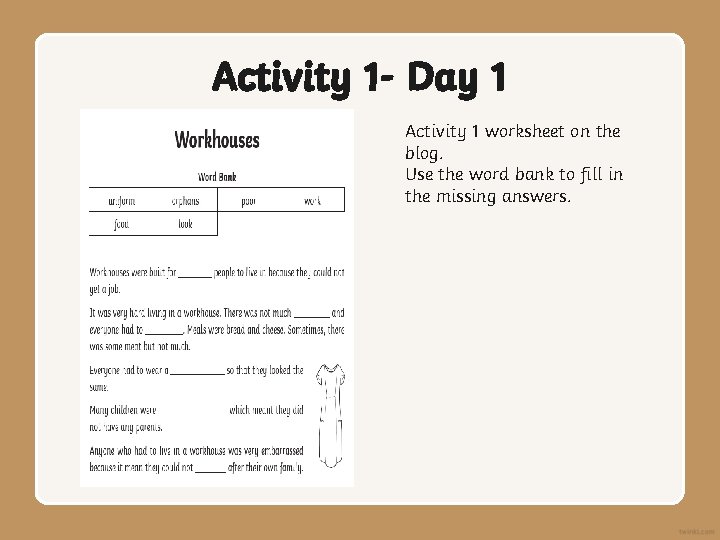
Activity 1 - Day 1 Activity 1 worksheet on the blog. Use the word bank to fill in the missing answers.
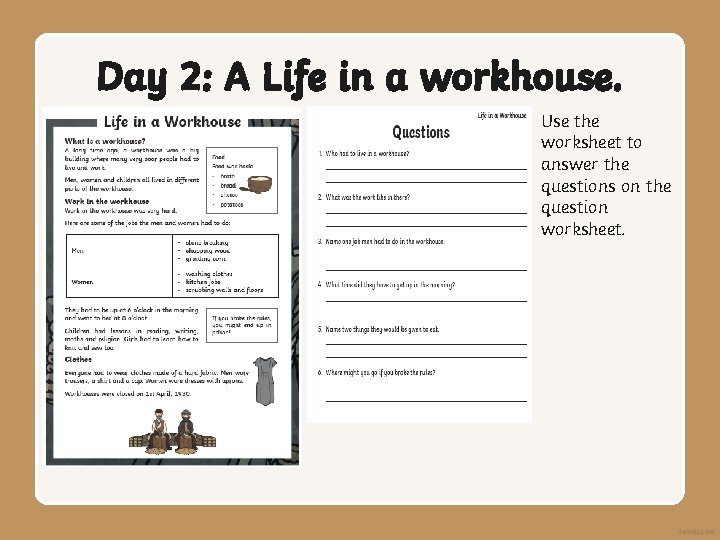
Day 2: A Life in a workhouse. Use the worksheet to answer the questions on the question worksheet.
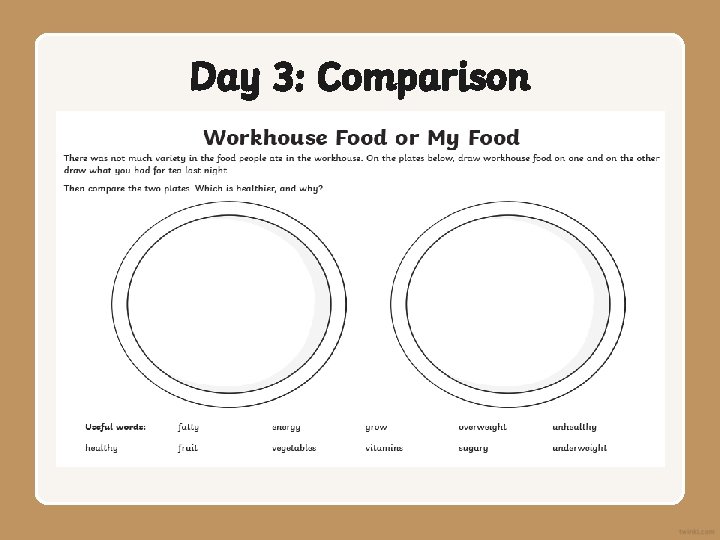
Day 3: Comparison

- Slides: 17