
Workforce Planning Business Unit Planning Tool Kit draft
Workforce Planning Business Unit Planning Tool Kit (draft)
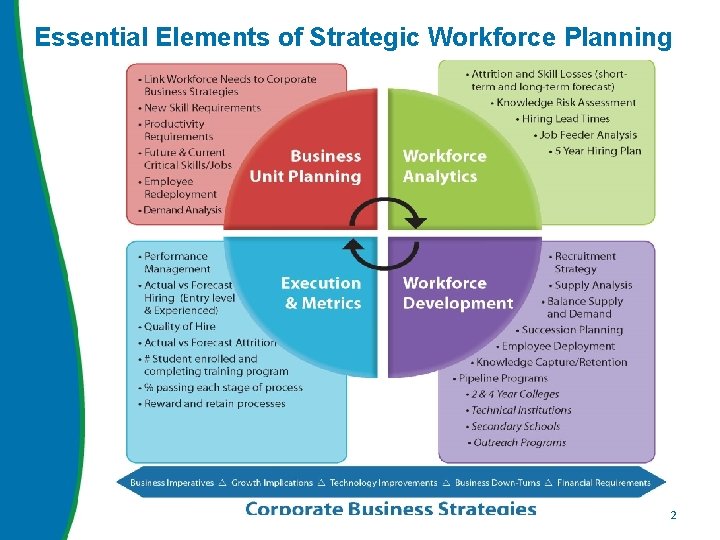
Essential Elements of Strategic Workforce Planning 2
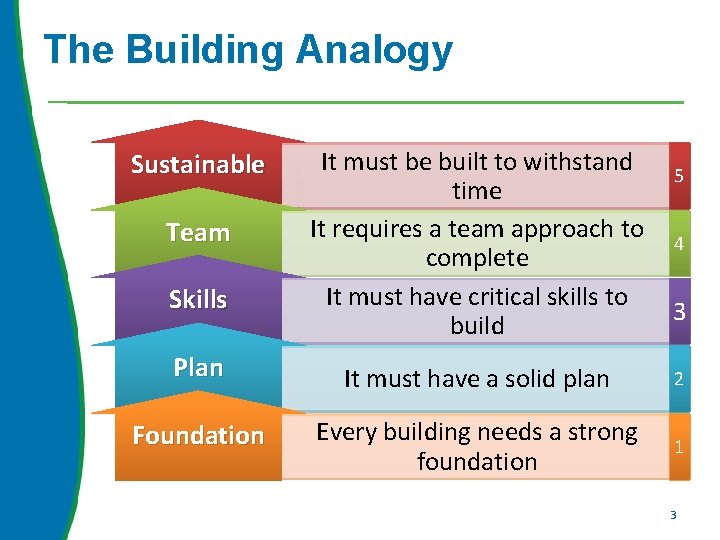
The Building Analogy Sustainable Team Skills It must be built to withstand time It requires a team approach to complete It must have critical skills to build 5 4 3 Plan It must have a solid plan 2 Foundation Every building needs a strong foundation 1 3
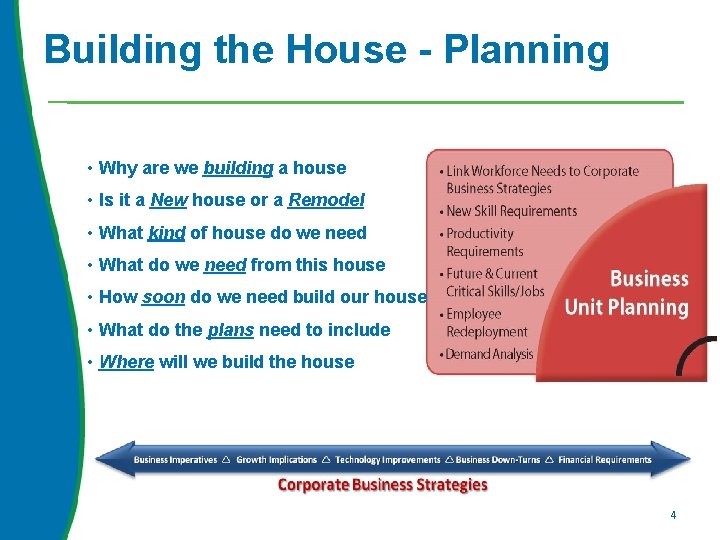
Building the House - Planning • Why are we building a house • Is it a New house or a Remodel • What kind of house do we need • What do we need from this house • How soon do we need build our house • What do the plans need to include • Where will we build the house 4
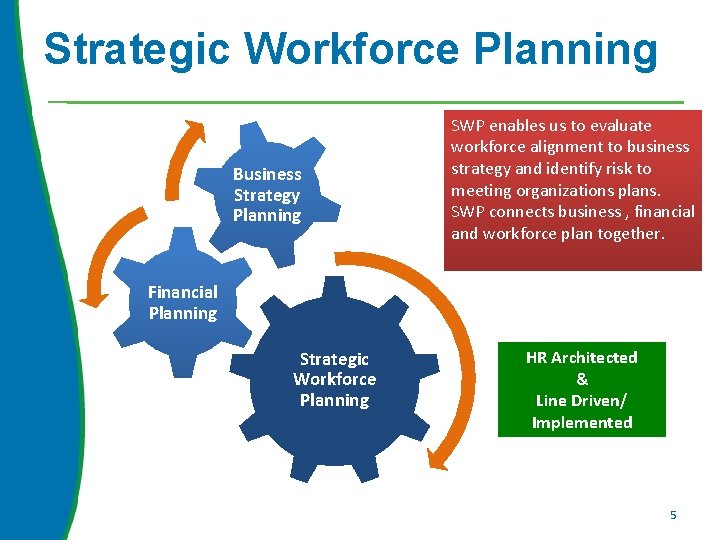
Strategic Workforce Planning Business Strategy Planning SWP enables us to evaluate workforce alignment to business strategy and identify risk to meeting organizations plans. SWP connects business , financial and workforce plan together. Financial Planning Strategic Workforce Planning HR Architected & Line Driven/ Implemented 5
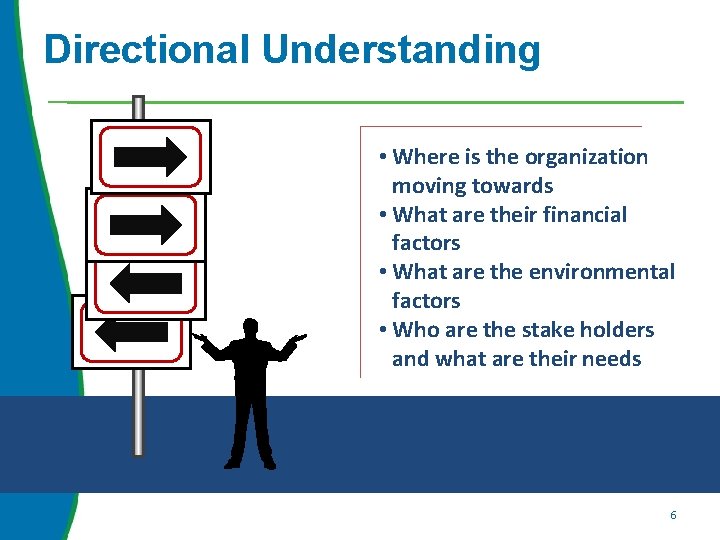
Directional Understanding • Where is the organization moving towards • What are their financial factors • What are the environmental factors • Who are the stake holders and what are their needs 6
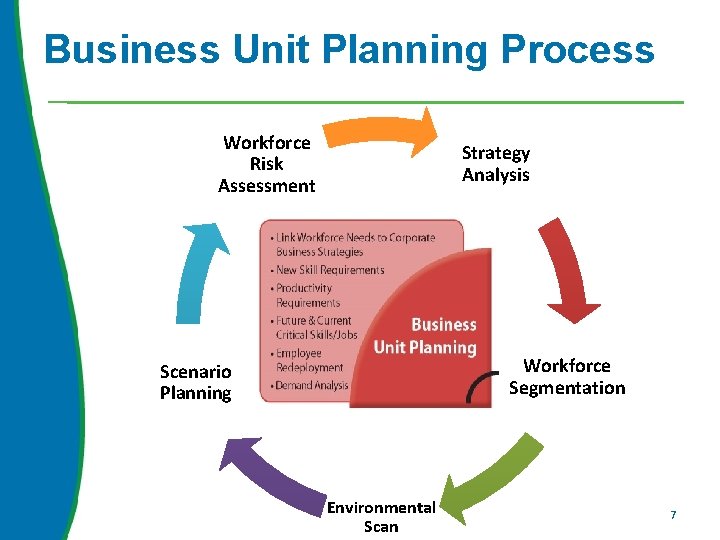
Business Unit Planning Process Workforce Risk Assessment Strategy Analysis Workforce Segmentation Scenario Planning Environmental Scan 7
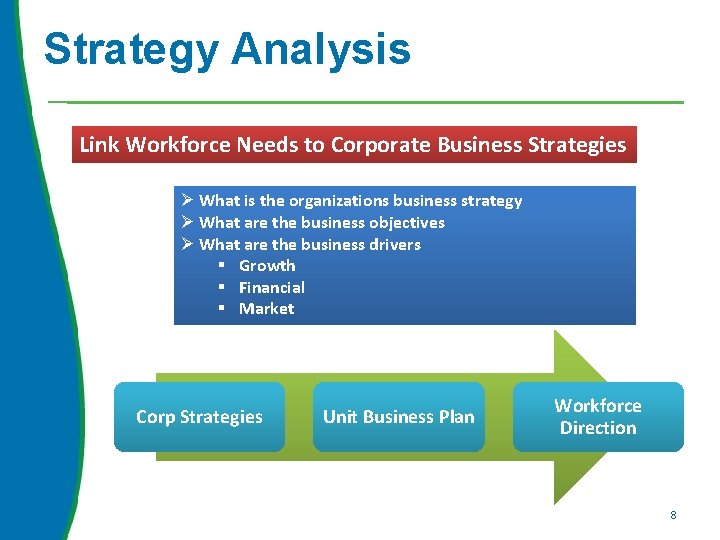
Strategy Analysis Link Workforce Needs to Corporate Business Strategies Ø What is the organizations business strategy Ø What are the business objectives Ø What are the business drivers § Growth § Financial § Market Corp Strategies Unit Business Plan Workforce Direction 8
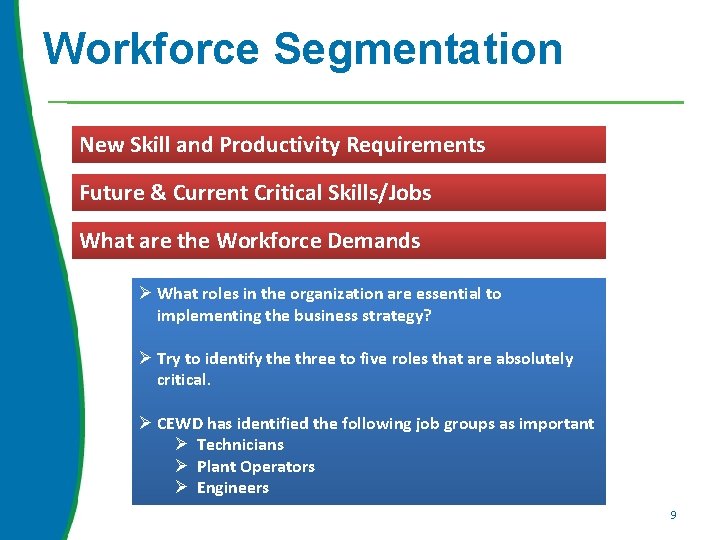
Workforce Segmentation New Skill and Productivity Requirements Future & Current Critical Skills/Jobs What are the Workforce Demands Ø What roles in the organization are essential to implementing the business strategy? Ø Try to identify the three to five roles that are absolutely critical. Ø CEWD has identified the following job groups as important Ø Technicians Ø Plant Operators Ø Engineers 9
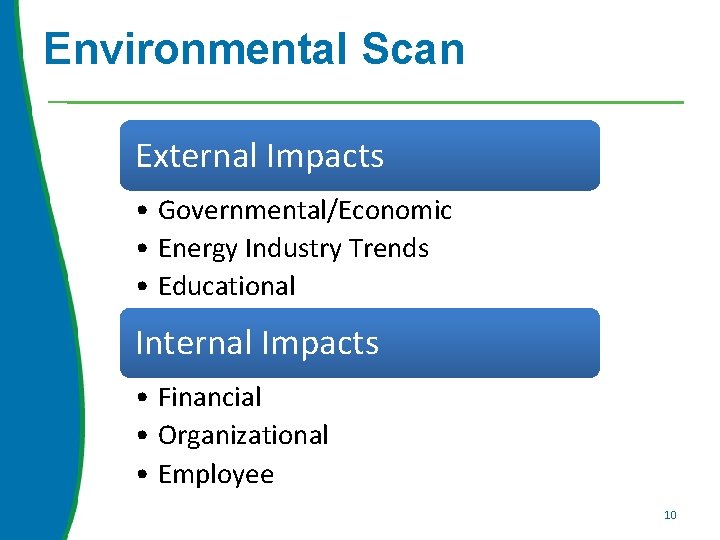
Environmental Scan External Impacts • Governmental/Economic • Energy Industry Trends • Educational Internal Impacts • Financial • Organizational • Employee 10
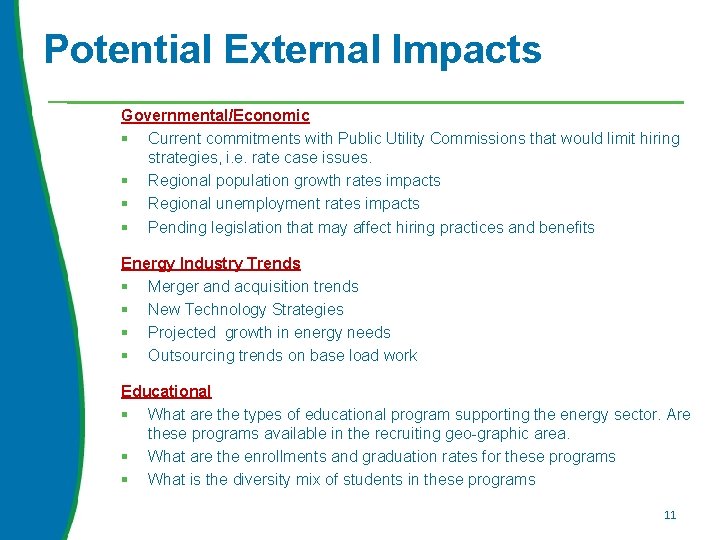
Potential External Impacts Governmental/Economic § Current commitments with Public Utility Commissions that would limit hiring strategies, i. e. rate case issues. § Regional population growth rates impacts § Regional unemployment rates impacts § Pending legislation that may affect hiring practices and benefits Energy Industry Trends § Merger and acquisition trends § New Technology Strategies § Projected growth in energy needs § Outsourcing trends on base load work Educational § What are the types of educational program supporting the energy sector. Are these programs available in the recruiting geo-graphic area. § What are the enrollments and graduation rates for these programs § What is the diversity mix of students in these programs 11
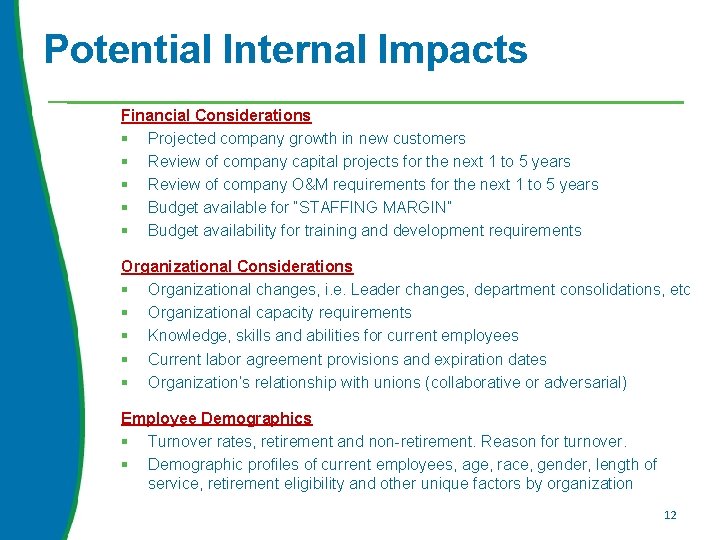
Potential Internal Impacts Financial Considerations § Projected company growth in new customers § Review of company capital projects for the next 1 to 5 years § Review of company O&M requirements for the next 1 to 5 years § Budget available for “STAFFING MARGIN” § Budget availability for training and development requirements Organizational Considerations § Organizational changes, i. e. Leader changes, department consolidations, etc § Organizational capacity requirements § Knowledge, skills and abilities for current employees § Current labor agreement provisions and expiration dates § Organization’s relationship with unions (collaborative or adversarial) Employee Demographics § Turnover rates, retirement and non-retirement. Reason for turnover. § Demographic profiles of current employees, age, race, gender, length of service, retirement eligibility and other unique factors by organization 12
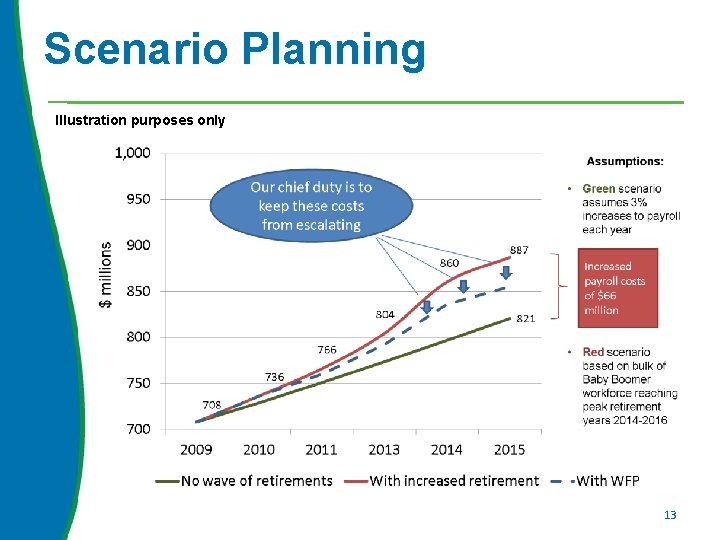
Scenario Planning Illustration purposes only 13
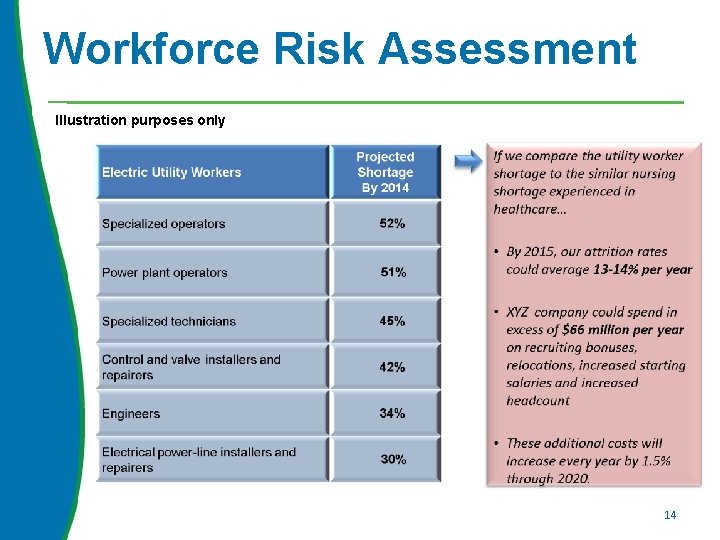
Workforce Risk Assessment Illustration purposes only 14
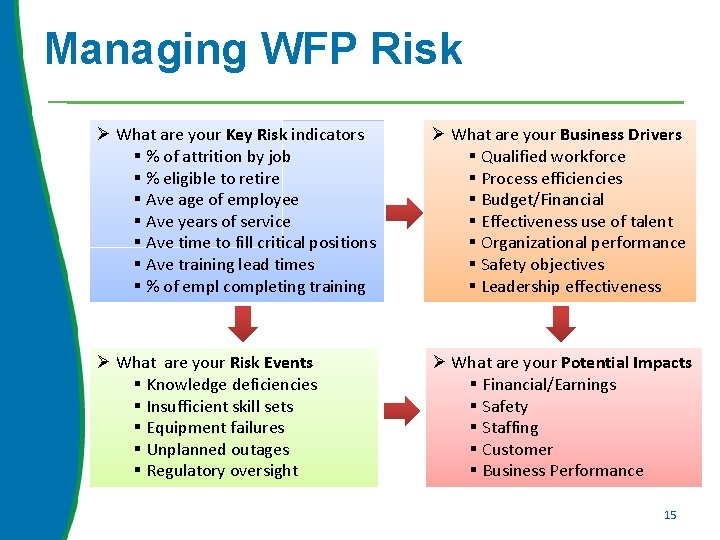
Managing WFP Risk Ø What are your Key Risk indicators § % of attrition by job § % eligible to retire § Ave age of employee § Ave years of service § Ave time to fill critical positions § Ave training lead times § % of empl completing training Ø What are your Business Drivers § Qualified workforce § Process efficiencies § Budget/Financial § Effectiveness use of talent § Organizational performance § Safety objectives § Leadership effectiveness Ø What are your Risk Events § Knowledge deficiencies § Insufficient skill sets § Equipment failures § Unplanned outages § Regulatory oversight Ø What are your Potential Impacts § Financial/Earnings § Safety § Staffing § Customer § Business Performance 15
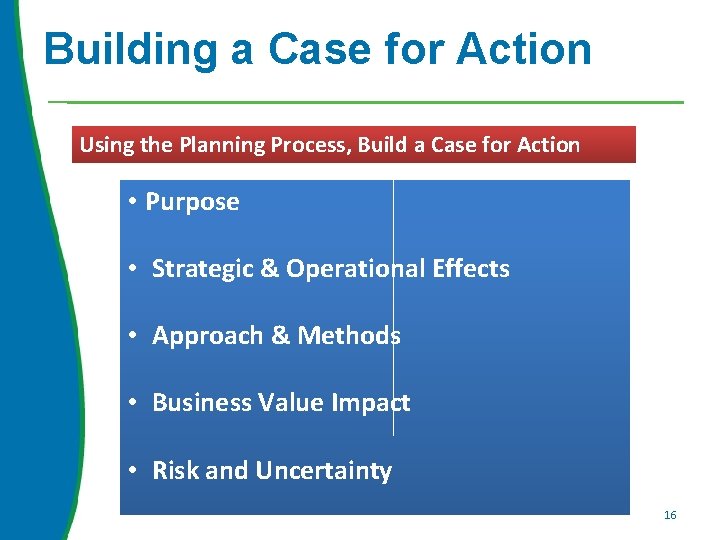
Building a Case for Action Using the Planning Process, Build a Case for Action • Purpose • Strategic & Operational Effects • Approach & Methods • Business Value Impact • Risk and Uncertainty 16
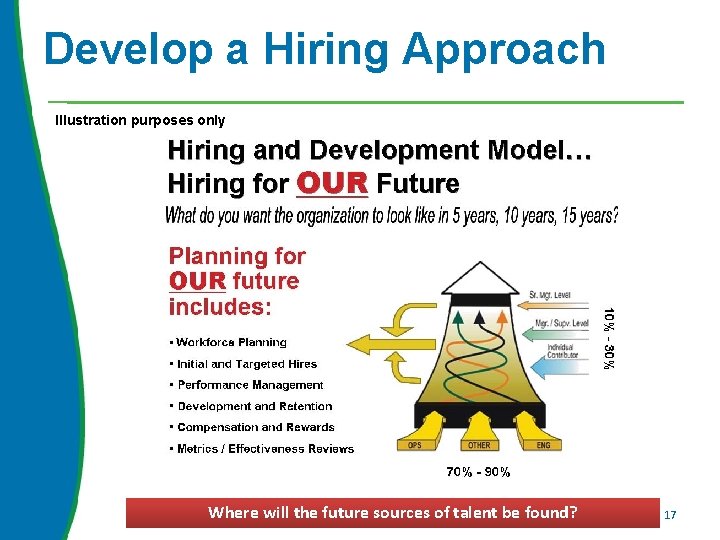
Develop a Hiring Approach Illustration purposes only Where will the future sources of talent be found? 17
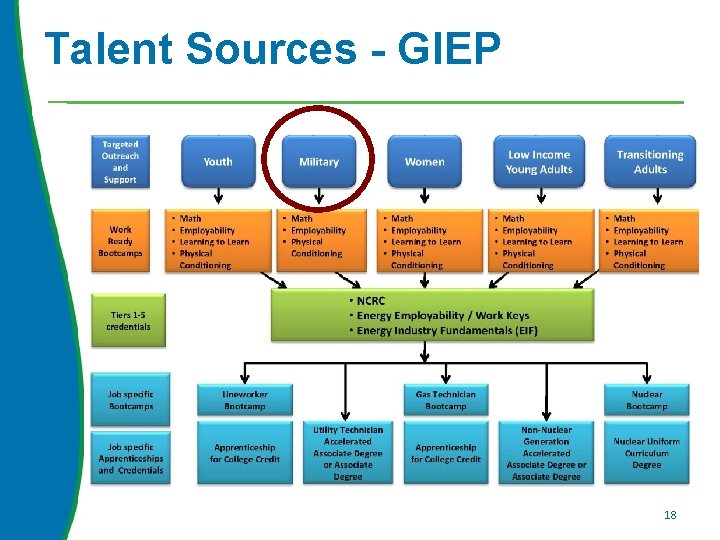
Talent Sources - GIEP 18
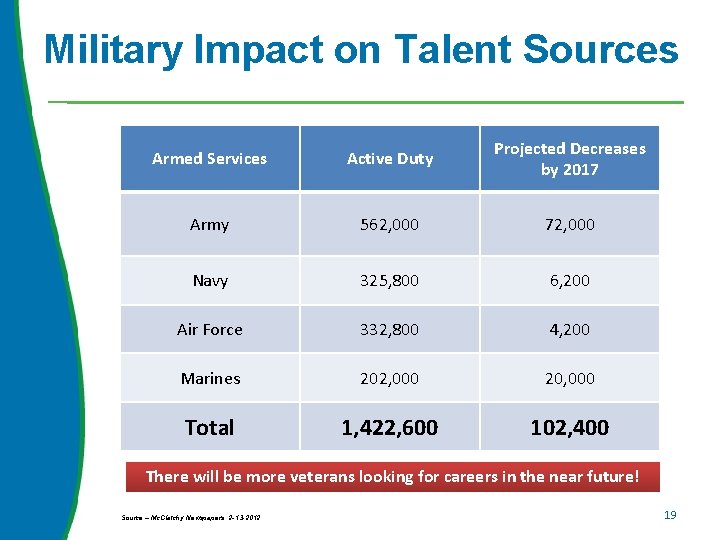
Military Impact on Talent Sources Armed Services Active Duty Projected Decreases by 2017 Army 562, 000 72, 000 Navy 325, 800 6, 200 Air Force 332, 800 4, 200 Marines 202, 000 20, 000 Total 1, 422, 600 102, 400 There will be more veterans looking for careers in the near future! Source – Mc. Clatchy Newspapers, 2 -13 -2012 19
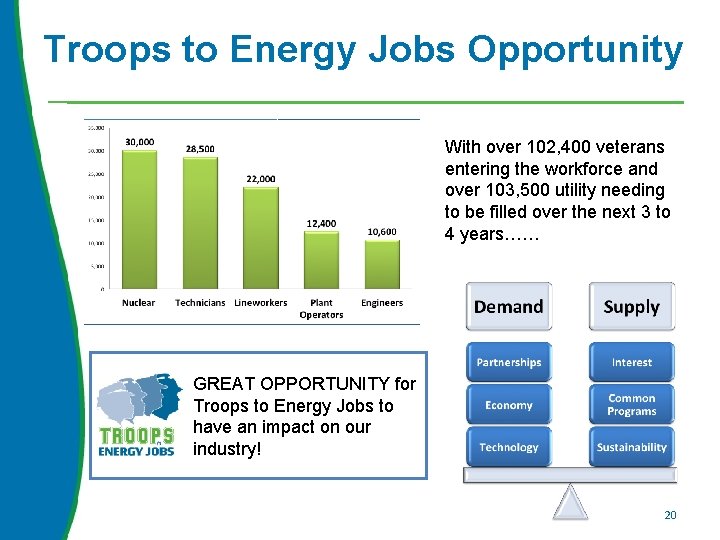
Troops to Energy Jobs Opportunity With over 102, 400 veterans entering the workforce and over 103, 500 utility needing to be filled over the next 3 to 4 years…… GREAT OPPORTUNITY for Troops to Energy Jobs to have an impact on our industry! 20
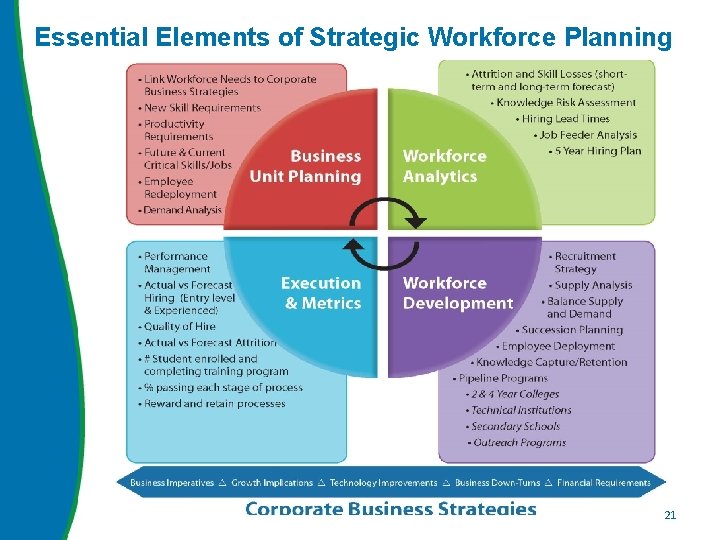
Essential Elements of Strategic Workforce Planning 21
Questions & Answer Session 22
Addendum Other Samples of Business & Strategic Planning Models 23
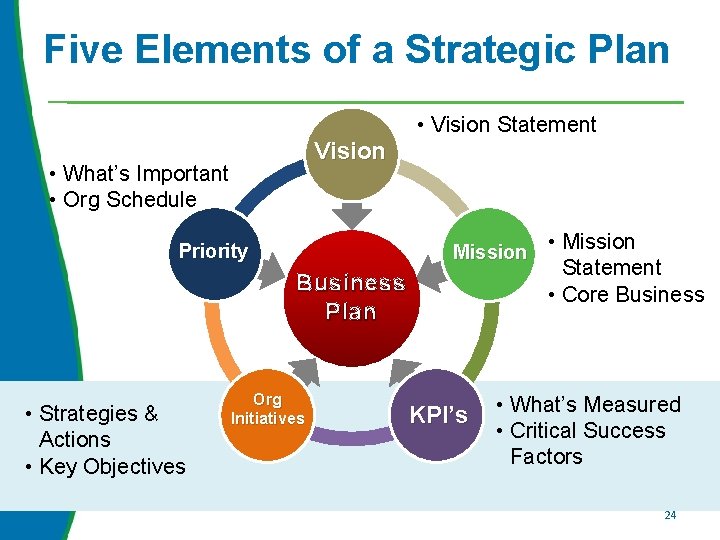
Five Elements of a Strategic Plan • Vision Statement Vision • What’s Important • Org Schedule Priority Mission Business Plan • Strategies & Actions • Key Objectives Org Initiatives KPI’s • Mission Statement • Core Business • What’s Measured • Critical Success Factors 24
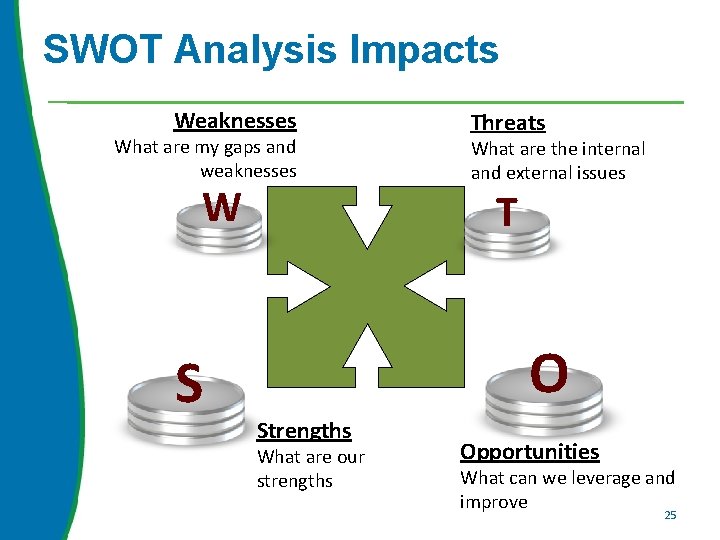
SWOT Analysis Impacts Weaknesses What are my gaps and weaknesses W S Threats What are the internal and external issues T O Strengths What are our strengths Opportunities What can we leverage and improve 25
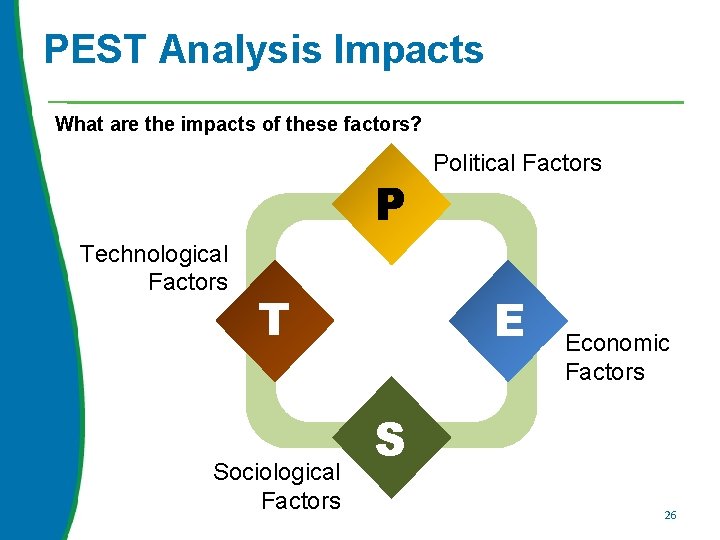
PEST Analysis Impacts What are the impacts of these factors? P Technological Factors T Sociological Factors Political Factors E Economic Factors S 26
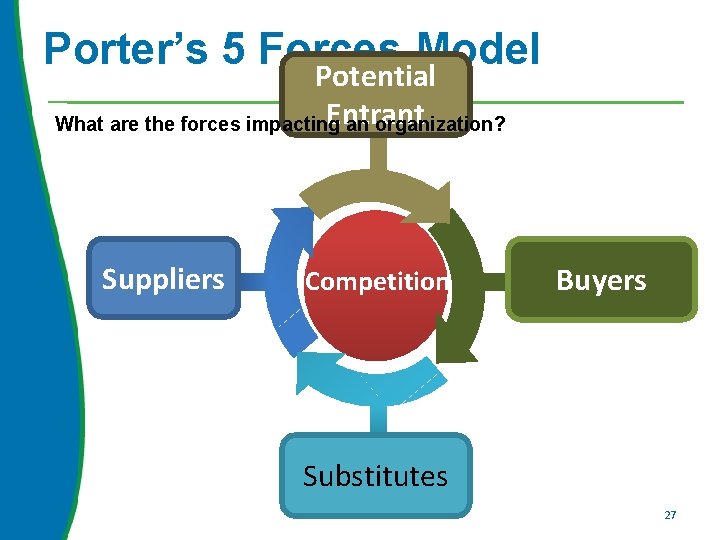
Porter’s 5 Forces Model Potential Entrant What are the forces impacting an organization? Suppliers Competition Buyers Substitutes 27
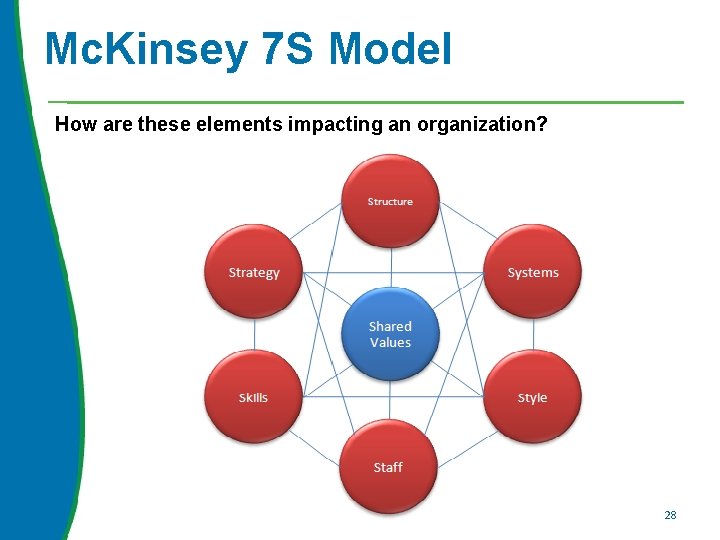
Mc. Kinsey 7 S Model How are these elements impacting an organization? 28
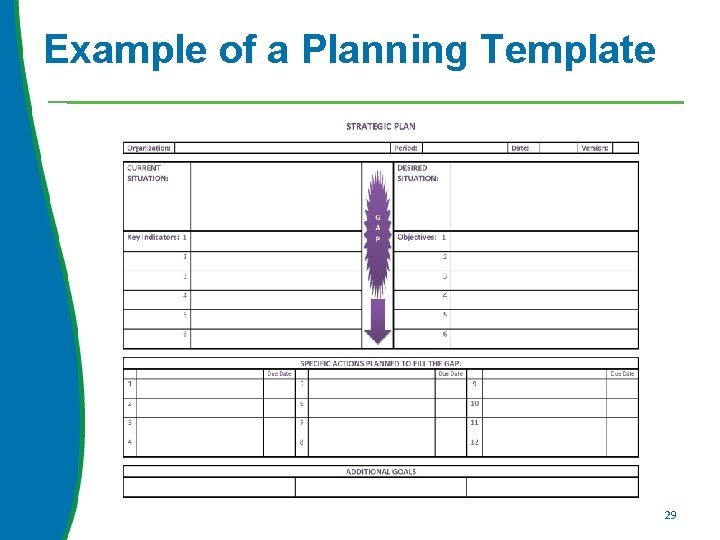
Example of a Planning Template 29
- Slides: 29