
Workforce Panel Presentation Safe Skilled Trained Viable Participating

Workforce Panel Presentation Safe, Skilled, Trained, Viable, Participating Citizen Workforce Frank Yancey Kellogg Brown & Root CII Annual Conference 2001
Workforce 2000 Reality check. . . • Record low unemployment • Low inflation • Labor demand – blue collar • Steady to strong growth in heavy industry construction Sources: U. S. Department of Labor (DOL) Bureau of Labor Statistics (BLS)
Workforce 2000 Reality check. . . • Labor shortages • Demographic shifts • Industry reputation and perceptions • Investment in training • Wages. . . past and present Sources: U. S. Department of Labor (DOL) Bureau of Labor Statistics (BLS)
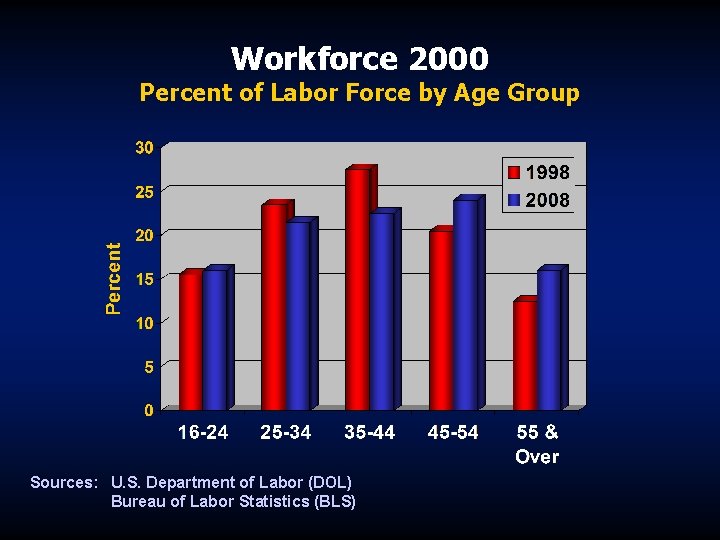
Workforce 2000 Percent of Labor Force by Age Group Sources: U. S. Department of Labor (DOL) Bureau of Labor Statistics (BLS)
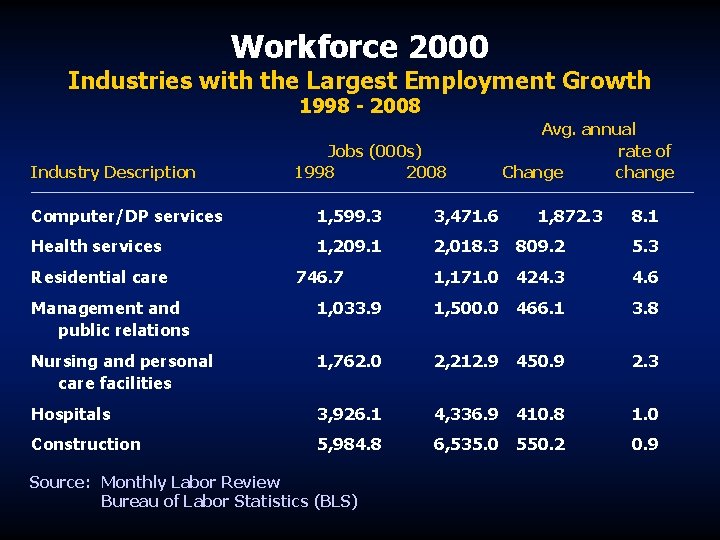
Workforce 2000 Industries with the Largest Employment Growth 1998 - 2008 Industry Description Jobs (000 s) 1998 2008 Avg. annual rate of Change change Computer/DP services 1, 599. 3 3, 471. 6 Health services 1, 209. 1 2, 018. 3 809. 2 5. 3 1, 171. 0 424. 3 4. 6 Residential care 746. 7 1, 872. 3 8. 1 Management and public relations 1, 033. 9 1, 500. 0 466. 1 3. 8 Nursing and personal care facilities 1, 762. 0 2, 212. 9 450. 9 2. 3 Hospitals 3, 926. 1 4, 336. 9 410. 8 1. 0 Construction 5, 984. 8 6, 535. 0 550. 2 0. 9 Source: Monthly Labor Review Bureau of Labor Statistics (BLS)
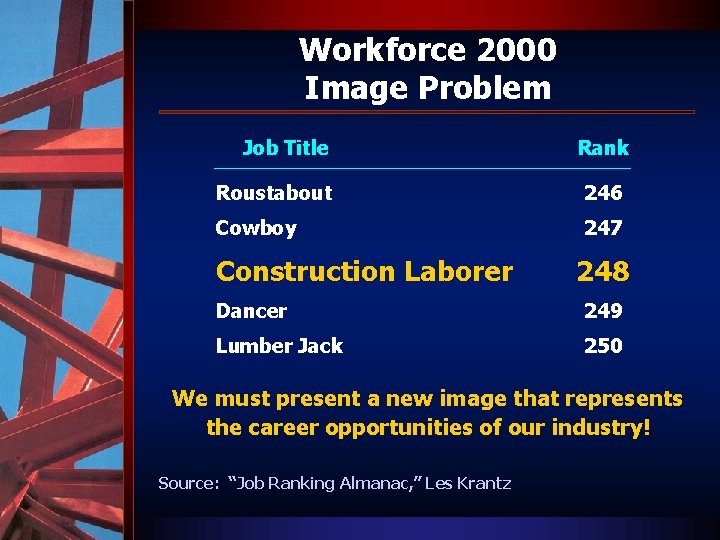
Workforce 2000 Image Problem Job Title Rank Roustabout 246 Cowboy 247 Construction Laborer 248 Dancer 249 Lumber Jack 250 We must present a new image that represents the career opportunities of our industry! Source: “Job Ranking Almanac, ” Les Krantz
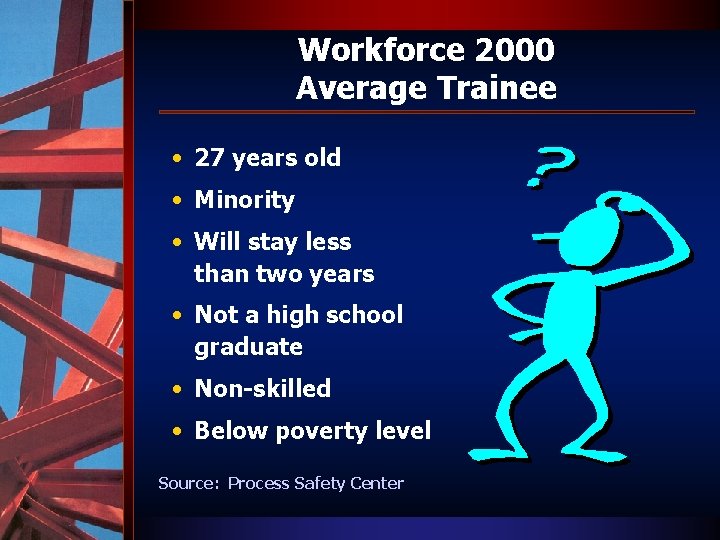
Workforce 2000 Average Trainee • 27 years old • Minority • Will stay less than two years • Not a high school graduate • Non-skilled • Below poverty level Source: Process Safety Center
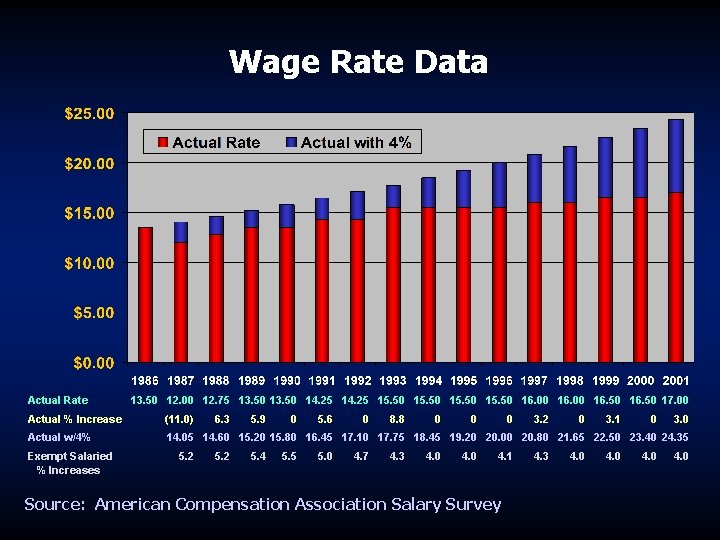
Wage Rate Data Actual Rate 13. 50 12. 00 12. 75 13. 50 14. 25 15. 50 16. 00 16. 50 17. 00 Actual % Increase (11. 0) Actual w/4% 14. 05 14. 60 15. 20 15. 80 16. 45 17. 10 17. 75 18. 45 19. 20 20. 00 20. 80 21. 65 22. 50 23. 40 24. 35 Exempt Salaried % Increases 5. 2 6. 3 5. 2 5. 9 5. 4 0 5. 5 5. 6 5. 0 0 4. 7 8. 8 4. 3 0 4. 0 0 4. 1 Source: American Compensation Association Salary Survey 3. 2 4. 3 0 4. 0 3. 1 4. 0 0 4. 0 3. 0 4. 0
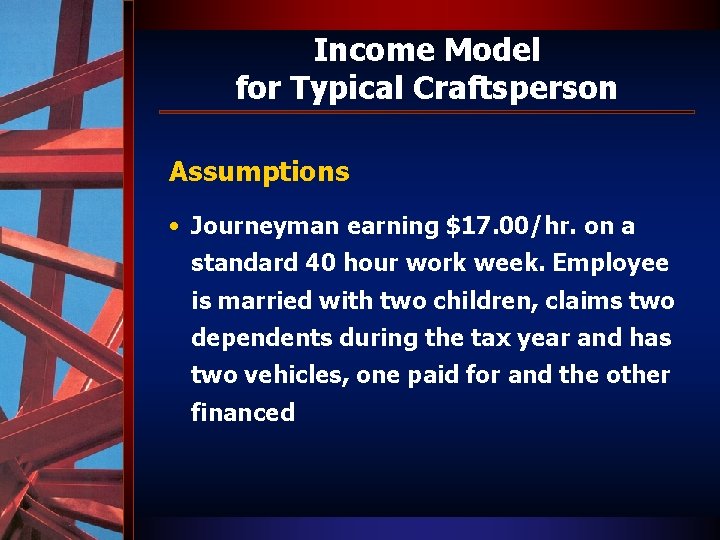
Income Model for Typical Craftsperson Assumptions • Journeyman earning $17. 00/hr. on a standard 40 hour work week. Employee is married with two children, claims two dependents during the tax year and has two vehicles, one paid for and the other financed
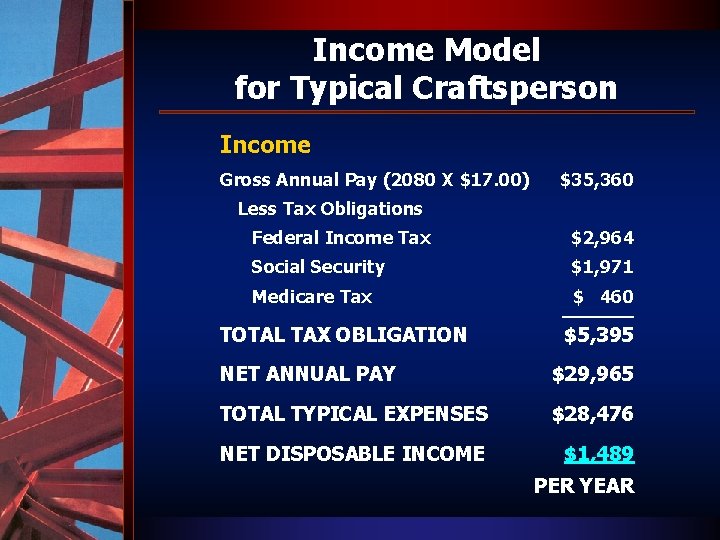
Income Model for Typical Craftsperson Income Gross Annual Pay (2080 X $17. 00) $35, 360 Less Tax Obligations Federal Income Tax $2, 964 Social Security $1, 971 Medicare Tax $ 460 TOTAL TAX OBLIGATION $5, 395 NET ANNUAL PAY $29, 965 TOTAL TYPICAL EXPENSES $28, 476 NET DISPOSABLE INCOME $1, 489 PER YEAR
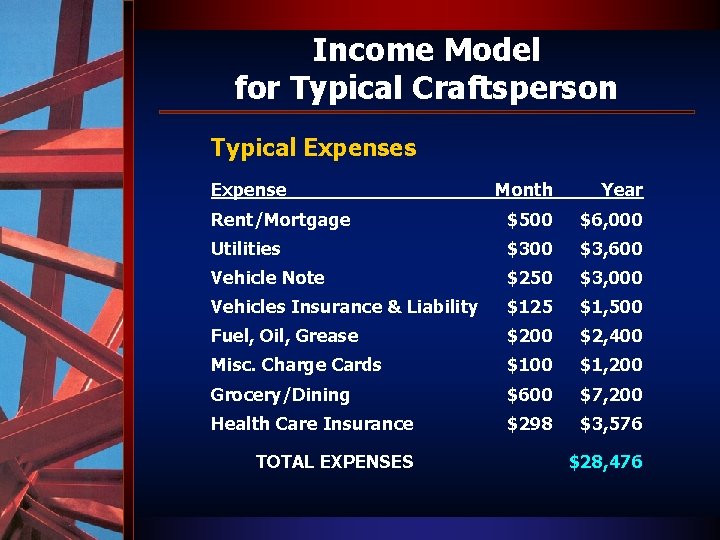
Income Model for Typical Craftsperson Typical Expenses Expense Month Year Rent/Mortgage $500 $6, 000 Utilities $300 $3, 600 Vehicle Note $250 $3, 000 Vehicles Insurance & Liability $125 $1, 500 Fuel, Oil, Grease $200 $2, 400 Misc. Charge Cards $100 $1, 200 Grocery/Dining $600 $7, 200 Health Care Insurance $298 $3, 576 TOTAL EXPENSES $28, 476
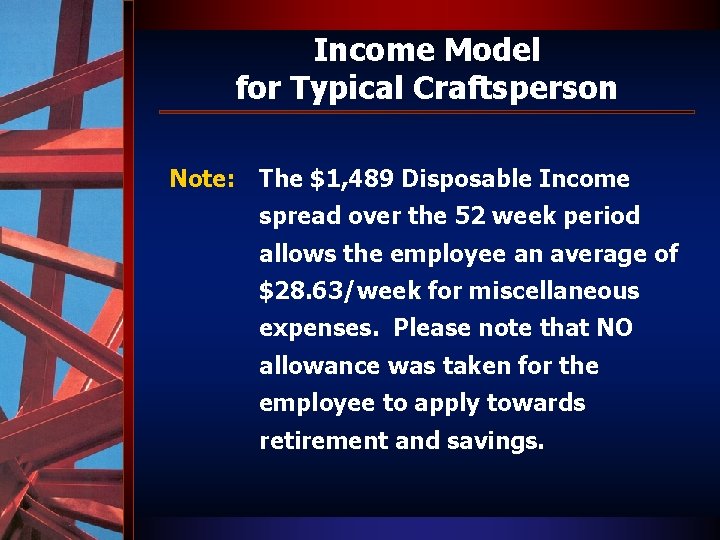
Income Model for Typical Craftsperson Note: The $1, 489 Disposable Income spread over the 52 week period allows the employee an average of $28. 63/week for miscellaneous expenses. Please note that NO allowance was taken for the employee to apply towards retirement and savings.
Income Model for Typical Entry-Level Helper Assumptions • Helper/apprentice earning $10. 00/hr. on a standard 40 hour work week. Employee is married with two children, claims two dependents during the tax year and has two vehicles, one paid for and the other financed.
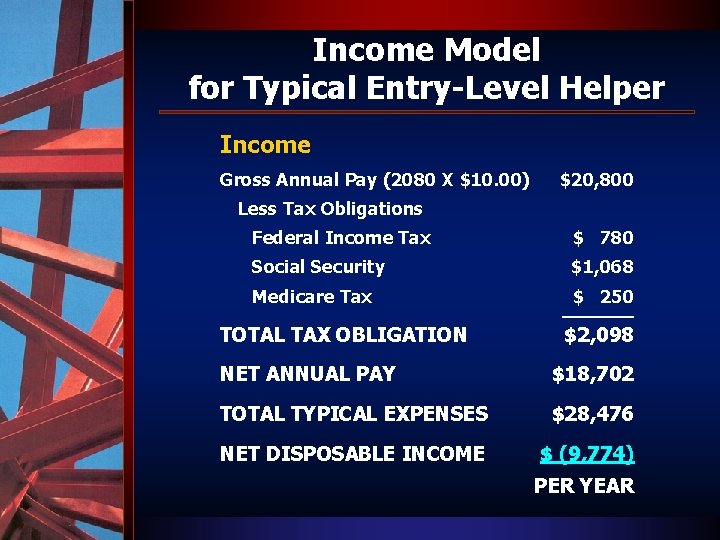
Income Model for Typical Entry-Level Helper Income Gross Annual Pay (2080 X $10. 00) $20, 800 Less Tax Obligations Federal Income Tax $ 780 Social Security $1, 068 Medicare Tax $ 250 TOTAL TAX OBLIGATION $2, 098 NET ANNUAL PAY $18, 702 TOTAL TYPICAL EXPENSES $28, 476 NET DISPOSABLE INCOME $ (9, 774) PER YEAR
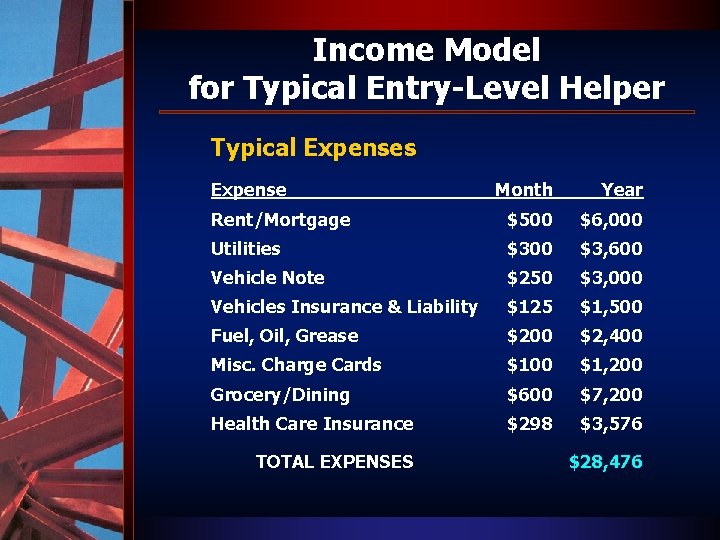
Income Model for Typical Entry-Level Helper Typical Expenses Expense Month Year Rent/Mortgage $500 $6, 000 Utilities $300 $3, 600 Vehicle Note $250 $3, 000 Vehicles Insurance & Liability $125 $1, 500 Fuel, Oil, Grease $200 $2, 400 Misc. Charge Cards $100 $1, 200 Grocery/Dining $600 $7, 200 Health Care Insurance $298 $3, 576 TOTAL EXPENSES $28, 476
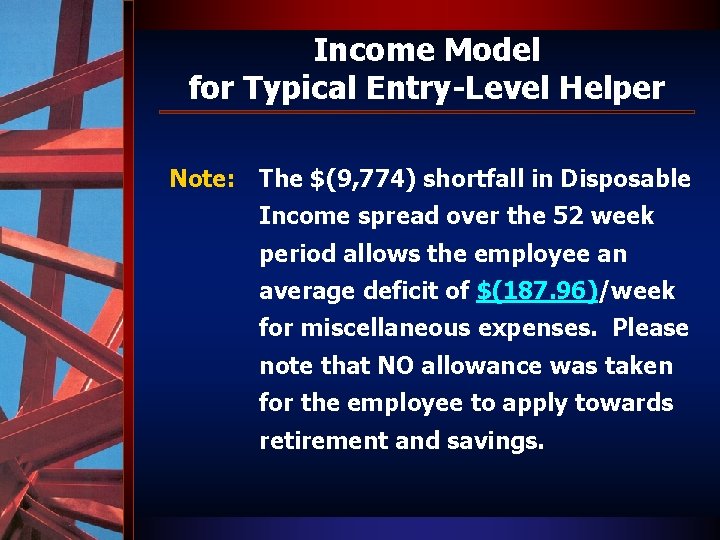
Income Model for Typical Entry-Level Helper Note: The $(9, 774) shortfall in Disposable Income spread over the 52 week period allows the employee an average deficit of $(187. 96)/week for miscellaneous expenses. Please note that NO allowance was taken for the employee to apply towards retirement and savings.

CII Annual Conference 2001 San Francisco, California
- Slides: 17