
Workforce on the move the case of Luxembourg

Workforce on the move: the case of Luxembourg Fabienne Becker & Adolfo Sommarribas LU EMN NCP 26 June 2013 Warsaw, Poland
Presentation outlook 1. Luxembourgish demography 2. The structure of the labour market in Luxembourg 3. Third-country national cross-border workers - LU EMN NCP study 2012 4. Luxembourg and the highly qualified workforce - LU EMN NCP study - 2013 5. Challenges and barriers for highly qualified TCN 6. Conclusions
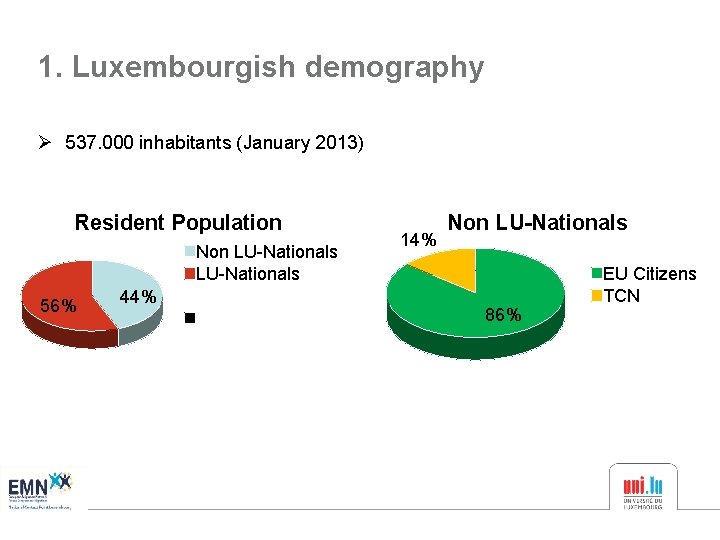
1. Luxembourgish demography Ø 537. 000 inhabitants (January 2013) Resident Population Non LU-Nationals 56% 44% 14% Non LU-Nationals 86% EU Citizens TCN
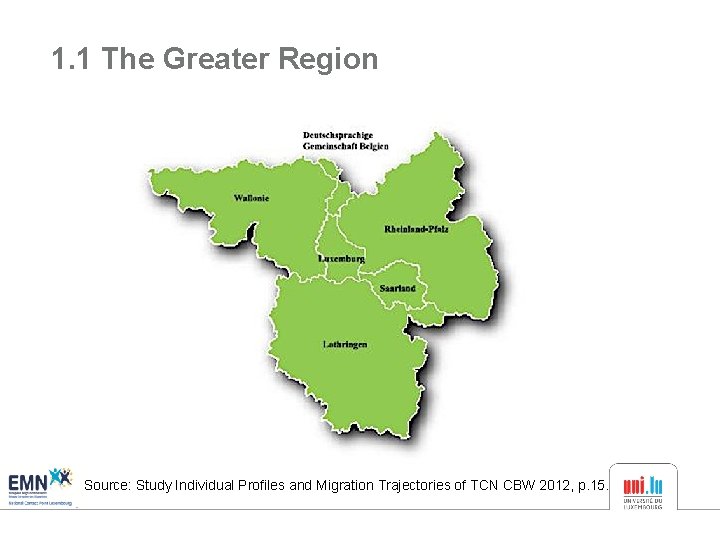
1. 1 The Greater Region Source: Study Individual Profiles and Migration Trajectories of TCN CBW 2012, p. 15.
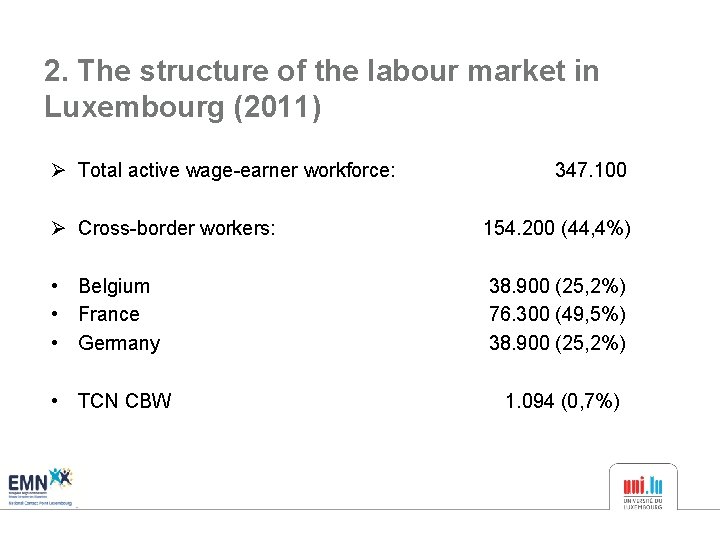
2. The structure of the labour market in Luxembourg (2011) Ø Total active wage-earner workforce: 347. 100 Ø Cross-border workers: 154. 200 (44, 4%) • Belgium • France • Germany 38. 900 (25, 2%) 76. 300 (49, 5%) 38. 900 (25, 2%) • TCN CBW 1. 094 (0, 7%)
3. Third-country national cross-border workers (TCN CBWs) LU EMN NCP study (2012) TCN CBW – Definition: Ø Ø Ø Person residing in Belgium, France, Germany Regularly crossing the border Carrying out a paid activity Non-EU citizens Work permit requirement Individual Profiles and Migration Trajectories of TCN CBWs
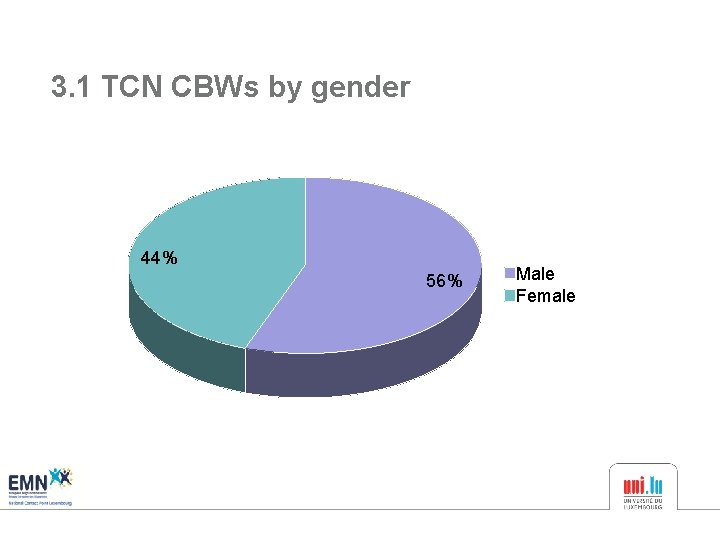
3. 1 TCN CBWs by gender 44% 56% Male Female
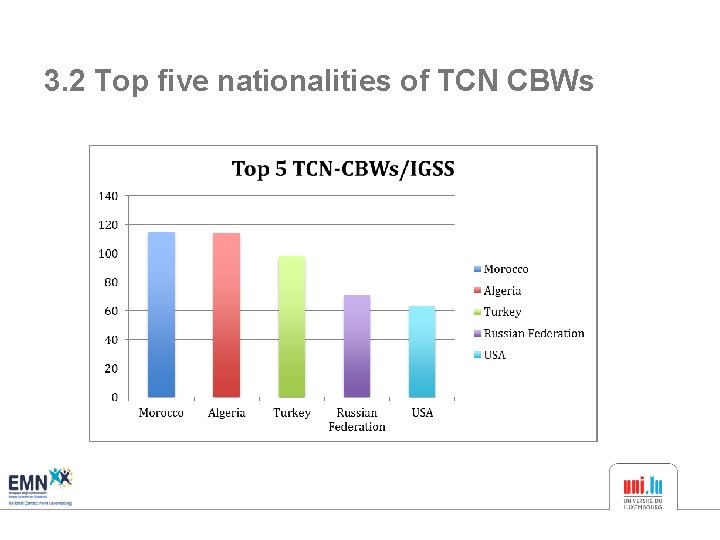
3. 2 Top five nationalities of TCN CBWs
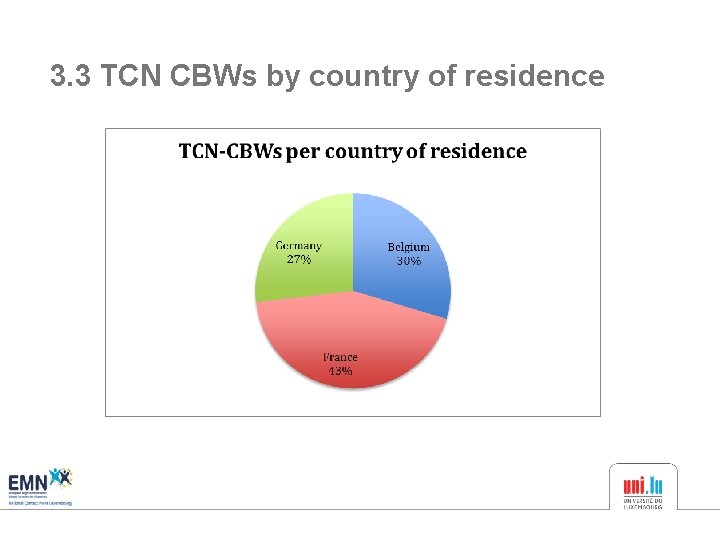
3. 3 TCN CBWs by country of residence
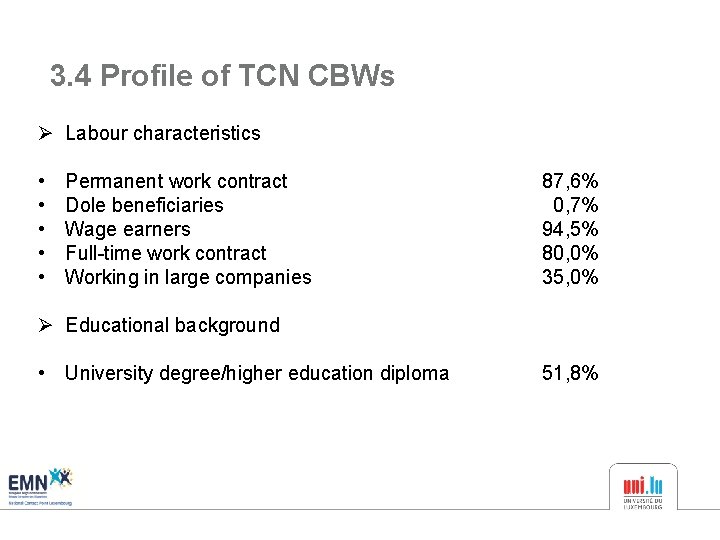
3. 4 Profile of TCN CBWs Ø Labour characteristics • • • Permanent work contract Dole beneficiaries Wage earners Full-time work contract Working in large companies 87, 6% 0, 7% 94, 5% 80, 0% 35, 0% Ø Educational background • University degree/higher education diploma 51, 8%
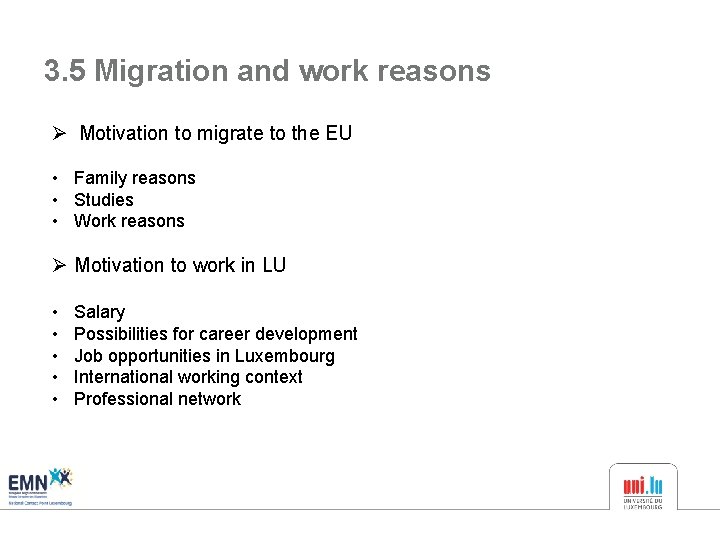
3. 5 Migration and work reasons Ø Motivation to migrate to the EU • Family reasons • Studies • Work reasons Ø Motivation to work in LU • • • Salary Possibilities for career development Job opportunities in Luxembourg International working context Professional network
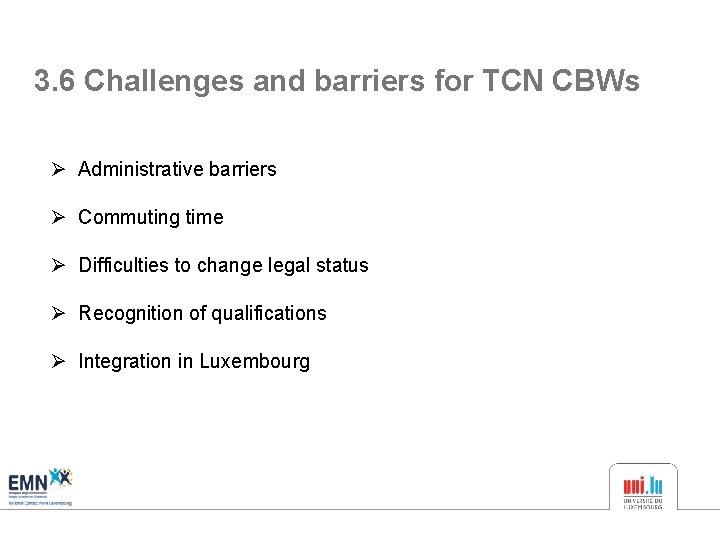
3. 6 Challenges and barriers for TCN CBWs Ø Administrative barriers Ø Commuting time Ø Difficulties to change legal status Ø Recognition of qualifications Ø Integration in Luxembourg

4. Luxembourg and the highly qualified workforce LU EMN NCP study (2013) Ø Labour migration demand-driven (low and highly qualified) Ø Traditionally the source of workforce the Greater Region Ø Recent developments of the economy beyond the Greater Region
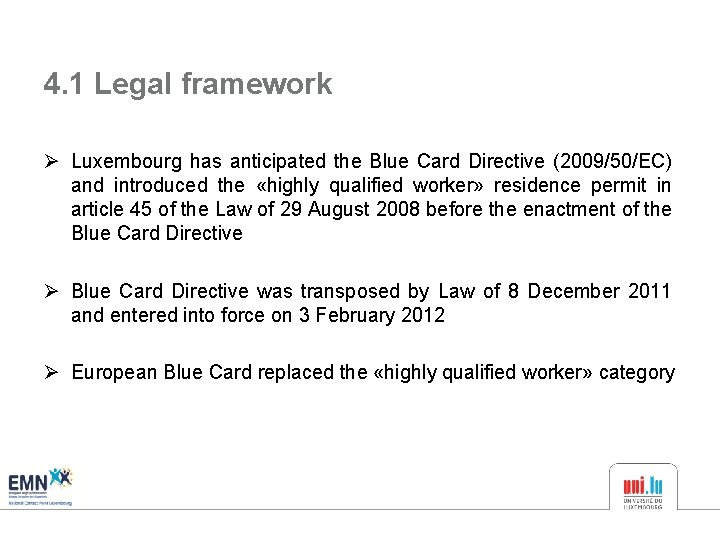
4. 1 Legal framework Ø Luxembourg has anticipated the Blue Card Directive (2009/50/EC) and introduced the «highly qualified worker» residence permit in article 45 of the Law of 29 August 2008 before the enactment of the Blue Card Directive Ø Blue Card Directive was transposed by Law of 8 December 2011 and entered into force on 3 February 2012 Ø European Blue Card replaced the «highly qualified worker» category
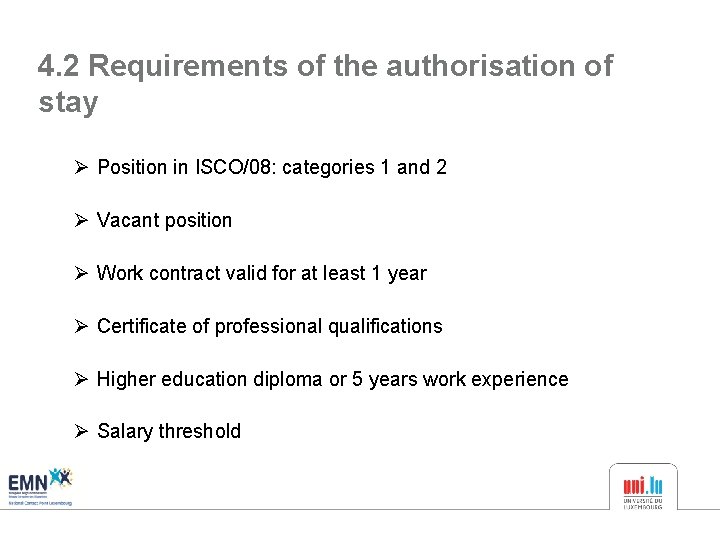
4. 2 Requirements of the authorisation of stay Ø Position in ISCO/08: categories 1 and 2 Ø Vacant position Ø Work contract valid for at least 1 year Ø Certificate of professional qualifications Ø Higher education diploma or 5 years work experience Ø Salary threshold
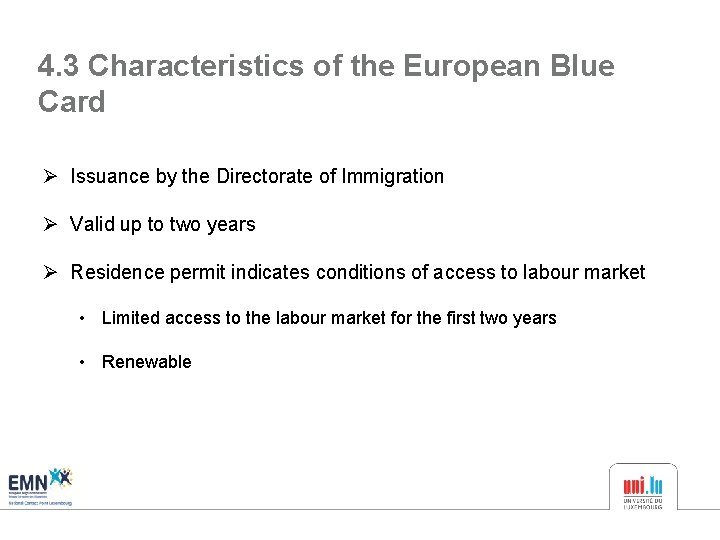
4. 3 Characteristics of the European Blue Card Ø Issuance by the Directorate of Immigration Ø Valid up to two years Ø Residence permit indicates conditions of access to labour market • Limited access to the labour market for the first two years • Renewable
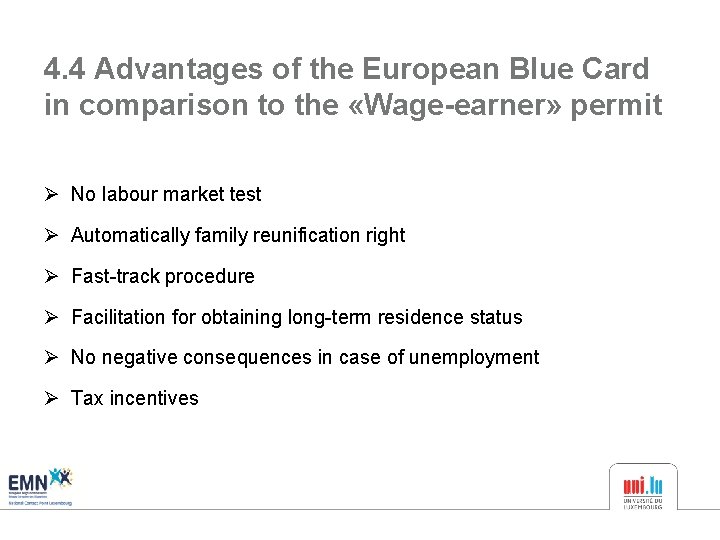
4. 4 Advantages of the European Blue Card in comparison to the «Wage-earner» permit Ø No labour market test Ø Automatically family reunification right Ø Fast-track procedure Ø Facilitation for obtaining long-term residence status Ø No negative consequences in case of unemployment Ø Tax incentives
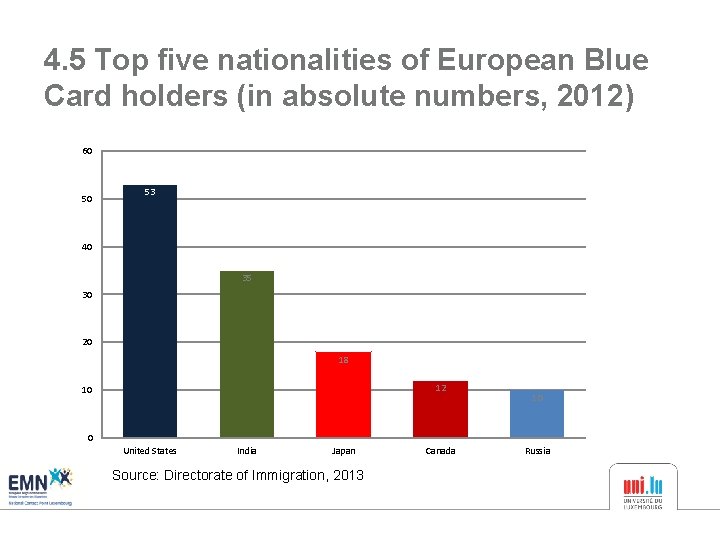
4. 5 Top five nationalities of European Blue Card holders (in absolute numbers, 2012) 60 50 53 40 35 30 20 18 12 10 10 0 United States India Japan Source: Directorate of Immigration, 2013 Canada Russia
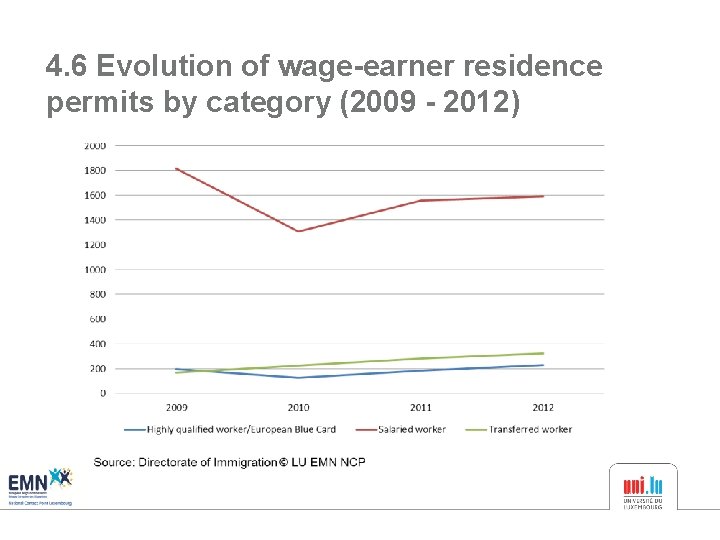
4. 6 Evolution of wage-earner residence permits by category (2009 - 2012)
5. Challenges and barriers for highly qualified TCN Ø Overly restrictive definition of “highly qualified” Ø Language barriers Ø Schooling Ø Housing Ø Bureaucracy Ø Lack of information
6. Conclusions Ø In Luxembourg, migration is characterized by EU mobility, especially by cross-border workers coming from the Greater Region Ø Third-country nationals represent only 6, 1% of the population living in Luxembourg Ø Government policy is focused on high qualified workers and researchers
6. Conclusions Ø TCN CBWs tend to be highly qualified and to have a certain level of stability in their professional status Ø As part of the migratory process TCN CBWs often acquire the nationality of an EU Member State Ø There is a higher level of integration in the country of residence of TCN CBWs Ø Barriers for highly qualified TCNs are often language based

Thank you for your attention!
- Slides: 23