
WORKERS OF THE WORLD UNITE THE RUSSIAN REVOLUTION
- Slides: 19
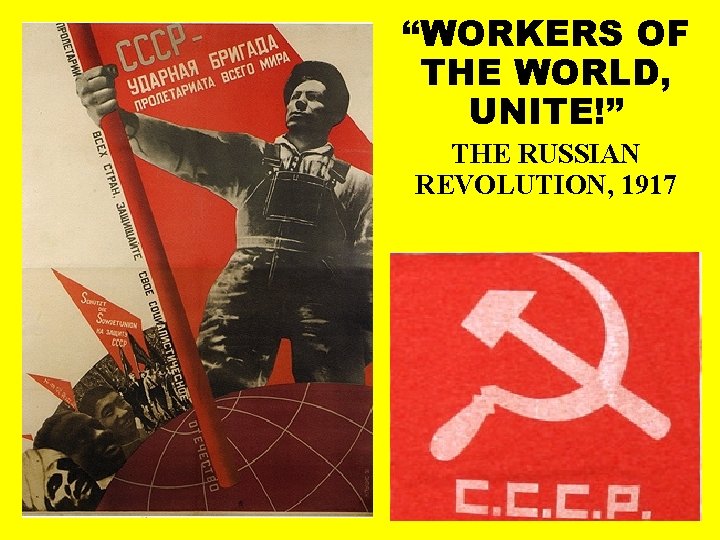
“WORKERS OF THE WORLD, UNITE!” THE RUSSIAN REVOLUTION, 1917
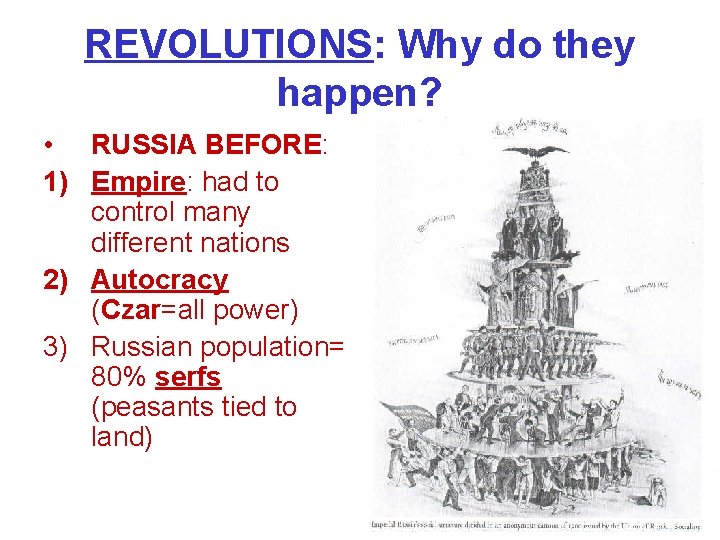
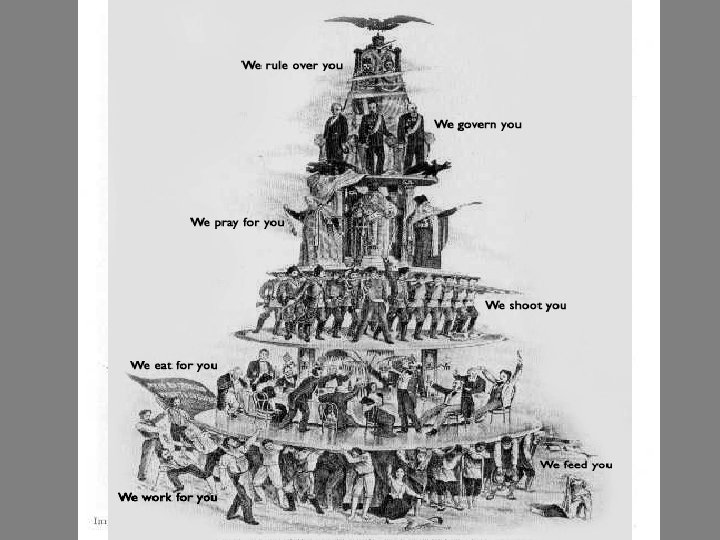
REVOLUTIONS: Why do they happen? • RUSSIA BEFORE: 1) Empire: had to control many different nations 2) Autocracy (Czar=all power) 3) Russian population= 80% serfs (peasants tied to land)
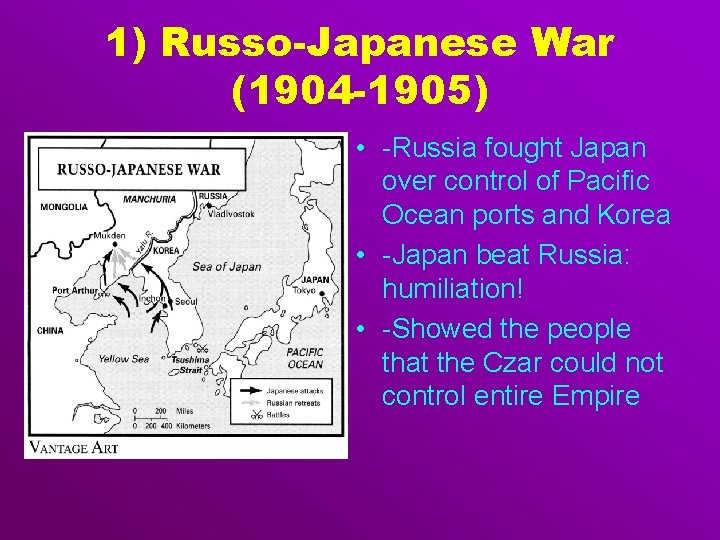
1) Russo-Japanese War (1904 -1905) • -Russia fought Japan over control of Pacific Ocean ports and Korea • -Japan beat Russia: humiliation! • -Showed the people that the Czar could not control entire Empire
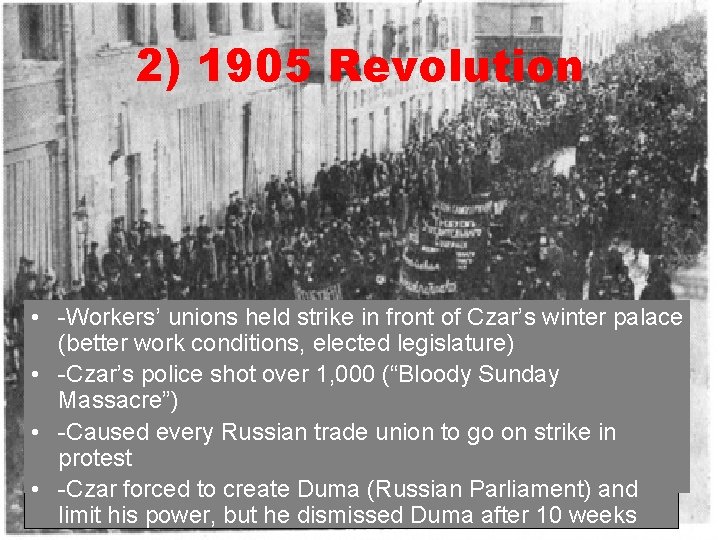
2) 1905 Revolution • -Workers’ unions held strike in front of Czar’s winter palace (better work conditions, elected legislature) • -Czar’s police shot over 1, 000 (“Bloody Sunday Massacre”) • -Caused every Russian trade union to go on strike in protest • -Czar forced to create Duma (Russian Parliament) and limit his power, but he dismissed Duma after 10 weeks
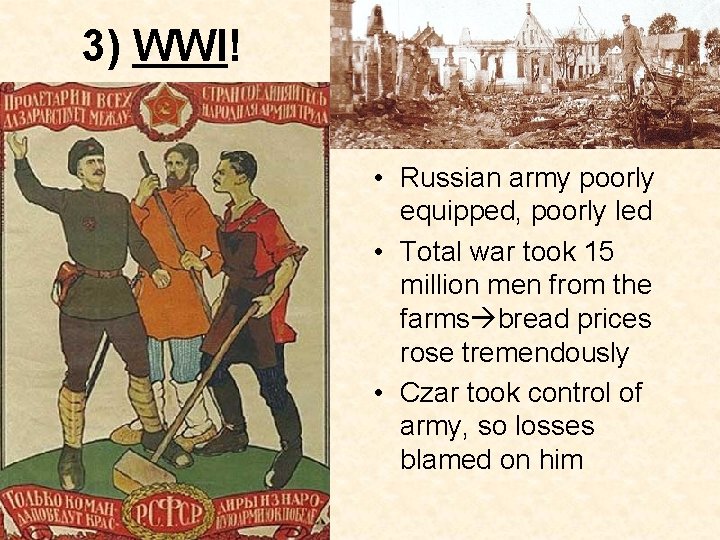
3) WWI! • Russian army poorly equipped, poorly led • Total war took 15 million men from the farms bread prices rose tremendously • Czar took control of army, so losses blamed on him
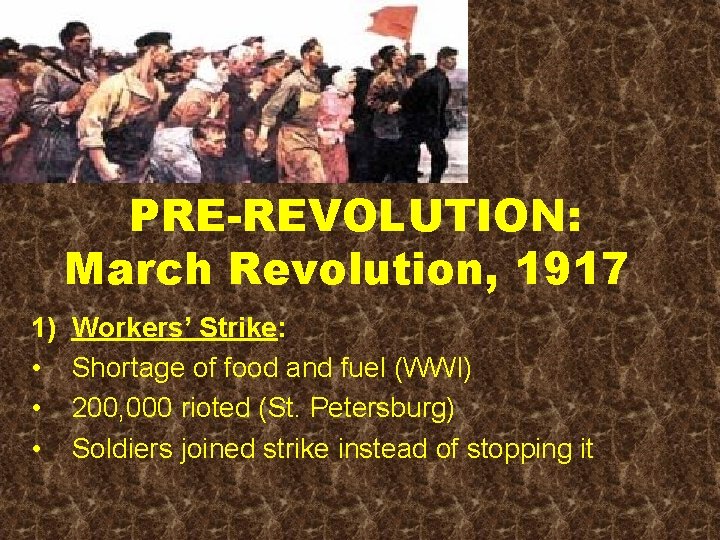
PRE-REVOLUTION: March Revolution, 1917 1) • • • Workers’ Strike: Shortage of food and fuel (WWI) 200, 000 rioted (St. Petersburg) Soldiers joined strike instead of stopping it
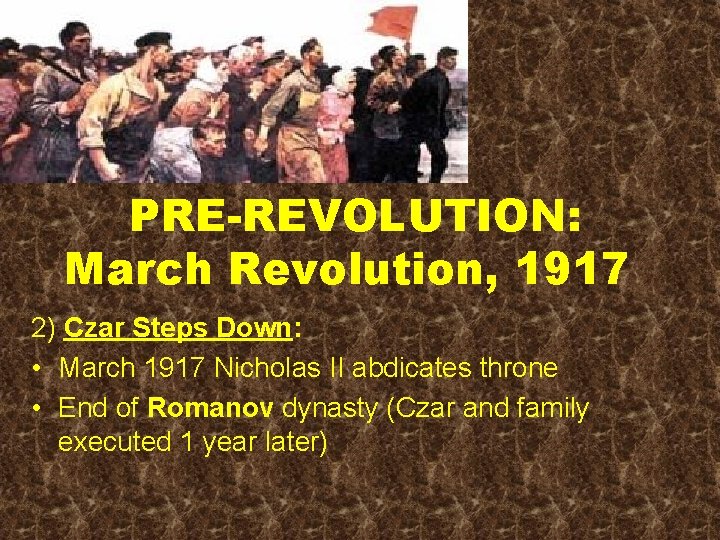
PRE-REVOLUTION: March Revolution, 1917 2) Czar Steps Down: • March 1917 Nicholas II abdicates throne • End of Romanov dynasty (Czar and family executed 1 year later)
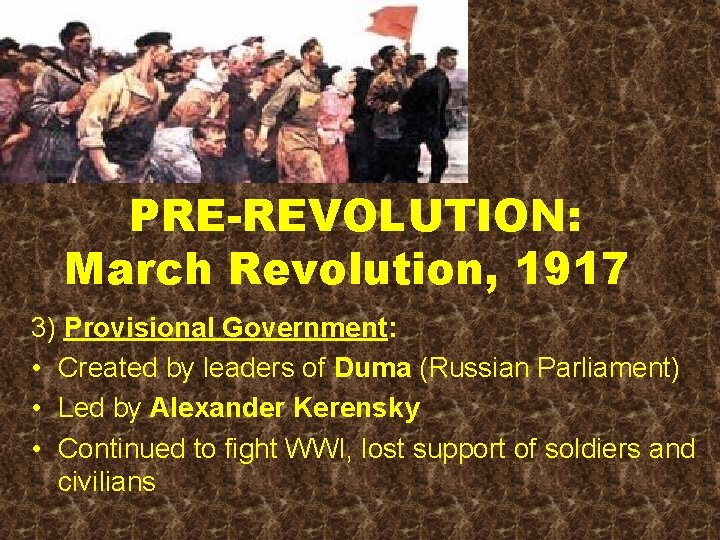
PRE-REVOLUTION: March Revolution, 1917 3) Provisional Government: • Created by leaders of Duma (Russian Parliament) • Led by Alexander Kerensky • Continued to fight WWI, lost support of soldiers and civilians
BOLSHEVIK REVOLUTION: November 1917 1) Soviets Formed: • Local councils of workers, peasants, soldiers • Russians looked to Soviets for leadership 2) Lenin Returns to Russia: • Germans sent Lenin by train to start Revolution • Slogan: “Peace, Land, and Bread!” • Won control of major Soviets in Russia
BOLSHEVIK REVOLUTION: November 1917 3) Bolshevik Takeover: • Nov. 1917: stormed Provisional Government’s headquarters in St. Petersburg • Arrested leaders of Prov. Gov’t • Bolsheviks now control Russia
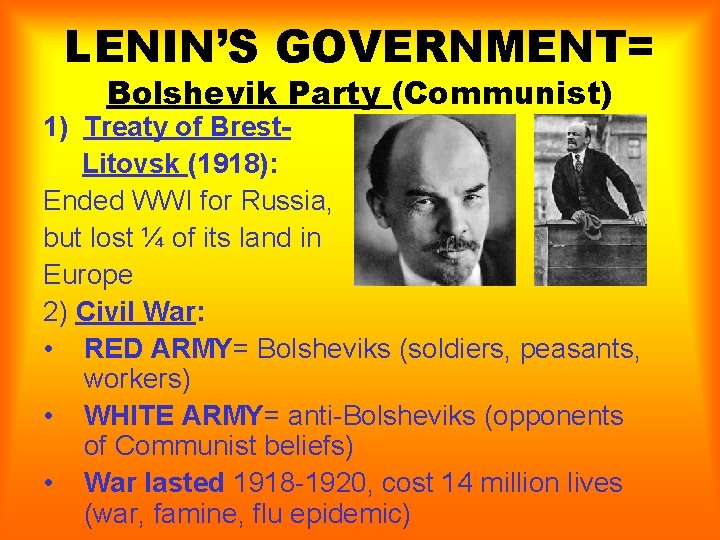
LENIN’S GOVERNMENT= Bolshevik Party (Communist) 1) Treaty of Brest. Litovsk (1918): Ended WWI for Russia, but lost ¼ of its land in Europe 2) Civil War: • RED ARMY= Bolsheviks (soldiers, peasants, workers) • WHITE ARMY= anti-Bolsheviks (opponents of Communist beliefs) • War lasted 1918 -1920, cost 14 million lives (war, famine, flu epidemic)
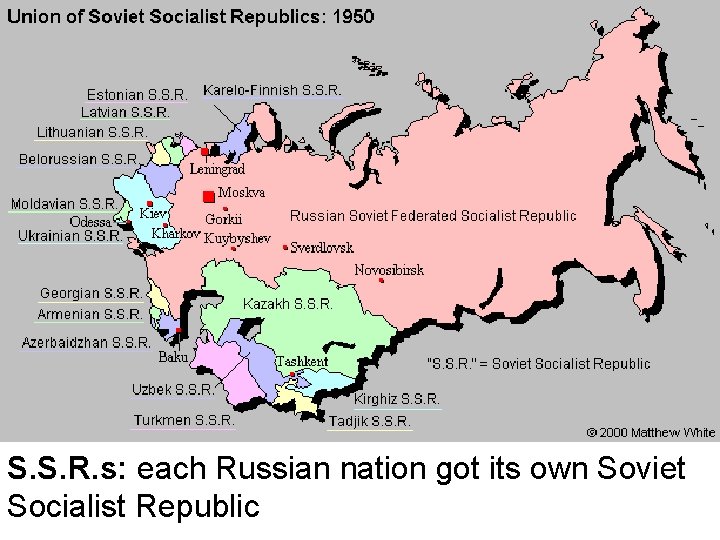
LENIN’S REFORMS 1) N. E. P. (New Economic Policy): March 1921 • Allowed some people to own factories and farms for profit • Motivated people to produce more • Economy recovered from war 2) U. S. S. R. (Union of Soviet Socialist Republics): • Re-organized Russia, recognized nations (1922) • Each nation got its own Socialist Republic • New capital, Moscow, controlled all Republics
LENIN’S REFORMS 3) Communist Party (1924): • New Constitution created all power to Party • Elected leaders, but only Communists could run • Type of Government=Dictatorship (Lenin controlled Communist Party)
S. S. R. s: each Russian nation got its own Soviet Socialist Republic
ALL ABOUT (TOE TAL UH TEAR EE UN ISM) TOTALITARIANISM= system in which gov’t totally controls public and private life
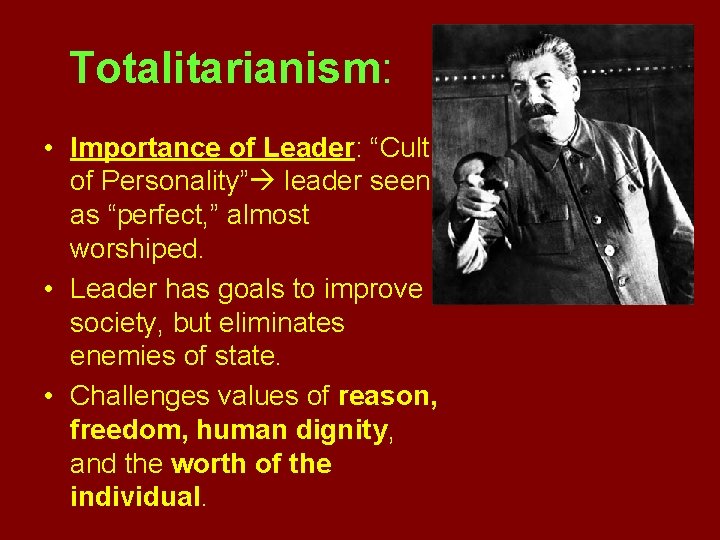
Totalitarianism: • Importance of Leader: “Cult of Personality” leader seen as “perfect, ” almost worshiped. • Leader has goals to improve society, but eliminates enemies of state. • Challenges values of reason, freedom, human dignity, and the worth of the individual.
METHODS OF CONTROL • Police Terror: police work for Party, only loyal to the leader. They… -Spy -Arrest “traitors” -Murder “traitors” • Indoctrination: instruction in the government’s beliefs (“brainwashing”). Control of… -Schools -Youth Groups
METHODS OF CONTROL • Propaganda/Censorship: government controls all news media and art forms. People are only allowed to see info that praises the Party or the leader. • Religious/Ethnic Persecution: Discrimination and violence against religious and ethnic groups. Meant to distract people from problems in society.