
WorkBased Learning Program Dr Mark Miear Superintendent Montgomery
Work-Based Learning Program Dr. Mark Miear Superintendent Montgomery County Public Schools
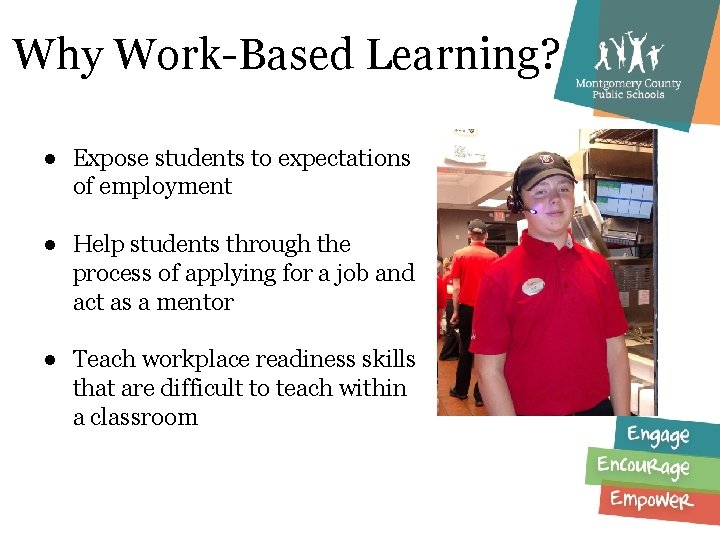
Why Work-Based Learning? ● Expose students to expectations of employment ● Help students through the process of applying for a job and act as a mentor ● Teach workplace readiness skills that are difficult to teach within a classroom
The MCPS Program ● Students are enrolled in a local elective course and are given early release or late arrival to provide flexibility and incentivize students working ● MCPS uses these VDOE programs in the Work-Based Learning Program ○ Job Shadowing ○ Mentorship ○ Internship ○ Service Learning ○ Clinical Experience ○ Registered Apprentice
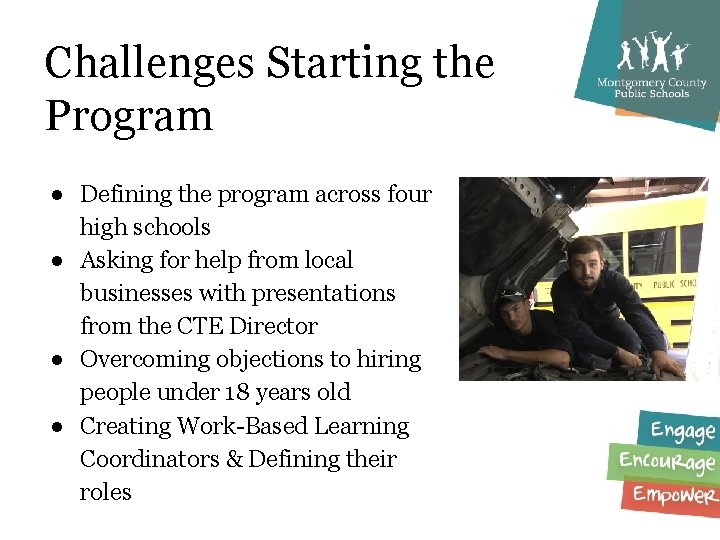
Challenges Starting the Program ● Defining the program across four high schools ● Asking for help from local businesses with presentations from the CTE Director ● Overcoming objections to hiring people under 18 years old ● Creating Work-Based Learning Coordinators & Defining their roles
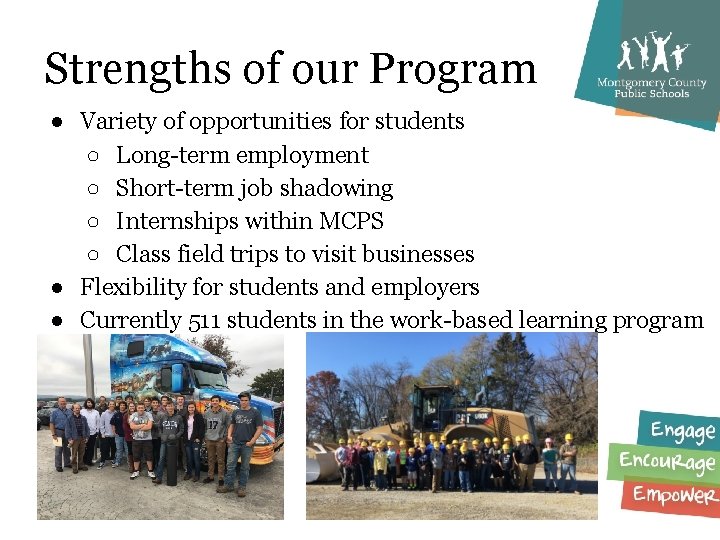
Strengths of our Program ● Variety of opportunities for students ○ Long-term employment ○ Short-term job shadowing ○ Internships within MCPS ○ Class field trips to visit businesses ● Flexibility for students and employers ● Currently 511 students in the work-based learning program

Examples of Work-Based Learning ● Construction companies ● Law firms ● MCPS Operations Interns: ○ IT, Custodians, School Bus Garage, etc. ● Nurse Aides working with CNA license ● Research Interns at Virginia Tech ● Teachers for Tomorrow in MCPS Elementary Schools ● Virginia Tech Athletic Department Interns ● Virginia-Maryland College of Veterinary Medicine Interns
The Next Steps ● Emphasize structured programs that lead to long-term careers ○ Links to local community college ○ Registered Apprenticeship programs ● Provide opportunities to every single student ○ Expand short-term job shadowing ○ Summer employment ○ Virtual Job Shadow ○ Work-based learning instead of early graduation
- Slides: 7