
Work Shop on Java Technology Presented By Jai
Work. Shop on Java Technology Presented By: - Jai Mangal Singh
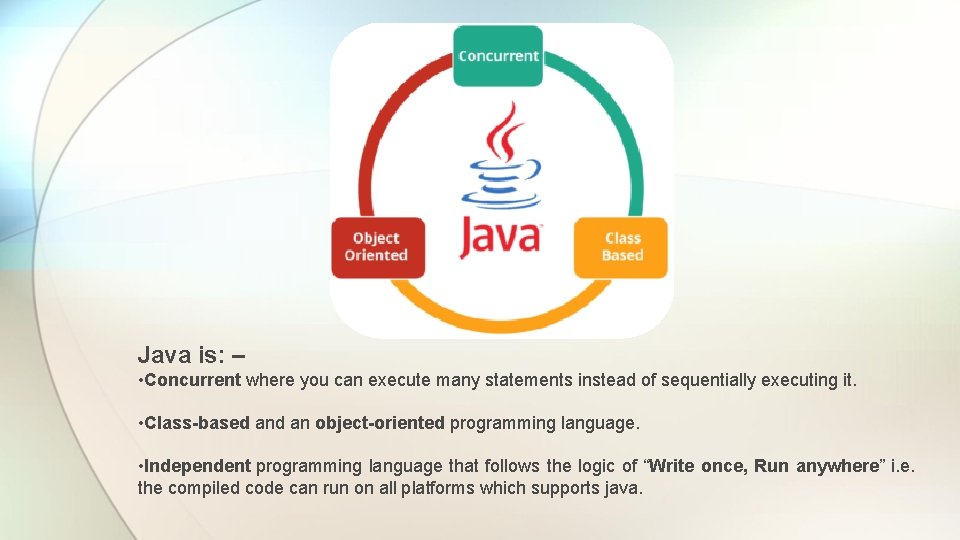
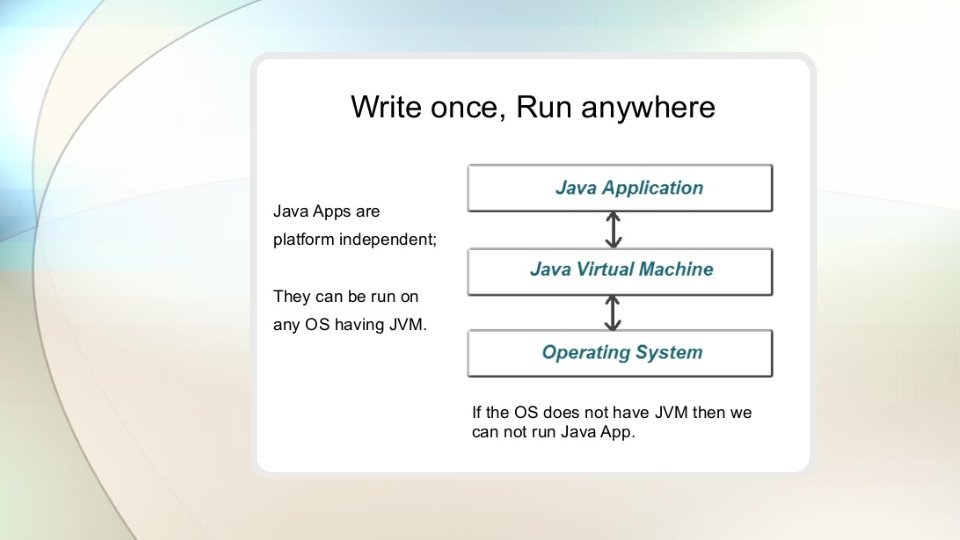
Java is: – • Concurrent where you can execute many statements instead of sequentially executing it. • Class-based an object-oriented programming language. • Independent programming language that follows the logic of “Write once, Run anywhere” i. e. the compiled code can run on all platforms which supports java.
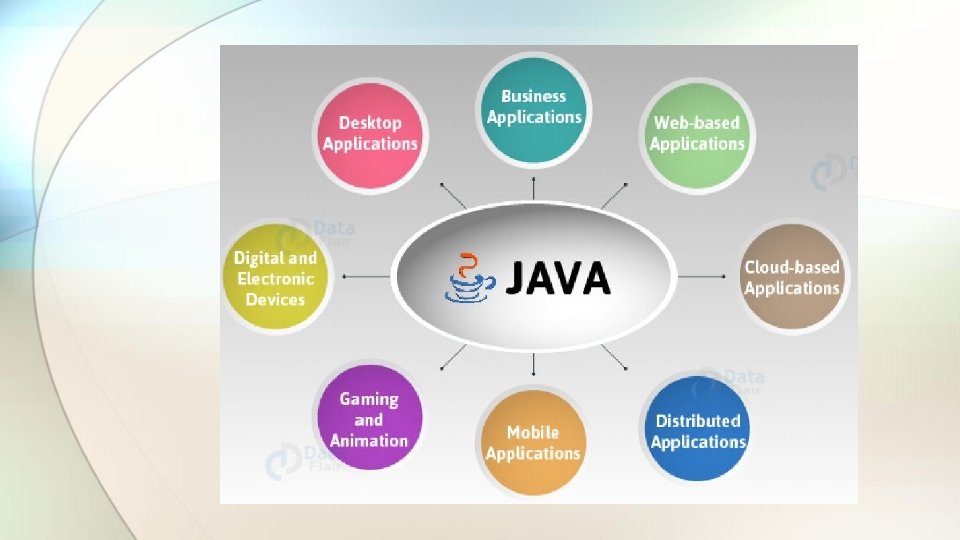
Where Java is used? Java is highly popular and has dominated from early 2000’s till the present. Java has been used in different domains. Some of them are listed below: • Banking: To deal with transaction management. • Retail: Billing applications that you see in a store/restaurant are completely written in Java. • Information Technology: Java is designed to solve implementation dependencies. • Android: Applications are either written in Java or use Java API. • Financial services: It is used in server-side applications. • Stock market: To write algorithms as to which company they should invest in. • Big Data: Hadoop Map. Reduce framework is written using Java. • Scientific and Research Community: To deal with huge amount of data.
Features of Java S imple: Java has made life easier by removing all the complexities such as pointers, operator overloading as you see in C++ or any other programming language. Portable: Java is platform independent which means that any application written on one platform can be easily ported to another platform.
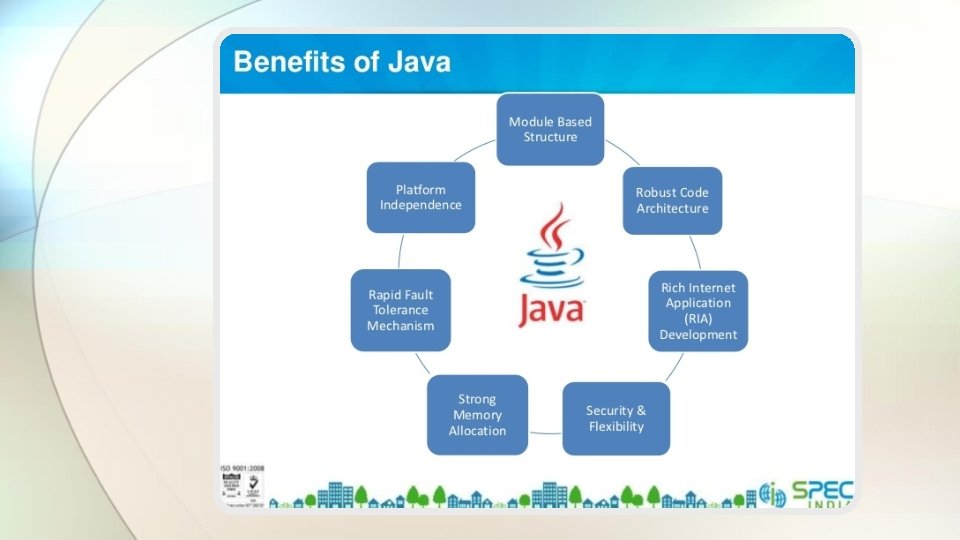
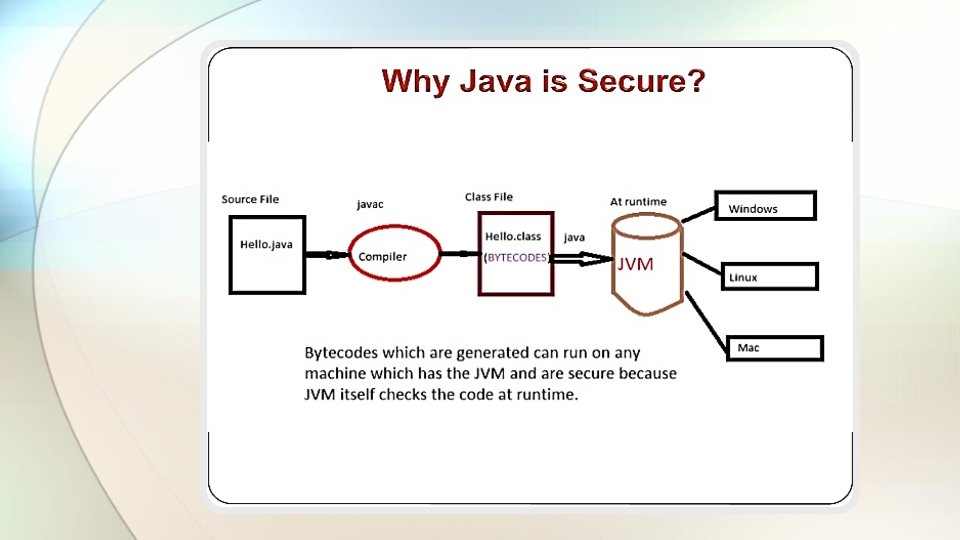
O bject-oriented: Everything is considered to be an “object” which possess some state, behavior and all the operations are performed using these objects. Secured: All the code is converted in bytecode after compilation, which is not readable by a human. and java does not use an explicit pointer and run the programs inside the sandbox to prevent any activities from untrusted sources. It enables to develop virus-free, tamper-free systems/applications. D ynamic: It has the ability to adapt to an evolving environment which supports dynamic memory allocation due to which memory wastage is reduced and performance of the application is increased.
Distributed: Java provides a feature which helps to create distributed applications. Using Remote Method Invocation (RMI), a program can invoke a method of another program across a network and get the output. You can access files by calling the methods from any machine on the internet. R obust: Java has a strong memory management system. It helps in eliminating error as it checks the code during compile and runtime.
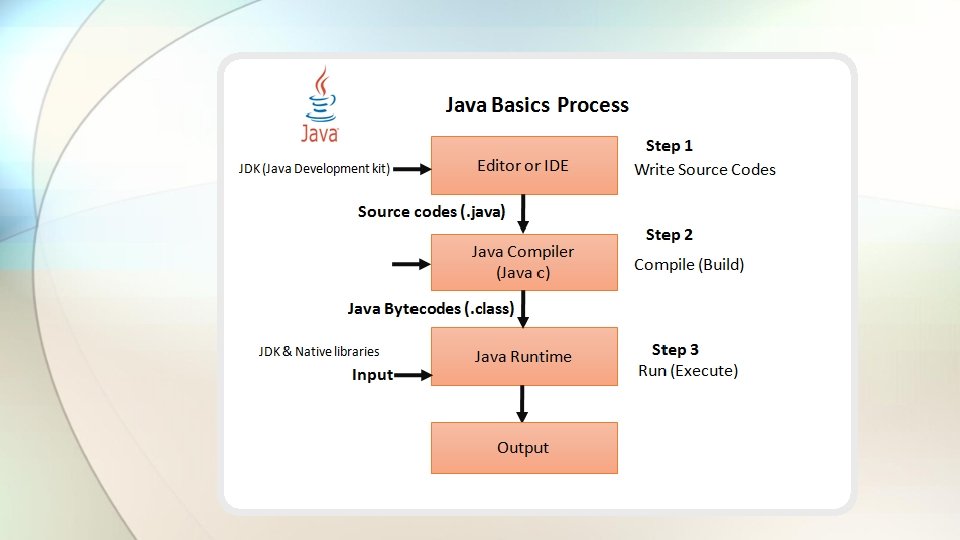
High Performance: Java achieves high performance through the use of bytecode which can be easily translated into native machine code. With the use of JIT (Just-In-Time) compilers, Java enables high performance. I nterpreted: Java is compiled to bytecodes, which are interpreted by a Java run-time environment. Multithreaded: Java supports multiple threads of execution (lightweight processes), including a set of synchronization primitives. This makes programming with threads much easier.
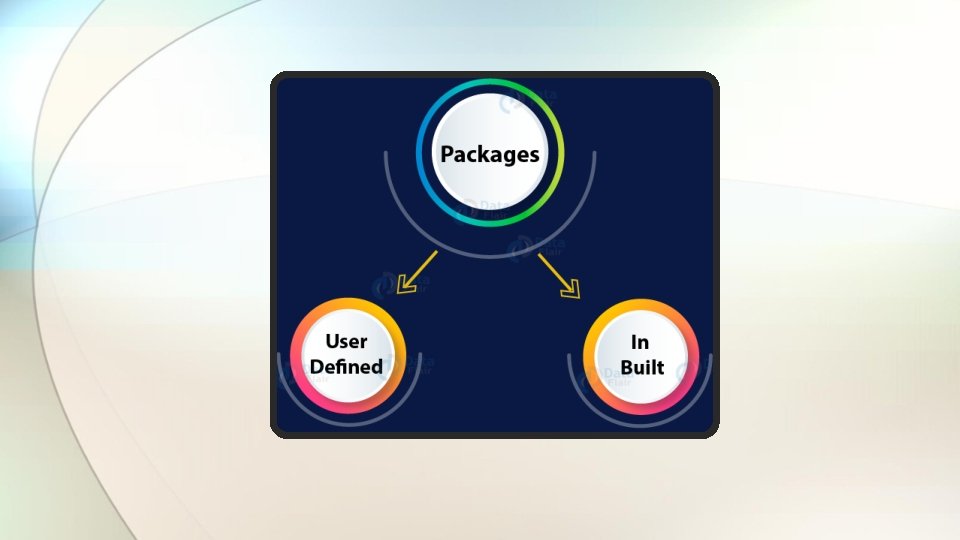
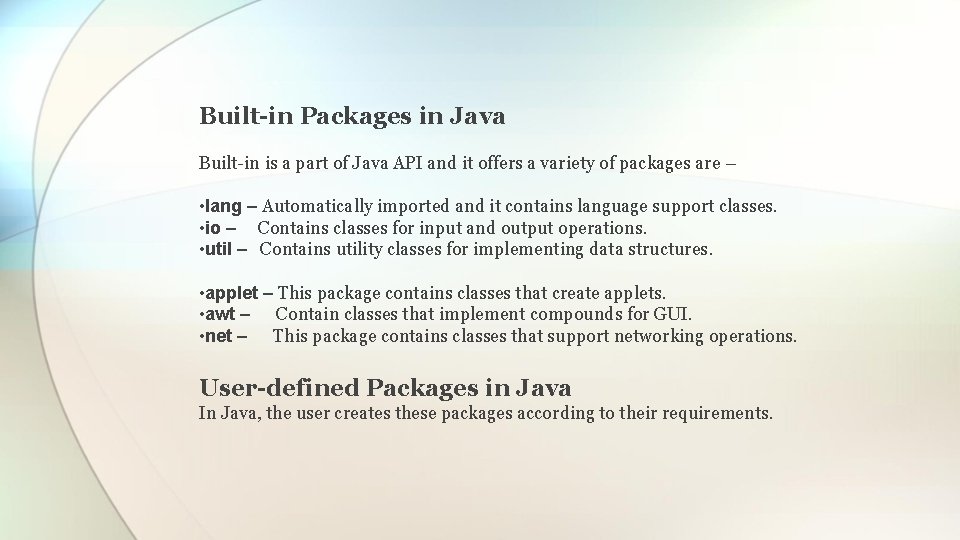
Built-in Packages in Java Built-in is a part of Java API and it offers a variety of packages are – • lang – Automatically imported and it contains language support classes. • io – Contains classes for input and output operations. • util – Contains utility classes for implementing data structures. • applet – This package contains classes that create applets. • awt – Contain classes that implement compounds for GUI. • net – This package contains classes that support networking operations. User-defined Packages in Java In Java, the user creates these packages according to their requirements.

- Slides: 19