
Work Session Mapping Template for Higher Education ICIU
- Slides: 20
Work Session: Mapping Template for Higher Education ICIU facilitated by Dr. Heidi Hayes Jacobs - March 5, 2015
OUR ESSENTIAL QUESTIONS How do we prepare our learners for their future? How can we design curriculum and instruction to support the contemporary student?
Agenda for our webinar session I. Greetings and Introductions for the Day / on-site and virtual II. Critique and review draft of COURSE MAPPING TEMPLATE III. Create drafts of a course map by transferring an existing course syllabus a. Consider feedback from others b. List possible ways to improve IV. Share proposed new software BETA test with Edu. Tect on College/University course mapping template a. Show existing tool b. Share latest work on Mapping 3. 0 c. Brainstorm possible ways college instructors might use d. Brainstorm possible ways college students might use V. Identify groups that can use the maps formal reviews in schools of education a. Purposes for reviews b. Different groupings
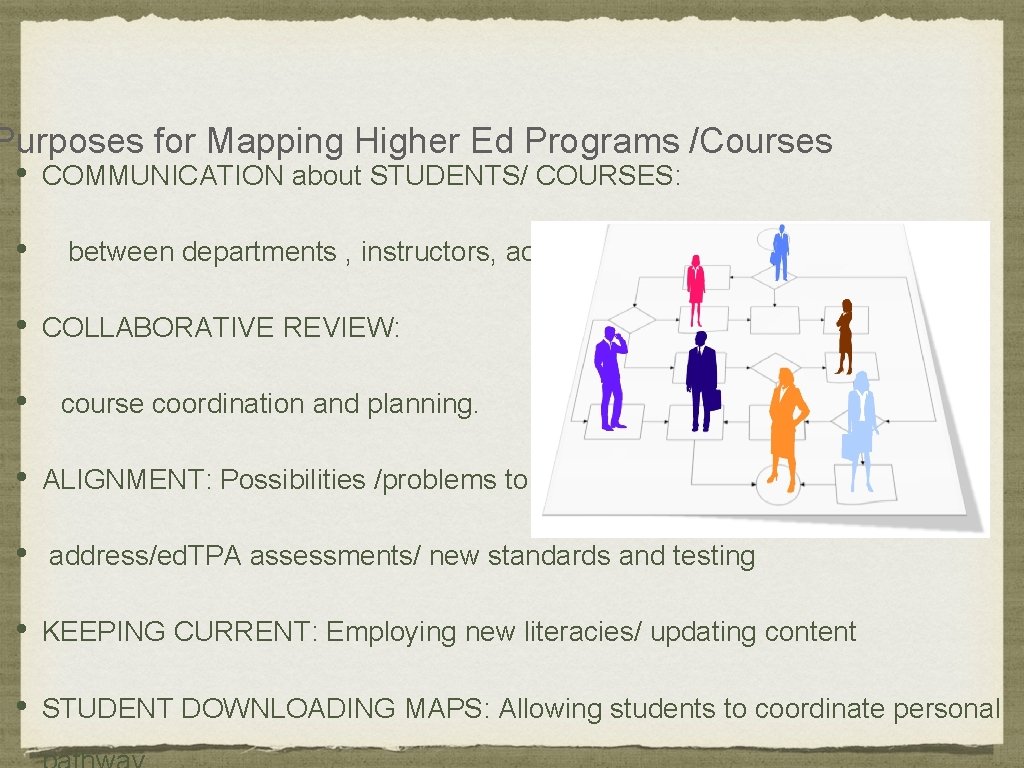
Purposes for Mapping Higher Ed Programs /Courses • COMMUNICATION about STUDENTS/ COURSES: • • • between departments , instructors, adjuncts, COLLABORATIVE REVIEW: course coordination and planning. • ALIGNMENT: Possibilities /problems to • address/ed. TPA assessments/ new standards and testing • KEEPING CURRENT: Employing new literacies/ updating content • STUDENT DOWNLOADING MAPS: Allowing students to coordinate personal
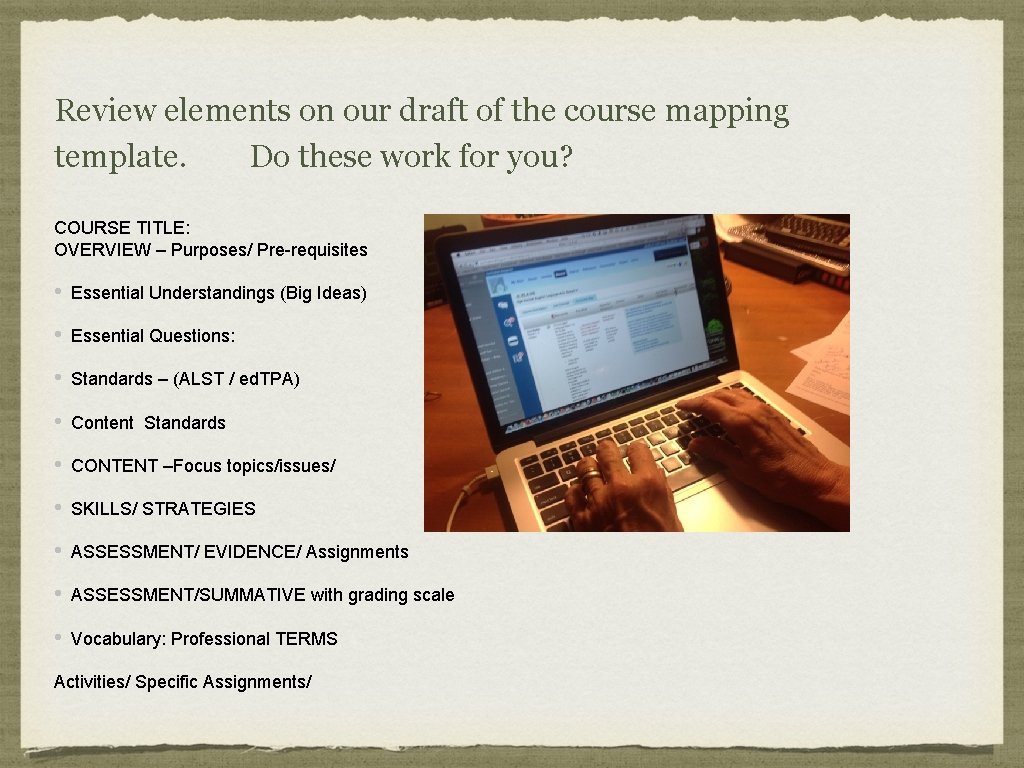
Review elements on our draft of the course mapping template. Do these work for you? COURSE TITLE: OVERVIEW – Purposes/ Pre-requisites • Essential Understandings (Big Ideas) • Essential Questions: • Standards – (ALST / ed. TPA) • Content Standards • CONTENT –Focus topics/issues/ • SKILLS/ STRATEGIES • ASSESSMENT/ EVIDENCE/ Assignments • ASSESSMENT/SUMMATIVE with grading scale • Vocabulary: Professional TERMS Activities/ Specific Assignments/
ESSENTIAL QUESTIONS Essential questions provide focus and direction to engage learners in fulfilling the mission. 6
HOW CAN WE ORGANIZE AND FRAME ESSENTIAL KNOWLEDGE? Big Ideas Relational statement that is the key concept declaring the purpose of the course. • Big Ideas or Key Concept are transferrable and promote inquiry. 7
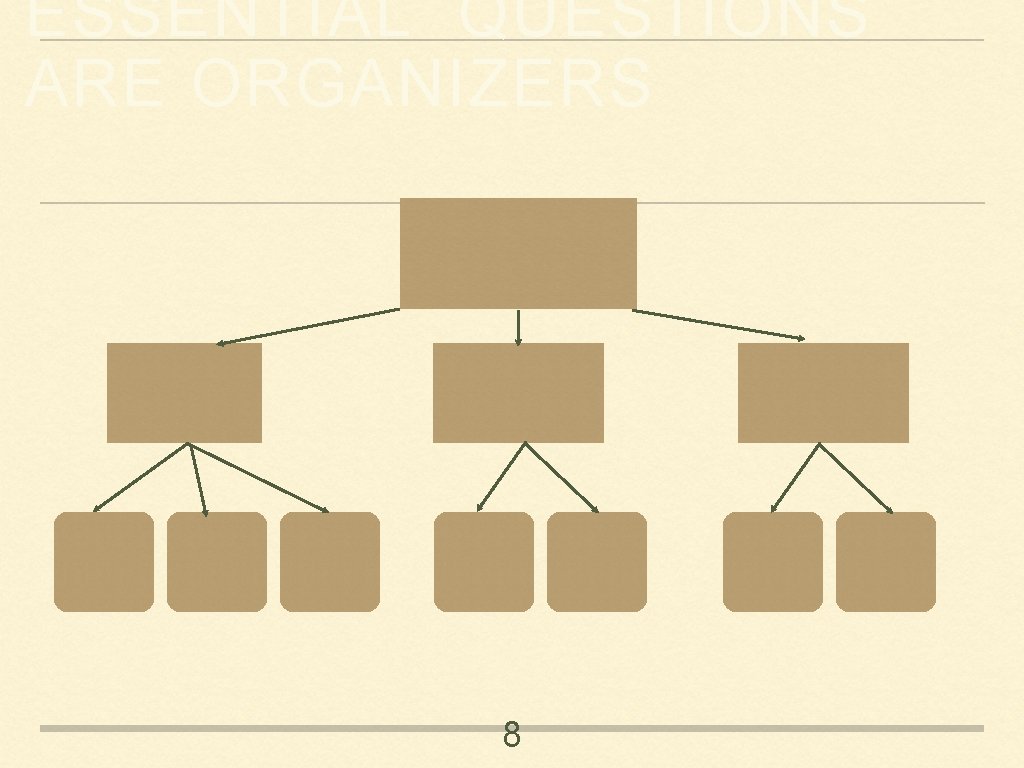
ESSENTIAL QUESTIONS ARE ORGANIZERS 8
NYSTCEPROFICIENCIES CAN BE MAPPED
New college and university proficiency standards ed. TPA
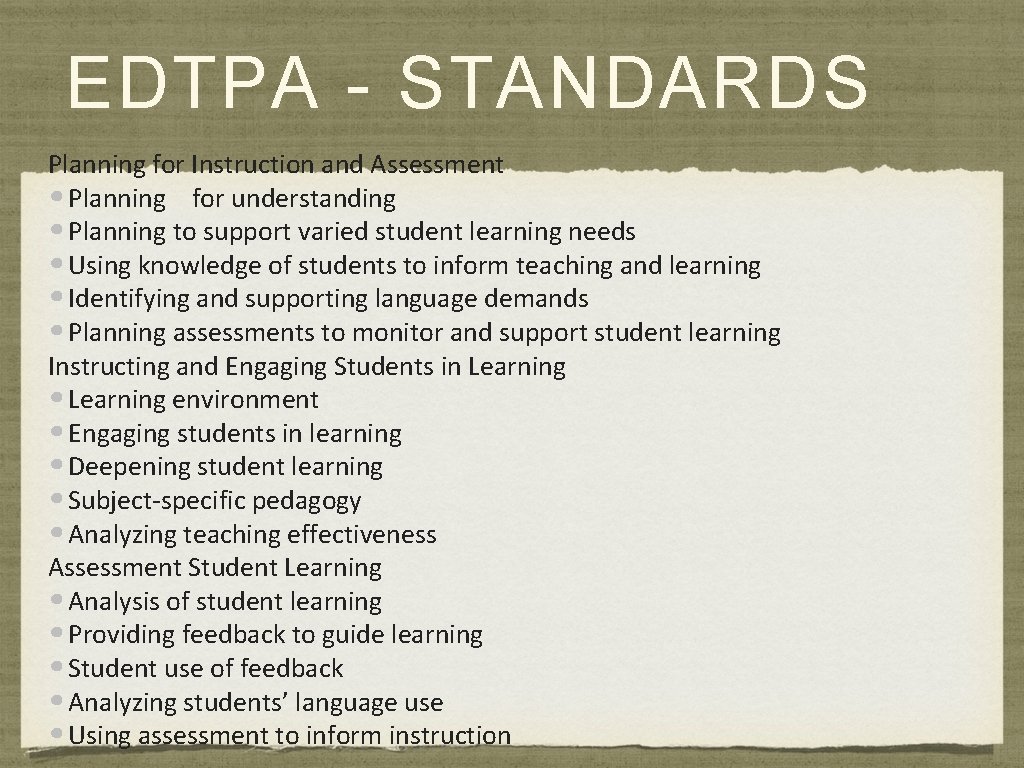
EDTPA - STANDARDS Planning for Instruction and Assessment • Planning for understanding • Planning to support varied student learning needs • Using knowledge of students to inform teaching and learning • Identifying and supporting language demands • Planning assessments to monitor and support student learning Instructing and Engaging Students in Learning • Learning environment • Engaging students in learning • Deepening student learning • Subject-specific pedagogy • Analyzing teaching effectiveness Assessment Student Learning • Analysis of student learning • Providing feedback to guide learning • Student use of feedback • Analyzing students’ language use • Using assessment to inform instruction
CONTENT The subject matter itself: key topics, facts, 1
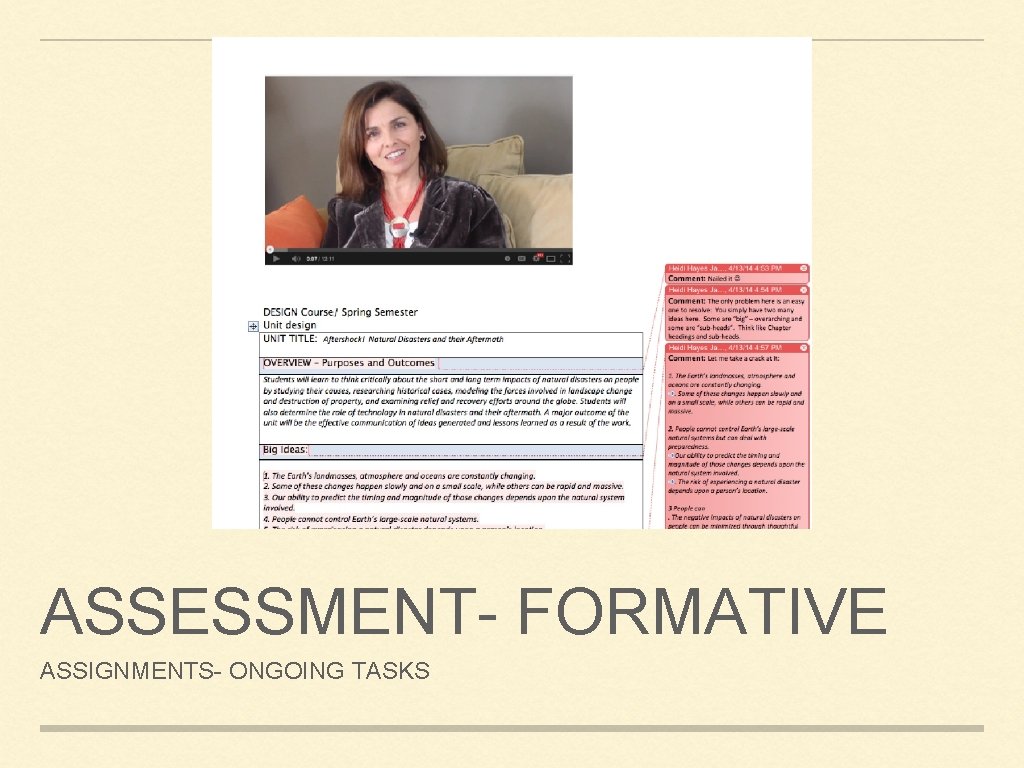
ASSESSMENT- FORMATIVE ASSIGNMENTS- ONGOING TASKS
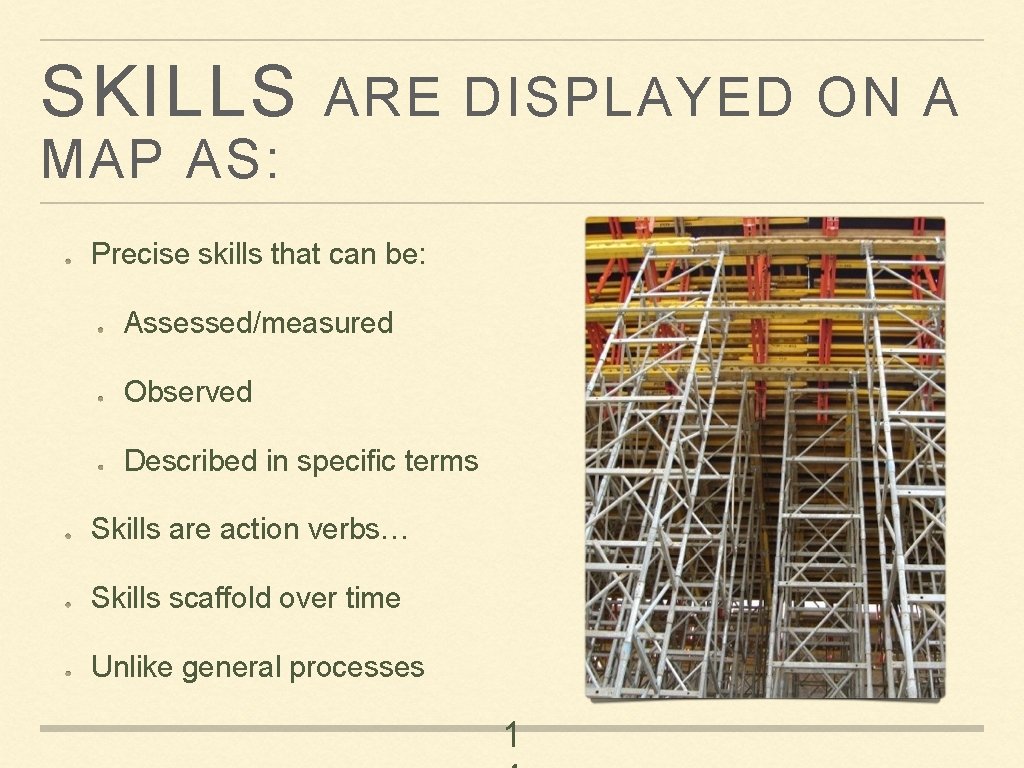
SKILLS ARE DISPLAYED ON A MAP AS: Precise skills that can be: Assessed/measured Observed Described in specific terms Skills are action verbs… Skills scaffold over time Unlike general processes 1
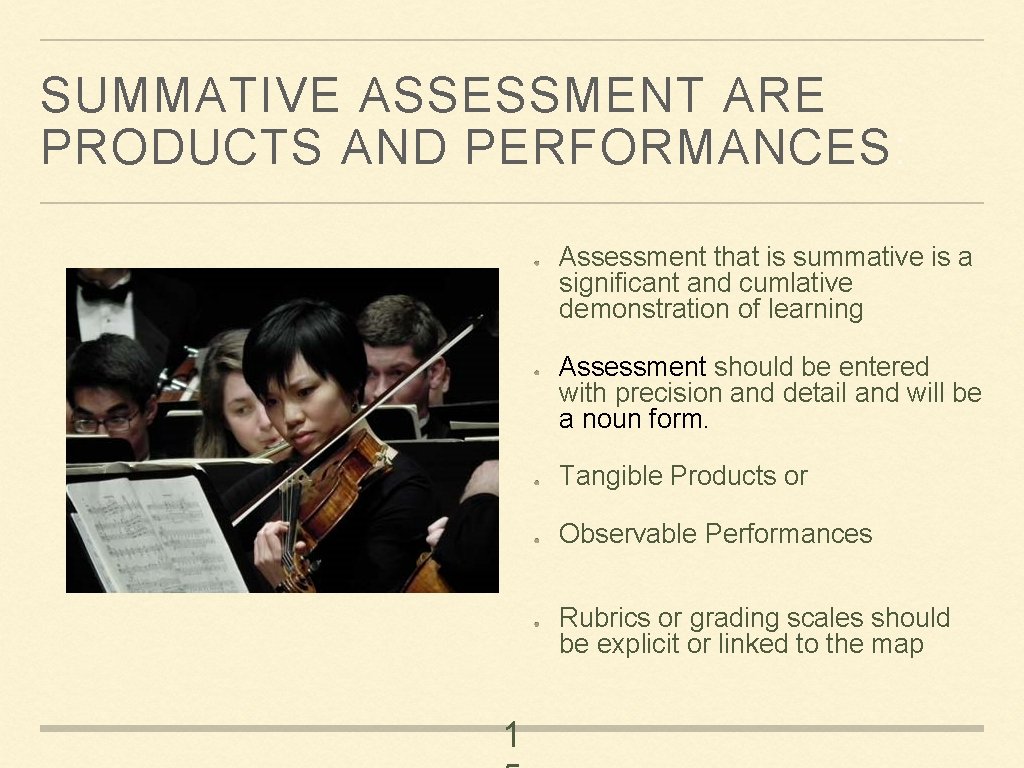
SUMMATIVE ASSESSMENT ARE PRODUCTS AND PERFORMANCES: Assessment that is summative is a significant and cumlative demonstration of learning Assessment should be entered with precision and detail and will be a noun form. Tangible Products or Observable Performances Rubrics or grading scales should be explicit or linked to the map 1
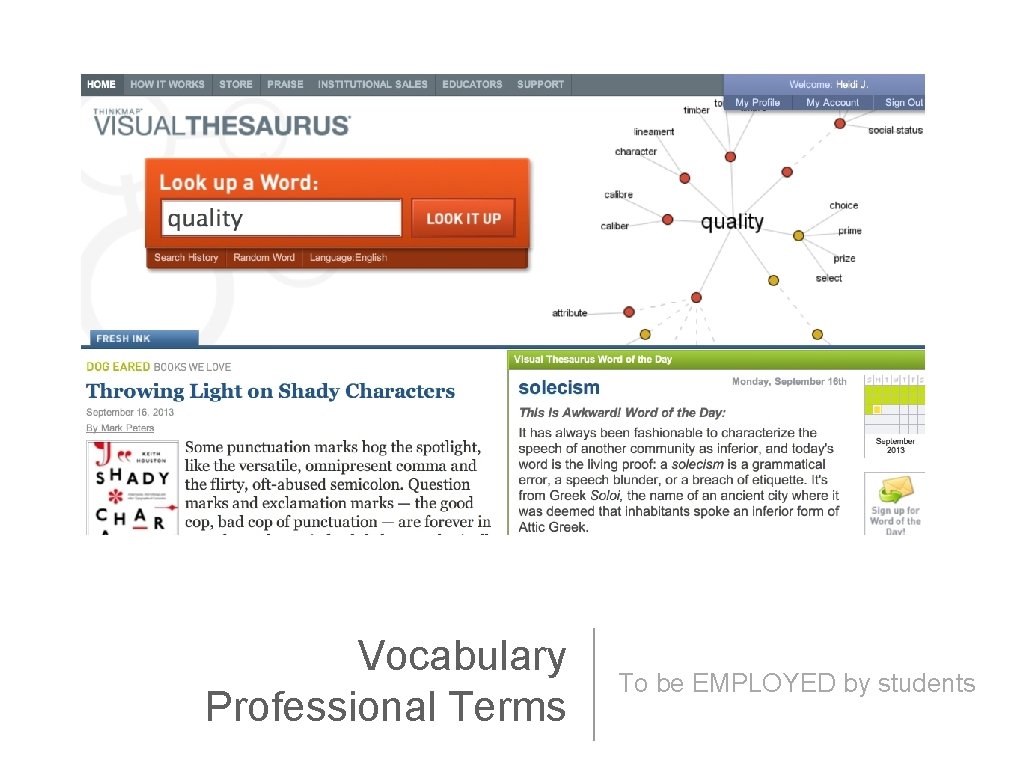
Vocabulary Professional Terms To be EMPLOYED by students
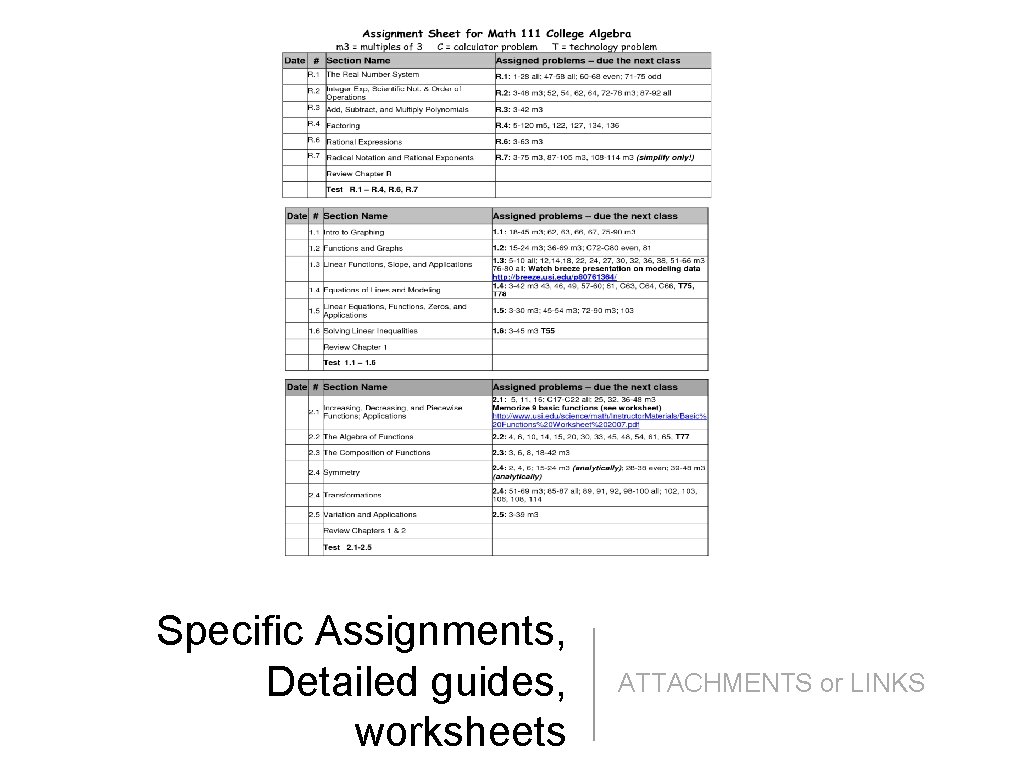
Specific Assignments, Detailed guides, worksheets ATTACHMENTS or LINKS
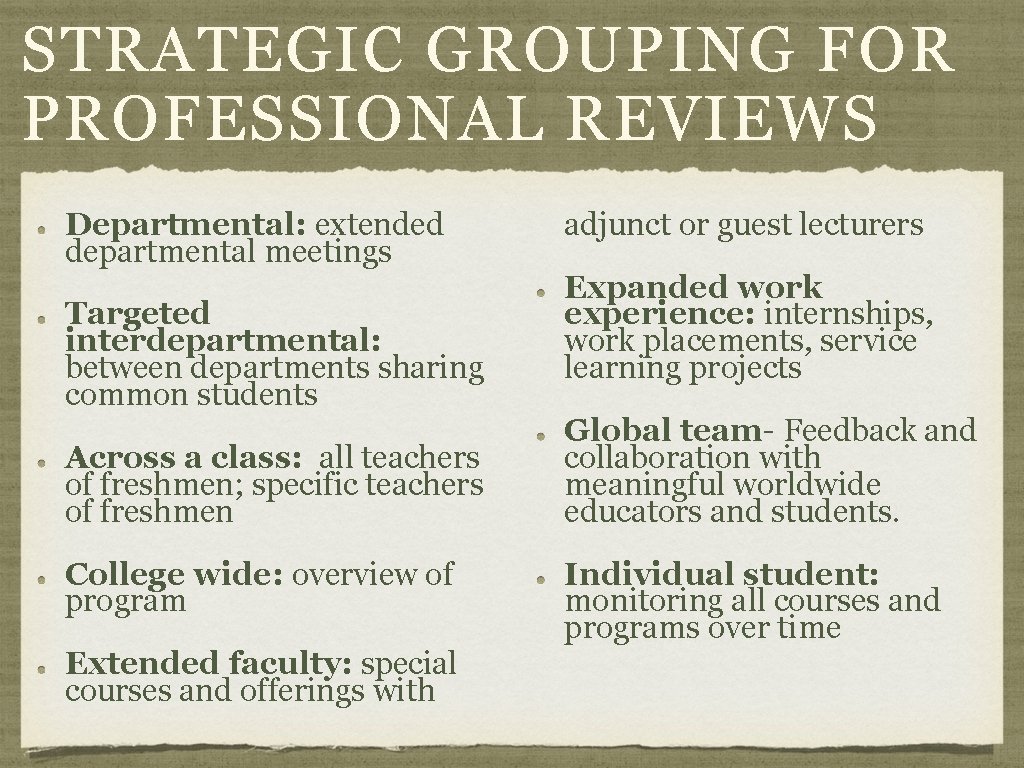
STRATEGIC GROUPING FOR PROFESSIONAL REVIEWS Departmental: extended departmental meetings Targeted interdepartmental: between departments sharing common students adjunct or guest lecturers Expanded work experience: internships, work placements, service learning projects Across a class: all teachers of freshmen; specific teachers of freshmen Global team- Feedback and collaboration with meaningful worldwide educators and students. College wide: overview of program Individual student: monitoring all courses and programs over time Extended faculty: special courses and offerings with
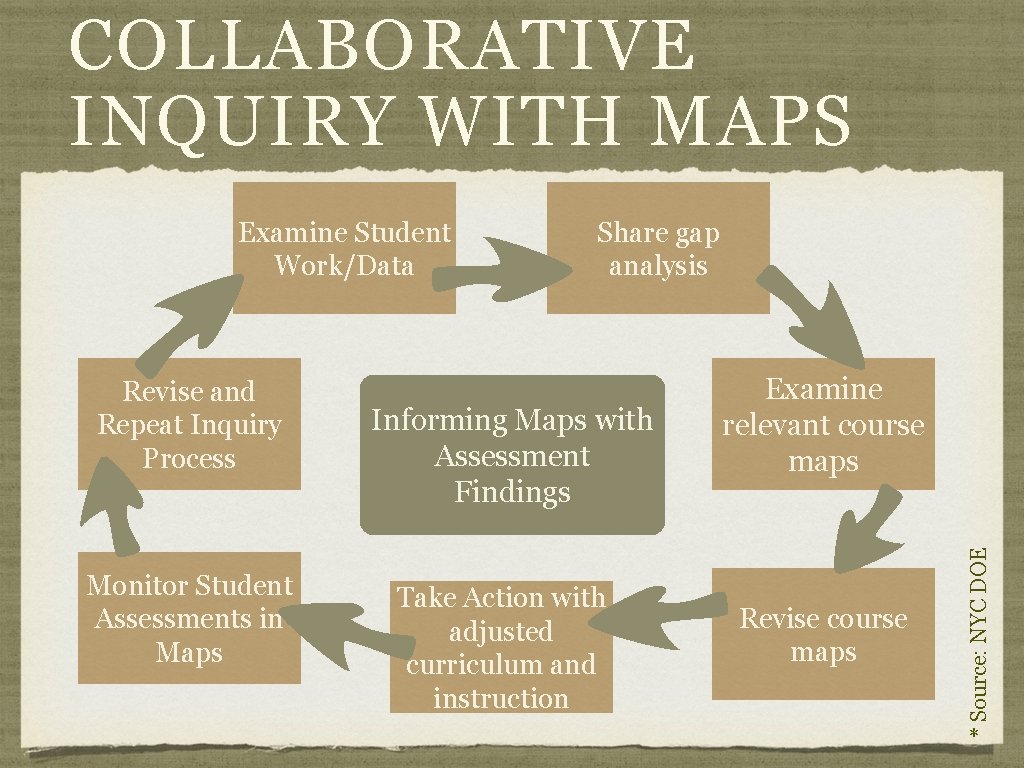
COLLABORATIVE INQUIRY WITH MAPS Revise and Repeat Inquiry Process Monitor Student Assessments in Maps Share gap analysis Informing Maps with Assessment Findings Take Action with adjusted curriculum and instruction Examine relevant course maps Revise course maps * Source: NYC DOE Examine Student Work/Data
✤ Next steps ✤ Develop course maps for exchange and feedback ✤ Consider possible beta test of software solution