
Work Power Energy Chapter 7 Explaining the Causes
- Slides: 52
Work, Power & Energy Chapter 7 Explaining the Causes of Motion Without Newton (sort of)
Work l The product of force and the amount of displacement along the line of action of that force. Units: ft. lbs (horsepower) Newton • meter (Joule) e
Work = F x d To calculate work done on an object, we need: The Force ¬The average magnitude of the force The direction of the force The Displacement ¬The magnitude of the change of position The direction of the change of position
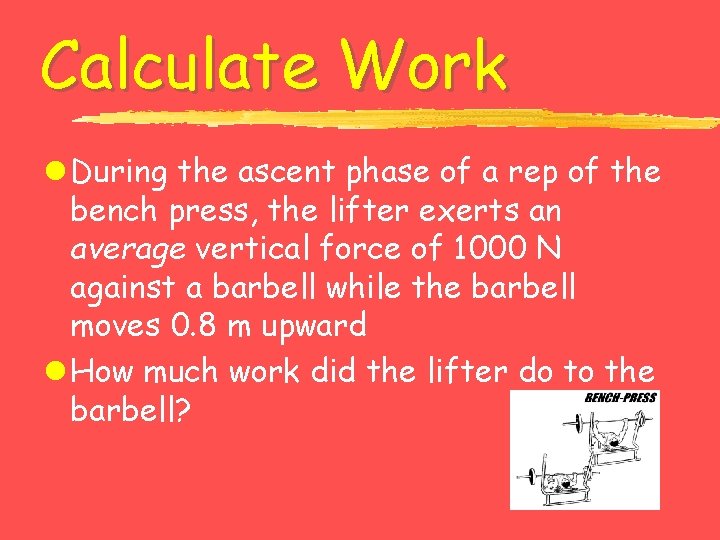
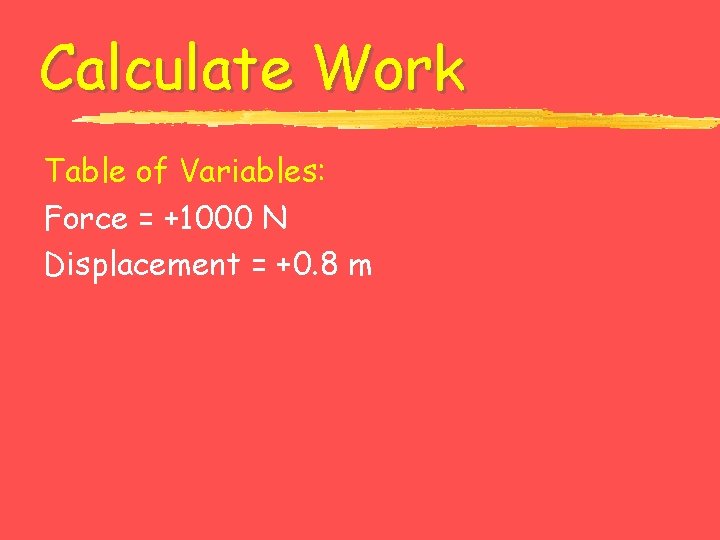
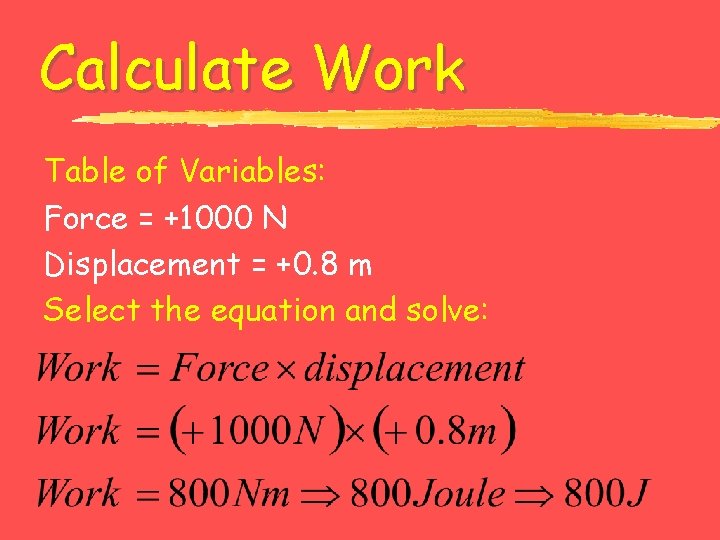
Calculate Work l During the ascent phase of a rep of the bench press, the lifter exerts an average vertical force of 1000 N against a barbell while the barbell moves 0. 8 m upward l How much work did the lifter do to the barbell?
Calculate Work Table of Variables: Force = +1000 N Displacement = +0. 8 m
Calculate Work Table of Variables: Force = +1000 N Displacement = +0. 8 m Select the equation and solve:
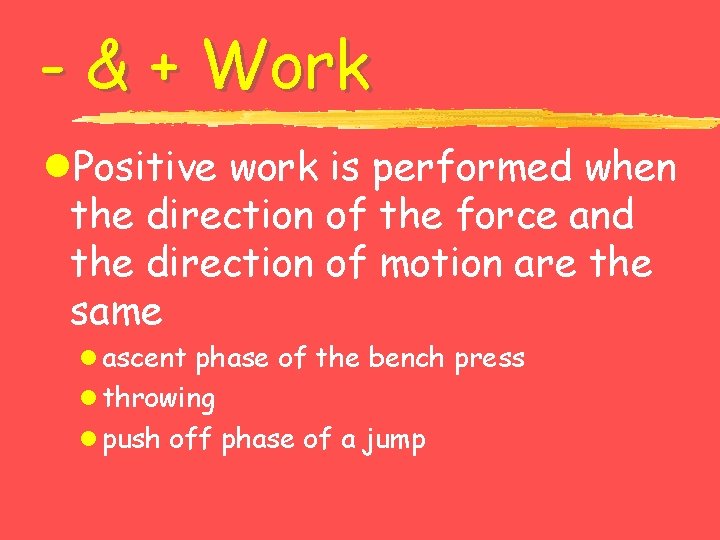
- & + Work l. Positive work is performed when the direction of the force and the direction of motion are the same l ascent phase of the bench press l throwing l push off phase of a jump
- & + Work l. Positive work is performed when the direction of the force and the direction of motion are the same
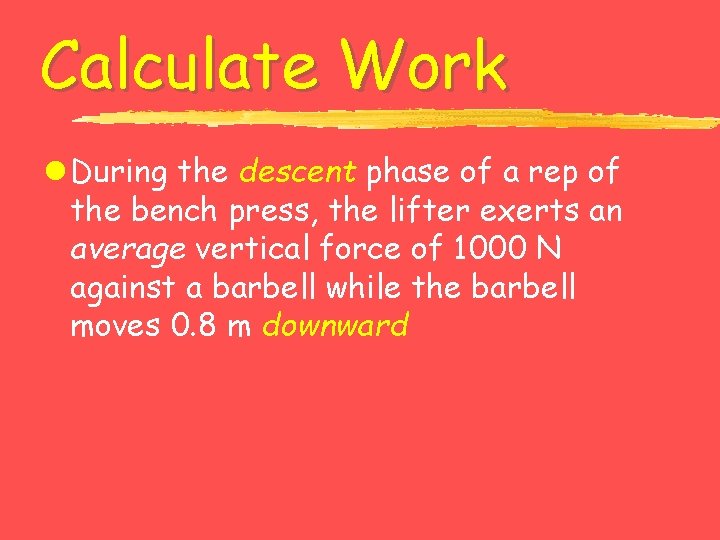
Calculate Work l During the descent phase of a rep of the bench press, the lifter exerts an average vertical force of 1000 N against a barbell while the barbell moves 0. 8 m downward
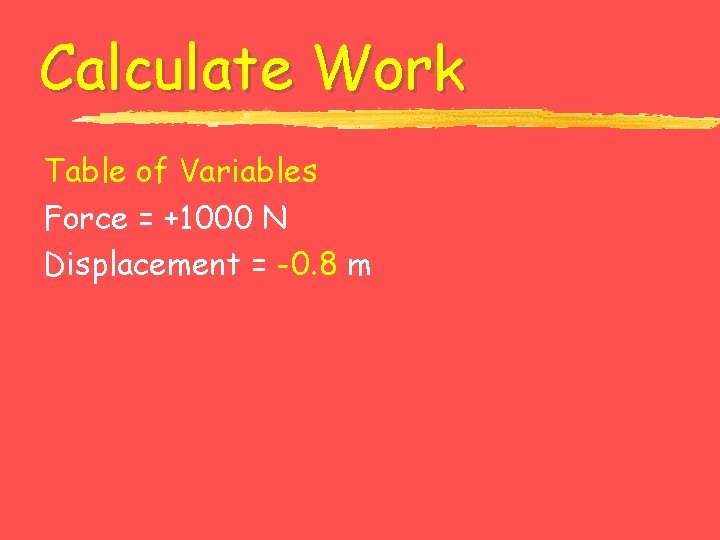
Calculate Work Table of Variables Force = +1000 N Displacement = -0. 8 m
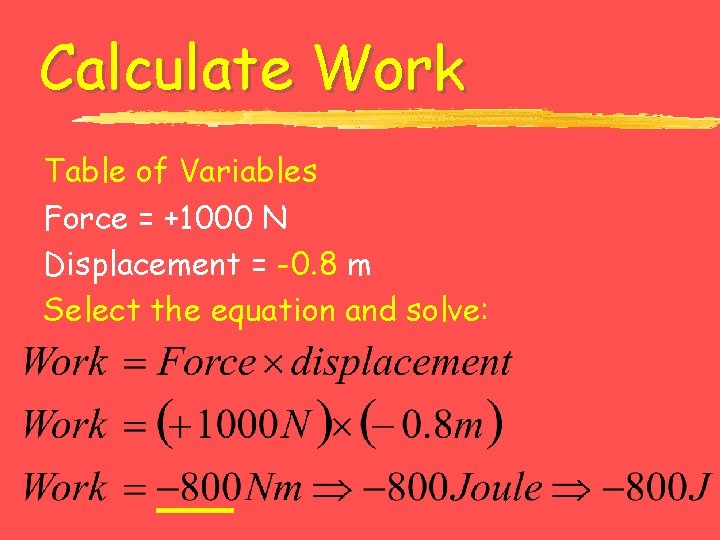
Calculate Work Table of Variables Force = +1000 N Displacement = -0. 8 m Select the equation and solve:
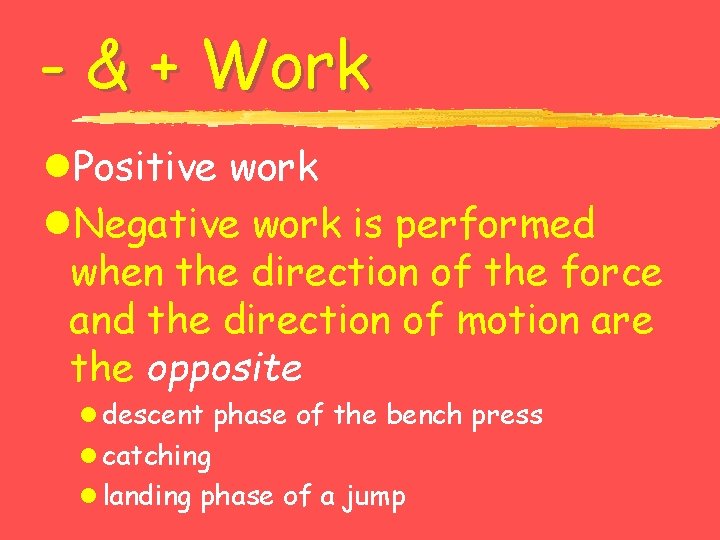
- & + Work l. Positive work l. Negative work is performed when the direction of the force and the direction of motion are the opposite l descent phase of the bench press l catching l landing phase of a jump
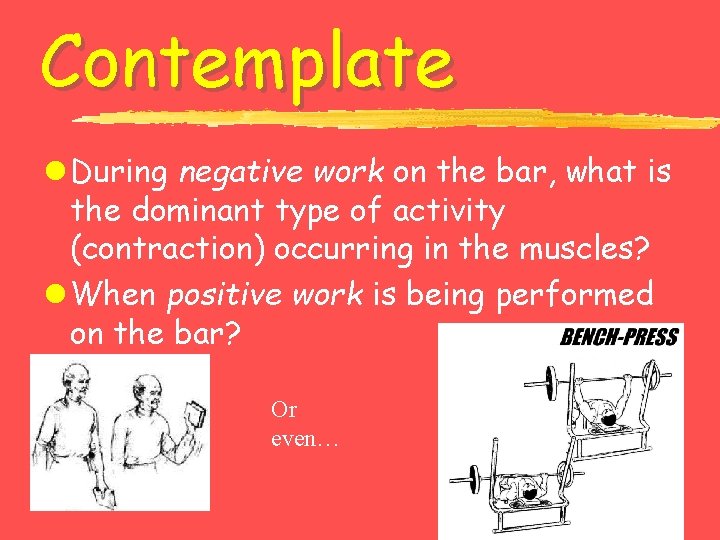
Contemplate l During negative work on the bar, what is the dominant type of activity (contraction) occurring in the muscles? l When positive work is being performed on the bar? Or even…
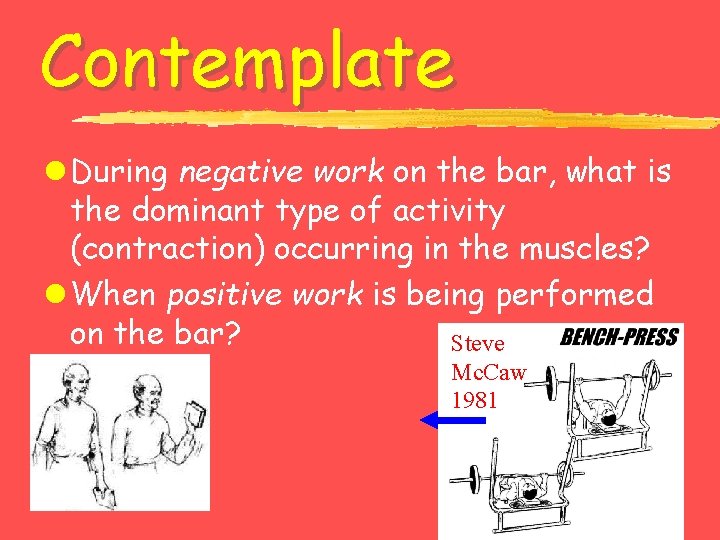
Contemplate l During negative work on the bar, what is the dominant type of activity (contraction) occurring in the muscles? l When positive work is being performed on the bar? Steve Mc. Caw 1981
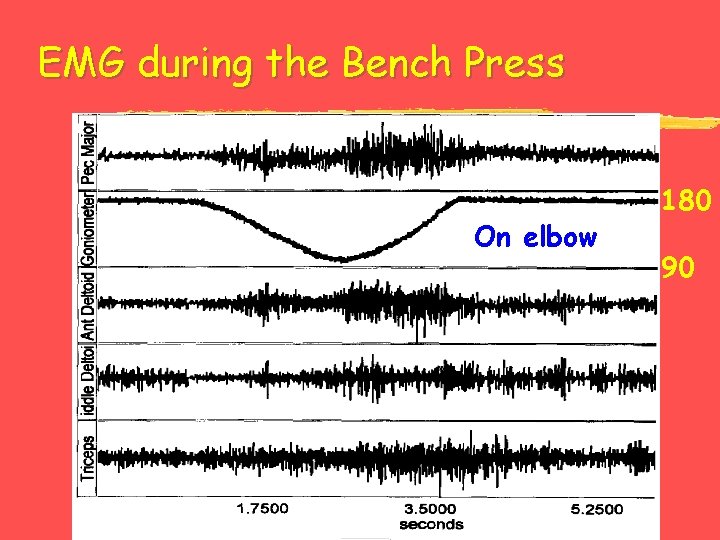
EMG during the Bench Press On elbow 180 90
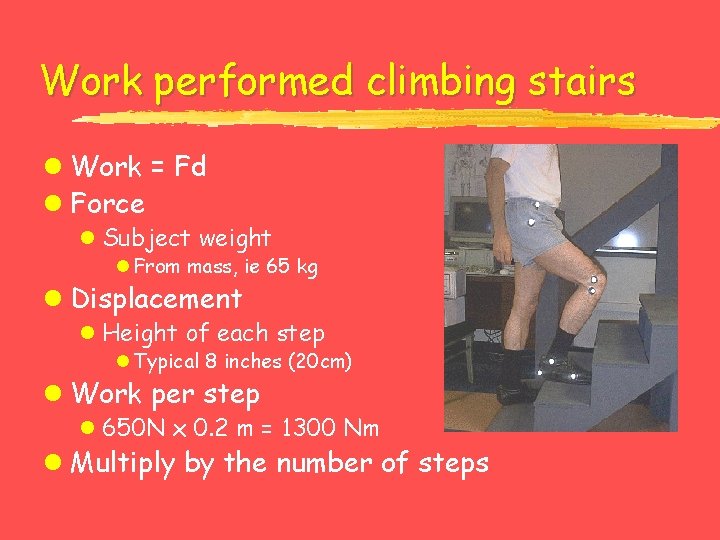
Work performed climbing stairs l Work = Fd l Force l Subject weight l From mass, ie 65 kg l Displacement l Height of each step l Typical 8 inches (20 cm) l Work per step l 650 N x 0. 2 m = 1300 Nm l Multiply by the number of steps
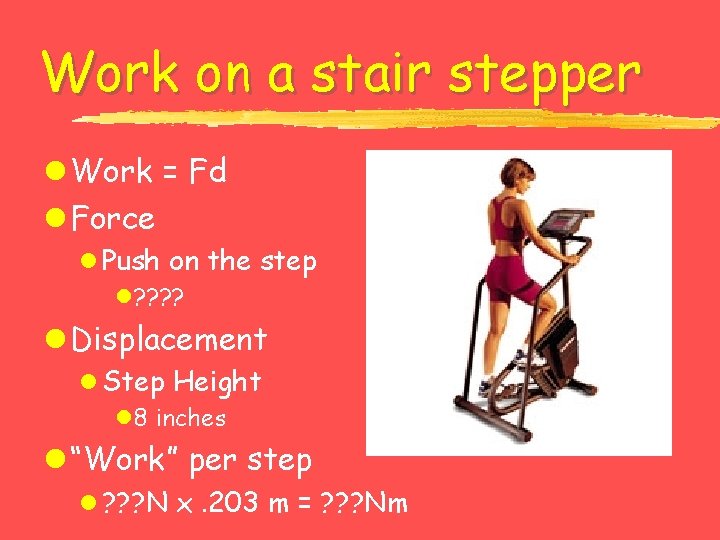
Work on a stair stepper l Work = Fd l Force l Push on the step l? ? l Displacement l Step Height l 8 inches l “Work” per step l ? ? ? N x. 203 m = ? ? ? Nm
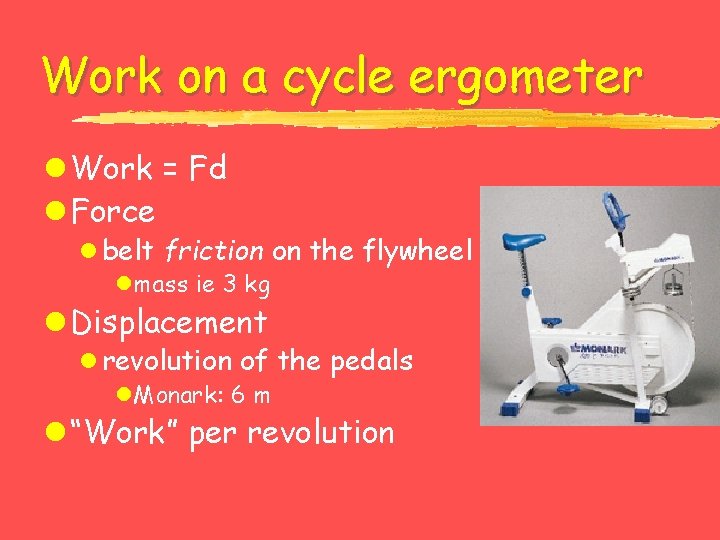
Work on a cycle ergometer l Work = Fd l Force l belt friction on the flywheel lmass ie 3 kg l Displacement l revolution of the pedals l. Monark: 6 m l “Work” per revolution
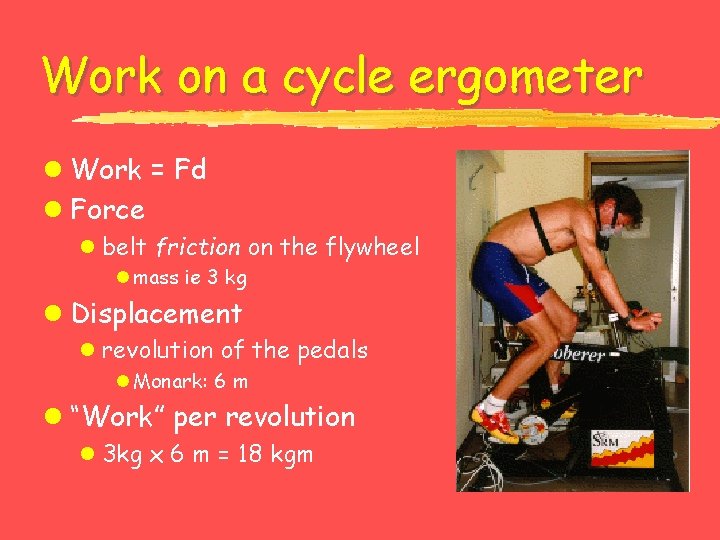
Work on a cycle ergometer l Work = Fd l Force l belt friction on the flywheel l mass ie 3 kg l Displacement l revolution of the pedals l Monark: 6 m l “Work” per revolution l 3 kg x 6 m = 18 kgm
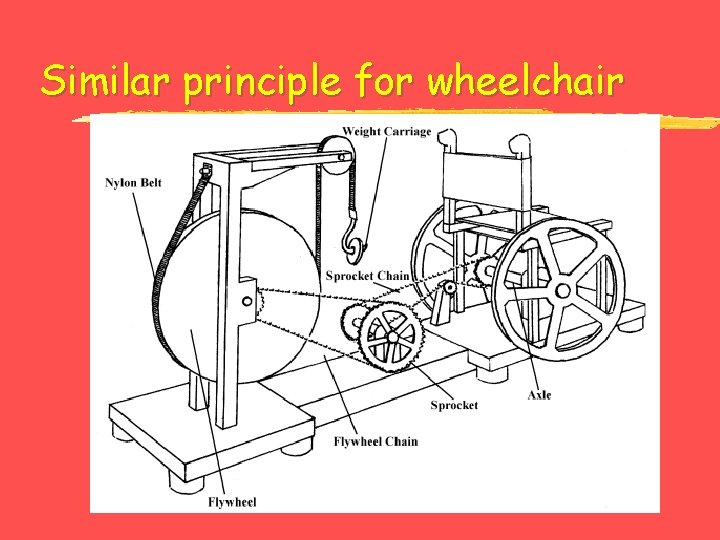
Similar principle for wheelchair
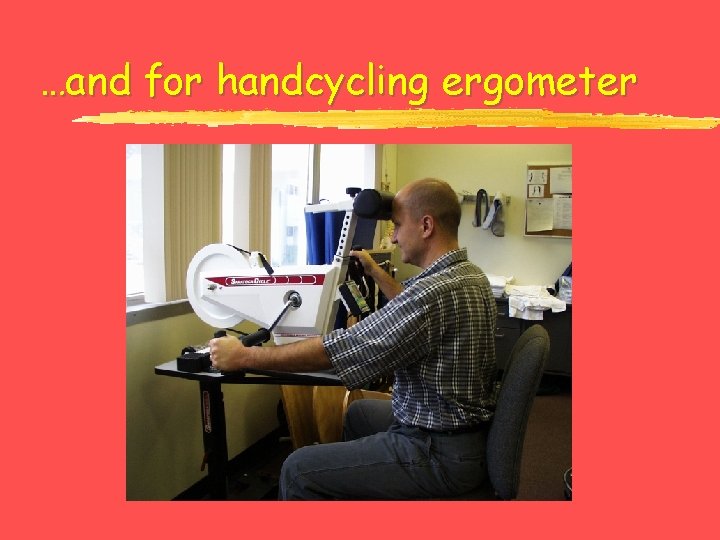
…and for handcycling ergometer
Energy l Energy (E) is defined as the capacity to do work l Many forms l. No more created, only converted l chemical, sound, heat, nuclear, mechanical l Kinetic Energy (KE): l energy due to motion l Potential Energy (PE): l energy due to position or deformation
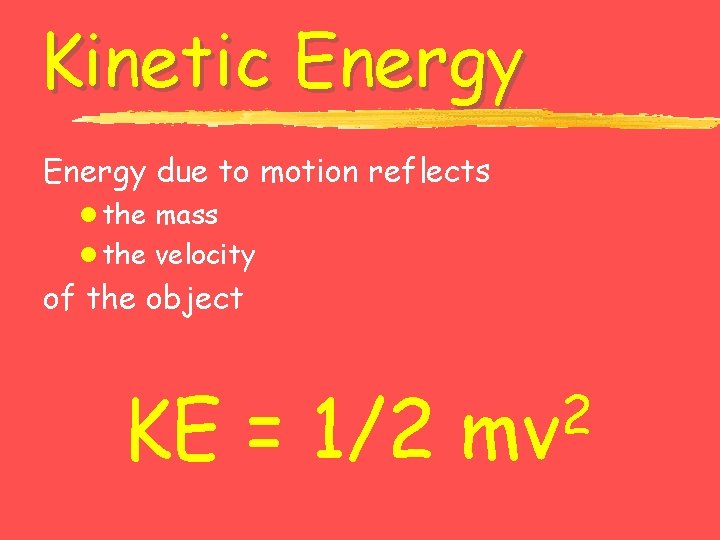
Kinetic Energy due to motion reflects l the mass l the velocity of the object KE = 1/2 2 mv
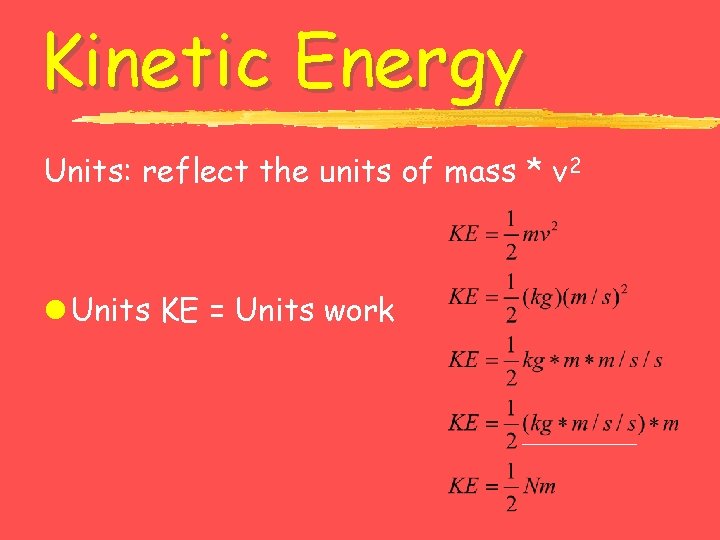
Kinetic Energy Units: reflect the units of mass * v 2 l Units KE = Units work
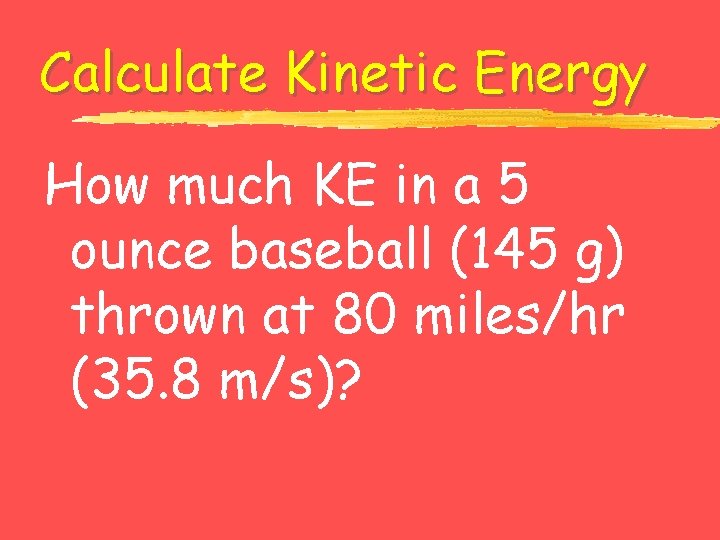
Calculate Kinetic Energy How much KE in a 5 ounce baseball (145 g) thrown at 80 miles/hr (35. 8 m/s)?
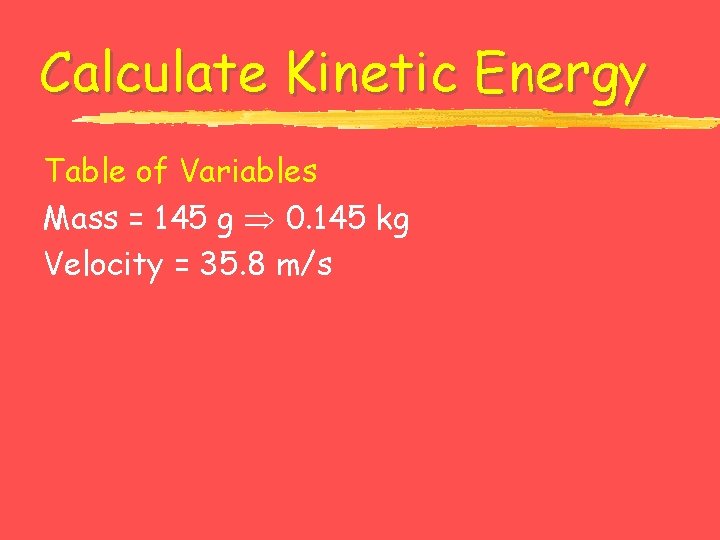
Calculate Kinetic Energy Table of Variables Mass = 145 g 0. 145 kg Velocity = 35. 8 m/s
Calculate Kinetic Energy Table of Variables Select the equation and solve:
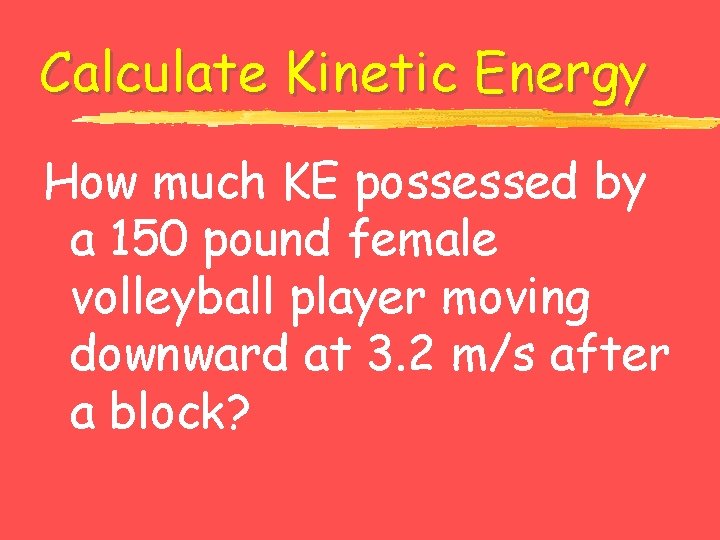
Calculate Kinetic Energy How much KE possessed by a 150 pound female volleyball player moving downward at 3. 2 m/s after a block?
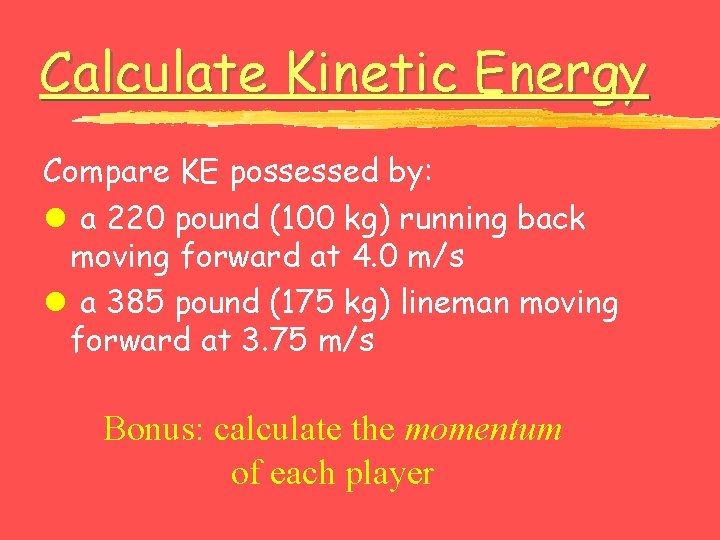
Calculate Kinetic Energy Compare KE possessed by: l a 220 pound (100 kg) running back moving forward at 4. 0 m/s l a 385 pound (175 kg) lineman moving forward at 3. 75 m/s Bonus: calculate the momentum of each player
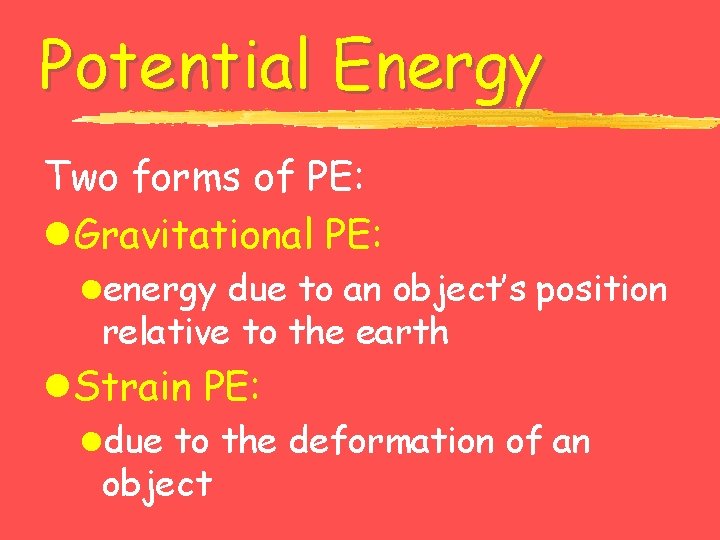
Potential Energy Two forms of PE: l. Gravitational PE: lenergy due to an object’s position relative to the earth l. Strain PE: ldue to the deformation of an object
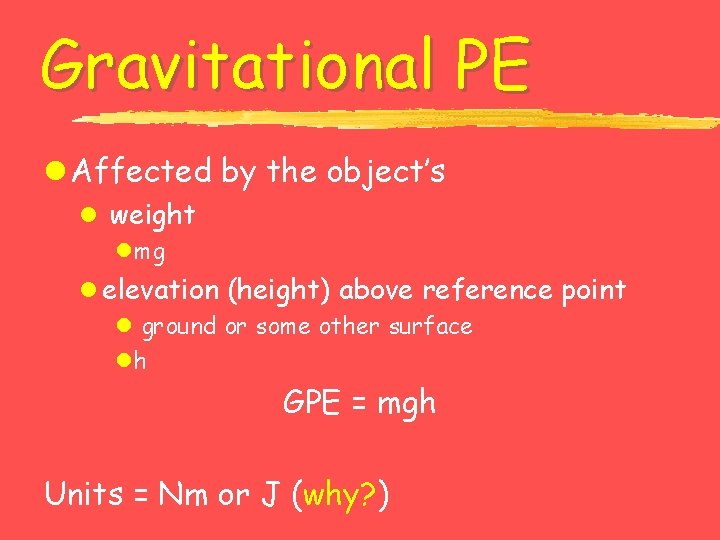
Gravitational PE l Affected by the object’s l weight lmg l elevation (height) above reference point l ground or some other surface lh GPE = mgh Units = Nm or J (why? )
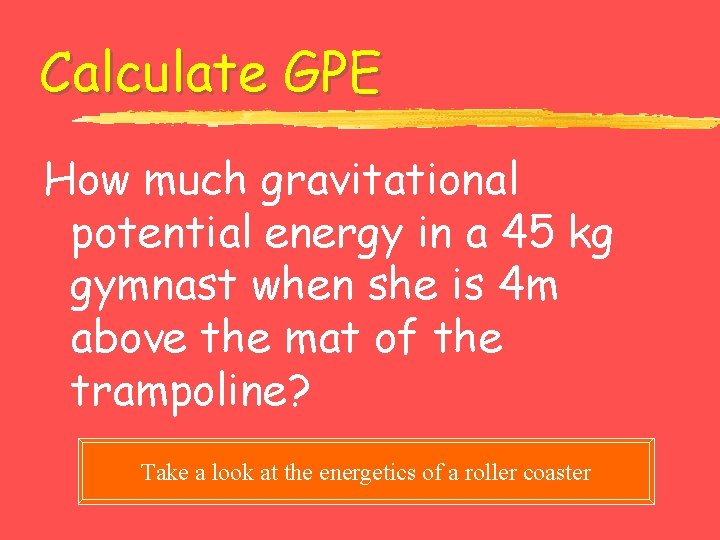
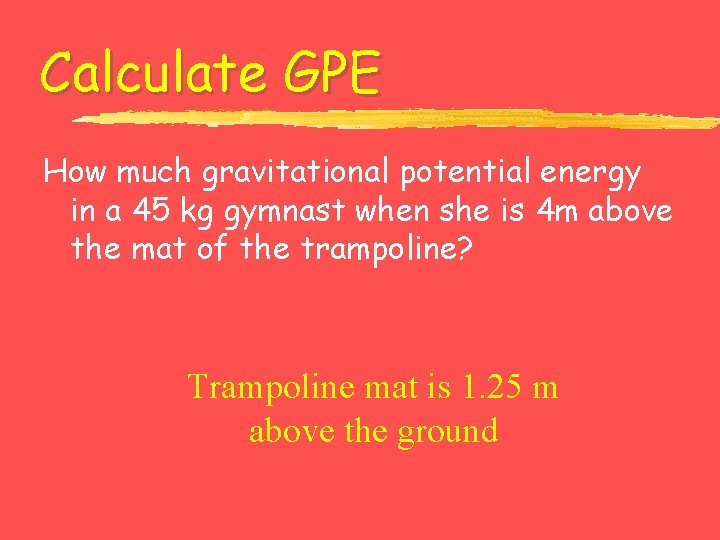
Calculate GPE How much gravitational potential energy in a 45 kg gymnast when she is 4 m above the mat of the trampoline? Take a look at the energetics of a roller coaster
Calculate GPE How much gravitational potential energy in a 45 kg gymnast when she is 4 m above the mat of the trampoline? Trampoline mat is 1. 25 m above the ground
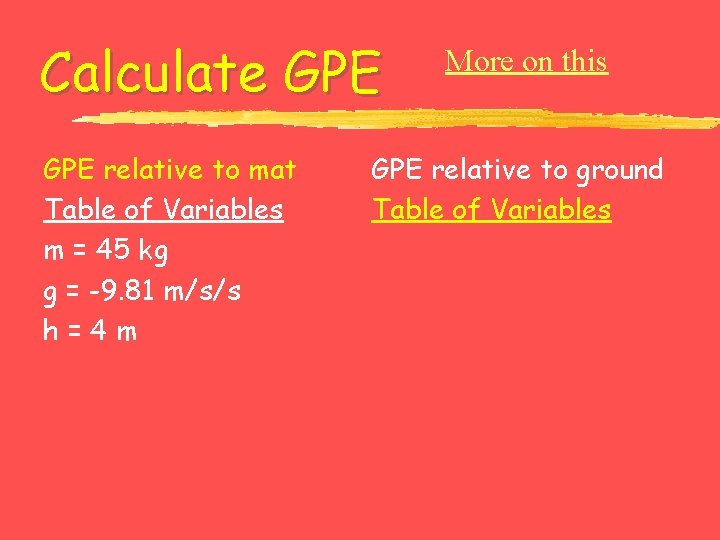
Calculate GPE relative to mat Table of Variables m = 45 kg g = -9. 81 m/s/s h=4 m More on this GPE relative to ground Table of Variables
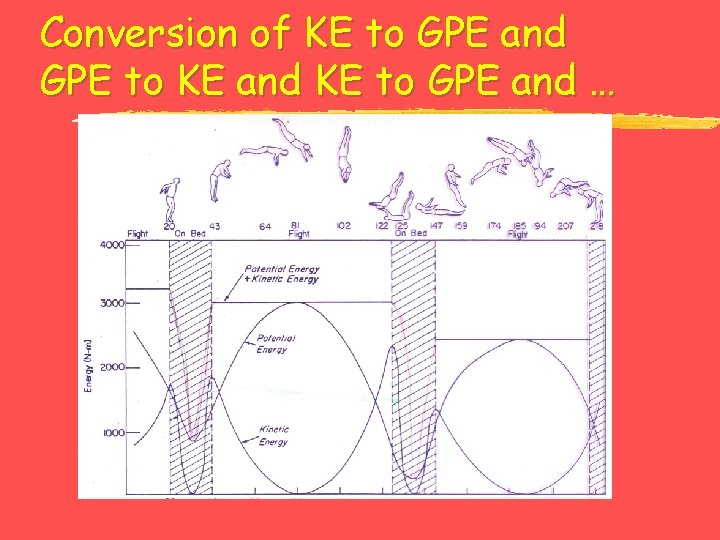
Conversion of KE to GPE and GPE to KE and KE to GPE and …
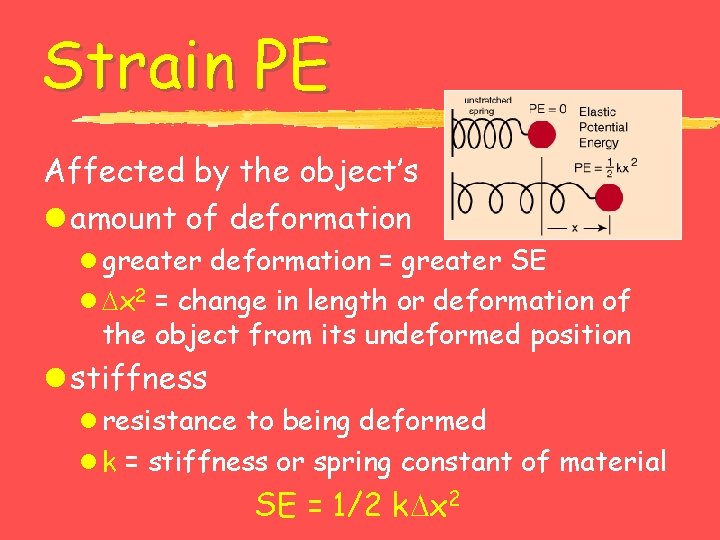
Strain PE Affected by the object’s l amount of deformation l greater deformation = greater SE l x 2 = change in length or deformation of the object from its undeformed position l stiffness l resistance to being deformed l k = stiffness or spring constant of material SE = 1/2 k x 2
Strain Energy l When a fiberglass vaulting pole bends, strain energy is stored in the bent pole .
Strain Energy l When a fiberglass vaulting pole bends, strain energy is stored in the bent pole l Bungee jumping.
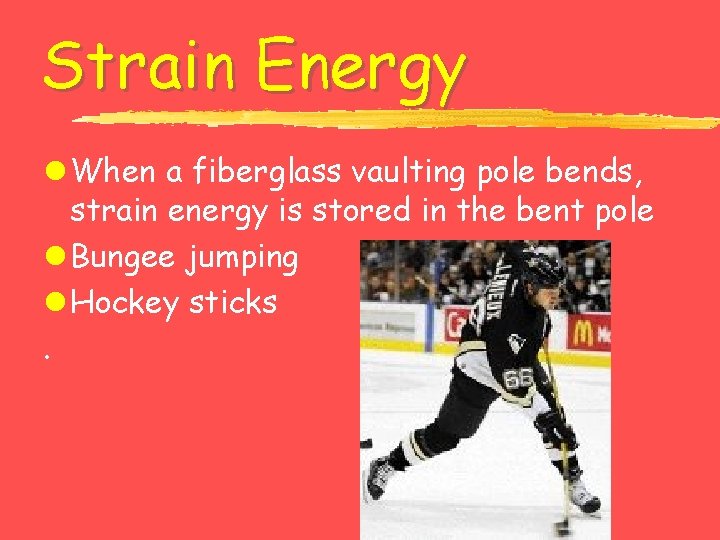
Strain Energy l When a fiberglass vaulting pole bends, strain energy is stored in the bent pole l Bungee jumping l Hockey sticks.
Strain Energy l When a fiberglass vaulting pole bends, strain energy is stored in the bent pole l Bungee jumping l When a tendon/ligament/muscle is stretched, strain energy is stored in the elongated elastin fibers (Fukunaga et al, 2001, ref#5332) l k = 10000 n /m tendon in walking x = 0. 007 m (7 mm), Achilles l When a floor/shoe sole is deformed, energy is stored in the material Plyometrics
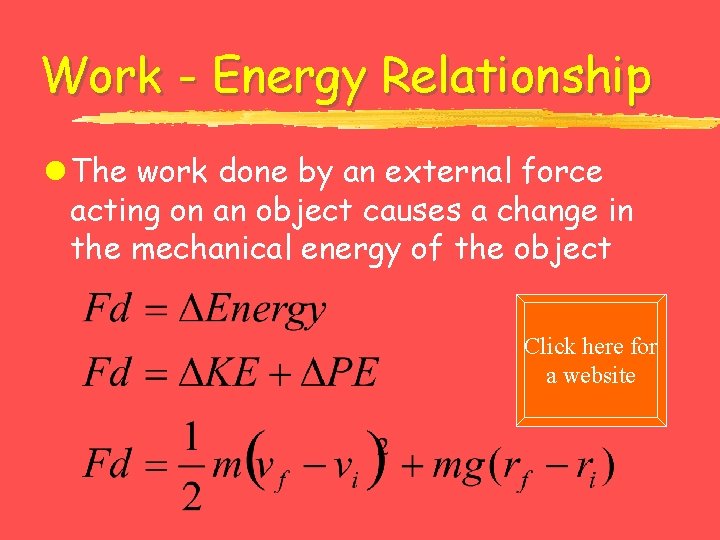
Work - Energy Relationship l The work done by an external force acting on an object causes a change in the mechanical energy of the object Click here for a website
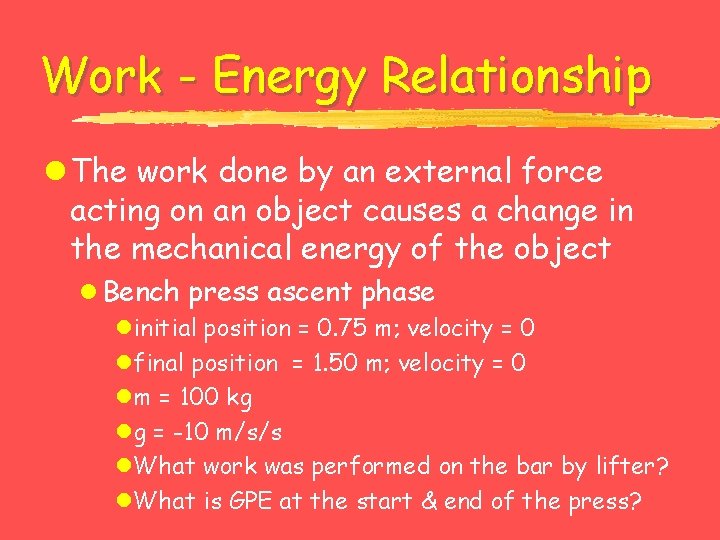
Work - Energy Relationship l The work done by an external force acting on an object causes a change in the mechanical energy of the object l Bench press ascent phase linitial position = 0. 75 m; velocity = 0 lfinal position = 1. 50 m; velocity = 0 lm = 100 kg lg = -10 m/s/s l. What work was performed on the bar by lifter? l. What is GPE at the start & end of the press?
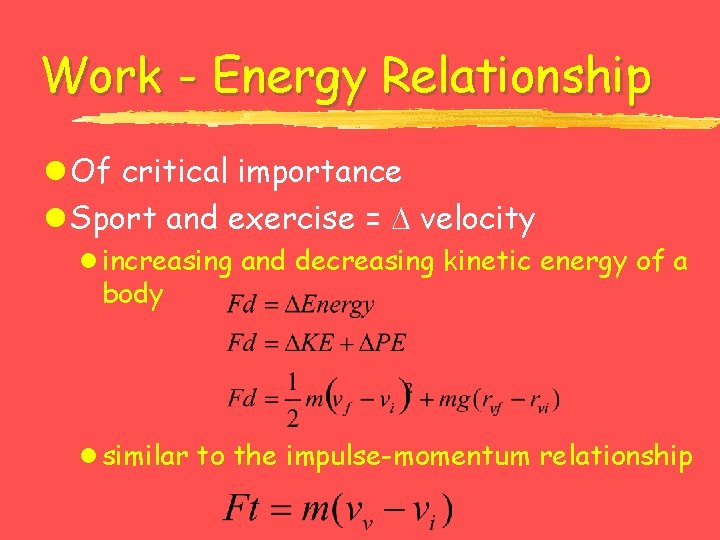
Work - Energy Relationship l Of critical importance l Sport and exercise = velocity l increasing and decreasing kinetic energy of a body l similar to the impulse-momentum relationship
Work - Energy Relationship l If more work is done, greater energy l greater average force l greater displacement l. Ex. Shot put technique (121 -122). l If displacement is restricted, average force is _____ ? (increased/decreased) l “giving” with the ball l landing hard vs soft
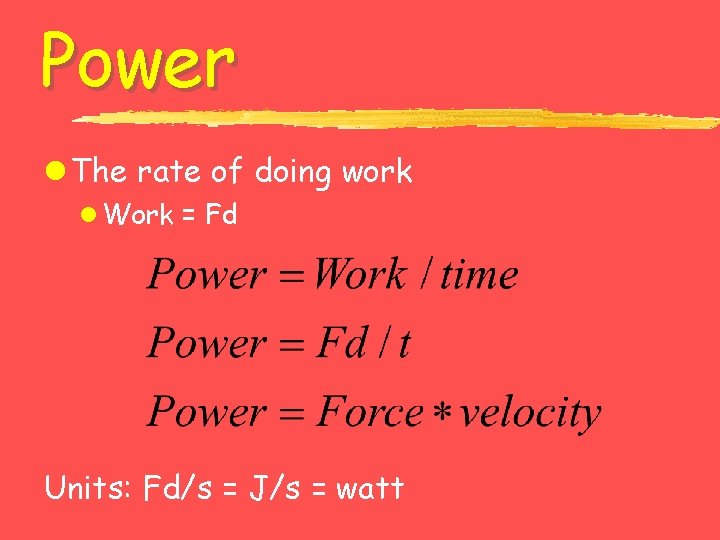
Power l The rate of doing work l Work = Fd Units: Fd/s = J/s = watt
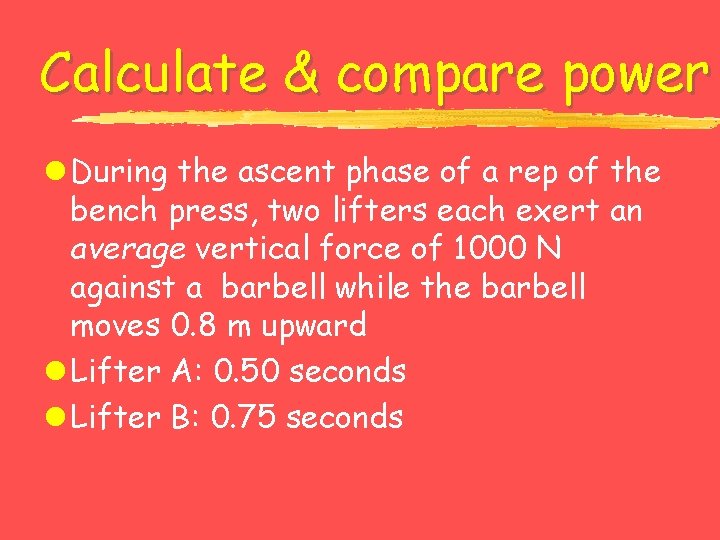
Calculate & compare power l During the ascent phase of a rep of the bench press, two lifters each exert an average vertical force of 1000 N against a barbell while the barbell moves 0. 8 m upward l Lifter A: 0. 50 seconds l Lifter B: 0. 75 seconds
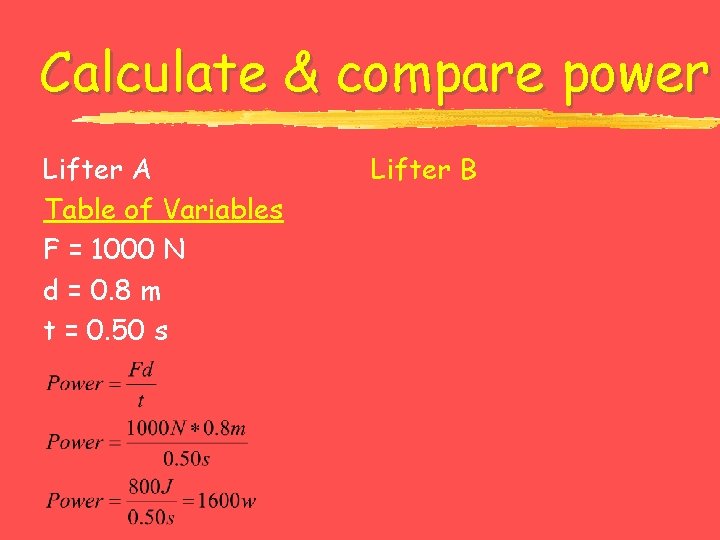
Calculate & compare power Lifter A Table of Variables F = 1000 N d = 0. 8 m t = 0. 50 s Lifter B
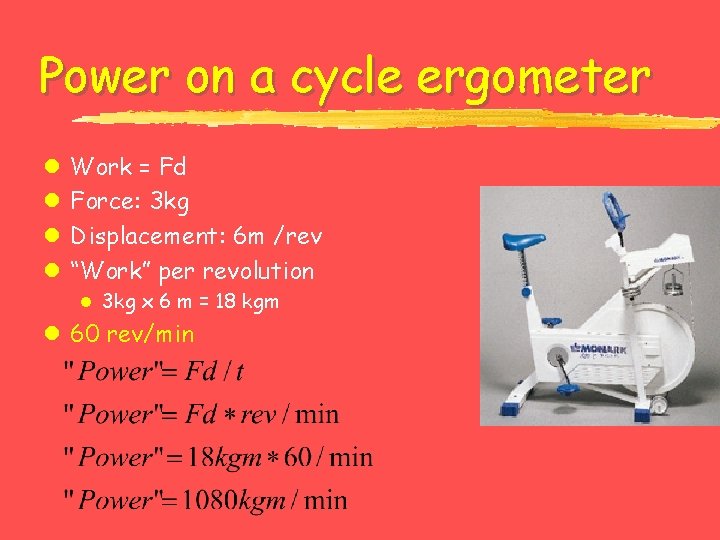
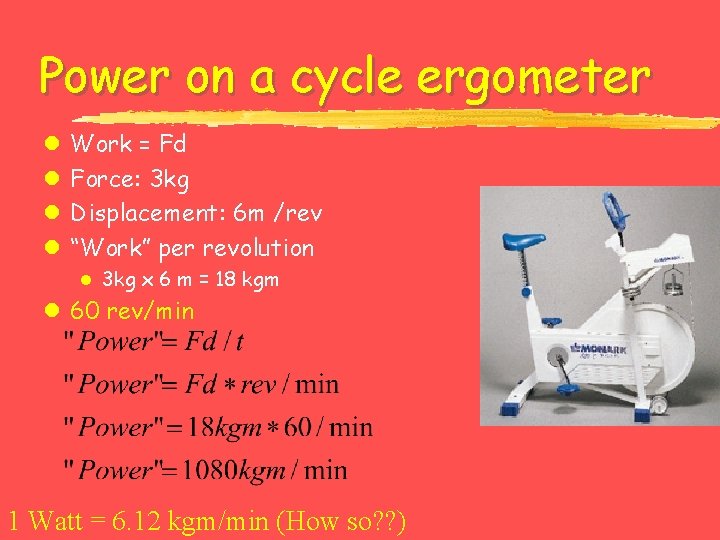
Power on a cycle ergometer l l Work = Fd Force: 3 kg Displacement: 6 m /rev “Work” per revolution l 3 kg x 6 m = 18 kgm l 60 rev/min
Power on a cycle ergometer l l Work = Fd Force: 3 kg Displacement: 6 m /rev “Work” per revolution l 3 kg x 6 m = 18 kgm l 60 rev/min 1 Watt = 6. 12 kgm/min (How so? ? )
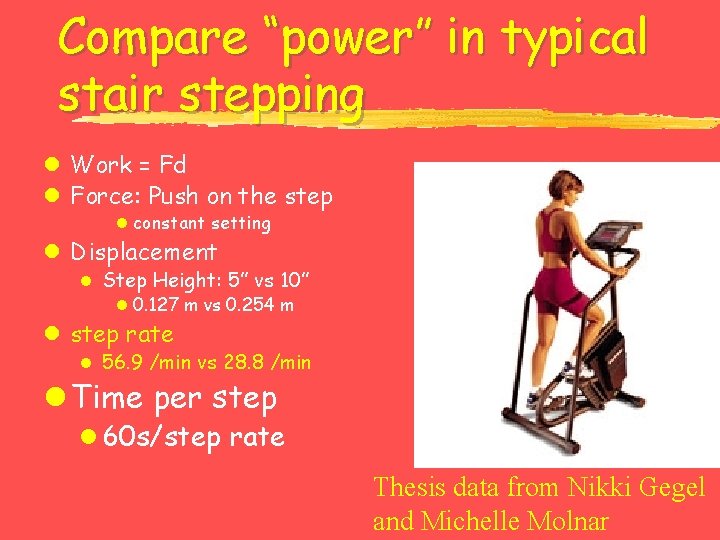
Compare “power” in typical stair stepping l Work = Fd l Force: Push on the step l constant setting l Displacement l Step Height: 5” vs 10” l 0. 127 m vs 0. 254 m l step rate l 56. 9 /min vs 28. 8 /min l Time per step l 60 s/step rate Thesis data from Nikki Gegel and Michelle Molnar
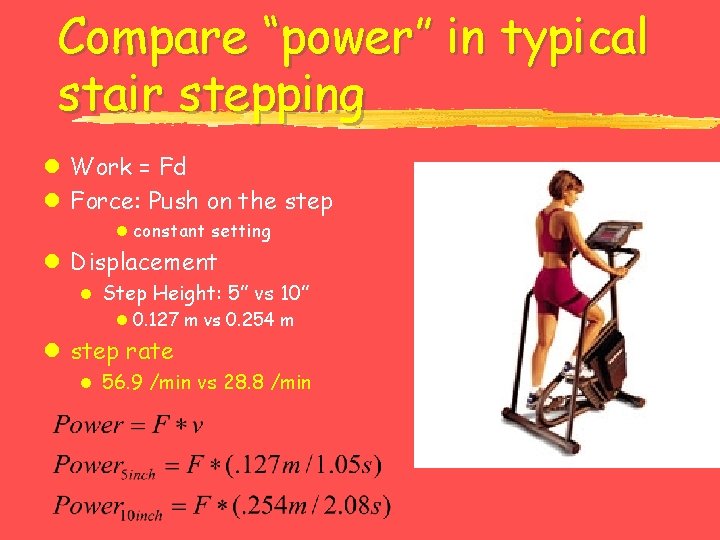
Compare “power” in typical stair stepping l Work = Fd l Force: Push on the step l constant setting l Displacement l Step Height: 5” vs 10” l 0. 127 m vs 0. 254 m l step rate l 56. 9 /min vs 28. 8 /min
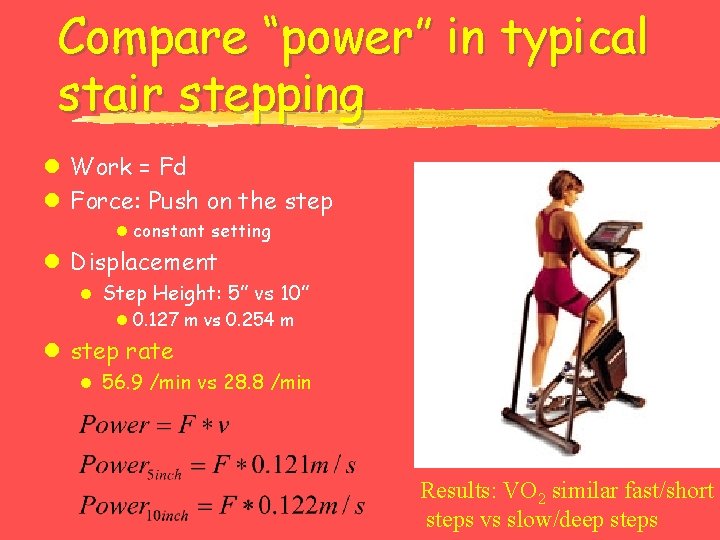
Compare “power” in typical stair stepping l Work = Fd l Force: Push on the step l constant setting l Displacement l Step Height: 5” vs 10” l 0. 127 m vs 0. 254 m l step rate l 56. 9 /min vs 28. 8 /min Results: VO 2 similar fast/short steps vs slow/deep steps