
WORK LIST DRAW familiar symbols in your sketchbook
WORK LIST • DRAW familiar symbols in your sketchbook, e. g. danger, safety, love, war, food, water, roads, cars pedestrians, schools, and advertising symbols. • Draw a pictograph that represents a common experience, e. g. a typical day at school • Draw a symbol you might see on a road sign –easily recognizable. Draw a second road sign next to it that shows what would happen if the first road sign were missed by the driver or pedestrian. • JOURNEY TO SCHOOL: Combine symbols to tell a story about how you get to school …can be real life or imaginary…Use 6 -10 colored symbols to represent the people, places, and things you see or do …use common symbols or make up your own. • Draw a self-portrait on a page in your sketchbook; use a mirror • Complete “My Personal Map” activity • NEXT: experiment on ghost prints • NEXT-NEXT: Brainstorm (mind-map) & develop final ideas
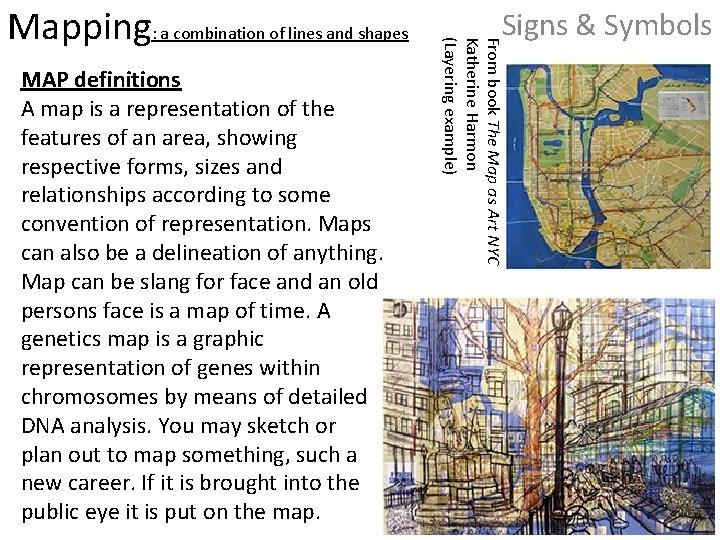
MAP definitions A map is a representation of the features of an area, showing respective forms, sizes and relationships according to some convention of representation. Maps can also be a delineation of anything. Map can be slang for face and an old persons face is a map of time. A genetics map is a graphic representation of genes within chromosomes by means of detailed DNA analysis. You may sketch or plan out to map something, such a new career. If it is brought into the public eye it is put on the map. Signs & Symbols From book The Map as Art NYC Katherine Harmon (Layering example) Mapping: a combination of lines and shapes
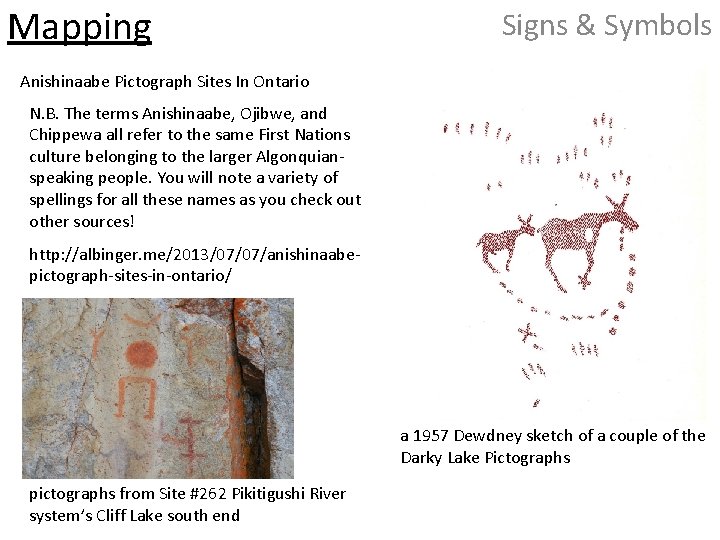
Mapping Signs & Symbols Anishinaabe Pictograph Sites In Ontario N. B. The terms Anishinaabe, Ojibwe, and Chippewa all refer to the same First Nations culture belonging to the larger Algonquianspeaking people. You will note a variety of spellings for all these names as you check out other sources! http: //albinger. me/2013/07/07/anishinaabepictograph-sites-in-ontario/ a 1957 Dewdney sketch of a couple of the Darky Lake Pictographs pictographs from Site #262 Pikitigushi River system’s Cliff Lake south end
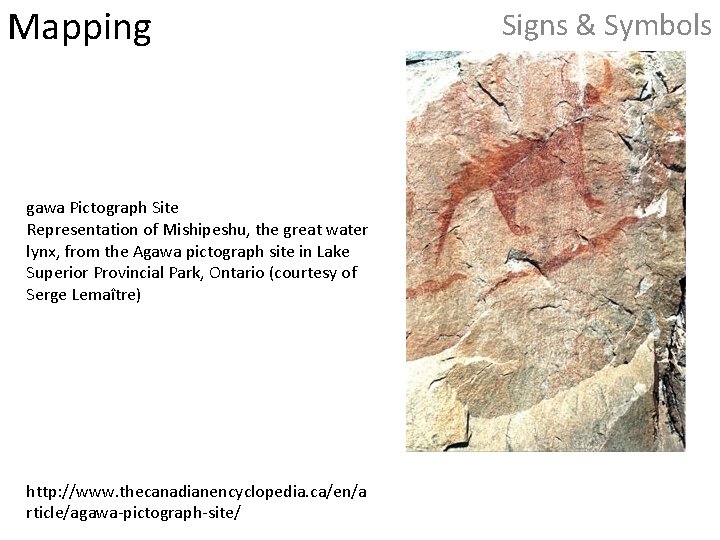
Mapping gawa Pictograph Site Representation of Mishipeshu, the great water lynx, from the Agawa pictograph site in Lake Superior Provincial Park, Ontario (courtesy of Serge Lemaître) http: //www. thecanadianencyclopedia. ca/en/a rticle/agawa-pictograph-site/ Signs & Symbols
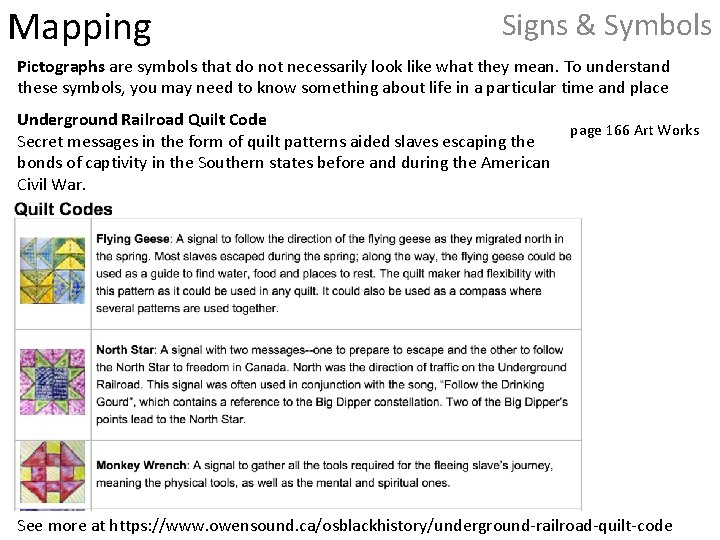
Mapping Signs & Symbols Pictographs are symbols that do not necessarily look like what they mean. To understand these symbols, you may need to know something about life in a particular time and place Underground Railroad Quilt Code Secret messages in the form of quilt patterns aided slaves escaping the bonds of captivity in the Southern states before and during the American Civil War. page 166 Art Works See more at https: //www. owensound. ca/osblackhistory/underground-railroad-quilt-code
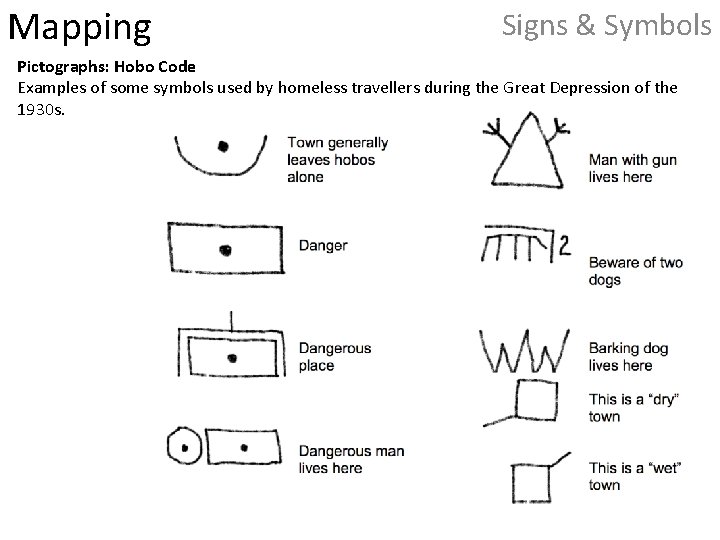
Mapping Signs & Symbols Pictographs: Hobo Code Examples of some symbols used by homeless travellers during the Great Depression of the 1930 s.
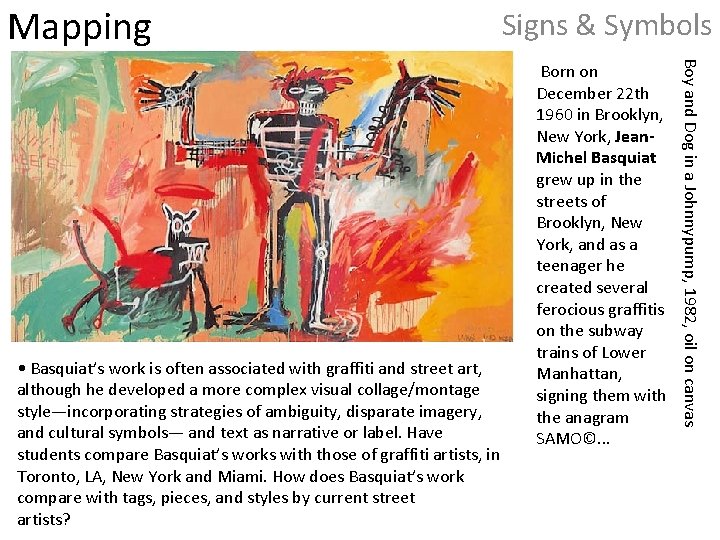
Mapping Born on December 22 th 1960 in Brooklyn, New York, Jean. Michel Basquiat grew up in the streets of Brooklyn, New York, and as a teenager he created several ferocious graffitis on the subway trains of Lower Manhattan, signing them with the anagram SAMO©. . . Boy and Dog in a Johnnypump, 1982, oil on canvas • Basquiat’s work is often associated with graffiti and street art, although he developed a more complex visual collage/montage style—incorporating strategies of ambiguity, disparate imagery, and cultural symbols— and text as narrative or label. Have students compare Basquiat’s works with those of graffiti artists, in Toronto, LA, New York and Miami. How does Basquiat’s work compare with tags, pieces, and styles by current street artists? Signs & Symbols
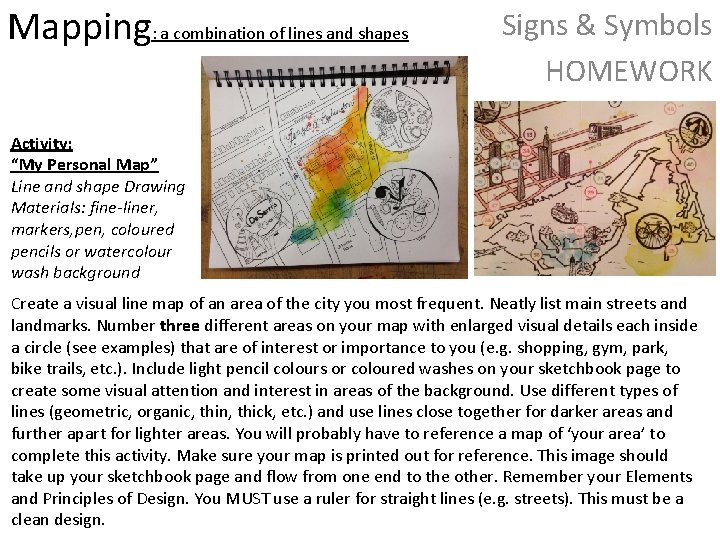
Mapping: a combination of lines and shapes Signs & Symbols HOMEWORK Activity: “My Personal Map” Line and shape Drawing Materials: fine-liner, markers, pen, coloured pencils or watercolour wash background Create a visual line map of an area of the city you most frequent. Neatly list main streets and landmarks. Number three different areas on your map with enlarged visual details each inside a circle (see examples) that are of interest or importance to you (e. g. shopping, gym, park, bike trails, etc. ). Include light pencil colours or coloured washes on your sketchbook page to create some visual attention and interest in areas of the background. Use different types of lines (geometric, organic, thin, thick, etc. ) and use lines close together for darker areas and further apart for lighter areas. You will probably have to reference a map of ‘your area’ to complete this activity. Make sure your map is printed out for reference. This image should take up your sketchbook page and flow from one end to the other. Remember your Elements and Principles of Design. You MUST use a ruler for straight lines (e. g. streets). This must be a clean design.
- Slides: 8