
WORK IN PAST In this presentation we will
- Slides: 6
WORK IN PAST
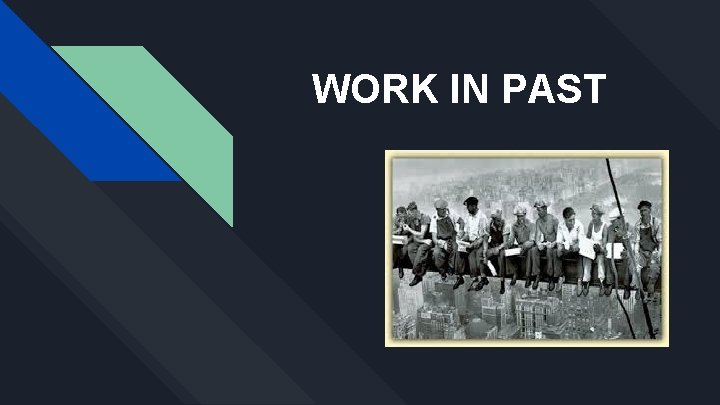
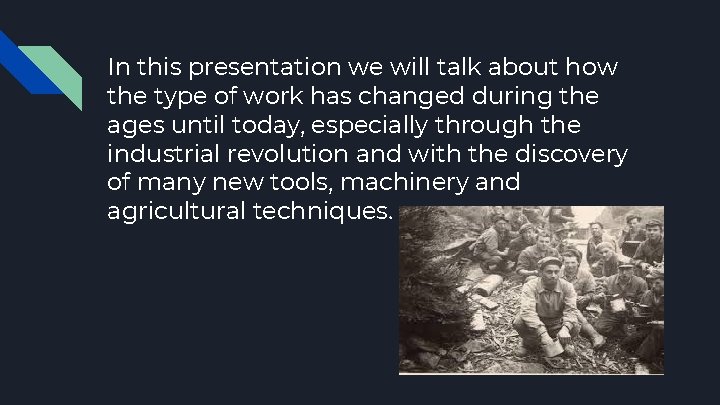
In this presentation we will talk about how the type of work has changed during the ages until today, especially through the industrial revolution and with the discovery of many new tools, machinery and agricultural techniques.
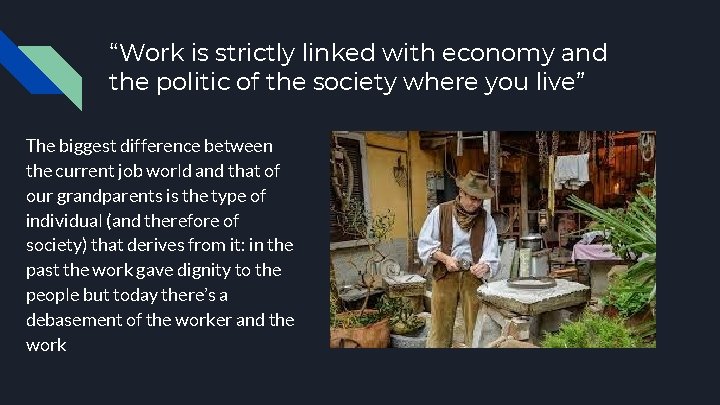
“Work is strictly linked with economy and the politic of the society where you live” The biggest difference between the current job world and that of our grandparents is the type of individual (and therefore of society) that derives from it: in the past the work gave dignity to the people but today there’s a debasement of the worker and the work
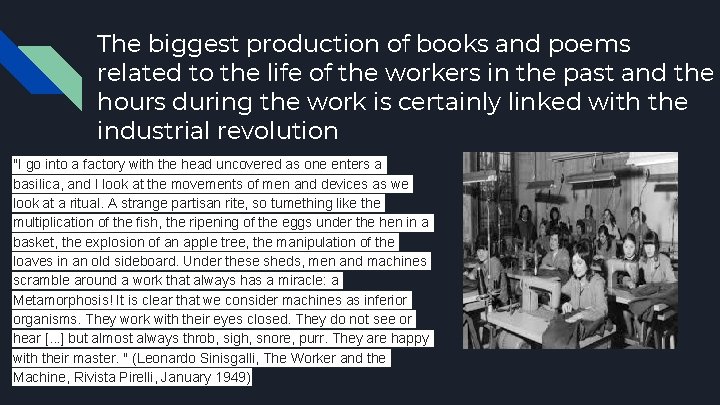
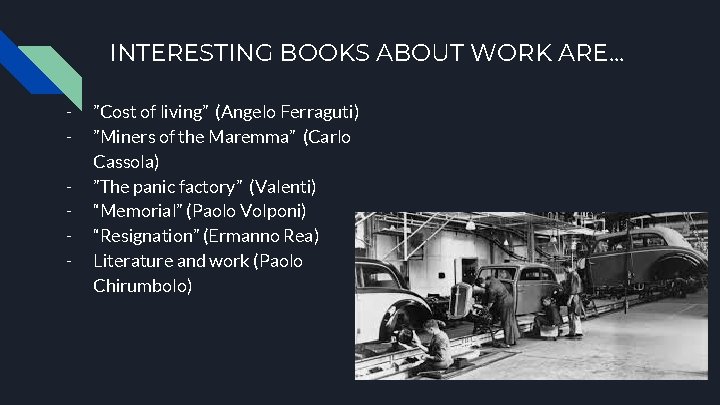
The biggest production of books and poems related to the life of the workers in the past and the hours during the work is certainly linked with the industrial revolution "I go into a factory with the head uncovered as one enters a basilica, and I look at the movements of men and devices as we look at a ritual. A strange partisan rite, so tumething like the multiplication of the fish, the ripening of the eggs under the hen in a basket, the explosion of an apple tree, the manipulation of the loaves in an old sideboard. Under these sheds, men and machines scramble around a work that always has a miracle: a Metamorphosis! It is clear that we consider machines as inferior organisms. They work with their eyes closed. They do not see or hear [. . . ] but almost always throb, sigh, snore, purr. They are happy with their master. " (Leonardo Sinisgalli, The Worker and the Machine, Rivista Pirelli, January 1949)
INTERESTING BOOKS ABOUT WORK ARE. . . - ”Cost of living” (Angelo Ferraguti) ”Miners of the Maremma” (Carlo Cassola) ”The panic factory” (Valenti) “Memorial” (Paolo Volponi) “Resignation” (Ermanno Rea) Literature and work (Paolo Chirumbolo)
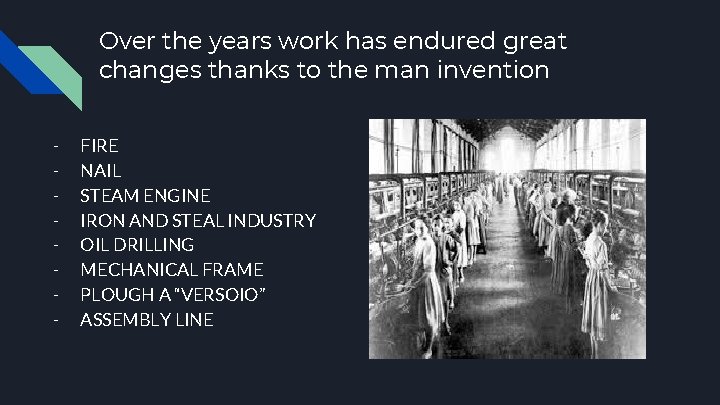
Over the years work has endured great changes thanks to the man invention - FIRE NAIL STEAM ENGINE IRON AND STEAL INDUSTRY OIL DRILLING MECHANICAL FRAME PLOUGH A “VERSOIO” ASSEMBLY LINE