
Work Based Reflective Practice 2 Session 3 Leadership
Work Based Reflective Practice 2 Session 3: Leadership, management and change Module Tutor: Helen Wilson B. Ed h. wilson@derby. ac. uk Lecturer: Chris Thomas
Learning Intentions • To explore the concept of teams • To explore motivation • To explore effective communication and conflict resolution • To reflect on the meaning & impact of leadership & management in the workplace • To examine and begin to understand leadership and management theory • To explore a variety of features relating to change management
Teams • What teams are there in your setting? • In pairs discuss why we need teams? • What are the advantages of team–work? • What makes a good team?
A good teams offers: • Help and support • Coordination of activities, increased commitment • Sense of belonging • Identification of professional development needs • Learning opportunities • Better communication • Satisfying, stimulating, pleasant working environment • Open and honest communication
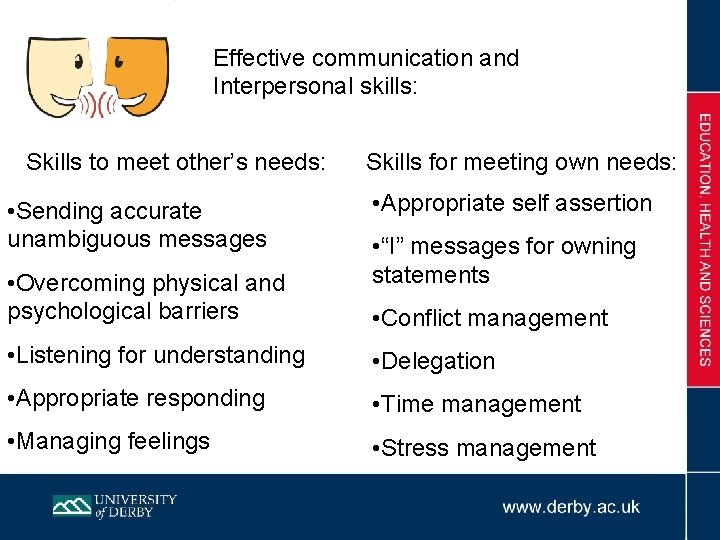
Effective communication and Interpersonal skills: Skills to meet other’s needs: Skills for meeting own needs: • Sending accurate unambiguous messages • Overcoming physical and psychological barriers • Appropriate self assertion • “I” messages for owning statements • Conflict management • Listening for understanding • Delegation • Appropriate responding • Time management • Managing feelings • Stress management
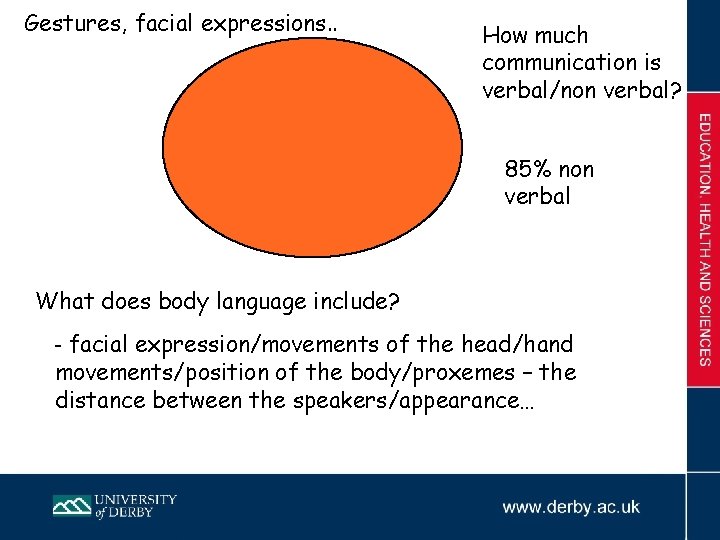
Gestures, facial expressions. . How much communication is verbal/non verbal? 85% non verbal What does body language include? - facial expression/movements of the head/hand movements/position of the body/proxemes – the distance between the speakers/appearance…
Active listening; • Listening is the most important skill in the communication process • Listening is an active process Stopping what you are doing to listen Give undivided attention Focus on person by using eye contact and positive body language Allow the person to finish what they say Encourage by nodding/supportive responses Do not interrupt or take over
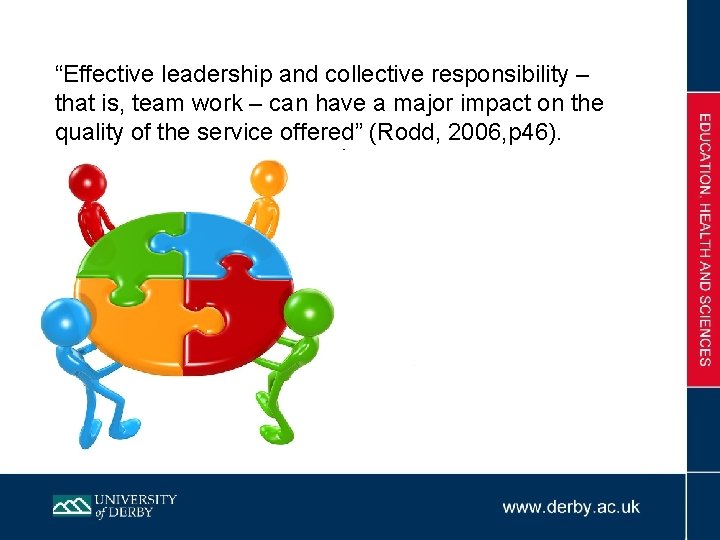
“Effective leadership and collective responsibility – that is, team work – can have a major impact on the quality of the service offered” (Rodd, 2006, p 46).
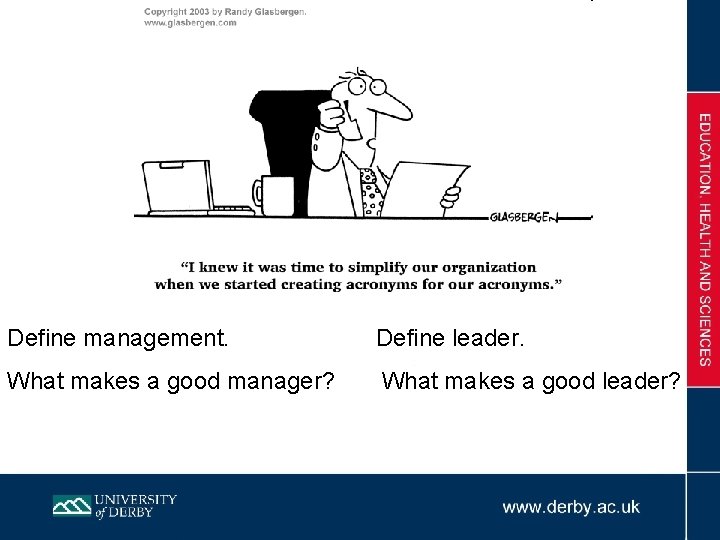
Define management. Define leader. What makes a good manager? What makes a good leader?
The meaning of ‘management’ • ‘The art of getting things done through people’ Follett in Barrett (2003: 51) • Management is generally defined as the act and science of getting people together to accomplish desired goals • Management can also refer to the person or people who perform the act(s) of management http: //www. leadership 501. com/definition-of-management/21/
s and s
Styles of management & leadership • • Task-oriented Bureaucratic Charismatic Democratic/ participative • Servant • People-oriented/ relations-oriented • Laissez-faire • Transactional • Autocratic • Transformational http: //www. mindtools. com/pages/article/new. LDR_84. htm
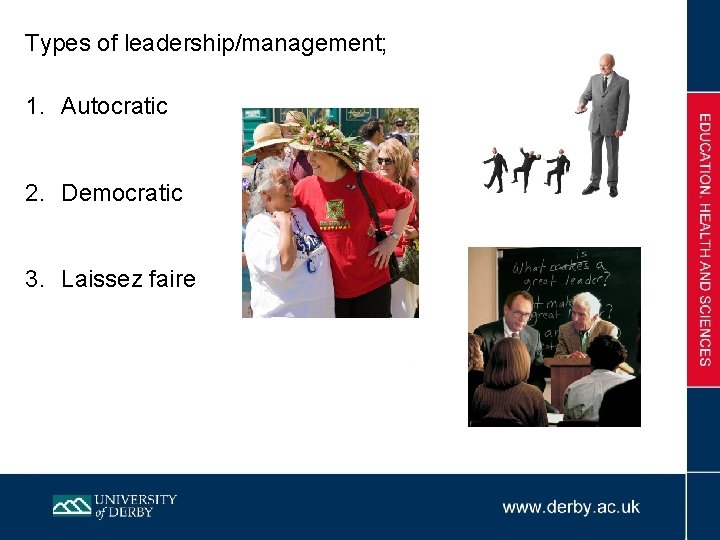
Types of leadership/management; 1. Autocratic 2. Democratic 3. Laissez faire
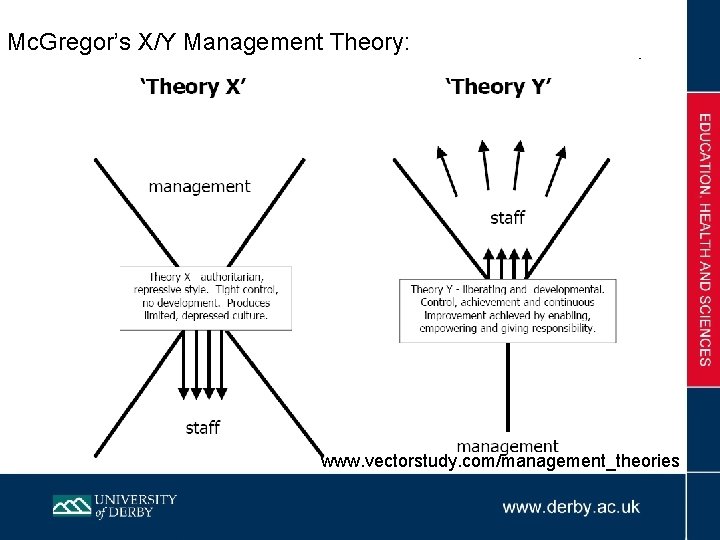
Mc. Gregor’s X/Y Management Theory: www. vectorstudy. com/management_theories
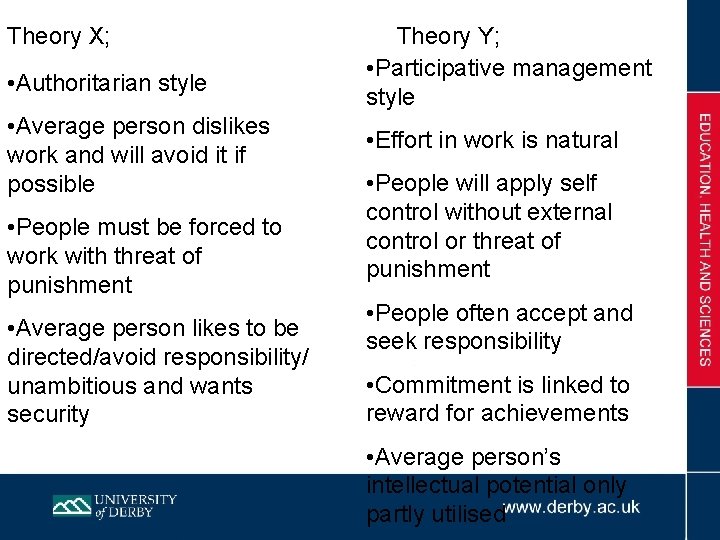
Theory X; Theory Y; • Participative management • Authoritarian style • Average person dislikes • Effort in work is natural work and will avoid it if • People will apply self possible control without external • People must be forced to control or threat of work with threat of punishment • People often accept and • Average person likes to be seek responsibility directed/avoid responsibility/ • Commitment is linked to unambitious and wants reward for achievements security • Average person’s intellectual potential only partly utilised
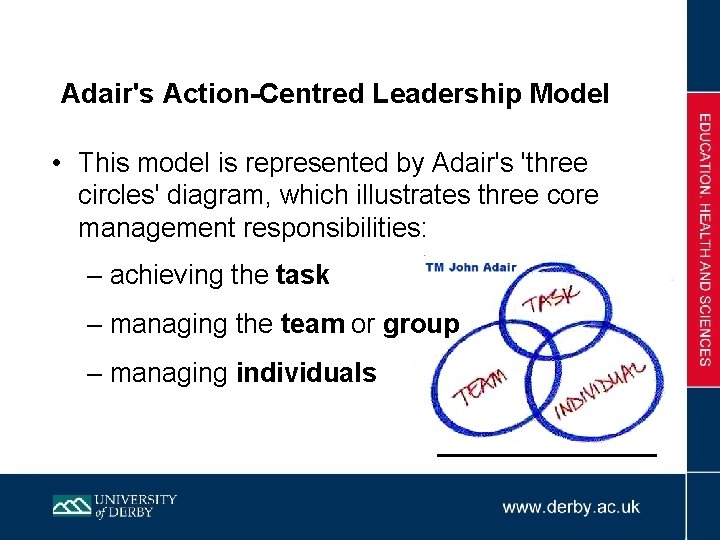
Adair's Action-Centred Leadership Model • This model is represented by Adair's 'three circles' diagram, which illustrates three core management responsibilities: – achieving the task – managing the team or group – managing individuals
Assessing managerial skills • To be a good manager you need to excel in four different areas: – Planning and administration – Problem-solving – Leadership – General people management
Change Management • There are three main types of change which occur in settings: 1. Developmental 2. Transitional 3. Transformational • Incremental change – ‘a little bit at a time’ • Induced change - policy • Routine change - quality • Crisis change – the unexpected • Innovative change – creative problem solving (Rodd, 2006: 184 -6)
Prochaska and Diclemetes’ Stages of Change Model; The idea behind the SCM is that behaviour change does not happen in one step. Rather, people tend to progress through different stages on their way to successful change. Also, each of us progresses through the stages at our own rate. Each person must decide for himself or herself when a stage is completed and when it is time to move on to the next stage. Moreover, this decision must come from the inside you (see developing an internal locus of control) -- stable, long term change cannot be externally imposed. www. addictioninfo. org/articles/11/1/Stages-of-Change-Model
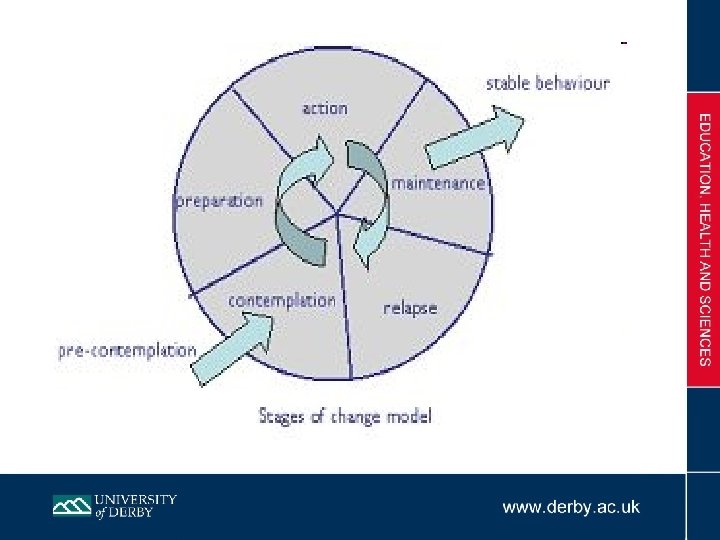
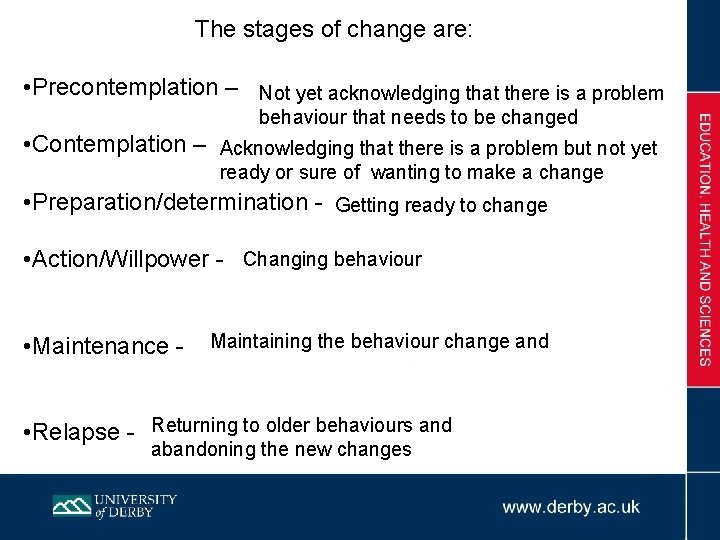
The stages of change are: • Precontemplation – Not yet acknowledging that there is a problem behaviour that needs to be changed • Contemplation – Acknowledging that there is a problem but not yet ready or sure of wanting to make a change • Preparation/determination - Getting ready to change • Action/Willpower - Changing behaviour • Maintenance - Maintaining the behaviour change and • Relapse - Returning to older behaviours and abandoning the new changes
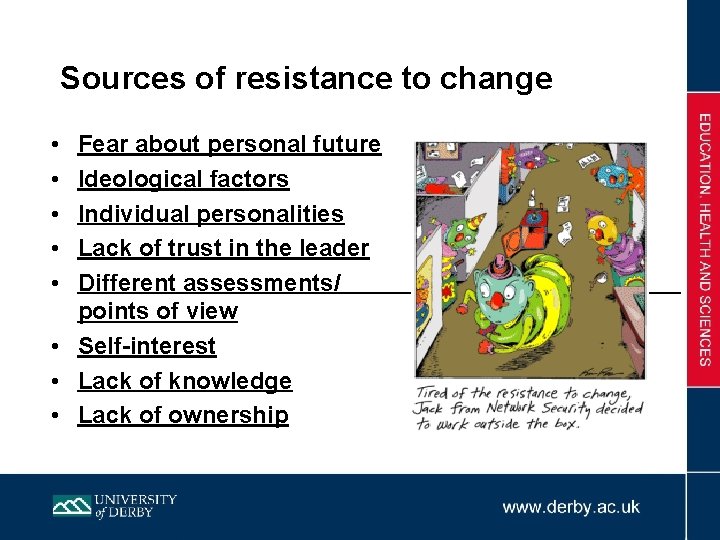
Sources of resistance to change • • • Fear about personal future Ideological factors Individual personalities Lack of trust in the leader Different assessments/ points of view • Self-interest • Lack of knowledge • Lack of ownership
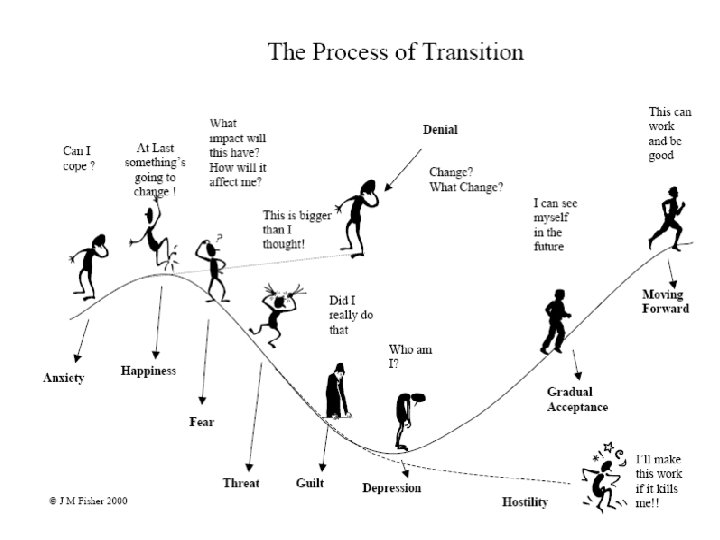
Typical ways of managing conflict; • Denial and withdrawal • Suppression and smoothing over • Power and dominance • Assertion • Negotiation • Problem solving
Helping staff cope with change • Challenge - help staff to see change as a challenge • Communicate - keep staff informed • Commitment - involve staff in the diagnosis of the need for change • Control - help staff to feel that they are not powerless • Confidence - build confident, resilient staff who know their value • Connect - network with others undergoing change so that staff understand that change is inevitable Rodd (2006: 193 -4)
Leadership for change • Ensure that the team understand the need/ benefits of the change • Communicate the objectives • Provide guidelines for achieving the objectives • Encourage team participation • Provide feedback (Rodd, 2006, p 195)
Learning Outcome One • LO 1: What? Component 1: COURSEWORK (2000 words) • An essay uses a critically reflective approach to examine the implementation and management of change with reference to academic theory.
Planning Proforma for WBRP 2: LO 1
Date • Submission date: • Week beginning: 22 nd April 2013
• Reflective practice is a process of learning and developing through examining our own practice, opening our practice to scrutiny by others, and studying texts from the wider sphere. (Bolton, 2001 p. 4) • A reflective practitioner…is a worker who is able to use experience, knowledge and theoretical perspectives to guide and inform practice…reflective practice involves cutting the cloth to suit the specific circumstances, rather than looking for ready-made solutions. (Thompson, 2002 p. 235) How will your LO 1 essay demonstrate this thinking
- Slides: 31