
Work Based Learning Higher and Degree Apprenticeships Whats


Work Based Learning Higher and Degree Apprenticeships
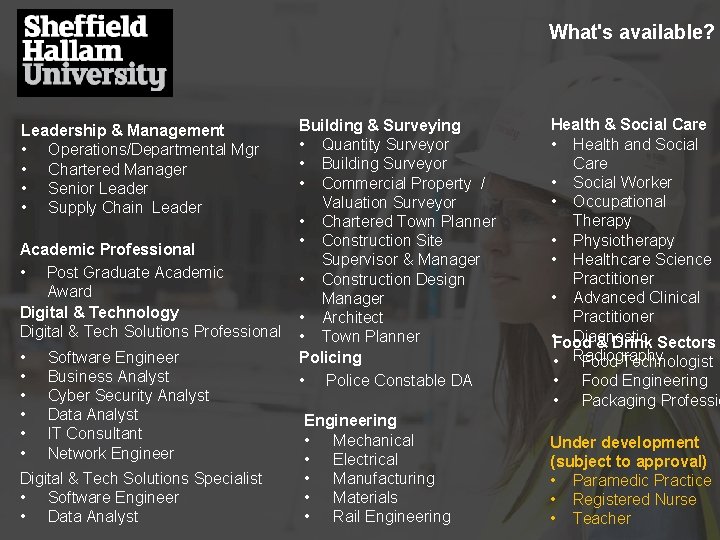
What's available? Leadership & Management • Operations/Departmental Mgr • Chartered Manager • Senior Leader • Supply Chain Leader Academic Professional • Post Graduate Academic Award Digital & Technology Digital & Tech Solutions Professional • • • Software Engineer Business Analyst Cyber Security Analyst Data Analyst IT Consultant Network Engineer Digital & Tech Solutions Specialist • Software Engineer • Data Analyst Building & Surveying • Quantity Surveyor • Building Surveyor • Commercial Property / Valuation Surveyor • Chartered Town Planner • Construction Site Supervisor & Manager • Construction Design Manager • Architect • Town Planner Policing • Police Constable DA Engineering • Mechanical • Electrical • Manufacturing • Materials • Rail Engineering Health & Social Care • Health and Social Care • Social Worker • Occupational Therapy • Physiotherapy • Healthcare Science Practitioner • Advanced Clinical Practitioner • Food Diagnostic & Drink Sectors Radiography • Food Technologist • • Food Engineering Packaging Professio Under development (subject to approval) • Paramedic Practice • Registered Nurse • Teacher
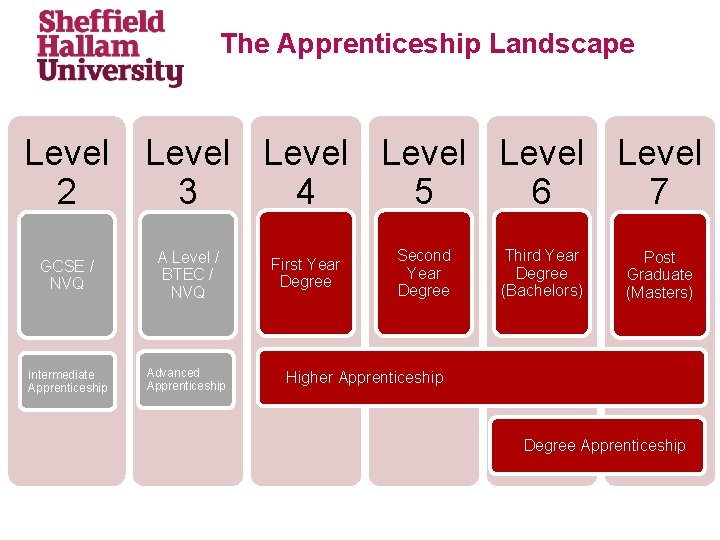
The Apprenticeship Landscape Level Level 2 3 4 5 6 7 GCSE / NVQ A Level / BTEC / NVQ intermediate Apprenticeship Advanced Apprenticeship First Year Degree Second Year Degree Third Year Degree (Bachelors) Post Graduate (Masters) Higher Apprenticeship Degree Apprenticeship
• What is an Apprentice? • Who will you become? • How will get there? Sometimes apprenticeship can be as simple as asking a senior executive to interview a few VP level candidates on your behalf and observing, learning from the process, and starting the process of developing judgement. Figuring out how to become an apprentice time and again is a key to developing great judgement. https: //tomtunguz. com/apprenticeship/
• What is an Apprentice? • Who will you become? • How will get there? ? e Commitment Statement
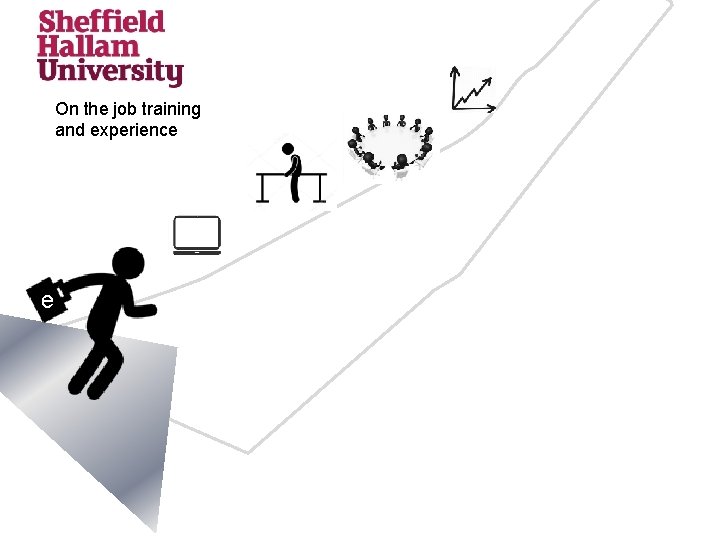
On the job training and experience e
e
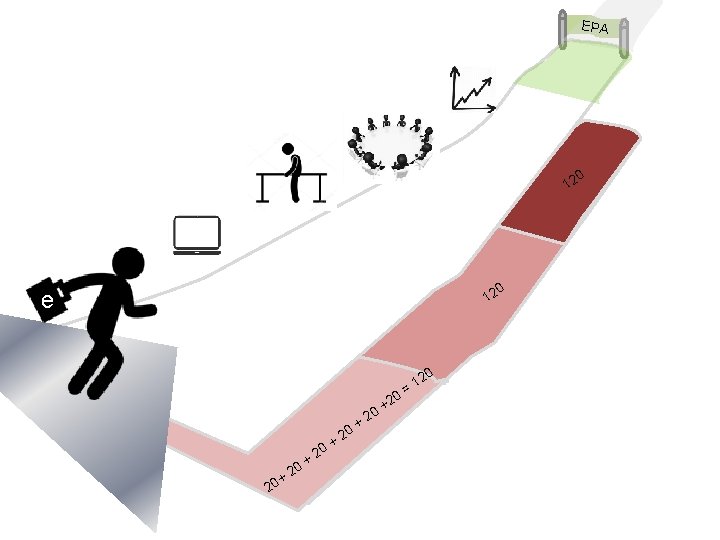
EPA 0 12 e 0 + 20 20 + + 20 2 0+ 20 0 +2 = 12
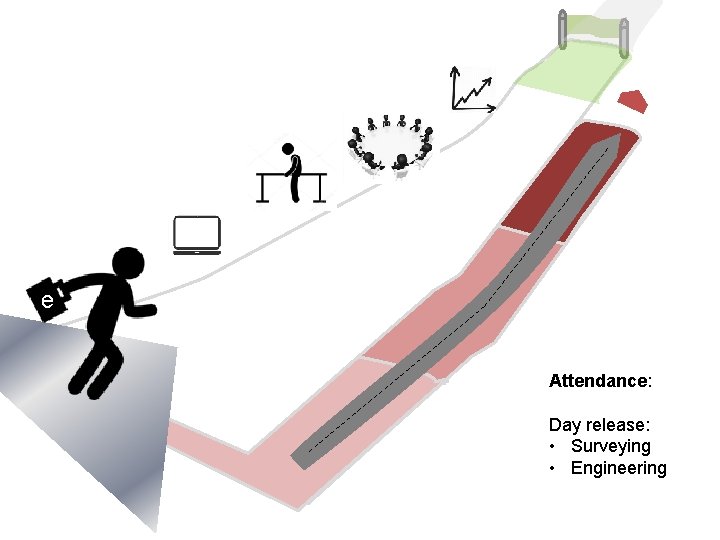
e Attendance: Day release: • Surveying • Engineering
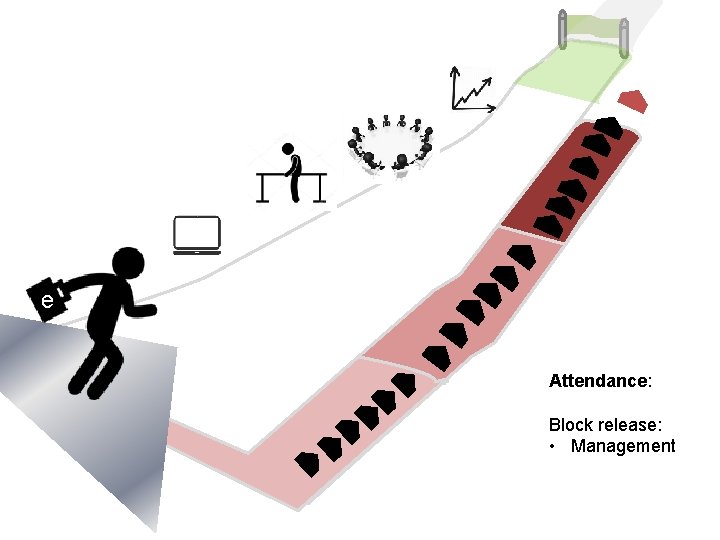
e Attendance: Block release: • Management
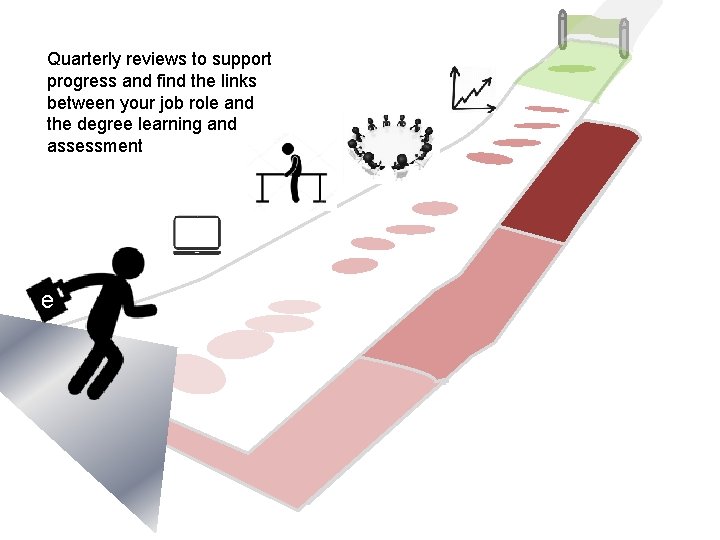
Quarterly reviews to support progress and find the links between your job role and the degree learning and assessment e
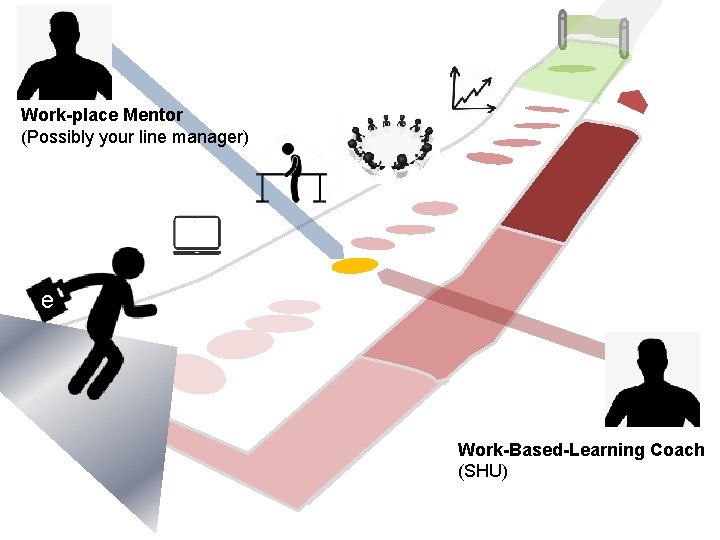
Work-place Mentor (Possibly your line manager) e Work-Based-Learning Coach (SHU)
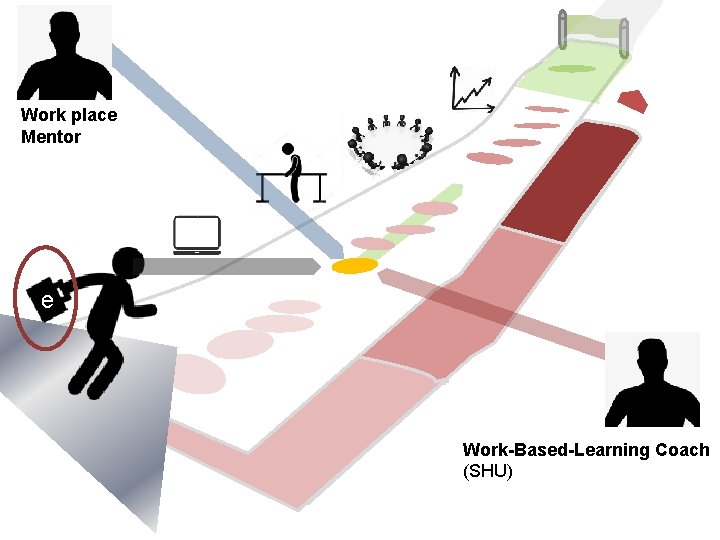
Work place Mentor e Work-Based-Learning Coach (SHU)
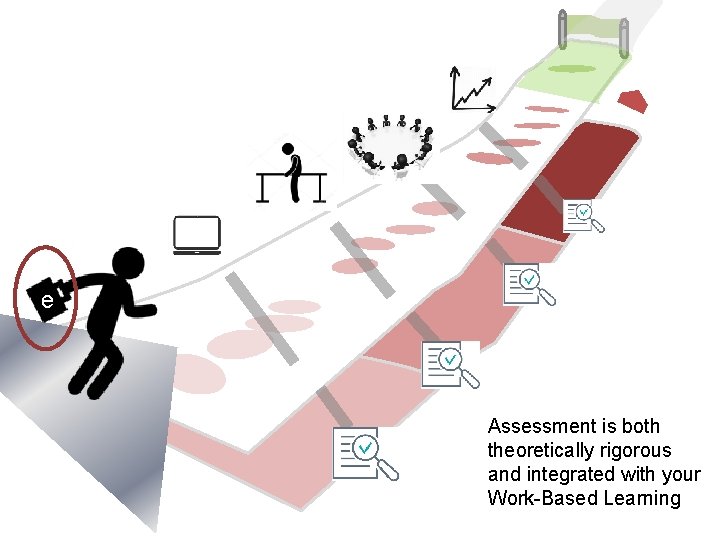
e Assessment is both theoretically rigorous and integrated with your Work-Based Learning
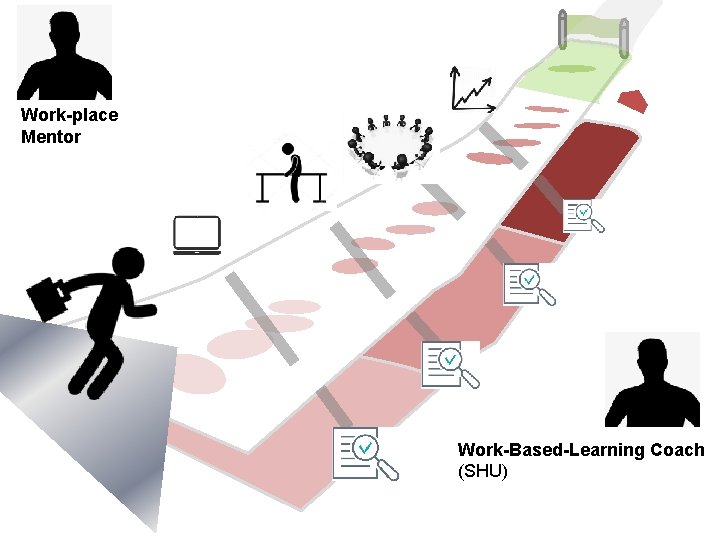
Work-place Mentor Work-Based-Learning Coach (SHU)

Work Based Learning Higher and Degree Apprenticeships Welcome and Good Luck
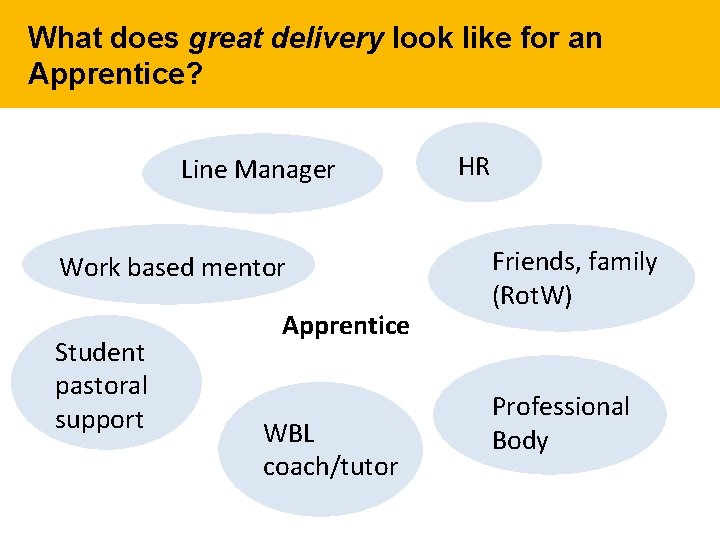
What does great delivery look like for an Apprentice? Line Manager Work based mentor Student pastoral support Apprentice WBL coach/tutor HR Friends, family (Rot. W) Professional Body
What does great delivery look like for an Apprentice? This shape?
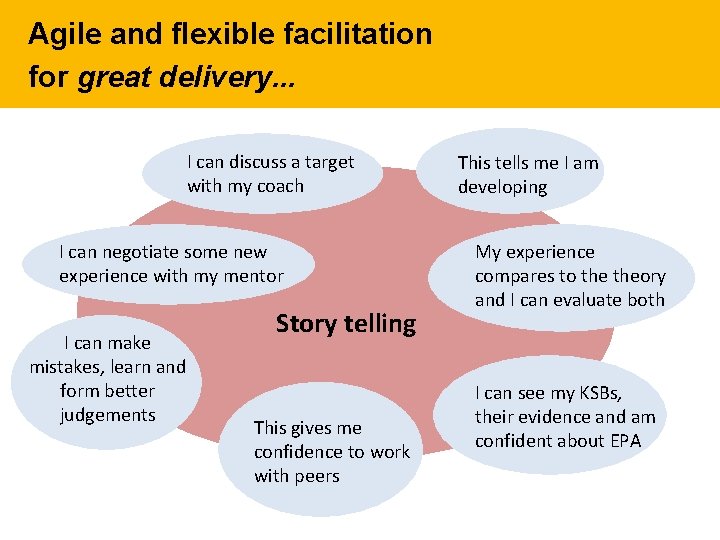
Agile and flexible facilitation for great delivery. . . I can discuss a target with my coach I can negotiate some new experience with my mentor I can make mistakes, learn and form better judgements Story telling This gives me confidence to work with peers This tells me I am developing My experience compares to theory and I can evaluate both I can see my KSBs, their evidence and am confident about EPA
Batch 3: Apprenticeship Compliance DO NOT REMOVE FROM INDUCTION
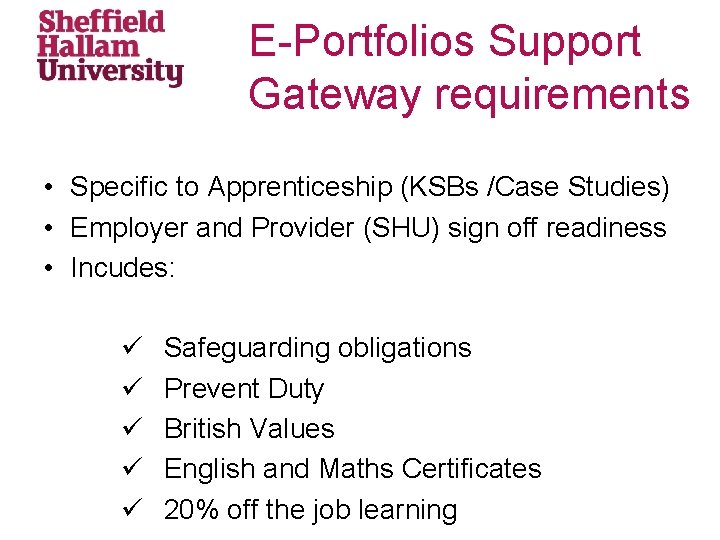
E-Portfolios Support Gateway requirements • Specific to Apprenticeship (KSBs /Case Studies) • Employer and Provider (SHU) sign off readiness • Incudes: ü ü ü Safeguarding obligations Prevent Duty British Values English and Maths Certificates 20% off the job learning
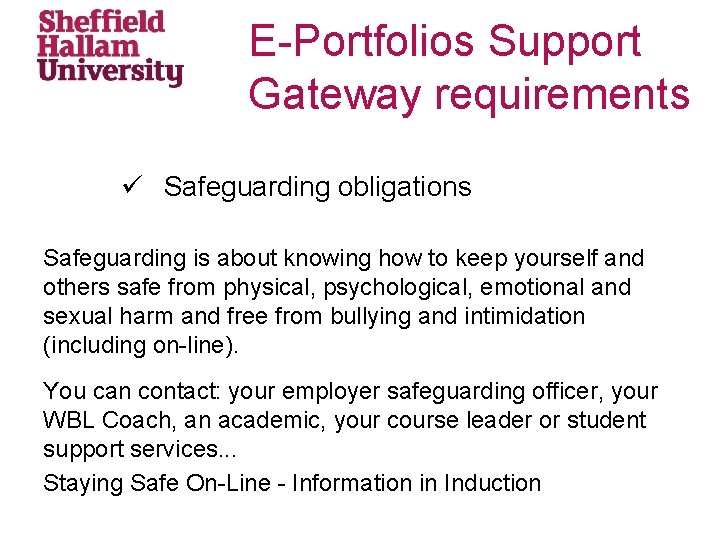
E-Portfolios Support Gateway requirements ü Safeguarding obligations Safeguarding is about knowing how to keep yourself and others safe from physical, psychological, emotional and sexual harm and free from bullying and intimidation (including on-line). You can contact: your employer safeguarding officer, your WBL Coach, an academic, your course leader or student support services. . . Staying Safe On-Line - Information in Induction
E-Portfolios Support Gateway requirements ü Safeguarding obligations An employer is legally responsible for Health and Safety at work. In some instances ("vulnerable adults") (or for any other reason) SHU will exercise a duty of care and is required to ensure the employer has the appropriate measures in place, offering the apprentice the opportunity to raise any concerns. Stay safe on-line - Guidance in your induction
E-Portfolios Support Gateway requirements ü Prevent Duty Apprenticeship funding requires all parties to work together in support of the Prevent Agenda. This is a Government initiative to address extremist behaviour and radicalisation of people to consider, encourage or commit illegal an violent acts against other people in society. This is not limited to any single group in society, but extends to all "hate crimes".
E-Portfolios Support Gateway requirements ü British Values. . . underpin the principles of a democratic and free society: • • Recognition and respect for the democratic process Respect for the rule of law Freedom of speech Respect and tolerance of others
Equality Diversity & Inclusion • https: //www. shu. ac. uk/about-us/equality-and-diversity • https: //www. shu. ac. uk/about-us/governance-andstrategy/governance/our-student-charter Our Equality Objectives set our vision to be recognised as a University that adds value to the futures of all our students, staff and partners by drawing on their unique and diverse talents and providing an environment that allows everyone to flourish and succeed
Equality Diversity & Inclusion Learning Opportunities: • • Read the SHU Student Charter Research and discuss Barratt policies Awareness: The Equality Act in construction Quarterly Review: Behaviours in the standard. . . When have you felt challenged? • WBL Module: Unconscious bias
Equality Diversity & Inclusion Behaviours in the Standard: • INSERT K R O • INSERT TO DO W Quarterly Review: Discuss a situation when judgement was needed. . . How did you feel? . . . What did you do? . . . What was the impact? . . . What evidence for E-portfolio? . . . What plans/targets for development?
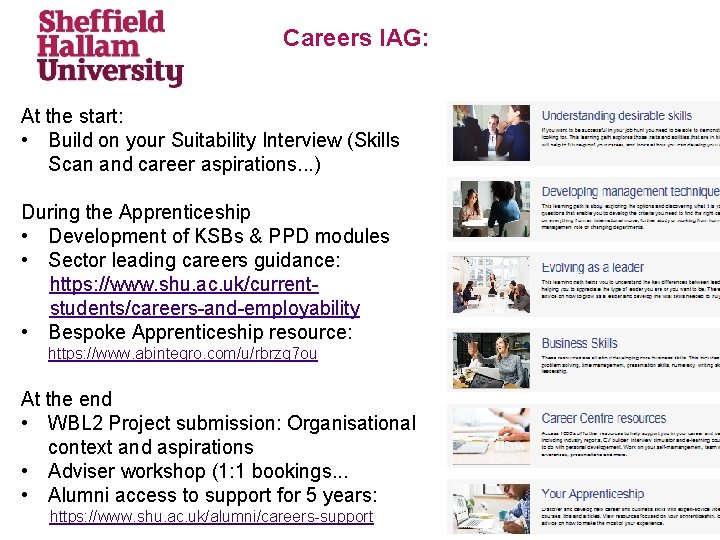
Careers IAG: At the start: • Build on your Suitability Interview (Skills Scan and career aspirations. . . ) During the Apprenticeship • Development of KSBs & PPD modules • Sector leading careers guidance: https: //www. shu. ac. uk/currentstudents/careers-and-employability • Bespoke Apprenticeship resource: https: //www. abintegro. com/u/rbrzg 7 ou At the end • WBL 2 Project submission: Organisational context and aspirations • Adviser workshop (1: 1 bookings. . . • Alumni access to support for 5 years: https: //www. shu. ac. uk/alumni/careers-support

20% off the job learning Formal Guidance from Government Flowchart PDF Off-the-job-Myths-Facts-130919. pdf 20% Government Guidance and Examples
Batch 4: Explanation / Illustrations for 20% Off the Job training
DATA COLLECTION FORM. . . UNDER CONSTRUCTION STANDARD INDUCTION APPROACH SEE DELIVERY GUIDE SLIDES AVAILABEL ON TAE
Off the Job Training Standard Assumptions Where and when (and how? ) will this take place?

20% Off the Job Learning. Y L N Breakdown O E L P M A X -E DO TO K R O W
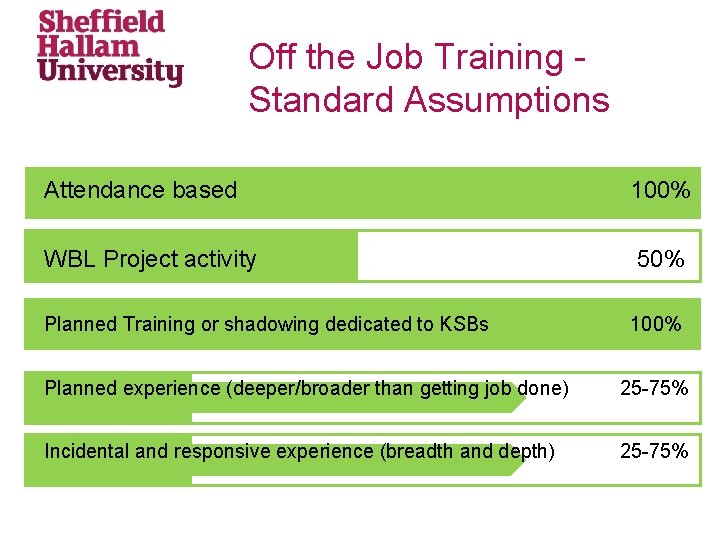
Off the Job Training Standard Assumptions Attendance based 100% WBL Project activity 50% Planned Training or shadowing dedicated to KSBs 100% Planned experience (deeper/broader than getting job done) 25 -75% Incidental and responsive experience (breadth and depth) 25 -75%
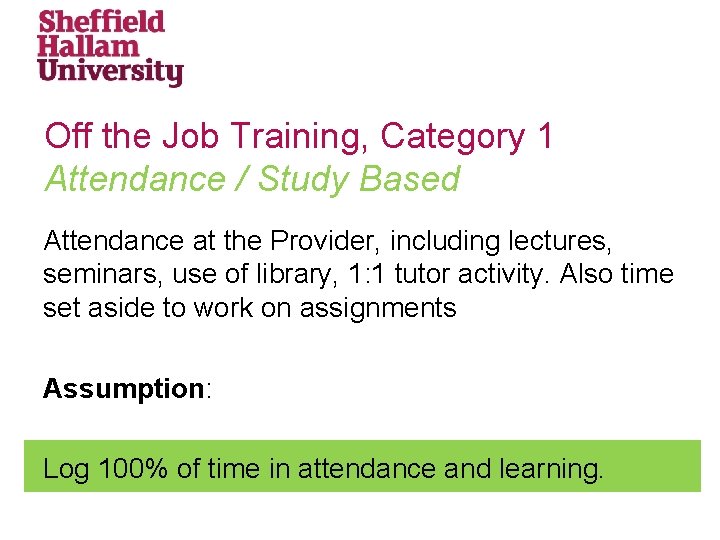
Off the Job Training, Category 1 Attendance / Study Based Attendance at the Provider, including lectures, seminars, use of library, 1: 1 tutor activity. Also time set aside to work on assignments Assumption: Log 100% of time in attendance and learning.
Off the Job Training, Category 1 Attendance / Study Based Attendance at the Provider, including lectures, seminars, use of library, 1: 1 tutor activity. Also time set aside to work on assignments Example: Following a lecture (1 hour) several learners met independently to talk about a group project (30 mins). Later in the working week the apprentice was allowed 1 hour to draw up an assignment structure and engage in a collaborate session with peers (1 hour)
Off the Job Training, Category 2 WBL Project Activity Projects that are undertaken in the work place that are a key feature of a work based learning module with the Provider. Assumption: Log 50% of work place time engaged with the work project.
Off the Job Training, Category 2 WBL Project Activity Projects that are undertaken in the work place that are a key feature of a work based learning module with the Provider. Example: A construction apprentice is conducting an academic project to evaluate the impact of a new process to engage subcontractors in a considerate construction scheme. During the week the apprentice reviews responses to a consultation survey. These will have an impact on the employer's process to manage site activities. Of the ten hours spent on this activity 50% (5 hours) are logged as off the job learning.
Off the Job Training, Category 3 Planned Training or Shadowing The activity would not have taken place at all in the job role if the activity was not helpful in addressing some competence area of the standard (knowledge, skills, behaviours). Assumption: Log 100% of work place time engaged with the activity.
Off the Job Training, Category 3 Planned Training or Shadowing The activity would not have taken place at all in the job role if the activity was not helpful in addressing some competence area of the standard (knowledge, skills, behaviours). Example: A health care professional takes time out from his duties to observe a procedure and the way in which colleagues are able to use skills and behaviours to support the medical team. The whole two hours are attributed as time spent learning critical skills and behaviours to progress towards the End Point Assessment
Off the Job Training, Category 4 Planned Experiential Learning The activity has been made available in a planned way, to a greater depth and scope than would have normally occurred in the role, so the apprentice can ensure one or more knowledge, skills and/or behaviours are progressed. Assumption: Log between 25% and 75% of the hours depending on how much additionality took place beyond simply getting the job done.
Off the Job Training, Category 4 Planned Experiential Learning The activity has been made available in a planned way, to a greater depth and scope than would have normally occurred in the role, so the apprentice can ensure one or more knowledge, skills and/or behaviours are progressed. Example: An engineering apprentice spends one day of her week on a rotation scheme working with colleagues in the design team to understand gain knowledge of how the business commercialises its product development. 40% of the time is judged to be getting the job done, so 60% is attributed to off the job learning as the activity is wider in scope than the apprentice's day job. They progress towards the End Point Assessment.
Off the Job Training, Category 5 Incidental Experiential Learning The activity was responsively extended beyond what was necessary to get the job done, to ensure that naturally occurring attainment of KSBs was enhanced and assured. Assumption: Log between 25% and 75% of the hours depending on how much additionality took place beyond simply getting the job done.
Off the Job Training, Category 5 Incidental Experiential Learning The activity was responsively extended beyond what was necessary to get the job done, to ensure that naturally occurring attainment of KSBs was enhanced and assured. Example: A management apprentice conducts financial analysis of a restructure. His manager spontaneously invites the apprentice to join her at a senior management team where the data will be reported and discussed. It is not necessary to attend, but the apprentice is able to continue his ongoing analysis with a deeper knowledge of the context in which he is to conduct his work. He records 75% of the 2 hour meeting as off the job learning. (25% was spent reviewing the data he produced in the first place!)
Batch 5: What to expect from SHU (Generic)
Your Apprenticeship What to expect from SHU • Access to our excellent facilities and expert staff - an excellent experience • Sector focussed Work Based Learning Coaches • Regular Information events to discuss how we can work together • Our Work Based Learning Approach: o Personal and Professional Development embedded combined with 3 -way review to embed portfolio work for the End Point Assessment o Project based learning to help learners gain additional off-the job training through their work role and to encourage early work-place impact
Your Apprenticeship What to expect from SHU • E-Portfolios bespoke to each apprenticeship to record evidence of progress • We will provide advice and guidance to help identify 20% off the job learning • Free on-line mentor development resource to support your apprenticeship supervisors • Join our Apprenticeship Ambassador scheme to support engagement and reputation • For employers, Expertise on funding and support to agree our apprenticeship contract and commitment statement as well as support recruiting your next Apprentice, or other skills/ business needs
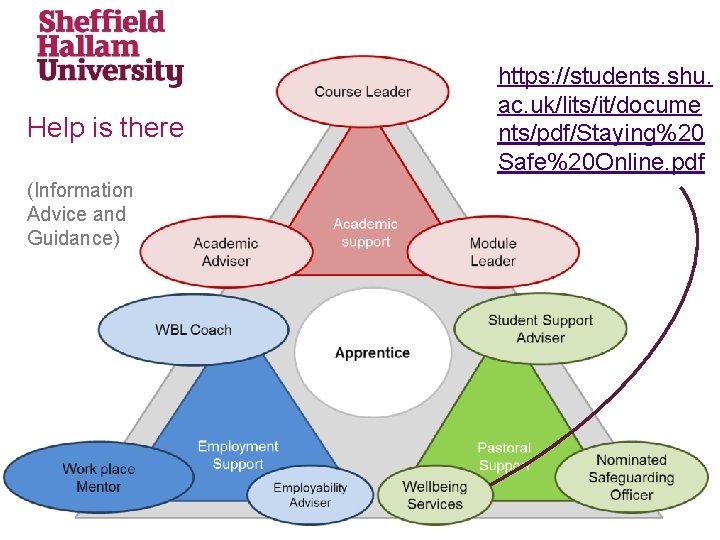
Help is there (Information Advice and Guidance) https: //students. shu. ac. uk/lits/it/docume nts/pdf/Staying%20 Safe%20 Online. pdf

NOTE: NEW DIAGRAM UNDER PRODUCTION
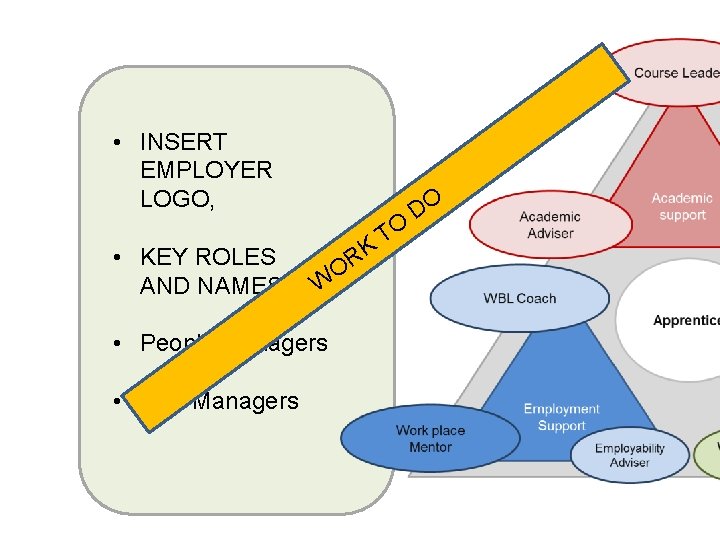
• INSERT EMPLOYER LOGO, • KEY ROLES AND NAMES W • People Managers • Line Managers K R O TO DO
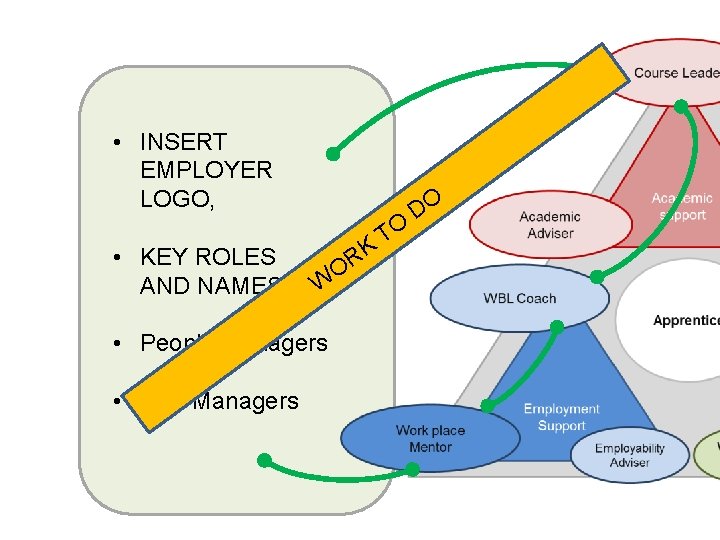
• INSERT EMPLOYER LOGO, • KEY ROLES AND NAMES W • People Managers • Line Managers K R O TO DO

Special Educational Needs • INSERT FROM DELIVERY GUIDE
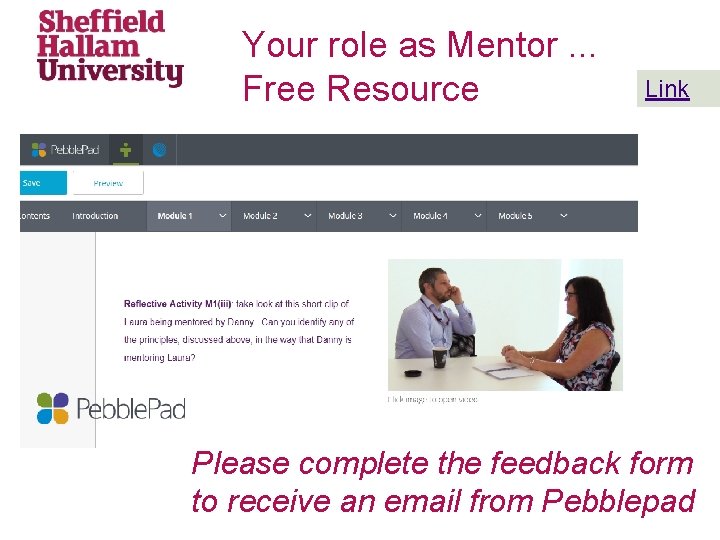
Your role as Mentor. . . Free Resource Link Please complete the feedback form to receive an email from Pebblepad
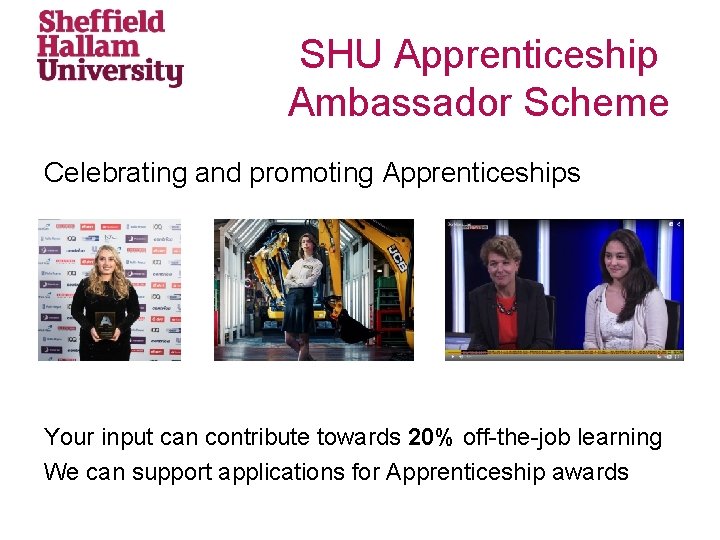
SHU Apprenticeship Ambassador Scheme Celebrating and promoting Apprenticeships Your input can contribute towards 20% off-the-job learning We can support applications for Apprenticeship awards
SHU Apprenticeship Ambassador Scheme This work could include: • Being interviewed for the local press/social media • Talking to Y 13 students at a sixth form • Talking to employers at a business event Is it a regular commitment? How do I register my interest?
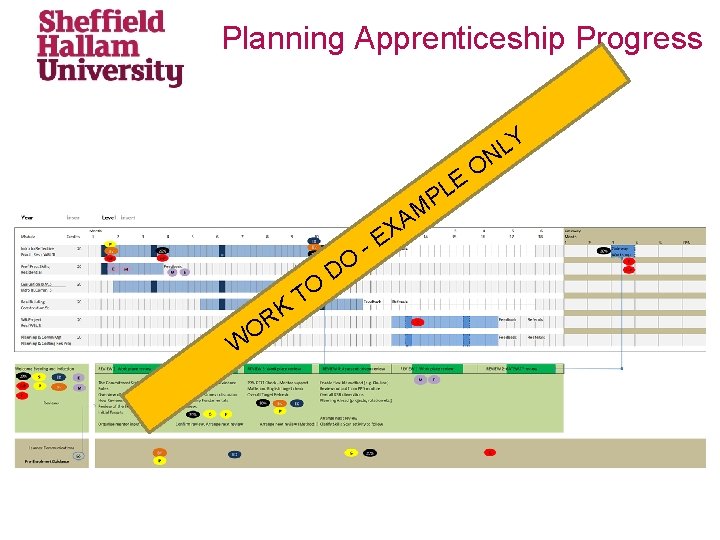
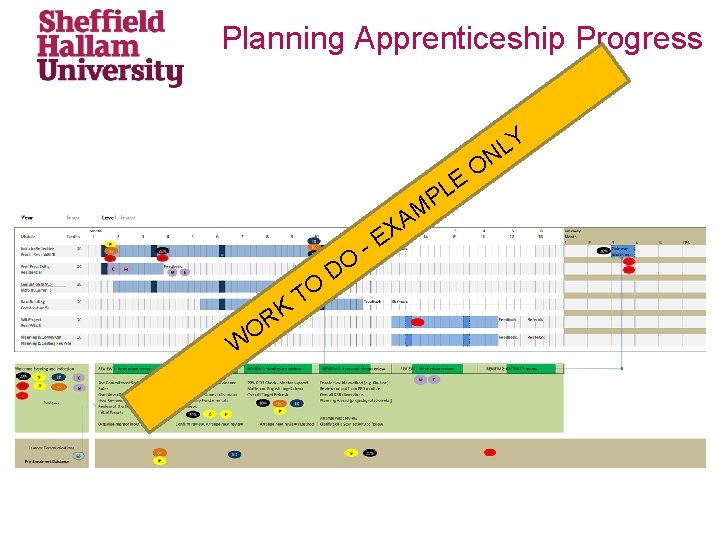
Planning Apprenticeship Progress LE P M A W K R O TO DO X E - O Y L N
Planning Apprenticeship Progress LE P M A W K R O TO DO X E - O Y L N
Batch 6: What to expect from the programme (AMMEND for Apprenticeship Standard)
The Standard: • https: //www. instituteforapprenticeships. org/appren ticeship-standards/academic-professional/HIP ES C I T N E R PP A EPA uses the C I End-point Assessment Methods The F I C PE and should be S following assessment methods OR F O undertaken in this order: INF T R E NS nd a k Lin I • Academic Professional Practice Assessment • Professional Conversation • Written Submission
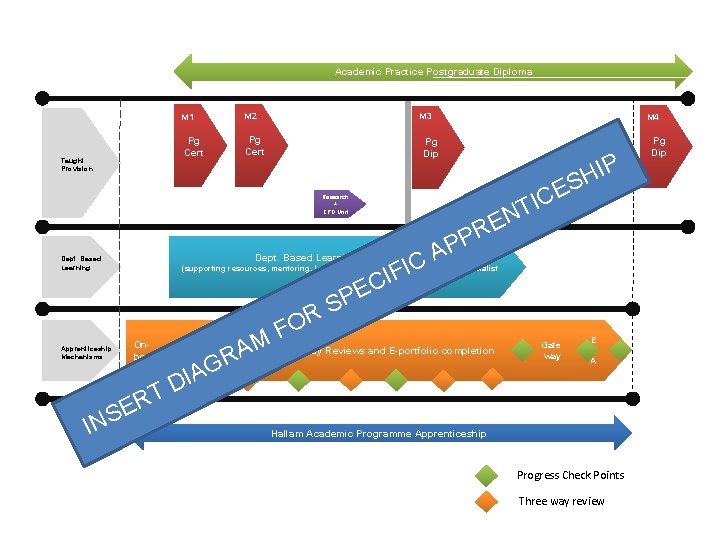
Academic Practice Postgraduate Diploma M 1 Pg Cert Taught Provision M 2 M 3 Pg Cert Pg Dip Research + CPD Unit Dept. Based Learning Apprenticeship Mechanisms M 4 IP H S E C I T EN R P P Dept. Based Learning and Project(s) A C I F CI E P S OR F M (supporting resources, mentoring, leadership development, conferences, specialist development) A R G A I D Onboarding T R E S IN Three Way Reviews and E-portfolio completion Gate way E P A Hallam Academic Programme Apprenticeship Progress Check Points Three way review Pg Dip
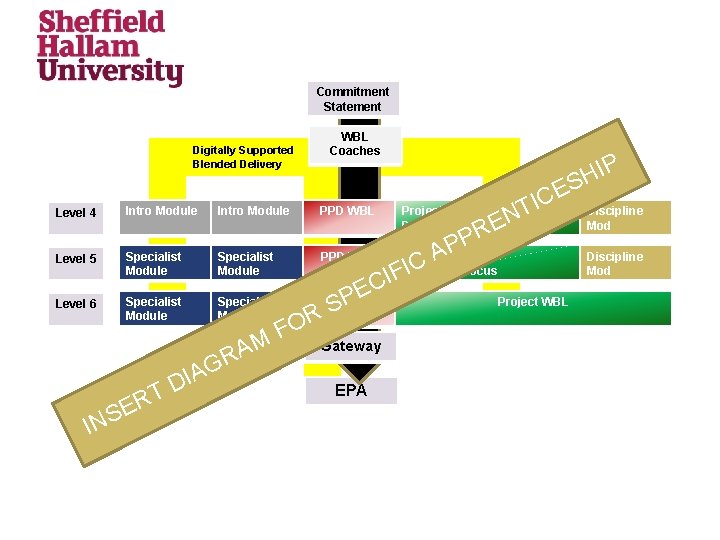
Commitment Statement Digitally Supported Blended Delivery WBL Coaches IP H S E C I T EN R P P Specialist PPD WBL Project AWBL Level 5 C I Module Discipline Focus F I C E Specialist PPDP WBL Project WBL Level 6 S Module OR F Gateway M A R G IA D EPA T R E S IN Level 4 Intro Module PPD WBL Project WBL Discipline Focus Discipline Mod

IP H S E C I Delivery Schedule T N E INS T R E R A R G A I D O F M IC F I EC P S PR P A
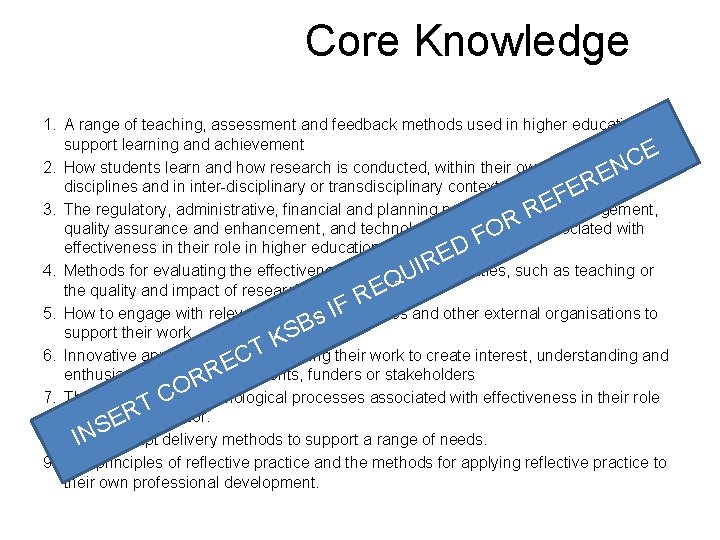
Core Knowledge 1. A range of teaching, assessment and feedback methods used in higher education to support learning and achievement CE 2. How students learn and how research is conducted, within their own and related N E R disciplines and in inter-disciplinary or transdisciplinary contexts. E F E 3. The regulatory, administrative, financial and planning procedures, R risk management, R associated with quality assurance and enhancement, and technological processes O F effectiveness in their role in higher education. D E R I 4. Methods for evaluating the effectiveness of academic U activities, such as teaching or Q the quality and impact of research. E R IF bodies and other external organisations to 5. How to engage with relevant professional s support their work. SB K T 6. Innovative approaches to. Cundertaking their work to create interest, understanding and E R students, funders or stakeholders enthusiasm among. Rtheir Otechnological processes associated with effectiveness in their role 7. The application of C T sector. R within the HE E S N 8. How I to adapt delivery methods to support a range of needs. 9. The principles of reflective practice and the methods for applying reflective practice to their own professional development.
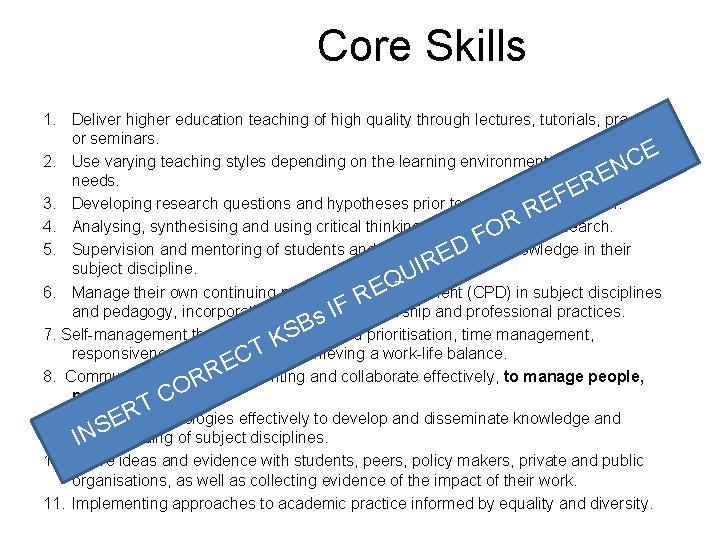
Core Skills 1. Deliver higher education teaching of high quality through lectures, tutorials, practicals or seminars. 2. Use varying teaching styles depending on the learning environment and students’ CE N E needs. R FE 3. Developing research questions and hypotheses prior to undertaking. Eresearch. R R 4. Analysing, synthesising and using critical thinking in the conduct O of research. F 5. Supervision and mentoring of students and peers to E develop D knowledge in their IR subject discipline. U Q E 6. Manage their own continuing professional development (CPD) in subject disciplines R and pedagogy, incorporating research, IFscholarship and professional practices. s 7. Self-management through preparation SB and prioritisation, time management, K Tand achieving a work-life balance. responsiveness to change, C E R 8. Communicate orally and in writing and collaborate effectively, to manage people, R O processes or teams. C Ttechnologies effectively to develop and disseminate knowledge and R 9. Use digital E S N understanding of subject disciplines. I 10. Share ideas and evidence with students, peers, policy makers, private and public organisations, as well as collecting evidence of the impact of their work. 11. Implementing approaches to academic practice informed by equality and diversity.
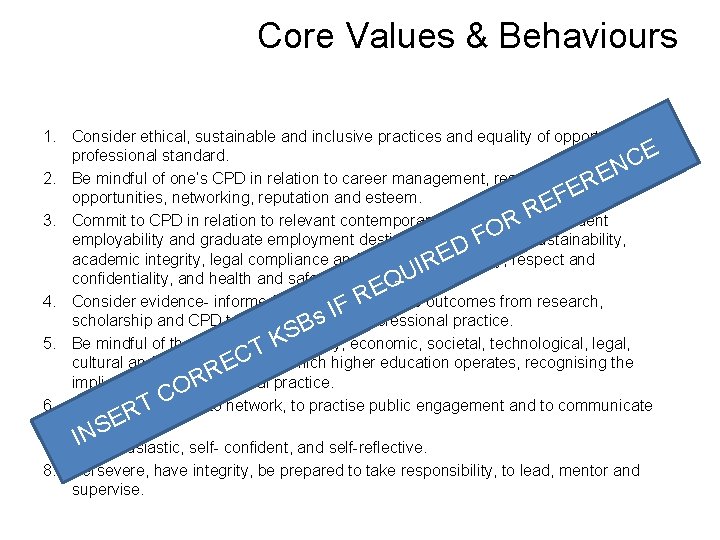
Core Values & Behaviours 1. Consider ethical, sustainable and inclusive practices and equality of opportunity to a professional standard. CE N Eto 2. Be mindful of one’s CPD in relation to career management, responsiveness R opportunities, networking, reputation and esteem. FE E R 3. Commit to CPD in relation to relevant contemporary issues such as: student R O F and sustainability, employability and graduate employment destinations; ethics D Eproperty, respect and academic integrity, legal compliance and intellectual R I U confidentiality, and health and safety. Q E the outcomes from research, R 4. Consider evidence- informed approaches and IF professional practice. s scholarship and CPD to inform their own B S K 5. Be mindful of the wider context (policy, economic, societal, technological, legal, T cultural and environmental) EC in which higher education operates, recognising the R implications for professional practice. R O C to network, to practise public engagement and to communicate 6. Seek opportunities T ER effectively. S INenthusiastic, self- confident, and self-reflective. 7. Be 8. Persevere, have integrity, be prepared to take responsibility, to lead, mentor and supervise.
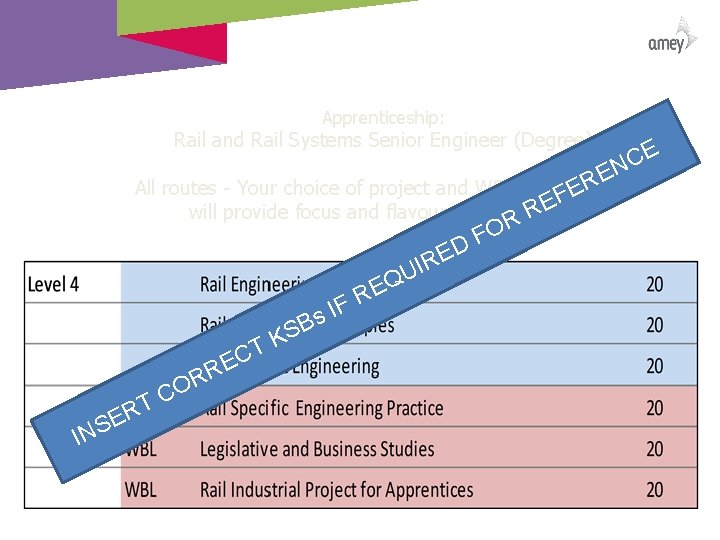
Apprenticeship: Rail and Rail Systems Senior Engineer (Degree) C N E R All routes - Your choice of project and WBL assessments E F RE 4 will provide focus and flavour during Level D E UIR IF s B S K T EC R R ER S IN O C T Q E R R O F E
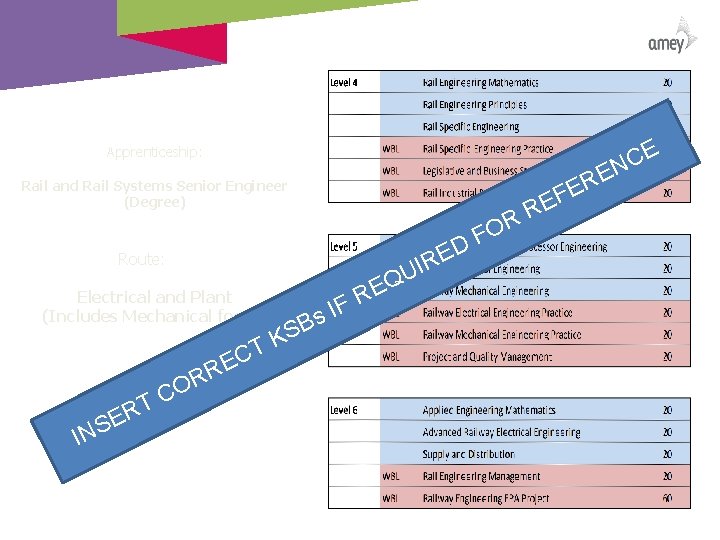
Apprenticeship: C N E R E F Rail and Rail Systems Senior Engineer (Degree) E R R O F D E R I U Route: Electrical and Plant (Includes Mechanical focus) S K T IF s B EC R R ER S IN O C T Q E R E
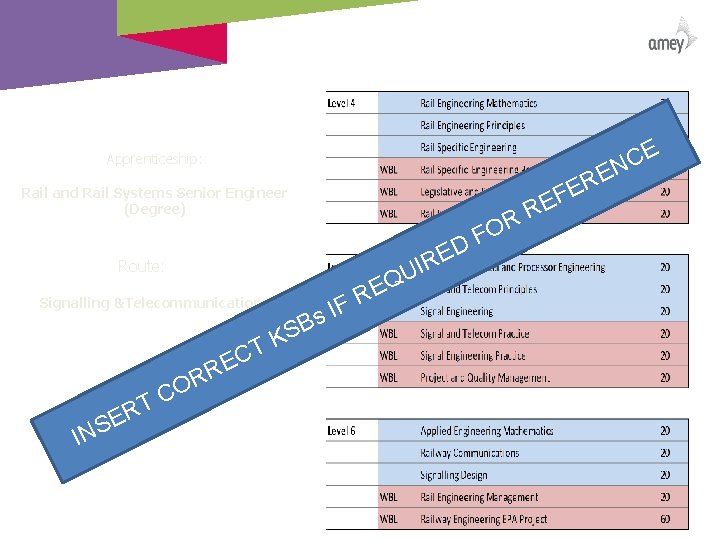
C N E Apprenticeship: R E F Rail and Rail Systems Senior Engineer (Degree) E R R O F D E R I U Route: IF s B Signalling &Telecommunications S K T EC R R ER S IN O C T Q E R E
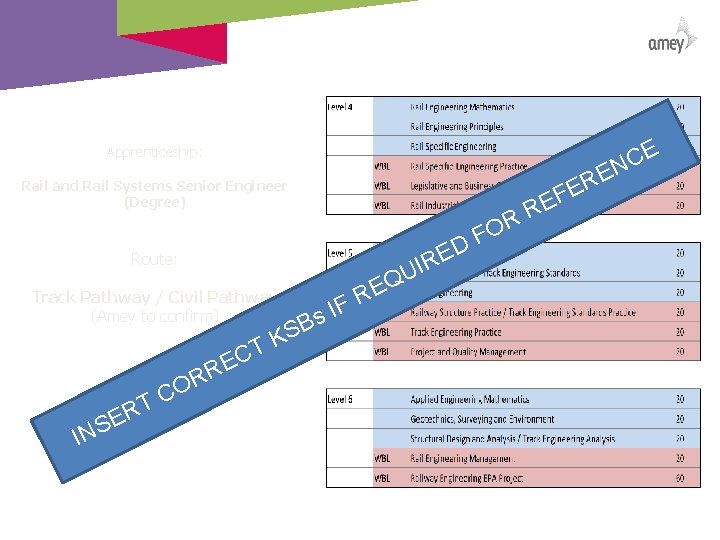
Apprenticeship: C N E R E F Rail and Rail Systems Senior Engineer (Degree) E R R O F D E R I U Route: Track Pathway / Civil Pathway (Amey to confirm) S K T IF s B EC R R ER S IN O C T Q E R E
Batch 7 a: Role of the Coach:

Work Based Learning Coaches
Work Based Learning Coaches (SHU) • Supporting the quality and efficiency of our Apprenticeship portfolio • Works with colleagues in departments to support sector-focussed programmes • Pre-join suitability interview: skills scan; career discussion - Is this the right programme? • The Skills Scan informs the starting position - Feeds PPD module + Review 1 • Manage Progress Reviews - three-way discussions to support and plan • E-Portfolios: Focus on evidence of impact, targets for EPA and development • Negotiation, planning and monitoring of WBL Projects • Help employers to understand meet their obligations • Feedback into academic practise and work place impact
WBL Coaches - Apprenticeship Progress Reviews ü We understand your starting point (Skills Scan) ü We plan for and monitoring 20% Off The Job Training ü Reviews set appropriately challenging targets (individualised SMART action plans). ü linking up to careers advice in the employer and SHU (Abintegro) ü welfare support, including attendance, safeguarding, staying safe online - referrals ü opportunity for literacy and numeracy development ü engagement with British Values, Prevent, Equality Diversity & Inclusion ü E-portfolio supports progress to EPA
Discussion The Journey to End Point Assessment • • • Chart progress against your Commitment Statement Review progress of KSBs and actions at 3 -way review Support from SHU WBL Coach and work place mentor Review at the Gateway period Submit E-Portfolio for End Point Assessment Some specific differences in each sector What does good evidence look like?
Batch 7 b: Discussing Evidence, Projects and E-portfolios for EPA
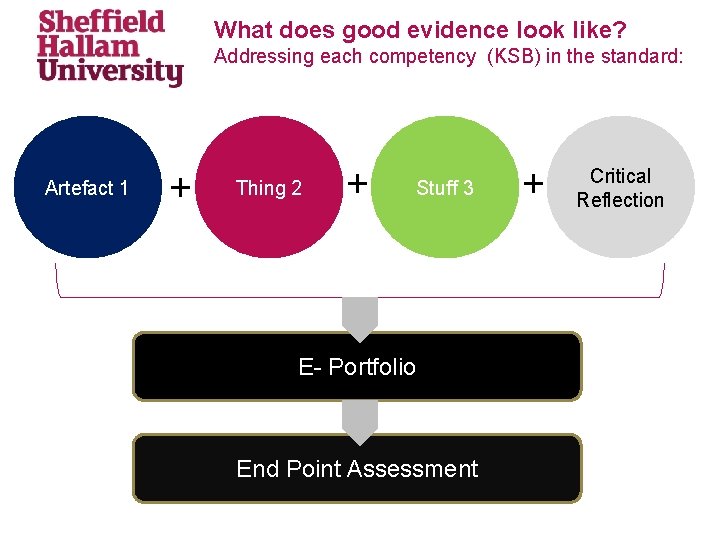
What does good evidence look like? Addressing each competency (KSB) in the standard: Artefact 1 + Thing 2 + Stuff 3 E- Portfolio End Point Assessment + Critical Reflection
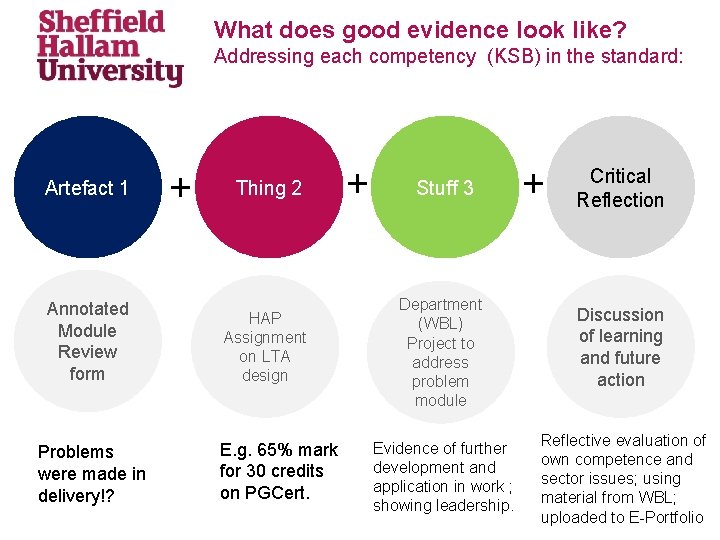
What does good evidence look like? Addressing each competency (KSB) in the standard: Artefact 1 Annotated Module Review form Problems were made in delivery!? + Thing 2 HAP Assignment on LTA design E. g. 65% mark for 30 credits on PGCert. + Stuff 3 + Critical Reflection Department (WBL) Project to address problem module Discussion of learning and future action Evidence of further development and application in work ; showing leadership. Reflective evaluation of own competence and sector issues; using material from WBL; uploaded to E-Portfolio
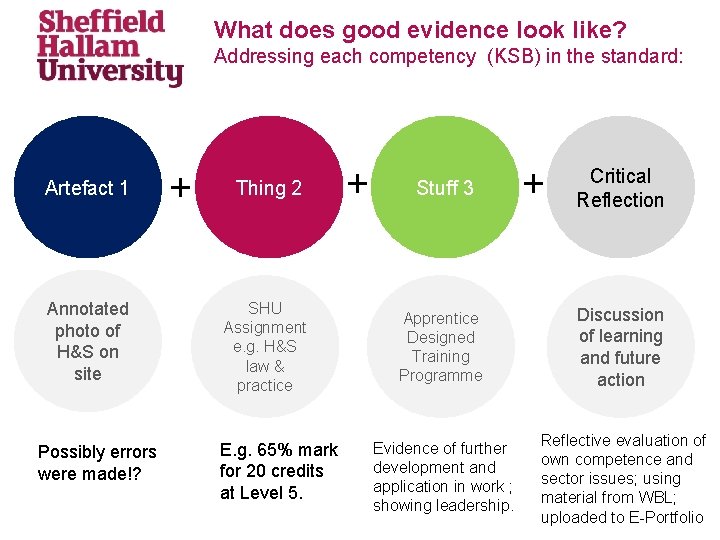
What does good evidence look like? Addressing each competency (KSB) in the standard: Artefact 1 Annotated photo of H&S on site Possibly errors were made!? + Thing 2 SHU Assignment e. g. H&S law & practice E. g. 65% mark for 20 credits at Level 5. + Stuff 3 + Critical Reflection Apprentice Designed Training Programme Discussion of learning and future action Evidence of further development and application in work ; showing leadership. Reflective evaluation of own competence and sector issues; using material from WBL; uploaded to E-Portfolio
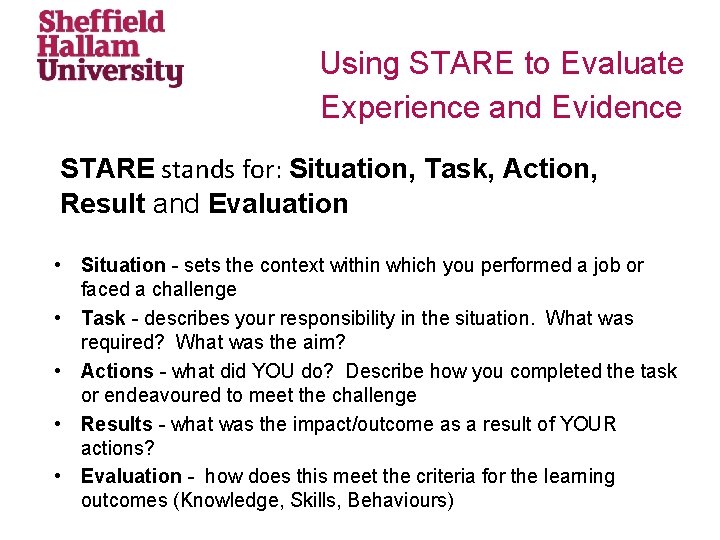
Using STARE to Evaluate Experience and Evidence STARE stands for: Situation, Task, Action, Result and Evaluation • Situation - sets the context within which you performed a job or faced a challenge • Task - describes your responsibility in the situation. What was required? What was the aim? • Actions - what did YOU do? Describe how you completed the task or endeavoured to meet the challenge • Results - what was the impact/outcome as a result of YOUR actions? • Evaluation - how does this meet the criteria for the learning outcomes (Knowledge, Skills, Behaviours)
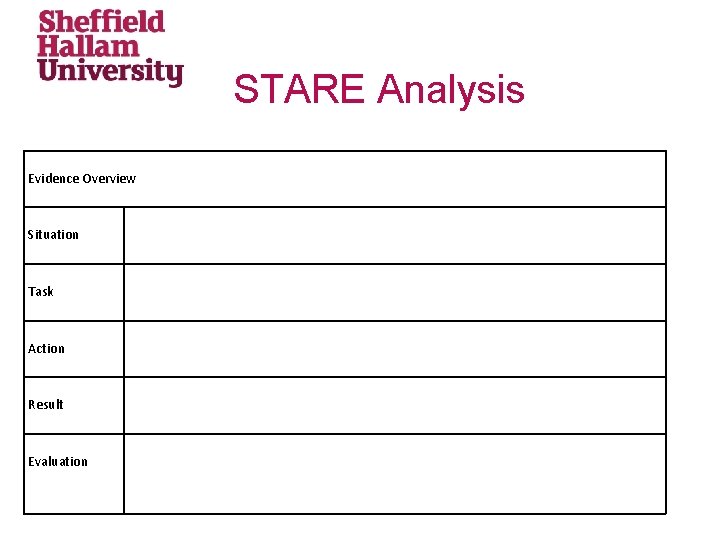
STARE Analysis? Evidence Overview Situation Task Action Result Evaluation
STARE Analysis? Evidence Overview Situation Task Action Result Evaluation INSERT PANTOMIME PICTURE!!!
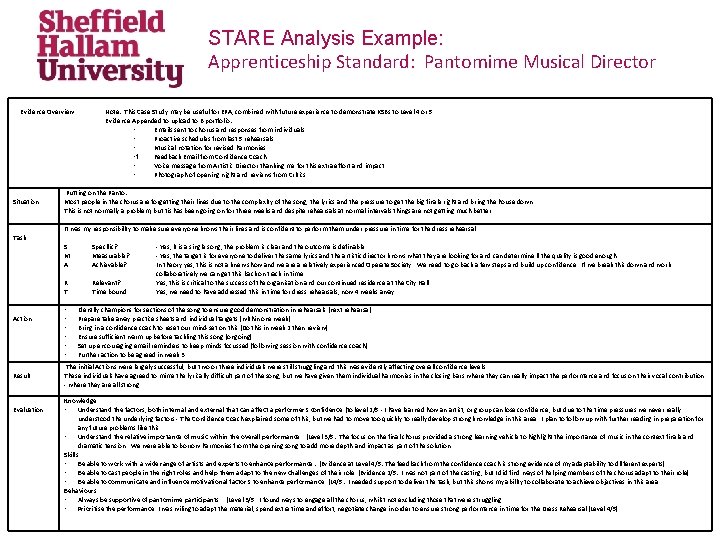
STARE Analysis Example: Apprenticeship Standard: Pantomime Musical Director ? Evidence Overview Situation Note: This Case Study may be useful for EPA, combined with future experience to demonstrate KSBs to Level 4 or 5. Evidence Appended to upload to E-portfolio: • Emails sent to chorus and responses from individuals • Proactive schedules from last 5 rehearsals • Musical notation for revised harmonies • f Feedback Email from Confidence Coach • Voice message from Artistic Director thanking me for this extra effort and impact • Photograph of opening night and reviews from Critics Putting on the Panto: Most people in the chorus are forgetting their lines due to the complexity of the song, the lyrics and the pressure to get the big finale right and bring the house down. This is not normally a problem, but tis has been going on for three weeks and despite rehearsals at normal intervals things are not getting much better. It was my responsibility to make sure everyone knows their lines and is confident to perform them under pressure in time for the dress rehearsal Task Action Result Evaluation S M A Specific? Measurable? Achievable? R T Relevant? Time bound • • • - Yes, it is a single song, the problem is clear and the outcome is definable - Yes, the target is for everyone to deliver the same lyrics and the artistic director knows what they are looking for and can determine if the quality is good enough In theory yes, this is not a knew show and we are a relatively experienced Operate Society. We need to go back a few steps and build up confidence. If we break this down and work collaboratively we can get this back on track in time Yes, this is critical to the success of the organisation and our continued residence at the City Hall Yes, we need to have addressed this in time for dress rehearsals, now 4 weeks away Identify champions for sections of the song to ensure good demonstration in rehearsals (next rehearsal) Prepare take away practice sheets and individual targets (within one week) Bring in a confidence coach to reset our mind-set on this (Do this in week 2 then review) Ensure sufficient warm up before tackling this song (ongoing). Set up encouraging email reminders to keep minds focussed (following session with confidence coach) Further action to be agreed in week 3. The initial Actions were largely successful, but two or three individuals were still struggling and this was evidently affecting overall confidence levels. These individuals have agreed to mime the lyrically difficult part of the song, but we have given them individual harmonies in the closing bars where they can really impact the performance and focus on their vocal contribution - where they are all strong. Knowledge: • Understand the factors, both internal and external that can affect a performer's confidence (to level 2/5 - I have learned how an artist, or group can lose confidence, but due to the time pressures we never really understood the underlying factors - The Confidence Coach explained some of this, but we had to move too quickly to really develop strong knowledge in this area. I plan to follow up with further reading in preparation for any future problems like this. • Understand the relative importance of music within the overall performance: (Level 3/5: The focus on the final chorus provided a strong learning vehicle to highlight the importance of music in the context finale and dramatic tension. We were able to borrow harmonies from the opening song to add more depth and impact as part of the solution. Skills • Be able to work with a wide range of artists and experts to enhance performance : (Evidence at Level 4/5: The feedback from the confidence coach is strong evidence of my adaptability to different experts). • Be able to cast people in the right roles and help them adapt to the new challenges of their role (Evidence 2/5: I was not part of the casting, but I did find ways of helping members of the chorus adapt to their role) • Be able to communicate and influence motivational factor's to enhance performance (L 4/5: I needed support to deliver the task, but this shows my ability to collaborate to achieve objectives in this area. Behaviours • Always be supportive of pantomime participants: (Level 3/5. I found ways to engage all the chorus, whilst not excluding those that were struggling • Prioritise the performance: I was wiling to adapt the material, spend extra time and effort, negotiate change in order to ensure strong performance in time for the Dress Rehearsal (Level 4/5)
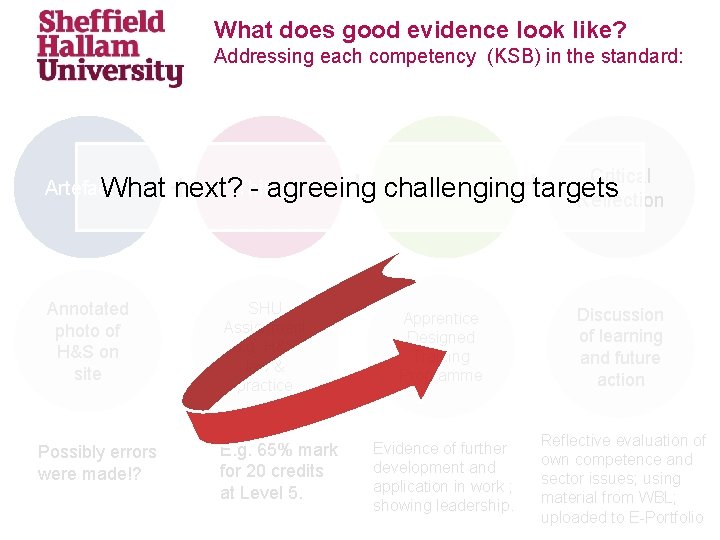
What does good evidence look like? Addressing each competency (KSB) in the standard: Artefact 1 What Annotated photo of H&S on site Possibly errors were made!? + + 2 next? Thing - agreeing SHU Assignment e. g. H&S law & practice E. g. 65% mark for 20 credits at Level 5. + Stuff 3 challenging Critical targets Reflection Apprentice Designed Training Programme Discussion of learning and future action Evidence of further development and application in work ; showing leadership. Reflective evaluation of own competence and sector issues; using material from WBL; uploaded to E-Portfolio
Batch 7 C Scheduling reviews
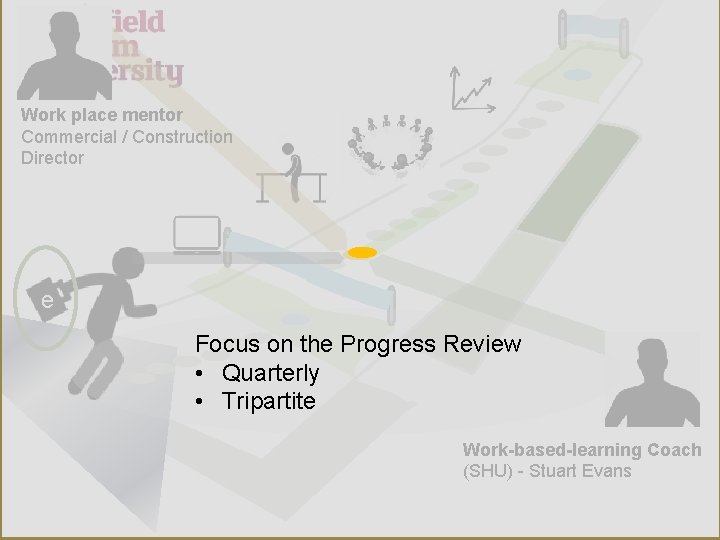
Work place mentor Commercial / Construction Director e Focus on the Progress Review • Quarterly • Tripartite Work-based-learning Coach (SHU) - Stuart Evans

Review Cycle
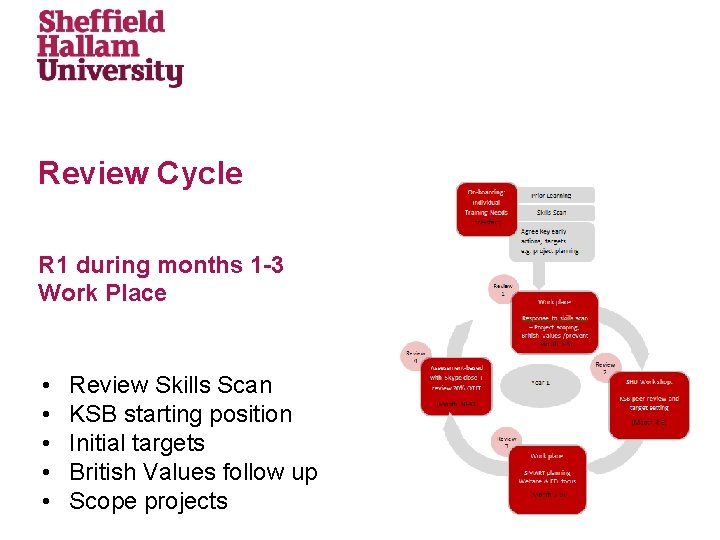
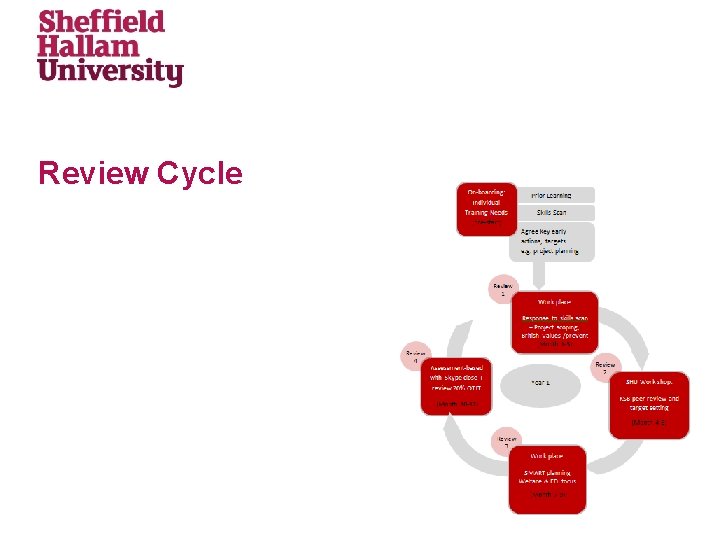
Review Cycle R 1 during months 1 -3 Work Place • • • Review Skills Scan KSB starting position Initial targets British Values follow up Scope projects
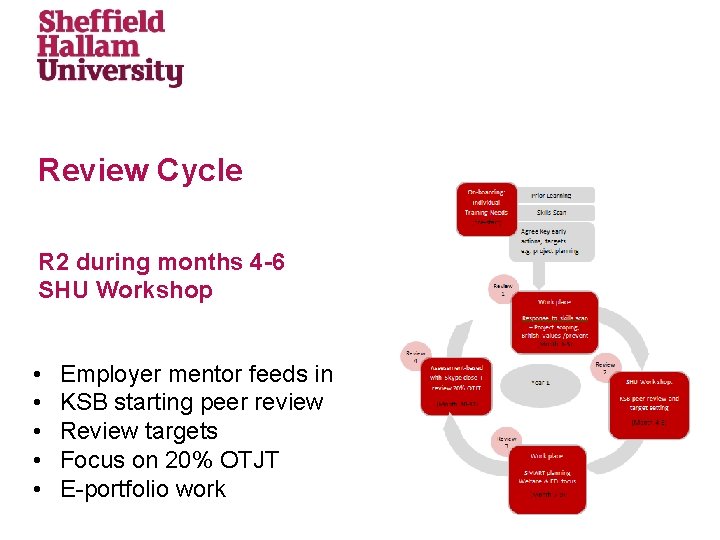
Review Cycle R 2 during months 4 -6 SHU Workshop • • • Employer mentor feeds in KSB starting peer review Review targets Focus on 20% OTJT E-portfolio work
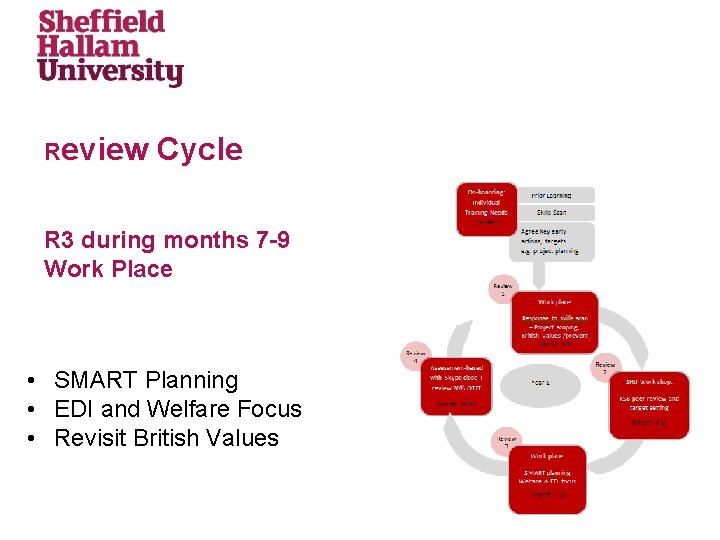
Review Cycle R 3 during months 7 -9 Work Place • SMART Planning • EDI and Welfare Focus • Revisit British Values
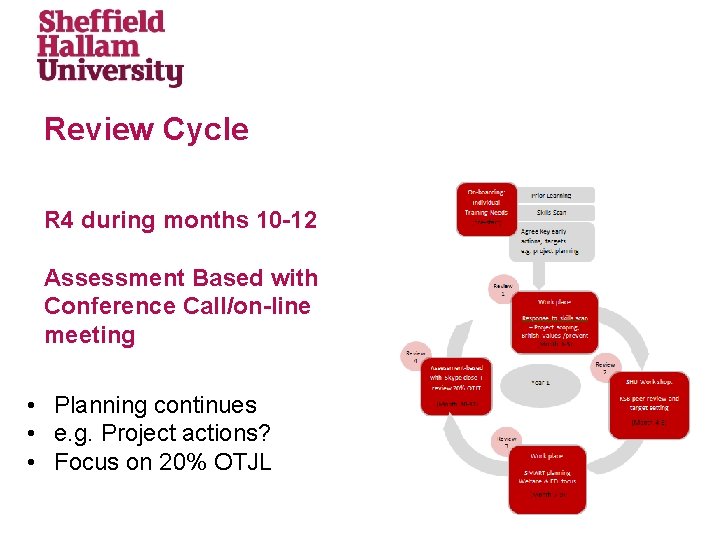
Review Cycle R 4 during months 10 -12 Assessment Based with Conference Call/on-line meeting • Planning continues • e. g. Project actions? • Focus on 20% OTJL
Review Cycle
Planning Apprenticeship Progress
Batch 7 d Focus on Reviews
Planning Apprenticeship Progress Apprentice Progress Reviews
Planning Apprenticeship Progress
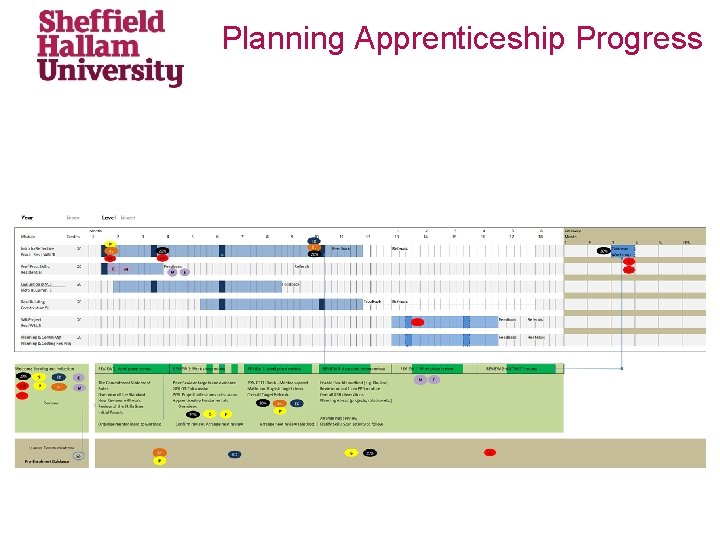
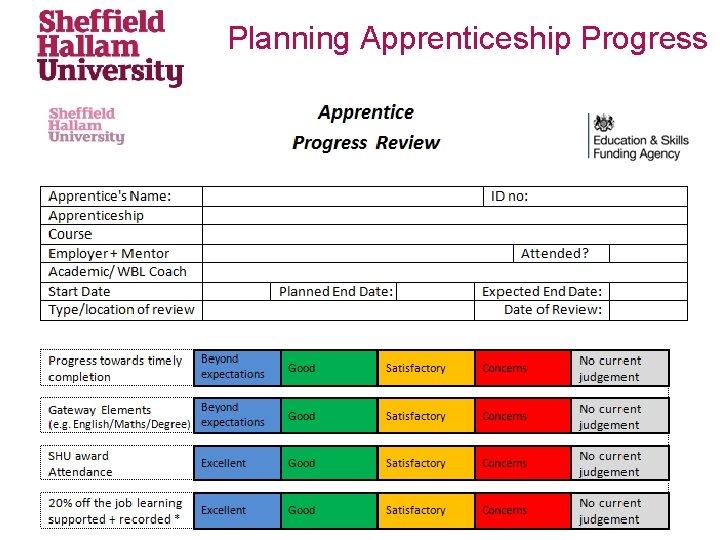
Planning Apprenticeship Progress Apprentice Progress Reviews Three way perspective on: • Progress towards timely completion • Other Gateway elements, E. g. English and Maths quals • SHU award attendance • 20% off the job learning supported and reported • (Also Mentor attendance and relationship tracked)
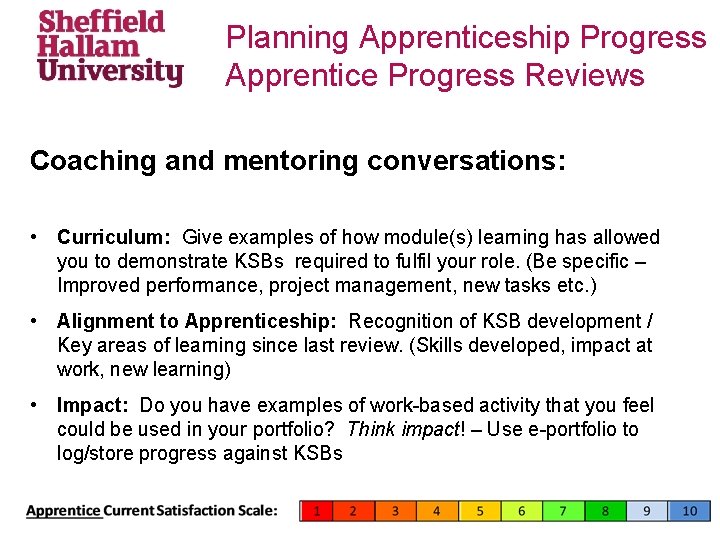
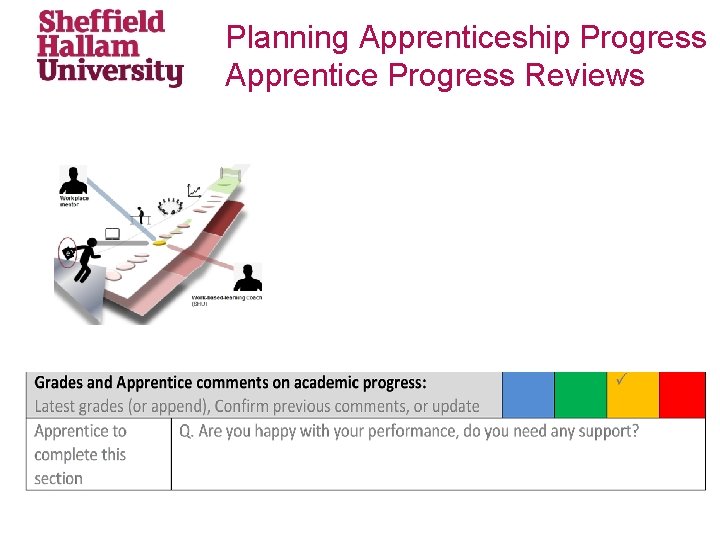
Planning Apprenticeship Progress Apprentice Progress Reviews Coaching and mentoring conversations: • Curriculum: Give examples of how module(s) learning has allowed you to demonstrate KSBs required to fulfil your role. (Be specific – Improved performance, project management, new tasks etc. ) • Alignment to Apprenticeship: Recognition of KSB development / Key areas of learning since last review. (Skills developed, impact at work, new learning) • Impact: Do you have examples of work-based activity that you feel could be used in your portfolio? Think impact! – Use e-portfolio to log/store progress against KSBs
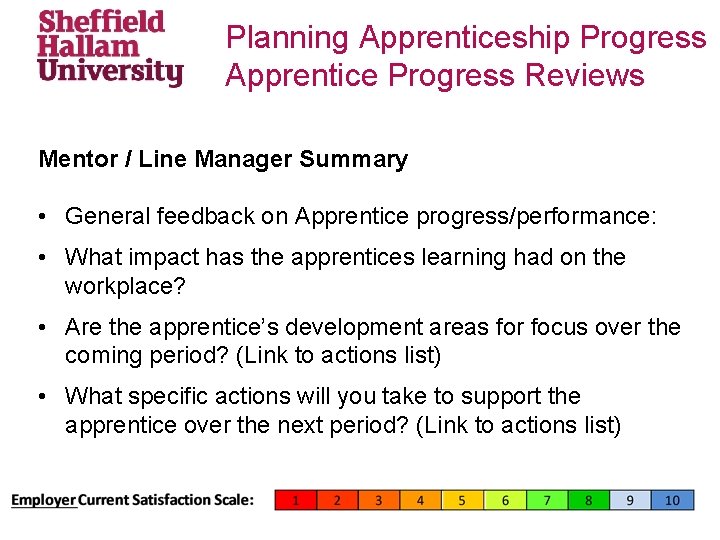
Planning Apprenticeship Progress Apprentice Progress Reviews Mentor / Line Manager Summary • General feedback on Apprentice progress/performance: • What impact has the apprentices learning had on the workplace? • Are the apprentice’s development areas for focus over the coming period? (Link to actions list) • What specific actions will you take to support the apprentice over the next period? (Link to actions list)
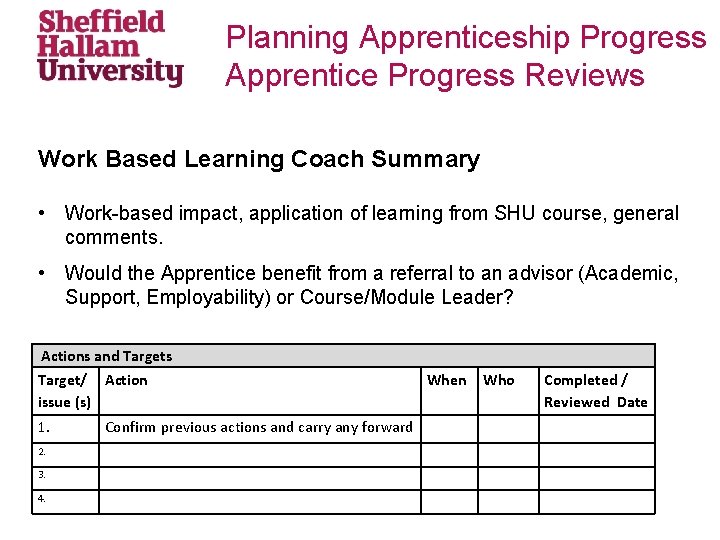
Planning Apprenticeship Progress Apprentice Progress Reviews Work Based Learning Coach Summary • Work-based impact, application of learning from SHU course, general comments. • Would the Apprentice benefit from a referral to an advisor (Academic, Support, Employability) or Course/Module Leader? Actions and Targets Target/ Action issue (s) 1. 2. 3. 4. Confirm previous actions and carry any forward When Who Completed / Reviewed Date
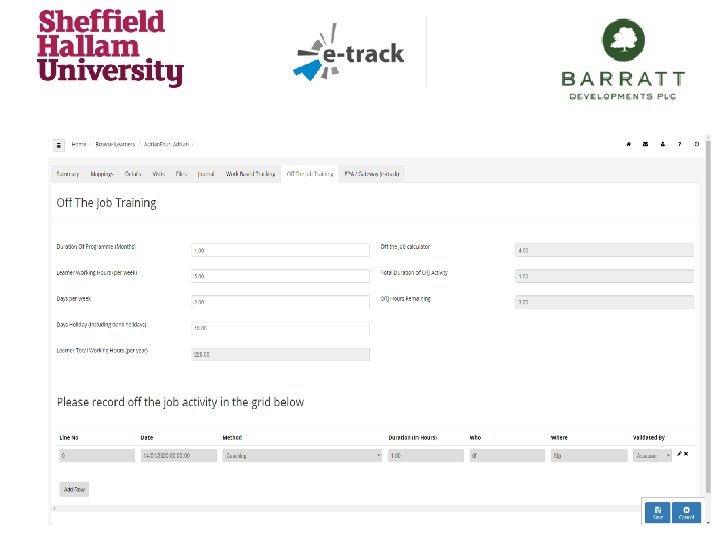
Batch 7 e E-Tracker Screen shots
E-portfolio
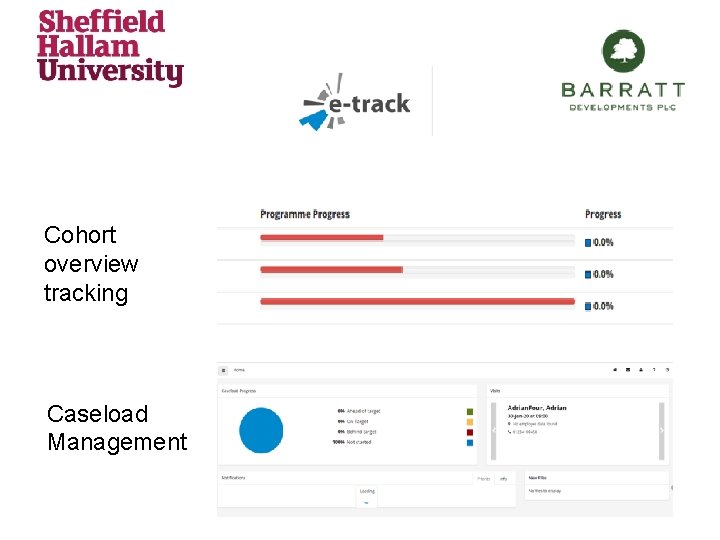
Cohort overview tracking Caseload Management
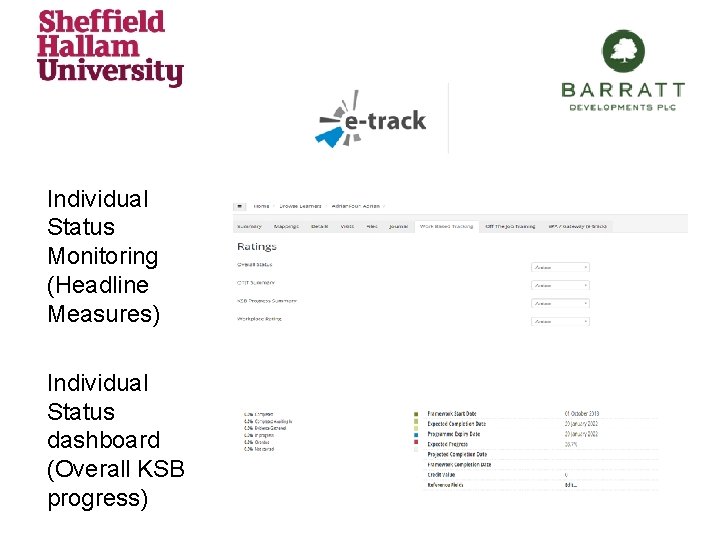
Individual Status Monitoring (Headline Measures) Individual Status dashboard (Overall KSB progress)
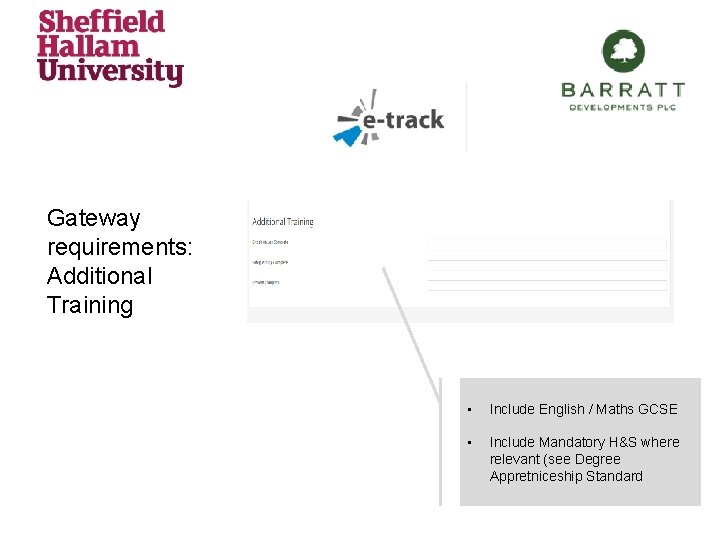
Gateway requirements: Additional Training • Include English / Maths GCSE • Include Mandatory H&S where relevant (see Degree Appretniceship Standard
Batch 8: Work Based Projects
Purpose of the projects To facilitate the connections between: • • The programme and the job role the organisation and the individual The knowledge, skills and behaviours Intention, implementation and impact
Discussion What makes a good project?
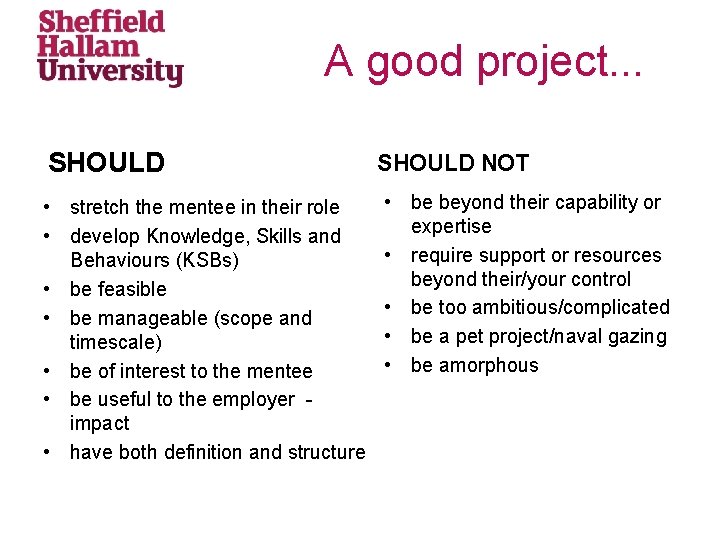
A good project. . . SHOULD • stretch the mentee in their role • develop Knowledge, Skills and Behaviours (KSBs) • be feasible • be manageable (scope and timescale) • be of interest to the mentee • be useful to the employer impact • have both definition and structure SHOULD NOT • be beyond their capability or expertise • require support or resources beyond their/your control • be too ambitious/complicated • be a pet project/naval gazing • be amorphous
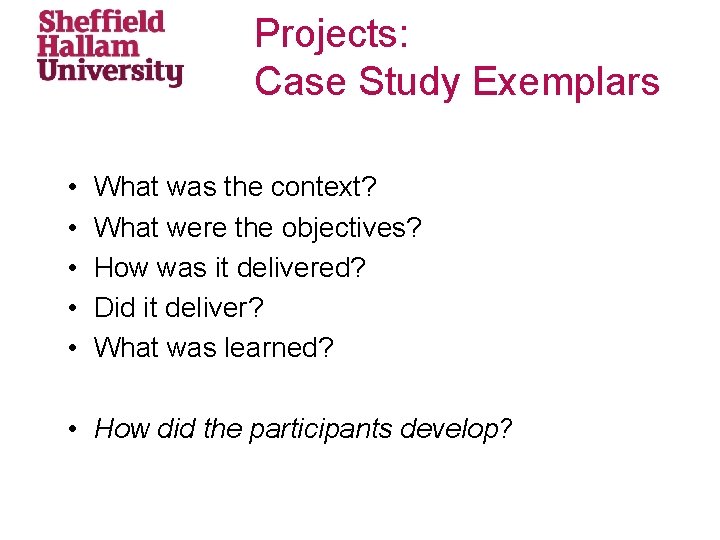
Projects: Case Study Exemplars • • • What was the context? What were the objectives? How was it delivered? Did it deliver? What was learned? • How did the participants develop?
Batch 9: Coaching, Mentoring and Learning
Question - Learning and Mentoring What is coaching and what is mentoring? Your are your experiences? What did you put into it? What did you get out of it? Any more questions?
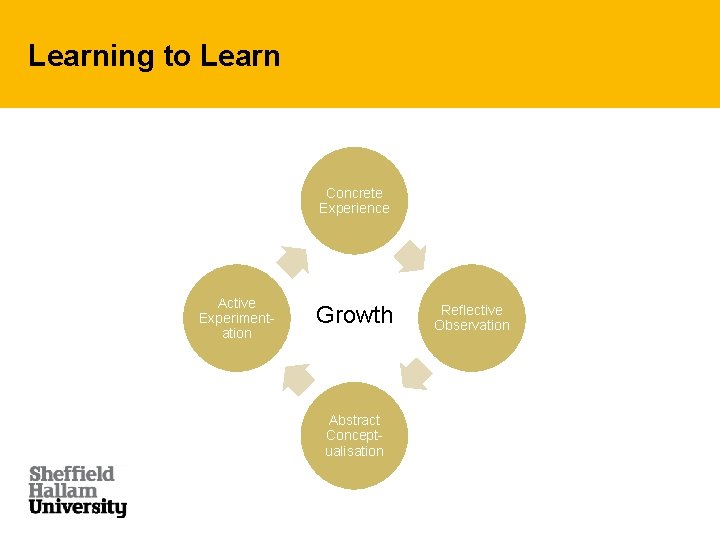
Learning to Learn Concrete Experience Active Experimentation Growth Abstract Conceptualisation Reflective Observation
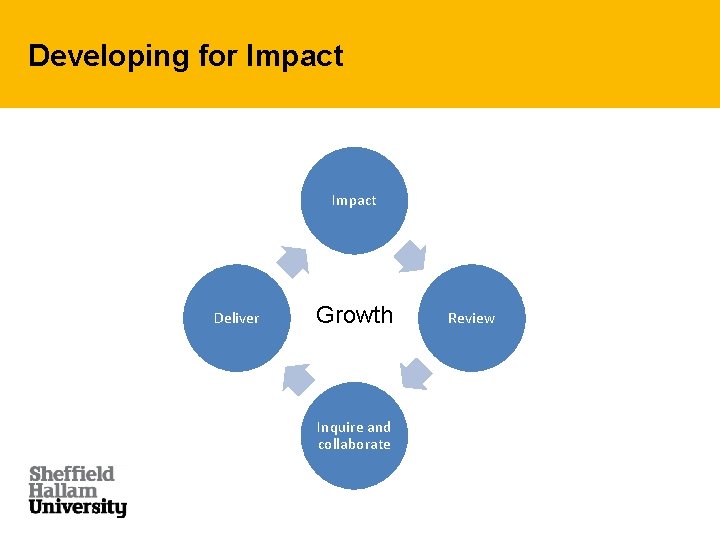
Developing for Impact Deliver Growth Inquire and collaborate Review
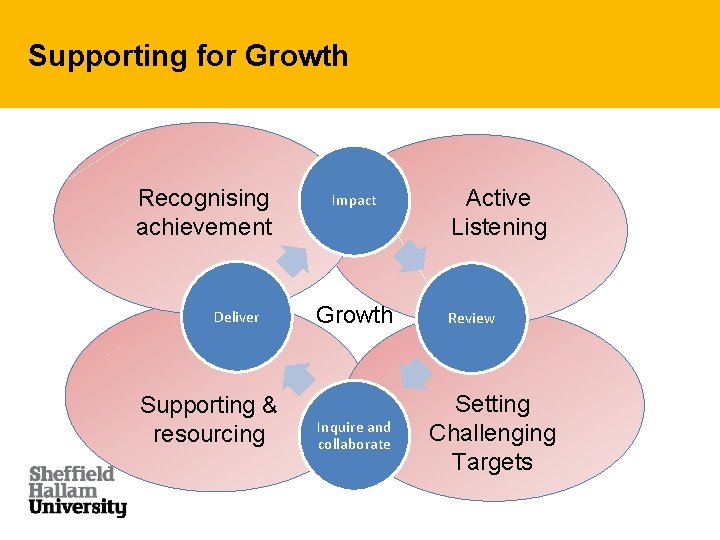
Supporting for Growth Recognising achievement Deliver Supporting & resourcing Impact Growth Inquire and collaborate Active Listening Review Setting Challenging Targets
Batch 10: Getting Event Feedback. . . Adjust and consider the feedback you want
Thank you for attending our welcome evening. Here is a brief reminder of what we have covered. • • • What is an Apprenticeship? - the journey is characterised by the three-way commitment and supported by a process of three way review to hep the apprentice work towards the End point Assessment E-Portfolios to build, store and refine evidence of knowledge, skills and behaviours to complete the apprenticeship End Point Assessment Support for the learner from academics and the WBL Coaches Support for the mentor (any time) and access to our free on-line mentoring resource Being an Ambassador apprentices and employers 20% off-the-job training - this is a funding requirement. SHU can support this and we will send our log book Please get in touch - let's work together.
Thank you for attending our welcome evening. Here is a brief reminder of what we have covered. • • • Your apprentice will receive a course specific induction and training to use their e-portfolio. Employers: Seek impact in the work place by identifying projects that will support achievement of knowledge, skills and behaviours We will help you to identify an End Point Assessor the Evidence is there - understand what the course is covering, engage with reviews and employers need to develop the commitment statement to ensure that on the job activities support development Each Apprentice has full information on their study and the apprenticeship - please use reviews to be engage. Evidence should be from a combination of sources and can be enhanced through degree-level critical reflection and evaluation Please get in touch - let's work together.
Please complete the form • Expression of interest to be part of the SHU Apprenticeship Ambassador scheme • What else did I want from this event? • What else do I need going forward? • As a mentor I would like the log on information for the On-line Mentor Support Resource • Other feedback/ Questions Thank you
Batch 11: Spare slides covering the components of an apprenticeship
Components of the Apprenticeship • • The Standard Training Needs - Commitment Statement (3 -way) Induction information The award: discipline modules, specialist modules, project modules, PDP modules Three-way review 20% off-the job learning The Gateway period and requirements End Point Assessment
Components of the Apprenticeship The Standard • • This reads like a job role. Two sides of A 4 paper Knowledge: I know, understand. . . Skills: I can do. . . Behaviours: I act and contribute. . . Meeting the standard: I am competent to become a professional practitioner. . .
Components of the Apprenticeship Training Needs - Commitment Statement (3 -way) • • • Is the (whole) Apprentice right for you? Three way: Apprentice; employer; provider Sets out the journey ahead A working document - anticipates change (e-portfolios) Accompanied by a contract (two way) and an Apprentice Agreement (two way) • Discussed in three-way reviews Defines your journey and status as an Apprentice
Components of the Apprenticeship Induction information • • A clear explanation of the course Sets out the duration and delivery pattern Clear overview of the prescribed content Identifies Work Based Learning opportunities (project modules and portfolio modules) • Support - academic mentoring and work-place • Identifies Apprentice fundamentals: British Values, Safeguarding, Equalities, English and Maths, etc. Open discussion, please get the foundations in place
Components of the Apprenticeship The Award (e. g. University Degree) • • • discipline modules specialist modules project modules PDP modules Three Way Reviews Support Where are the opportunities for meeting knowledge, skills and behaviours?
Components of the Apprenticeship Three-way review: • • • Apprentice + Employer + Provider i. e. You + Work-place mentor + WBL Coach (SHU) Quarterly, or at least once per study block Includes 20% off-the job learning RAG (Red, Amber, Green) Honest, transparent review - action based Track progress against knowledge skills and behaviours and meeting the Gateway requirements
Components of the Apprenticeship 20% off-the job learning • Includes attendance at Sheffield Hallam University • Employer has committed to providing/allowing this • Includes Work-place activities that are targeted at gaining knowledge, skills and behaviours • Method for calculating • Look to projects and review time Keep on top of your recording (e. g. Maytas, Excel, or Pebblepad).
Components of the Apprenticeship The Gateway period and requirements • • Includes passing the University modules End Point Assessment Organisation will connect through SHU Mostly independently assessed after the degree Some are integrated within the degree What additional support after the degree? Maths and English Prevent, Equalities, Safeguarding, British Values Who will sign off readiness? What other stepping stones? - e. g. NVQ, completion of major project, portfolio of evidence and 20% off-the-job learning, English and Maths certificates - see the standard
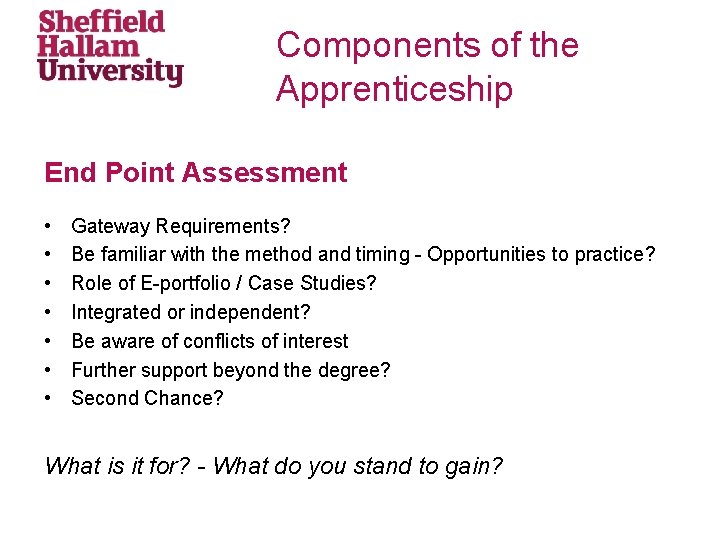
Components of the Apprenticeship End Point Assessment • • Gateway Requirements? Be familiar with the method and timing - Opportunities to practice? Role of E-portfolio / Case Studies? Integrated or independent? Be aware of conflicts of interest Further support beyond the degree? Second Chance? What is it for? - What do you stand to gain?
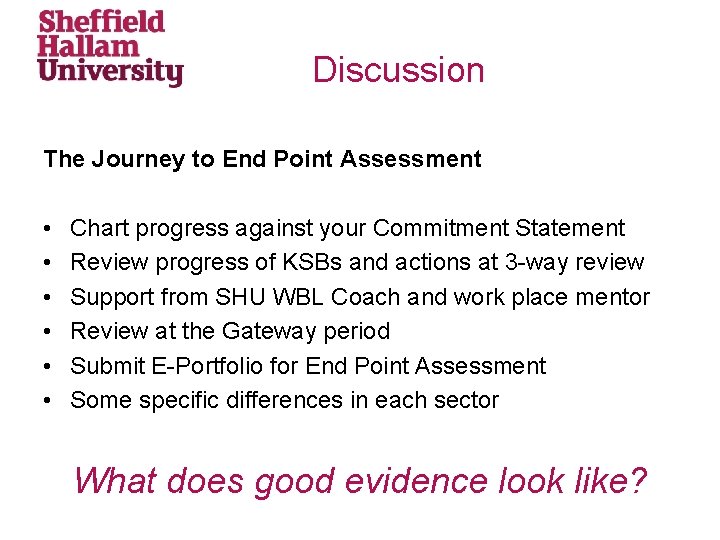
Discussion The Journey to End Point Assessment • • • Chart progress against your Commitment Statement Review progress of KSBs and actions at 3 -way review Support from SHU WBL Coach and work place mentor Review at the Gateway period Submit E-Portfolio for End Point Assessment Some specific differences in each sector What does good evidence look like?
Batch 12: How SHU builds an apprenticeship
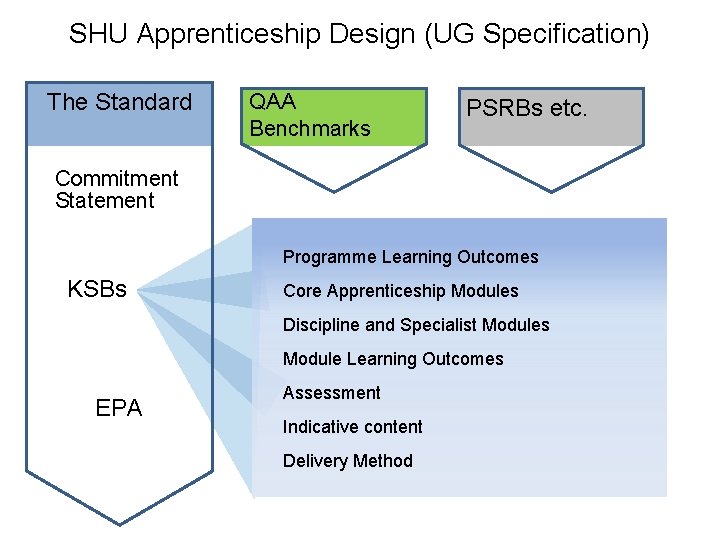
SHU Apprenticeship Design (UG Specification) The Standard QAA Benchmarks PSRBs etc. Commitment Statement Programme Learning Outcomes KSBs Core Apprenticeship Modules Discipline and Specialist Modules Module Learning Outcomes EPA Assessment Indicative content Delivery Method
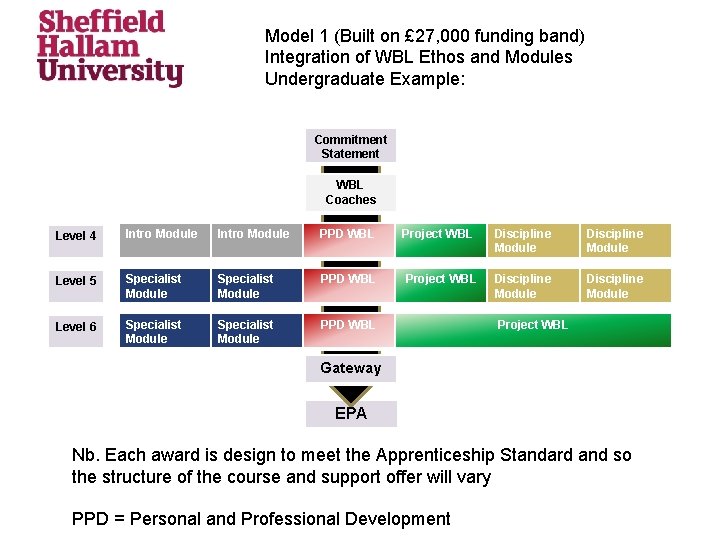
Model 1 (Built on £ 27, 000 funding band) Integration of WBL Ethos and Modules Undergraduate Example: Commitment Statement WBL Coaches Level 4 Intro Module PPD WBL Project WBL Discipline Module Level 5 Specialist Module PPD WBL Project WBL Discipline Module Level 6 Specialist Module PPD WBL Project WBL Gateway EPA Nb. Each award is design to meet the Apprenticeship Standard and so the structure of the course and support offer will vary PPD = Personal and Professional Development
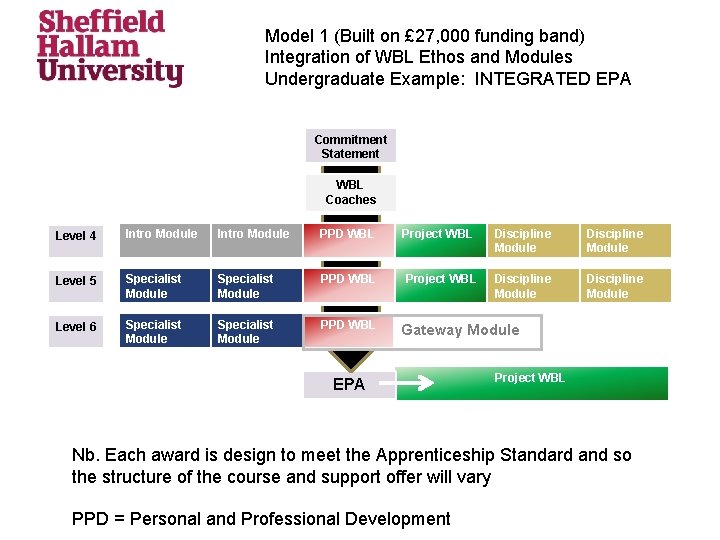
Model 1 (Built on £ 27, 000 funding band) Integration of WBL Ethos and Modules Undergraduate Example: INTEGRATED EPA Commitment Statement WBL Coaches Level 4 Intro Module PPD WBL Project WBL Discipline Module Level 5 Specialist Module PPD WBL Project WBL Discipline Module Level 6 Specialist Module PPD WBL Project WBL Gateway Module Specialist Module PPD WBL Project WBL EPA Nb. Each award is design to meet the Apprenticeship Standard and so the structure of the course and support offer will vary PPD = Personal and Professional Development
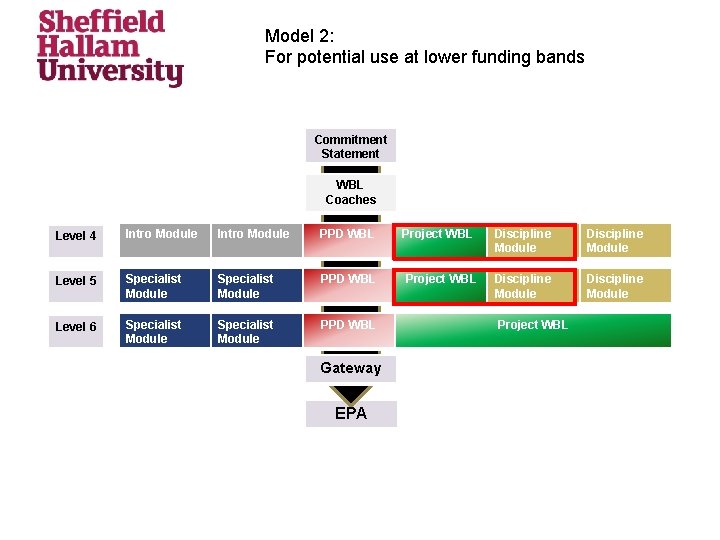
Model 2: For potential use at lower funding bands Commitment Statement WBL Coaches Level 4 Intro Module PPD WBL Project WBL Discipline Module Level 5 Specialist Module PPD WBL Project WBL Discipline Module Level 6 Specialist Module PPD WBL Gateway EPA Project WBL
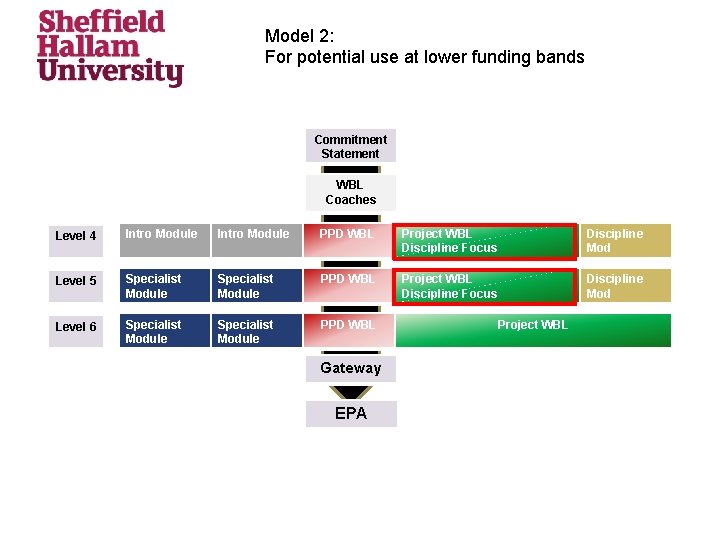
Model 2: For potential use at lower funding bands Commitment Statement WBL Coaches Level 4 Intro Module PPD WBL Project WBL Discipline Focus Discipline Mod Level 5 Specialist Module PPD WBL Project WBL Discipline Focus Discipline Mod Level 6 Specialist Module PPD WBL Gateway EPA Project WBL
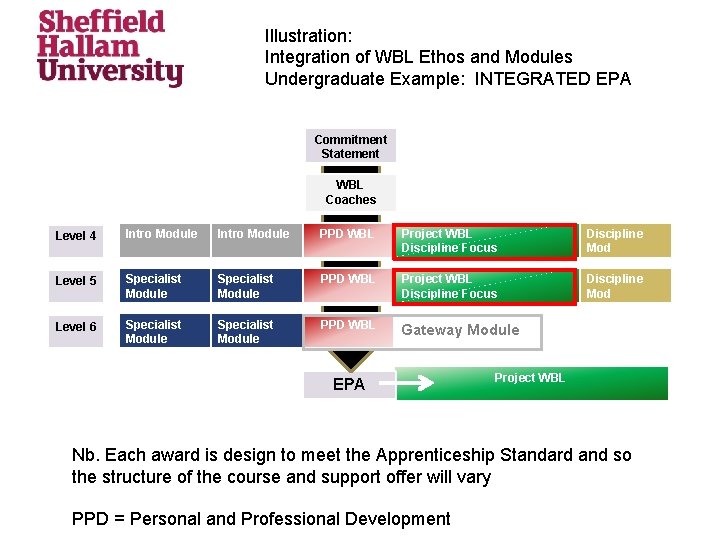
Illustration: Integration of WBL Ethos and Modules Undergraduate Example: INTEGRATED EPA Commitment Statement WBL Coaches Level 4 Intro Module PPD WBL Project WBL Discipline Focus Discipline Mod Level 5 Specialist Module PPD WBL Project WBL Discipline Focus Discipline Mod Level 6 Specialist Module PPD WBL Project WBL Gateway Module Specialist Module PPD WBL Project WBL EPA Nb. Each award is design to meet the Apprenticeship Standard and so the structure of the course and support offer will vary PPD = Personal and Professional Development
Batch 13 Apprenticeship Case Studies Template

INSERT TIMESCALE FOR AWARDS FROM KENT

Apprenticeship Case Study Template
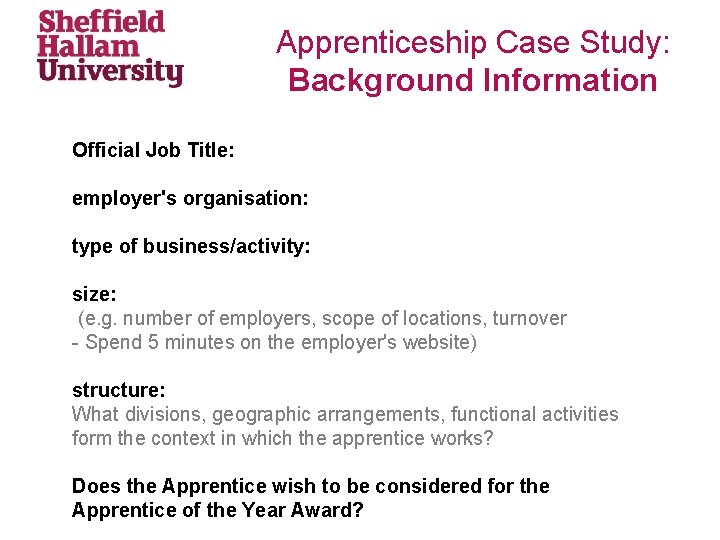
Apprenticeship Case Study: Background Information Official Job Title: employer's organisation: type of business/activity: size: (e. g. number of employers, scope of locations, turnover - Spend 5 minutes on the employer's website) structure: What divisions, geographic arrangements, functional activities form the context in which the apprentice works? Does the Apprentice wish to be considered for the Apprentice of the Year Award?
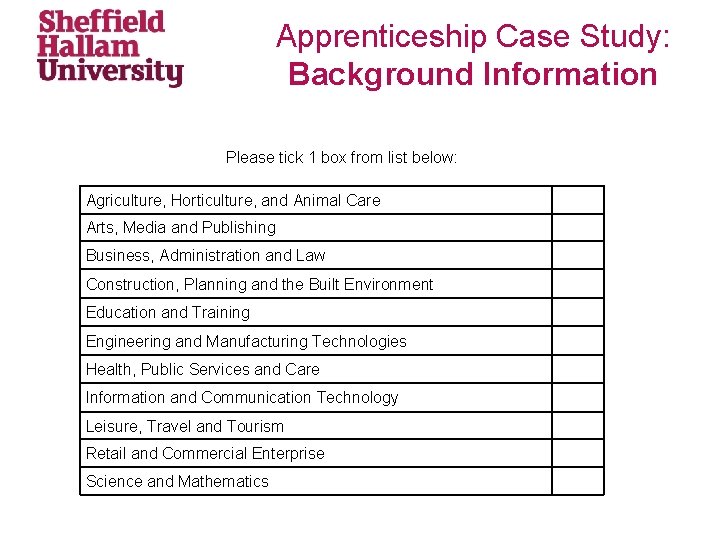
Apprenticeship Case Study: Background Information Please tick 1 box from list below: Agriculture, Horticulture, and Animal Care Arts, Media and Publishing Business, Administration and Law Construction, Planning and the Built Environment Education and Training Engineering and Manufacturing Technologies Health, Public Services and Care Information and Communication Technology Leisure, Travel and Tourism Retail and Commercial Enterprise Science and Mathematics
Apprenticeship Case Study: The Apprentice Input from the Apprentice to cover: Why you chose your apprenticeship and how you applied for it. An outline of your role (including key duties and responsibilities) and how it fits within the organisation. A description of the team you operate in and your personal contribution to team objectives and performance. A summary of your personal aspirations and planned career path.
Apprenticeship Case Study: Apprentice Personal Achievements Prompts: An outline of the skills you have developed since you began your apprenticeship. How your apprenticeship has impacted on you, especially in terms of your ambitions and motivation. Why you believe that others can learn from your apprenticeship experiences. Details of your activities as an ambassador for apprenticeships and vocational education both within, and outside, your organisation. Details of your greatest personal achievements to date, and why you believe these are noteworthy.
Apprenticeship Case Study: Impact on organisation Prompts: How your apprenticeship helps your employer meet organisational objectives/goals. What specific skills have you developed that benefit your employer? Tangible examples of ways in which you can demonstrate your personal impact and contribution. How your personal performance has benefited others in your employer’s organisation. How have you contributed to the success of your organisation?
Batch XX For additional resources see: - Apprenticeship Delivery Guide - Embedding Apprenticeship Essentials (both found in Apprenticeships T&AE web page
- Slides: 148