
Word Grammar and other cognitive theories Richard Hudson
- Slides: 30
Word Grammar and other cognitive theories Richard Hudson Budapest March 2012 1
Cognitive linguistics 2
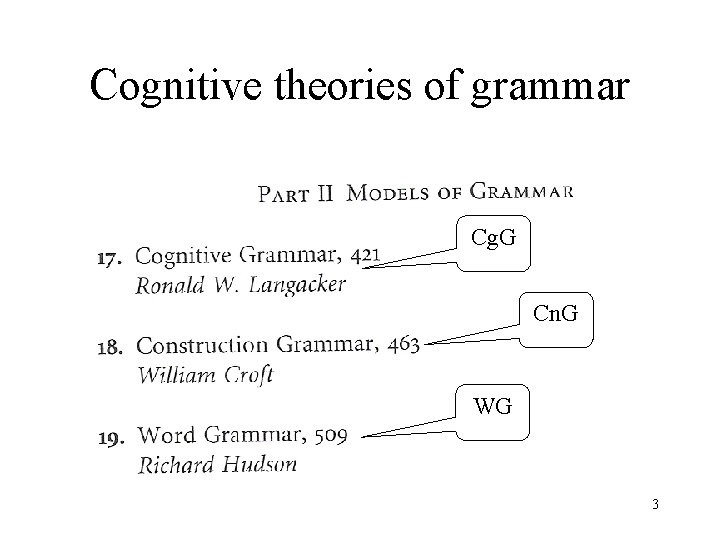
Cognitive theories of grammar Cg. G Cn. G WG 3
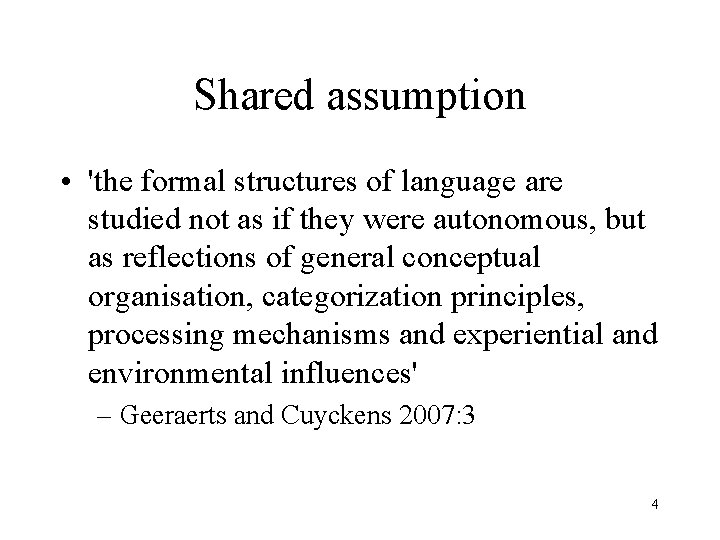
Shared assumption • 'the formal structures of language are studied not as if they were autonomous, but as reflections of general conceptual organisation, categorization principles, processing mechanisms and experiential and environmental influences' – Geeraerts and Cuyckens 2007: 3 4
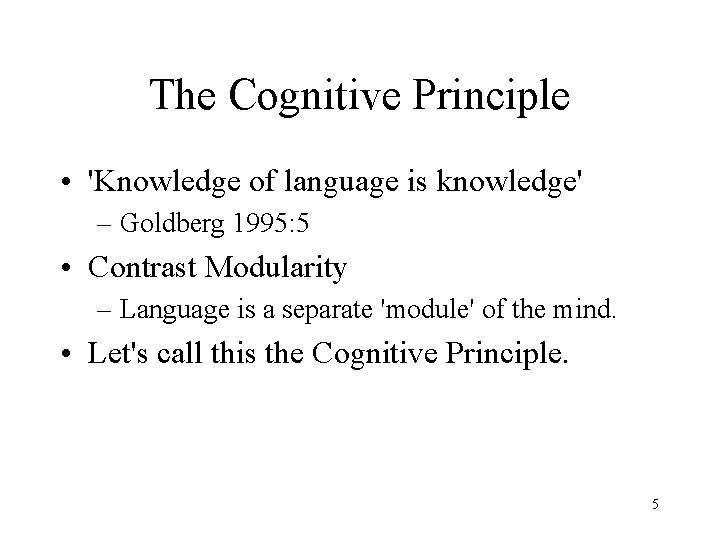
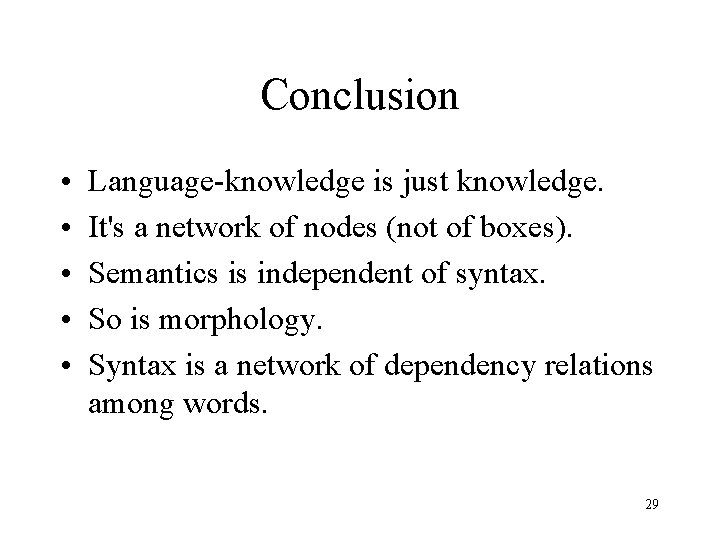
The Cognitive Principle • 'Knowledge of language is knowledge' – Goldberg 1995: 5 • Contrast Modularity – Language is a separate 'module' of the mind. • Let's call this the Cognitive Principle. 5
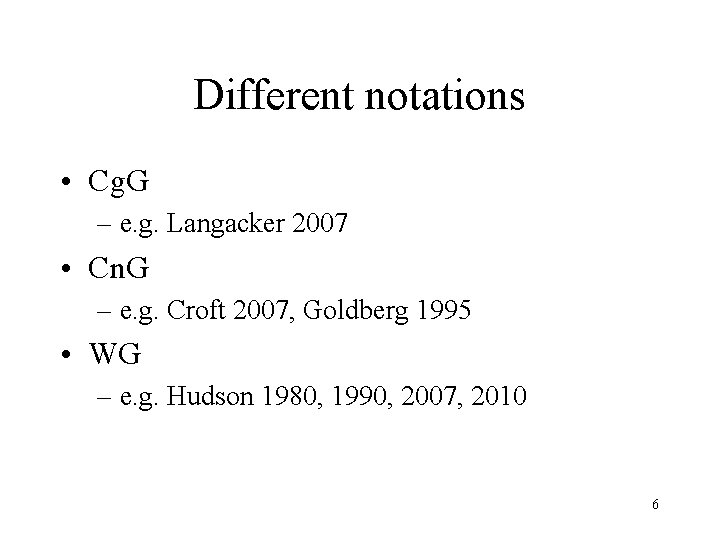
Different notations • Cg. G – e. g. Langacker 2007 • Cn. G – e. g. Croft 2007, Goldberg 1995 • WG – e. g. Hudson 1980, 1990, 2007, 2010 6
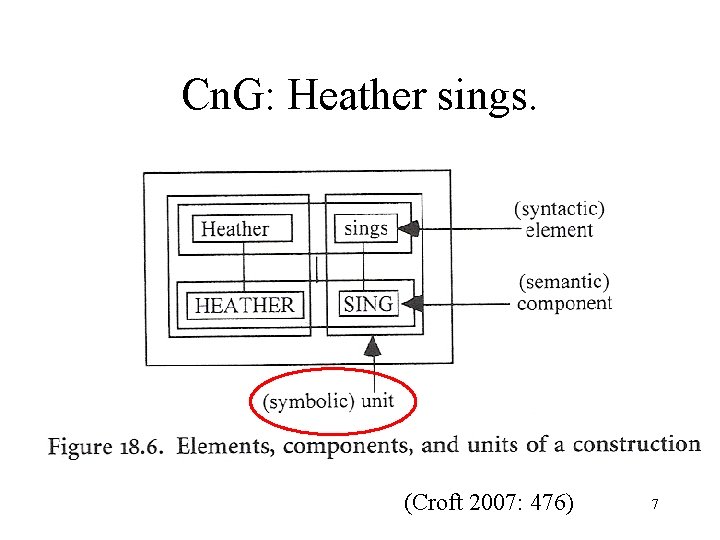
Cn. G: Heather sings. (Croft 2007: 476) 7
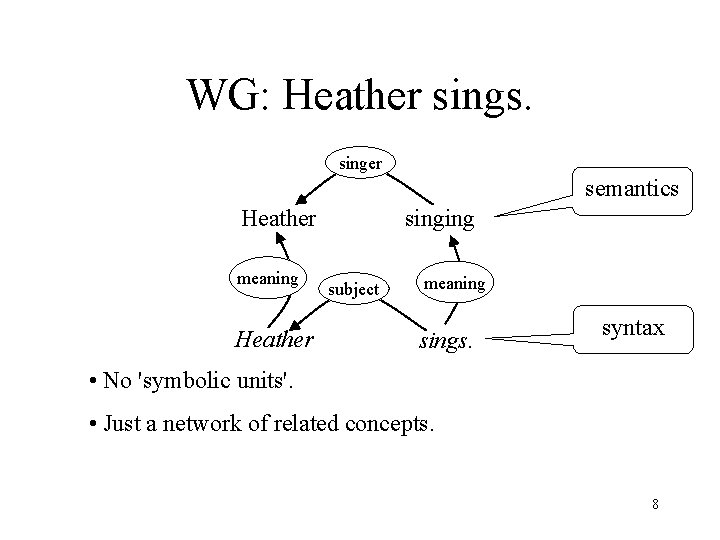
WG: Heather sings. singer semantics singing Heather meaning Heather subject meaning sings. syntax • No 'symbolic units'. • Just a network of related concepts. 8
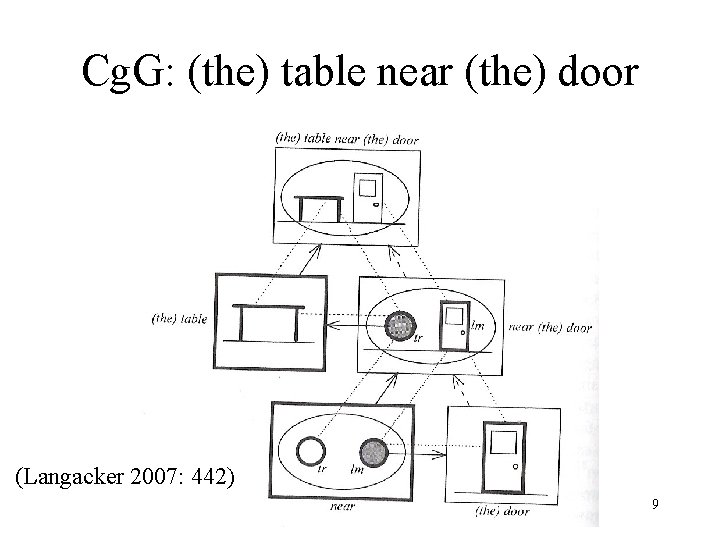
Cg. G: (the) table near (the) door (Langacker 2007: 442) 9
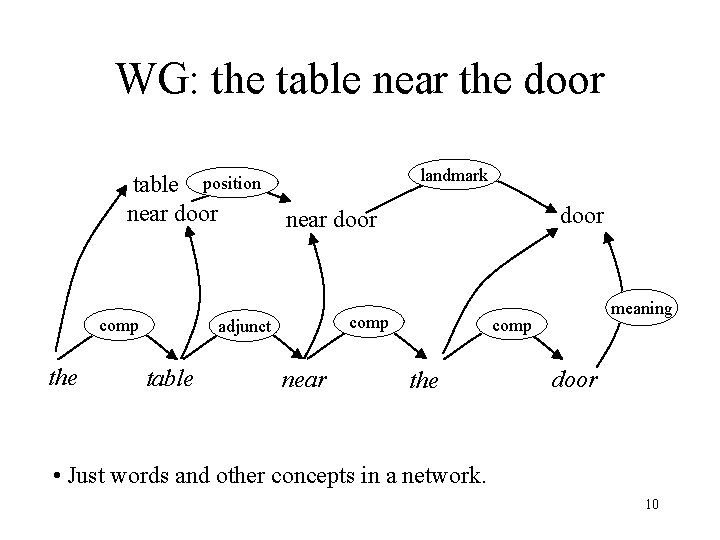
WG: the table near the door table position near door comp the landmark comp adjunct table door near meaning comp the door • Just words and other concepts in a network. 10
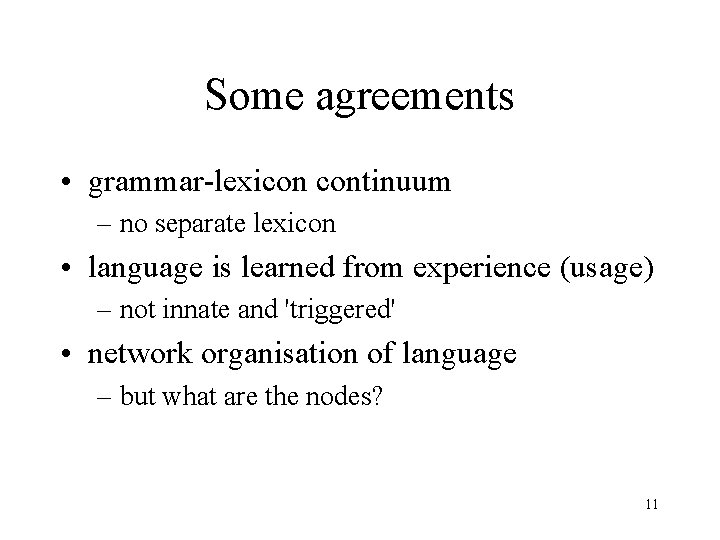
Some agreements • grammar-lexicon continuum – no separate lexicon • language is learned from experience (usage) – not innate and 'triggered' • network organisation of language – but what are the nodes? 11
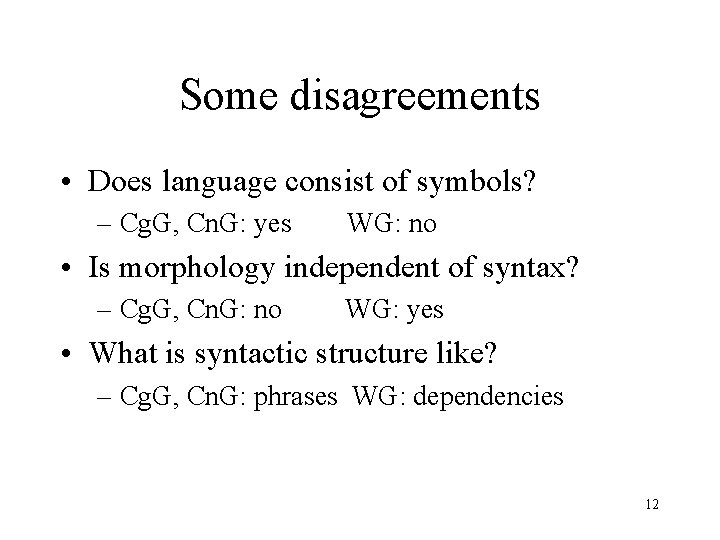
Some disagreements • Does language consist of symbols? – Cg. G, Cn. G: yes WG: no • Is morphology independent of syntax? – Cg. G, Cn. G: no WG: yes • What is syntactic structure like? – Cg. G, Cn. G: phrases WG: dependencies 12
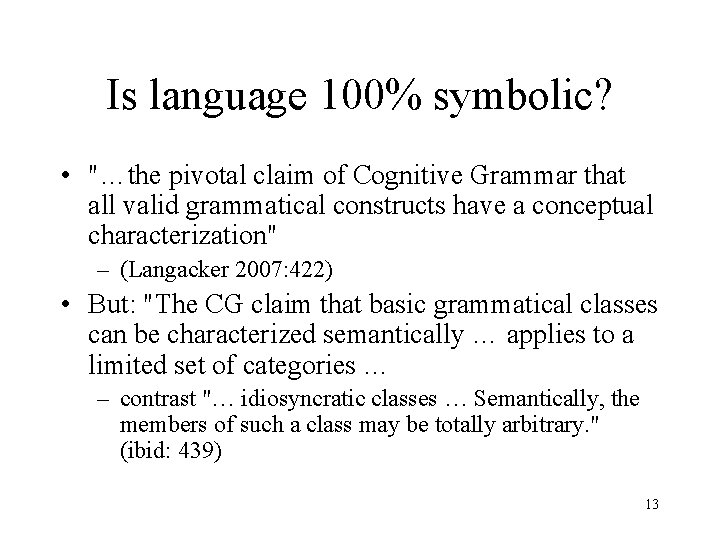
Is language 100% symbolic? • "…the pivotal claim of Cognitive Grammar that all valid grammatical constructs have a conceptual characterization" – (Langacker 2007: 422) • But: "The CG claim that basic grammatical classes can be characterized semantically … applies to a limited set of categories … – contrast "… idiosyncratic classes … Semantically, the members of such a class may be totally arbitrary. " (ibid: 439) 13
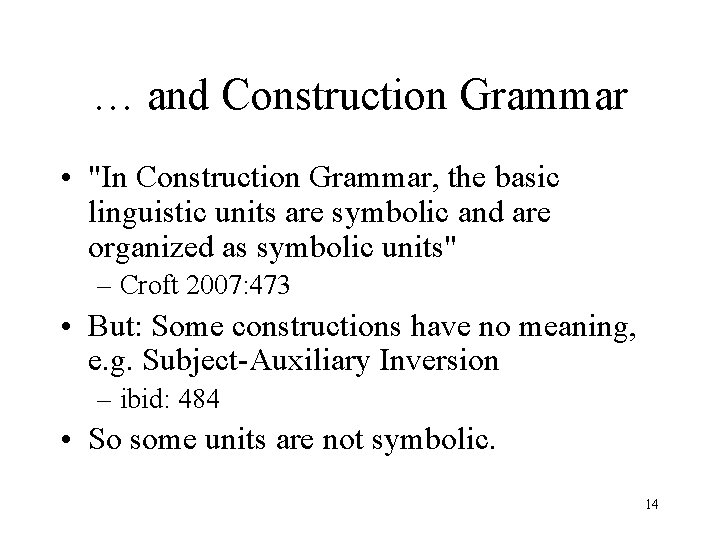
… and Construction Grammar • "In Construction Grammar, the basic linguistic units are symbolic and are organized as symbolic units" – Croft 2007: 473 • But: Some constructions have no meaning, e. g. Subject-Auxiliary Inversion – ibid: 484 • So some units are not symbolic. 14
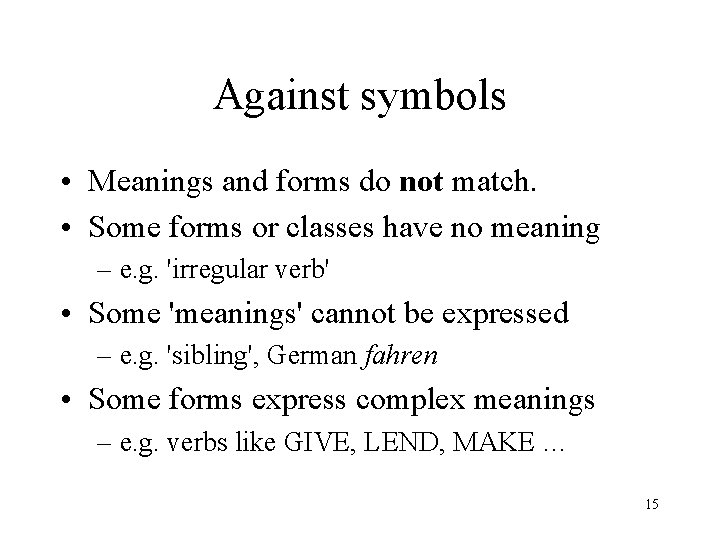
Against symbols • Meanings and forms do not match. • Some forms or classes have no meaning – e. g. 'irregular verb' • Some 'meanings' cannot be expressed – e. g. 'sibling', German fahren • Some forms express complex meanings – e. g. verbs like GIVE, LEND, MAKE … 15
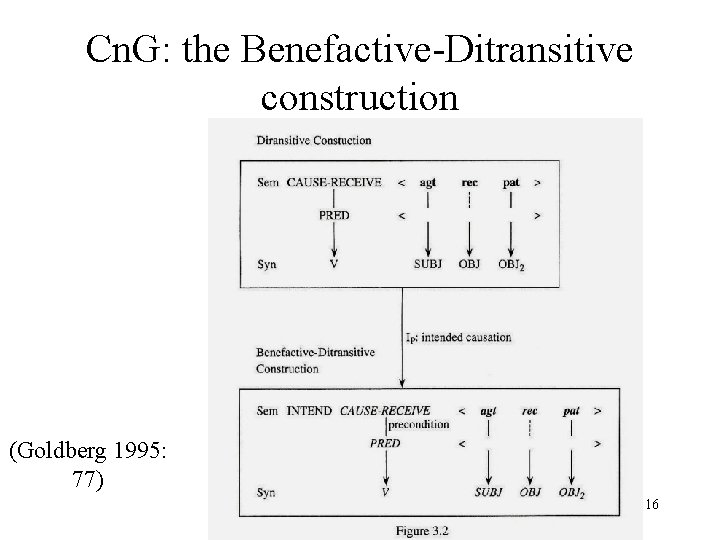
Cn. G: the Benefactive-Ditransitive construction (Goldberg 1995: 77) 16
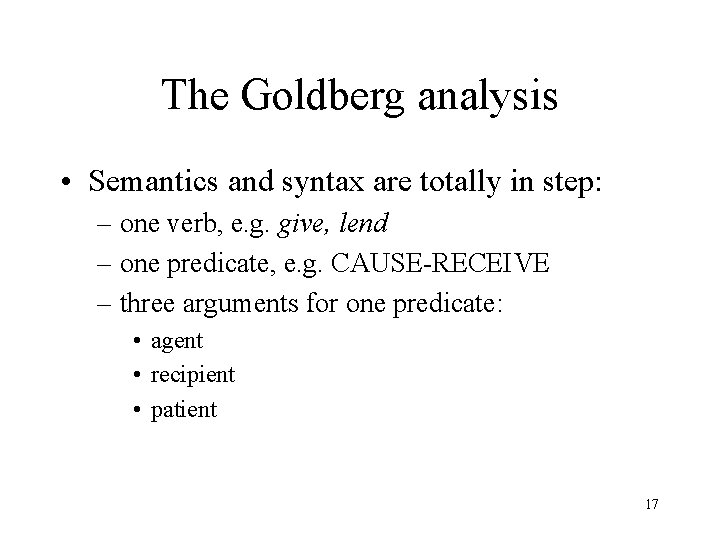
The Goldberg analysis • Semantics and syntax are totally in step: – one verb, e. g. give, lend – one predicate, e. g. CAUSE-RECEIVE – three arguments for one predicate: • agent • recipient • patient 17
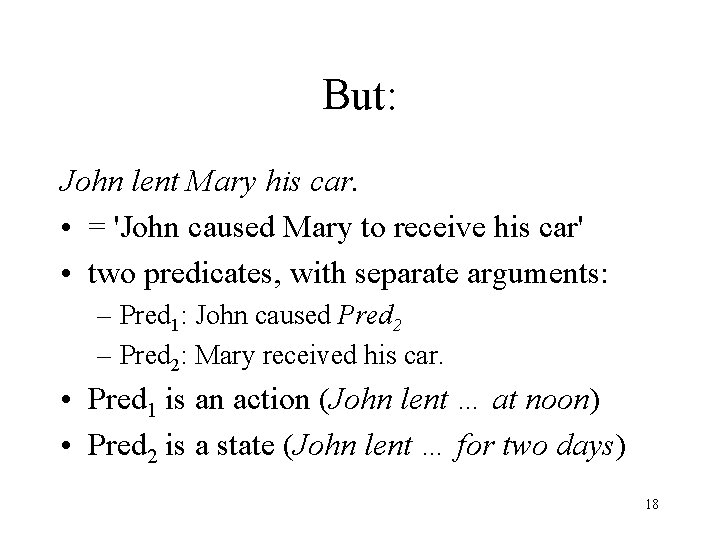
But: John lent Mary his car. • = 'John caused Mary to receive his car' • two predicates, with separate arguments: – Pred 1: John caused Pred 2 – Pred 2: Mary received his car. • Pred 1 is an action (John lent … at noon) • Pred 2 is a state (John lent … for two days) 18
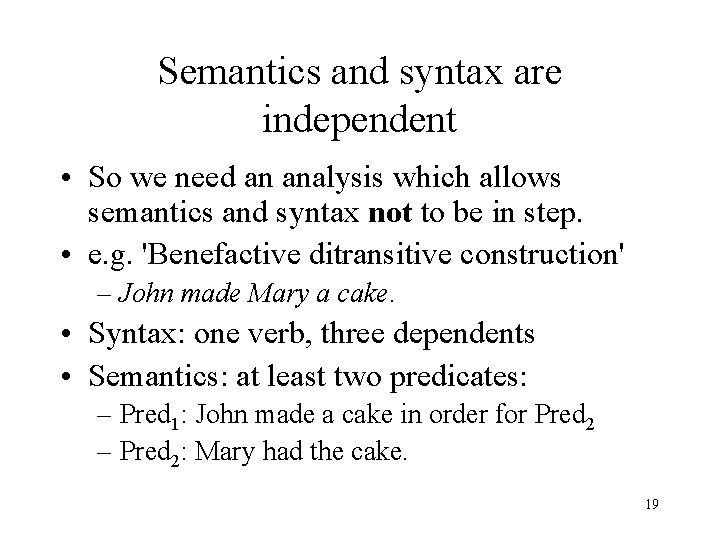
Semantics and syntax are independent • So we need an analysis which allows semantics and syntax not to be in step. • e. g. 'Benefactive ditransitive construction' – John made Mary a cake. • Syntax: one verb, three dependents • Semantics: at least two predicates: – Pred 1: John made a cake in order for Pred 2 – Pred 2: Mary had the cake. 19
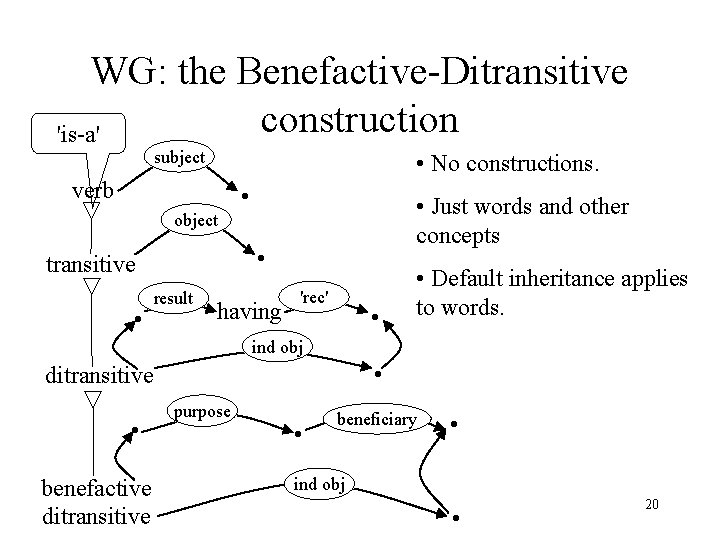
WG: the Benefactive-Ditransitive construction 'is-a' subject • No constructions. verb • • Just words and other concepts object • transitive • result having 'rec' • • Default inheritance applies to words. ind obj • ditransitive • benefactive ditransitive purpose • beneficiary • ind obj • 20
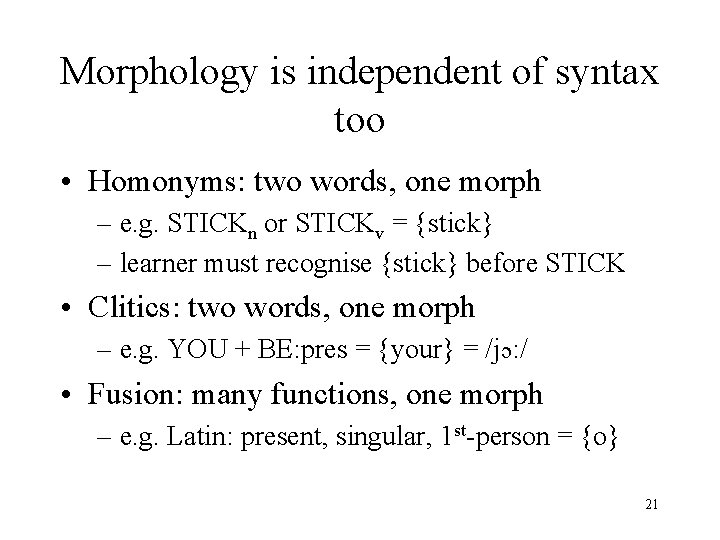
Morphology is independent of syntax too • Homonyms: two words, one morph – e. g. STICKn or STICKv = {stick} – learner must recognise {stick} before STICK • Clitics: two words, one morph – e. g. YOU + BE: pres = {your} = /jɔ: / • Fusion: many functions, one morph – e. g. Latin: present, singular, 1 st-person = {o} 21
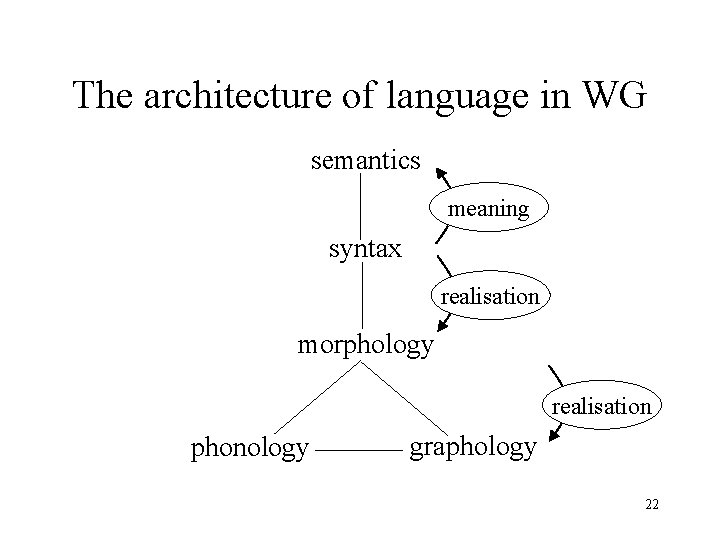
The architecture of language in WG semantics meaning syntax realisation morphology realisation phonology graphology 22
Syntactic structures • "… a construction … is made up of parts, and those parts are themselves independent constructions. " – Croft 2007: 495 • But: "In Cognitive Grammar … grammatical constituency is … variable, nonessential and nonfundamental. " – Langacker 2007: 442 23
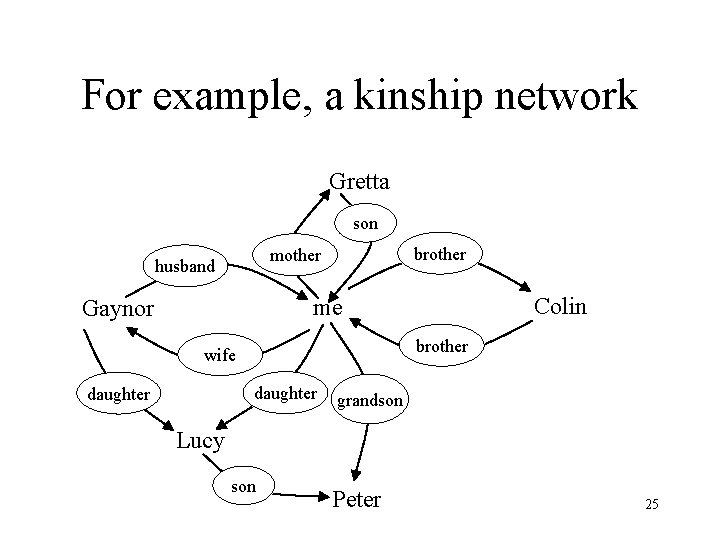
Phrase structure in Cg. G, Cn. G • Very simple phrase structure • The only relations possible in syntax are: – part-whole (sub-classified for function) – left-right • A very odd assumption for cognitive linguists – because we easily handle many other relations outside language, e. g. between people. 24
For example, a kinship network Gretta son brother mother husband Colin me Gaynor brother wife daughter grandson Lucy son Peter 25
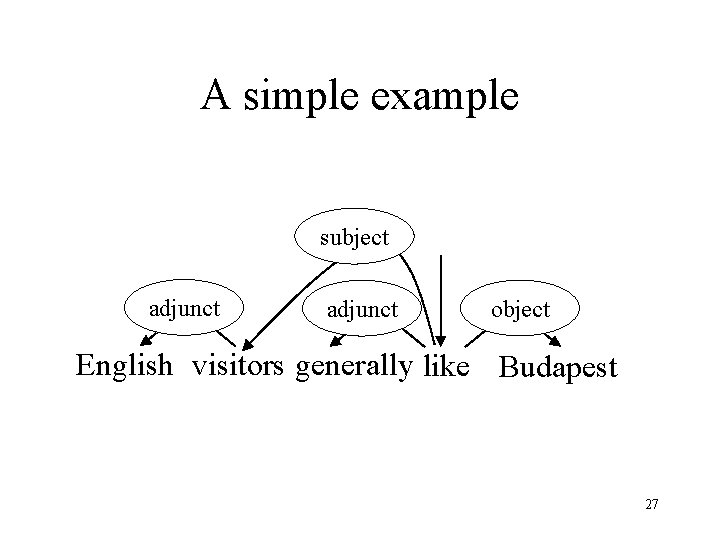
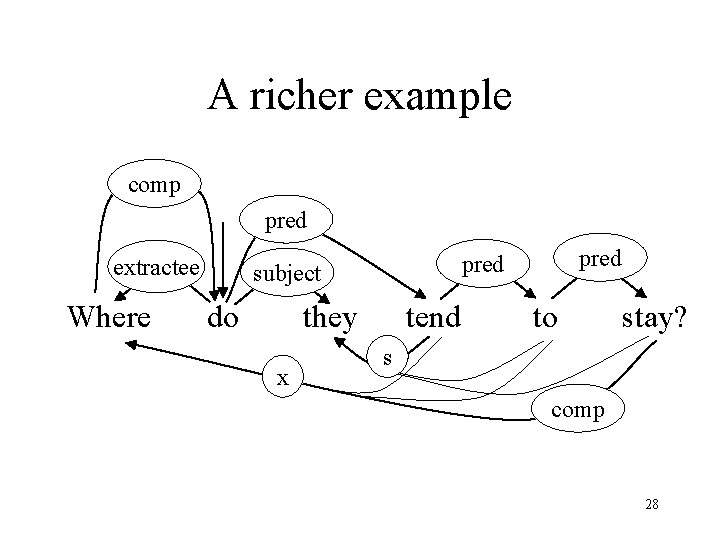
WG syntax • Dependency structure – like school grammar – but much richer • Dependencies: – are asymmetrical – link single words – can be sub-classified eg. as 'subject', 'adjunct' 26
A simple example subject adjunct object English visitors generally like Budapest 27
A richer example comp pred extractee Where subject do they x pred tend to stay? s comp 28
Conclusion • • • Language-knowledge is just knowledge. It's a network of nodes (not of boxes). Semantics is independent of syntax. So is morphology. Syntax is a network of dependency relations among words. 29
Thank you • This talk can be downloaded: www. phon. ucl. ac. uk/home/dick/talks. htm • More on Word Grammar: www. phon. ucl. ac. uk/home/dick/wg. htm 30