
WORD FORMATION adding suffixes Verbs nouns adjectives and

WORD FORMATION adding suffixes
Verbs, nouns, adjectives, and adverbs can be formed from other related or base words by adding a suffix to the end of the word. There are no clear rules – each word and the words which can be formed from it must be learned individually. Some of the most common suffixes and their usual meanings are listed below 2
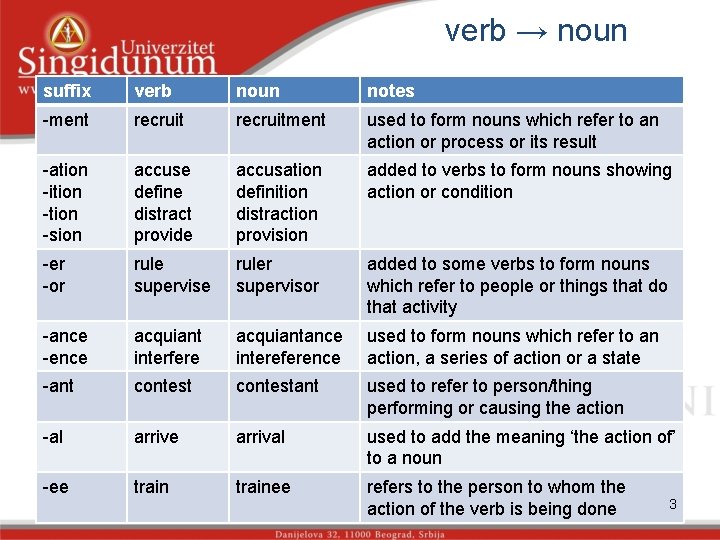
verb → noun suffix verb noun notes -ment recruitment used to form nouns which refer to an action or process or its result -ation -ition -sion accuse define distract provide accusation definition distraction provision added to verbs to form nouns showing action or condition -er -or rule supervise ruler supervisor added to some verbs to form nouns which refer to people or things that do that activity -ance -ence acquiant interfere acquiantance intereference used to form nouns which refer to an action, a series of action or a state -ant contestant used to refer to person/thing performing or causing the action -al arrive arrival used to add the meaning ‘the action of’ to a noun -ee trainee refers to the person to whom the action of the verb is being done 3
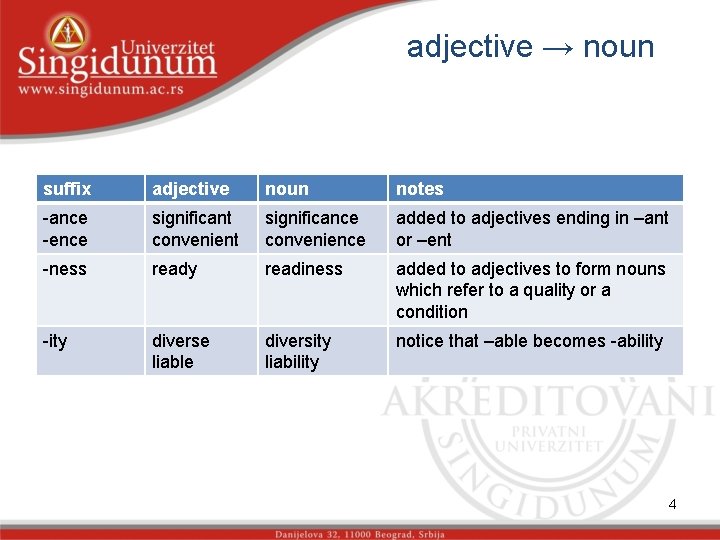
adjective → noun suffix adjective noun notes -ance -ence significant convenient significance convenience added to adjectives ending in –ant or –ent -ness ready readiness added to adjectives to form nouns which refer to a quality or a condition -ity diverse liable diversity liability notice that –able becomes -ability 4
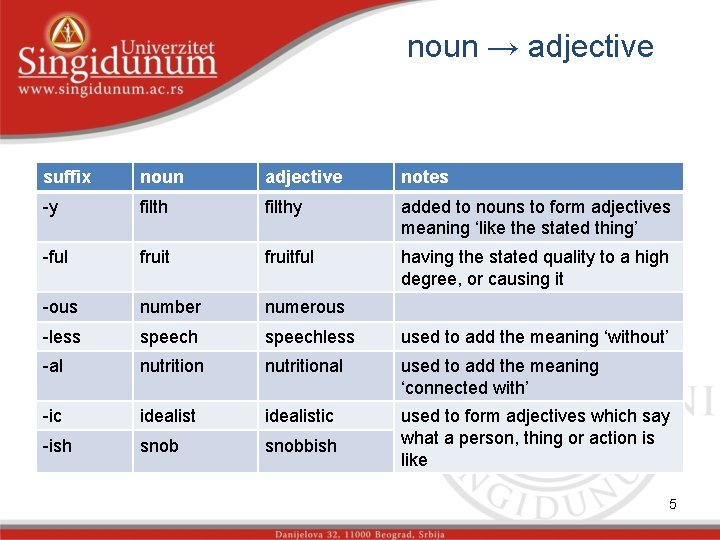
noun → adjective suffix noun adjective notes -y filthy added to nouns to form adjectives meaning ‘like the stated thing’ -ful fruitful having the stated quality to a high degree, or causing it -ous number numerous -less speechless used to add the meaning ‘without’ -al nutritional used to add the meaning ‘connected with’ -ic idealistic -ish snobbish used to form adjectives which say what a person, thing or action is like 5
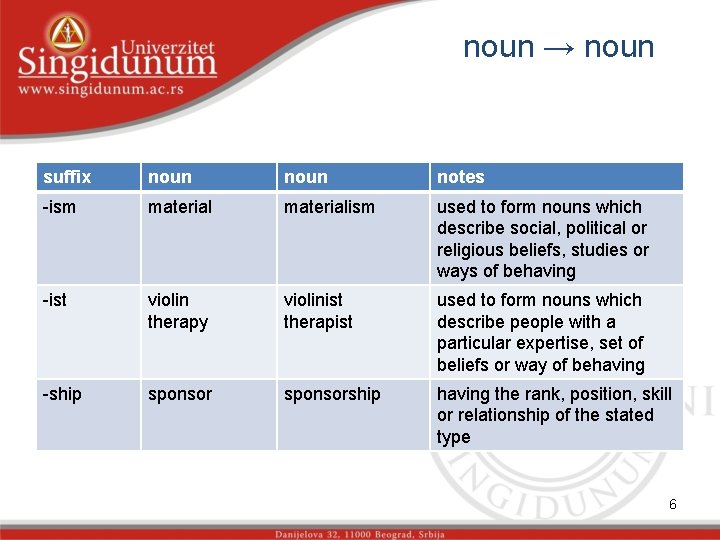
noun → noun suffix noun notes -ism materialism used to form nouns which describe social, political or religious beliefs, studies or ways of behaving -ist violin therapy violinist therapist used to form nouns which describe people with a particular expertise, set of beliefs or way of behaving -ship sponsorship having the rank, position, skill or relationship of the stated type 6
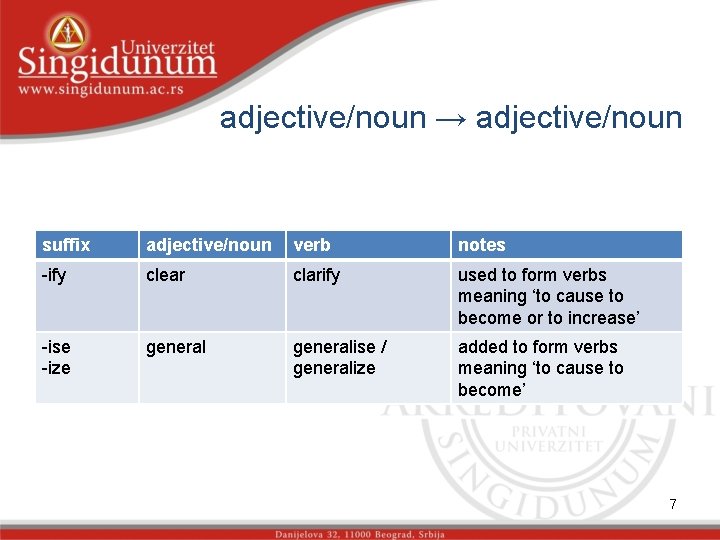
adjective/noun → adjective/noun suffix adjective/noun verb notes -ify clear clarify used to form verbs meaning ‘to cause to become or to increase’ -ise -ize generalise / generalize added to form verbs meaning ‘to cause to become’ 7

verb → adjective suffix verb adjective -ed biased -ing gripping -able -ible sustain neglect sustainable negligible -ent persistent -ive exclude exclusive notes added to verbs to form adjectives which mean ‘able to receive the action’ or ‘worth receiving the action’ added to verbs to form adjectives meaning ‘showing the ability to perform the activity’ 8
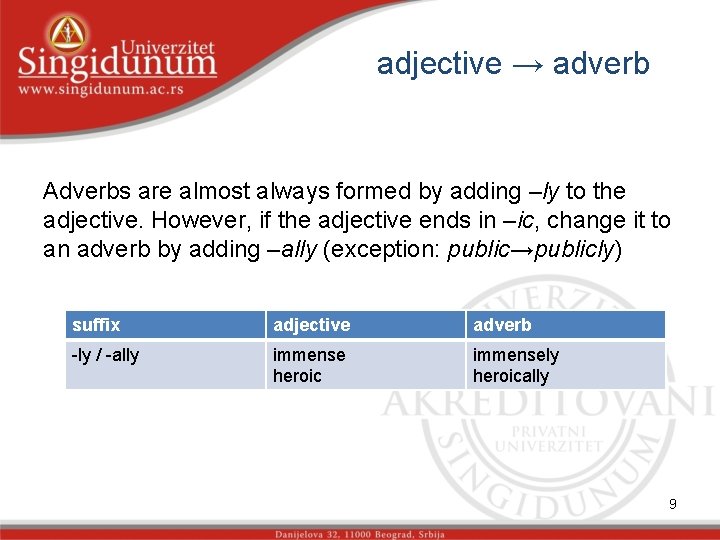
adjective → adverb Adverbs are almost always formed by adding –ly to the adjective. However, if the adjective ends in –ic, change it to an adverb by adding –ally (exception: public→publicly) suffix adjective adverb -ly / -ally immense heroic immensely heroically 9
- Slides: 9